


Disclosure
The sailor's voice and a few sound effects were made with the help of AI tools. The game's idea and gameplay are our own.
- Creator
- USUBOV GAMES
- Reviews
- -
- Added
- Nov 26, 2026
Public Steam disclosure research 27,951 disclosures tracked
Search developers’ Steam disclosures, compare classified AI use across games, and follow recorded changes. This index adds cross-game classifications and statistics to statements published on individual store pages.
Code help, debugging and other development work.
Capsule art, trailers and promotional material.
Pre-made art, audio, writing and other game assets.
Interactive or runtime AI features disclosed by the developer.
Groups reflect automatic analysis of public disclosures; mature records are excluded. These counts do not measure AI use across all of Steam. Missing or unclear statements cannot establish whether a game uses AI.
The sailor's voice and a few sound effects were made with the help of AI tools. The game's idea and gameplay are our own.
During the development of this game, we used AI as a reference tool to explore ideas and support the development process. AI served as an aid to the reference process, while the final decisions regarding the game's design and development were made by us.
We used generative AI tools during development to create store artwork and promotional graphics, the CEO.EXE boss model, and the illustration of the person playing at a desk seen through the PC case window in HEAPSTORM. These assets were created in advance.
The background music, the story mode illustrations, the title logo, the achievement icons and the store page artwork (capsule and library images) were created with generative AI tools, then designed and edited by the developer. No content is generated by AI while you play.
AI tools were used to assist with the translation of in-game texts into multiple languages, the generation of Japanese in-game voiceovers, and the creation of graphical and text elements for the Steam store page.
Tropalm was made with AI, all the way through. Under the developer's direction, large language models (mainly Anthropic's Claude) wrote the game: its code, every 3D model and animation, the programs that draw its textures and icons, the programs that synthesize its sounds and music, and its translations. The game uses no images made by image-generation AI and no sounds made by music-generation AI: every picture is drawn by code or rendered from the game itself, and every sound is synthesized. The fonts are licensed work by others. While you play, your AI companions' words and actions are generated live by a language model (Tropalm Cloud AI, or a local or other model you choose), and their voices by text-to-speech. The trailer's voices were made with text-to-speech as well. Connects to 3rd-Party Service for AI Content Generation: Tropalm Cloud AI, or a model that runs on the player's own PC
BGM is provided by Suno AI audio generation. Claude was used throughout the project for prototyping, polish and review.
Some visual assets were refined with AI tools, such as a few UI icons, upscaling and color correction of existing textures, a few 3D models and some announcement artwork.
The character 3D models and some images in the game were created with generative AI. The store text was refined with AI assistance to make it easier to read. All translations were done with AI.
In early access as a solo developer, some AI generated placeholder assets will be in the game for the time being. These are on our list to replace with real art, please reach out to jack@netbug.us if you are interested in helping to make art.
Night Shift: Haunted Mall was created by a small human team. The game concept, creative direction, character models, menus and most of the in-game 3D environments were made by hand. Generative AI tools were used during development for the music, some in-game 3D props and environment pieces, the trailer cutscene, the localized text (French, Spanish, Italian, German, Japanese, Korean and Simplified Chinese) and parts of the game code. All AI-assisted content was reviewed and edited by the team. The game does not generate any content with AI while you play.
This game was made by one person who has been writing software since the Commodore VIC-20. AI tools helped me finally build the game I've carried in my head for years and share it with you in a timely manner. AI didn't replace the creativity. It removed the barriers that would have kept me from sharing it with you. I'm grateful for that, and grateful to you for playing.
Some text, translations, art and audio were made with the help of AI tools, then reviewed and edited by the developer.
Some textures, 2D graphics, 3D models, visual effects, and in-game sound effects were created with the assistance of generative AI tools. Generative AI tools were also used to assist with localization and the creation of some promotional images used on the game's Steam store page.
Some 3D models and translated text were made with the help of AI tools, then reviewed and edited by the developer. Nothing in the game is generated by AI while you play.
Chunk DAW's in-game UI is pre-generated with AI. Things like the loading blocks in the menus are the main visual generative AI, but all other assets and materials/sounds that are experienced in game are not. The in-game tutorial has been assisted with AI. AI was also used in development as a code assistant. While I disagree with the negative effects AI has for the environment, Chunk DAW is designed to be a creative space that encourages people to create for themselves. It is a new self-contained environment in which music and worlds can be built, shared, and experienced by anyone in the world. Chunk DAW is also a new way to make music that is accessible for neurodivergent learners who prefer to learn and create in a more tactile way, opening doors for self-expression to folks who may not be able to otherwise. In Chunk DAW, I've recorded all of the sounds with instruments in my home studio. My partner and I have walked the streets of Montreal with a hand-scanner to collect the materials used in game, and I'm in the process of refining how to capture the backgrounds with my 360 camera around Montreal. I've also spent over 20 hours refining the font you see in game. The content you experience in game is hand-crafted. If you haven't been following me for awhile, I have been playing music and creating art for 18 years. Go back in time on my Instagram to see the multi-media evolution of my creative expression that got me to where I am today. I am dedicated to the craft of making art and expressing myself, ask anyone who knows me. If you feel like you aren't comfortable participating in the experience because of this AI usage, I completely understand. I hope that Chunk DAW inspires people to reduce their AI usage and get back to what makes creativity fun in the first place: Play.
Mine Ore Else used generative AI during development. Nothing in the game is generated while you play. During development, we used AI tools to help write parts of the source code, and the background songs and the trailer songs were made with AI music generators. We chose, reviewed and tested all of it before it shipped. The robots, the mine and the mining props are licensed 3D models handcrafted by human artists, and the sound effects, visual effects, menus and the logo are made by our own code and scripts.
This game was developed with the help of AI tools under the developer's direction. The 3D voxel models, visual effects and in-game text were created with AI assistance, and AI helped draft the store page text. Some sound effects were generated with AI. Screenshots are captured from the running game.
Generative AI tools were used during development to assist with writing and editing in-game text. No AI image, 3D model, music, or voice generators were used—all audio and fonts are licensed, human-made works.
I'm a solo developer, and I've used AI tools throughout development: to help write the code, to generate many of the 3D models and textures, the capsule art, and most of the in-game and store page text. The audio isn't AI-generated: I recorded it myself or used non-AI sound libraries. Nothing is generated while you play; every collapse is simulated physics.
Store capsules, Library capsules, and Game icon
Generative AI tools were used during development to help draft and refine some in-game dialogue, localization, and store description text. No AI-generated content is created during gameplay.
AI was used for localisation and multiplayer testing only.
Arivel is developed with the help of AI tools. AI assistants helped write the game's code. AI also helped translate the game and its store page. The game does not use generative AI while you play: no content is generated by AI in real time.
Here's where I used AI. The music was generated with Suno, then picked, trimmed and levelled for the game. About half the sound effects started as ElevenLabs generations that were cut and retuned to fit, and the rest, including the tone under every hit, are synthesised from scratch. I used Claude, an AI assistant, for most of the code and most of the writing, in the game and on its store pages. The translations into 13 languages were made with AI too. No image in the game or on its pages is AI-generated. Every picture, the store art included, is rendered by the game.
Generative AI was used to assist with localization/translation.
Programmer art isn't good - AI is used to supplement assets purchased from the Fab store.
Generative AI was used to help write the game's code, to speed up development, and to create the key art used on the store page and in the Steam library (capsule, header and hero images).
AI tools helped create placeholder music, sounds and some in-game text during development. These are being replaced by our team's own work over time. Nothing is generated by AI while you play.
This game is being designed, directed and finely-tuned by a Koi-Loving Keeper and Solo First-Time Game Developer; AI tools are being used to assist with coding and some asset creation. Every detail is being reviewed, refined and manually adjusted by me. Along with the AI tools; Blender, GIMP and Unity are being used to amend and repair the assets. AI is great for building the base of an asset, however it requires a lot of manual polishing to get it game-worthy. This is a project based on my passion for Koi and my desire to share that passion with others; and AI is filling in the gaps to bring it to life.
Generative AI was used during development to create some pre-generated artwork and textures, including store capsule and library artwork. These assets are reviewed and integrated by the developer. Forever World Craft does not generate AI content during gameplay or connect to a third-party AI service.
Some visual assets and promotional artwork were created with assistance from generative AI tools. These include the Wilderune logo and Steam capsule illustrations. Store descriptions and translations were also prepared with AI assistance. The game does not generate AI content during play and does not connect to external AI services.
Generative AI tools were used to assist with visual assets, programming, and localization. All content was reviewed and approved by the developer.
AI tools were used during development to assist with shader creation, optimization, and the programming of certain game systems.
We used AI tools while making Million Tiles, including for the code, and store page text. We reviewed and edited all of it. Nothing is generated by AI while you play.
The artwork in Voxmons, including the creatures, the worlds and the game's logo, was created with generative AI. The game does not generate any content with AI while you play.
AI tools helped with brainstorming and produced first drafts of some voxel models, sounds, and translations, which were then manually reworked for the final build. No asset has been left untouched.
Claude was used in making this game.
Storepage capsule images, sound effects, and localization are made with AI. Most assets in the game are originally made by human artists. However I still adjust 3D models and retexture them, this way the game has smaller file size and runs more smoothly. For example: a small mining rover was 1Gb in its source but now it is 12Mb and I generated a small laser turret on top of that.
A small portion of the visual assets were created with the assistance of generative AI and then manually edited and refined.
AI tools were used during development to help write and review code, troubleshoot technical issues, and enhance visual concepts. Generative AI was also used to create portions of the game’s artwork and 3D asset source material, including some character and equipment assets and Steam promotional artwork. These materials were based on concept art created, selected, edited, optimized and integrated by the developer. AI generated content is prepared during development, not generated live during gameplay.
Some preset ship hull shapes were created by generating 3D models with an AI tool, then converting them into the game's block format and editing them by hand.
Some AI was used only for creating the artworks and marketing images.
Store artwork is generated.
AI was used to generate images and assist with the design of some HUD elements.
AI tools were used to help create the game's code, its user-interface, the game logo, and some of its 3D models, all under the developer's direction. The game's design and all other artwork were created by the developer. Music and sound effects come from royalty-free libraries and the developer's son. The store artwork was hand-painted by the developer’s brother.
Generative AI tools were used to help create some background music and sound effects, the logo, icons, Steam achievement icons and store artwork, and to assist with translating in-game text and drafting store descriptions. The developer reviews and selects the resulting assets and text, and edits them as needed. The bonsai and cities are procedurally generated by the game's own code. The game does not generate content using AI or connect to external AI services during gameplay.
Some of the 2D art and 3D models were made with AI tools and then edited by us. Nothing is generated by AI while you play.
We use generative AI for developer tooling, early access placeholders and marketing content to allow our team to focus on bringing you the highest quality game in a timely manner.
Live-Generated AI Content: This game features a custom, offline neural network architecture running entirely on your local hardware. It utilizes safe, locked base models to procedurally generate dynamic NPC dialogue and ambient acoustic elements in real-time. Because it runs locally, it ensures zero server lag and complete player data privacy. No external web scraping or online APIs are used. Guardrails: All AI models operate within a strictly locked, offline sandbox. Dialogue generation is heavily constrained by strict, character-bound system prompts (Hermes 3) to ensure NPCs remain safely in-character as clinical personnel. The game utilizes no external APIs, preventing malicious web-based prompt injections. Finally, players have full access to the standard Steam Overlay tools to easily report any unexpected dialogue outputs directly to our development team.
| Title⇅ | Disclosure | Creator⇅ | Src | Reviews⇅ | Added↓ |
|---|---|---|---|---|---|
 A Game About Digging For Worms In-game content audio | The sailor's voice and a few sound effects were made with the help of AI tools. The game's idea and gameplay are our own. | USUBOV GAMES | - | Nov 26, 2026 | |
 Saturnia Dev only | During the development of this game, we used AI as a reference tool to explore ideas and support the development process. AI served as an aid to the reference process, while the final decisions regarding the game's design and development were made by us. | İzmaritGames | - | Nov 26, 2026 | |
 RAMpocalypse: The AI Ate My RAM In-game content art | We used generative AI tools during development to create store artwork and promotional graphics, the CEO.EXE boss model, and the illustration of the person playing at a desk seen through the PC case window in HEAPSTORM. These assets were created in advance. | Matielle Games | - | Nov 23, 2026 | |
 Kawaii Kaiju: Beam! In-game content artaudiotext | The background music, the story mode illustrations, the title logo, the achievement icons and the store page artwork (capsule and library images) were created with generative AI tools, then designed and edited by the developer. No content is generated by AI while you play. | YUNIWAVE | - | Nov 23, 2026 | |
 DeepBreaker In-game content textaudioart | AI tools were used to assist with the translation of in-game texts into multiple languages, the generation of Japanese in-game voiceovers, and the creation of graphical and text elements for the Steam store page. | GalaVerse Creations | - | Nov 23, 2026 | |
 Tropalm Live AI artaudiocodetext | Tropalm was made with AI, all the way through. Under the developer's direction, large language models (mainly Anthropic's Claude) wrote the game: its code, every 3D model and animation, the programs that draw its textures and icons, the programs that synthesize its sounds and music, and its translations. The game uses no images made by image-generation AI and no sounds made by music-generation AI: every picture is drawn by code or rendered from the game itself, and every sound is synthesized. The fonts are licensed work by others.
While you play, your AI companions' words and actions are generated live by a language model (Tropalm Cloud AI, or a local or other model you choose), and their voices by text-to-speech. The trailer's voices were made with text-to-speech as well.
Connects to 3rd-Party Service for AI Content Generation: Tropalm Cloud AI, or a model that runs on the player's own PC | Marble Works | - | Nov 21, 2026 | |
 Voxel Surge In-game content audio | BGM is provided by Suno AI audio generation.
Claude was used throughout the project for prototyping, polish and review. | jIM | - | Nov 20, 2026 | |
 Dwelvers In-game content art | Some visual assets were refined with AI tools, such as a few UI icons, upscaling and color correction of existing textures, a few 3D models and some announcement artwork. | Rasmus Ljunggren | 242 | Nov 19, 2026 | |
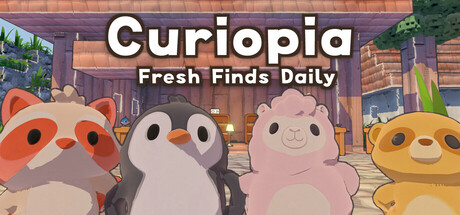 Curiopia: Fresh Finds Daily In-game content arttext | The character 3D models and some images in the game were created with generative AI. The store text was refined with AI assistance to make it easier to read. All translations were done with AI. | coznssoft | - | Nov 19, 2026 | |
 Distant Garden In-game content art | In early access as a solo developer, some AI generated placeholder assets will be in the game for the time being. These are on our list to replace with real art, please reach out to jack@netbug.us if you are interested in helping to make art. | Jackson Levine | 54 | Nov 19, 2026 | |
 NIGHT SHIFT: HAUNTED MALL In-game content audioarttextcode | Night Shift: Haunted Mall was created by a small human team. The game concept, creative direction, character models, menus and most of the in-game 3D environments were made by hand. Generative AI tools were used during development for the music, some in-game 3D props and environment pieces, the trailer cutscene, the localized text (French, Spanish, Italian, German, Japanese, Korean and Simplified Chinese) and parts of the game code. All AI-assisted content was reviewed and edited by the team. The game does not generate any content with AI while you play. | Tokkun Studio | - | Nov 19, 2026 | |
 Blok Stock and Barrel Dev only | This game was made by one person who has been writing software since the Commodore VIC-20. AI tools helped me finally build the game I've carried in my head for years and share it with you in a timely manner. AI didn't replace the creativity. It removed the barriers that would have kept me from sharing it with you. I'm grateful for that, and grateful to you for playing. | Shrike | - | Nov 18, 2026 | |
 Phantom Shapes In-game content textartaudio | Some text, translations, art and audio were made with the help of AI tools, then reviewed and edited by the developer. | Nasser Made Games | - | Nov 16, 2026 | |
 UNDERGROUND CASINO In-game content artaudiotext | Some textures, 2D graphics, 3D models, visual effects, and in-game sound effects were created with the assistance of generative AI tools. Generative AI tools were also used to assist with localization and the creation of some promotional images used on the game's Steam store page. | MOSHIMOBOX | - | Nov 16, 2026 | |
 DOPAMIN CUBE In-game content arttext | Some 3D models and translated text were made with the help of AI tools, then reviewed and edited by the developer. Nothing in the game is generated by AI while you play. | JSH | - | Nov 15, 2026 | |
 Chunk DAW In-game content arttext | Chunk DAW's in-game UI is pre-generated with AI. Things like the loading blocks in the menus are the main visual generative AI, but all other assets and materials/sounds that are experienced in game are not. The in-game tutorial has been assisted with AI. AI was also used in development as a code assistant.
While I disagree with the negative effects AI has for the environment, Chunk DAW is designed to be a creative space that encourages people to create for themselves. It is a new self-contained environment in which music and worlds can be built, shared, and experienced by anyone in the world. Chunk DAW is also a new way to make music that is accessible for neurodivergent learners who prefer to learn and create in a more tactile way, opening doors for self-expression to folks who may not be able to otherwise.
In Chunk DAW, I've recorded all of the sounds with instruments in my home studio. My partner and I have walked the streets of Montreal with a hand-scanner to collect the materials used in game, and I'm in the process of refining how to capture the backgrounds with my 360 camera around Montreal. I've also spent over 20 hours refining the font you see in game. The content you experience in game is hand-crafted.
If you haven't been following me for awhile, I have been playing music and creating art for 18 years. Go back in time on my Instagram to see the multi-media evolution of my creative expression that got me to where I am today. I am dedicated to the craft of making art and expressing myself, ask anyone who knows me.
If you feel like you aren't comfortable participating in the experience because of this AI usage, I completely understand. I hope that Chunk DAW inspires people to reduce their AI usage and get back to what makes creativity fun in the first place: Play. | Mackenzie Gray | - | Nov 15, 2026 | |
 Mine Ore Else In-game content audiocode | Mine Ore Else used generative AI during development. Nothing in the game is generated while you play.
During development, we used AI tools to help write parts of the source code, and the background songs and the trailer songs were made with AI music generators. We chose, reviewed and tested all of it before it shipped. The robots, the mine and the mining props are licensed 3D models handcrafted by human artists, and the sound effects, visual effects, menus and the logo are made by our own code and scripts. | Aixceptional | - | Nov 13, 2026 | |
 WORLD EATER In-game content arttextaudio | This game was developed with the help of AI tools under the developer's direction. The 3D voxel models, visual effects and in-game text were created with AI assistance, and AI helped draft the store page text. Some sound effects were generated with AI. Screenshots are captured from the running game. | Sambosa | - | Nov 13, 2026 | |
 One More Asteroid In-game content text | Generative AI tools were used during development to assist with writing and editing in-game text. No AI image, 3D model, music, or voice generators were used—all audio and fonts are licensed, human-made works. | Atimohr | - | Nov 13, 2026 | |
 Destruction Brothers In-game content arttextcode | I'm a solo developer, and I've used AI tools throughout development: to help write the code, to generate many of the 3D models and textures, the capsule art, and most of the in-game and store page text. The audio isn't AI-generated: I recorded it myself or used non-AI sound libraries. Nothing is generated while you play; every collapse is simulated physics. | Anneal Games | - | Nov 12, 2026 | |
 Punch Your Way Out Store/marketing art | Store capsules, Library capsules, and Game icon | Black Sea Studios | - | Nov 10, 2026 | |
 Forge More, Mole! In-game content text | Generative AI tools were used during development to help draft and refine some in-game dialogue, localization, and store description text. No AI-generated content is created during gameplay. | Enter the Game Studios | - | Nov 9, 2026 | |
 Dicellion In-game content text | AI was used for localisation and multiplayer testing only. | Retro Spect | - | Nov 8, 2026 | |
 Arivel In-game content codetext | Arivel is developed with the help of AI tools. AI assistants helped write the game's code. AI also helped translate the game and its store page. The game does not use generative AI while you play: no content is generated by AI in real time. | WhistleLab | - | Nov 8, 2026 | |
 Fossick In-game content audiotext | Here's where I used AI. The music was generated with Suno, then picked, trimmed and levelled for the game. About half the sound effects started as ElevenLabs generations that were cut and retuned to fit, and the rest, including the tone under every hit, are synthesised from scratch. I used Claude, an AI assistant, for most of the code and most of the writing, in the game and on its store pages. The translations into 13 languages were made with AI too. No image in the game or on its pages is AI-generated. Every picture, the store art included, is rendered by the game. | PB& Games | - | Nov 3, 2026 | |
 No Asteroids In-game content text | Generative AI was used to assist with localization/translation. | Unruled Games | 54 | Nov 2, 2026 | |
 LFG In-game content art | Programmer art isn't good - AI is used to supplement assets purchased from the Fab store. | Bad Circuit Games | - | Nov 2, 2026 | |
 New Babylon Store/marketing codeart | Generative AI was used to help write the game's code, to speed up development, and to create the key art used on the store page and in the Steam library (capsule, header and hero images). | Caesar's Ghost | - | Nov 2, 2026 | |
 Ore Heads In-game content audiotext | AI tools helped create placeholder music, sounds and some in-game text during development. These are being replaced by our team's own work over time. Nothing is generated by AI while you play. | Active Meltdown | - | Oct 31, 2026 | |
 Koi Oasis In-game content artcode | This game is being designed, directed and finely-tuned by a Koi-Loving Keeper and Solo First-Time Game Developer; AI tools are being used to assist with coding and some asset creation. Every detail is being reviewed, refined and manually adjusted by me. Along with the AI tools; Blender, GIMP and Unity are being used to amend and repair the assets. AI is great for building the base of an asset, however it requires a lot of manual polishing to get it game-worthy. This is a project based on my passion for Koi and my desire to share that passion with others; and AI is filling in the gaps to bring it to life. | Oasis Sim Studios | - | Oct 31, 2026 | |
 Forever World Craft In-game content art | Generative AI was used during development to create some pre-generated artwork and textures, including store capsule and library artwork. These assets are reviewed and integrated by the developer. Forever World Craft does not generate AI content during gameplay or connect to a third-party AI service. | KH Solution Co., Ltd. | - | Oct 30, 2026 | |
 Wilderune In-game content arttext | Some visual assets and promotional artwork were created with assistance from generative AI tools. These include the Wilderune logo and Steam capsule illustrations. Store descriptions and translations were also prepared with AI assistance. The game does not generate AI content during play and does not connect to external AI services. | Lofy Studio | - | Oct 28, 2026 | |
 Punch Through In-game content artcodetext | Generative AI tools were used to assist with visual assets, programming, and localization. All content was reviewed and approved by the developer. | Master Studio | - | Oct 27, 2026 | |
 Magic Exhibit Dev only code | AI tools were used during development to assist with shader creation, optimization, and the programming of certain game systems. | VSolStudio | - | Oct 27, 2026 | |
 Million Tiles Store/marketing textcode | We used AI tools while making Million Tiles, including for the code, and store page text. We reviewed and edited all of it. Nothing is generated by AI while you play. | Duck Tile | - | Oct 25, 2026 | |
 Voxmons In-game content art | The artwork in Voxmons, including the creatures, the worlds and the game's logo, was created with generative AI. The game does not generate any content with AI while you play. | Wolf Of War | 36 | Oct 25, 2026 | |
 Tiny Worlds: 3D Nonograms In-game content artaudiotext | AI tools helped with brainstorming and produced first drafts of some voxel models, sounds, and translations, which were then manually reworked for the final build. No asset has been left untouched. | ZeroDevLab | - | Oct 25, 2026 | |
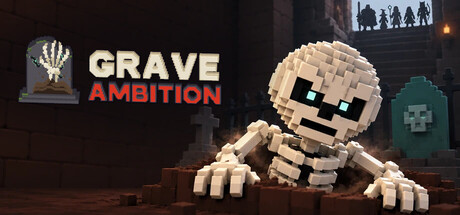 Grave Ambition Unclear | Claude was used in making this game. | Baron Von Ruzij | - | Oct 24, 2026 | |
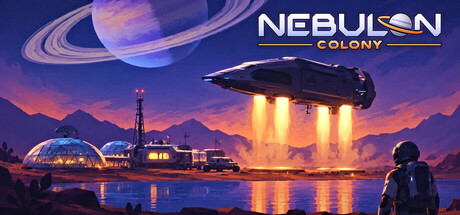 Nebulon Colony In-game content artaudiotext | Storepage capsule images, sound effects, and localization are made with AI. Most assets in the game are originally made by human artists. However I still adjust 3D models and retexture them, this way the game has smaller file size and runs more smoothly. For example: a small mining rover was 1Gb in its source but now it is 12Mb and I generated a small laser turret on top of that. | Mythforge Games | - | Oct 24, 2026 | |
 太阳骑士与邪恶试炼 In-game content art | A small portion of the visual assets were created with the assistance of generative AI and then manually edited and refined. | XIANQIAN GAME | - | Oct 24, 2026 | |
 SpartanBit In-game content artcode | AI tools were used during development to help write and review code, troubleshoot technical issues, and enhance visual concepts. Generative AI was also used to create portions of the game’s artwork and 3D asset source material, including some character and equipment assets and Steam promotional artwork. These materials were based on concept art created, selected, edited, optimized and integrated by the developer.
AI generated content is prepared during development, not generated live during gameplay. | Zorp Games | - | Oct 24, 2026 | |
 Neural Spaceship Sandbox In-game content art | Some preset ship hull shapes were created by generating 3D models with an AI tool, then converting them into the game's block format and editing them by hand. | Firth Sandbox Limited | - | Oct 23, 2026 | |
 Escape The Walls: Punch Escape In-game content art | Some AI was used only for creating the artworks and marketing images. | Thinflow Games | - | Oct 22, 2026 | |
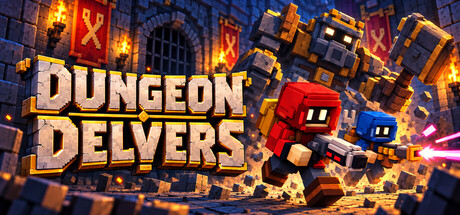 Dungeon Delvers Store/marketing art | Store artwork is generated. | Crush Bug Studios | - | Oct 22, 2026 | |
 Mini Legends Idle In-game content art | AI was used to generate images and assist with the design of some HUD elements. | Reysher Games | 176 | Oct 22, 2026 | |
 Impenetrable In-game content artcode | AI tools were used to help create the game's code, its user-interface, the game logo, and some of its 3D models, all under the developer's direction. The game's design and all other artwork were created by the developer. Music and sound effects come from royalty-free libraries and the developer's son. The store artwork was hand-painted by the developer’s brother. | Weapon Studios | - | Oct 22, 2026 | |
 Desktop Bonsai Towns In-game content audioarttext | Generative AI tools were used to help create some background music and sound effects, the logo, icons, Steam achievement icons and store artwork, and to assist with translating in-game text and drafting store descriptions. The developer reviews and selects the resulting assets and text, and edits them as needed. The bonsai and cities are procedurally generated by the game's own code. The game does not generate content using AI or connect to external AI services during gameplay. | YUNIWAVE | - | Oct 21, 2026 | |
 Punch The Walls In-game content art | Some of the 2D art and 3D models were made with AI tools and then edited by us. Nothing is generated by AI while you play. | BoomGames | 638 | Oct 20, 2026 | |
 TimbrianGuard Store/marketing arttext | We use generative AI for developer tooling, early access placeholders and marketing content to allow our team to focus on bringing you the highest quality game in a timely manner. | Re³ Studios | - | Oct 20, 2026 | |
 Stemmies Live AI textaudio | Live-Generated AI Content:
This game features a custom, offline neural network architecture running entirely on your local hardware. It utilizes safe, locked base models to procedurally generate dynamic NPC dialogue and ambient acoustic elements in real-time. Because it runs locally, it ensures zero server lag and complete player data privacy. No external web scraping or online APIs are used.
Guardrails:
All AI models operate within a strictly locked, offline sandbox. Dialogue generation is heavily constrained by strict, character-bound system prompts (Hermes 3) to ensure NPCs remain safely in-character as clinical personnel. The game utilizes no external APIs, preventing malicious web-based prompt injections. Finally, players have full access to the standard Steam Overlay tools to easily report any unexpected dialogue outputs directly to our development team. | Lenn Dolling | - | Oct 19, 2026 |


