Public Steam disclosure research26,448 disclosures tracked
Where do games disclose AI use?
Search developers’ Steam disclosures, compare classified AI use across
games, and follow recorded changes.
This index adds cross-game classifications and statistics to
statements published on individual store pages.
Groups reflect automatic analysis of public disclosures; mature records are excluded. These counts do not measure AI use across all of Steam.
Missing or unclear statements cannot establish whether a game uses AI.
During development, AI tools are used to assist in generating background environments and background music. All character art and character CGs are completely human-made, without the use of AI.
No real-time AI generation is used during gameplay.
Generative AI was used during development to help localize the game's text into 28 languages, as well as the songs created with suno. These translations were produced with AI assistance and checked with automated quality tools. All gameplay, art, and design were created by the developer. No generative AI content is created in real time while you play.
"Generative AI tools were utilized as an assistive resource across specific stages of the development pipeline:
• Code & Scripting: AI was used as a coding and debugging assistant to optimize gameplay logic and accelerate script writing. All final code was structured, reviewed, and implemented manually.
• Voiceover & Audio: Certain voiceover lines and vocal elements were generated using AI voice synthesis tools, then manually edited, mixed, and mastered to fit the in-game atmosphere.
• 3D & Blender Pipeline (Art & Store Capsule): AI tools assisted in concept ideation, generating supplementary textures, and streamlining the Blender workflow. Specifically for the store capsule art and key visuals, the 3D scene composition, modeling, lighting, and rendering were constructed in Blender, with AI serving in an assistive capacity for reference generation, texture details, and post-processing.
• Localization & Translation: AI translation tools were used to assist in localizing in-game texts, UI elements, and store page descriptions into multiple languages, which were subsequently reviewed and adjusted for context.
Generative AI tools were used during development to help create portions of the game's 2D artwork, including character illustrations, backgrounds, UI elements, icons and visual effects, as well as portions of the text and localization. The game does not generate content using AI during gameplay or connect to external generative AI services.
The intro and other short video clips, background music, some footstep sound effects and the race commentary voice were made in advance with generative AI tools (video, music, sound effect and speech synthesis) and picked by the developer after reviewing them. Parts of the English and Japanese translations were drafted with AI tools and then reviewed. No content is generated by AI while you play.
During development, generative AI tools were used to create or assist with some of the card illustrations. These assets are included in the game; no AI content is generated during gameplay, and the game does not connect to external AI services.
The AUREL logo and the store and library artwork were created with the help of generative AI. The app itself does not generate any content with AI: its noise suppression uses a neural network that only filters your own microphone signal in real time.
Again, Liliya is made by a small studio working with an AI assistant. The AI helped write the tools and scripts that build our 3D models, textures, and sound effects and some 2D art and helped draft some of our text. Every design choice is ours, and everything is directed, checked, and finished by us. No downloaded or stock art is used, and nothing is generated by AI while you play.
Generative AI Disclosure
Generative AI tools were used during development to help create parts of this game's content:
1. Card artwork: Character illustrations on the cards were generated with an AI image tool using text prompts only, then selected, cut out, composed and finalized by our team. The AI generation label is kept on the cards and is visible at the bottom-left corner.
2. Text & Localization: The in-game multilingual translations and the store page copy were produced with AI assistance and reviewed by our team.
3. Store & promotional assets: Created from actual in-game footage, which includes the AI-generated artwork described above.
This game does not generate any AI content at runtime, and does not connect to any external AI services during gameplay.
Pre-generated content: store art, event illustrations, region maps and expedition backdrops were made with a locally run AI image model (Qwen-Image), then hand-picked and converted to the game's 32-colour palette; the background music was made with a locally run AI music model (ACE-Step), then hand-picked and edited. The game generates no AI content while you play. Campaign visuals, characters, UI and sound effects are drawn and synthesized in code.
This game uses pre-generated AI-assisted content, including character voices, selected 2D posters and texture imagery, and text polishing and localization. Character voices were generated with ElevenLabs; selected images and text were created with assistance from ChatGPT. Steam store promotional artwork is also AI-generated; this does not include gameplay screenshots. All of this content is prepared during development. The game does not generate AI content or connect to external AI services during play.
The game logo, the app icon, the story illustrations in the intro, some user interface artwork and some translated texts were created with the help of generative AI tools. The key art, characters, environments, story and gameplay were made without generative AI. No AI content is generated while you play.
Generative AI assisted in creating some artwork, written content, store copy, and localized translations. These materials were generated during development and incorporated into the game and store page. The game does not generate AI content during gameplay or connect to external third-party AI services.
The dog illustrations and animations, BGM and sound effects, and all translations in the game were created using AI. The store images were designed using AI, based on photos taken by the developer.
AI tools were used during development as part of the production process: to help create the art and music, to translate the game into five languages, and to assist with code and automated testing (the test bots). The game design, levels, mechanics and balancing were made by the developer, and every asset was selected, edited and adjusted to fit the game. Nothing is generated by AI while you play.
Some of the game's art, such as the characters, objects and icons, was generated with an image model from my own prompts and style guide, and I reviewed and picked every piece. I used an AI writing assistant to help draft the game's text and this store page, and edited it myself. The sound effects and music are synthesized in code, without generative AI. Nothing is generated by AI while you play.
Our team designed the game and directed every part of it. AI tools helped us create the art, the story text and the translations, and we reviewed and edited all of it. The music was not made with AI, and nothing is generated by AI while you play.
All pictures, 3D models, voices, sound effects and music in this game were made with AI tools during development, then picked, edited and put together by hand.
- Pictures (concept pictures, unit and building designs, ground and cliff textures, icons, the logo and key art): Krea 2
- 3D models of every unit, building and hero prop: generated from those pictures with TRELLIS 2 and Pixal3D, then cleaned up, rigged and animated by hand-written tools in Blender.
- Unit voices: voices designed with Qwen3 voice design and performed with IndexTTS. No real person's voice was copied.
- Sound effects: the MOSS sound effect model.
- Music: composed by the developer with the FlowMusic AI music tool.
The code was written with the help of an AI coding assistant (Claude).
Some artwork, music, and multilingual translations in this game were created with the assistance of generative AI. All such content was pre-generated during development.
Some artwork, music, and store promotional materials for this game were created using generative AI. All such content was generated in advance during development.
The game is in development; elements may change. Generative AI was temporarily used for content (visuals, CG); everything was manually reviewed and refined to match the project's style. In the release version, AI content will be fully replaced.
In-game and store text was drafted with an AI assistant and edited by the developers. Translations into languages other than English and Russian were also made with AI. All art, models and sound were made by the developers.
Generative AI tools were used to create some product packaging illustrations and textures included in the game, as well as promotional assets such as the game logo and Steam artwork. AI tools also assisted with drafting and translating some store-page text.
Towers of Ruin is designed and built by Ceus Games. Generative AI tools were used as a starting point for some visual assets, which were then edited, re-textured and integrated by hand: the game logo and app icon, some menu frames, card and tower icons, and some of the 3D tower models. Game design, maps, balancing, and tower and enemy behavior were created by us; music, sound effects and character animations were made or licensed from human creators. The store page text and its translations were drafted with AI assistance and reviewed by us. No content is generated by AI while you play.
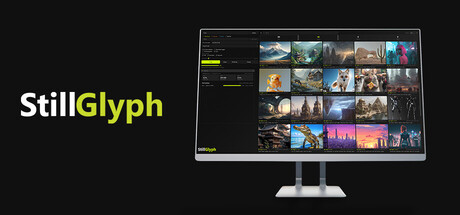
StillGlyph uses AI to write captions, titles and keywords for photos you choose from your own computer. It does not generate images or alter the picture itself.
You can use the API key of an online AI provider from the list, or run AI models locally on your PC, offline and private, with the optional aid of SauceNAO online search to help name characters. Generated text describes what is in each image and is saved into that image's metadata on your computer. Nothing is shared or published unless you choose to.
This game uses AI for mainly Code and Art. Animations and sounds are human made, and gameplay testing is done extensively through human. Every feature of this game is overlooked by Human, AI assistance is only used for technical reasons. At a later date, art assets may be replaced with art created by artist.
Generative AI was used to assist with proofreading and linguistic refinement of dialogue. The story, characters, and dialogue content were created by the developer. AI assistance was limited to improving wording and correcting language. No generative AI content is generated during gameplay.
Storepage capsule images, sound effects, and localization are made with AI. Most assets in the game are originally made by human artists. However I still adjust 3D models and retexture them, this way the game has smaller file size and runs more smoothly. For example: a small mining rover was 1Gb in its source but now it is 12Mb and I generated a small laser turret on top of that.
Generative AI was used during development to help create some 3D models and decorative artwork, including book-cover images, and to prepare and translate store text. The game does not generate AI content or connect to AI services during gameplay.
During the development of Puzzlozenge, generative AI tools were used to assist in creating certain static graphical assets, including the game's logo and title lettering. These elements were reviewed and refined throughout the development process.
The game does not use generative AI during gameplay.
Generative AI was used during the development process to assist in creating certain interfaces and achievement icons, as well as the cover images for the store and the text content on those pages, including translations into multiple languages. All of these elements and texts were prepared before the game was released. The game does not use AI to generate content while it is running, nor does it connect to any third-party AI services.
The in-game text (Japanese and English), the store description and the code that procedurally draws the pixel art were created with the help of generative AI. No AI-generated images or audio are used. Nothing is generated by AI during gameplay.
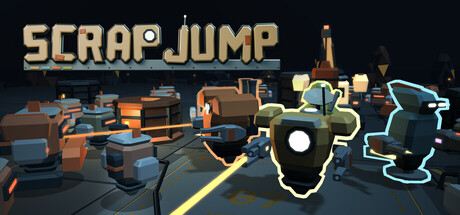
We build Scrapjump with the help of an AI assistant. It helped write the game's code. We direct, review and edit everything it produces. Every image and video on this page is rendered in the game's own engine, not by an image generator. The game generates no AI content while you play.
Some of the game's content, including artwork, music, voices, and text, was created with the help of generative AI tools and reviewed by the developer. No AI content is generated during gameplay.