Public Steam disclosure research27,951 disclosures tracked
Where do games disclose AI use?
Search developers’ Steam disclosures, compare classified AI use across
games, and follow recorded changes.
This index adds cross-game classifications and statistics to
statements published on individual store pages.
Groups reflect automatic analysis of public disclosures; mature records are excluded. These counts do not measure AI use across all of Steam.
Missing or unclear statements cannot establish whether a game uses AI.
My game uses AI quite frequently. Every logo you see is a product of the collaboration between a human and an AI. Every song you hear is a product of human-AI collaboration. Every player report card uses AI generated text modularly pieced together from smaller chunks.
The match commentator is using an AI generated voice.
This is a modern game that uses modern technology to its full potential.
Regarding AI usage: The game employs AI in only two areas
1. Character voice lines (disabled by default)
The ultra-large script (800k words) makes authentic voice acting financially unaffordable for our small studio.
2. "Seek Answers" function in the game lobby’s Sosoth (NPC) interaction interface
For entertainment purposes, we used AI chat.
What we can guarantee: Beyond these, translation, scripts, design, art, animation, and other game components absolutely did not use AI.
Connects to 3rd-Party Service for AI Content Generation: kimi
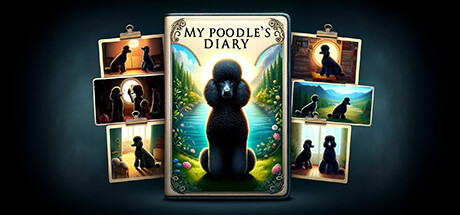
The original narrative of "My Poodle's Diary" is inspired by true events. AI was utilized to enhance the text, generate visual artwork, and provide narration, ensuring a polished and engaging experience. Despite this technological integration, each chapter has been meticulously crafted by hand to preserve the authenticity and emotional depth of the story.
We employ generative AI technologies during the creation of some assets. Typically this involves the ideation of content and visual reference material. These elements represent a minor component of the overall development. AI has been used to generate voices for an AI antagonist and a player advisor.
This game may contain parts of Audio and / or Artwork customized with the help of AI Generation derived from Art we own commercial rights to use, or artwork done by our studio.
AI-Powered Cinematics & Immersion
To bring the world of The Hive Pandemic to life, we’ve integrated cutting-edge AI technology to enhance both visuals and audio.
🎙️ AI Voice Generation – Leveraging Eleven Labs, we crafted realistic, emotive voice performances that breathe life into our characters, from the cold directives of corporate leaders to the haunting whispers of the Hive.
🎵 AI-Generated Music & Soundscapes – Using Suno, we designed dynamic, immersive soundscapes that evolve with the game’s intense action and eerie mind sequences.
🎨 AI-Assisted Cutscenes – Our art editor, combined with AI enhancements, has helped create stunning cinematic sequences, blending hand-crafted art with AI-powered refinements for a truly unique visual experience.
By combining traditional artistry with AI-driven tools, The Hive Pandemic delivers a deeply atmospheric, story-rich experience that blurs the line between technology and creativity—just like the world it portrays.
After I personally finalized the design phase, some art assets were first rendered using generative AI tools, and I then manually refined and detailed them.
Similarly, certain background music pieces were developed with the help of generative AI tools.
Should you have any concerns about these methods, please feel free to experience the game according to your own preferences. Thank you for your understanding and consideration.
AI-assisted tools may also be used during development for temporary voice-over drafts, sound exploration, and visual concept iteration, strictly as part of the production workflow.
Final voice acting, sound effects, music selection, visual assets, and UI elements are curated, edited, or replaced by the developer before release to meet quality, consistency, and licensing standards.
No AI systems generate live audio, voices, images, or visual content during gameplay.
All final in-game audiovisual content is authored, validated, and intentionally integrated into the game experience.
AI use is quite limited to speech-to-speech models, allowing us to voice act many characters.
Fortunately, this voice is highly realistic since we actually do the acting ourselves, and use the AI to enhance it.
Additionally, AI is sparingly used for some images, and then manually cleaned up and modified by a professional artist.
The game uses some AI-generated sound effects, music, voice overs and in-game localization. It may, in rare instances use AI art fully or adopted by artists.
Isolation Simulator is a one-person passion project. To be fully transparent:
I recorded all the voice lines myself, then used AI voice filters to create different character voices.
Some background wall art and a few music tracks/instrumentals were created or enhanced with AI tools.
Everything else — gameplay systems, level design, ARG mechanics, most 2D assets, lore, writing, and core experience — was made manually by me.
I used AI only where it helped me focus on what matters most to me: deep storytelling, player observation mechanics, and a complex ARG. I know some players have strong feelings about AI in games — I respect that. This is simply how I was able to finish the game as a solo developer.
In-game patient responses are generated in real time with offline local language model. Game logo animation and part of game music samples/loops have been produced with tools utilizing generative technology.
Chat GPT is used to search for programming solutions and
to generate names.
AI is used to translate to other languages than English.
The paintings are prepared with a mixed canvas of AI images, 3D models, photos, textures and other paintings. And is then manually painted over, together with some filters and effects.
Generated audio melodies, voices and sound filters for game events are used.
Some game content, marketing materials, and character voices for Medieval Frontiers were created or translated with the assistance of AI tools. While we use these technologies to support our workflow, every feature and narrative beat is a result of our team’s deliberate creative decisions. The final experience is hand-guided by our vision to ensure the world feels authentic to our players.
AI tools were used in the production of the voice acting. We are a five-person team that has been working on this project for several years without the budget of a large studio. In our case, this was a practical solution that allowed us to complete the game at the level of quality we were aiming for. All creative decisions and the final shape of the game were made by our team. AI was used as a supporting production tool, not as a replacement for the creative work behind the game.
I use PhotoShop's generative AI, Replica Studios for some voice acting, and ChatGPT for some quest dialogue. I also use Mid Journey to generate graphics. Most AI generated content is temporary and will be replaced when/if the game ever makes enough money to hire people to replace them.
We have used in-house AI models to generate background assets, font, and some voices.
We will continue to advance the practical application of AI in art creation. To discuss the latest progress in this field, welcome to contact us.
During development, we may use AI tools to assist with character voice-overs and certain illustrations. In all such cases, AI-generated materials are treated as draft content: our team selects, edits, and combines them before approving the end result. The final product is made under the full creative control of our developers and artists and reflects their artistic vision.