Public Steam disclosure research25,383 disclosures tracked
Where do games disclose AI use?
Search developers’ Steam disclosures, compare classified AI use across
games, and follow recorded changes.
This index adds cross-game classifications and statistics to
statements published on individual store pages.
Groups reflect automatic analysis of public disclosures; mature records are excluded. These counts do not measure AI use across all of Steam.
Missing or unclear statements cannot establish whether a game uses AI.
Generative AI tools were used extensively during development to assist with original fictional adult character artwork, pool-hall environments, UI decoration, video and animation assets, background music, ambient audio, sound effects, worldbuilding, character concepts, dialogue, gameplay descriptions, localization, and promotional copy. AI tools also assisted with gameplay ideation, balance simulation, programming, debugging, and test design.
All player-facing AI-assisted content was generated before release, then selected, edited, integrated, and reviewed by the developer before being shipped as fixed game assets. The developer remains responsible for the final content.
The game does not use generative AI at runtime, does not generate images, audio, text, or dialogue during play, and does not submit player input, save data, or multiplayer content to any AI service.
We use AI to assist with ideation for some art assets, music, and programming, as well as to support asset creation during the prototyping stage. All final assets are manually recreated, arranged, refined, and exported by our team.
All visual artwork used in the game was created directly by the developer.
Generative AI tools were used as part of the production process for certain audio assets and for translation/localization assistance. AI-generated or AI-assisted outputs were reviewed and edited by the developer before being included in the final game.
Generative AI was used during development to create some visual artwork and background music. The generated content was reviewed by the development team before being included in the game. The game does not generate AI content during gameplay.
This game uses generative AI tools to assist in the creation of pre-rendered visual assets (concept art, textures, background illustrations, key visuals), sound effects, and background music. All AI-generated content is reviewed, edited, and curated by the developer before being included in the final build. No AI generation occurs during gameplay, and no external AI services are connected at runtime.
During the development, we may use AI-assisted tools to help create procedural 3D models, environments, interface elements, animations, and sound effects. These tools were used under the developer’s direction, and in every case the end result reflects their creativity.
All game content was created using generative AI, including visuals, 3D models, textures, music, sound effects, and text. Generative AI was also used to create the store descriptions and marketing materials.
The game does not generate AI content during play or connect to external AI services.
Generative AI was used during development to create or refine some of the game’s visual assets and music, and to assist with localization. These assets were selected by the developer and edited and adapted as needed. The game does not generate AI content in real time during gameplay.
Generative AI tools were used throughout development: the game's code and its in-game text, the paintings, achievement icons and interface art, the 3D models, and the music and sound effects. Everything was reviewed, edited and tested, and ships as fixed content. Nothing is generated while you play: the game runs no model and makes no network call.
We used AI tools to speed up parts of our creative workflow, including artwork, music, text, and translations. Our creative vision guided the process, and we selected and refined the visuals to match Hold the Coop!’s cartoon style.
Generative AI is currently used during development for temporary placeholder music and artwork, including some Steam store page and marketing materials. These assets are temporary and will be replaced before release. The final version of the game and its final store and marketing materials will not use AI-generated content.
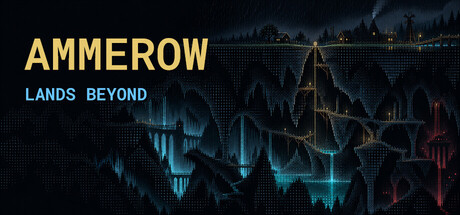
The music in Ammerow: Lands Beyond was created with Claude Compose, a bespoke composition system built for this project. Rather than a generative music model, it works like a tireless studio composer: an AI assistant (Anthropic's Claude) writes and runs code that composes each piece note by note — melody, harmony, counterpoint and orchestration derived from music theory — and performs it through real, licensed virtual instruments in a professional DAW (Ableton Live). It then "listens back" by analysing the rendered audio to refine the balance. No generative audio/music model was used, no AI was trained on other artists' recordings, and no track was produced from a prompt. Every note is placed deliberately, and every piece is directed, reviewed and approved by a human. The result is authored, not generated.
The sound effects are an original, human-directed procedural synthesis library. Claude Code assisted in writing custom Python DSP software and individual cue recipes; every waveform was deterministically rendered from mathematical models and recorded seeds. No recordings, performers, samples, stock audio, sample libraries or generative-audio service were used.
Ammerow is designed primarily as a coloured ASCII game. Selected creature, item and shopkeeper illustrations began as AI-generated source images and are converted through a deterministic ASCII-art pipeline. The optional tile mode is a work-in-progress secondary presentation. Its small atlases were programmatically drawn in a custom SDL application using natural-language Codex direction. No generative-image model, inherited tileset, traced artwork or third-party graphical asset was used.
Some narrative, gameplay data and other player-facing material were also developed with AI assistance under human direction and review.
Some Steam marketing backgrounds were created using OpenAI image-generation tools and then selected, reviewed and combined with deterministic Ammerow branding by the developer.
No AI runs while the game is being played.
Generative AI was used during development to assist with some pre-generated artwork, audio, music, sound effects, and written content. All AI-assisted content was reviewed and edited by the developer before being included in the game. No live-generated AI is used during gameplay.
Game illustrations and some sound effects, as well as part of the text and localization, are created using generative AI tools, then manually refined and validated. No content is generated by AI in real time, and the game design is human-made.
Generative AI tools were used during development to assist with programming, writing in-game dialogue and descriptive text, translation into multiple languages, implementing graphics and sound effects, and creating promotional artwork and descriptions for the Steam store page.
These materials were created and incorporated during development. The game does not use generative AI to create new dialogue, images, or audio during gameplay. The autonomous behavior of residents and monsters, as well as their context-sensitive conversations, is driven by pre-programmed game logic and pre-written dialogue.
Generative AI was used to create the game's artwork, music, voices and sound effects, including store and promotional artwork. The game does not generate AI content during gameplay.
Generative AI tools were used during development to assist with creating and refining a limited number of sprites, images, and sound effects. All resulting assets were reviewed, edited where necessary, and approved before inclusion in the game. The game does not generate AI content during gameplay.
The music for this game has been created with AI through serious prompting and critical listening.
Want to donate your own electric swing music to this game? Contact us on Discord :)
Some pre-generated assets in this game (certain artwork/icons/sound effects) were created with the assistance of AI tools and then reviewed and edited by the developer. No content is generated by AI at runtime.
The story outline, the characters, and the five branching endings were created by hand. On that basis, the script prose, the 357 background illustrations, the soundtrack and the sound effects were generated with AI and individually reviewed by the developer before inclusion; candidates that did not pass were discarded and are not in the game. The English and Japanese translations were produced with AI and spot-checked by the developer. The store artwork and trailer also use AI-generated images.
No AI runs while you play. All content is fixed at release.
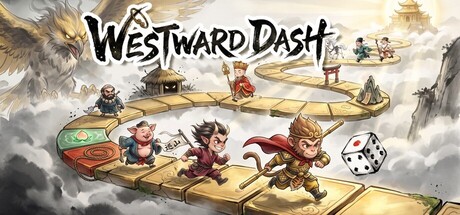
All 2D artwork (characters, board, keeper portraits, medals, and store assets) was created with generative AI tools under the developer's direction and curation. The pipa melody was performed and recorded live by a human musician (the developer's wife); the surrounding arrangement was AI-assisted. Game design, writing, and code are human-authored with AI assistance. Localization into 17 languages was AI-assisted with human review. The game contains no live/runtime AI generation.
Pre-generated content: part of the game's art (backgrounds, character and enemy sprites, portraits, props, key art and capsule images) was created with generative image tools (Google Gemini, PixelLab) and then reviewed, cut, edited and assembled by hand by the developer. Some sound effects were produced with AI audio tools (ElevenLabs). Parts of the source code were written with the assistance of an AI coding assistant (Anthropic Claude) under the developer's direction and review. The story, game design, world, dialogue and puzzles are the developer's own work.
Live-generated content: none. The game does not generate any content with AI while it is running.
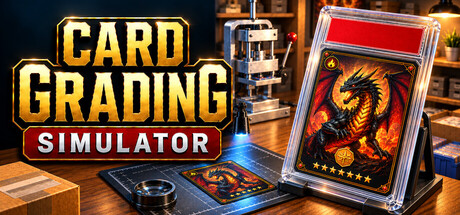
Generative AI tools were used during development to help create card artwork, certain 3D assets, sound effects, and music. These assets are included as pre-made content. The game does not generate AI content during gameplay.
This game uses artwork, audio, and other assets created with generative AI during development. These assets are generated in advance and included in the game installation. Generative AI is also used to create Steam store artwork. The game does not generate AI content during gameplay or connect to external AI services.
Generative tools were used during development to create and refine pre-generated artwork, some 3D assets, textures, audio, cinematic sequences, and store/marketing materials, including translated store descriptions. These assets are included as fixed content. The game does not generate AI content during play and does not connect to a generative AI service.
Artificial Intelligence was used to assist for the art, music, and development as this was built by a single person working a full time job. Your support is appreciated and we understand if this does not align with your values.
Pixel Golf League includes some graphics and sounds that were generated using AI tools. No AI tools are connected to or being used to generate content during gameplay.
Generative AI tools were used during development to create or assist with 3D models, voice audio, and translations/localization. Generative AI was also used to create and edit promotional artwork for the Steam store and library, including capsule images, backgrounds, and logo artwork.
FableBrawl uses pre-generated AI content for Storybook artwork, store artwork, some music and sound effects, and translations. These assets are created during development and shipped as finished files. No content or code is generated by AI during gameplay, and the game does not call an external generative AI service while you play.
Storybook mode art is AI-generated; if you prefer no AI art, you can use Rough Draft mode art. Community Mode is a work-in-progress version supported by the generous donations of our community.
Generative AI was used during development for visual assets, music, and small portions of text, as well as the store artwork. These are pre-generated assets included with the game. No content is generated by AI during play, and the game does not connect to an AI service.
AI Generated Content Disclosure
Generative AI tools were used to create some of the game's visual assets, audio elements, and code during development:
Visuals & Art: Title artwork, in-game graphic assets.
Audio: Background music (BGM) and sound effects (SFX).
Code: Generative AI was used to assist in writing parts of the code.
The background music in this game was pre-generated with a generative AI tool. No AI-generated content is used for visuals, characters, environments, icons, store artwork, or text, and the game does not generate content at runtime or connect to external AI services.
Generative AI tools were used to assist in the creation and refinement of visual assets, music, and voice content. All final assets were selected, edited, adapted, and integrated by the developer. No AI-generated content is created during gameplay.
We use generative AI across all disciplines of game development most often with heavy amounts of human editing. That involves audio and visual art, our logo, and localization. We use it as a productivity tool so we can achieve a higher level of quality, faster, than we would have been able to.
This game utilizes generative AI technologies in the following areas: [Pre-generated Content] Part of BGM: AI-generated audio is temporarily used as placeholder assets during development (to be progressively replaced in future updates). [Real-time Generation during Gameplay] In-Game Text: Dynamic generation of dialogues and narrative text tailored to in-game situations. Character Voice: Real-time speech synthesis for character voices based on generated text. *All real-time generation processes run entirely locally and securely on the player's machine, with no data transmitted to external servers. Furthermore, there is no feature allowing players to freely input custom text or prompts.
Generative AI was used during development for some visual and audio assets.
During gameplay, narrative text and character dialogue are generated in real time by a third-party AI model selected and configured by the player.
Generative AI tools were used extensively during development to assist with original fictional adult character artwork, pool-hall environments, UI decoration, video and animation assets, background music, ambient audio, sound effects, worldbuilding, character concepts, dialogue, gameplay descriptions, localization, and promotional copy. AI tools also assisted with gameplay ideation, balance simulation, programming, debugging, and test design.
All player-facing AI-assisted content was generated before release, then selected, edited, integrated, and reviewed by the developer before being shipped as fixed game assets. The developer remains responsible for the final content.
The game does not use generative AI at runtime, does not generate images, audio, text, or dialogue during play, and does not submit player input, save data, or multiplayer content to any AI service.
We use AI to assist with ideation for some art assets, music, and programming, as well as to support asset creation during the prototyping stage. All final assets are manually recreated, arranged, refined, and exported by our team.
All visual artwork used in the game was created directly by the developer.
Generative AI tools were used as part of the production process for certain audio assets and for translation/localization assistance. AI-generated or AI-assisted outputs were reviewed and edited by the developer before being included in the final game.
Generative AI was used during development to create some visual artwork and background music. The generated content was reviewed by the development team before being included in the game. The game does not generate AI content during gameplay.
This game uses generative AI tools to assist in the creation of pre-rendered visual assets (concept art, textures, background illustrations, key visuals), sound effects, and background music. All AI-generated content is reviewed, edited, and curated by the developer before being included in the final build. No AI generation occurs during gameplay, and no external AI services are connected at runtime.
During the development, we may use AI-assisted tools to help create procedural 3D models, environments, interface elements, animations, and sound effects. These tools were used under the developer’s direction, and in every case the end result reflects their creativity.
All game content was created using generative AI, including visuals, 3D models, textures, music, sound effects, and text. Generative AI was also used to create the store descriptions and marketing materials.
The game does not generate AI content during play or connect to external AI services.
Generative AI was used during development to create or refine some of the game’s visual assets and music, and to assist with localization. These assets were selected by the developer and edited and adapted as needed. The game does not generate AI content in real time during gameplay.
Generative AI tools were used throughout development: the game's code and its in-game text, the paintings, achievement icons and interface art, the 3D models, and the music and sound effects. Everything was reviewed, edited and tested, and ships as fixed content. Nothing is generated while you play: the game runs no model and makes no network call.
We used AI tools to speed up parts of our creative workflow, including artwork, music, text, and translations. Our creative vision guided the process, and we selected and refined the visuals to match Hold the Coop!’s cartoon style.
Generative AI is currently used during development for temporary placeholder music and artwork, including some Steam store page and marketing materials. These assets are temporary and will be replaced before release. The final version of the game and its final store and marketing materials will not use AI-generated content.
The music in Ammerow: Lands Beyond was created with Claude Compose, a bespoke composition system built for this project. Rather than a generative music model, it works like a tireless studio composer: an AI assistant (Anthropic's Claude) writes and runs code that composes each piece note by note — melody, harmony, counterpoint and orchestration derived from music theory — and performs it through real, licensed virtual instruments in a professional DAW (Ableton Live). It then "listens back" by analysing the rendered audio to refine the balance. No generative audio/music model was used, no AI was trained on other artists' recordings, and no track was produced from a prompt. Every note is placed deliberately, and every piece is directed, reviewed and approved by a human. The result is authored, not generated.
The sound effects are an original, human-directed procedural synthesis library. Claude Code assisted in writing custom Python DSP software and individual cue recipes; every waveform was deterministically rendered from mathematical models and recorded seeds. No recordings, performers, samples, stock audio, sample libraries or generative-audio service were used.
Ammerow is designed primarily as a coloured ASCII game. Selected creature, item and shopkeeper illustrations began as AI-generated source images and are converted through a deterministic ASCII-art pipeline. The optional tile mode is a work-in-progress secondary presentation. Its small atlases were programmatically drawn in a custom SDL application using natural-language Codex direction. No generative-image model, inherited tileset, traced artwork or third-party graphical asset was used.
Some narrative, gameplay data and other player-facing material were also developed with AI assistance under human direction and review.
Some Steam marketing backgrounds were created using OpenAI image-generation tools and then selected, reviewed and combined with deterministic Ammerow branding by the developer.
No AI runs while the game is being played.
Generative AI was used during development to assist with some pre-generated artwork, audio, music, sound effects, and written content. All AI-assisted content was reviewed and edited by the developer before being included in the game. No live-generated AI is used during gameplay.
Game illustrations and some sound effects, as well as part of the text and localization, are created using generative AI tools, then manually refined and validated. No content is generated by AI in real time, and the game design is human-made.
Generative AI tools were used during development to assist with programming, writing in-game dialogue and descriptive text, translation into multiple languages, implementing graphics and sound effects, and creating promotional artwork and descriptions for the Steam store page.
These materials were created and incorporated during development. The game does not use generative AI to create new dialogue, images, or audio during gameplay. The autonomous behavior of residents and monsters, as well as their context-sensitive conversations, is driven by pre-programmed game logic and pre-written dialogue.
Generative AI was used to create the game's artwork, music, voices and sound effects, including store and promotional artwork. The game does not generate AI content during gameplay.
Generative AI tools were used during development to assist with creating and refining a limited number of sprites, images, and sound effects. All resulting assets were reviewed, edited where necessary, and approved before inclusion in the game. The game does not generate AI content during gameplay.
The music for this game has been created with AI through serious prompting and critical listening.
Want to donate your own electric swing music to this game? Contact us on Discord :)
Some pre-generated assets in this game (certain artwork/icons/sound effects) were created with the assistance of AI tools and then reviewed and edited by the developer. No content is generated by AI at runtime.
The story outline, the characters, and the five branching endings were created by hand. On that basis, the script prose, the 357 background illustrations, the soundtrack and the sound effects were generated with AI and individually reviewed by the developer before inclusion; candidates that did not pass were discarded and are not in the game. The English and Japanese translations were produced with AI and spot-checked by the developer. The store artwork and trailer also use AI-generated images.
No AI runs while you play. All content is fixed at release.
All 2D artwork (characters, board, keeper portraits, medals, and store assets) was created with generative AI tools under the developer's direction and curation. The pipa melody was performed and recorded live by a human musician (the developer's wife); the surrounding arrangement was AI-assisted. Game design, writing, and code are human-authored with AI assistance. Localization into 17 languages was AI-assisted with human review. The game contains no live/runtime AI generation.
Pre-generated content: part of the game's art (backgrounds, character and enemy sprites, portraits, props, key art and capsule images) was created with generative image tools (Google Gemini, PixelLab) and then reviewed, cut, edited and assembled by hand by the developer. Some sound effects were produced with AI audio tools (ElevenLabs). Parts of the source code were written with the assistance of an AI coding assistant (Anthropic Claude) under the developer's direction and review. The story, game design, world, dialogue and puzzles are the developer's own work.
Live-generated content: none. The game does not generate any content with AI while it is running.
Generative AI tools were used during development to help create card artwork, certain 3D assets, sound effects, and music. These assets are included as pre-made content. The game does not generate AI content during gameplay.
This game uses artwork, audio, and other assets created with generative AI during development. These assets are generated in advance and included in the game installation. Generative AI is also used to create Steam store artwork. The game does not generate AI content during gameplay or connect to external AI services.
Generative tools were used during development to create and refine pre-generated artwork, some 3D assets, textures, audio, cinematic sequences, and store/marketing materials, including translated store descriptions. These assets are included as fixed content. The game does not generate AI content during play and does not connect to a generative AI service.
Artificial Intelligence was used to assist for the art, music, and development as this was built by a single person working a full time job. Your support is appreciated and we understand if this does not align with your values.
Pixel Golf League includes some graphics and sounds that were generated using AI tools. No AI tools are connected to or being used to generate content during gameplay.
Generative AI tools were used during development to create or assist with 3D models, voice audio, and translations/localization. Generative AI was also used to create and edit promotional artwork for the Steam store and library, including capsule images, backgrounds, and logo artwork.
FableBrawl uses pre-generated AI content for Storybook artwork, store artwork, some music and sound effects, and translations. These assets are created during development and shipped as finished files. No content or code is generated by AI during gameplay, and the game does not call an external generative AI service while you play.
Storybook mode art is AI-generated; if you prefer no AI art, you can use Rough Draft mode art. Community Mode is a work-in-progress version supported by the generous donations of our community.
Generative AI was used during development for visual assets, music, and small portions of text, as well as the store artwork. These are pre-generated assets included with the game. No content is generated by AI during play, and the game does not connect to an AI service.
AI Generated Content Disclosure
Generative AI tools were used to create some of the game's visual assets, audio elements, and code during development:
Visuals & Art: Title artwork, in-game graphic assets.
Audio: Background music (BGM) and sound effects (SFX).
Code: Generative AI was used to assist in writing parts of the code.
The background music in this game was pre-generated with a generative AI tool. No AI-generated content is used for visuals, characters, environments, icons, store artwork, or text, and the game does not generate content at runtime or connect to external AI services.
Generative AI tools were used to assist in the creation and refinement of visual assets, music, and voice content. All final assets were selected, edited, adapted, and integrated by the developer. No AI-generated content is created during gameplay.
We use generative AI across all disciplines of game development most often with heavy amounts of human editing. That involves audio and visual art, our logo, and localization. We use it as a productivity tool so we can achieve a higher level of quality, faster, than we would have been able to.
This game utilizes generative AI technologies in the following areas: [Pre-generated Content] Part of BGM: AI-generated audio is temporarily used as placeholder assets during development (to be progressively replaced in future updates). [Real-time Generation during Gameplay] In-Game Text: Dynamic generation of dialogues and narrative text tailored to in-game situations. Character Voice: Real-time speech synthesis for character voices based on generated text. *All real-time generation processes run entirely locally and securely on the player's machine, with no data transmitted to external servers. Furthermore, there is no feature allowing players to freely input custom text or prompts.
Generative AI was used during development for some visual and audio assets.
During gameplay, narrative text and character dialogue are generated in real time by a third-party AI model selected and configured by the player.