Public Steam disclosure research25,394 disclosures tracked
Where do games disclose AI use?
Search developers’ Steam disclosures, compare classified AI use across
games, and follow recorded changes.
This index adds cross-game classifications and statistics to
statements published on individual store pages.
Groups reflect automatic analysis of public disclosures; mature records are excluded. These counts do not measure AI use across all of Steam.
Missing or unclear statements cannot establish whether a game uses AI.
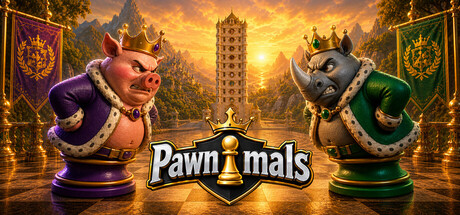
Pawnimals uses generative AI as part of its development and content creation process. Generative AI tools were used to assist with the creation and refinement of some visual assets, character artwork, animations, voice/audio content, and other creative elements in the game.
AI-generated content is reviewed, edited, directed, and integrated by the developer to maintain a consistent visual style, character design, and overall player experience. Generative AI is used as a production tool and does not generate unrestricted content based on player prompts during normal gameplay.
This game uses generative AI in the following ways:
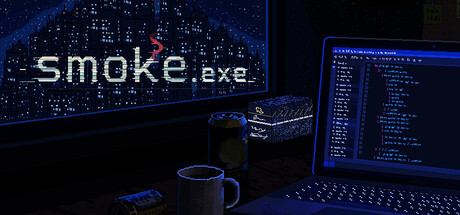
Music — tracks were built from AI-generated material, then edited and arranged by hand.
Title artwork — an AI-generated rough was used as reference and redrawn by hand as pixel art.
English localization — the English text was machine-translated and then reviewed and corrected by the developer.
Code — parts of the game's code were written with AI assistance.
Everything else is made by the developer by hand: all 145 in-game icons, every UI image, the cigarette package illustrations, and the achievement icons.
This game’s player-facing art, writing, and audio were created with generative AI and then selected, edited, and directed by the developer. Store images and trailers use the same pre-generated assets. No content is generated live during gameplay.
I use AI tools mostly for generating code and audio clips. I also use AI at times for image-editing. I write all the dialogue for the characters - but all the voices inside the game are generated by AI.
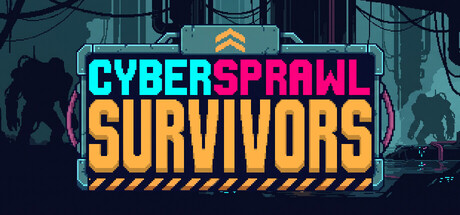
CyberSprawl: Survivors contains pre-generated visual art, written content, sound effects, and other assets created or assisted with generative AI tools, then curated and integrated by the development team. Generative AI also assists development, including code. No AI generates content during gameplay, and the game does not connect to external AI services while you play.
Some 3D models, UI assets and background music of the game were initially created with generative AI tools, and then fully revised, refined and adjusted manually by our development team.
Some artwork and promotional images used on the Steam store page were created with assistance from generative AI and subsequently reviewed and approved by humans. The game’s narrative voice-over uses pre-generated text-to-speech audio. No content is generated in real time during gameplay.
Generative AI tools were used during development to assist in the creation and refinement of selected visual, audio and promotional assets.
All AI-assisted content is reviewed and curated by the development team before being included in the game or its marketing materials.
Some of this game's content was created with the assistance of generative AI tools during development: portions of the game's code, some text, and music tracks, and is reviewed by the developer before shipping. The game does not generate AI content at runtime.
Vectorline uses on-device AI for its optional voice features. When you speak commands to aircraft, a local speech-recognition model transcribes your voice into ATC instructions. Pilot and controller radio readbacks are spoken aloud using a local neural text-to-speech model. Both models run entirely on your own machine — no audio, text, or data is ever sent to an external server, and no internet connection is required for these features. The spoken content is limited to standard air-traffic-control phraseology generated by the simulator itself.
You can disable these features in the settings without impacting gameplay.
The game uses pre-generated AI-generated voice acting for character dialogue, narration, and promotional trailer voice-over.
All AI-generated voice content is produced in advance and reviewed by the development team before being included in the game or its Steam store assets. No AI content is generated live while the game is running.
I (Sean) use AI coding assistants: GitHub Copilot and Claude Code. I've written software for years and I teach games programming at university, and I use AI tools the way I use a profiler or a compiler. They helped build web tools Dave and I use to balance the ecosystem across long simulations, they're very good at finding edge-case bugs (I'm looking at you, pathing system), and they write the boilerplate for things like save states and UI. I never ship code I haven't read and thoroughly tested.
No content in this game is AI-generated, and no generative AI runs while you play.
Every sound, art and music asset in this game was made by a human. The game started out as the idea of “Asset Safari” around the concept of buying sprite packs from artists, which is what we have done. The music, sound and writing is also all human generated.
This game does not use live-generated AI during gameplay.
Some pre-generated content in the game was created with assistance from generative AI tools during development, including portions of written text, game data, music arrangement ideas, and pixel-art implementation support. All such content was reviewed, edited, and integrated by the developer before being included in the game.
Pre-generated AI content: TROPHY FLEET's visual assets and its synthetic character voice performances were produced using AI image and voice generation as a starting point during development. Every generated asset was then selected, chroma-keyed against a solid key background, retouched, resized and hand-aligned by the developer before shipping. Boss artwork is collision-aligned to gameplay: each visible weak point on a boss sprite corresponds to an actual targetable hitbox at that exact position. Source masters and shipped runtime assets are both retained in the project repository.
The soundtrack is not AI-generated. It consists of 39 CC0-licensed music tracks, curated per world and normalized to -16 LUFS, with full attribution shipped in the game's THIRD_PARTY_NOTICES file.
All game design, code, level authoring, enemy behaviour, boss mechanics and balance systems are the developer's own work.
The game generates no content while it is running. It sends no player data or prompts to any AI service or any other service, requires no network connection, and functions fully offline.
This game uses AI-generated images for some of its backgrounds, obstacles, collectible items, UI, fonts, logo, and visual effects, and an AI-generated sound effect on the results screen. Character designs were primarily hand-drawn by REBORNSMITH's designers, with generative AI used as an assistive tool in places. Generative AI tools were also used for some of the background music and parts of the promotional trailer. All AI-assisted content was reviewed and edited by our team. The game does not generate any images, audio, or text with AI during gameplay.
Generative AI tools were used to assist in the creation or editing of certain visual assets, promotional materials, cinematic elements, draft copy, and audio elements.
All final outputs were reviewed and selected by the development team, and were revised where necessary before being incorporated into the game and related materials.
Generative AI is not used during gameplay, and the game does not connect to any generative AI services.
Some character voices in the game were generated using AI voice technology. AI was used only to generate pre-recorded character dialogue. No AI-generated content is created dynamically during gameplay.
The original game design, mechanics, and core concept were created by the developer. However, the majority of in-game assets—including code, 3D visuals, sound effects, and UI elements—were generated or assisted by generative AI tools. The developer curated, edited, assembled, and implemented all AI-generated content to realize the intended gameplay experience.
Pre-generated content only. No AI runs while the game is played.
Some monster and boss sprites were generated with PixelLab (an AI pixel-art tool) and then hand-edited, cut into animation strips and cleaned up by the developer. A few background art pieces, such as arcade machine sheets and map-card thumbnails, were generated with Google Gemini and then reworked by hand. The music soundtrack was generated with Suno on a paid licence. Some store page art may be based on these assets.
All gameplay code, the level design, the rest of the sprite art, UI, sound effects and all text were made by the developer without generative AI. The game does not generate any content at runtime.
Some of the game's 2D art, character voice acting, and localization content utilized generative AI assistance during production. All related content was generated and manually reviewed before release; no generative AI-generated content will be used during gameplay.
The illustrations in this game (Battle Card art, faction emblems, Commander portraits and board imagery) were generated with Midjourney, working from the designer's own concept art and art direction. Each image was then selected, tone-matched to the card stock, fitted and composited into the game's frames.
Card names, card text and the written rules were drafted with the assistance of a large language model, working from the designer's original hand-written rules and card designs, then edited and finalized by hand. The music and sound effects were generated with Suno. Voice recordings were performed by the creator.
The game itself is a person's work: the rules, the mechanics, the economy and the balance decisions were designed by hand over many revisions, with AI used as a collaborator rather than an author. The physical board game came first.
No content is generated by AI while you play. The computer opponents are conventional rule-based code, not a generative model.
Generative AI was used during development to create or assist with code, 2D art, UI assets, icons, music, sound effects, narrative text, localization, and store marketing materials. All AI-assisted content was reviewed, selected, modified, and integrated by the developer before being included in the game. The game does not generate AI content during gameplay and does not connect to external AI services.
We make extensive use of AI throughout this project, from coding and generating image/sound assets to planning, story concepts, and daily life improvements. We truly appreciate your understanding and support. Thanks a ton!
Generative AI tools were used during development to create some pre-generated visual artwork used in marketing/store assets and some pre-generated background music used in the game. The game does not use generative AI to create content during gameplay.
This game uses AI-assisted tools during development, limited exclusively to programming assistance, multilingual translation assistance, drafting assistance for written store page copy, and a synthesized voice used for the narration of our promotional videos.
The narration script is written by the development team. Only the voice reading it is synthesized, and it appears in promotional videos only. It is not part of the game, and no AI-generated output is integrated into the game itself. All content is manually reviewed, edited, integrated, proofread, and tested by the development team before use.
AI is not used to create characters, character illustrations, character-related artwork, animations, music, sound effects, narrative, or other core creative content. Our sound effects are public domain field recordings, and the music in our videos is licensed from human authors. The game does not generate content in real time while running, nor does it connect to external AI services to provide generative features to players.
Some assets in this game were created with the help of generative AI: background and character art, UI and achievement icons, music and sound effects, and promotional material such as the trailer. All of them were selected, edited and checked by hand before use. The script and all in-game text were written by a human. The game performs no AI generation at runtime and connects to no external AI service.
Generative AI tools were used to create content in this game, including art, sound, in-game text, and the copy on this store page. All of it is reviewed by the developer before release. Nothing is generated by AI while you play.
This game uses AI-assisted tools during development to create and refine some of its visual and audio assets. AI is not used to generate content while the game is running. All assets are reviewed and polished by our team before they appear in the game, ensuring a consistent and family-friendly experience.
This game uses generative AI in the following ways.All of this content was created ahead of time — nothing is generated by AI while the game is running.- Draw-along song lyrics — generative AI produces the first drafts, and the developer reviews and hand-picks every song- The stroke order of each model drawing (its line-coordinate data) — same as above- Singing voices — synthesized with VOICEVOX (Shikoku Metan / Namine Ritsu) and Synthesizer V (Sheena 2, for the English songs), and shipped as pre-rendered audio files[What we don't do]- No image-generation AI is used. Every model drawing is rendered as lines from coordinate data- The game never connects to online AI services during play (the only network traffic is for online matches)
AI content for audio sound effects on player strike attacks normal slash sounds for punches and kicks & wording that completes mission. Game Cover marketing material
Pawnimals uses generative AI as part of its development and content creation process. Generative AI tools were used to assist with the creation and refinement of some visual assets, character artwork, animations, voice/audio content, and other creative elements in the game.
AI-generated content is reviewed, edited, directed, and integrated by the developer to maintain a consistent visual style, character design, and overall player experience. Generative AI is used as a production tool and does not generate unrestricted content based on player prompts during normal gameplay.
This game uses generative AI in the following ways:
Music — tracks were built from AI-generated material, then edited and arranged by hand.
Title artwork — an AI-generated rough was used as reference and redrawn by hand as pixel art.
English localization — the English text was machine-translated and then reviewed and corrected by the developer.
Code — parts of the game's code were written with AI assistance.
Everything else is made by the developer by hand: all 145 in-game icons, every UI image, the cigarette package illustrations, and the achievement icons.
This game’s player-facing art, writing, and audio were created with generative AI and then selected, edited, and directed by the developer. Store images and trailers use the same pre-generated assets. No content is generated live during gameplay.
I use AI tools mostly for generating code and audio clips. I also use AI at times for image-editing. I write all the dialogue for the characters - but all the voices inside the game are generated by AI.
CyberSprawl: Survivors contains pre-generated visual art, written content, sound effects, and other assets created or assisted with generative AI tools, then curated and integrated by the development team. Generative AI also assists development, including code. No AI generates content during gameplay, and the game does not connect to external AI services while you play.
Some 3D models, UI assets and background music of the game were initially created with generative AI tools, and then fully revised, refined and adjusted manually by our development team.
Some artwork and promotional images used on the Steam store page were created with assistance from generative AI and subsequently reviewed and approved by humans. The game’s narrative voice-over uses pre-generated text-to-speech audio. No content is generated in real time during gameplay.
Generative AI tools were used during development to assist in the creation and refinement of selected visual, audio and promotional assets.
All AI-assisted content is reviewed and curated by the development team before being included in the game or its marketing materials.
Some of this game's content was created with the assistance of generative AI tools during development: portions of the game's code, some text, and music tracks, and is reviewed by the developer before shipping. The game does not generate AI content at runtime.
Vectorline uses on-device AI for its optional voice features. When you speak commands to aircraft, a local speech-recognition model transcribes your voice into ATC instructions. Pilot and controller radio readbacks are spoken aloud using a local neural text-to-speech model. Both models run entirely on your own machine — no audio, text, or data is ever sent to an external server, and no internet connection is required for these features. The spoken content is limited to standard air-traffic-control phraseology generated by the simulator itself.
You can disable these features in the settings without impacting gameplay.
The game uses pre-generated AI-generated voice acting for character dialogue, narration, and promotional trailer voice-over.
All AI-generated voice content is produced in advance and reviewed by the development team before being included in the game or its Steam store assets. No AI content is generated live while the game is running.
I (Sean) use AI coding assistants: GitHub Copilot and Claude Code. I've written software for years and I teach games programming at university, and I use AI tools the way I use a profiler or a compiler. They helped build web tools Dave and I use to balance the ecosystem across long simulations, they're very good at finding edge-case bugs (I'm looking at you, pathing system), and they write the boilerplate for things like save states and UI. I never ship code I haven't read and thoroughly tested.
No content in this game is AI-generated, and no generative AI runs while you play.
Every sound, art and music asset in this game was made by a human. The game started out as the idea of “Asset Safari” around the concept of buying sprite packs from artists, which is what we have done. The music, sound and writing is also all human generated.
This game does not use live-generated AI during gameplay.
Some pre-generated content in the game was created with assistance from generative AI tools during development, including portions of written text, game data, music arrangement ideas, and pixel-art implementation support. All such content was reviewed, edited, and integrated by the developer before being included in the game.
Pre-generated AI content: TROPHY FLEET's visual assets and its synthetic character voice performances were produced using AI image and voice generation as a starting point during development. Every generated asset was then selected, chroma-keyed against a solid key background, retouched, resized and hand-aligned by the developer before shipping. Boss artwork is collision-aligned to gameplay: each visible weak point on a boss sprite corresponds to an actual targetable hitbox at that exact position. Source masters and shipped runtime assets are both retained in the project repository.
The soundtrack is not AI-generated. It consists of 39 CC0-licensed music tracks, curated per world and normalized to -16 LUFS, with full attribution shipped in the game's THIRD_PARTY_NOTICES file.
All game design, code, level authoring, enemy behaviour, boss mechanics and balance systems are the developer's own work.
The game generates no content while it is running. It sends no player data or prompts to any AI service or any other service, requires no network connection, and functions fully offline.
This game uses AI-generated images for some of its backgrounds, obstacles, collectible items, UI, fonts, logo, and visual effects, and an AI-generated sound effect on the results screen. Character designs were primarily hand-drawn by REBORNSMITH's designers, with generative AI used as an assistive tool in places. Generative AI tools were also used for some of the background music and parts of the promotional trailer. All AI-assisted content was reviewed and edited by our team. The game does not generate any images, audio, or text with AI during gameplay.
Generative AI tools were used to assist in the creation or editing of certain visual assets, promotional materials, cinematic elements, draft copy, and audio elements.
All final outputs were reviewed and selected by the development team, and were revised where necessary before being incorporated into the game and related materials.
Generative AI is not used during gameplay, and the game does not connect to any generative AI services.
Some character voices in the game were generated using AI voice technology. AI was used only to generate pre-recorded character dialogue. No AI-generated content is created dynamically during gameplay.
The original game design, mechanics, and core concept were created by the developer. However, the majority of in-game assets—including code, 3D visuals, sound effects, and UI elements—were generated or assisted by generative AI tools. The developer curated, edited, assembled, and implemented all AI-generated content to realize the intended gameplay experience.
Pre-generated content only. No AI runs while the game is played.
Some monster and boss sprites were generated with PixelLab (an AI pixel-art tool) and then hand-edited, cut into animation strips and cleaned up by the developer. A few background art pieces, such as arcade machine sheets and map-card thumbnails, were generated with Google Gemini and then reworked by hand. The music soundtrack was generated with Suno on a paid licence. Some store page art may be based on these assets.
All gameplay code, the level design, the rest of the sprite art, UI, sound effects and all text were made by the developer without generative AI. The game does not generate any content at runtime.
Some of the game's 2D art, character voice acting, and localization content utilized generative AI assistance during production. All related content was generated and manually reviewed before release; no generative AI-generated content will be used during gameplay.
The illustrations in this game (Battle Card art, faction emblems, Commander portraits and board imagery) were generated with Midjourney, working from the designer's own concept art and art direction. Each image was then selected, tone-matched to the card stock, fitted and composited into the game's frames.
Card names, card text and the written rules were drafted with the assistance of a large language model, working from the designer's original hand-written rules and card designs, then edited and finalized by hand. The music and sound effects were generated with Suno. Voice recordings were performed by the creator.
The game itself is a person's work: the rules, the mechanics, the economy and the balance decisions were designed by hand over many revisions, with AI used as a collaborator rather than an author. The physical board game came first.
No content is generated by AI while you play. The computer opponents are conventional rule-based code, not a generative model.
Generative AI was used during development to create or assist with code, 2D art, UI assets, icons, music, sound effects, narrative text, localization, and store marketing materials. All AI-assisted content was reviewed, selected, modified, and integrated by the developer before being included in the game. The game does not generate AI content during gameplay and does not connect to external AI services.
We make extensive use of AI throughout this project, from coding and generating image/sound assets to planning, story concepts, and daily life improvements. We truly appreciate your understanding and support. Thanks a ton!
Generative AI tools were used during development to create some pre-generated visual artwork used in marketing/store assets and some pre-generated background music used in the game. The game does not use generative AI to create content during gameplay.
This game uses AI-assisted tools during development, limited exclusively to programming assistance, multilingual translation assistance, drafting assistance for written store page copy, and a synthesized voice used for the narration of our promotional videos.
The narration script is written by the development team. Only the voice reading it is synthesized, and it appears in promotional videos only. It is not part of the game, and no AI-generated output is integrated into the game itself. All content is manually reviewed, edited, integrated, proofread, and tested by the development team before use.
AI is not used to create characters, character illustrations, character-related artwork, animations, music, sound effects, narrative, or other core creative content. Our sound effects are public domain field recordings, and the music in our videos is licensed from human authors. The game does not generate content in real time while running, nor does it connect to external AI services to provide generative features to players.
Some assets in this game were created with the help of generative AI: background and character art, UI and achievement icons, music and sound effects, and promotional material such as the trailer. All of them were selected, edited and checked by hand before use. The script and all in-game text were written by a human. The game performs no AI generation at runtime and connects to no external AI service.
Generative AI tools were used to create content in this game, including art, sound, in-game text, and the copy on this store page. All of it is reviewed by the developer before release. Nothing is generated by AI while you play.
This game uses AI-assisted tools during development to create and refine some of its visual and audio assets. AI is not used to generate content while the game is running. All assets are reviewed and polished by our team before they appear in the game, ensuring a consistent and family-friendly experience.
This game uses generative AI in the following ways.All of this content was created ahead of time — nothing is generated by AI while the game is running.- Draw-along song lyrics — generative AI produces the first drafts, and the developer reviews and hand-picks every song- The stroke order of each model drawing (its line-coordinate data) — same as above- Singing voices — synthesized with VOICEVOX (Shikoku Metan / Namine Ritsu) and Synthesizer V (Sheena 2, for the English songs), and shipped as pre-rendered audio files[What we don't do]- No image-generation AI is used. Every model drawing is rendered as lines from coordinate data- The game never connects to online AI services during play (the only network traffic is for online matches)
AI content for audio sound effects on player strike attacks normal slash sounds for punches and kicks & wording that completes mission. Game Cover marketing material