Public Steam disclosure research25,508 disclosures tracked
Where do games disclose AI use?
Search developers’ Steam disclosures, compare classified AI use across
games, and follow recorded changes.
This index adds cross-game classifications and statistics to
statements published on individual store pages.
Groups reflect automatic analysis of public disclosures; mature records are excluded. These counts do not measure AI use across all of Steam.
Missing or unclear statements cannot establish whether a game uses AI.
AI Was used to generate the page description, it was also used to test certain parts of the game and help debug a few problems, there was partial AI usage also for the game music, while the music itself was created in FL Studio there was usage to generate some of the variants of the tracks
Root Cause is utilizes AI assets in the game. This content, when utilized, is generated during development, then curated, edited, and committed to the project before release. Nothing is generated while the game is running.
Items that may be generated:
Illustrated art.
UI/Interfaces
Icon Sets
Sounds and Music
Dialogue, case briefings, case content, and interface copy
The visual art in Gearbound is made with PixelLab, an AI pixel-art tool. Every sprite, animation, tileset, background, prop, interface element and piece of marketing art was generated with PixelLab and then directed, edited and assembled by us.
The music and sound effects are rendered by synthesis scripts that were written with AI assistance. No generative audio model was used, and nothing was sourced from a music-generation service.
Nothing is generated by AI while you play. Every asset is finished and baked into the build before it ships, and the game makes no AI calls at runtime.
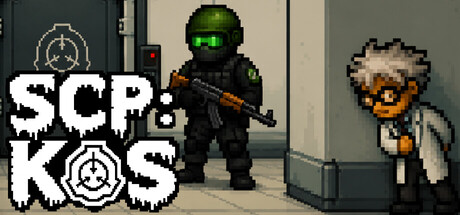
Generative AI was used to create in-game CCTV camera footage images and English voiceovers.
All AI-generated assets have been reviewed and edited to fit the game's atmosphere and quality standards.
Music and sound effects were AI-generated (Suno / ElevenLabs) and edited by the developer. AI (Claude Code) was also used as a coding assistant during development. Visual assets are licensed/purchased assets and are not AI-generated. No AI content is generated live during gameplay all content is fixed and authored before release.
Generative AI tools were used to assist in the creation of some artwork, store page graphics, 3D assets, and audio content. No generative AI is used to generate content live during gameplay.
This game utilizes pre-generated AI tools to create SFXs, music, UI images, texts, and one 3D model. Some of which are edited and all of which are selected with care.
Pre-generated only. Nothing is generated live while the game runs, and the game makes no network calls of any kind.
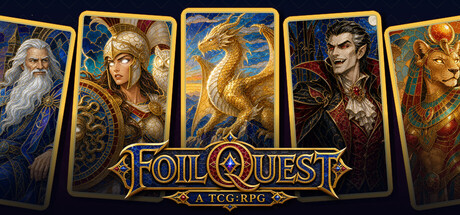
2D card illustrations were produced with an AI image tool from hand-written art-direction prompts, then cropped, recoloured and composited by hand into the game's painted card frames. A small number of 3D prop meshes were produced with an image-to-3D model (Microsoft TRELLIS, MIT licensed) and edited before use; most world geometry is built procedurally in code rather than generated. Ambient beds and music were produced with an AI music tool against a fixed written spec (key of D, 72 BPM, fades in from silence, no climax) and are mixed and crossfaded by the game's own audio code.
All code, game design, UI layout, in-game text and store text are human-authored. Some combat sound effects are CC0 samples from Freesound.
No player data is sent to any AI service.
Some assets and code in Angkor were created with the assistance of generative AI tools, including 2D art, sound effects, portions of the game's code, and some in-game text. All AI-assisted content was reviewed, edited, and integrated by a human developer. Angkor does not generate any content live during gameplay.
Dashboard Engine uses AI only at runtime, on your own device, and bundles no pre-generated AI content.
On-device neural text-to-speech (installed by default): the app includes neural TTS voices (MeloTTS and Kokoro) that synthesize spoken audio from text locally on your PC. An English voice is bundled and installed by default; other languages download on demand. These voices produce speech at runtime — for the assistant's replies, spoken system alerts, and voice previews. They are used purely as speech output: a "voice profile" is a small set of tuning settings that reference a licensed base voice, and the app stores or uploads no voice recordings of any kind.
Optional AI assistant (off by default): if you turn it on, you connect it to a language model you run locally on your own machine or local network (for example Ollama or LM Studio). Your typed messages are sent to that local model to generate conversational replies in real time, which can be read aloud by the on-device TTS above. There is no cloud AI service, account, or API key — nothing leaves your PC.
All AI output is generated live from your own input and your own local models, so it is not authored or reviewed by the developer. No AI-generated content is pre-created or bundled with the app.
Cosmo Corgis is designed and directed by one person. During development, AI tools were used as a production assistant — helping write and test the game's code and assisting with portions of the 3D asset work, always under the developer's direction. The music and sound effects were generated with AI tools. Every design decision, and the game's look and feel, are the developer's own. Nothing is generated by AI while you play: everything in the game ships fixed and tested.
Some visual assets and background music included in this game were created using generative AI tools and have been reviewed, edited, and integrated by the developer.
Pregenerated AI audio tools were used during development to generate character voice lines and background music tracks. All visual art, graphics, puzzle task and animations were created by hand without generative AI.
DriveGear includes some pre-generated visual and audio assets created with AI tools. These assets were selected and edited by the developer and ship as fixed content. No content is generated by AI during gameplay.
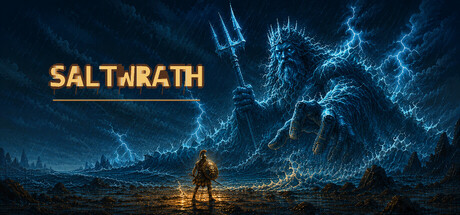
Some of SALTWRATH's audio and store artwork was created using generative AI tools and then edited by hand. The music and sound effects were generated with Suno, then trimmed, mixed and levelled manually before being used in the game. Some store page and capsule artwork was generated with an AI image tool and edited before use.
The game itself does not use generative AI while you play. Nothing is generated live during a run, no content changes between playthroughs because of AI, and no player input is ever sent to an AI service.
This game uses generative AI as a production tool for certain visual art and music assets. All AI-assisted content has been reviewed and refined by the developer. No generative AI is used during gameplay. All puzzles, investigation mechanics, and gameplay systems are designed and implemented by the developer.
This game uses generative AI during development to create some image assets, music assets, and text drafts. All generated content was reviewed by the developer and edited or processed as necessary before being included in the game. The game does not generate content using generative AI during gameplay.
As a solo developer, this game utilizes generative AI tools to assist in the creation of certain assets—including game dialogue, artwork, and audio elements—which are then carefully edited, refined, and polished by the developer.
Some of this game's assets were made with generative AI tools: the music, the store artwork, and the French translation. Everything ships as fixed files that were generated, chosen, and edited by the developer. Nothing is generated while you play, and the game never connects to an AI service.
This game is made by a single dev, and sold for a fair price. In order to do that this dev needed the help of AI. So some pre-rendered assets in this game were created with the help of generative AI tools, always under my direction and with every asset reviewed by me the developer: certain illustrations, backdrops, and UI art; some music tracks and sound effects; and character voice lines generated via text-to-speech from scripts written by me the developer. The game design, the gameplay, physics, and large parts of the code are entirely human-made, and no AI content is generated at runtime.
This game uses AI-generated audio effects (via ElevenLabs) for a limited set of sound effects, layered and processed alongside licensed library sounds. As a solo developer on a tight budget, this let me create specific, bespoke sounds without the cost of a full custom audio pack for assets that are only used a handful of times.
Some of these may be replaced with human-composed audio as the game develops.
Generative AI tools were used during development to assist in creating certain environmental textures and ambient sound effects to enhance the game's atmosphere. All generated assets were reviewed and integrated manually to fit the retro aesthetic of the game.
Generative AI tools were used during the development of ScrapBound to assist with the creation of some visual and audio assets. AI-generated imagery was used as a starting point for various game assets, which were then modified, edited, and integrated to fit the game's visual style. Many of these assets will over time be replaced as the development of the game continues.
Some assets in Starfort, including selected voice lines, artwork, and marketing materials, were created with the help of generative AI tools during development. All such content was reviewed, edited, curated, and finalized by the developer and is pre-generated. Starfort does not generate content during gameplay or connect to external AI services.
Some of the artwork in this game — including bumper, ball, table and mark sprites — was created with AI-assisted pixel art tools and then reviewed, edited and assembled by hand. The world and boss music comes from licensed artists who state that they work with AI assistance; the sound effects are not AI-generated. Parts of the source code were written with AI assistance. No content is generated by AI while playing.
AI tools were used during the development of this game to assist with programming, and the creation of some sound effects and UI images. All AI-assisted content was reviewed and edited by the developer before being incorporated into the game.
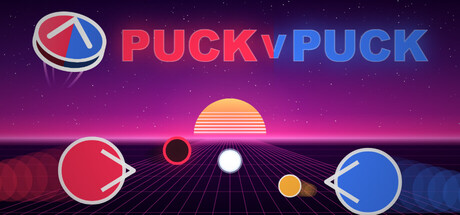
Development of PUCKVPUCK was assisted by an AI coding assistant. It helped write and review the game's code — including the sound effects, which are synthesised mathematically in code rather than recorded or sampled — and it drafted text for this store page. No AI image, audio or video generation models were used: the visuals are drawn procedurally by hand-written code, every screenshot and trailer clip is real captured gameplay, and all music was written and performed by the developers. Nothing is generated live while you play.
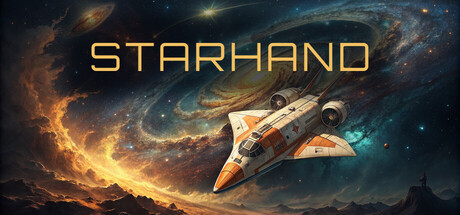
The visual art, music, sound effects, pilot voice lines and written text in Starhand were created using generative AI tools — Recraft for illustration, Suno for music, and ElevenLabs for voice and sound effects — and were then selected, edited and assembled by the developer. All of it is generated ahead of time and ships as fixed assets: the game does not generate any content while you play, and it does not connect to any AI service at runtime.
Some shipped content was created with the help of generative AI tools and then reviewed and edited by the developer: parts of the store and marketing artwork, the trailer music, and the first drafts of the interface translations (German, Spanish, French, Polish, Brazilian Portuguese). All gameplay, rules logic and code are deterministic and human-reviewed. The game does not generate any AI content at runtime.
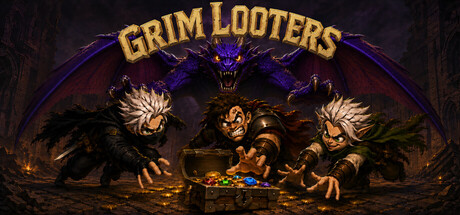
The visual assets in Grim Looters — character, monster, item and card artwork, plus the store and marketing images — were created with the assistance of generative AI image tools and then curated, edited, and assembled by the developer. Some background music was AI-assisted. All AI-generated content is reviewed by the developer to ensure it is appropriate and cleared for use. No AI content is generated live during gameplay.
During development, generative AI was used to create or edit selected 2D character and environment art, UI elements and icons, VFX and animation assets, English and Simplified Chinese character voices, and store marketing artwork. It was also used in the production of the opening cinematic and its audio. All generated content was reviewed and edited, composited, or post-processed by the development team as appropriate. The game does not use generative AI at runtime and does not generate content in response to player input.
Generative AI tools were used during development to assist with portions of code writing and debugging, text drafting and editing, English localization, and the creation of some music assets. All related content was manually reviewed, revised, curated, and approved by the developer.
The game does not generate any AI content during gameplay and does not connect to external AI services.
Some background music inside the game was created with generative AI tools. Generative AI was also used as a development assistant for some debugging, and code building. The game does not use live AI generation during playing.
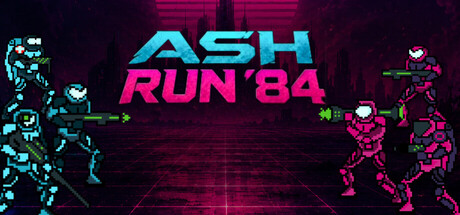
Ash Run '84 is a human-designed game built with the assistance of AI tools in specific areas of development.
*Gameplay, mechanics, game design, level design, balance, pixel art units, buildings, tiles, UI, and production direction were created by our two-person development team.*
AI Created:
- Commander portraits are currently AI-assisted placeholder artwork. We plan to replace them with original human-created artwork as development continues.
- Music is currently AI-generated for this release. If the game receives sufficient support, we intend to commission an original soundtrack composed by a human musician.
- Programming was developed by our team with AI-assisted coding tools used to accelerate implementation, debugging, testing, and iteration. All code was reviewed, integrated, and directed by the developers.
Generative AI tools were used during development to assist with programming and to create or refine portions of the game’s artwork, visual assets, sound effects, and other audio. All AI-assisted content was selected, edited, integrated, and reviewed by the developer. The game does not generate AI content or connect to external AI services during gameplay.
AI Was used to generate the page description, it was also used to test certain parts of the game and help debug a few problems, there was partial AI usage also for the game music, while the music itself was created in FL Studio there was usage to generate some of the variants of the tracks
Root Cause is utilizes AI assets in the game. This content, when utilized, is generated during development, then curated, edited, and committed to the project before release. Nothing is generated while the game is running.
Items that may be generated:
Illustrated art.
UI/Interfaces
Icon Sets
Sounds and Music
Dialogue, case briefings, case content, and interface copy
The visual art in Gearbound is made with PixelLab, an AI pixel-art tool. Every sprite, animation, tileset, background, prop, interface element and piece of marketing art was generated with PixelLab and then directed, edited and assembled by us.
The music and sound effects are rendered by synthesis scripts that were written with AI assistance. No generative audio model was used, and nothing was sourced from a music-generation service.
Nothing is generated by AI while you play. Every asset is finished and baked into the build before it ships, and the game makes no AI calls at runtime.
Generative AI was used to create in-game CCTV camera footage images and English voiceovers.
All AI-generated assets have been reviewed and edited to fit the game's atmosphere and quality standards.
Music and sound effects were AI-generated (Suno / ElevenLabs) and edited by the developer. AI (Claude Code) was also used as a coding assistant during development. Visual assets are licensed/purchased assets and are not AI-generated. No AI content is generated live during gameplay all content is fixed and authored before release.
Generative AI tools were used to assist in the creation of some artwork, store page graphics, 3D assets, and audio content. No generative AI is used to generate content live during gameplay.
This game utilizes pre-generated AI tools to create SFXs, music, UI images, texts, and one 3D model. Some of which are edited and all of which are selected with care.
Pre-generated only. Nothing is generated live while the game runs, and the game makes no network calls of any kind.
2D card illustrations were produced with an AI image tool from hand-written art-direction prompts, then cropped, recoloured and composited by hand into the game's painted card frames. A small number of 3D prop meshes were produced with an image-to-3D model (Microsoft TRELLIS, MIT licensed) and edited before use; most world geometry is built procedurally in code rather than generated. Ambient beds and music were produced with an AI music tool against a fixed written spec (key of D, 72 BPM, fades in from silence, no climax) and are mixed and crossfaded by the game's own audio code.
All code, game design, UI layout, in-game text and store text are human-authored. Some combat sound effects are CC0 samples from Freesound.
No player data is sent to any AI service.
Some assets and code in Angkor were created with the assistance of generative AI tools, including 2D art, sound effects, portions of the game's code, and some in-game text. All AI-assisted content was reviewed, edited, and integrated by a human developer. Angkor does not generate any content live during gameplay.
Dashboard Engine uses AI only at runtime, on your own device, and bundles no pre-generated AI content.
On-device neural text-to-speech (installed by default): the app includes neural TTS voices (MeloTTS and Kokoro) that synthesize spoken audio from text locally on your PC. An English voice is bundled and installed by default; other languages download on demand. These voices produce speech at runtime — for the assistant's replies, spoken system alerts, and voice previews. They are used purely as speech output: a "voice profile" is a small set of tuning settings that reference a licensed base voice, and the app stores or uploads no voice recordings of any kind.
Optional AI assistant (off by default): if you turn it on, you connect it to a language model you run locally on your own machine or local network (for example Ollama or LM Studio). Your typed messages are sent to that local model to generate conversational replies in real time, which can be read aloud by the on-device TTS above. There is no cloud AI service, account, or API key — nothing leaves your PC.
All AI output is generated live from your own input and your own local models, so it is not authored or reviewed by the developer. No AI-generated content is pre-created or bundled with the app.
Cosmo Corgis is designed and directed by one person. During development, AI tools were used as a production assistant — helping write and test the game's code and assisting with portions of the 3D asset work, always under the developer's direction. The music and sound effects were generated with AI tools. Every design decision, and the game's look and feel, are the developer's own. Nothing is generated by AI while you play: everything in the game ships fixed and tested.
Some visual assets and background music included in this game were created using generative AI tools and have been reviewed, edited, and integrated by the developer.
Pregenerated AI audio tools were used during development to generate character voice lines and background music tracks. All visual art, graphics, puzzle task and animations were created by hand without generative AI.
DriveGear includes some pre-generated visual and audio assets created with AI tools. These assets were selected and edited by the developer and ship as fixed content. No content is generated by AI during gameplay.
Some of SALTWRATH's audio and store artwork was created using generative AI tools and then edited by hand. The music and sound effects were generated with Suno, then trimmed, mixed and levelled manually before being used in the game. Some store page and capsule artwork was generated with an AI image tool and edited before use.
The game itself does not use generative AI while you play. Nothing is generated live during a run, no content changes between playthroughs because of AI, and no player input is ever sent to an AI service.
This game uses generative AI as a production tool for certain visual art and music assets. All AI-assisted content has been reviewed and refined by the developer. No generative AI is used during gameplay. All puzzles, investigation mechanics, and gameplay systems are designed and implemented by the developer.
This game uses generative AI during development to create some image assets, music assets, and text drafts. All generated content was reviewed by the developer and edited or processed as necessary before being included in the game. The game does not generate content using generative AI during gameplay.
As a solo developer, this game utilizes generative AI tools to assist in the creation of certain assets—including game dialogue, artwork, and audio elements—which are then carefully edited, refined, and polished by the developer.
Some of this game's assets were made with generative AI tools: the music, the store artwork, and the French translation. Everything ships as fixed files that were generated, chosen, and edited by the developer. Nothing is generated while you play, and the game never connects to an AI service.
This game is made by a single dev, and sold for a fair price. In order to do that this dev needed the help of AI. So some pre-rendered assets in this game were created with the help of generative AI tools, always under my direction and with every asset reviewed by me the developer: certain illustrations, backdrops, and UI art; some music tracks and sound effects; and character voice lines generated via text-to-speech from scripts written by me the developer. The game design, the gameplay, physics, and large parts of the code are entirely human-made, and no AI content is generated at runtime.
This game uses AI-generated audio effects (via ElevenLabs) for a limited set of sound effects, layered and processed alongside licensed library sounds. As a solo developer on a tight budget, this let me create specific, bespoke sounds without the cost of a full custom audio pack for assets that are only used a handful of times.
Some of these may be replaced with human-composed audio as the game develops.
Generative AI tools were used during development to assist in creating certain environmental textures and ambient sound effects to enhance the game's atmosphere. All generated assets were reviewed and integrated manually to fit the retro aesthetic of the game.
Generative AI tools were used during the development of ScrapBound to assist with the creation of some visual and audio assets. AI-generated imagery was used as a starting point for various game assets, which were then modified, edited, and integrated to fit the game's visual style. Many of these assets will over time be replaced as the development of the game continues.
Some assets in Starfort, including selected voice lines, artwork, and marketing materials, were created with the help of generative AI tools during development. All such content was reviewed, edited, curated, and finalized by the developer and is pre-generated. Starfort does not generate content during gameplay or connect to external AI services.
Some of the artwork in this game — including bumper, ball, table and mark sprites — was created with AI-assisted pixel art tools and then reviewed, edited and assembled by hand. The world and boss music comes from licensed artists who state that they work with AI assistance; the sound effects are not AI-generated. Parts of the source code were written with AI assistance. No content is generated by AI while playing.
AI tools were used during the development of this game to assist with programming, and the creation of some sound effects and UI images. All AI-assisted content was reviewed and edited by the developer before being incorporated into the game.
Development of PUCKVPUCK was assisted by an AI coding assistant. It helped write and review the game's code — including the sound effects, which are synthesised mathematically in code rather than recorded or sampled — and it drafted text for this store page. No AI image, audio or video generation models were used: the visuals are drawn procedurally by hand-written code, every screenshot and trailer clip is real captured gameplay, and all music was written and performed by the developers. Nothing is generated live while you play.
The visual art, music, sound effects, pilot voice lines and written text in Starhand were created using generative AI tools — Recraft for illustration, Suno for music, and ElevenLabs for voice and sound effects — and were then selected, edited and assembled by the developer. All of it is generated ahead of time and ships as fixed assets: the game does not generate any content while you play, and it does not connect to any AI service at runtime.
Some shipped content was created with the help of generative AI tools and then reviewed and edited by the developer: parts of the store and marketing artwork, the trailer music, and the first drafts of the interface translations (German, Spanish, French, Polish, Brazilian Portuguese). All gameplay, rules logic and code are deterministic and human-reviewed. The game does not generate any AI content at runtime.
The visual assets in Grim Looters — character, monster, item and card artwork, plus the store and marketing images — were created with the assistance of generative AI image tools and then curated, edited, and assembled by the developer. Some background music was AI-assisted. All AI-generated content is reviewed by the developer to ensure it is appropriate and cleared for use. No AI content is generated live during gameplay.
During development, generative AI was used to create or edit selected 2D character and environment art, UI elements and icons, VFX and animation assets, English and Simplified Chinese character voices, and store marketing artwork. It was also used in the production of the opening cinematic and its audio. All generated content was reviewed and edited, composited, or post-processed by the development team as appropriate. The game does not use generative AI at runtime and does not generate content in response to player input.
Generative AI tools were used during development to assist with portions of code writing and debugging, text drafting and editing, English localization, and the creation of some music assets. All related content was manually reviewed, revised, curated, and approved by the developer.
The game does not generate any AI content during gameplay and does not connect to external AI services.
Some background music inside the game was created with generative AI tools. Generative AI was also used as a development assistant for some debugging, and code building. The game does not use live AI generation during playing.
Ash Run '84 is a human-designed game built with the assistance of AI tools in specific areas of development.
*Gameplay, mechanics, game design, level design, balance, pixel art units, buildings, tiles, UI, and production direction were created by our two-person development team.*
AI Created:
- Commander portraits are currently AI-assisted placeholder artwork. We plan to replace them with original human-created artwork as development continues.
- Music is currently AI-generated for this release. If the game receives sufficient support, we intend to commission an original soundtrack composed by a human musician.
- Programming was developed by our team with AI-assisted coding tools used to accelerate implementation, debugging, testing, and iteration. All code was reviewed, integrated, and directed by the developers.
Generative AI tools were used during development to assist with programming and to create or refine portions of the game’s artwork, visual assets, sound effects, and other audio. All AI-assisted content was selected, edited, integrated, and reviewed by the developer. The game does not generate AI content or connect to external AI services during gameplay.