Public Steam disclosure research25,380 disclosures tracked
Where do games disclose AI use?
Search developers’ Steam disclosures, compare classified AI use across
games, and follow recorded changes.
This index adds cross-game classifications and statistics to
statements published on individual store pages.
Groups reflect automatic analysis of public disclosures; mature records are excluded. These counts do not measure AI use across all of Steam.
Missing or unclear statements cannot establish whether a game uses AI.
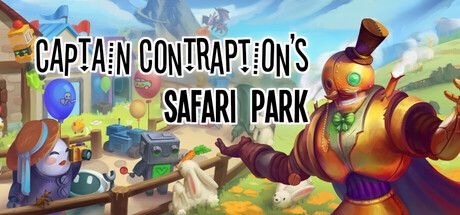
I (Sean) use AI coding assistants: GitHub Copilot and Claude Code. I've written software for years and I teach games programming at university, and I use AI tools the way I use a profiler or a compiler. They helped build web tools Dave and I use to balance the ecosystem across long simulations, they're very good at finding edge-case bugs (I'm looking at you, pathing system), and they write the boilerplate for things like save states and UI. I never ship code I haven't read and thoroughly tested.
No content in this game is AI-generated, and no generative AI runs while you play.
Every sound, art and music asset in this game was made by a human. The game started out as the idea of “Asset Safari” around the concept of buying sprite packs from artists, which is what we have done. The music, sound and writing is also all human generated.
I use Bezi, an AI coding tool for Unity to help develop some of the more complicated algorithms used in pathfinding and enemy AI. I review all generated code used in the game and make modifications when necessary.
AI was used to help code the game, and some of the in-game text was generated by it (and checked my grammar). I love video games, but I work in the financial universe, so without AI I would not be able to mechanically develop the game and do all the steps as a solo project. (Kudos to solo developers pre-AI, next level people)
Some marketing artwork for the store page (the capsule's sky, city backdrop, rain and lettering layers) was produced with generative image tools (OpenAI image generation, Google Gemini) and then composited and edited by hand. A few placeholder textures currently in the build (the city seen through the office window and its signs, and the sample sheets in the customization menu) were AI-generated and are scheduled to be replaced with licensed or hand-made art before release. AI coding and writing assistants were used during development for parts of the source code, documentation and drafts of store text; all game rules, design decisions and final art direction are the developer's own. The game does not generate content with AI at runtime.
The coding process used artificial intelligence, to allow the creator to focus on the creative aspects of game development. All art, story, mechanics, balancing, and creative direction is human-made.
Generative AI tools were used throughout development to create all of the game's visual art assets and program code, as well as localization and promotional materials. All outputs were directed, reviewed, edited, tested, and integrated under the developer's supervision. The game does not generate AI content during gameplay or connect to external AI services.
This game uses generative AI in the following areas:
Art: Character sprites, background images, UI elements, and other
visual assets were created with the assistance of generative AI tools.
All generated assets were reviewed, edited, and adjusted by the
developer before being used in the game.
Localization: Store page text and in-game text in languages other
than Japanese were translated with the assistance of generative AI,
and reviewed before publication.
Programming: Generative AI was used as a coding assistant during
development.
No AI-generated content is produced at runtime. All game content
is fixed and pre-authored.
The original game design, mechanics, and core concept were created by the developer. However, the majority of in-game assets—including code, 3D visuals, sound effects, and UI elements—were generated or assisted by generative AI tools. The developer curated, edited, assembled, and implemented all AI-generated content to realize the intended gameplay experience.
We make extensive use of AI throughout this project, from coding and generating image/sound assets to planning, story concepts, and daily life improvements. We truly appreciate your understanding and support. Thanks a ton!
This game uses AI-assisted tools during development, limited exclusively to programming assistance, multilingual translation assistance, drafting assistance for written store page copy, and a synthesized voice used for the narration of our promotional videos.
The narration script is written by the development team. Only the voice reading it is synthesized, and it appears in promotional videos only. It is not part of the game, and no AI-generated output is integrated into the game itself. All content is manually reviewed, edited, integrated, proofread, and tested by the development team before use.
AI is not used to create characters, character illustrations, character-related artwork, animations, music, sound effects, narrative, or other core creative content. Our sound effects are public domain field recordings, and the music in our videos is licensed from human authors. The game does not generate content in real time while running, nor does it connect to external AI services to provide generative features to players.
During the development of Spacepawn, generative AI tools were used to speed up coding, create certain in-game visuals, and assist with localization (translations). As an indie developer, AI was utilized as a support tool to fill expertise gaps in non-programming areas such as art design and translation. All AI-generated content has been carefully reviewed and edited by us to ensure it aligns perfectly with the game's overall vision and integrity.
Generative artificial intelligence tools were used during development to help create certain visual elements (sprites) and to assist with generating portions of code. No content is generated in real time during gameplay.
The game uses generative AI to create molecular structures during gameplay. Molecules are procedurally generated by a generative AI model embedded locally within the game and operating as part of the game’s molecular design system.
The in-game generative AI system is used exclusively for molecular structure generation and does not generate dialogue, artwork, music, or other narrative content during gameplay.
During development, generative AI tools were used to assist with artwork preparation, text polishing, and UI code development.
This game uses generative AI extensively during development to assist with programming and to create art, music, and some written materials. All content included in the final game is manually reviewed, edited, and integrated; no content is generated in real time while the game is running.
Pre-generated AI tools were used during development to assist with portions of source code and localization, and to create the store capsule/key artwork. All outputs were reviewed, edited, and curated by the developers. The game's playable visuals are rendered procedurally by the shipped code. The product contains no live-generative AI, does not accept AI prompts from players, and does not send player data to an AI service.
Generative AI tools were used during development to assist with creating and iterating some pre-generated visual assets, UI icons, concept art, text drafts, and development/code prototypes.
All AI-assisted content was reviewed, edited, and selected by the developer before being included in the game.
The game does not use live generative AI during gameplay, does not generate new content for players in real time, and does not send player input or personal data to any AI service.
AI is used for creating concept art, prototype textures, and quick mesh tests that are eventually replaced with real artist graphic designs and hand-tailored models.
Spacetime Chronicles comes from a handmade animated feature: most of what you see are real paper sets, characters and props, photographed and animated frame by frame by the author. Generative AI was used in the following areas. Images: roughly 15% of the game's images were created or completed with generative AI, then edited and integrated by the author. Audio: the game's sound effects and character voices were produced using generative AI tools. Code: parts of the game's source code were written and reviewed with the help of AI assistants. All of this content was generated during development, reviewed and approved by the author before release. The game does not generate any AI content while you play, and it does not connect to any AI service at runtime.
Generative AI tools were used as development assistance, including support for programming, text editing, brainstorming, and localization. The game's visual artwork and assets are created by the developer and do not use AI-generated images. Story concepts and final creative decisions are made and edited by the developer.
We use AI to polish and iterate on the human prepared concepts, textures, sometimes the achieved final version is used in game.
For game code, occasionally, we use a reliable snippet based generation, reviewed and ebmedded into the game by developers, for maximum stability.
Generative AI tools were used during development only. Nothing is generated by AI while the game is running, and the game does not connect to any AI service during play.
What was made with the help of AI:
- Artwork: many in-game icons and illustrations (items, resources, tools and more) and parts of the Steam store artwork (capsules, backgrounds and library images) were created with AI image-generation tools, based on the developer's own logo and art direction, and then selected, edited and resized by hand.
- Code and text: AI assistants helped write and review parts of the game's source code and some in-game texts such as guides and item descriptions. Everything is reviewed and tested by the developer.
- Localization: translations of the interface from English into other languages were produced with AI translation tools and are checked with help from the player community.
Game design, gameplay systems and balancing are the developer's own work.
WICKLING was built with AI assistance. Generative AI was used during development to help write the game's code, its pixel art, its level layouts and some of its writing, and to help produce this store page and its artwork.
The soundtrack is not AI-generated. Every note is a hand-written 2A03 chiptune, synthesised by the game as it runs rather than played back from audio files, which is why the horror systems can bend the music live.
Nothing in WICKLING is generated while you play. Every level, sprite, line of text and piece of music is fixed and identical for every player, and the game makes no network requests of any kind.
This game's art and code are creatively directed by a human developer (me), directing, refining, reviewing, and quality-checking every part across hundreds of hours of iteration. I build it with Claude AI as my tool. The visuals are not pre-made image files or AI-generated images. They are drawn by code at runtime (procedural rendering) using standard 2D canvas drawing commands, and Claude AI writes and brings that code to life. The store page and marketing images come from that same in-game rendering. The game does not include third-party copyrighted material.
AI tools were used during development to assist with parts of the workflow, including code, materials, graphics, and other production tasks. All generated content was reviewed, adjusted, integrated, and refined as part of the game’s development process.
I’m developing this game alongside my job and family life. So yes, I’ve used AI: without these tools, I probably would never have been able to bring a project of this scale to completion.
I remain the creative lead, the developer, and the person making all the decisions about the game. I see AI as an employee or assistant that helps me on a daily basis: it allows me to work faster, solve certain problems, and accomplish things that would otherwise have taken much more time.
Try the demo and make up your own mind: it’s up to you to decide whether it affects your enjoyment of the game in any way.
Ai-assisted tools were used during development for programming support. Some visuals and audio were created through developer-directed, deterministic code and exported as fixed assets—not generated by image, video, or audio models. Screenshots and trailers show actual gameplay footage.
Some art assets in this game were created with the assistance of generative AI. AI-assisted tools were also used in the translation and localization of the English text. In addition, AI was used to assist with certain programming tasks during development. All AI-assisted output included in the game was manually reviewed, edited, and integrated by the developer.
AI tools were used during development to assist with code, artwork, music, and other production tasks. All creative direction, design decisions, implementation, integration, testing, and final selection of content were handled by the developer.
All in-game visual and audio assets are procedurally generated by code at runtime. The build contains no pre-rendered AI, painted, or recorded media files.
AI (Anthropic's Claude) was used during development only to help draft source code and in-game text, which was manually reviewed and edited. No AI services are accessed while running the game. The only third-party assets are two open-license fonts designed by human artists.
This game was developed with the help of generative AI tools in the following areas.
■ Illustrations and images
2D artwork such as backgrounds, character portraits, cut-in illustrations, character creator parts, achievement icons, and store artwork was produced using image generation AI. The developer designed and directed the composition, character design, colors, and intent, then selected, retouched, cropped, and composited the generated images before including them in the game.
■ Music
The background music was produced using music generation AI. The developer designed the required mood for each scene, generated candidates, then selected and edited the tracks that are included in the game.
■ Program code
AI coding assistance tools were used for part of the implementation work.
■ Assets that do not involve AI
All sound effects and character voices are existing human-created audio assets (Soundeffect Lab, Kurage Kosho, T-Suta, DOVA-SYNDROME), used in accordance with each provider's terms of use. They are not AI generated. The font is "Zen Kaku Gothic New," provided under the SIL Open Font License.
■ Rights and legal care
All AI-generated assets were reviewed by the developer to ensure they contain no illegal content and do not infringe the rights of third parties. No generation was performed with the intent of imitating any specific real person or existing work.
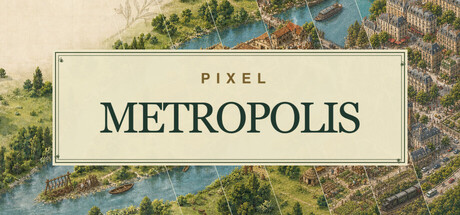
Pixel Metropolis is a human-designed, AI-implemented game. As its sole human creator, I am responsible for the game’s design, systems, architecture, quality assurance, extensive testing, art direction, and sound direction.
Codex, primarily using OpenAI’s GPT-5.6 Sol model, has generated all of the game’s code and has been used to direct the creation and implementation of its visual and sound assets. The only non-generated assets are a small selection of CC0 sounds.
The games code is made by AI, but everything else is made by the creator (story, models, design, animations, some textures and other stuff) and some assets are made by real people NOT AI (credits are in the end of the game)
I (Sean) use AI coding assistants: GitHub Copilot and Claude Code. I've written software for years and I teach games programming at university, and I use AI tools the way I use a profiler or a compiler. They helped build web tools Dave and I use to balance the ecosystem across long simulations, they're very good at finding edge-case bugs (I'm looking at you, pathing system), and they write the boilerplate for things like save states and UI. I never ship code I haven't read and thoroughly tested.
No content in this game is AI-generated, and no generative AI runs while you play.
Every sound, art and music asset in this game was made by a human. The game started out as the idea of “Asset Safari” around the concept of buying sprite packs from artists, which is what we have done. The music, sound and writing is also all human generated.
I use Bezi, an AI coding tool for Unity to help develop some of the more complicated algorithms used in pathfinding and enemy AI. I review all generated code used in the game and make modifications when necessary.
AI was used to help code the game, and some of the in-game text was generated by it (and checked my grammar). I love video games, but I work in the financial universe, so without AI I would not be able to mechanically develop the game and do all the steps as a solo project. (Kudos to solo developers pre-AI, next level people)
Some marketing artwork for the store page (the capsule's sky, city backdrop, rain and lettering layers) was produced with generative image tools (OpenAI image generation, Google Gemini) and then composited and edited by hand. A few placeholder textures currently in the build (the city seen through the office window and its signs, and the sample sheets in the customization menu) were AI-generated and are scheduled to be replaced with licensed or hand-made art before release. AI coding and writing assistants were used during development for parts of the source code, documentation and drafts of store text; all game rules, design decisions and final art direction are the developer's own. The game does not generate content with AI at runtime.
The coding process used artificial intelligence, to allow the creator to focus on the creative aspects of game development. All art, story, mechanics, balancing, and creative direction is human-made.
Generative AI tools were used throughout development to create all of the game's visual art assets and program code, as well as localization and promotional materials. All outputs were directed, reviewed, edited, tested, and integrated under the developer's supervision. The game does not generate AI content during gameplay or connect to external AI services.
This game uses generative AI in the following areas:
Art: Character sprites, background images, UI elements, and other
visual assets were created with the assistance of generative AI tools.
All generated assets were reviewed, edited, and adjusted by the
developer before being used in the game.
Localization: Store page text and in-game text in languages other
than Japanese were translated with the assistance of generative AI,
and reviewed before publication.
Programming: Generative AI was used as a coding assistant during
development.
No AI-generated content is produced at runtime. All game content
is fixed and pre-authored.
The original game design, mechanics, and core concept were created by the developer. However, the majority of in-game assets—including code, 3D visuals, sound effects, and UI elements—were generated or assisted by generative AI tools. The developer curated, edited, assembled, and implemented all AI-generated content to realize the intended gameplay experience.
We make extensive use of AI throughout this project, from coding and generating image/sound assets to planning, story concepts, and daily life improvements. We truly appreciate your understanding and support. Thanks a ton!
This game uses AI-assisted tools during development, limited exclusively to programming assistance, multilingual translation assistance, drafting assistance for written store page copy, and a synthesized voice used for the narration of our promotional videos.
The narration script is written by the development team. Only the voice reading it is synthesized, and it appears in promotional videos only. It is not part of the game, and no AI-generated output is integrated into the game itself. All content is manually reviewed, edited, integrated, proofread, and tested by the development team before use.
AI is not used to create characters, character illustrations, character-related artwork, animations, music, sound effects, narrative, or other core creative content. Our sound effects are public domain field recordings, and the music in our videos is licensed from human authors. The game does not generate content in real time while running, nor does it connect to external AI services to provide generative features to players.
During the development of Spacepawn, generative AI tools were used to speed up coding, create certain in-game visuals, and assist with localization (translations). As an indie developer, AI was utilized as a support tool to fill expertise gaps in non-programming areas such as art design and translation. All AI-generated content has been carefully reviewed and edited by us to ensure it aligns perfectly with the game's overall vision and integrity.
Generative artificial intelligence tools were used during development to help create certain visual elements (sprites) and to assist with generating portions of code. No content is generated in real time during gameplay.
The game uses generative AI to create molecular structures during gameplay. Molecules are procedurally generated by a generative AI model embedded locally within the game and operating as part of the game’s molecular design system.
The in-game generative AI system is used exclusively for molecular structure generation and does not generate dialogue, artwork, music, or other narrative content during gameplay.
During development, generative AI tools were used to assist with artwork preparation, text polishing, and UI code development.
This game uses generative AI extensively during development to assist with programming and to create art, music, and some written materials. All content included in the final game is manually reviewed, edited, and integrated; no content is generated in real time while the game is running.
Pre-generated AI tools were used during development to assist with portions of source code and localization, and to create the store capsule/key artwork. All outputs were reviewed, edited, and curated by the developers. The game's playable visuals are rendered procedurally by the shipped code. The product contains no live-generative AI, does not accept AI prompts from players, and does not send player data to an AI service.
Generative AI tools were used during development to assist with creating and iterating some pre-generated visual assets, UI icons, concept art, text drafts, and development/code prototypes.
All AI-assisted content was reviewed, edited, and selected by the developer before being included in the game.
The game does not use live generative AI during gameplay, does not generate new content for players in real time, and does not send player input or personal data to any AI service.
AI is used for creating concept art, prototype textures, and quick mesh tests that are eventually replaced with real artist graphic designs and hand-tailored models.
Spacetime Chronicles comes from a handmade animated feature: most of what you see are real paper sets, characters and props, photographed and animated frame by frame by the author. Generative AI was used in the following areas. Images: roughly 15% of the game's images were created or completed with generative AI, then edited and integrated by the author. Audio: the game's sound effects and character voices were produced using generative AI tools. Code: parts of the game's source code were written and reviewed with the help of AI assistants. All of this content was generated during development, reviewed and approved by the author before release. The game does not generate any AI content while you play, and it does not connect to any AI service at runtime.
Generative AI tools were used as development assistance, including support for programming, text editing, brainstorming, and localization. The game's visual artwork and assets are created by the developer and do not use AI-generated images. Story concepts and final creative decisions are made and edited by the developer.
We use AI to polish and iterate on the human prepared concepts, textures, sometimes the achieved final version is used in game.
For game code, occasionally, we use a reliable snippet based generation, reviewed and ebmedded into the game by developers, for maximum stability.
Generative AI tools were used during development only. Nothing is generated by AI while the game is running, and the game does not connect to any AI service during play.
What was made with the help of AI:
- Artwork: many in-game icons and illustrations (items, resources, tools and more) and parts of the Steam store artwork (capsules, backgrounds and library images) were created with AI image-generation tools, based on the developer's own logo and art direction, and then selected, edited and resized by hand.
- Code and text: AI assistants helped write and review parts of the game's source code and some in-game texts such as guides and item descriptions. Everything is reviewed and tested by the developer.
- Localization: translations of the interface from English into other languages were produced with AI translation tools and are checked with help from the player community.
Game design, gameplay systems and balancing are the developer's own work.
WICKLING was built with AI assistance. Generative AI was used during development to help write the game's code, its pixel art, its level layouts and some of its writing, and to help produce this store page and its artwork.
The soundtrack is not AI-generated. Every note is a hand-written 2A03 chiptune, synthesised by the game as it runs rather than played back from audio files, which is why the horror systems can bend the music live.
Nothing in WICKLING is generated while you play. Every level, sprite, line of text and piece of music is fixed and identical for every player, and the game makes no network requests of any kind.
This game's art and code are creatively directed by a human developer (me), directing, refining, reviewing, and quality-checking every part across hundreds of hours of iteration. I build it with Claude AI as my tool. The visuals are not pre-made image files or AI-generated images. They are drawn by code at runtime (procedural rendering) using standard 2D canvas drawing commands, and Claude AI writes and brings that code to life. The store page and marketing images come from that same in-game rendering. The game does not include third-party copyrighted material.
AI tools were used during development to assist with parts of the workflow, including code, materials, graphics, and other production tasks. All generated content was reviewed, adjusted, integrated, and refined as part of the game’s development process.
I’m developing this game alongside my job and family life. So yes, I’ve used AI: without these tools, I probably would never have been able to bring a project of this scale to completion.
I remain the creative lead, the developer, and the person making all the decisions about the game. I see AI as an employee or assistant that helps me on a daily basis: it allows me to work faster, solve certain problems, and accomplish things that would otherwise have taken much more time.
Try the demo and make up your own mind: it’s up to you to decide whether it affects your enjoyment of the game in any way.
Ai-assisted tools were used during development for programming support. Some visuals and audio were created through developer-directed, deterministic code and exported as fixed assets—not generated by image, video, or audio models. Screenshots and trailers show actual gameplay footage.
Some art assets in this game were created with the assistance of generative AI. AI-assisted tools were also used in the translation and localization of the English text. In addition, AI was used to assist with certain programming tasks during development. All AI-assisted output included in the game was manually reviewed, edited, and integrated by the developer.
AI tools were used during development to assist with code, artwork, music, and other production tasks. All creative direction, design decisions, implementation, integration, testing, and final selection of content were handled by the developer.
All in-game visual and audio assets are procedurally generated by code at runtime. The build contains no pre-rendered AI, painted, or recorded media files.
AI (Anthropic's Claude) was used during development only to help draft source code and in-game text, which was manually reviewed and edited. No AI services are accessed while running the game. The only third-party assets are two open-license fonts designed by human artists.
This game was developed with the help of generative AI tools in the following areas.
■ Illustrations and images
2D artwork such as backgrounds, character portraits, cut-in illustrations, character creator parts, achievement icons, and store artwork was produced using image generation AI. The developer designed and directed the composition, character design, colors, and intent, then selected, retouched, cropped, and composited the generated images before including them in the game.
■ Music
The background music was produced using music generation AI. The developer designed the required mood for each scene, generated candidates, then selected and edited the tracks that are included in the game.
■ Program code
AI coding assistance tools were used for part of the implementation work.
■ Assets that do not involve AI
All sound effects and character voices are existing human-created audio assets (Soundeffect Lab, Kurage Kosho, T-Suta, DOVA-SYNDROME), used in accordance with each provider's terms of use. They are not AI generated. The font is "Zen Kaku Gothic New," provided under the SIL Open Font License.
■ Rights and legal care
All AI-generated assets were reviewed by the developer to ensure they contain no illegal content and do not infringe the rights of third parties. No generation was performed with the intent of imitating any specific real person or existing work.
Pixel Metropolis is a human-designed, AI-implemented game. As its sole human creator, I am responsible for the game’s design, systems, architecture, quality assurance, extensive testing, art direction, and sound direction.
Codex, primarily using OpenAI’s GPT-5.6 Sol model, has generated all of the game’s code and has been used to direct the creation and implementation of its visual and sound assets. The only non-generated assets are a small selection of CC0 sounds.
The games code is made by AI, but everything else is made by the creator (story, models, design, animations, some textures and other stuff) and some assets are made by real people NOT AI (credits are in the end of the game)