Public Steam disclosure research25,394 disclosures tracked
Where do games disclose AI use?
Search developers’ Steam disclosures, compare classified AI use across
games, and follow recorded changes.
This index adds cross-game classifications and statistics to
statements published on individual store pages.
Groups reflect automatic analysis of public disclosures; mature records are excluded. These counts do not measure AI use across all of Steam.
Missing or unclear statements cannot establish whether a game uses AI.
Generative AI tools were used during development to assist with programming tasks and to generate some reference assets and 3D models. All AI-generated content was reviewed, modified, and integrated by the developers.
Some of the game's resources (art assets, some promotional images on the store page, code, etc.) were completed with the help of AI to achieve better artistic effects.
This game uses generative AI to create part of its content:
- Art and sprites: generated with AI tools and manually edited in Photoshop.
- Intro cinematic: generated with Google Veo 3 and Flow, then edited.
- Some sound effects: generated or processed with AI tools, combined with recorded and licensed library sounds.
- Code assistance: parts of development were assisted by language models (Claude).
All AI-generated content was reviewed, edited, and approved by the developer. The game does NOT use AI at runtime: all content is pre-rendered.
We utilize AI technology to enhance development efficiency and provide a broader experience for our players. Our use of AI is categorized as follows:
Art & Visuals: AI tools are used strictly for initial concept generation and as reference material. No AI-generated visual assets are used "as-is" in the final game. Every image is manually refined, repainted, and finalized by our artists to ensure a unique and high-quality aesthetic.
Sound & Coding: We utilize AI-assisted tools to optimize backend code performance and assist in sound engineering, allowing us to focus on core gameplay stability and mechanics.
In all areas, we are committed to transparency and will continue to update and polish the game's content based on player input and professional review.
Generative AI was used to assist with artwork concept drafts, music ideation, localization, and code-writing during development. All final content was reviewed and curated by the developer.
Artificial intelligence tools were used throughout development, assisting with the game’s programming as well as the creation of capsule artwork and other minor graphical assets.
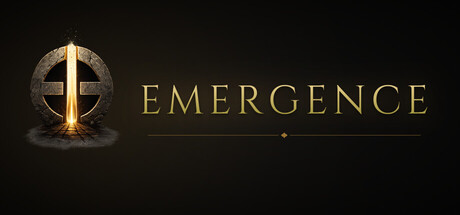
Emergence uses generative AI as a development tool. It has been used to assist in the creation of certain visual assets (illustrations, icons, and concept art), text, and to help with software development and feature prototyping.
All content included in the game is reviewed, edited, approved, and ultimately authored by the developer. Generative AI is not used to create player-facing content during gameplay unless explicitly stated in the game's feature descriptions.
Parts of this game were made with AI assistance: the non-Russian text localizations and some of the source code were produced with an AI coding assistant and reviewed by the developer.
All 3D assets, artwork and audio are human-authored or licensed; the store images are rendered directly from the game's own 3D scenes.
No content is generated by AI while you play.
FIRST LINE was designed and directed by its human developer: the gameplay systems, the mechanics, the narrative and every creative decision. The game's code — including the systems that render all visuals and synthesize all audio at runtime — was written with an AI coding assistant (Claude Code) under that direction. The English localization was also produced with AI assistance. No pre-generated AI images, audio, or video assets are included in the game. Parts of the store page text were also written with AI assistance.
Store artwork (capsules and icons) is likewise rendered by AI-written code under human direction.
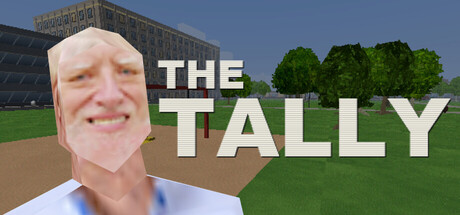
The Tally was made by a solo developer working closely with an AI assistant. The game's code and written content were created with the help of AI under the developer's direction and review. All 3D models and music are the work of human artists, credited in-game. Textures are produced by procedural scripts, not image-generation models. Nothing is generated by AI while you play.
AI tools were used during development to assist with programming and debugging. All game design, mechanics, artwork, audio, and final implementation decisions were created and managed by the developer.
Portions of this game's code, artwork, music arrangement, and text were created with the assistance of generative AI tools (Anthropic Claude). All AI-assisted content was reviewed, tested, and curated by the developer. The game does not generate any content using AI at runtime.
Generative AI tools were used during development to assist with portions of the game’s code, including implementation, debugging, refactoring, and testing. The resulting code was reviewed, edited, integrated, and tested before inclusion in the shipped build. The game does not contain a generative AI model, does not connect to a generative AI service, does not accept player prompts, and does not generate code or other AI content while running.
This game uses pre-generated AI-assisted content. The base concepts, 3D geometry, textures, and some source animation data for the male and female player characters were created with Tencent Hunyuan 3D Studio. The development team subsequently performed extensive manual editing and integration, including topology and rigging adjustments, animation processing, hand replacement, material work, and technical review. No content is generated by AI during
This game was developed with the assistance of generative AI in the following areas:
Programming assistance: Claude Code (Anthropic) was used to assist with coding and debugging
BGM: Music was generated using Suno AI
Story illustration images: Some narrative artwork was generated using NanoBanana
During the development of this game, generative AI technologies were utilized as auxiliary tools to optimize production and enhance the overall quality of the final product. AI was used in the following areas:
Visual Art & Assets: Generative tools were used during the concept art stage to create baseline character portraits, user interface elements, and background images of government offices. All AI-generated assets underwent manual digital painting, color correction, and stylization to fit the game's distinct, gritty political noir atmosphere.
Text & Narrative Design: AI assistants were employed for copyediting, historical context verification, dialogue polishing, and structuring large volumes of text to ensure the narrative feels immersive, realistic, and deeply engaging.
Coding & Scripting: AI tools helped optimize Godot engine source code, identify bugs, and accelerate the technical implementation of dynamic UI systems.
Important Note: The game contains only pre-generated content. There is no live-generated AI content running during gameplay. The game experience is fully deterministic, stable, and hardcoded within the final build by the developer.
Claude was used as a coding assistant throughout the creation process. All artwork/sound/music/gameplay/creative stuff was designed by humans as should be.
AI was employed strictly for technical assistance (code debugging, music scripting, and refining translations). All AI-assisted content was manually reviewed.
We used AI tools during development to assist with portions of the game's code and some textures/images. All AI-assisted content was reviewed and finalized by the development team before being included in the game. No AI-generated content is created during gameplay.
During the development of El sonido de un sueño, generative AI tools were used as support for the creation and prototyping of some game assets, including 3D models, visual elements, music and programming assistance. All AI-generated or AI-assisted content was reviewed, edited, integrated and manually adjusted by the development team before being included in the game.
The game does not use live generative AI during gameplay. No text, images, music, dialogue or narrative decisions are generated by AI while the player is playing.
Generative AI was used during development to assist with some visual assets, text and localization, and code. All AI-assisted content included in the game and its marketing materials was reviewed and edited by the developer. The game does not generate AI content during gameplay and does not connect to external AI services.
AI has been used to help code and shape the games content including Codex and Claude code. A premium Suno account was used to create music for the game. Codex was used to help generate art and in-game assets. All lore, scripting, and general architecture was hand crafted by the author of the game.
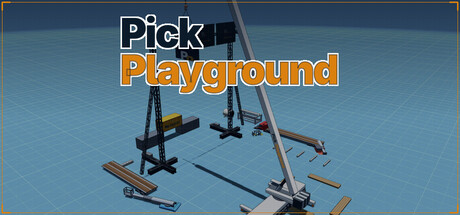
Some of Pick Playground's development was assisted by generative AI tools, including parts of the code and some of the art. Everything in the game was reviewed and finalized by the developer.
AI-assisted tools were used during development to help produce some 2D art assets (character and enemy artwork, UI icons), sound effects, voice lines, and supporting code. All AI-assisted content was created before release and reviewed by the development team. The game does not generate any content or code in real time during gameplay, and it does not connect to any external AI service while playing.
Generative AI was used in this game to assist with the creation of some character voiceovers and in the coding process. The game's visual and narrative design were created by our team.
Generative AI tools assisted with portions of development, including some player-facing UI, tutorial and campaign text, and implementation code.
All output was reviewed and edited by the developer. The game does not generate AI content while running.
Maps and terrain are generated using deterministic procedural algorithms and public-domain geographic data. Audio uses licensed recordings and conventional synthesis/editing, not generative AI.
Ai was used to develop the code, artwork, various events, and dialogue in the game. Most player-facing text was reviewed by humans and many of the events and conversations were approved, improved, or rewritten by humans. There is no run-time AI usage, everything was created before the game runs, only standard computer actions are done at runtime. ex. selections and randomization of existing content.
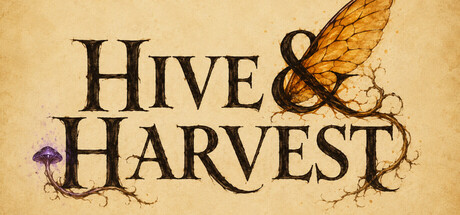
Most of the art for Hive & Harvest has been initially generated by AI models, which has then been manually edited to achieve the desired tessellation look.
Coding of the game involved AI models for the purpose of quality control.
Code: I'm a solo developer and I use AI coding agents. The architecture, game design, systems, and direction are mine; the agents write code to my spec, under my review. That includes the UI, which agents build from my own designs and styles.
3D art: Made by a professional artist. No AI.
Music and SFX: Currently placeholders, licensed from Ocular Sounds, who state their sounds are crafted from original source recordings by their in-house sound design team. To be replaced with commissioned work.
Writing: Written by me. AI agents help me edit and apply corrections; I approve every word that ships. A professional writer will be brought on as development continues.
Illustrations: Not in the game yet. They will be commissioned from professional artists.
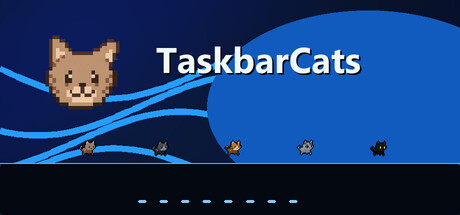
Generative AI tools were used during development to assist with programming and drafts of some user-interface text and localization. All shipped content was reviewed and edited by the developer. The animated cat artwork is licensed human-created pixel art. Taskbar Cats does not generate AI content during use and does not connect to external AI services.
Pre-release, temporary audio and visual publicly available assets have been used that may be AI generated. Programming and localization are LLM assisted. Custom creative content (artwork, sprites, narrative, etc.) is all handcrafted.
Artificial Intelligence was used primarily for generating Steam capsule artwork, specific gameplay sounds, and assistance with mathematical code functions. All AI-generated content was manually edited and reviewed throughout every stage of development.
This project is human-led and human-authored. The core concept, research direction, cultural framing, interactive decisions, visual judgement, source selection, and the final content of the work were all determined by me.
AI was used as a supporting production tool, mainly for: debugging Unity and C# errors; suggesting code structure for prototype scripts; organising local folders and repository structure; searching for public references and technical resources; and drafting editable documentation outlines that I then reviewed and revised.
AI was not used as an autonomous author. It did not decide the research direction, cultural interpretation, aesthetic intention, or final meaning of the work. AI-generated text and code were treated as working material - selected, edited, corrected, rejected, or rewritten. The personal reflection was written by me; no AI-generated text is presented as personal reflective writing.
Generative AI tools were used during development to assist with writing, reviewing, and optimizing portions of the game’s code. All AI-assisted code was manually reviewed, modified, and tested by the developer. Generative AI is not used to generate content while the game is running, nor was it used to create player-facing artwork, audio, narrative, or other text content.
The developer used generative AI tools during the development process to assist in coding, generate and retouch art assets, write game text, and create background music, voiceovers, and sound effects. All AI-generated assets have been reviewed, edited, and curated by the developer.
Generative AI tools were used during development to assist with selected pre-generated visual assets and portions of the programming work. All AI-assisted content is manually reviewed, edited, and integrated by the developer. Visual assets are repainted, adjusted, and brought into a consistent art style before being used in the game or promotional materials. The game does not generate AI content during gameplay and does not connect to any external AI services.
Generative AI tools were used during development to assist with programming tasks and to generate some reference assets and 3D models. All AI-generated content was reviewed, modified, and integrated by the developers.
Some of the game's resources (art assets, some promotional images on the store page, code, etc.) were completed with the help of AI to achieve better artistic effects.
This game uses generative AI to create part of its content:
- Art and sprites: generated with AI tools and manually edited in Photoshop.
- Intro cinematic: generated with Google Veo 3 and Flow, then edited.
- Some sound effects: generated or processed with AI tools, combined with recorded and licensed library sounds.
- Code assistance: parts of development were assisted by language models (Claude).
All AI-generated content was reviewed, edited, and approved by the developer. The game does NOT use AI at runtime: all content is pre-rendered.
We utilize AI technology to enhance development efficiency and provide a broader experience for our players. Our use of AI is categorized as follows:
Art & Visuals: AI tools are used strictly for initial concept generation and as reference material. No AI-generated visual assets are used "as-is" in the final game. Every image is manually refined, repainted, and finalized by our artists to ensure a unique and high-quality aesthetic.
Sound & Coding: We utilize AI-assisted tools to optimize backend code performance and assist in sound engineering, allowing us to focus on core gameplay stability and mechanics.
In all areas, we are committed to transparency and will continue to update and polish the game's content based on player input and professional review.
Generative AI was used to assist with artwork concept drafts, music ideation, localization, and code-writing during development. All final content was reviewed and curated by the developer.
Artificial intelligence tools were used throughout development, assisting with the game’s programming as well as the creation of capsule artwork and other minor graphical assets.
Emergence uses generative AI as a development tool. It has been used to assist in the creation of certain visual assets (illustrations, icons, and concept art), text, and to help with software development and feature prototyping.
All content included in the game is reviewed, edited, approved, and ultimately authored by the developer. Generative AI is not used to create player-facing content during gameplay unless explicitly stated in the game's feature descriptions.
Parts of this game were made with AI assistance: the non-Russian text localizations and some of the source code were produced with an AI coding assistant and reviewed by the developer.
All 3D assets, artwork and audio are human-authored or licensed; the store images are rendered directly from the game's own 3D scenes.
No content is generated by AI while you play.
FIRST LINE was designed and directed by its human developer: the gameplay systems, the mechanics, the narrative and every creative decision. The game's code — including the systems that render all visuals and synthesize all audio at runtime — was written with an AI coding assistant (Claude Code) under that direction. The English localization was also produced with AI assistance. No pre-generated AI images, audio, or video assets are included in the game. Parts of the store page text were also written with AI assistance.
Store artwork (capsules and icons) is likewise rendered by AI-written code under human direction.
The Tally was made by a solo developer working closely with an AI assistant. The game's code and written content were created with the help of AI under the developer's direction and review. All 3D models and music are the work of human artists, credited in-game. Textures are produced by procedural scripts, not image-generation models. Nothing is generated by AI while you play.
AI tools were used during development to assist with programming and debugging. All game design, mechanics, artwork, audio, and final implementation decisions were created and managed by the developer.
Portions of this game's code, artwork, music arrangement, and text were created with the assistance of generative AI tools (Anthropic Claude). All AI-assisted content was reviewed, tested, and curated by the developer. The game does not generate any content using AI at runtime.
Generative AI tools were used during development to assist with portions of the game’s code, including implementation, debugging, refactoring, and testing. The resulting code was reviewed, edited, integrated, and tested before inclusion in the shipped build. The game does not contain a generative AI model, does not connect to a generative AI service, does not accept player prompts, and does not generate code or other AI content while running.
This game uses pre-generated AI-assisted content. The base concepts, 3D geometry, textures, and some source animation data for the male and female player characters were created with Tencent Hunyuan 3D Studio. The development team subsequently performed extensive manual editing and integration, including topology and rigging adjustments, animation processing, hand replacement, material work, and technical review. No content is generated by AI during
This game was developed with the assistance of generative AI in the following areas:
Programming assistance: Claude Code (Anthropic) was used to assist with coding and debugging
BGM: Music was generated using Suno AI
Story illustration images: Some narrative artwork was generated using NanoBanana
During the development of this game, generative AI technologies were utilized as auxiliary tools to optimize production and enhance the overall quality of the final product. AI was used in the following areas:
Visual Art & Assets: Generative tools were used during the concept art stage to create baseline character portraits, user interface elements, and background images of government offices. All AI-generated assets underwent manual digital painting, color correction, and stylization to fit the game's distinct, gritty political noir atmosphere.
Text & Narrative Design: AI assistants were employed for copyediting, historical context verification, dialogue polishing, and structuring large volumes of text to ensure the narrative feels immersive, realistic, and deeply engaging.
Coding & Scripting: AI tools helped optimize Godot engine source code, identify bugs, and accelerate the technical implementation of dynamic UI systems.
Important Note: The game contains only pre-generated content. There is no live-generated AI content running during gameplay. The game experience is fully deterministic, stable, and hardcoded within the final build by the developer.
Claude was used as a coding assistant throughout the creation process. All artwork/sound/music/gameplay/creative stuff was designed by humans as should be.
AI was employed strictly for technical assistance (code debugging, music scripting, and refining translations). All AI-assisted content was manually reviewed.
We used AI tools during development to assist with portions of the game's code and some textures/images. All AI-assisted content was reviewed and finalized by the development team before being included in the game. No AI-generated content is created during gameplay.
During the development of El sonido de un sueño, generative AI tools were used as support for the creation and prototyping of some game assets, including 3D models, visual elements, music and programming assistance. All AI-generated or AI-assisted content was reviewed, edited, integrated and manually adjusted by the development team before being included in the game.
The game does not use live generative AI during gameplay. No text, images, music, dialogue or narrative decisions are generated by AI while the player is playing.
Generative AI was used during development to assist with some visual assets, text and localization, and code. All AI-assisted content included in the game and its marketing materials was reviewed and edited by the developer. The game does not generate AI content during gameplay and does not connect to external AI services.
AI has been used to help code and shape the games content including Codex and Claude code. A premium Suno account was used to create music for the game. Codex was used to help generate art and in-game assets. All lore, scripting, and general architecture was hand crafted by the author of the game.
Some of Pick Playground's development was assisted by generative AI tools, including parts of the code and some of the art. Everything in the game was reviewed and finalized by the developer.
AI-assisted tools were used during development to help produce some 2D art assets (character and enemy artwork, UI icons), sound effects, voice lines, and supporting code. All AI-assisted content was created before release and reviewed by the development team. The game does not generate any content or code in real time during gameplay, and it does not connect to any external AI service while playing.
Generative AI was used in this game to assist with the creation of some character voiceovers and in the coding process. The game's visual and narrative design were created by our team.
Generative AI tools assisted with portions of development, including some player-facing UI, tutorial and campaign text, and implementation code.
All output was reviewed and edited by the developer. The game does not generate AI content while running.
Maps and terrain are generated using deterministic procedural algorithms and public-domain geographic data. Audio uses licensed recordings and conventional synthesis/editing, not generative AI.
Ai was used to develop the code, artwork, various events, and dialogue in the game. Most player-facing text was reviewed by humans and many of the events and conversations were approved, improved, or rewritten by humans. There is no run-time AI usage, everything was created before the game runs, only standard computer actions are done at runtime. ex. selections and randomization of existing content.
Most of the art for Hive & Harvest has been initially generated by AI models, which has then been manually edited to achieve the desired tessellation look.
Coding of the game involved AI models for the purpose of quality control.
Code: I'm a solo developer and I use AI coding agents. The architecture, game design, systems, and direction are mine; the agents write code to my spec, under my review. That includes the UI, which agents build from my own designs and styles.
3D art: Made by a professional artist. No AI.
Music and SFX: Currently placeholders, licensed from Ocular Sounds, who state their sounds are crafted from original source recordings by their in-house sound design team. To be replaced with commissioned work.
Writing: Written by me. AI agents help me edit and apply corrections; I approve every word that ships. A professional writer will be brought on as development continues.
Illustrations: Not in the game yet. They will be commissioned from professional artists.
Generative AI tools were used during development to assist with programming and drafts of some user-interface text and localization. All shipped content was reviewed and edited by the developer. The animated cat artwork is licensed human-created pixel art. Taskbar Cats does not generate AI content during use and does not connect to external AI services.
Pre-release, temporary audio and visual publicly available assets have been used that may be AI generated. Programming and localization are LLM assisted. Custom creative content (artwork, sprites, narrative, etc.) is all handcrafted.
Artificial Intelligence was used primarily for generating Steam capsule artwork, specific gameplay sounds, and assistance with mathematical code functions. All AI-generated content was manually edited and reviewed throughout every stage of development.
This project is human-led and human-authored. The core concept, research direction, cultural framing, interactive decisions, visual judgement, source selection, and the final content of the work were all determined by me.
AI was used as a supporting production tool, mainly for: debugging Unity and C# errors; suggesting code structure for prototype scripts; organising local folders and repository structure; searching for public references and technical resources; and drafting editable documentation outlines that I then reviewed and revised.
AI was not used as an autonomous author. It did not decide the research direction, cultural interpretation, aesthetic intention, or final meaning of the work. AI-generated text and code were treated as working material - selected, edited, corrected, rejected, or rewritten. The personal reflection was written by me; no AI-generated text is presented as personal reflective writing.
Generative AI tools were used during development to assist with writing, reviewing, and optimizing portions of the game’s code. All AI-assisted code was manually reviewed, modified, and tested by the developer. Generative AI is not used to generate content while the game is running, nor was it used to create player-facing artwork, audio, narrative, or other text content.
The developer used generative AI tools during the development process to assist in coding, generate and retouch art assets, write game text, and create background music, voiceovers, and sound effects. All AI-generated assets have been reviewed, edited, and curated by the developer.
Generative AI tools were used during development to assist with selected pre-generated visual assets and portions of the programming work. All AI-assisted content is manually reviewed, edited, and integrated by the developer. Visual assets are repainted, adjusted, and brought into a consistent art style before being used in the game or promotional materials. The game does not generate AI content during gameplay and does not connect to any external AI services.