Public Steam disclosure research25,497 disclosures tracked
Where do games disclose AI use?
Search developers’ Steam disclosures, compare classified AI use across
games, and follow recorded changes.
This index adds cross-game classifications and statistics to
statements published on individual store pages.
Groups reflect automatic analysis of public disclosures; mature records are excluded. These counts do not measure AI use across all of Steam.
Missing or unclear statements cannot establish whether a game uses AI.
This project leverages generative AI to assist in software development and documentation processing, covering data retrieval and synthesis, localization, modular script implementation, and code logic optimization. By utilizing AI for cross-disciplinary knowledge integration and performance refactoring, all outputs undergo manual review and adjustment. This ensures that core creativity remains developer-led while enhancing development efficiency under the premise of maintaining system stability.
This game was built by a solo developer using AI-assisted coding tools throughout development, including for generating SVG code that was rendered into game icons. All creative direction, game design, and visual style decisions were made by the developer. No AI image generation models were used to create artwork.
Dead Reckoning is written, and designed by one person. I want to be precise about where AI tools do and don't appear in it.
Creative content — no generative AI. All writing, narrative, and design is mine. I've worked as a technical writer for twelve years; the game's voice is my own. All art and visual assets are hand-made or licensed from named human artists. All music and sound effects are licensed from named human creators (public domain / Creative Commons) — none of it is AI-generated. This is a hard line and I intend to keep it.
Development & release tooling — where AI assists. I use AI in the engineering and release pipeline only, never to author the game itself:
- Coding assistance while writing the game's GDScript.
- An automated QA/test harness that plays the simulation thousands of times to catch crashes and balance regressions.
- Assistance in building linters (Valve YAML sheets) that check the project's text.
- Drafting and summarizing the release notes (patch notes) from the project's changelog.
None of this creates any of the writing, art, audio, or design inside the game.
Localization. The four translations (German, French, Italian, Spanish) are machine-translated by DeepL from my English source, with automated guards that fall back to English wherever a translation would break. This is an accessibility vs. quality decision, and I decided on the former. Proper localizations are planned and will be contracted out if the budget allows.
Artificial intelligence tools were used during the development of this game.
AI-assisted tools were utilized in certain parts of the coding process and for generating some visual assets.
All AI-generated content has been reviewed, modified, and integrated by the developer to ensure consistency and quality.
During development of this game AI was used for code completion, art generation, text descriptions and a psychological/motivational/emotional support as well as release planning. Pretty much at every step of this game dev journey the AI was part of it.
This game uses AI-generated images for all in-game graphics, promotional materials, and store page assets (with the exception of some licensed UI icons). All generated graphics have been manually reviewed. Additionally, AI (Google Gemini) was used as a development tool to assist with writing code and designing game mechanics. However, the final game runs entirely offline and does not contain any live-generating AI systems.
This project was developed using advanced AI-assisted tools across visual assets, audio design, and core system implementation, with all elements carefully refined and adjusted to ensure a cohesive and polished gameplay experience.
Generative AI "Gemini" was utilized across various stages of development, including coding and image generation.
While AI helped improve development efficiency, all final adjustments and quality control were performed manually with the utmost care to ensure the best possible experience for our players.
Generative AI tools were used exclusively during the development process for brainstorming ideas and coding assistance. All in-game assets—including art, animation, audio, and narrative—were entirely created by our human team.
AI was used as a coding assistant and for assistance with sprite animation. However none of the art was fully generated by AI. All art, be it music or drawn, was originally created by myself, the sole developer, or from open source creators.
All of the game's code was generated using generative AI, and no code was manually written by the developer. The gameplay, levels, balancing, controls, and overall player experience were entirely designed, directed, tested, and ultimately approved by a human creator.
AI tools were used only during development for tasks such as code assistance and partial media creation (e.g., some music elements).
No AI systems run in the game itself, and AI does not affect gameplay or player experience
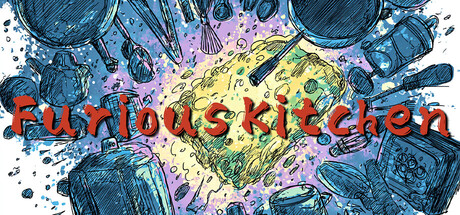
During the development of Furious Kitchen, we utilized generative Artificial Intelligence (AI) tools to assist in content creation and optimization. The specific implementations are as follows:
Programming & Scripts: We used AI programming assistants (Large Language Models) to help write and refactor underlying game logic code, as well as to assist with the implementation of the multi-language localization system and text translation.
Art Assets : Certain visual elements within the game (such as UI icons, background assets, or promotional base art) were created with the assistance of AI image generation tools. All generated images were subsequently redrawn, modified, and stylized manually by the developer to fit the game's aesthetic.
Music & Audio : Some background music or sound effect assets in the game were composed and arranged using AI audio generation tools.
This game does not feature any live-generated AI content (i.e., AI content generated in real-time while playing). All AI-assisted assets were pre-generated during the development phase and carefully reviewed to ensure they do not infringe upon any third-party copyrights.
Some parts of this game were created with the assistance of generative AI tools, including certain visual assets, sounds, and code.
All AI-generated content has been reviewed and modified by the developer to ensure quality and consistency.
This game uses AI-assisted tools during development for certain visual and technical elements. All generated content has been manually reviewed, refined, and integrated to ensure a cohesive artistic direction and high-quality player experience.
Of course, we used some artificial intelligence technologies to speed up our business processes and produce higher quality and better-performing games. We used Claude for code development, ChatGPT for visual production, created the game's cover art with ChatGPT, and wrote the game's overall code architecture with the help of Claude. These AIs significantly sped up our work, but absolutely do not think: "the developers produced this game without any hassle, using only a single prompt." This thought is completely wrong. What actually happened was that we gave these AIs some of the tasks we would have done ourselves, and they did them in stages to speed up the process. Even with this setup, it still took 6 months to finish the game.
This game was developed with AI assistance for visual assets, sound effects, localization, and code. All AI-generated content was pre-generated during development and reviewed by the developer. No real-time AI content generation occurs during gameplay.
AI-assisted tools were used for all of the game visuals, audio, and code. No AI generation occurs during gameplay, and no external AI services are used while playing.
This game was 100% developed using AI (Claude Code by Anthropic) — including game design, programming, balancing, and localization. No AI is used during gameplay.
Non-majorists are using Generative AI in everything from coding, images, audio, etc. to create games with just planning. At least it's a lot better than what I do myself.
AI tools were used in a supporting role during the development of this game. Specifically, AI was used to assist with parts of the localization process, the creation of some UI concepts and UI elements, and coding support such as drafting and organizing code. All final review, editing, implementation, and quality control were performed by the developer.
The game's code is written with the help of AI.
Every other gameplay aspects and assets, i.e. Art, Audio, etc., is human produced, with love and care sprinkled in.
This game made auxiliary use of pre-generated AI tools during solo development to improve efficiency in areas such as programming code scripts, game system data structure design, draft text writing, and the creation of certain UI icons (such as trait nodes). All AI-assisted content in the game—including code, graphic assets, and text—was thoroughly reviewed, revised, and reworked by the developer to align with the game's intended direction. This game does not include live-generated AI content that is created through real-time interaction with players.
Sector Scavengers was built almost 100% using AI agents and tools. Makko.ai created the game art, animations, and game code/logic, and the trailers were made with a combination of Grok and 11 Labs.
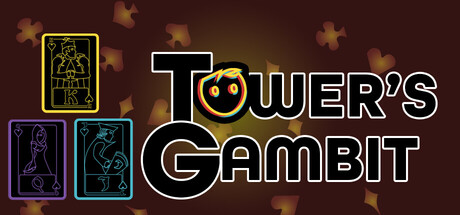
As a solo developer, I used AI as my development partner on Tower's Gambit. It has helped me code faster and prototype things quickly. Every design decision, every mechanic, every pixel of this game reflects my vision — AI just helped me get there.
Game development was accelerated through use of AI code assistants to help create and test the software code.
Language translations were provided by AI.
AI Disclosure
This game was developed by a solo developer using AI-assisted tools for image generation and coding support. All creative direction, game design, narrative, and artistic vision were conceived and executed by the developer. AI tools were used to make solo development feasible — not to replace creativity, but to support it.
AI is used to create codes for the game, also used to create some graphical elements, like usage of upscayl to create larger map, some character may also created with ai. Texture etc is hand made, (see full disclosure in credits page within the game, this page also available in demo)
This app utilized AI to use CSS styling and java-script to make the application feel more modern. such as creating UI icons like the trash bin icons, navigation slide bars, and stylizing features. It was also used to resize and upscale the main Ghost Vault logo and store image assets.
Some visual assets used in this game were created with the help of AI-assisted tools during development. AI-assisted tools were also used for parts of the programming process. No AI is used during gameplay, and the game does not generate live content for players.
This game uses AI-generated artwork for card illustrations, character portraits, arena backgrounds, and UI elements. AI was also used to assist with sound design and animation assets. Game code was developed with AI-assisted programming tools.
During development, AI tools were used to assist with code generation, debugging, and drafting of game documentation. Voice callouts were generated using AI text-to-speech and processed with radio filters to simulate authentic ATC communications.
This game uses generative AI tools during development to assist with the creation of certain art assets, text, and programming content. The gameplay design and final integration are completed by the developer. All such content has been manually reviewed, refined, and approved by the developer to ensure it fits the game's design goals and remains consistent with the materials presented on the store page.
This game utilizes generative AI tools to assist in the creation of certain content during development, including the following:
* Art / Images: Some in-game assets and promotional materials were generated using Nano Banana. All AI-generated visuals were manually edited, integrated, and refined to ensure visual consistency and quality.
* Music / Audio: Some background music tracks were generated using Suno and were subsequently manually adjusted, mixed, and refined.
* Code / Logic: AI coding assistants were used to help generate portions of programming logic and code. All final code was manually reviewed and modified by the development team.
All AI-generated content has been manually reviewed and edited before release and does not contain illegal or inappropriate material.
This game does not include live-generated AI content. All AI-assisted assets are pre-generated and finalized during development.
This game utilizes generative AI tools during development to enhance certain aspects of production. Specifically, AI was used to assist with programming tasks and sound creation. All AI-assisted content was carefully reviewed, refined, and integrated by the developer to ensure consistency and quality within the game.
AI was used for the following:
* In game code
* Capsule images
* Trailer and boss music
* Ideas and direction for the story
* In-game cinematic
* Character design and in-game portraits
* Model textures
* Achievement images
The developer utilized generative AI tools during the production phase to assist with coding and drafting marketing text. AI was also used to generate foundational 2D promotional artwork for the Steam store page, which was subsequently edited, refined, and polished manually in Photoshop.
Most of this game's content was created with the assistance of AI generation tools, except for a small portion of
hand-crafted assets. All AI-generated content was reviewed and edited by the developer. No AI is used during gameplay.
This project leverages generative AI to assist in software development and documentation processing, covering data retrieval and synthesis, localization, modular script implementation, and code logic optimization. By utilizing AI for cross-disciplinary knowledge integration and performance refactoring, all outputs undergo manual review and adjustment. This ensures that core creativity remains developer-led while enhancing development efficiency under the premise of maintaining system stability.
This game was built by a solo developer using AI-assisted coding tools throughout development, including for generating SVG code that was rendered into game icons. All creative direction, game design, and visual style decisions were made by the developer. No AI image generation models were used to create artwork.
Dead Reckoning is written, and designed by one person. I want to be precise about where AI tools do and don't appear in it.
Creative content — no generative AI. All writing, narrative, and design is mine. I've worked as a technical writer for twelve years; the game's voice is my own. All art and visual assets are hand-made or licensed from named human artists. All music and sound effects are licensed from named human creators (public domain / Creative Commons) — none of it is AI-generated. This is a hard line and I intend to keep it.
Development & release tooling — where AI assists. I use AI in the engineering and release pipeline only, never to author the game itself:
- Coding assistance while writing the game's GDScript.
- An automated QA/test harness that plays the simulation thousands of times to catch crashes and balance regressions.
- Assistance in building linters (Valve YAML sheets) that check the project's text.
- Drafting and summarizing the release notes (patch notes) from the project's changelog.
None of this creates any of the writing, art, audio, or design inside the game.
Localization. The four translations (German, French, Italian, Spanish) are machine-translated by DeepL from my English source, with automated guards that fall back to English wherever a translation would break. This is an accessibility vs. quality decision, and I decided on the former. Proper localizations are planned and will be contracted out if the budget allows.
Artificial intelligence tools were used during the development of this game.
AI-assisted tools were utilized in certain parts of the coding process and for generating some visual assets.
All AI-generated content has been reviewed, modified, and integrated by the developer to ensure consistency and quality.
During development of this game AI was used for code completion, art generation, text descriptions and a psychological/motivational/emotional support as well as release planning. Pretty much at every step of this game dev journey the AI was part of it.
This game uses AI-generated images for all in-game graphics, promotional materials, and store page assets (with the exception of some licensed UI icons). All generated graphics have been manually reviewed. Additionally, AI (Google Gemini) was used as a development tool to assist with writing code and designing game mechanics. However, the final game runs entirely offline and does not contain any live-generating AI systems.
This project was developed using advanced AI-assisted tools across visual assets, audio design, and core system implementation, with all elements carefully refined and adjusted to ensure a cohesive and polished gameplay experience.
Generative AI "Gemini" was utilized across various stages of development, including coding and image generation.
While AI helped improve development efficiency, all final adjustments and quality control were performed manually with the utmost care to ensure the best possible experience for our players.
Generative AI tools were used exclusively during the development process for brainstorming ideas and coding assistance. All in-game assets—including art, animation, audio, and narrative—were entirely created by our human team.
AI was used as a coding assistant and for assistance with sprite animation. However none of the art was fully generated by AI. All art, be it music or drawn, was originally created by myself, the sole developer, or from open source creators.
All of the game's code was generated using generative AI, and no code was manually written by the developer. The gameplay, levels, balancing, controls, and overall player experience were entirely designed, directed, tested, and ultimately approved by a human creator.
AI tools were used only during development for tasks such as code assistance and partial media creation (e.g., some music elements).
No AI systems run in the game itself, and AI does not affect gameplay or player experience
During the development of Furious Kitchen, we utilized generative Artificial Intelligence (AI) tools to assist in content creation and optimization. The specific implementations are as follows:
Programming & Scripts: We used AI programming assistants (Large Language Models) to help write and refactor underlying game logic code, as well as to assist with the implementation of the multi-language localization system and text translation.
Art Assets : Certain visual elements within the game (such as UI icons, background assets, or promotional base art) were created with the assistance of AI image generation tools. All generated images were subsequently redrawn, modified, and stylized manually by the developer to fit the game's aesthetic.
Music & Audio : Some background music or sound effect assets in the game were composed and arranged using AI audio generation tools.
This game does not feature any live-generated AI content (i.e., AI content generated in real-time while playing). All AI-assisted assets were pre-generated during the development phase and carefully reviewed to ensure they do not infringe upon any third-party copyrights.
Some parts of this game were created with the assistance of generative AI tools, including certain visual assets, sounds, and code.
All AI-generated content has been reviewed and modified by the developer to ensure quality and consistency.
This game uses AI-assisted tools during development for certain visual and technical elements. All generated content has been manually reviewed, refined, and integrated to ensure a cohesive artistic direction and high-quality player experience.
Of course, we used some artificial intelligence technologies to speed up our business processes and produce higher quality and better-performing games. We used Claude for code development, ChatGPT for visual production, created the game's cover art with ChatGPT, and wrote the game's overall code architecture with the help of Claude. These AIs significantly sped up our work, but absolutely do not think: "the developers produced this game without any hassle, using only a single prompt." This thought is completely wrong. What actually happened was that we gave these AIs some of the tasks we would have done ourselves, and they did them in stages to speed up the process. Even with this setup, it still took 6 months to finish the game.
This game was developed with AI assistance for visual assets, sound effects, localization, and code. All AI-generated content was pre-generated during development and reviewed by the developer. No real-time AI content generation occurs during gameplay.
AI-assisted tools were used for all of the game visuals, audio, and code. No AI generation occurs during gameplay, and no external AI services are used while playing.
This game was 100% developed using AI (Claude Code by Anthropic) — including game design, programming, balancing, and localization. No AI is used during gameplay.
Non-majorists are using Generative AI in everything from coding, images, audio, etc. to create games with just planning. At least it's a lot better than what I do myself.
AI tools were used in a supporting role during the development of this game. Specifically, AI was used to assist with parts of the localization process, the creation of some UI concepts and UI elements, and coding support such as drafting and organizing code. All final review, editing, implementation, and quality control were performed by the developer.
The game's code is written with the help of AI.
Every other gameplay aspects and assets, i.e. Art, Audio, etc., is human produced, with love and care sprinkled in.
This game made auxiliary use of pre-generated AI tools during solo development to improve efficiency in areas such as programming code scripts, game system data structure design, draft text writing, and the creation of certain UI icons (such as trait nodes). All AI-assisted content in the game—including code, graphic assets, and text—was thoroughly reviewed, revised, and reworked by the developer to align with the game's intended direction. This game does not include live-generated AI content that is created through real-time interaction with players.
Sector Scavengers was built almost 100% using AI agents and tools. Makko.ai created the game art, animations, and game code/logic, and the trailers were made with a combination of Grok and 11 Labs.
As a solo developer, I used AI as my development partner on Tower's Gambit. It has helped me code faster and prototype things quickly. Every design decision, every mechanic, every pixel of this game reflects my vision — AI just helped me get there.
Game development was accelerated through use of AI code assistants to help create and test the software code.
Language translations were provided by AI.
AI Disclosure
This game was developed by a solo developer using AI-assisted tools for image generation and coding support. All creative direction, game design, narrative, and artistic vision were conceived and executed by the developer. AI tools were used to make solo development feasible — not to replace creativity, but to support it.
AI is used to create codes for the game, also used to create some graphical elements, like usage of upscayl to create larger map, some character may also created with ai. Texture etc is hand made, (see full disclosure in credits page within the game, this page also available in demo)
This app utilized AI to use CSS styling and java-script to make the application feel more modern. such as creating UI icons like the trash bin icons, navigation slide bars, and stylizing features. It was also used to resize and upscale the main Ghost Vault logo and store image assets.
Some visual assets used in this game were created with the help of AI-assisted tools during development. AI-assisted tools were also used for parts of the programming process. No AI is used during gameplay, and the game does not generate live content for players.
This game uses AI-generated artwork for card illustrations, character portraits, arena backgrounds, and UI elements. AI was also used to assist with sound design and animation assets. Game code was developed with AI-assisted programming tools.
During development, AI tools were used to assist with code generation, debugging, and drafting of game documentation. Voice callouts were generated using AI text-to-speech and processed with radio filters to simulate authentic ATC communications.
This game uses generative AI tools during development to assist with the creation of certain art assets, text, and programming content. The gameplay design and final integration are completed by the developer. All such content has been manually reviewed, refined, and approved by the developer to ensure it fits the game's design goals and remains consistent with the materials presented on the store page.
This game utilizes generative AI tools to assist in the creation of certain content during development, including the following:
* Art / Images: Some in-game assets and promotional materials were generated using Nano Banana. All AI-generated visuals were manually edited, integrated, and refined to ensure visual consistency and quality.
* Music / Audio: Some background music tracks were generated using Suno and were subsequently manually adjusted, mixed, and refined.
* Code / Logic: AI coding assistants were used to help generate portions of programming logic and code. All final code was manually reviewed and modified by the development team.
All AI-generated content has been manually reviewed and edited before release and does not contain illegal or inappropriate material.
This game does not include live-generated AI content. All AI-assisted assets are pre-generated and finalized during development.
This game utilizes generative AI tools during development to enhance certain aspects of production. Specifically, AI was used to assist with programming tasks and sound creation. All AI-assisted content was carefully reviewed, refined, and integrated by the developer to ensure consistency and quality within the game.
AI was used for the following:
* In game code
* Capsule images
* Trailer and boss music
* Ideas and direction for the story
* In-game cinematic
* Character design and in-game portraits
* Model textures
* Achievement images
The developer utilized generative AI tools during the production phase to assist with coding and drafting marketing text. AI was also used to generate foundational 2D promotional artwork for the Steam store page, which was subsequently edited, refined, and polished manually in Photoshop.
Most of this game's content was created with the assistance of AI generation tools, except for a small portion of
hand-crafted assets. All AI-generated content was reviewed and edited by the developer. No AI is used during gameplay.