Public Steam disclosure research25,514 disclosures tracked
Where do games disclose AI use?
Search developers’ Steam disclosures, compare classified AI use across
games, and follow recorded changes.
This index adds cross-game classifications and statistics to
statements published on individual store pages.
Groups reflect automatic analysis of public disclosures; mature records are excluded. These counts do not measure AI use across all of Steam.
Missing or unclear statements cannot establish whether a game uses AI.
This game uses content created or assisted by generative AI. Generative AI was used to help create and edit some visual assets, music/sound materials, and scripts. All final content was reviewed, selected, and adjusted by the developer before being included in the game.
This game uses content created or assisted by generative AI. Generative AI was used to help create and edit some visual assets, music/sound materials, and scripts. All final content was reviewed, selected, and adjusted by the developer before being included in the game.
This game includes optional local AI features:
Text Generation: A local language model periodically generates in-game short story events based on the player's typing activity.
Image Generation: A local image generation model may probabilistically generate illustrations for the corresponding story when a story event is triggered.
The AI features are purely an advanced option; whether you use them or not does not affect the core gameplay experience.
This game uses generative AI for some of its content.
- 2D artwork: Some illustrations and icons, including the character portraits, were created with image-generation AI, then selected and hand-retouched by the developer before being included. The same applies to the images used on this store page.
- Text: Languages other than Japanese (English, Simplified Chinese, Traditional Chinese, Korean) are based on translations produced with a large language model.
Generative AI was not used for the music, sound effects, character voices, or 3D models. Those are licensed tracks and sound effects, recordings by voice actors, and models we made ourselves.
Generative AI is used only during development. The game never generates content with AI while you play, and it never connects to an external AI service.
Selby is a desktop AI assistant tool. It generates text responses, code, and document content in real time, and performs automated tasks to streamline your workflow.
This is a visual novel independently developed by an individual with no budget. It is based on an existing novel, with parts of the narrative text synthesized and refined using AI, which has been repeatedly checked, edited, and approved by the developer. The game's scenes and character models are also AI-generated, and have undergone extensive debugging, deletion, revision, and final confirmation before release to ensure compliance and quality.
Generative AI tools were used as development assistants for portions of game code, UI text, localization, and the preparation of some store-page copy and marketing layouts. All results were reviewed and edited by the developer. No generative AI is used during gameplay, and the game does not connect to external AI services.
This game was made with the help of generative AI tools:
• 2D art: Some of the game's 2D artwork (backgrounds, UI skins, card and joker illustrations) was created using generative AI, then selected, edited and integrated into the game by hand.
• Commentary: In-match commentary lines were produced with AI text-to-speech. All other sound effects are synthesized procedurally by the game's own code, with no AI involved.
No AI model runs while you play. The game is fully offline and never connects to any server; all of the content above is pre-generated, fixed content created during development. No player data is ever sent to any AI system.
This game uses generative AI for the following content. All of it was generated during development and shipped with the game; no content is generated at runtime.
- Music and sound effects (2 theme songs, in-game BGM, SFX): Suno
- Graphics (character art, backgrounds, event CGs, store page images): OpenAI
- Extra scenarios, concept and writing: OpenAI, Claude Code
- English text (translation of the main story and extras): Claude Code, OpenAI
- Game implementation (engine, game code): Claude Code
Starscrip uses short-form in-game text content that was created with the assistance of generative artificial intelligence.
Player facing marketing content, like release notes, may also be created with the assistance of generative artificial intelligence.
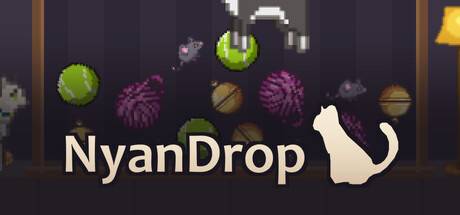
NyanDrop uses AI tools in parts of its development process, including the creation of some of the pixel artwork used in the game and on the store page, the sound effects and music, and the writing and translation of text shown in the game and on the store page. All such output is generated and reviewed in advance before being incorporated into the product, and no generative AI runs during gameplay.
All art, music and story are 100% human created. All voice acting has a live voice actor recording/performance for every line of dialogue, voice changers were used on certain characters to pitch the sound higher or lower to better suit those specific characters. Some artist-created hand-painted assets were positioned into specific starting poses and ending poses, with in-between frames generated (affecting less-than 1% of the game animations, majority (99%) are animated by hand using 2D-bone-rigging and frame-by-frame animation), some generated in-between frames were then hand-painted over before being included in the game.
Generative AI tools were used during development to assist with certain production tasks, including localization and the creation of placeholder/reference materials. No AI-generated content is created during gameplay, and the game does not connect to or use any AI services while running.
Generative AI tools were used during development to assist with concept artwork, selected in-game visual assets, and portions of written content and code. All AI-assisted material was reviewed, curated, edited, and integrated by the developer. The game does not generate AI content during gameplay.
Generative AI was used during pre-production to create early concept sketches, used purely as visual inspiration and reference. None of these initial AI-generated images appear in the final game, all art assets were subsequently created and replaced by the development team. Generative AI tools were also used to assist with writing portions of the game's code and with translating the game's text into other languages. In all cases, all output was reviewed, tested, and approved by human developers before being used in the final product.
Generative AI tools were used as production assistance for portions of the game's 2D artwork, character voices, and localization. All such content is pre-generated and manually reviewed before release. The game does not generate content with AI during play.
Generative AI tools were used to assist with programming, debugging, and improving written content.
However, the developer remained fully responsible for the game's design, direction, overall programming, integration, testing, and all final decisions.
Promotional materials and store page artwork were created with the help of generative AI and then reviewed and edited by the developer. No generative AI is used during gameplay or connects to external AI services.
Generative AI tools were used during development to create most of the game's code and assist with localization, including some store-page text. All AI-assisted outputs were manually reviewed, edited, tested, and integrated by the developer. No artwork, character designs, animations, music, sound effects, or other visual or audio assets were generated using AI. The game does not use live-generated AI during gameplay.
Live-generated: Pixie's chat feature generates the pet's replies with a language model that ships inside the product and runs entirely on the player's own computer. There is no third-party AI service, no API key and no account of any kind; the feature makes no network requests at all and works with the machine fully offline. The model is Gemma 4 E2B, licensed under the Apache License 2.0 and redistributed with the notices required by that license.
Pre-generated: written text in the product and on this store page — including the interface strings and their translations into the supported languages — was produced with the help of an AI writing assistant.
All art, animation and characters are hand-made: every sprite is drawn at runtime by a parametric pixel renderer written for this project, with no generative AI involved at any stage.
Camera and microphone input are processed entirely on-device (MediaPipe) and are never sent to any server.
The key art used in this game's store capsules and cover was created with the assistance of generative AI tools, then edited and composited by the developer (logo and layout added manually). AI tools were also used to assist with translating menu text and store page descriptions. All gameplay content — code, in-game sprites, animations, music, and sound effects — was created by human artists or licensed from human-made asset packs. No AI-generated content appears in the game itself.
Generative AI tools were used during development to assist with portions of the game’s code, gameplay data, English and Korean text, visual assets—including card, character, monster, UI, and environment artwork—and the creation of music, ambience, and sound effects.
All AI-assisted material was reviewed and selected by the developer, then edited or processed where appropriate, tested, and integrated into the game. The game does not use generative AI at runtime, and no player input or personal data is sent to generative AI services.
At this stage, some in-game text is translated using generative AI tools as a temporary solution. All other content — art, models, audio, and design — is created manually. AI translation will be replaced with professional human localization for the full release.
Some of the content in Broken Pixel was created using generative AI. All of it was produced during development, reviewed by us, and shipped as fixed, pre-generated assets — no AI runs while you play.
- Story narration: the roughly ten hours of spoken narration were generated with an AI text-to-speech model (ElevenLabs). The scripts were written with AI assistance and edited by hand.
- Player avatars: the 3D character avatars were generated with an AI image-to-3D tool (Meshy).
- Store & marketing art: the capsule and marketing images were generated with an AI image model (Runware / fal.ai).
- Soundtrack: the lounge soundtrack was generated with an AI music model (Mureka).
The gameplay itself contains no AI-generated content — every room, screen, painting and level layout is built by traditional procedural code. Nothing is generated live, and the game never connects to an AI service while you play.
Generative AI tools were used during development to create all visual artwork, sound effects, and music in Matchinko, including artwork used in store and marketing materials. AI tools also assisted with code, debugging, and drafts of some written content. All generated material was reviewed, selected, edited, tested, and integrated by the developer before inclusion. The game does not generate content using AI at runtime, connect to external AI services during play, or send player data to AI systems.
The game's code, writing (company names, event text, narrative flavor), and 2D art were created during development with AI assistance (Anthropic's Claude), directed, curated, and edited by the developer. All content is pre-generated: the game generates no AI content at runtime and connects to no AI services while you play.
Some of this game's localized text was translated with AI assistance. All translated content has been manually reviewed and proofread to ensure quality and accuracy, and does not contain any illegal or infringing material.
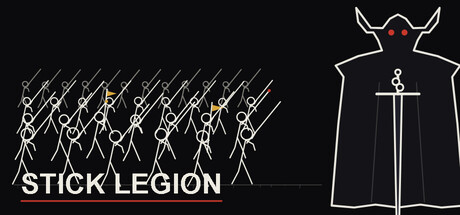
Some of Stick Legion's in-game text and promotional materials were created with the help of generative AI tools, all reviewed and edited by the developer. The game performs no live AI generation during play.
Generative AI tools assisted with parts of the development, iteration, and production process. The foundation of The Helios Accord—including its original concept, core ideas, world, systems, and narrative—was conceived, designed, and originally written by me. I direct, review, revise, and take responsibility for all AI-assisted material included in the game and its store presentation
These translations were generated with the help of AI. As an indie developer, I currently don't have the budget to hire professional translators, but I hope to do so in the future.
Some of the game's 2D artwork (card illustrations) was created with the assistance of generative AI tools, then curated, edited, and integrated by the developer. AI assistance was also used for in-game text and store page copy. All game design and final content decisions are the developer's own. The game contains no live/runtime AI-generated content.
Pre-generated only. Generative AI assisted in creating some art, music, SFX, and localization during development, all developer-reviewed. No live AI content in the shipped game.
Some pre-generated visual assets and localization text were created with the assistance of generative AI and were reviewed and edited by the developer. The game does not generate AI content during gameplay.
This game's localization (including English text) was created with the assistance of AI translation tools, reviewed by the developer. No AI-generated content is created live during gameplay.
Bar Baron's game design, code, simulation systems, balance and all in-game text are written by hand.Generative AI was used as a production tool in two places: some of the game's 3D props-furniture,
bar equipment, kitchen and decor items-were produced with AI tools, and part of the soundtrack is
AI-generated music.
Those props were made specifically for Bar Baron, following our own art direction, and were then
reviewed, optimized and placed by hand-this is not a game assembled from generic asset packs.
Character models are not AI-generated.
Nothing is generated while you play. The game runs no generative AI at runtime: every system, every
event and every number in the simulation was authored by a person.
GloomDelve's visuals, audio, and dungeons are generated procedurally by hand-written code; calculated geometry, synthesized sound, and deterministic seed-based level generation, not by generative AI. Generative AI tools were used during development to assist with translating the interface into non-English languages. The game generates no content at runtime and connects to no AI service while you play. Every run is produced by the same deterministic procedural systems.
- All in-game art was hand-drawn by several artists
- The game cover and logo were hand-drawn by an artist
- Translations from English into other languages were partially done using artificial intelligence, because hiring professional translators is expensive for us, and they often rely heavily on AI for their translations. So if you notice an error in the text, please let us know so we can correct it.
- Some of the background music was created using AI
Generative AI has only been used in the process of localization to serve our international players. We are trying our best to minimalize through out the process of localization.
Generative AI was used to assist with artwork concept drafts, music ideation, localization, and code-writing during development. All final content was reviewed and curated by the developer.
AI was used for some translations, music, and visual assets. The game does not create AI-generated content during gameplay, and AI was not used to write the game’s code.
CivEconomy: Future Leader uses locally-running AI for two optional gameplay features. All AI processing runs entirely on the player's machine — no data is sent to external servers.
Text AI (Command Processing): An on-device language model (Llama 3.2 1B via Ollama) interprets natural language player commands and classifies them into game actions. A keyword-matching fallback system works identically without AI enabled.
Image AI (Chieftain Portraits): An on-device Stable Diffusion 1.5 model generates decorative chieftain portrait images. These are purely cosmetic with no gameplay impact.
Both features are completely optional. The game is fully functional and playable without any AI features active.
This game contains pre-generated visual, audio, and text assets created with generative AI and selected, directed, edited, and integrated by the developer. It does not use live-generated AI content during gameplay.
Emergence uses generative AI as a development tool. It has been used to assist in the creation of certain visual assets (illustrations, icons, and concept art), text, and to help with software development and feature prototyping.
All content included in the game is reviewed, edited, approved, and ultimately authored by the developer. Generative AI is not used to create player-facing content during gameplay unless explicitly stated in the game's feature descriptions.
Character portraits, scene art, and voice performances were generated with licensed AI tools (PixelLab, ElevenLabs) under paid subscriptions, then curated, edited, and directed by hand.
The soundtrack is built on the developer's original compositions, produced and arranged with Suno under a paid subscription.
All game design, writing, and code are human-made. No AI generation occurs at runtime.
Parts of this game were made with AI assistance: the non-Russian text localizations and some of the source code were produced with an AI coding assistant and reviewed by the developer.
All 3D assets, artwork and audio are human-authored or licensed; the store images are rendered directly from the game's own 3D scenes.
No content is generated by AI while you play.
This game uses content created or assisted by generative AI. Generative AI was used to help create and edit some visual assets, music/sound materials, and scripts. All final content was reviewed, selected, and adjusted by the developer before being included in the game.
This game uses content created or assisted by generative AI. Generative AI was used to help create and edit some visual assets, music/sound materials, and scripts. All final content was reviewed, selected, and adjusted by the developer before being included in the game.
This game includes optional local AI features:
Text Generation: A local language model periodically generates in-game short story events based on the player's typing activity.
Image Generation: A local image generation model may probabilistically generate illustrations for the corresponding story when a story event is triggered.
The AI features are purely an advanced option; whether you use them or not does not affect the core gameplay experience.
This game uses generative AI for some of its content.
- 2D artwork: Some illustrations and icons, including the character portraits, were created with image-generation AI, then selected and hand-retouched by the developer before being included. The same applies to the images used on this store page.
- Text: Languages other than Japanese (English, Simplified Chinese, Traditional Chinese, Korean) are based on translations produced with a large language model.
Generative AI was not used for the music, sound effects, character voices, or 3D models. Those are licensed tracks and sound effects, recordings by voice actors, and models we made ourselves.
Generative AI is used only during development. The game never generates content with AI while you play, and it never connects to an external AI service.
Selby is a desktop AI assistant tool. It generates text responses, code, and document content in real time, and performs automated tasks to streamline your workflow.
This is a visual novel independently developed by an individual with no budget. It is based on an existing novel, with parts of the narrative text synthesized and refined using AI, which has been repeatedly checked, edited, and approved by the developer. The game's scenes and character models are also AI-generated, and have undergone extensive debugging, deletion, revision, and final confirmation before release to ensure compliance and quality.
Generative AI tools were used as development assistants for portions of game code, UI text, localization, and the preparation of some store-page copy and marketing layouts. All results were reviewed and edited by the developer. No generative AI is used during gameplay, and the game does not connect to external AI services.
This game was made with the help of generative AI tools:
• 2D art: Some of the game's 2D artwork (backgrounds, UI skins, card and joker illustrations) was created using generative AI, then selected, edited and integrated into the game by hand.
• Commentary: In-match commentary lines were produced with AI text-to-speech. All other sound effects are synthesized procedurally by the game's own code, with no AI involved.
No AI model runs while you play. The game is fully offline and never connects to any server; all of the content above is pre-generated, fixed content created during development. No player data is ever sent to any AI system.
This game uses generative AI for the following content. All of it was generated during development and shipped with the game; no content is generated at runtime.
- Music and sound effects (2 theme songs, in-game BGM, SFX): Suno
- Graphics (character art, backgrounds, event CGs, store page images): OpenAI
- Extra scenarios, concept and writing: OpenAI, Claude Code
- English text (translation of the main story and extras): Claude Code, OpenAI
- Game implementation (engine, game code): Claude Code
Starscrip uses short-form in-game text content that was created with the assistance of generative artificial intelligence.
Player facing marketing content, like release notes, may also be created with the assistance of generative artificial intelligence.
NyanDrop uses AI tools in parts of its development process, including the creation of some of the pixel artwork used in the game and on the store page, the sound effects and music, and the writing and translation of text shown in the game and on the store page. All such output is generated and reviewed in advance before being incorporated into the product, and no generative AI runs during gameplay.
All art, music and story are 100% human created. All voice acting has a live voice actor recording/performance for every line of dialogue, voice changers were used on certain characters to pitch the sound higher or lower to better suit those specific characters. Some artist-created hand-painted assets were positioned into specific starting poses and ending poses, with in-between frames generated (affecting less-than 1% of the game animations, majority (99%) are animated by hand using 2D-bone-rigging and frame-by-frame animation), some generated in-between frames were then hand-painted over before being included in the game.
Generative AI tools were used during development to assist with certain production tasks, including localization and the creation of placeholder/reference materials. No AI-generated content is created during gameplay, and the game does not connect to or use any AI services while running.
Generative AI tools were used during development to assist with concept artwork, selected in-game visual assets, and portions of written content and code. All AI-assisted material was reviewed, curated, edited, and integrated by the developer. The game does not generate AI content during gameplay.
Generative AI was used during pre-production to create early concept sketches, used purely as visual inspiration and reference. None of these initial AI-generated images appear in the final game, all art assets were subsequently created and replaced by the development team. Generative AI tools were also used to assist with writing portions of the game's code and with translating the game's text into other languages. In all cases, all output was reviewed, tested, and approved by human developers before being used in the final product.
Generative AI tools were used as production assistance for portions of the game's 2D artwork, character voices, and localization. All such content is pre-generated and manually reviewed before release. The game does not generate content with AI during play.
Generative AI tools were used to assist with programming, debugging, and improving written content.
However, the developer remained fully responsible for the game's design, direction, overall programming, integration, testing, and all final decisions.
Promotional materials and store page artwork were created with the help of generative AI and then reviewed and edited by the developer. No generative AI is used during gameplay or connects to external AI services.
Generative AI tools were used during development to create most of the game's code and assist with localization, including some store-page text. All AI-assisted outputs were manually reviewed, edited, tested, and integrated by the developer. No artwork, character designs, animations, music, sound effects, or other visual or audio assets were generated using AI. The game does not use live-generated AI during gameplay.
Live-generated: Pixie's chat feature generates the pet's replies with a language model that ships inside the product and runs entirely on the player's own computer. There is no third-party AI service, no API key and no account of any kind; the feature makes no network requests at all and works with the machine fully offline. The model is Gemma 4 E2B, licensed under the Apache License 2.0 and redistributed with the notices required by that license.
Pre-generated: written text in the product and on this store page — including the interface strings and their translations into the supported languages — was produced with the help of an AI writing assistant.
All art, animation and characters are hand-made: every sprite is drawn at runtime by a parametric pixel renderer written for this project, with no generative AI involved at any stage.
Camera and microphone input are processed entirely on-device (MediaPipe) and are never sent to any server.
The key art used in this game's store capsules and cover was created with the assistance of generative AI tools, then edited and composited by the developer (logo and layout added manually). AI tools were also used to assist with translating menu text and store page descriptions. All gameplay content — code, in-game sprites, animations, music, and sound effects — was created by human artists or licensed from human-made asset packs. No AI-generated content appears in the game itself.
Generative AI tools were used during development to assist with portions of the game’s code, gameplay data, English and Korean text, visual assets—including card, character, monster, UI, and environment artwork—and the creation of music, ambience, and sound effects.
All AI-assisted material was reviewed and selected by the developer, then edited or processed where appropriate, tested, and integrated into the game. The game does not use generative AI at runtime, and no player input or personal data is sent to generative AI services.
At this stage, some in-game text is translated using generative AI tools as a temporary solution. All other content — art, models, audio, and design — is created manually. AI translation will be replaced with professional human localization for the full release.
Some of the content in Broken Pixel was created using generative AI. All of it was produced during development, reviewed by us, and shipped as fixed, pre-generated assets — no AI runs while you play.
- Story narration: the roughly ten hours of spoken narration were generated with an AI text-to-speech model (ElevenLabs). The scripts were written with AI assistance and edited by hand.
- Player avatars: the 3D character avatars were generated with an AI image-to-3D tool (Meshy).
- Store & marketing art: the capsule and marketing images were generated with an AI image model (Runware / fal.ai).
- Soundtrack: the lounge soundtrack was generated with an AI music model (Mureka).
The gameplay itself contains no AI-generated content — every room, screen, painting and level layout is built by traditional procedural code. Nothing is generated live, and the game never connects to an AI service while you play.
Generative AI tools were used during development to create all visual artwork, sound effects, and music in Matchinko, including artwork used in store and marketing materials. AI tools also assisted with code, debugging, and drafts of some written content. All generated material was reviewed, selected, edited, tested, and integrated by the developer before inclusion. The game does not generate content using AI at runtime, connect to external AI services during play, or send player data to AI systems.
The game's code, writing (company names, event text, narrative flavor), and 2D art were created during development with AI assistance (Anthropic's Claude), directed, curated, and edited by the developer. All content is pre-generated: the game generates no AI content at runtime and connects to no AI services while you play.
Some of this game's localized text was translated with AI assistance. All translated content has been manually reviewed and proofread to ensure quality and accuracy, and does not contain any illegal or infringing material.
Some of Stick Legion's in-game text and promotional materials were created with the help of generative AI tools, all reviewed and edited by the developer. The game performs no live AI generation during play.
Generative AI tools assisted with parts of the development, iteration, and production process. The foundation of The Helios Accord—including its original concept, core ideas, world, systems, and narrative—was conceived, designed, and originally written by me. I direct, review, revise, and take responsibility for all AI-assisted material included in the game and its store presentation
These translations were generated with the help of AI. As an indie developer, I currently don't have the budget to hire professional translators, but I hope to do so in the future.
Some of the game's 2D artwork (card illustrations) was created with the assistance of generative AI tools, then curated, edited, and integrated by the developer. AI assistance was also used for in-game text and store page copy. All game design and final content decisions are the developer's own. The game contains no live/runtime AI-generated content.
Pre-generated only. Generative AI assisted in creating some art, music, SFX, and localization during development, all developer-reviewed. No live AI content in the shipped game.
Some pre-generated visual assets and localization text were created with the assistance of generative AI and were reviewed and edited by the developer. The game does not generate AI content during gameplay.
This game's localization (including English text) was created with the assistance of AI translation tools, reviewed by the developer. No AI-generated content is created live during gameplay.
Bar Baron's game design, code, simulation systems, balance and all in-game text are written by hand.Generative AI was used as a production tool in two places: some of the game's 3D props-furniture,
bar equipment, kitchen and decor items-were produced with AI tools, and part of the soundtrack is
AI-generated music.
Those props were made specifically for Bar Baron, following our own art direction, and were then
reviewed, optimized and placed by hand-this is not a game assembled from generic asset packs.
Character models are not AI-generated.
Nothing is generated while you play. The game runs no generative AI at runtime: every system, every
event and every number in the simulation was authored by a person.
GloomDelve's visuals, audio, and dungeons are generated procedurally by hand-written code; calculated geometry, synthesized sound, and deterministic seed-based level generation, not by generative AI. Generative AI tools were used during development to assist with translating the interface into non-English languages. The game generates no content at runtime and connects to no AI service while you play. Every run is produced by the same deterministic procedural systems.
- All in-game art was hand-drawn by several artists
- The game cover and logo were hand-drawn by an artist
- Translations from English into other languages were partially done using artificial intelligence, because hiring professional translators is expensive for us, and they often rely heavily on AI for their translations. So if you notice an error in the text, please let us know so we can correct it.
- Some of the background music was created using AI
Generative AI has only been used in the process of localization to serve our international players. We are trying our best to minimalize through out the process of localization.
Generative AI was used to assist with artwork concept drafts, music ideation, localization, and code-writing during development. All final content was reviewed and curated by the developer.
AI was used for some translations, music, and visual assets. The game does not create AI-generated content during gameplay, and AI was not used to write the game’s code.
CivEconomy: Future Leader uses locally-running AI for two optional gameplay features. All AI processing runs entirely on the player's machine — no data is sent to external servers.
Text AI (Command Processing): An on-device language model (Llama 3.2 1B via Ollama) interprets natural language player commands and classifies them into game actions. A keyword-matching fallback system works identically without AI enabled.
Image AI (Chieftain Portraits): An on-device Stable Diffusion 1.5 model generates decorative chieftain portrait images. These are purely cosmetic with no gameplay impact.
Both features are completely optional. The game is fully functional and playable without any AI features active.
This game contains pre-generated visual, audio, and text assets created with generative AI and selected, directed, edited, and integrated by the developer. It does not use live-generated AI content during gameplay.
Emergence uses generative AI as a development tool. It has been used to assist in the creation of certain visual assets (illustrations, icons, and concept art), text, and to help with software development and feature prototyping.
All content included in the game is reviewed, edited, approved, and ultimately authored by the developer. Generative AI is not used to create player-facing content during gameplay unless explicitly stated in the game's feature descriptions.
Character portraits, scene art, and voice performances were generated with licensed AI tools (PixelLab, ElevenLabs) under paid subscriptions, then curated, edited, and directed by hand.
The soundtrack is built on the developer's original compositions, produced and arranged with Suno under a paid subscription.
All game design, writing, and code are human-made. No AI generation occurs at runtime.
Parts of this game were made with AI assistance: the non-Russian text localizations and some of the source code were produced with an AI coding assistant and reviewed by the developer.
All 3D assets, artwork and audio are human-authored or licensed; the store images are rendered directly from the game's own 3D scenes.
No content is generated by AI while you play.