Public Steam disclosure research25,376 disclosures tracked
Where do games disclose AI use?
Search developers’ Steam disclosures, compare classified AI use across
games, and follow recorded changes.
This index adds cross-game classifications and statistics to
statements published on individual store pages.
Groups reflect automatic analysis of public disclosures; mature records are excluded. These counts do not measure AI use across all of Steam.
Missing or unclear statements cannot establish whether a game uses AI.
All images, text, music, code, and other important parts of the game are created manually.
We have used AI for some of the translation, as well as for creating some textures (for example - wall posters). The usage is minimal, and you probably won't notice it. This is done to speed up the development process. In the future, we may replace these assets if we deem it necessary.
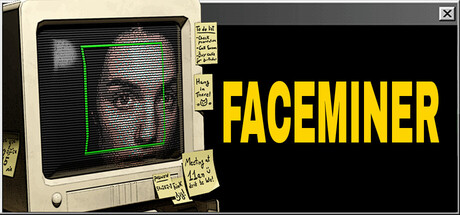
FACEMINER is a concept-driven game that directly engages with the ethics of AI. For thematic purposes, the game features faces which have been generated by a GAN (Generative Adversarial Network) trained on the FFHQ dataset, a research dataset released by NVIDIA that is the backbone of many real-world facial recognition applications. Per NVIDIA, only images under permissive licenses were collected.
The 'AI training' in this game is fictional and has been simulated for entertainment purposes. The game can be interpreted as a critique of AI specifically relating to the ecological impact of mass data hoarding, surveillance concerns, and way it is used to compound corporate power.
The use of AI in Vice Undercover was strictly limited to enhancing a limited number of database images, such as some faces, objects, and locations. All images began with original photographs taken by the team, which were then used to create datasets for generating initial concepts. These AI-generated images were not used as-is—instead, they served as a starting point for detailed, creative transformation. Every final image was extensively painted, composited, and refined using original photographs and artistic elements, ensuring that all visuals align with the game's unique style and authenticity. AI was simply one tool in a much larger creative process driven by human artistry.
1. We used ChatGPT-4 to make some custom javascript plugins.
2. Used ChatGPT-4/DALL-E3 to generate some of the faces of NPC's, also some icons for the system menu.
1. We used ChatGPT-4 to make some custom javascript plugins.
2. Used ChatGPT-4/DALL-E3 to generate some of the faces of NPC's, also some icons for the system menu.
—Some background images and illustrations
—Involving promotional art materials
—A small number of image assets, including visual images and page backgrounds
—Part of the content of the main promotional image
AI-Rendered Images (Stable Diffusion)
1 x Skybox for the exterior world of the laboratory
5 x projected graphics of the slide projector
2 x wall murals (astronaut on Martian moon Deimos, rocket)
2 x technical drawings on lab table
My game uses AI quite frequently. Every logo you see is a product of the collaboration between a human and an AI. Every song you hear is a product of human-AI collaboration. Every player report card uses AI generated text modularly pieced together from smaller chunks.
The match commentator is using an AI generated voice.
This is a modern game that uses modern technology to its full potential.
The game includes several textures that were initially generated using AI and subsequently refined through manual editing.
There aren't many such objects in the game.
Localizations to languages with an in-game marking "BETA" (French, Spanish, Italian, Swedish) have been created using generative artificial intelligence.
Isolation Simulator is a one-person passion project. To be fully transparent:
I recorded all the voice lines myself, then used AI voice filters to create different character voices.
Some background wall art and a few music tracks/instrumentals were created or enhanced with AI tools.
Everything else — gameplay systems, level design, ARG mechanics, most 2D assets, lore, writing, and core experience — was made manually by me.
I used AI only where it helped me focus on what matters most to me: deep storytelling, player observation mechanics, and a complex ARG. I know some players have strong feelings about AI in games — I respect that. This is simply how I was able to finish the game as a solo developer.
All images, text, music, code, and other important parts of the game are created manually.
We have used AI for some of the translation, as well as for creating some textures (for example - wall posters). The usage is minimal, and you probably won't notice it. This is done to speed up the development process. In the future, we may replace these assets if we deem it necessary.
FACEMINER is a concept-driven game that directly engages with the ethics of AI. For thematic purposes, the game features faces which have been generated by a GAN (Generative Adversarial Network) trained on the FFHQ dataset, a research dataset released by NVIDIA that is the backbone of many real-world facial recognition applications. Per NVIDIA, only images under permissive licenses were collected.
The 'AI training' in this game is fictional and has been simulated for entertainment purposes. The game can be interpreted as a critique of AI specifically relating to the ecological impact of mass data hoarding, surveillance concerns, and way it is used to compound corporate power.
The use of AI in Vice Undercover was strictly limited to enhancing a limited number of database images, such as some faces, objects, and locations. All images began with original photographs taken by the team, which were then used to create datasets for generating initial concepts. These AI-generated images were not used as-is—instead, they served as a starting point for detailed, creative transformation. Every final image was extensively painted, composited, and refined using original photographs and artistic elements, ensuring that all visuals align with the game's unique style and authenticity. AI was simply one tool in a much larger creative process driven by human artistry.
1. We used ChatGPT-4 to make some custom javascript plugins.
2. Used ChatGPT-4/DALL-E3 to generate some of the faces of NPC's, also some icons for the system menu.
1. We used ChatGPT-4 to make some custom javascript plugins.
2. Used ChatGPT-4/DALL-E3 to generate some of the faces of NPC's, also some icons for the system menu.
—Some background images and illustrations
—Involving promotional art materials
—A small number of image assets, including visual images and page backgrounds
—Part of the content of the main promotional image
AI-Rendered Images (Stable Diffusion)
1 x Skybox for the exterior world of the laboratory
5 x projected graphics of the slide projector
2 x wall murals (astronaut on Martian moon Deimos, rocket)
2 x technical drawings on lab table
My game uses AI quite frequently. Every logo you see is a product of the collaboration between a human and an AI. Every song you hear is a product of human-AI collaboration. Every player report card uses AI generated text modularly pieced together from smaller chunks.
The match commentator is using an AI generated voice.
This is a modern game that uses modern technology to its full potential.
The game includes several textures that were initially generated using AI and subsequently refined through manual editing.
There aren't many such objects in the game.
Localizations to languages with an in-game marking "BETA" (French, Spanish, Italian, Swedish) have been created using generative artificial intelligence.
Isolation Simulator is a one-person passion project. To be fully transparent:
I recorded all the voice lines myself, then used AI voice filters to create different character voices.
Some background wall art and a few music tracks/instrumentals were created or enhanced with AI tools.
Everything else — gameplay systems, level design, ARG mechanics, most 2D assets, lore, writing, and core experience — was made manually by me.
I used AI only where it helped me focus on what matters most to me: deep storytelling, player observation mechanics, and a complex ARG. I know some players have strong feelings about AI in games — I respect that. This is simply how I was able to finish the game as a solo developer.