Public Steam disclosure research25,380 disclosures tracked
Where do games disclose AI use?
Search developers’ Steam disclosures, compare classified AI use across
games, and follow recorded changes.
This index adds cross-game classifications and statistics to
statements published on individual store pages.
Groups reflect automatic analysis of public disclosures; mature records are excluded. These counts do not measure AI use across all of Steam.
Missing or unclear statements cannot establish whether a game uses AI.
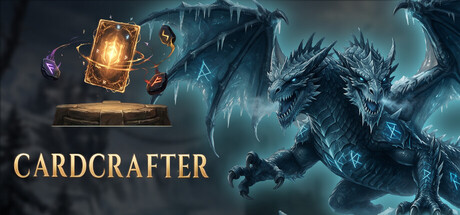
CardCrafter uses generative AI to create some of the content shipped with the game:
• Art: card illustrations, character and enemy portraits, icons, currencies and background scenes are created primarily with generative image models, then curated, post-processed and integrated by human.
• Audio: some sound effects and background music are created with generative AI tools.
• Text & localization: In-game text such as card descriptions is drafted with AI assistance and edited by hand; the Simplified Chinese and English localizations are machine-translated first, then human-proofread.
All of this content is pre-generated during development and baked into the game. The game does not generate any AI content at runtime, and never sends player input to an AI. Everything produced with AI is reviewed and selected by human before inclusion.
All voices are Ai generated along with the soundtracks. They are however created under strict instructions and hours of testing to get them right. Ai assisted in creating models/props.
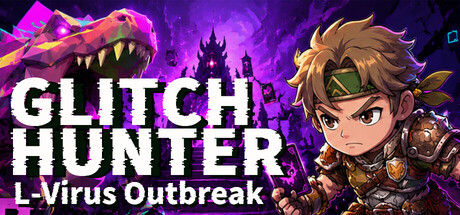
Hi! I’m a solo indie developer working on this game during my free time outside of daily life.
To bring this project to life with limited time and resources, I used AI tools to assist parts of the development process, such as brainstorming, early prototypes, draft writing, and iteration support.
However, the core game design, gameplay systems, story structure, balancing, and final implementation were all personally planned, edited, and integrated by me.
AI is a tool that helps me turn ideas into something playable—it does not replace the creative decisions behind this game.
I know people may have different opinions about AI, so I want to be transparent about it.
Thank you for playing and supporting my work.
I hope you enjoy exploring this broken, virus-corrupted world.
Some visual assets and text content used in this game were created or assisted by generative artificial intelligence tools. All AI-generated content has been reviewed, edited, and integrated by the development team to ensure consistency with the game's design and quality standards.
AI tools (Claude, Gemini, Copilot) were used to assist with game source code development. No visual or audio content is generated by AI at runtime.
Narzędzia AI (Claude, Gemini, Copilot) były wykorzystywane jako wsparcie przy tworzeniu kodu źródłowego gry. Treści wizualne i dźwiękowe nie są generowane przez AI w czasie rzeczywistym.
Generative AI tools were used during development to create and assist with many of the game's visual assets, including character artwork, card illustrations, backgrounds, and UI elements. These assets were generated during development and are included in the game as pre-generated, static content. The game does not use generative AI to create content during gameplay.
Generative AI tools were used during development to help create and refine pre generated visual assets, text and localization, and code. All AI-assisted material included in the game was reviewed and integrated by the developer, with further editing where needed. The game does not use live generative AI and does not generate content during gameplay.
Generative AI tools were used during development to assist with the creation and refinement of some pre-generated visual artwork and marketing assets. All AI-assisted content was reviewed, edited, and integrated by the developer. Ancient Duel does not generate AI content during gameplay.
Our visual development workflow uses generative AI to create parts of graphical elements and textures. Every AI-assisted visual asset is reviewed, edited and polished by our team to maintain a consistent visual standard across the game.
Artificial intelligence tools were utilized as a reference and assistive aid in the creation of certain art assets, audio elements, and localization translations for this game.
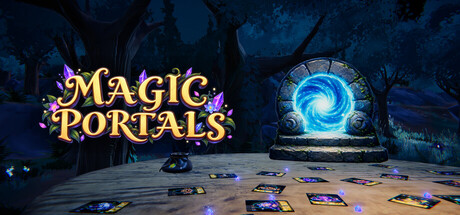
Some of the 3D models used for the table and room background in this game were created with the assistance of a generative AI (text-to-3D) tool, and were then adjusted and integrated by the developer. All other assets — including the dictionary data, UI artwork, sound, and all in-game text — were produced without generative AI. No content is generated by AI while you play.
AI was only used to generate minimal resources to support unit design and partial localization.
All AI-assisted content has been reviewed, and the final assets were manually drawn to fit the game's artistic style and atmosphere.
Store page assets: These were primarily created by our designers through composition and arrangement of existing in-game assets, followed by minor AI-assisted adjustments to atmosphere (e.g., lighting, color tones). All final images have undergone thorough human review and refinement. The core design work was completed by our designers, with AI serving only as a supplementary tool to enhance the final presentation.
The 2D art in OBOLUS is made with image generation models running locally on my own machine — Stable Diffusion XL through ComfyUI, including a style model I trained myself on 1930s cartoon references. None of it is a raw output: every sprite, backdrop, card frame and icon was directed through many passes, then cut out, colour-corrected, upscaled and assembled frame by frame into animation sheets.
Everything else is not AI: the rules, every card and every number on it, the balance, the 22 heroes, the six lands, the writing and the interface. The sound effects are synthesised by code written for this game.
Nothing is generated while you play. The game makes no network calls and ships with no model — nothing runs on your machine, and none of your data goes anywhere.
AI coding assistants were used during development to help create and edit portions of the code and player-facing implementation that ship with the game. The game's 2D artwork was not created by an image-generation model. All AI-assisted outputs were reviewed, edited, and integrated by the developer. The game does not use generative AI at runtime.
HASSO uses generative AI tools for part of its pre-produced content: the card illustrations, and the translation of the game's text into the languages it supports. All AI-generated content is reviewed and curated before it is included in the game. The user interface icons, the music and the sound effects are not AI-generated. No content is generated by AI at runtime: the player never sends prompts and never receives live AI output.
Some of the art in this game was made with the help of generative AI. The voxel character portraits were generated from written prompts using an AI image generator, then cut out, colour-corrected, posed and animated by hand by the developer. The store page capsules and the achievement icons are composed from that same character art. Parts of the store page text, and the game's translations into its eight supported languages, were produced with AI assistance and reviewed by the developer.
No generative AI runs while you play — nothing is generated in real time. The patrons' behaviour is ordinary game AI: hand-written rules and probability tables. The music and every sound effect are not AI-generated; they are synthesised procedurally.
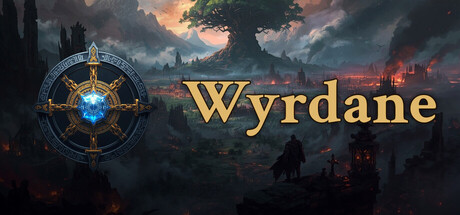
Wyrdane uses AI-generated artwork for its card illustrations. As a solo developer working without a starting budget, this is a pragmatic choice to bring the game's world to life and test its mechanics without a professional illustration budget. If the project finds its audience, the goal is to progressively replace these visuals with artwork made by human illustrators.
Game design, card balance, game mechanics, world-building, and creative direction are entirely human-made. AI is a production tool, not the creator of this game.
This game uses generative AI in a limited way. AI tools were used only to help create some of the store page and library artwork (such as the capsule images used to display the game in the Steam library and store). The game itself contains no AI-generated content.
All in-game art, assets, screenshots, and the trailer were created without generative AI. No AI content is generated while you play.
Generative AI tools were used in part during the development of this
game.
· Some character concept art and illustrations were produced using
generative AI tools. All such images were subsequently reviewed and
adjusted by our development team before being used in the game.
· The images shipped in the game are the result of that review and
adjustment process.
Game design, systems, programming, rules, and balancing were created
by our development team without generative AI.
The game's 2D artwork, including card and unit illustrations, worker portraits, and store assets, was generated with AI image tools and then reviewed, selected, and edited by the developer. Parts of the in-game text and localizations were also written with AI assistance. The game does not generate any content with AI at runtime.
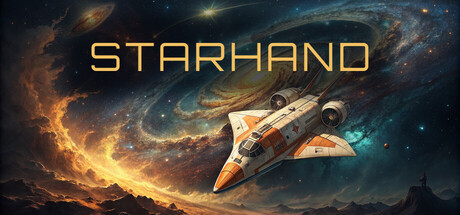
The visual art, music, sound effects, pilot voice lines and written text in Starhand were created using generative AI tools — Recraft for illustration, Suno for music, and ElevenLabs for voice and sound effects — and were then selected, edited and assembled by the developer. All of it is generated ahead of time and ships as fixed assets: the game does not generate any content while you play, and it does not connect to any AI service at runtime.
Generative AI tools were used during development to create some pre-generated 2D concept art and visual assets that appear in the game and its marketing materials. These assets were selected, edited, integrated, and reviewed by the development team. The game does not generate AI content while it is running.
Some shipped content was created with the help of generative AI tools and then reviewed and edited by the developer: parts of the store and marketing artwork, the trailer music, and the first drafts of the interface translations (German, Spanish, French, Polish, Brazilian Portuguese). All gameplay, rules logic and code are deterministic and human-reviewed. The game does not generate any AI content at runtime.
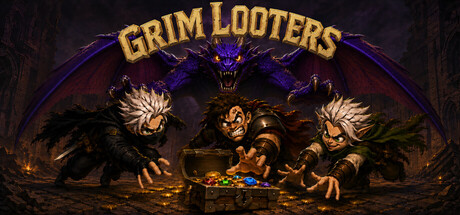
The visual assets in Grim Looters — character, monster, item and card artwork, plus the store and marketing images — were created with the assistance of generative AI image tools and then curated, edited, and assembled by the developer. Some background music was AI-assisted. All AI-generated content is reviewed by the developer to ensure it is appropriate and cleared for use. No AI content is generated live during gameplay.
Generative AI tools were used during development to assist with programming and to create or refine portions of the game’s artwork, visual assets, sound effects, and other audio. All AI-assisted content was selected, edited, integrated, and reviewed by the developer. The game does not generate AI content or connect to external AI services during gameplay.
Generative AI was used during development to assist with some
pre-generated 2D artwork, icons, card and character illustrations,
store graphical assets, localization, written content, and portions
of code implementation. All outputs were reviewed, selected, edited
where needed, and manually integrated by the developer. The game
does not generate AI content or code during gameplay.
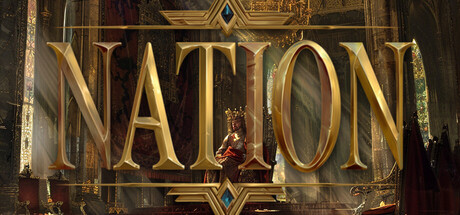
Some of Nation's 2D artwork — character portraits, card illustrations, backgrounds, and store/marketing images — was created with the assistance of generative AI tools, then selected, edited, and composited by our team. All game design, rules, writing, and code are human-made. The game does not generate content with AI while you play.
This game uses generative AI for the following:
Images: the source material for both the scene artwork and the item icons (backpack, hand cart and so on) is photographs taken by the developer — the scenes in the lanes, stairwells and apartment courtyards of Anping, Tainan; the items shot as physical objects. Each photograph is processed first — removing things that should not appear in frame, commercial branding, and anything touching on privacy — and then stylised into animation by AI.
Music: planned to be AI-generated (not yet implemented).
Localisation: Traditional Chinese is the language the game is written in. Every other language — English, Japanese, German, and Taiwanese Pe̍h-ōe-jī — is AI-translated, with no native-speaker editing pass. If you find a mistake, please do tell me.
Store page and marketing images also include AI-generated elements.
AI-generated content is used in this product. The store page capsule artwork was created using an AI image generation tool. Portions of the store page description text were drafted with the assistance of an AI writing tool and reviewed/edited by the developer.
Generative AI tools were used to assist in creating initial visual assets (such as background textures and UI elements). All generated assets have been manually edited, refined, and integrated into the game by the developer.
Generative artwork is used in the creation of part or full of assets that can not be generated by the game engine. AI is used in the drafting of art and writing before it is reviewed and heavily edited.
Portions of this game's written content were drafted with the assistance of Anthropic's Claude, under the direction of the developer, and were reviewed and edited by a human before inclusion. All artwork is procedurally rendered by the game's own code. No generative AI images are used. No AI content is generated during gameplay.
The 2D background images in the main menu and the promotional (capsule) designs used on the Steam store page were created with the help of generative AI tools and subsequently edited manually. The characters, battlefields, and in-game pixel art graphics that make up the core game experience are completely outside of this scope.
The majority of the game's programming was done by AI.
For the in-game text, AI is utilized as a supplementary tool to improve grammar, but all text is ultimately checked and adjusted manually. AI is also used for translating the game into other languages.
However, no AI is used whatsoever for the illustrations or UI.
Generative AI was used in the development of this game. 2D artwork (characters, familiars, cards, backgrounds, etc.) was created with image-generation AI, then curated, edited, and retouched by the developer. AI-assisted tools were also used during development (e.g., programming). No AI content is generated at runtime. BOT opponents are rule-based programs, not generative AI.
CardCrafter uses generative AI to create some of the content shipped with the game:
• Art: card illustrations, character and enemy portraits, icons, currencies and background scenes are created primarily with generative image models, then curated, post-processed and integrated by human.
• Audio: some sound effects and background music are created with generative AI tools.
• Text & localization: In-game text such as card descriptions is drafted with AI assistance and edited by hand; the Simplified Chinese and English localizations are machine-translated first, then human-proofread.
All of this content is pre-generated during development and baked into the game. The game does not generate any AI content at runtime, and never sends player input to an AI. Everything produced with AI is reviewed and selected by human before inclusion.
All voices are Ai generated along with the soundtracks. They are however created under strict instructions and hours of testing to get them right. Ai assisted in creating models/props.
Hi! I’m a solo indie developer working on this game during my free time outside of daily life.
To bring this project to life with limited time and resources, I used AI tools to assist parts of the development process, such as brainstorming, early prototypes, draft writing, and iteration support.
However, the core game design, gameplay systems, story structure, balancing, and final implementation were all personally planned, edited, and integrated by me.
AI is a tool that helps me turn ideas into something playable—it does not replace the creative decisions behind this game.
I know people may have different opinions about AI, so I want to be transparent about it.
Thank you for playing and supporting my work.
I hope you enjoy exploring this broken, virus-corrupted world.
Some visual assets and text content used in this game were created or assisted by generative artificial intelligence tools. All AI-generated content has been reviewed, edited, and integrated by the development team to ensure consistency with the game's design and quality standards.
AI tools (Claude, Gemini, Copilot) were used to assist with game source code development. No visual or audio content is generated by AI at runtime.
Narzędzia AI (Claude, Gemini, Copilot) były wykorzystywane jako wsparcie przy tworzeniu kodu źródłowego gry. Treści wizualne i dźwiękowe nie są generowane przez AI w czasie rzeczywistym.
Generative AI tools were used during development to create and assist with many of the game's visual assets, including character artwork, card illustrations, backgrounds, and UI elements. These assets were generated during development and are included in the game as pre-generated, static content. The game does not use generative AI to create content during gameplay.
Generative AI tools were used during development to help create and refine pre generated visual assets, text and localization, and code. All AI-assisted material included in the game was reviewed and integrated by the developer, with further editing where needed. The game does not use live generative AI and does not generate content during gameplay.
Generative AI tools were used during development to assist with the creation and refinement of some pre-generated visual artwork and marketing assets. All AI-assisted content was reviewed, edited, and integrated by the developer. Ancient Duel does not generate AI content during gameplay.
Our visual development workflow uses generative AI to create parts of graphical elements and textures. Every AI-assisted visual asset is reviewed, edited and polished by our team to maintain a consistent visual standard across the game.
Artificial intelligence tools were utilized as a reference and assistive aid in the creation of certain art assets, audio elements, and localization translations for this game.
Some of the 3D models used for the table and room background in this game were created with the assistance of a generative AI (text-to-3D) tool, and were then adjusted and integrated by the developer. All other assets — including the dictionary data, UI artwork, sound, and all in-game text — were produced without generative AI. No content is generated by AI while you play.
AI was only used to generate minimal resources to support unit design and partial localization.
All AI-assisted content has been reviewed, and the final assets were manually drawn to fit the game's artistic style and atmosphere.
Store page assets: These were primarily created by our designers through composition and arrangement of existing in-game assets, followed by minor AI-assisted adjustments to atmosphere (e.g., lighting, color tones). All final images have undergone thorough human review and refinement. The core design work was completed by our designers, with AI serving only as a supplementary tool to enhance the final presentation.
The 2D art in OBOLUS is made with image generation models running locally on my own machine — Stable Diffusion XL through ComfyUI, including a style model I trained myself on 1930s cartoon references. None of it is a raw output: every sprite, backdrop, card frame and icon was directed through many passes, then cut out, colour-corrected, upscaled and assembled frame by frame into animation sheets.
Everything else is not AI: the rules, every card and every number on it, the balance, the 22 heroes, the six lands, the writing and the interface. The sound effects are synthesised by code written for this game.
Nothing is generated while you play. The game makes no network calls and ships with no model — nothing runs on your machine, and none of your data goes anywhere.
AI coding assistants were used during development to help create and edit portions of the code and player-facing implementation that ship with the game. The game's 2D artwork was not created by an image-generation model. All AI-assisted outputs were reviewed, edited, and integrated by the developer. The game does not use generative AI at runtime.
HASSO uses generative AI tools for part of its pre-produced content: the card illustrations, and the translation of the game's text into the languages it supports. All AI-generated content is reviewed and curated before it is included in the game. The user interface icons, the music and the sound effects are not AI-generated. No content is generated by AI at runtime: the player never sends prompts and never receives live AI output.
Some of the art in this game was made with the help of generative AI. The voxel character portraits were generated from written prompts using an AI image generator, then cut out, colour-corrected, posed and animated by hand by the developer. The store page capsules and the achievement icons are composed from that same character art. Parts of the store page text, and the game's translations into its eight supported languages, were produced with AI assistance and reviewed by the developer.
No generative AI runs while you play — nothing is generated in real time. The patrons' behaviour is ordinary game AI: hand-written rules and probability tables. The music and every sound effect are not AI-generated; they are synthesised procedurally.
Wyrdane uses AI-generated artwork for its card illustrations. As a solo developer working without a starting budget, this is a pragmatic choice to bring the game's world to life and test its mechanics without a professional illustration budget. If the project finds its audience, the goal is to progressively replace these visuals with artwork made by human illustrators.
Game design, card balance, game mechanics, world-building, and creative direction are entirely human-made. AI is a production tool, not the creator of this game.
This game uses generative AI in a limited way. AI tools were used only to help create some of the store page and library artwork (such as the capsule images used to display the game in the Steam library and store). The game itself contains no AI-generated content.
All in-game art, assets, screenshots, and the trailer were created without generative AI. No AI content is generated while you play.
Generative AI tools were used in part during the development of this
game.
· Some character concept art and illustrations were produced using
generative AI tools. All such images were subsequently reviewed and
adjusted by our development team before being used in the game.
· The images shipped in the game are the result of that review and
adjustment process.
Game design, systems, programming, rules, and balancing were created
by our development team without generative AI.
The game's 2D artwork, including card and unit illustrations, worker portraits, and store assets, was generated with AI image tools and then reviewed, selected, and edited by the developer. Parts of the in-game text and localizations were also written with AI assistance. The game does not generate any content with AI at runtime.
The visual art, music, sound effects, pilot voice lines and written text in Starhand were created using generative AI tools — Recraft for illustration, Suno for music, and ElevenLabs for voice and sound effects — and were then selected, edited and assembled by the developer. All of it is generated ahead of time and ships as fixed assets: the game does not generate any content while you play, and it does not connect to any AI service at runtime.
Generative AI tools were used during development to create some pre-generated 2D concept art and visual assets that appear in the game and its marketing materials. These assets were selected, edited, integrated, and reviewed by the development team. The game does not generate AI content while it is running.
Some shipped content was created with the help of generative AI tools and then reviewed and edited by the developer: parts of the store and marketing artwork, the trailer music, and the first drafts of the interface translations (German, Spanish, French, Polish, Brazilian Portuguese). All gameplay, rules logic and code are deterministic and human-reviewed. The game does not generate any AI content at runtime.
The visual assets in Grim Looters — character, monster, item and card artwork, plus the store and marketing images — were created with the assistance of generative AI image tools and then curated, edited, and assembled by the developer. Some background music was AI-assisted. All AI-generated content is reviewed by the developer to ensure it is appropriate and cleared for use. No AI content is generated live during gameplay.
Generative AI tools were used during development to assist with programming and to create or refine portions of the game’s artwork, visual assets, sound effects, and other audio. All AI-assisted content was selected, edited, integrated, and reviewed by the developer. The game does not generate AI content or connect to external AI services during gameplay.
Generative AI was used during development to assist with some
pre-generated 2D artwork, icons, card and character illustrations,
store graphical assets, localization, written content, and portions
of code implementation. All outputs were reviewed, selected, edited
where needed, and manually integrated by the developer. The game
does not generate AI content or code during gameplay.
Some of Nation's 2D artwork — character portraits, card illustrations, backgrounds, and store/marketing images — was created with the assistance of generative AI tools, then selected, edited, and composited by our team. All game design, rules, writing, and code are human-made. The game does not generate content with AI while you play.
This game uses generative AI for the following:
Images: the source material for both the scene artwork and the item icons (backpack, hand cart and so on) is photographs taken by the developer — the scenes in the lanes, stairwells and apartment courtyards of Anping, Tainan; the items shot as physical objects. Each photograph is processed first — removing things that should not appear in frame, commercial branding, and anything touching on privacy — and then stylised into animation by AI.
Music: planned to be AI-generated (not yet implemented).
Localisation: Traditional Chinese is the language the game is written in. Every other language — English, Japanese, German, and Taiwanese Pe̍h-ōe-jī — is AI-translated, with no native-speaker editing pass. If you find a mistake, please do tell me.
Store page and marketing images also include AI-generated elements.
AI-generated content is used in this product. The store page capsule artwork was created using an AI image generation tool. Portions of the store page description text were drafted with the assistance of an AI writing tool and reviewed/edited by the developer.
Generative AI tools were used to assist in creating initial visual assets (such as background textures and UI elements). All generated assets have been manually edited, refined, and integrated into the game by the developer.
Generative artwork is used in the creation of part or full of assets that can not be generated by the game engine. AI is used in the drafting of art and writing before it is reviewed and heavily edited.
Portions of this game's written content were drafted with the assistance of Anthropic's Claude, under the direction of the developer, and were reviewed and edited by a human before inclusion. All artwork is procedurally rendered by the game's own code. No generative AI images are used. No AI content is generated during gameplay.
The 2D background images in the main menu and the promotional (capsule) designs used on the Steam store page were created with the help of generative AI tools and subsequently edited manually. The characters, battlefields, and in-game pixel art graphics that make up the core game experience are completely outside of this scope.
The majority of the game's programming was done by AI.
For the in-game text, AI is utilized as a supplementary tool to improve grammar, but all text is ultimately checked and adjusted manually. AI is also used for translating the game into other languages.
However, no AI is used whatsoever for the illustrations or UI.
Generative AI was used in the development of this game. 2D artwork (characters, familiars, cards, backgrounds, etc.) was created with image-generation AI, then curated, edited, and retouched by the developer. AI-assisted tools were also used during development (e.g., programming). No AI content is generated at runtime. BOT opponents are rule-based programs, not generative AI.