Public Steam disclosure research25,380 disclosures tracked
Where do games disclose AI use?
Search developers’ Steam disclosures, compare classified AI use across
games, and follow recorded changes.
This index adds cross-game classifications and statistics to
statements published on individual store pages.
Groups reflect automatic analysis of public disclosures; mature records are excluded. These counts do not measure AI use across all of Steam.
Missing or unclear statements cannot establish whether a game uses AI.
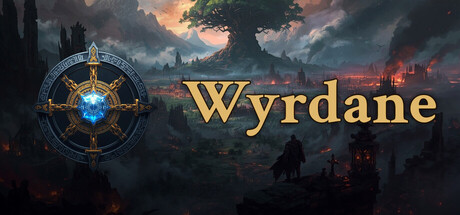
Wyrdane uses AI-generated artwork for its card illustrations. As a solo developer working without a starting budget, this is a pragmatic choice to bring the game's world to life and test its mechanics without a professional illustration budget. If the project finds its audience, the goal is to progressively replace these visuals with artwork made by human illustrators.
Game design, card balance, game mechanics, world-building, and creative direction are entirely human-made. AI is a production tool, not the creator of this game.
Generative AI tools were used in part during the development of this
game.
· Some character concept art and illustrations were produced using
generative AI tools. All such images were subsequently reviewed and
adjusted by our development team before being used in the game.
· The images shipped in the game are the result of that review and
adjustment process.
Game design, systems, programming, rules, and balancing were created
by our development team without generative AI.
AI tools including ChatGPT, Lovart, and others were used during development to generate early concept art for characters, weapons, props, UI, and pet animations. All final in-game assets were manually redrawn and refined by our art team.
Some of the game's 2D artwork (store page graphics and character portraits) was pre-generated using generative AI tools, then reviewed and edited by the developer. The game does not generate any AI content at runtime. All gameplay, level design, and code are human-made.
Generative AI tools were used during development to assist with portions of code writing and debugging, text drafting and editing, English localization, and the creation of some music assets. All related content was manually reviewed, revised, curated, and approved by the developer.
The game does not generate any AI content during gameplay and does not connect to external AI services.
Some background music inside the game was created with generative AI tools. Generative AI was also used as a development assistant for some debugging, and code building. The game does not use live AI generation during playing.
Generative AI Disclosure
This game features real-time generative AI to create a unique experience for each player:
Dynamic Dialogue: Our NPC interaction system uses an LLM to respond to player queries in real-time, allowing for more natural and varied conversations.
AI Guardrails: We have implemented strict filtering and pre-defined safety protocols to ensure that all AI-generated content remains appropriate and consistent with the game's world.
All live-generated content is monitored to prevent the generation of illegal or harmful material.
Store page capsule artwork was generated using AI tools. Application code was developed with AI assistance. All output was reviewed and tested by the developer.
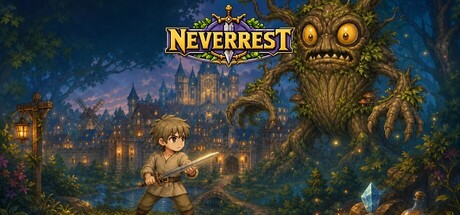
Neverrest uses generative AI tools during development to assist with the creation of some pre-rendered 2D artwork and visual assets. All AI-assisted content is reviewed, edited, and integrated by the developer. The game does not generate AI content during gameplay.
Generative artwork is used in the creation of part or full of assets that can not be generated by the game engine. AI is used in the drafting of art and writing before it is reviewed and heavily edited.
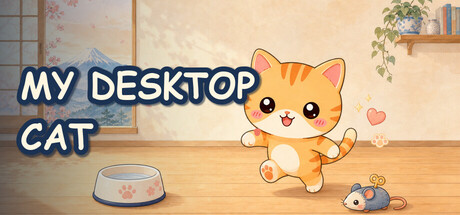
Generative AI was used during development to create and refine some pre-generated visual assets, including cat character and animation sprites, backgrounds, decorative items, achievement icons, and selected store and marketing artwork. Every generated asset was reviewed, edited, and integrated by the developer before inclusion. The game does not generate AI content at runtime and does not connect to external AI services during play.
Generative AI was used for deep game simulation to assist with designing difficulty curves and testing in game mathmatical calculations. It was also used for designing alternative UI Models for cosmetic changes.
Game Design, layout, original creations, music, sound, story, plots, etc. were Designed entirely by the Creator.
HyperION DAW uses generative AI only for optional music and audio-production features. Depending on the installed local model and enabled feature, users may generate instrumental audio, sound effects, MIDI ideas, and related production material. Generated results remain editable inside the DAW and can be inserted into an arrangement, mixed, exported, or discarded.
The application does not generate visual, adult, hateful, violent, or explicit text content. Users are responsible for reviewing generated material and ensuring that their use complies with applicable laws, licenses, provider terms, and copyright requirements. HyperION does not guarantee that generated material is free from third-party claims.
Background music was generated with Suno. Background images and character sprites were generated with image-generation AI (Google Gemini, Pollo AI), then curated and edited by the developer. Much of the program code was written with an AI coding assistant (Claude Code) under the developer's direction and review. Game design and sound effects are the developer's own work. No content is generated by AI at runtime.
The images in this game start from generative AI output and are then redrawn pixel by pixel by the developer. This covers equipment icons, character and enemy sprites, backgrounds, and the images on this store page.
The music was created with a generative AI music service under a commercial-use license.
The text is written in Japanese and machine-translated into other languages.
Some pre-rendered visual artwork, promotional material, as well as game elements were created with AI and then selected, edited, and integrated by the developer. The game does not generate AI content during gameplay and does not connect to third-party AI services during gameplay.
Generative AI tools were used during the development process exclusively to assist with programming, specifically for structuring GDScript code and debugging.
The two announcer voices, BroadcASH and BOBcast, are generated with ElevenLabs from scripts we write and edit ourselves. Every line is approved, levelled and listened to by hand before it ships.
Nothing else in the game is AI generated. The card art is emoji placeholder today, and is being replaced with original illustrations commissioned from human artists. The music is composed in-house by our own procedural scripts, and every track has a written provenance log. The rules, the design and the natural history research are ours.
Some marketing and store copy is drafted with AI assistance and edited before use.
AI was used for localization, while being manually reviewed, and as a time-saving step in the development of some image and model assets, for retopology, concepting, and inbetweening.
The game contains no unmodified AI outputs.
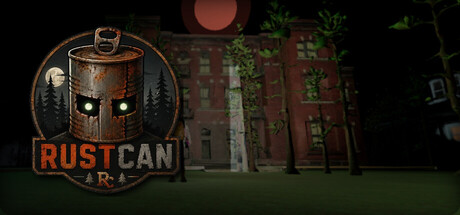
RUSTCAN includes an optional live-generated AI guide called the Gnome. Players can ask the Gnome questions about gameplay, controls, progression, and the in-game world. The Gnome generates text responses at runtime through a server-side AI service.
Responses may be inaccurate and are provided for entertainment and gameplay guidance only. The Gnome does not provide professional, financial, medical, or legal advice.
Players access the feature after signing in, entering Hollow Pines, and selecting Ask the Gnome or speaking with the Gnome in town.
Requests require an authenticated RUSTCAN account and server-side application verification. Requests are rate-limited and monitored. Server-side input moderation blocks or flags severe illegal, exploitative, violent, self-harm, and other prohibited requests.
Generated replies are sanitized before display, and fallback responses are used when the AI service fails or produces no usable response. Players can report problems through the in-game bug/report tools.
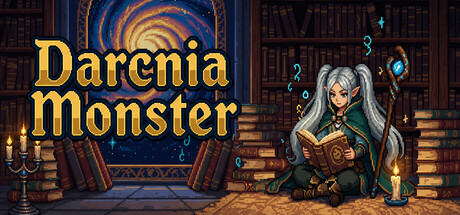
Darcnia Monster is made by a single independent developer. Some of the game's visual assets — background illustrations, cinematic scenes, and character and card artwork — were created with the help of generative AI image tools, and the in-game character voices were produced using AI voice synthesis. Every AI-assisted asset was hand-selected, edited, and integrated by the developer to match the game's art direction and story. No AI runs while you play: nothing is generated in real time, and no player data is ever sent to any AI service.
This game uses live generative AI to create text-based character dialogue, diaries, journey events, NPC conversations, and outcomes of player-directed interactions. Responses are generated from player-created character profiles, recent in-game memories, current objectives, and player messages. Relevant text context is sent to a third-party AI service to generate these responses. Generated content may vary between sessions and may occasionally produce unexpected results. AI is not used to generate executable code or modify files on the player's device.
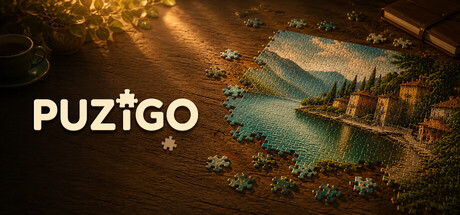
PUZIGO includes pre-generated AI content in the separate free Starter Pack DLC. The Starter Pack contains 40 AI-generated themed puzzle images across seven themes: abstract, animals, flowers, landscapes, painting-style, space, and steampunk.
These images were generated during development, manually reviewed, curated, and included as fixed content. PUZIGO does not use AI to generate content during gameplay.
The remaining five images in the Starter Pack are public-domain classical artworks. Images loaded through the optional Custom Image Unlock DLC are selected by the player, processed locally on the player's PC, and are not uploaded or generated by AI within PUZIGO.
Some promotional and store artwork also contains pre-generated AI-assisted visual elements.
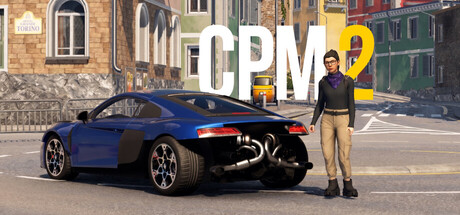
In game development, artificial intelligence is used solely as a supporting tool. We employ neural networks to enhance and refine 2D art (loading screens and promo banners) created using our in-game screenshots, after which they undergo manual color correction and artifact removal. AI also assists us with translating in-game text and generating the announcer's voice for racing modes. All key game elements, including 3D car models, tuning, and the open world, are created entirely by hand by our team.
Some promotional visual assets used on the store page (marketing illustrations) were created with the help of generative artificial intelligence tools.
The game content itself (gameplay, in-game graphics, levels, mechanics, and logic) is entirely created by humans, with no AI-generated content used in real time or in pre-rendered gameplay.
This game used AI tools to transform gameplay ideas and logic into functional code and to create promotional artwork. AI was used as a creative and technical aid during development, without affecting gameplay or the player experience.
Generative AI tools were used during development to assist in the creation of certain visual and audio assets. This includes some concept art, textures, UI elements, loading screens, promotional artwork, graphical assets, music, and sound effects.
AI-assisted content may be edited, modified, retouched, mixed, or otherwise integrated by the development team before being included in the game or promotional materials.
Generative AI is not used to dynamically generate content during gameplay.
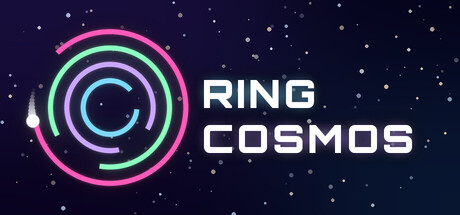
Ring Cosmos was developed by a solo developer with AI assistance during programming. The store page capsule images were also produced with AI assistance, generated programmatically through custom drawing code rather than image generation models. All game visuals are drawn in real time by the game's own rendering code. The soundtrack is licensed human-made music by JDSherbert. No AI content is generated while you play.
This work is fully developed and produced with the assistance of AI: character animations, scene maps, interface UI, sound effects, music and other art and audio materials are all generated by AI; The core gameplay mechanism of the game relies on manual planning to complete the development outline, and the implementation of segmented content and function building are all assisted by AI to complete the development work.
Wyrdane uses AI-generated artwork for its card illustrations. As a solo developer working without a starting budget, this is a pragmatic choice to bring the game's world to life and test its mechanics without a professional illustration budget. If the project finds its audience, the goal is to progressively replace these visuals with artwork made by human illustrators.
Game design, card balance, game mechanics, world-building, and creative direction are entirely human-made. AI is a production tool, not the creator of this game.
Generative AI tools were used in part during the development of this
game.
· Some character concept art and illustrations were produced using
generative AI tools. All such images were subsequently reviewed and
adjusted by our development team before being used in the game.
· The images shipped in the game are the result of that review and
adjustment process.
Game design, systems, programming, rules, and balancing were created
by our development team without generative AI.
AI tools including ChatGPT, Lovart, and others were used during development to generate early concept art for characters, weapons, props, UI, and pet animations. All final in-game assets were manually redrawn and refined by our art team.
Some of the game's 2D artwork (store page graphics and character portraits) was pre-generated using generative AI tools, then reviewed and edited by the developer. The game does not generate any AI content at runtime. All gameplay, level design, and code are human-made.
Generative AI tools were used during development to assist with portions of code writing and debugging, text drafting and editing, English localization, and the creation of some music assets. All related content was manually reviewed, revised, curated, and approved by the developer.
The game does not generate any AI content during gameplay and does not connect to external AI services.
Some background music inside the game was created with generative AI tools. Generative AI was also used as a development assistant for some debugging, and code building. The game does not use live AI generation during playing.
Generative AI Disclosure
This game features real-time generative AI to create a unique experience for each player:
Dynamic Dialogue: Our NPC interaction system uses an LLM to respond to player queries in real-time, allowing for more natural and varied conversations.
AI Guardrails: We have implemented strict filtering and pre-defined safety protocols to ensure that all AI-generated content remains appropriate and consistent with the game's world.
All live-generated content is monitored to prevent the generation of illegal or harmful material.
Store page capsule artwork was generated using AI tools. Application code was developed with AI assistance. All output was reviewed and tested by the developer.
Neverrest uses generative AI tools during development to assist with the creation of some pre-rendered 2D artwork and visual assets. All AI-assisted content is reviewed, edited, and integrated by the developer. The game does not generate AI content during gameplay.
Generative artwork is used in the creation of part or full of assets that can not be generated by the game engine. AI is used in the drafting of art and writing before it is reviewed and heavily edited.
Generative AI was used during development to create and refine some pre-generated visual assets, including cat character and animation sprites, backgrounds, decorative items, achievement icons, and selected store and marketing artwork. Every generated asset was reviewed, edited, and integrated by the developer before inclusion. The game does not generate AI content at runtime and does not connect to external AI services during play.
Generative AI was used for deep game simulation to assist with designing difficulty curves and testing in game mathmatical calculations. It was also used for designing alternative UI Models for cosmetic changes.
Game Design, layout, original creations, music, sound, story, plots, etc. were Designed entirely by the Creator.
HyperION DAW uses generative AI only for optional music and audio-production features. Depending on the installed local model and enabled feature, users may generate instrumental audio, sound effects, MIDI ideas, and related production material. Generated results remain editable inside the DAW and can be inserted into an arrangement, mixed, exported, or discarded.
The application does not generate visual, adult, hateful, violent, or explicit text content. Users are responsible for reviewing generated material and ensuring that their use complies with applicable laws, licenses, provider terms, and copyright requirements. HyperION does not guarantee that generated material is free from third-party claims.
Background music was generated with Suno. Background images and character sprites were generated with image-generation AI (Google Gemini, Pollo AI), then curated and edited by the developer. Much of the program code was written with an AI coding assistant (Claude Code) under the developer's direction and review. Game design and sound effects are the developer's own work. No content is generated by AI at runtime.
The images in this game start from generative AI output and are then redrawn pixel by pixel by the developer. This covers equipment icons, character and enemy sprites, backgrounds, and the images on this store page.
The music was created with a generative AI music service under a commercial-use license.
The text is written in Japanese and machine-translated into other languages.
Some pre-rendered visual artwork, promotional material, as well as game elements were created with AI and then selected, edited, and integrated by the developer. The game does not generate AI content during gameplay and does not connect to third-party AI services during gameplay.
Generative AI tools were used during the development process exclusively to assist with programming, specifically for structuring GDScript code and debugging.
The two announcer voices, BroadcASH and BOBcast, are generated with ElevenLabs from scripts we write and edit ourselves. Every line is approved, levelled and listened to by hand before it ships.
Nothing else in the game is AI generated. The card art is emoji placeholder today, and is being replaced with original illustrations commissioned from human artists. The music is composed in-house by our own procedural scripts, and every track has a written provenance log. The rules, the design and the natural history research are ours.
Some marketing and store copy is drafted with AI assistance and edited before use.
AI was used for localization, while being manually reviewed, and as a time-saving step in the development of some image and model assets, for retopology, concepting, and inbetweening.
The game contains no unmodified AI outputs.
RUSTCAN includes an optional live-generated AI guide called the Gnome. Players can ask the Gnome questions about gameplay, controls, progression, and the in-game world. The Gnome generates text responses at runtime through a server-side AI service.
Responses may be inaccurate and are provided for entertainment and gameplay guidance only. The Gnome does not provide professional, financial, medical, or legal advice.
Players access the feature after signing in, entering Hollow Pines, and selecting Ask the Gnome or speaking with the Gnome in town.
Requests require an authenticated RUSTCAN account and server-side application verification. Requests are rate-limited and monitored. Server-side input moderation blocks or flags severe illegal, exploitative, violent, self-harm, and other prohibited requests.
Generated replies are sanitized before display, and fallback responses are used when the AI service fails or produces no usable response. Players can report problems through the in-game bug/report tools.
Darcnia Monster is made by a single independent developer. Some of the game's visual assets — background illustrations, cinematic scenes, and character and card artwork — were created with the help of generative AI image tools, and the in-game character voices were produced using AI voice synthesis. Every AI-assisted asset was hand-selected, edited, and integrated by the developer to match the game's art direction and story. No AI runs while you play: nothing is generated in real time, and no player data is ever sent to any AI service.
This game uses live generative AI to create text-based character dialogue, diaries, journey events, NPC conversations, and outcomes of player-directed interactions. Responses are generated from player-created character profiles, recent in-game memories, current objectives, and player messages. Relevant text context is sent to a third-party AI service to generate these responses. Generated content may vary between sessions and may occasionally produce unexpected results. AI is not used to generate executable code or modify files on the player's device.
PUZIGO includes pre-generated AI content in the separate free Starter Pack DLC. The Starter Pack contains 40 AI-generated themed puzzle images across seven themes: abstract, animals, flowers, landscapes, painting-style, space, and steampunk.
These images were generated during development, manually reviewed, curated, and included as fixed content. PUZIGO does not use AI to generate content during gameplay.
The remaining five images in the Starter Pack are public-domain classical artworks. Images loaded through the optional Custom Image Unlock DLC are selected by the player, processed locally on the player's PC, and are not uploaded or generated by AI within PUZIGO.
Some promotional and store artwork also contains pre-generated AI-assisted visual elements.
In game development, artificial intelligence is used solely as a supporting tool. We employ neural networks to enhance and refine 2D art (loading screens and promo banners) created using our in-game screenshots, after which they undergo manual color correction and artifact removal. AI also assists us with translating in-game text and generating the announcer's voice for racing modes. All key game elements, including 3D car models, tuning, and the open world, are created entirely by hand by our team.
Some promotional visual assets used on the store page (marketing illustrations) were created with the help of generative artificial intelligence tools.
The game content itself (gameplay, in-game graphics, levels, mechanics, and logic) is entirely created by humans, with no AI-generated content used in real time or in pre-rendered gameplay.
This game used AI tools to transform gameplay ideas and logic into functional code and to create promotional artwork. AI was used as a creative and technical aid during development, without affecting gameplay or the player experience.
Generative AI tools were used during development to assist in the creation of certain visual and audio assets. This includes some concept art, textures, UI elements, loading screens, promotional artwork, graphical assets, music, and sound effects.
AI-assisted content may be edited, modified, retouched, mixed, or otherwise integrated by the development team before being included in the game or promotional materials.
Generative AI is not used to dynamically generate content during gameplay.
Ring Cosmos was developed by a solo developer with AI assistance during programming. The store page capsule images were also produced with AI assistance, generated programmatically through custom drawing code rather than image generation models. All game visuals are drawn in real time by the game's own rendering code. The soundtrack is licensed human-made music by JDSherbert. No AI content is generated while you play.
This work is fully developed and produced with the assistance of AI: character animations, scene maps, interface UI, sound effects, music and other art and audio materials are all generated by AI; The core gameplay mechanism of the game relies on manual planning to complete the development outline, and the implementation of segmented content and function building are all assisted by AI to complete the development work.