Public Steam disclosure research26,750 disclosures tracked
Where do games disclose AI use?
Search developers’ Steam disclosures, compare classified AI use across
games, and follow recorded changes.
This index adds cross-game classifications and statistics to
statements published on individual store pages.
Groups reflect automatic analysis of public disclosures; mature records are excluded. These counts do not measure AI use across all of Steam.
Missing or unclear statements cannot establish whether a game uses AI.
Some pre-rendered art assets (enemy and background artwork) and localization were created with generative AI tools under human direction, then manually cleaned up and integrated by the developers. Development used AI-assisted coding tools. No content is AI-generated at runtime.
Generative AI tools were used during development to assist in the creation of some systems, 3D models, textures, and localized translations included in the game.
Used AI to over optimize the performance of the game as it is very painful to have thousands of enemies on your screen at the same time and 100 projectiles per seconds without turning your pc into an oven.
Also used AI for localization. (Added different languages besides English)
Pre-generated AI tools were used to assist in creating 2D character, environment, interface, and promotional artwork. No content is generated by AI during gameplay, and the game does not connect to external AI services.
We are a small studio with only six people actively involved in development. For teams like ours, generative AI is a supportive tool that helps us realize a creative vision that would otherwise be completely out of reach within our budget. It allows us to focus on what we love doing most: creating games. We view AI strictly as a practical toolset.
Here is how we utilized generative AI in our game:
• Visual Assets: We use generative AI for both concept art and in-game graphics. The vast majority of these AI-generated images are manually modified, iterated upon, and finalized by our artist. We have not replaced any jobs; our games simply feature richer visual assets.
• Audio & Voice-over: Voice-over (VO) lines and several music tracks were generated using AI.
• Proofreading: We utilize AI to proofread our texts and scripts.
AI assistance was used in the development of this game. Players are strongly advised to play using mainstream free "flash" AI APIs such as Agnes API or Qwen API — simply fill in your API information in the game settings. For the sake of speed, enabling thinking mode is not recommended. This game contains optional generative AI features. In “AI-Enhanced Narrative Mode”, the game calls the third-party LLM API you provide yourself, generating more immersive event text in real time as you play. This mode is entirely optional: even without connecting any API, you can still fully experience all of the built-in, human-written historical content and the core gameplay. The game will not use your gameplay data to train any models. All AI-generated content is controlled by your own API key and quota, and you are responsible for your own usage.
Props to you for checking this out! I used AI to help code some of the newer features and port this from my original mobile build as it saved a lot of dev time. Everything else—sounds, amateur vector art, and the remaining 85%+ of the code is completely human-crafted.
Artificial intelligence tools are used only for concept art/design references and text translations. No AI-generated content is used directly in the final in-game assets.
Parts of this product were produced with the help of generative AI. The HTML, CSS, JavaScript and shader code of the bundled wallpapers, the store page text and its translations were drafted with AI assistance and reviewed by a person before release.
The application itself does not use generative AI at runtime. It generates no content while you use it, and nothing you do in Wallpaper — hardware readings, settings, your own photos and videos — is sent to any AI model or to any server. Everything stays on your PC.
Some visual assets and music featured in this game were initially created with the assistance of generative AI tools. All AI-assisted content has been carefully reviewed, selected, and substantially refined by the developer to ensure consistent artistic direction, cohesive style, and a high standard of quality throughout the game.
This game uses generative artificial intelligence to assist with story planning, writing, and editing, as well as to create character artwork, backgrounds, event illustrations, music, and selected sound effects. All generated content was reviewed, selected, revised, and edited by the developer before being incorporated into the game.
All AI-generated content was created in advance during development. The game does not generate new content while you play, and no player input or personal information is sent to any generative AI service.
Some of the artwork in this game — including character portraits, user
interface elements, map and battle backgrounds, unit sprites, and visual
effects — was created with the help of generative AI image tools, then
reviewed, corrected, and assembled by hand before being included in the
game. Some sound effects were produced with AI audio tools in the same way.
All of this content is generated ahead of time and is fixed in the shipped
build. The game does not generate any content while you play, and it does
not connect to any external AI service during gameplay.
This software incorporates a local AI model, which is used solely to provide an "intelligent semantic search" service. When you enter a text description, the AI analyzes the semantics in real time and searches your local image library to display the most relevant image results. All search results are sourced from your local image library; the AI does not generate or create any new image or video content. Users can choose whether to enable this feature.
Some of the game’s visual assets were created with the assistance of AI tools.
All music featured in the game was created by human artists and is not AI-generated.
Pre-generated generative AI tools were used during development to create a limited number of static visual assets.
OpenAI image generation was used to create a supernatural Wooden Man face texture and four decorative environment and fabric textures used in the post-match ceremony. Meshy was used to create the Wooden Man 3D character model.
These assets are included in the shipped game and may also be visible in store screenshots or trailers. The assets were reviewed, edited where necessary, and integrated into the game by the developer.
The game does not use live-generated AI. It does not connect to a generative AI service during gameplay, does not send player input to an AI service, and does not generate new AI content while the game is running.
AI tools were used to assist with localizing the interface text into the game's 11 supported languages. All artwork, music, sound and game design are human-made.
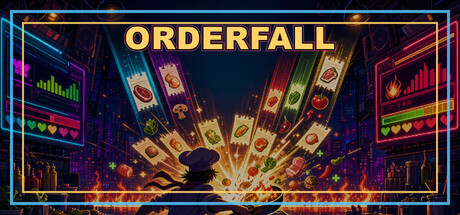
Generative AI tools were used for pre-rendered character portraits, title/key artwork and other game illustrations, portions of promotional video and audio, marketing artwork, and assistance with localized text. These assets and text were reviewed and edited for the game. Orderfall does not generate AI content during gameplay or connect to an external AI service. The live-action-style Captain Cook teaser is dramatized promotional footage; the game itself uses pixel-art graphics.
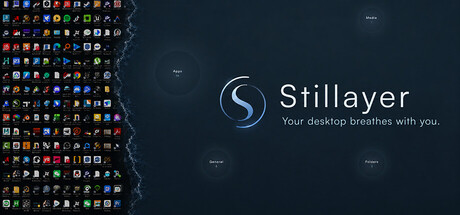
Stillayer uses AI-assisted tools during development for some pre-generated content: the ambient sound bed (the background audio pad) was created with AI audio generation and then hand-edited by the developer; the interface text and store descriptions were written and localized into multiple languages with AI assistance and reviewed by the developer. All visuals — the desktop scenes, light pools and animations — are hand-coded procedural graphics with no AI-generated artwork. Stillayer does not generate any content at runtime, contains no live AI features, and works fully offline.
The soundtrack is AI generated with human modifications. Art, text, localizations, and store assets were made with AI assistance and human modifications. Nothing is generated at runtime, and the game never connects to an AI service.
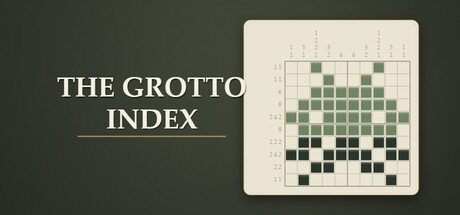
The developer of The Grotto Index used generative AI tools during development to help create some of the game's visual assets, including specimen pixel art and illustrations. All AI-assisted content was reviewed, edited, and curated by the developer before being included in the game. No content is generated by AI during gameplay — every puzzle, image, and piece of text in the shipped game is fixed and was finalized before release.
No AI-generated images, models, or audio appear in the game or on this Steam page. Music is composed and arranged by me in BandLab. UI and VFX are handmade or generated procedurally with code, including the breaking waves shaped by hand.
Otherwise, I code Shorebreaker with AI assistance: the design decisions are mine, and AI helps me work through, implement, and debug them. For self-marketing, some of my social media videos use AI voiceover from CapCut because I can't wake the baby.
Generative AI is used to help modernize multiple image assets, including enhancement, upscaling, cleanup, and visual refinement. All AI-assisted assets are reviewed and finalized by the development team before use in the game.
Generative AI tools were used during development to assist with brainstorming and editing some mission and other written content. All generated suggestions were reviewed and edited by me before inclusion in the game.
Some visual, localization, store page, and marketing materials may be created with the assistance of generative AI tools. All AI-assisted content is reviewed, edited, and polished by our team before use. No AI content is generated during gameplay.
Generative AI was used during development to assist in creating some pre-generated visual assets, character artwork, backgrounds, and promotional images. All AI-assisted content was reviewed and selected by the developer before inclusion in the game. No generative AI is used during gameplay, and the game does not connect to any external AI service.
Generative AI tools were used during development to assist with portions of the game’s interface and narrative text, programming, procedurally constructed 2D visual elements, and marketing materials. All included content was reviewed, edited, and integrated by the developer. Tide & Crown does not generate AI content during gameplay and does not connect to external AI services.
Generative AI was used during development to assist with visual ideation and to create selected pre-generated store-page and marketing materials, including supporting textures and interface concept imagery. These materials were reviewed and edited by the developer. The game does not generate content or code during gameplay, and it does not connect to an external AI service.
Generative AI was used solely to assist with translation, localization, and language editing of written text. This includes localization of Steam store-page descriptions and translation or language correction of in-game text, primarily from Portuguese into English. No AI-generated artwork, audio, gameplay content, or live-generated AI content is included in the game.
*Certain audio assets used in the game were created with the assistance of generative AI tools.*
*All AI-assisted audio was reviewed, edited, mixed, and refined by the developer, with human input throughout the process to ensure it fits the game's atmosphere, artistic direction, and quality standards.*
Some visual assets in the game were created with the assistance of generative AI tools. All gameplay systems, mechanics, and interactive content were developed by the team.
Generative AI was used to assist in creating all pre-rendered artwork, including environment backgrounds, menu and branding art, icons, and promotional/title-card images. These assets were reviewed and integrated by the developer. No content is generated during gameplay, and the game does not connect to external AI services.
Pre-generated: Some 2D illustrations and the pre-recorded narration were produced with AI tools and reviewed by the developers before inclusion.
Live-generated: A language model bundled with the game runs entirely on the player's device, with no internet connection. During play it writes narration, dialogue, and the names and lore of items, relics and skills; it selects among game-defined options for run content such as synergies, oaths and subclasses; and it accepts free-text actions typed by the player (for example "cut the chandelier loose"), judges them, and narrates the result. Damage, stats, difficulty, and progression are always governed by the game's own rules. Player input is filtered before it reaches the model, every generated line is checked before it is shown, and no art or audio is generated at runtime.
Some 2D art assets and pre-rendered cinematic videos in this game were created with the help of generative AI tools, and were then manually reviewed, edited and retouched by the developer. Generative AI tools were also used to assist during development. The game does not generate any AI content at runtime.