Public Steam disclosure research25,727 disclosures tracked
Where do games disclose AI use?
Search developers’ Steam disclosures, compare classified AI use across
games, and follow recorded changes.
This index adds cross-game classifications and statistics to
statements published on individual store pages.
Groups reflect automatic analysis of public disclosures; mature records are excluded. These counts do not measure AI use across all of Steam.
Missing or unclear statements cannot establish whether a game uses AI.
This game contains pre-generated AI-assisted illustrations and visual assets. All AI-assisted content has been reviewed, modified, and integrated by the developer. The game does not generate AI content during gameplay and does not connect to external AI services.
Some of the content in Broken Pixel was created using generative AI. All of it was produced during development, reviewed by us, and shipped as fixed, pre-generated assets — no AI runs while you play.
- Story narration: the roughly ten hours of spoken narration were generated with an AI text-to-speech model (ElevenLabs). The scripts were written with AI assistance and edited by hand.
- Player avatars: the 3D character avatars were generated with an AI image-to-3D tool (Meshy).
- Store & marketing art: the capsule and marketing images were generated with an AI image model (Runware / fal.ai).
- Soundtrack: the lounge soundtrack was generated with an AI music model (Mureka).
The gameplay itself contains no AI-generated content — every room, screen, painting and level layout is built by traditional procedural code. Nothing is generated live, and the game never connects to an AI service while you play.
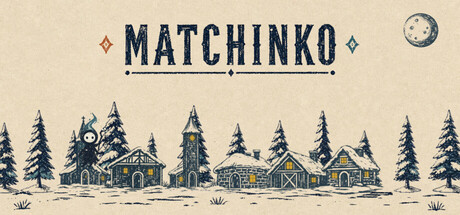
Generative AI tools were used during development to create all visual artwork, sound effects, and music in Matchinko, including artwork used in store and marketing materials. AI tools also assisted with code, debugging, and drafts of some written content. All generated material was reviewed, selected, edited, tested, and integrated by the developer before inclusion. The game does not generate content using AI at runtime, connect to external AI services during play, or send player data to AI systems.
The game's code, writing (company names, event text, narrative flavor), and 2D art were created during development with AI assistance (Anthropic's Claude), directed, curated, and edited by the developer. All content is pre-generated: the game generates no AI content at runtime and connects to no AI services while you play.
Some of this game's localized text was translated with AI assistance. All translated content has been manually reviewed and proofread to ensure quality and accuracy, and does not contain any illegal or infringing material.
Generative AI was used to assist in the creation of certain sound effects included in the game. These assets were generated during the development phase and are included as static elements in the final build. The AI was used as a supplementary tool to enhance environmental audio, while all creative direction, editing, and integration were performed by me as the solo developer
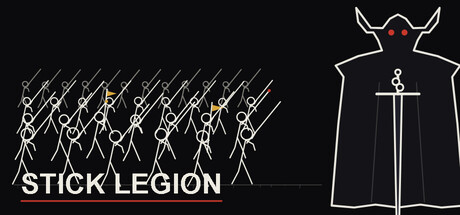
Some of Stick Legion's in-game text and promotional materials were created with the help of generative AI tools, all reviewed and edited by the developer. The game performs no live AI generation during play.
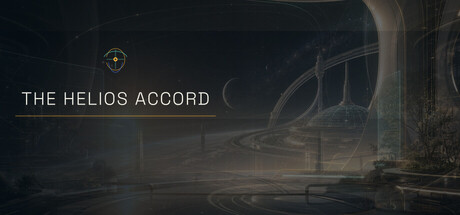
Generative AI tools assisted with parts of the development, iteration, and production process. The foundation of The Helios Accord—including its original concept, core ideas, world, systems, and narrative—was conceived, designed, and originally written by me. I direct, review, revise, and take responsibility for all AI-assisted material included in the game and its store presentation
Some of the game’s visual assets were created with the assistance of generative AI. All generated artwork is reviewed, edited, refined, and adapted by the development team to maintain a consistent visual identity and ensure that it matches the game’s artistic direction and design choices.
This approach was necessary due to the high cost of commissioning the full amount of artwork required from one or more professional artists or illustrators. Using AI-assisted tools helped keep the project financially viable, speed up production, and bring the game to players sooner while preserving a cohesive and recognizable style.
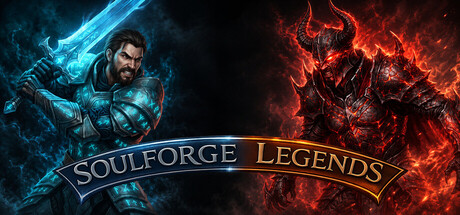
Some of the art in SoulForge Legends was created with the help of generative AI tools. All of it was generated during development, then reviewed, edited and assembled by hand before shipping. Nothing is generated live while you play, and the game never sends your input to an AI service.
These translations were generated with the help of AI. As an indie developer, I currently don't have the budget to hire professional translators, but I hope to do so in the future.
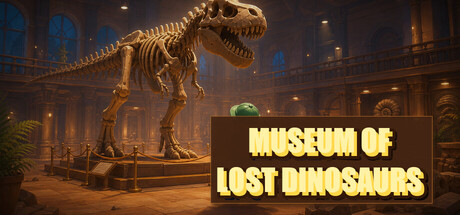
Some Steam store, library, icon, and marketing images for this game were created with generative AI and then reviewed and edited for the dinosaur museum theme. The game does not use real-time generative AI during gameplay.
Some of the game's 2D artwork (card illustrations) was created with the assistance of generative AI tools, then curated, edited, and integrated by the developer. AI assistance was also used for in-game text and store page copy. All game design and final content decisions are the developer's own. The game contains no live/runtime AI-generated content.
Some in-game artwork—including characters, monsters, weapons, backgrounds, card illustrations, and UI assets—as well as some store page images, was created using pre-generated AI tools. All generated assets were selected, edited, adjusted, and reviewed by the developer before being included in the game. The game does not generate AI content during gameplay.
Pre-generated only. Generative AI assisted in creating some art, music, SFX, and localization during development, all developer-reviewed. No live AI content in the shipped game.
Some 3D prop assets and promotional artwork were created with the assistance of generative AI tools. All AI-assisted content was manually reviewed, edited, and integrated by the developer. No content is generated during gameplay.
Some pre-generated visual assets and localization text were created with the assistance of generative AI and were reviewed and edited by the developer. The game does not generate AI content during gameplay.
We use AI tools only to demonstrate the game's feel, for marketing materials, and to optimise development. 3D models, UI, characters, robot enemies, the main soundtrack and other key elements of the game are lovingly crafted by our team.
Yes, we're not the fastest indie developers in the world. But we're working hard for you! ^_^
Generative AI tools were used during development to create and refine some pre-generated visual assets, including concept art, character and environment models, textures, animations, UI artwork, icons, visual effects, and selected store or marketing images. All such assets were reviewed and edited by the developer. The game does not generate AI content during gameplay and does not connect to external AI services while running.
This game's localization (including English text) was created with the assistance of AI translation tools, reviewed by the developer. No AI-generated content is created live during gameplay.
Some visual and audio assets were created or assisted using AI tools, then selected, edited, and integrated by the developer. The game's story, gameplay mechanics, dialogue, programming, and overall design were created by the developer.
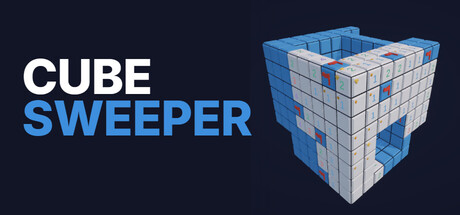
Cube Sweeper used AI assistance during development in two places. Some of the game's handcrafted curated boards began as AI-generated shapes, which were then validated and certified solvable by the game's own logic engine before anything shipped, exactly like every other board in the game. Store page artwork production was aided by AI-assisted tools. No AI is used at runtime. The puzzles are generated by a deterministic system.
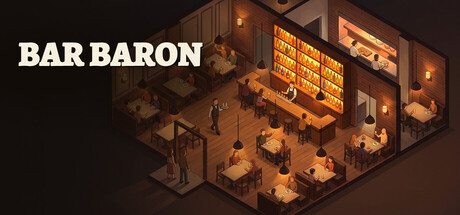
Bar Baron's game design, code, simulation systems, balance and all in-game text are written by hand.Generative AI was used as a production tool in two places: some of the game's 3D props-furniture,
bar equipment, kitchen and decor items-were produced with AI tools, and part of the soundtrack is
AI-generated music.
Those props were made specifically for Bar Baron, following our own art direction, and were then
reviewed, optimized and placed by hand-this is not a game assembled from generic asset packs.
Character models are not AI-generated.
Nothing is generated while you play. The game runs no generative AI at runtime: every system, every
event and every number in the simulation was authored by a person.
This game uses generative AI to create part of its content:
- Art and sprites: generated with AI tools and manually edited in Photoshop.
- Intro cinematic: generated with Google Veo 3 and Flow, then edited.
- Some sound effects: generated or processed with AI tools, combined with recorded and licensed library sounds.
- Code assistance: parts of development were assisted by language models (Claude).
All AI-generated content was reviewed, edited, and approved by the developer. The game does NOT use AI at runtime: all content is pre-rendered.
I have used generative AI for some parts or sections of the trailer creation and some voices or images used inside the game itself. All the code and inner workings of the game have been created by a person.
This game uses AI-generated artwork for static marketplace listing images including cars, homes, investment properties, boats, and businesses shown in the Assets and Business panels, as well as for Steam achievement icons. All AI-generated content is created during development and shipped as fixed image files. The game does not generate any content live during gameplay and does not connect to any AI service while you play.
Generative AI tools were used to assist in creating and refining some promotional artwork for the Steam store page and related marketing materials. All AI-assisted assets were reviewed and edited by the developer. No generative AI content is used in the game itself, and no content is generated during gameplay.
GloomDelve's visuals, audio, and dungeons are generated procedurally by hand-written code; calculated geometry, synthesized sound, and deterministic seed-based level generation, not by generative AI. Generative AI tools were used during development to assist with translating the interface into non-English languages. The game generates no content at runtime and connects to no AI service while you play. Every run is produced by the same deterministic procedural systems.
We utilize AI technology to enhance development efficiency and provide a broader experience for our players. Our use of AI is categorized as follows:
Art & Visuals: AI tools are used strictly for initial concept generation and as reference material. No AI-generated visual assets are used "as-is" in the final game. Every image is manually refined, repainted, and finalized by our artists to ensure a unique and high-quality aesthetic.
Sound & Coding: We utilize AI-assisted tools to optimize backend code performance and assist in sound engineering, allowing us to focus on core gameplay stability and mechanics.
In all areas, we are committed to transparency and will continue to update and polish the game's content based on player input and professional review.
Thug Arena was made with the use of AI and LLMs to generate many of the graphical assets. The game was made by two brothers in our spare time, and none of us are artists or can afford to pay artists for this game. We have used AI creatively to get to a style we liked for the game including most but not all assets, such as trees, buildings, pedestrians and weapons.
During the development of the game, generative AI tools were used to create some decorative props and certain sound effects. All AI-generated content was reviewed, edited, and manually integrated by the developer to ensure consistency with the game's artistic style and quality standards. Artificial intelligence was not used to generate gameplay code or core gameplay mechanics.
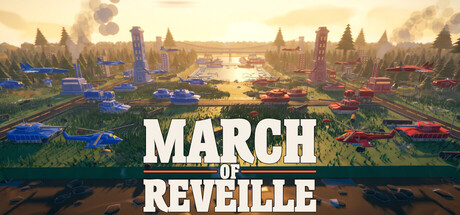
Some non-gameplay assets in March of Reveille were made with the help of generative AI tools.
Music — composed using AI music generation.
Store page and marketing artwork — the key art on this page began as renders captured in-engine from the game's own 3D models, terrain and units, then restyled using AI image editing. It depicts the actual game.
All 3D models, environments, unit designs, UI and game design are the developer's own work, built from scratch in Blender and Godot.
Generative AI was used to assist in creating certain promotional and store page artwork. All AI-generated content was reviewed, edited, and refined by the developer. No generative AI is used during gameplay.
Some visual assets in the game were created with the assistance of generative AI tools and then curated and edited by the developer: certain environment textures, the loading splash image, several 3D prop models, some UI icons, and store page artwork. All AI-assisted content is pre-rendered and shipped with the game — the game does not generate any content at runtime, and AI is not used in gameplay, chat, or any live systems.
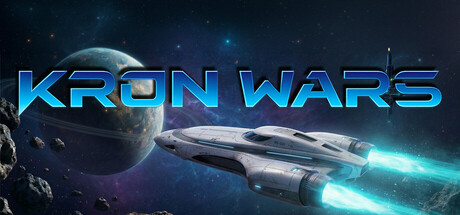
Some visual assets in Kron Wars — including spaceship designs, environment artwork, and promotional videos — were created with the assistance of generative AI tools. All AI-generated content has been reviewed, curated, and integrated by our development team. No AI is used to generate gameplay content, in-game text, or player-facing decisions at runtime.
AI tools were used during development to assist with the creation and editing of some visual assets, including characters, UI icons, and background elements. Some assets created or edited with the assistance of AI tools are included in the game.
Generative AI was used to assist in creating certain promotional and store page artwork. All AI-generated content was reviewed, edited, and refined by the developer. No generative AI is used during gameplay.
This game contains pre-generated AI-assisted illustrations and visual assets. All AI-assisted content has been reviewed, modified, and integrated by the developer. The game does not generate AI content during gameplay and does not connect to external AI services.
Some of the content in Broken Pixel was created using generative AI. All of it was produced during development, reviewed by us, and shipped as fixed, pre-generated assets — no AI runs while you play.
- Story narration: the roughly ten hours of spoken narration were generated with an AI text-to-speech model (ElevenLabs). The scripts were written with AI assistance and edited by hand.
- Player avatars: the 3D character avatars were generated with an AI image-to-3D tool (Meshy).
- Store & marketing art: the capsule and marketing images were generated with an AI image model (Runware / fal.ai).
- Soundtrack: the lounge soundtrack was generated with an AI music model (Mureka).
The gameplay itself contains no AI-generated content — every room, screen, painting and level layout is built by traditional procedural code. Nothing is generated live, and the game never connects to an AI service while you play.
Generative AI tools were used during development to create all visual artwork, sound effects, and music in Matchinko, including artwork used in store and marketing materials. AI tools also assisted with code, debugging, and drafts of some written content. All generated material was reviewed, selected, edited, tested, and integrated by the developer before inclusion. The game does not generate content using AI at runtime, connect to external AI services during play, or send player data to AI systems.
The game's code, writing (company names, event text, narrative flavor), and 2D art were created during development with AI assistance (Anthropic's Claude), directed, curated, and edited by the developer. All content is pre-generated: the game generates no AI content at runtime and connects to no AI services while you play.
Some of this game's localized text was translated with AI assistance. All translated content has been manually reviewed and proofread to ensure quality and accuracy, and does not contain any illegal or infringing material.
Generative AI was used to assist in the creation of certain sound effects included in the game. These assets were generated during the development phase and are included as static elements in the final build. The AI was used as a supplementary tool to enhance environmental audio, while all creative direction, editing, and integration were performed by me as the solo developer
Some of Stick Legion's in-game text and promotional materials were created with the help of generative AI tools, all reviewed and edited by the developer. The game performs no live AI generation during play.
Generative AI tools assisted with parts of the development, iteration, and production process. The foundation of The Helios Accord—including its original concept, core ideas, world, systems, and narrative—was conceived, designed, and originally written by me. I direct, review, revise, and take responsibility for all AI-assisted material included in the game and its store presentation
Some of the game’s visual assets were created with the assistance of generative AI. All generated artwork is reviewed, edited, refined, and adapted by the development team to maintain a consistent visual identity and ensure that it matches the game’s artistic direction and design choices.
This approach was necessary due to the high cost of commissioning the full amount of artwork required from one or more professional artists or illustrators. Using AI-assisted tools helped keep the project financially viable, speed up production, and bring the game to players sooner while preserving a cohesive and recognizable style.
Some of the art in SoulForge Legends was created with the help of generative AI tools. All of it was generated during development, then reviewed, edited and assembled by hand before shipping. Nothing is generated live while you play, and the game never sends your input to an AI service.
These translations were generated with the help of AI. As an indie developer, I currently don't have the budget to hire professional translators, but I hope to do so in the future.
Some Steam store, library, icon, and marketing images for this game were created with generative AI and then reviewed and edited for the dinosaur museum theme. The game does not use real-time generative AI during gameplay.
Some of the game's 2D artwork (card illustrations) was created with the assistance of generative AI tools, then curated, edited, and integrated by the developer. AI assistance was also used for in-game text and store page copy. All game design and final content decisions are the developer's own. The game contains no live/runtime AI-generated content.
Some in-game artwork—including characters, monsters, weapons, backgrounds, card illustrations, and UI assets—as well as some store page images, was created using pre-generated AI tools. All generated assets were selected, edited, adjusted, and reviewed by the developer before being included in the game. The game does not generate AI content during gameplay.
Pre-generated only. Generative AI assisted in creating some art, music, SFX, and localization during development, all developer-reviewed. No live AI content in the shipped game.
Some 3D prop assets and promotional artwork were created with the assistance of generative AI tools. All AI-assisted content was manually reviewed, edited, and integrated by the developer. No content is generated during gameplay.
Some pre-generated visual assets and localization text were created with the assistance of generative AI and were reviewed and edited by the developer. The game does not generate AI content during gameplay.
We use AI tools only to demonstrate the game's feel, for marketing materials, and to optimise development. 3D models, UI, characters, robot enemies, the main soundtrack and other key elements of the game are lovingly crafted by our team.
Yes, we're not the fastest indie developers in the world. But we're working hard for you! ^_^
Generative AI tools were used during development to create and refine some pre-generated visual assets, including concept art, character and environment models, textures, animations, UI artwork, icons, visual effects, and selected store or marketing images. All such assets were reviewed and edited by the developer. The game does not generate AI content during gameplay and does not connect to external AI services while running.
This game's localization (including English text) was created with the assistance of AI translation tools, reviewed by the developer. No AI-generated content is created live during gameplay.
Some visual and audio assets were created or assisted using AI tools, then selected, edited, and integrated by the developer. The game's story, gameplay mechanics, dialogue, programming, and overall design were created by the developer.
Cube Sweeper used AI assistance during development in two places. Some of the game's handcrafted curated boards began as AI-generated shapes, which were then validated and certified solvable by the game's own logic engine before anything shipped, exactly like every other board in the game. Store page artwork production was aided by AI-assisted tools. No AI is used at runtime. The puzzles are generated by a deterministic system.
Bar Baron's game design, code, simulation systems, balance and all in-game text are written by hand.Generative AI was used as a production tool in two places: some of the game's 3D props-furniture,
bar equipment, kitchen and decor items-were produced with AI tools, and part of the soundtrack is
AI-generated music.
Those props were made specifically for Bar Baron, following our own art direction, and were then
reviewed, optimized and placed by hand-this is not a game assembled from generic asset packs.
Character models are not AI-generated.
Nothing is generated while you play. The game runs no generative AI at runtime: every system, every
event and every number in the simulation was authored by a person.
This game uses generative AI to create part of its content:
- Art and sprites: generated with AI tools and manually edited in Photoshop.
- Intro cinematic: generated with Google Veo 3 and Flow, then edited.
- Some sound effects: generated or processed with AI tools, combined with recorded and licensed library sounds.
- Code assistance: parts of development were assisted by language models (Claude).
All AI-generated content was reviewed, edited, and approved by the developer. The game does NOT use AI at runtime: all content is pre-rendered.
I have used generative AI for some parts or sections of the trailer creation and some voices or images used inside the game itself. All the code and inner workings of the game have been created by a person.
This game uses AI-generated artwork for static marketplace listing images including cars, homes, investment properties, boats, and businesses shown in the Assets and Business panels, as well as for Steam achievement icons. All AI-generated content is created during development and shipped as fixed image files. The game does not generate any content live during gameplay and does not connect to any AI service while you play.
Generative AI tools were used to assist in creating and refining some promotional artwork for the Steam store page and related marketing materials. All AI-assisted assets were reviewed and edited by the developer. No generative AI content is used in the game itself, and no content is generated during gameplay.
GloomDelve's visuals, audio, and dungeons are generated procedurally by hand-written code; calculated geometry, synthesized sound, and deterministic seed-based level generation, not by generative AI. Generative AI tools were used during development to assist with translating the interface into non-English languages. The game generates no content at runtime and connects to no AI service while you play. Every run is produced by the same deterministic procedural systems.
We utilize AI technology to enhance development efficiency and provide a broader experience for our players. Our use of AI is categorized as follows:
Art & Visuals: AI tools are used strictly for initial concept generation and as reference material. No AI-generated visual assets are used "as-is" in the final game. Every image is manually refined, repainted, and finalized by our artists to ensure a unique and high-quality aesthetic.
Sound & Coding: We utilize AI-assisted tools to optimize backend code performance and assist in sound engineering, allowing us to focus on core gameplay stability and mechanics.
In all areas, we are committed to transparency and will continue to update and polish the game's content based on player input and professional review.
Thug Arena was made with the use of AI and LLMs to generate many of the graphical assets. The game was made by two brothers in our spare time, and none of us are artists or can afford to pay artists for this game. We have used AI creatively to get to a style we liked for the game including most but not all assets, such as trees, buildings, pedestrians and weapons.
During the development of the game, generative AI tools were used to create some decorative props and certain sound effects. All AI-generated content was reviewed, edited, and manually integrated by the developer to ensure consistency with the game's artistic style and quality standards. Artificial intelligence was not used to generate gameplay code or core gameplay mechanics.
Some non-gameplay assets in March of Reveille were made with the help of generative AI tools.
Music — composed using AI music generation.
Store page and marketing artwork — the key art on this page began as renders captured in-engine from the game's own 3D models, terrain and units, then restyled using AI image editing. It depicts the actual game.
All 3D models, environments, unit designs, UI and game design are the developer's own work, built from scratch in Blender and Godot.
Generative AI was used to assist in creating certain promotional and store page artwork. All AI-generated content was reviewed, edited, and refined by the developer. No generative AI is used during gameplay.
Some visual assets in the game were created with the assistance of generative AI tools and then curated and edited by the developer: certain environment textures, the loading splash image, several 3D prop models, some UI icons, and store page artwork. All AI-assisted content is pre-rendered and shipped with the game — the game does not generate any content at runtime, and AI is not used in gameplay, chat, or any live systems.
Some visual assets in Kron Wars — including spaceship designs, environment artwork, and promotional videos — were created with the assistance of generative AI tools. All AI-generated content has been reviewed, curated, and integrated by our development team. No AI is used to generate gameplay content, in-game text, or player-facing decisions at runtime.
AI tools were used during development to assist with the creation and editing of some visual assets, including characters, UI icons, and background elements. Some assets created or edited with the assistance of AI tools are included in the game.
Generative AI was used to assist in creating certain promotional and store page artwork. All AI-generated content was reviewed, edited, and refined by the developer. No generative AI is used during gameplay.