Public Steam disclosure research25,380 disclosures tracked
Where do games disclose AI use?
Search developers’ Steam disclosures, compare classified AI use across
games, and follow recorded changes.
This index adds cross-game classifications and statistics to
statements published on individual store pages.
Groups reflect automatic analysis of public disclosures; mature records are excluded. These counts do not measure AI use across all of Steam.
Missing or unclear statements cannot establish whether a game uses AI.
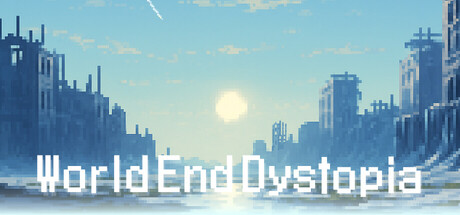
The in-game graphics and sound are generated by AI and then modified and adjusted by creators before being used.
In World End Dystopia, AI technology is used as a supplementary tool in certain parts of the production process. AI supports tasks such as prototyping, comparison, and organization, while the worldbuilding, narrative, game design, and all final expressions and decisions are created entirely by human hands.
Just as the AI “EDEN” depicted in the game exists to support human choice, AI in the real-world development process is likewise limited to an assistive role—supporting human understanding and judgment rather than replacing creativity or decision-making.
During the development of this game, generative AI was used to create some user interface (UI) assets and for text translation.
Please note that the main character illustrations were created by human artists.
In the development of Mudventure, we utilized generative AI technologies to streamline our workflow and enhance the overall gaming experience as follows:
Coding Assistance: ChatGPT and Gemini were used as auxiliary tools for code optimization and system architecture design. This allowed our team to focus more on building a stable multiplayer environment.
Visual Content: ChatGPT (DALL-E) was used to generate certain static images, such as in-game item icons and textures. All AI-generated assets underwent a manual refinement process to ensure they align perfectly with our game’s unique art style.
Audio and Music: We utilized Suno to create the background music (BGM). We carefully curated and edited tracks generated by AI to best capture the mysterious yet casual atmosphere of our mudflat island.
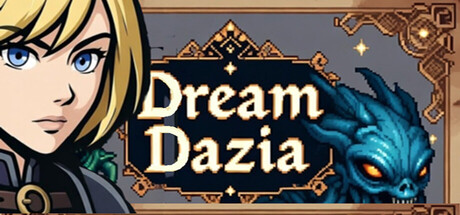
Grok AI was used in order to make some of the pictures in the library, game store page, and some intro./outro. picture in the game representing Dream Dazia.
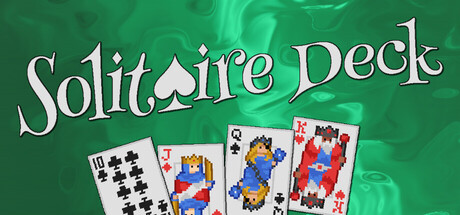
AI tools were used to localize Solitaire Deck's text into multiple languages, this is the only AI content in the game. As a solo developer, it was my only feasible way to support players who prefer games in their native language. Some translations have been reviewed by native speakers, and I'm working to get more checked over time. If you spot anything off, please let me know through the Steam discussions and I'll get it fixed.
As a small indie team, we may use procedural and/or AI-based tools to assist with the development process. In all such cases, the final product reflects the creativity and expression of our own development team.
During development, AI-based language tools were used to assist with the localization of in-game text across the languages supported by the game. All AI-assisted translations were reviewed, edited, and validated by the developer before inclusion in the build. The game does not connect to any AI service at runtime; no content is generated live during gameplay.
The 'Battle' framework is a separate game mode, but uses references to the 'Collectible' framework and vice versa. The 'Battle' framework was created with AI assistance; the Collectible framework was not, though they work in tandem. Additionally, there are card arts which were created humans, and card arts which were created with AI, though edited manually by humans. You can toggle between them in settings.
As a small indie team, we may use procedural and/or AI-based tools to assist with the development process. In all such cases, the final product reflects the creativity and expression of our own development team.
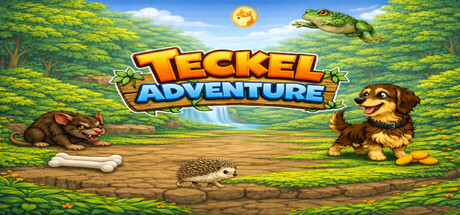
Some promotional or artistic visual assets in Teckel Adventure were initially generated with the help of AI tools and then edited or integrated by the developer.
No content is generated by AI during gameplay. All gameplay systems and interactive content are fully predefined.
Mystic Grove uses generative AI in a limited supporting role for certain pre-rendered content, including music and some 2D visual assets such as skill images, spec node images, and related artwork. The core game itself — including gameplay systems, programming, combat, level design, map creation, and overall development — is solely created by the developer. Mystic Grove does not use live-generated AI content during gameplay.
Some game artwork and visual assets were created with the assistance of generative AI tools. All AI-generated content was reviewed and curated by the developer.
I used a text-based generative AI (LLM) to assist with the English translation (localization) of all in-game text (dialogue, UI, system messages) and to help write the English descriptions for the Steam store page.
Artificial intelligence technologies are widely used to assist in translating text content into multiple languages.
Some game assets are commercially licensed materials generated by artificial intelligence. The developer added custom dynamic effects based on these source assets within the game engine.
The game does not integrate any AI APIs, and no generative AI runs during gameplay.
AI-Generated Content
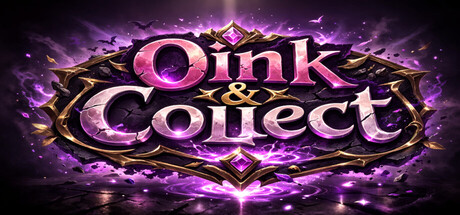
Some of the visual content in Oink & Collect was created with the assistance of AI tools.
This includes individual card artwork, booster pack illustrations, and in-game graphical elements.
All AI-generated content has been reviewed, adjusted, and curated by the developer to ensure style, quality, and consistency within the game.
No AI systems are used to generate player-generated content, and no dynamic AI content creation occurs during gameplay.
AI generative models were used to create localization files to support languages that would otherwise be difficult for a solo developer. Placeholder AI-generated assets have been created for the Steam store splash images, with the intent of commissioning an artist if this gains community support. All in-game assets (sprites, music, sound effects, UI elements, and interactive content) were created by humans and are credited in the game credits. CPU opponents use traditional game AI algorithms, not generative AI models.
This is the third iteration of development, that was originally developed in 2019 with HTML + JS, then rebuilt in Unity, and then transferred to LOVE2D written in Lua. It was more-or-less built with a box of scraps in a cave in its first iterations, and modern software since those days have effectively blurred the line where task automation meets unethical AI consumption.
It's up to each of us to determine where that line is for ourselves in a rapidly changing digital age. As both a solo game dev and multimedia artist carrying a full-time job in neither of those fields, I feel that it's important to be educating ourselves on where AI can be a useful tool to allow new opportunities and expand capabilities for independent creators that are otherwise untenable, while keeping the human side of game dev at its core, especially in the indie genre.
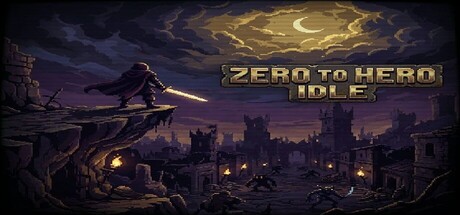
The development of Zero to Hero was assisted by Generative AI tools (Large Language Models). As a solo developer and non-programmer, I utilized AI to help write the game's source code, debug errors, extensive refactoring, and assist in designing mathematical progression systems. All AI-generated code and content were manually reviewed, tested, and refined to ensure a cohesive and fun gameplay experience. The game's core design, vision, and final polish are human-curated.
Neofold includes real-time generated AI content, such as its recommended "Infinity Mode", which uses a local diffusion model to generate infinite unique creatures in real-time using your GPU. No external servers are used. No generation happens without your prior input, ensuring stable performance during your work and gaming sessions.
Neofold includes pre-generated AI content, such as its alternate "Lite Mode", which uses a giant set of pre-generated creatures for players without a suitable video card.
Most of the in-game 2D assets, including character sprites, UI elements, and backgrounds, were created using generative AI tools during the development process. We have manually reviewed all assets to ensure they do not contain illegal content.
Generative AI tools were used during the development of this game. Specifically, AI was utilized for icon images, promotional trailers, and the ending cinematic sequences. All AI-generated content has been manually reviewed and refined by the development team to ensure quality and copyright compliance.
We have used generative AI to create reference images of Promo materials, which were later redrawn by an artist, and for creating item frames. We are also utilizing several assets that contain UI images that were created using AI and edited by hand afterwards.
Father, PhD student, and Software Engineer during the day; game developer at night. This game was developed solo by me over two years, with no significant budget, and before AI was cool: #realindie #livingthedream. All visual assets and other in-game content were created by humans or purchased from human creators. The only exception is the voice work, which was produced using paid professional voice synthesis software rather than human voice actors due to budget limitations (#realindie #solodev). If the game generates enough revenue and there is community interest, I plan to replace it with real voice acting in a future version.
Generative A.I. that was used in the game:
Coding for the Select Arrow, that replaces the default RPG Maker selection highlight, moving left and right (the actual arrow is not A.I. generated)
Coding for the Select Arrow changing depending where in the game you are (the arrows themselves are not A.I. generated)
Coding for the Enemy Health Numbers appearing
Coding for checking if both the player and enemy are at 1 HP (not the actual heartbeat event itself)
AI was used during development to help create some visual assets, including certain textures, logo elements, and background images. These assets were reviewed, edited, and integrated by the developer before being used in the game. The game does not use live AI generation during gameplay.
Generative AI tools were used to create the illustrations and assist with multilingual localization. All AI-generated content was manually reviewed, edited, and adjusted by the developer. The game design and creative direction were handled by a human.
This game uses generative AI for the following purposes:
· Text language translation
The following languages are translated by local staff, not AI:
English
French
Italian
German
Dutch
Spanish
Spanish (Latin America)
Polish
Portuguese (Brazil)
Japanese
Korean
The in-game graphics and sound are generated by AI and then modified and adjusted by creators before being used.
In World End Dystopia, AI technology is used as a supplementary tool in certain parts of the production process. AI supports tasks such as prototyping, comparison, and organization, while the worldbuilding, narrative, game design, and all final expressions and decisions are created entirely by human hands.
Just as the AI “EDEN” depicted in the game exists to support human choice, AI in the real-world development process is likewise limited to an assistive role—supporting human understanding and judgment rather than replacing creativity or decision-making.
During the development of this game, generative AI was used to create some user interface (UI) assets and for text translation.
Please note that the main character illustrations were created by human artists.
In the development of Mudventure, we utilized generative AI technologies to streamline our workflow and enhance the overall gaming experience as follows:
Coding Assistance: ChatGPT and Gemini were used as auxiliary tools for code optimization and system architecture design. This allowed our team to focus more on building a stable multiplayer environment.
Visual Content: ChatGPT (DALL-E) was used to generate certain static images, such as in-game item icons and textures. All AI-generated assets underwent a manual refinement process to ensure they align perfectly with our game’s unique art style.
Audio and Music: We utilized Suno to create the background music (BGM). We carefully curated and edited tracks generated by AI to best capture the mysterious yet casual atmosphere of our mudflat island.
Grok AI was used in order to make some of the pictures in the library, game store page, and some intro./outro. picture in the game representing Dream Dazia.
AI tools were used to localize Solitaire Deck's text into multiple languages, this is the only AI content in the game. As a solo developer, it was my only feasible way to support players who prefer games in their native language. Some translations have been reviewed by native speakers, and I'm working to get more checked over time. If you spot anything off, please let me know through the Steam discussions and I'll get it fixed.
As a small indie team, we may use procedural and/or AI-based tools to assist with the development process. In all such cases, the final product reflects the creativity and expression of our own development team.
During development, AI-based language tools were used to assist with the localization of in-game text across the languages supported by the game. All AI-assisted translations were reviewed, edited, and validated by the developer before inclusion in the build. The game does not connect to any AI service at runtime; no content is generated live during gameplay.
The 'Battle' framework is a separate game mode, but uses references to the 'Collectible' framework and vice versa. The 'Battle' framework was created with AI assistance; the Collectible framework was not, though they work in tandem. Additionally, there are card arts which were created humans, and card arts which were created with AI, though edited manually by humans. You can toggle between them in settings.
As a small indie team, we may use procedural and/or AI-based tools to assist with the development process. In all such cases, the final product reflects the creativity and expression of our own development team.
Some promotional or artistic visual assets in Teckel Adventure were initially generated with the help of AI tools and then edited or integrated by the developer.
No content is generated by AI during gameplay. All gameplay systems and interactive content are fully predefined.
Mystic Grove uses generative AI in a limited supporting role for certain pre-rendered content, including music and some 2D visual assets such as skill images, spec node images, and related artwork. The core game itself — including gameplay systems, programming, combat, level design, map creation, and overall development — is solely created by the developer. Mystic Grove does not use live-generated AI content during gameplay.
Some game artwork and visual assets were created with the assistance of generative AI tools. All AI-generated content was reviewed and curated by the developer.
I used a text-based generative AI (LLM) to assist with the English translation (localization) of all in-game text (dialogue, UI, system messages) and to help write the English descriptions for the Steam store page.
Artificial intelligence technologies are widely used to assist in translating text content into multiple languages.
Some game assets are commercially licensed materials generated by artificial intelligence. The developer added custom dynamic effects based on these source assets within the game engine.
The game does not integrate any AI APIs, and no generative AI runs during gameplay.
AI-Generated Content
Some of the visual content in Oink & Collect was created with the assistance of AI tools.
This includes individual card artwork, booster pack illustrations, and in-game graphical elements.
All AI-generated content has been reviewed, adjusted, and curated by the developer to ensure style, quality, and consistency within the game.
No AI systems are used to generate player-generated content, and no dynamic AI content creation occurs during gameplay.
AI generative models were used to create localization files to support languages that would otherwise be difficult for a solo developer. Placeholder AI-generated assets have been created for the Steam store splash images, with the intent of commissioning an artist if this gains community support. All in-game assets (sprites, music, sound effects, UI elements, and interactive content) were created by humans and are credited in the game credits. CPU opponents use traditional game AI algorithms, not generative AI models.
This is the third iteration of development, that was originally developed in 2019 with HTML + JS, then rebuilt in Unity, and then transferred to LOVE2D written in Lua. It was more-or-less built with a box of scraps in a cave in its first iterations, and modern software since those days have effectively blurred the line where task automation meets unethical AI consumption.
It's up to each of us to determine where that line is for ourselves in a rapidly changing digital age. As both a solo game dev and multimedia artist carrying a full-time job in neither of those fields, I feel that it's important to be educating ourselves on where AI can be a useful tool to allow new opportunities and expand capabilities for independent creators that are otherwise untenable, while keeping the human side of game dev at its core, especially in the indie genre.
The development of Zero to Hero was assisted by Generative AI tools (Large Language Models). As a solo developer and non-programmer, I utilized AI to help write the game's source code, debug errors, extensive refactoring, and assist in designing mathematical progression systems. All AI-generated code and content were manually reviewed, tested, and refined to ensure a cohesive and fun gameplay experience. The game's core design, vision, and final polish are human-curated.
Neofold includes real-time generated AI content, such as its recommended "Infinity Mode", which uses a local diffusion model to generate infinite unique creatures in real-time using your GPU. No external servers are used. No generation happens without your prior input, ensuring stable performance during your work and gaming sessions.
Neofold includes pre-generated AI content, such as its alternate "Lite Mode", which uses a giant set of pre-generated creatures for players without a suitable video card.
Most of the in-game 2D assets, including character sprites, UI elements, and backgrounds, were created using generative AI tools during the development process. We have manually reviewed all assets to ensure they do not contain illegal content.
Generative AI tools were used during the development of this game. Specifically, AI was utilized for icon images, promotional trailers, and the ending cinematic sequences. All AI-generated content has been manually reviewed and refined by the development team to ensure quality and copyright compliance.
We have used generative AI to create reference images of Promo materials, which were later redrawn by an artist, and for creating item frames. We are also utilizing several assets that contain UI images that were created using AI and edited by hand afterwards.
Father, PhD student, and Software Engineer during the day; game developer at night. This game was developed solo by me over two years, with no significant budget, and before AI was cool: #realindie #livingthedream. All visual assets and other in-game content were created by humans or purchased from human creators. The only exception is the voice work, which was produced using paid professional voice synthesis software rather than human voice actors due to budget limitations (#realindie #solodev). If the game generates enough revenue and there is community interest, I plan to replace it with real voice acting in a future version.
Generative A.I. that was used in the game:
Coding for the Select Arrow, that replaces the default RPG Maker selection highlight, moving left and right (the actual arrow is not A.I. generated)
Coding for the Select Arrow changing depending where in the game you are (the arrows themselves are not A.I. generated)
Coding for the Enemy Health Numbers appearing
Coding for checking if both the player and enemy are at 1 HP (not the actual heartbeat event itself)
AI was used during development to help create some visual assets, including certain textures, logo elements, and background images. These assets were reviewed, edited, and integrated by the developer before being used in the game. The game does not use live AI generation during gameplay.
Generative AI tools were used to create the illustrations and assist with multilingual localization. All AI-generated content was manually reviewed, edited, and adjusted by the developer. The game design and creative direction were handled by a human.
This game uses generative AI for the following purposes:
· Text language translation
The following languages are translated by local staff, not AI:
English
French
Italian
German
Dutch
Spanish
Spanish (Latin America)
Polish
Portuguese (Brazil)
Japanese
Korean