Public Steam disclosure research25,380 disclosures tracked
Where do games disclose AI use?
Search developers’ Steam disclosures, compare classified AI use across
games, and follow recorded changes.
This index adds cross-game classifications and statistics to
statements published on individual store pages.
Groups reflect automatic analysis of public disclosures; mature records are excluded. These counts do not measure AI use across all of Steam.
Missing or unclear statements cannot establish whether a game uses AI.
Generative AI tools were used during development to assist in creating selected pre-generated 3D assets and visual artwork used in the game. All generated outputs were reviewed, edited, and integrated by the developer. The game does not generate AI content during gameplay or connect to external AI services.
Generative AI was used as a development aid for some pre-generated marketing artwork, concept artwork, localization drafts, and selected visual assets. All AI-assisted content was reviewed and edited by the developer before inclusion. The game does not generate AI content during gameplay or connect to external AI services.
We use AI tools to assist development. Some 3D models are generated with the assistance of AI tools (Meshy) from our own concept designs, and are then reviewed, adjusted, and integrated into the game by the team. Some store page text was drafted with AI assistance and then edited by the developers.
No generative AI runs at runtime. Players never receive AI-generated content while playing.
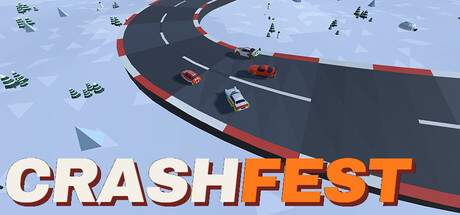
CrashFest is a one-person game, built in Unity between coffee and complaints from playtesters. It started as a physics experiment about shoving a low-poly car off a ledge and got out of hand once six controllers were plugged in.
I’m a software engineer, not an artist. So a good chunk of CrashFest was made together with Claude AI — art direction, shaders, menus, the visual bits I’d never have drawn on my own — and the soundtrack comes out of Suno. The code, the physics and every questionable design decision are mine.
This game uses generative AI in parts of its development.
Generative AI is used to help generate the game's program code. However, all final testing, adjustment, and verification of the generated code are carried out by human developers.
Generative AI is also used to create the game's background music (BGM).
Some of the game's visual assets (background artwork, orb and planet textures, UI elements) as well as the store page capsules and marketing images were created with the help of AI image-generation tools. The background music was created using AI music tools. All AI-assisted content was reviewed, edited and curated by the developer, who holds the rights to use it.
OrbFlow was created with the assistance of AI coding agents for script generation, physics optimization, and text drafting. All game design, level layouts, visual aesthetics, and quality assurance were directed, tested, and refined by the human developer.
Generative AI was used only to assist with text localization and marketing assets; no AI-generated artwork, audio, or runtime content is included in the game.
Generative AI was used to create some visual assets for the Steam store page and promotional materials. AI is not used to generate content, gameplay, or code in real time during gameplay.
Generative AI was not used to create any in-game content resources. AI was utilized solely for the translation of certain in-game languages and external content, such as our Steam page.
I used generative AI tools to create initial concept art and sketches for my game characters, which I then manually recreated and modeled in 3D myself. I also used AI to assist in sketching the game's official logo
This game uses AI-assisted translation for the Steam store page and some in-game UI text. As a solo indie developer with limited resources, AI translation helps make the game accessible to more players and support a wider range of languages.
The game's code was written with the help of an AI coding assistant, following the developer's design direction. Because the characters, arenas, materials and user interface are generated procedurally in code rather than authored as art assets, they are a result of that same process. The background music tracks were generated with Suno (commercial licence). Sound effects are licensed from Mixkit and Freesound. Nothing is generated by AI while the game is running.
The game is a single hand-maintained source file. It was written together
with an AI coding assistant. Every change was reviewed, tested and integrated by
the developer; the game ships with its own automated test suite.
Generative AI was used to assist in creating some in-game artwork and promotional artwork for the game, including certain environment backgrounds and Steam store assets.
As a solo indie developer, I used Generative AI tools during development to create certain icons and UI graphic elements in order to streamline the visual pipeline and reduce overall development time. All AI-generated assets are pre-generated static images included directly in the game files; no AI content is generated live during gameplay.
AI tools were used to draft store page text and to translate the in-game text into English, Japanese and Chinese.
AI was also used for part of the art.
All of this was reviewed and edited by the developers.
No AI-generated content is created while the game is running.
Some of this game's 2D art (such as item icons and UI illustrations) was created with the help of generative AI, and AI was also used to help write and translate some in-game and store page text. All of it was reviewed and finalized by the developer, and no content is generated by AI while you play.
All 3D models and textures were created by humans. Some sound assets and UI graphics were created using generative AI and edited and supervised by humans.
AI used to generate code, including code to procedurally generate graphics/sound.
Artists using Suno marked "(Suno)" after artist name.
AI used for localization.
ViewerFrenzy includes pre-generated AI-assisted music and selected visual assets created during development. These assets are reviewed and curated by the development team before inclusion in the game. The game does not use generative AI to create content during gameplay.
Art direction steered asset creation, SFX, store capsule artwork and the logo were produced with generative AI assistance then hand-edited. No generative AI runs at runtime; the game generates no content live.
AI tools were used during development to assist with asset creation, texture generation, and development workflows. All AI-generated content was reviewed, modified, and curated by the development team.
Generative AI was used during development to generate suspect mugshot photos, dossier case texts, and to assist with language localization. All generated assets are static and pre-packaged into the game.
We used Claude (Anthropic) during development for the following:
- Writing the store page description
- Assisting with the translation of in-game text
- Generating some simple in-game objects
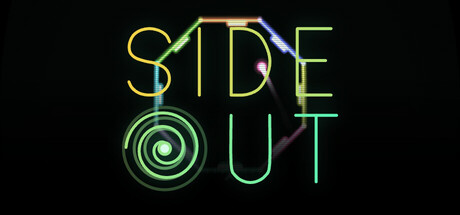
SIDE OUT was built with AI-assisted development tools. No artwork, audio, text or other content in the game is generated by AI. All visuals are drawn procedurally in code, and all store text is written by hand.
Generative AI was used to assist in creating select art assets, which were reviewed, edited, and integrated by the developer. All gameplay, programming, and overall design were created by the development team.
This game includes content created with the help of AI during development.
Images (34): backgrounds, the logo and in-game objects were created using OpenAI's image generation (gpt-image), then edited by the developer.
34 of the 66 sprites in the shipping build originate this way.
UI elements and one texture (13) and sound effects (21): these were designed by AI (Claude) and implemented as the developer's own program code. They are not the output of an image or audio generation model; the shapes and waveforms are produced by deterministic processing.
The game does not generate any content with AI at runtime.
Music is licensed from a purchased royalty-free library and involves no
AI. Stage design is the developer's own work.
Some Steam store and library artwork (capsules, hero, broadcast panels, and similar marketing images) was created with generative AI, then selected and cropped by the developer.
A few 3D props were blocked out with an AI modeling tool and then adjusted by hand for the game.
The game itself does not use generative AI while you play. Halley, the story, fishing, and locations are human-authored. Worlds and water use traditional game systems, not live AI generation.
We are team of two with a design and development background. We have a combined decades experience shipping production-quality code and art. We use AI along with our other tools, like Blender, Substance, etc. to help us build our vision. We use AI in the early stage of concept development and prototyping, coding assistance, but everything that makes it in-game is hand-crafted and authored by us. The music is played by hand real instruments. All screen captures are 100% in-game with no alterations.
We used AI tools in two places during development, and in neither of them to replace creative work.
Our French, Spanish, Italian, Japanese and Korean localisations are made using AI. We also used AI assistance while writing and restructuring parts of our codebase.
Everything players see and hear — art, animation, sound, music, game design and all original writing — was made by people.
All simulation, art, audio and text in Terra Logic are hand-made — the game ships with no AI-generated content and makes no network requests by default. One optional feature can generate text at runtime: the "whisper" narrator, a single one-line ambient caption. By default it composes lines from a built-in, hand-written phrase library. Players who supply their own Anthropic (Claude) API key in a local config file may enable AI-generated phrasing for that one caption line; without a key the AI path is fully inactive. AI output never affects simulation, gameplay, art, audio, or any other text.
Some pre-rendered 2D art was created with the assistance of generative AI tools: the playable characters' animation frames, world backgrounds and tile art were generated from the developer's original character and world designs, then hand-edited, aligned and baked into final game assets by the developer. A small number of sound effects were also created with AI audio tools and then mixed by hand. The store page capsule images are composed from the same AI-assisted paintings plus hand-set typography. All AI-assisted content is pre-rendered, was reviewed by the developer before shipping, and no content is generated by AI at runtime.
Generative AI tools were used during development to assist in creating selected pre-generated 3D assets and visual artwork used in the game. All generated outputs were reviewed, edited, and integrated by the developer. The game does not generate AI content during gameplay or connect to external AI services.
Generative AI was used as a development aid for some pre-generated marketing artwork, concept artwork, localization drafts, and selected visual assets. All AI-assisted content was reviewed and edited by the developer before inclusion. The game does not generate AI content during gameplay or connect to external AI services.
We use AI tools to assist development. Some 3D models are generated with the assistance of AI tools (Meshy) from our own concept designs, and are then reviewed, adjusted, and integrated into the game by the team. Some store page text was drafted with AI assistance and then edited by the developers.
No generative AI runs at runtime. Players never receive AI-generated content while playing.
CrashFest is a one-person game, built in Unity between coffee and complaints from playtesters. It started as a physics experiment about shoving a low-poly car off a ledge and got out of hand once six controllers were plugged in.
I’m a software engineer, not an artist. So a good chunk of CrashFest was made together with Claude AI — art direction, shaders, menus, the visual bits I’d never have drawn on my own — and the soundtrack comes out of Suno. The code, the physics and every questionable design decision are mine.
This game uses generative AI in parts of its development.
Generative AI is used to help generate the game's program code. However, all final testing, adjustment, and verification of the generated code are carried out by human developers.
Generative AI is also used to create the game's background music (BGM).
Some of the game's visual assets (background artwork, orb and planet textures, UI elements) as well as the store page capsules and marketing images were created with the help of AI image-generation tools. The background music was created using AI music tools. All AI-assisted content was reviewed, edited and curated by the developer, who holds the rights to use it.
OrbFlow was created with the assistance of AI coding agents for script generation, physics optimization, and text drafting. All game design, level layouts, visual aesthetics, and quality assurance were directed, tested, and refined by the human developer.
Generative AI was used only to assist with text localization and marketing assets; no AI-generated artwork, audio, or runtime content is included in the game.
Generative AI was used to create some visual assets for the Steam store page and promotional materials. AI is not used to generate content, gameplay, or code in real time during gameplay.
Generative AI was not used to create any in-game content resources. AI was utilized solely for the translation of certain in-game languages and external content, such as our Steam page.
I used generative AI tools to create initial concept art and sketches for my game characters, which I then manually recreated and modeled in 3D myself. I also used AI to assist in sketching the game's official logo
This game uses AI-assisted translation for the Steam store page and some in-game UI text. As a solo indie developer with limited resources, AI translation helps make the game accessible to more players and support a wider range of languages.
The game's code was written with the help of an AI coding assistant, following the developer's design direction. Because the characters, arenas, materials and user interface are generated procedurally in code rather than authored as art assets, they are a result of that same process. The background music tracks were generated with Suno (commercial licence). Sound effects are licensed from Mixkit and Freesound. Nothing is generated by AI while the game is running.
The game is a single hand-maintained source file. It was written together
with an AI coding assistant. Every change was reviewed, tested and integrated by
the developer; the game ships with its own automated test suite.
Generative AI was used to assist in creating some in-game artwork and promotional artwork for the game, including certain environment backgrounds and Steam store assets.
As a solo indie developer, I used Generative AI tools during development to create certain icons and UI graphic elements in order to streamline the visual pipeline and reduce overall development time. All AI-generated assets are pre-generated static images included directly in the game files; no AI content is generated live during gameplay.
AI tools were used to draft store page text and to translate the in-game text into English, Japanese and Chinese.
AI was also used for part of the art.
All of this was reviewed and edited by the developers.
No AI-generated content is created while the game is running.
Some of this game's 2D art (such as item icons and UI illustrations) was created with the help of generative AI, and AI was also used to help write and translate some in-game and store page text. All of it was reviewed and finalized by the developer, and no content is generated by AI while you play.
All 3D models and textures were created by humans. Some sound assets and UI graphics were created using generative AI and edited and supervised by humans.
AI used to generate code, including code to procedurally generate graphics/sound.
Artists using Suno marked "(Suno)" after artist name.
AI used for localization.
ViewerFrenzy includes pre-generated AI-assisted music and selected visual assets created during development. These assets are reviewed and curated by the development team before inclusion in the game. The game does not use generative AI to create content during gameplay.
Art direction steered asset creation, SFX, store capsule artwork and the logo were produced with generative AI assistance then hand-edited. No generative AI runs at runtime; the game generates no content live.
AI tools were used during development to assist with asset creation, texture generation, and development workflows. All AI-generated content was reviewed, modified, and curated by the development team.
Generative AI was used during development to generate suspect mugshot photos, dossier case texts, and to assist with language localization. All generated assets are static and pre-packaged into the game.
We used Claude (Anthropic) during development for the following:
- Writing the store page description
- Assisting with the translation of in-game text
- Generating some simple in-game objects
SIDE OUT was built with AI-assisted development tools. No artwork, audio, text or other content in the game is generated by AI. All visuals are drawn procedurally in code, and all store text is written by hand.
Generative AI was used to assist in creating select art assets, which were reviewed, edited, and integrated by the developer. All gameplay, programming, and overall design were created by the development team.
This game includes content created with the help of AI during development.
Images (34): backgrounds, the logo and in-game objects were created using OpenAI's image generation (gpt-image), then edited by the developer.
34 of the 66 sprites in the shipping build originate this way.
UI elements and one texture (13) and sound effects (21): these were designed by AI (Claude) and implemented as the developer's own program code. They are not the output of an image or audio generation model; the shapes and waveforms are produced by deterministic processing.
The game does not generate any content with AI at runtime.
Music is licensed from a purchased royalty-free library and involves no
AI. Stage design is the developer's own work.
Some Steam store and library artwork (capsules, hero, broadcast panels, and similar marketing images) was created with generative AI, then selected and cropped by the developer.
A few 3D props were blocked out with an AI modeling tool and then adjusted by hand for the game.
The game itself does not use generative AI while you play. Halley, the story, fishing, and locations are human-authored. Worlds and water use traditional game systems, not live AI generation.
We are team of two with a design and development background. We have a combined decades experience shipping production-quality code and art. We use AI along with our other tools, like Blender, Substance, etc. to help us build our vision. We use AI in the early stage of concept development and prototyping, coding assistance, but everything that makes it in-game is hand-crafted and authored by us. The music is played by hand real instruments. All screen captures are 100% in-game with no alterations.
We used AI tools in two places during development, and in neither of them to replace creative work.
Our French, Spanish, Italian, Japanese and Korean localisations are made using AI. We also used AI assistance while writing and restructuring parts of our codebase.
Everything players see and hear — art, animation, sound, music, game design and all original writing — was made by people.
All simulation, art, audio and text in Terra Logic are hand-made — the game ships with no AI-generated content and makes no network requests by default. One optional feature can generate text at runtime: the "whisper" narrator, a single one-line ambient caption. By default it composes lines from a built-in, hand-written phrase library. Players who supply their own Anthropic (Claude) API key in a local config file may enable AI-generated phrasing for that one caption line; without a key the AI path is fully inactive. AI output never affects simulation, gameplay, art, audio, or any other text.
Some pre-rendered 2D art was created with the assistance of generative AI tools: the playable characters' animation frames, world backgrounds and tile art were generated from the developer's original character and world designs, then hand-edited, aligned and baked into final game assets by the developer. A small number of sound effects were also created with AI audio tools and then mixed by hand. The store page capsule images are composed from the same AI-assisted paintings plus hand-set typography. All AI-assisted content is pre-rendered, was reviewed by the developer before shipping, and no content is generated by AI at runtime.