








Disclosure
I used AI to help review code and check for any bugs. Also a few small pieces of art that will be changed/updated by release while we get artists commissioned.
- Creator
- IdleGear
- Reviews
- -
- Added
- Jul 2, 2026
Public Steam disclosure research 25,380 disclosures tracked
Search developers’ Steam disclosures, compare classified AI use across games, and follow recorded changes. This index adds cross-game classifications and statistics to statements published on individual store pages.
Code help, debugging and other development work.
Capsule art, trailers and promotional material.
Pre-made art, audio, writing and other game assets.
Interactive or runtime AI features disclosed by the developer.
Groups reflect automatic analysis of public disclosures; mature records are excluded. These counts do not measure AI use across all of Steam. Missing or unclear statements cannot establish whether a game uses AI.
I used AI to help review code and check for any bugs. Also a few small pieces of art that will be changed/updated by release while we get artists commissioned.
It was partially used for depicting space backgrounds, BGM performance, multilingual translation, and metal light source effects.
AI was utilized in the following areas: * Art Assets: Two textures (the move marker and UI background) were generated using AI tools. * Development: AI was primarily used for code review, debugging, and localization support. * Audio: Some musical tracks and voices may have been AI-generated. Text: Help text was generated and proofread with AI assistance. * In-Game Feature: The game includes llama.cpp, enabling an experimental feature where players can consult an AI about chess moves.
Some promotional artwork and achievement icons were created using generative AI and then manually edited by the developer. No gameplay content is generated by AI.
Some game artwork and visual assets were created with the assistance of generative AI tools during development.
OFS is made by a solo developer using a hybrid, human-led production pipeline. Some of the game's content was produced with the help of several generative AI tools — for instance to assist with certain complex 3D meshes, textures, and visual elements. These tools are used for one purpose only: to augment and accelerate human creativity, never to replace it. Every artistic direction, every gameplay decision, and every final creative call is made by a human. All AI-assisted assets — meshes, textures, visuals, objects and anything else — are hand-reviewed, edited, and finalized by a human before they ever make it into the game. As a solo developer, this hybrid approach simply unlocks far more creative possibilities than would otherwise be feasible without a full team — while keeping full human authorship over the final result.
All images in the game, as well as on the store page, were generated using AI.
AI tools were used for polishing narrative text content and translations.
Developed using Claude Code.
During development, some of the game's art assets (including icons, UI elements, scene backgrounds, and character visuals) were created with the help of AI image-generation tools, then curated, adjusted, and integrated by hand. The game does not generate any AI content in real time during play.
Localization texts for different languages are generated with the support of Gen AI.
Some visual assets and artwork used during the development of Shrunk Wilds were created with the assistance of AI image generation tools. All generated assets are manually reviewed, modified, and curated by the developer before being implemented into the game. Players do not interact with AI systems during gameplay, and the game does not generate content in real time.
Some store page text, promotional materials, localization support, and selected visual assets may be created or assisted by generative AI tools. All AI-assisted content is reviewed and edited by Demona Vosz before publication. Vanya Online does not use generative AI to create live content during gameplay.
We used Generative AI tools solely for localizing the store page descriptions, brainstorming promotional texts, and translating "About This Game" sections into multiple languages to make the game accessible to a wider audience. No AI-generated assets (such as art, code, or audio) are used within the game build itself.
We used generative AI mainly for generating code. It has also been used for writing flavour text, many interface descriptions and some lines for an AI character. Finally it has also been used for proofreading.
While developing this game I used AI Tools to assist in many aspects of the game creation process. I used MidJourney to create background images, Mureka to create the sound track, and Ludo to generate sprites. All game design, logic, formulas, gameplay modes, powers, balancing, etc. I handled myself over months of development time.
This game was made with the help of generative AI tools. During development, AI was used to help create some of the content that ships with the game — including its writing and dialogue, its English and Turkish text, and its 2D art and UI (such as icons, product sprites, achievement badges, and store images). All of this content was directed, reviewed, and curated by the developer. The game does not generate any AI content while you play, and does not connect to any AI service during gameplay.
As a solo developer, I used AI tools as a foundation to expand the game's scope, manually refining and finalizing every asset to ensure the final result is a high-quality, handcrafted experience.
Cellula was developed with the assistance of generative AI tools. The developer used AI to help write C++ code, generate 3D organelle models from text descriptions, and create UI button artwork. No AI-generated content appears in the final game without human modification, curation, and integration. This project is itself a demonstration of how AI can democratize game development — allowing a single developer with domain expertise but limited programming experience to build something that previously required a full studio. All game design, biological accuracy, educational content, and creative direction were provided by a human physician and educator.
We used advanced AI language models (Claude and Gemini) to help translate SERVICE DESK SIM into 8 languages: French, German, Spanish, Italian, Hindi, Urdu, Japanese, and English (UK). The AI handled the initial translation of all in-game text from UI menus to dialogue, story sequences, and thousands of unique support tickets. Every translation was then carefully reviewed and tested by humans to ensure quality and cultural accuracy across all languages.
We used artificial intelligence tools in several areas of Parcel Empire’s development, always under human supervision. Some of the game’s artwork was generated with the help of AI, then significantly reworked by hand to match the project’s art direction and the specific needs of the game. The game’s music was entirely generated with the help of AI. The sound effects, however, were not generated by AI. AI was also used to help translate the game into the available languages. The game’s development is handled by a developer on the team. Some portions of the code were assisted by AI, but they were reviewed, adapted, and integrated under human supervision.
Generative AI was used in this game to help create some user interface visuals and sound effects.
Code,UI Elemente
Some of the UI elements in the game were generated by AI, and the images on the store pages were also generated by AI.
Some store assets (capsules, library art, promotional images) and some in-game terrain sprites (such as mountains and forests) started from drafts produced with AI image tools, then selected, color-graded, composited, and cropped by the developer. All publicly released assets are human-reviewed. UI, fonts, icons, player avatars, faction emblems, and other non-terrain art are drawn directly by the developer or built from licensed fonts / open-source resources — no AI generation involved. Player-to-player text messages produced at runtime by the AI model each player has chosen are disclosed separately under "Live-Generated AI".
Some visual assets, images, or concept materials used in this game are created with AI-assisted tools and further selected, adjusted, integrated, or refined by the author for use in the game's artistic presentation and content production.
This game uses text-to-speech to generate character voices, image-to-3D tools to create ship models, and image-to-video tools to produce cinematic sequences you may encounter during gameplay. AI-generated content has been used to enhance and enrich the in-game experience.
Some images in this game were generated with the assistance of AI tools during development.
"Generative AI was utilized to assist with the initial translation and localization of the game's text assets. All AI-assisted content underwent thorough manual review, editing, and refinement by our development team to ensure cultural accuracy and a high-quality narrative experience for players."
VoxelForge includes local generative AI features for user-assisted 3D and voxel asset creation. Users can provide their own source images and use the application to generate 3D models, voxel assets, meshes, textures, and related production assets. This generation runs locally on the user’s computer using model files bundled with the application. VoxelForge does not connect to an external AI service during normal use. It does not require a Hugging Face account, API key, cloud generation service, or external server connection at runtime. User input images and generated outputs are not uploaded to our servers. The AI features are intended as creative tools for asset production. Users are responsible for ensuring that they have the necessary rights to any images or source material they import, and for reviewing generated outputs before using or distributing them.
Some animations and effects use AI
During development, we used generative AI tools to assist in creating certain game content. This includes using AI to generate base concepts and visual assets for specific in-game items or backgrounds (which were subsequently refined manually), as well as using AI for multilingual localization and text polishing.
AI Disclosure This game was developed entirely with the assistance of large language models and generative AI tools. AI systems were used for graphic asset generation, concept art, narrative text drafting, lore writing, design review, creative critique, initial structural planning, code architecture, system design, feature implementation, iterative refinement, and debugging. All lore, mechanics, story, art, and game systems are pre-authored and fully static. No AI processing or generation occurs at runtime — the game runs entirely on pre-built code with no live model calls. This disclosure is provided in compliance with Steam's AI Content Policy and Valve developer transparency guidelines.
Art assets in this game are partially created with AI technology to improve the overall player experience.
AI has been used to generate music
This game contain AI generated image that have been modified with a 2d software so you can have beautiful pictures representing the game and the war.
AI was used to assist with programming and Steam page translations are currently AI-generated.
This game contains pre-generated AI-generated and AI-assisted visual content. Generative AI tools were used as part of the art creation process for certain visual assets appearing in the game and on the Steam store page. This may include building artwork, ability cards, character artwork, menu artwork, user interface elements, promotional images, store capsules, library assets, and other graphical materials. All such content was reviewed, curated, modified where necessary, and approved by the developer before inclusion in the final game. The developer is responsible for the final content presented to players. The game does not use live AI generation, AI-powered gameplay systems, or AI-generated user content. All AI-assisted content is pre-generated during development and distributed as part of the game files.
Some Example textures & images were created with AI.
The Logo And Marketing Graphics Made By AI
The visual design of the tournament hall environment in the game was created using generative AI tools.
AI was used to help find bugs, create some art, music, and game content. The game itself was designed and made by humans.
This application uses generative AI tools to assist in writing parts of the code and logic during development. All AI-generated code has been reviewed, tested, and integrated by humans to ensure the security and stability of the application.
LLMs has been used for debugging, documentation, coding, and also for improving of grammar of some text.
The game is partly developed with AI, assets and part of the code.
By My Side is developed by a small independent studio, and we use generative AI as part of our content pipeline: - 3D models — many in-game models (crops, props, buildings, devices and characters) are generated with Meshy AI, then adjusted, scaled and integrated by hand. - Music & sound — parts of the soundtrack and sound effects are created with AI audio tools and curated by us. - Localization — translations are drafted with AI assistance and reviewed before release. All AI-generated content is reviewed, edited and curated by the developer before it ships. No generative AI runs live during gameplay — everything is pre-generated and fixed.
AI tools were used to assist with concept art direction, store artwork iteration, written content, UI text refinement, and creative planning. All final content was reviewed, edited, and implemented by the developer.
FLOWORKS was developed with the help of AI-based coding assistants, which we used to write parts of the game's source code. Everything you see and hear in the game is then generated procedurally by that code — all graphics are drawn in code (SVG/CSS) and all sound is synthesized in code (Web Audio). The game contains no AI-generated image or audio assets, and no generative AI runs while you play.
Hey everyone! I’m incredibly excited to finally bring this factory game to Steam. To be completely transparent, a significant part of this game was crafted through what the cool kids call "Vibe Coding"—leveraging cutting-edge AI to help bring my logic, systems, and visions to life. While the AI helped lay down the bricks, the core factory mechanics, balancing, and gameplay design are all fueled by my own passion for automation. Think of it as a factory game built by a developer who loves automation so much, they even automated parts of the development process! I hope you enjoy optimizing your factories as much as I enjoyed optimizing this code.
Some of the visual assets and code scripts in this game were created with the assistance of generative AI tools.
| Title⇅ | Disclosure | Creator⇅ | Src | Reviews⇅ | Added↓ |
|---|---|---|---|---|---|
 Corefall: Idle Dungeon RPG In-game content artcode | I used AI to help review code and check for any bugs. Also a few small pieces of art that will be changed/updated by release while we get artists commissioned. | IdleGear | - | Jul 2, 2026 | |
 RobotAssembly In-game content artaudiotext | It was partially used for depicting space backgrounds, BGM performance, multilingual translation, and metal light source effects. | ONEKICK CO.,LTD. | - | Jul 2, 2026 | |
 Caïssa Board In-game content arttextaudiocode | AI was utilized in the following areas:
* Art Assets: Two textures (the move marker and UI background) were generated using AI tools.
* Development: AI was primarily used for code review, debugging, and localization support.
* Audio: Some musical tracks and voices may have been AI-generated.
Text: Help text was generated and proofread with AI assistance.
* In-Game Feature: The game includes llama.cpp, enabling an experimental feature where players can consult an AI about chess moves. | Dominique Lorre | - | Jul 1, 2026 | |
 Huntervania In-game content art | Some promotional artwork and achievement icons were created using generative AI and then manually edited by the developer. No gameplay content is generated by AI. | Dubcherry | - | Jun 30, 2026 | |
 Fantasyforyou In-game content art | Some game artwork and visual assets were created with the assistance of generative AI tools during development. | GNISoft Co.,Ltd. | - | Jun 30, 2026 | |
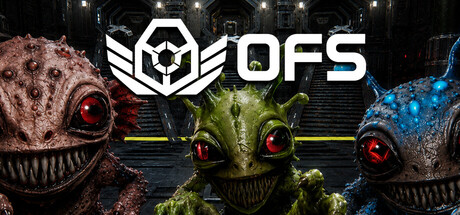 OFS In-game content art | OFS is made by a solo developer using a hybrid, human-led production pipeline.
Some of the game's content was produced with the help of several generative AI tools — for instance to assist with certain complex 3D meshes, textures, and visual elements. These tools are used for one purpose only: to augment and accelerate human creativity, never to replace it.
Every artistic direction, every gameplay decision, and every final creative call is made by a human. All AI-assisted assets — meshes, textures, visuals, objects and anything else — are hand-reviewed, edited, and finalized by a human before they ever make it into the game.
As a solo developer, this hybrid approach simply unlocks far more creative possibilities than would otherwise be feasible without a full team — while keeping full human authorship over the final result. | Cold Narrative | - | Jun 29, 2026 | |
 Arcane Forge In-game content art | All images in the game, as well as on the store page, were generated using AI. | Vayvolt | - | Jun 29, 2026 | |
 Star Haul Tycoon In-game content text | AI tools were used for polishing narrative text content and translations. | sugames | - | Jun 29, 2026 | |
 Daily War Online Dev only code | Developed using Claude Code. | Daily War Online | - | Jun 29, 2026 | |
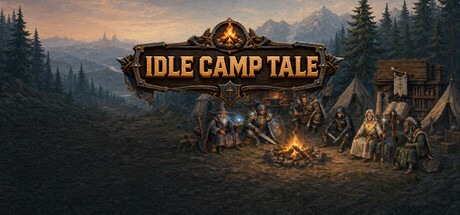 Camp & Conquer In-game content art | During development, some of the game's art assets (including icons, UI elements, scene backgrounds, and character visuals) were created with the help of AI image-generation tools, then curated, adjusted, and integrated by hand. The game does not generate any AI content in real time during play. | Maple Leaf | - | Jun 28, 2026 | |
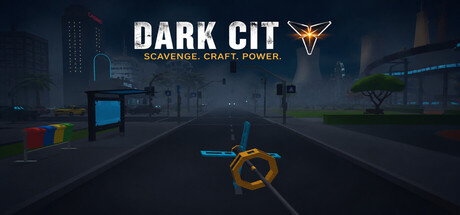 Dark City: Scavenge Craft Power In-game content text | Localization texts for different languages are generated with the support of Gen AI. | GMG | - | Jun 28, 2026 | |
 Shrunk Wilds In-game content art | Some visual assets and artwork used during the development of Shrunk Wilds were created with the assistance of AI image generation tools. All generated assets are manually reviewed, modified, and curated by the developer before being implemented into the game. Players do not interact with AI systems during gameplay, and the game does not generate content in real time. | Metallicus Media | - | Jun 28, 2026 | |
 Vanya Online - Idle MMORPG Store/marketing arttext | Some store page text, promotional materials, localization support, and selected visual assets may be created or assisted by generative AI tools. All AI-assisted content is reviewed and edited by Demona Vosz before publication. Vanya Online does not use generative AI to create live content during gameplay. | Demona Vosz | 73 | Jun 28, 2026 | |
 Egg-cremental Store/marketing text | We used Generative AI tools solely for localizing the store page descriptions, brainstorming promotional texts, and translating "About This Game" sections into multiple languages to make the game accessible to a wider audience. No AI-generated assets (such as art, code, or audio) are used within the game build itself. | Lucuxis | - | Jun 28, 2026 | |
 Terraforming Titans In-game content textcode | We used generative AI mainly for generating code. It has also been used for writing flavour text, many interface descriptions and some lines for an AI character. Finally it has also been used for proofreading. | terraforming.titans | 51 | Jun 28, 2026 | |
 Idle Regenerator In-game content artaudio | While developing this game I used AI Tools to assist in many aspects of the game creation process. I used MidJourney to create background images, Mureka to create the sound track, and Ludo to generate sprites.
All game design, logic, formulas, gameplay modes, powers, balancing, etc. I handled myself over months of development time. | Gestalt Gaming LLC | 45 | Jun 28, 2026 | |
 Labeloop In-game content textart | This game was made with the help of generative AI tools. During development, AI was used to help create some of the content that ships with the game — including its writing and dialogue, its English and Turkish text, and its 2D art and UI (such as icons, product sprites, achievement badges, and store images). All of this content was directed, reviewed, and curated by the developer. The game does not generate any AI content while you play, and does not connect to any AI service during gameplay. | YB Studio | - | Jun 28, 2026 | |
 Mycelium Conquest: Mitosis In-game content art | As a solo developer, I used AI tools as a foundation to expand the game's scope, manually refining and finalizing every asset to ensure the final result is a high-quality, handcrafted experience. | YCF Productions | - | Jun 28, 2026 | |
 Cellula In-game content artcode | Cellula was developed with the assistance of generative AI tools. The developer used AI to help write C++ code, generate 3D organelle models from text descriptions, and create UI button artwork. No AI-generated content appears in the final game without human modification, curation, and integration.
This project is itself a demonstration of how AI can democratize game development — allowing a single developer with domain expertise but limited programming experience to build something that previously required a full studio.
All game design, biological accuracy, educational content, and creative direction were provided by a human physician and educator. | Patrick Gallaway | - | Jun 28, 2026 | |
 Service Desk Sim text | We used advanced AI language models (Claude and Gemini) to help translate
SERVICE DESK SIM into 8 languages: French, German, Spanish, Italian, Hindi,
Urdu, Japanese, and English (UK). The AI handled the initial translation of
all in-game text from UI menus to dialogue, story sequences, and thousands
of unique support tickets. Every translation was then carefully reviewed and
tested by humans to ensure quality and cultural accuracy across all languages. | ReproDev Games | - | Jun 28, 2026 | |
 Parcel Empire In-game content artaudiotextcode | We used artificial intelligence tools in several areas of Parcel Empire’s development, always under human supervision.
Some of the game’s artwork was generated with the help of AI, then significantly reworked by hand to match the project’s art direction and the specific needs of the game.
The game’s music was entirely generated with the help of AI. The sound effects, however, were not generated by AI.
AI was also used to help translate the game into the available languages.
The game’s development is handled by a developer on the team. Some portions of the code were assisted by AI, but they were reviewed, adapted, and integrated under human supervision. | PexLab | - | Jun 28, 2026 | |
 Hosting Simulator: 2026 In-game content artaudio | Generative AI was used in this game to help create some user interface visuals and sound effects. | Xraus Games | - | Jun 28, 2026 | |
 Road Tycoon Unclear code | Code,UI Elemente | REVOKO | - | Jun 28, 2026 | |
 黑圣化:悟空 In-game content art | Some of the UI elements in the game were generated by AI, and the images on the store pages were also generated by AI. | 一半世界 | - | Jun 28, 2026 | |
 Proxy In-game content art | Some store assets (capsules, library art, promotional images) and some in-game terrain sprites (such as mountains and forests) started from drafts produced with AI image tools, then selected, color-graded, composited, and cropped by the developer. All publicly released assets are human-reviewed. UI, fonts, icons, player avatars, faction emblems, and other non-terrain art are drawn directly by the developer or built from licensed fonts / open-source resources — no AI generation involved. Player-to-player text messages produced at runtime by the AI model each player has chosen are disclosed separately under "Live-Generated AI". | Cup Island | - | Jun 28, 2026 | |
 Fantasy Air-Sea Battles Showdown In-game content art | Some visual assets, images, or concept materials used in this game are created with AI-assisted tools and further selected, adjusted, integrated, or refined by the author for use in the game's artistic presentation and content production. | WANG WENJIE | - | Jun 28, 2026 | |
 Destination Gemini In-game content audioart | This game uses text-to-speech to generate character voices, image-to-3D tools to create ship models, and image-to-video tools to produce cinematic sequences you may encounter during gameplay.
AI-generated content has been used to enhance and enrich the in-game experience. | Hubert Cachat | - | Jun 28, 2026 | |
 Chinese Pancake Simulator In-game content art | Some images in this game were generated with the assistance of AI tools during development. | Furnace Hound Games | - | Jun 28, 2026 | |
 无限R-放置赛车 Infinite R: Idle Racing In-game content text | "Generative AI was utilized to assist with the initial translation and localization of the game's text assets. All AI-assisted content underwent thorough manual review, editing, and refinement by our development team to ensure cultural accuracy and a high-quality narrative experience for players." | VoidSlash Games | - | Jun 28, 2026 | |
 VoxelForge Live AI arttext | VoxelForge includes local generative AI features for user-assisted 3D and voxel asset creation.
Users can provide their own source images and use the application to generate 3D models, voxel assets, meshes, textures, and related production assets. This generation runs locally on the user’s computer using model files bundled with the application.
VoxelForge does not connect to an external AI service during normal use. It does not require a Hugging Face account, API key, cloud generation service, or external server connection at runtime. User input images and generated outputs are not uploaded to our servers.
The AI features are intended as creative tools for asset production. Users are responsible for ensuring that they have the necessary rights to any images or source material they import, and for reviewing generated outputs before using or distributing them. | Ghst.Bstrd | - | Jun 28, 2026 | |
 灰界年代记 In-game content art | Some animations and effects use AI | 重黎游戏 | - | Jun 28, 2026 | |
 Robot In Kitchen In-game content arttext | During development, we used generative AI tools to assist in creating certain game content. This includes using AI to generate base concepts and visual assets for specific in-game items or backgrounds (which were subsequently refined manually), as well as using AI for multilingual localization and text polishing. | MA HAN | - | Jun 28, 2026 | |
 Just a Clicker Game In-game content arttextcode | AI Disclosure
This game was developed entirely with the assistance of large language models and generative AI tools. AI systems were used for graphic asset generation, concept art, narrative text drafting, lore writing, design review, creative critique, initial structural planning, code architecture, system design, feature implementation, iterative refinement, and debugging. All lore, mechanics, story, art, and game systems are pre-authored and fully static. No AI processing or generation occurs at runtime — the game runs entirely on pre-built code with no live model calls. This disclosure is provided in compliance with Steam's AI Content Policy and Valve developer transparency guidelines. | Mochi Fox Studios | - | Jun 28, 2026 | |
 Palm Farm: Idle Crops In-game content art | Art assets in this game are partially created with AI technology to improve the overall player experience. | Fantasy Tree | - | Jun 28, 2026 | |
 MMOS: MMO Simulator In-game content audio | AI has been used to generate music | SwiftSync | - | Jun 28, 2026 | |
 DUSK OF WAR In-game content art | This game contain AI generated image that have been modified with a 2d software so you can have beautiful pictures representing the game and the war. | oedipe games | - | Jun 28, 2026 | |
 Magnetic Catch Store/marketing text | AI was used to assist with programming and Steam page translations are currently AI-generated. | gameandcode | - | Jun 28, 2026 | |
 PetCraft In-game content art | This game contains pre-generated AI-generated and AI-assisted visual content.
Generative AI tools were used as part of the art creation process for certain visual assets appearing in the game and on the Steam store page. This may include building artwork, ability cards, character artwork, menu artwork, user interface elements, promotional images, store capsules, library assets, and other graphical materials.
All such content was reviewed, curated, modified where necessary, and approved by the developer before inclusion in the final game. The developer is responsible for the final content presented to players.
The game does not use live AI generation, AI-powered gameplay systems, or AI-generated user content. All AI-assisted content is pre-generated during development and distributed as part of the game files. | BlueMonkey Studio | - | Jun 27, 2026 | |
 TILEZ In-game content art | Some Example textures & images were created with AI. | Martin Winters | - | Jun 27, 2026 | |
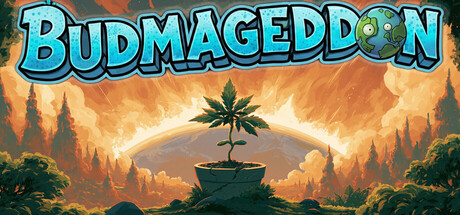 BudMageddon Store/marketing art | The Logo And Marketing Graphics Made By AI | SHAHIN MOHAMMADPOUR | - | Jun 27, 2026 | |
 Goal Idle In-game content art | The visual design of the tournament hall environment in the game was created using generative AI tools. | Royue Games | - | Jun 27, 2026 | |
 Upgradia In-game content artaudio | AI was used to help find bugs, create some art, music, and game content.
The game itself was designed and made by humans. | Mytharia | 29 | Jun 27, 2026 | |
 Audictrl Dev only code | This application uses generative AI tools to assist in writing parts of the code and logic during development. All AI-generated code has been reviewed, tested, and integrated by humans to ensure the security and stability of the application. | AudiCtrl Team | - | Jun 27, 2026 | |
 Cradle of the Dark Brood Dev only textcode | LLMs has been used for debugging, documentation, coding, and also for improving of grammar of some text. | RyuseGames | 30 | Jun 27, 2026 | |
 Aethyr Idle In-game content artcode | The game is partly developed with AI, assets and part of the code. | Odyoz | - | Jun 27, 2026 | |
 By My Side In-game content artaudiotext | By My Side is developed by a small independent studio, and we use generative AI as part of our content pipeline:
- 3D models — many in-game models (crops, props, buildings, devices and characters) are generated with Meshy AI, then adjusted, scaled and integrated by hand.
- Music & sound — parts of the soundtrack and sound effects are created with AI audio tools and curated by us.
- Localization — translations are drafted with AI assistance and reviewed before release.
All AI-generated content is reviewed, edited and curated by the developer before it ships. No generative AI runs live during gameplay — everything is pre-generated and fixed. | OverLKD Studio | - | Jun 27, 2026 | |
 Legacy of the Ark: The Long Awakening Store/marketing arttext | AI tools were used to assist with concept art direction, store artwork iteration, written content, UI text refinement, and creative planning. All final content was reviewed, edited, and implemented by the developer. | Broken Ark Studios | 31 | Jun 27, 2026 | |
 FLOWORKS In-game content artaudiocode | FLOWORKS was developed with the help of AI-based coding assistants, which we used to write parts of the game's source code. Everything you see and hear in the game is then generated procedurally by that code — all graphics are drawn in code (SVG/CSS) and all sound is synthesized in code (Web Audio).
The game contains no AI-generated image or audio assets, and no generative AI runs while you play. | QUENCH FORGE | - | Jun 27, 2026 | |
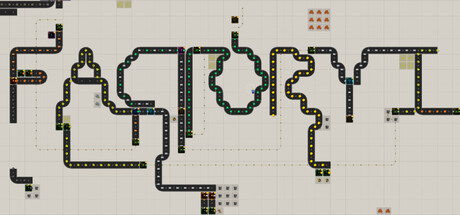 FACTORY I Dev only code | Hey everyone! I’m incredibly excited to finally bring this factory game to Steam.
To be completely transparent, a significant part of this game was crafted through what the cool kids call "Vibe Coding"—leveraging cutting-edge AI to help bring my logic, systems, and visions to life. While the AI helped lay down the bricks, the core factory mechanics, balancing, and gameplay design are all fueled by my own passion for automation.
Think of it as a factory game built by a developer who loves automation so much, they even automated parts of the development process! I hope you enjoy optimizing your factories as much as I enjoyed optimizing this code. | Studio H.D | - | Jun 27, 2026 | |
 CryptoGrid In-game content artcode | Some of the visual assets and code scripts in this game were created with the assistance of generative AI tools. | TELSON INTERACTIVE | - | Jun 16, 2026 |


