Public Steam disclosure research25,380 disclosures tracked
Where do games disclose AI use?
Search developers’ Steam disclosures, compare classified AI use across
games, and follow recorded changes.
This index adds cross-game classifications and statistics to
statements published on individual store pages.
Groups reflect automatic analysis of public disclosures; mature records are excluded. These counts do not measure AI use across all of Steam.
Missing or unclear statements cannot establish whether a game uses AI.
AI tools including ChatGPT, Lovart, and others were used during development to generate early concept art for characters, weapons, props, UI, and pet animations. All final in-game assets were manually redrawn and refined by our art team.
Generative AI tools were used during the development of ScrapBound to assist with the creation of some visual and audio assets. AI-generated imagery was used as a starting point for various game assets, which were then modified, edited, and integrated to fit the game's visual style. Many of these assets will over time be replaced as the development of the game continues.
Generative AI was only used to assist in creating some of the inventory icons and promotional artwork, as TEMPORARY PLACEHOLDERS.
The game's environments, gameplay systems, characters, mechanics, world design, and narrative were created by the developer. No AI content is generated during gameplay.
- AI coding agents were used to assist with general game programming for Sudden Death Golf in order to iterate over gameplay ideas faster as a solo dev
- Some parts of in-game UI/UX design were created with the assist of AI
- No 3D models or textures were made with AI. Most were made by hand by me, some were bought or commissioned
Some Steam store and library presentation artwork was created with assistance from generative AI tools, then selected and edited by the developer. Localization was completed conventionally, with AI used to assist in verification and quality checks.
Some images in the current version were created with the assistance of generative AI. These assets are planned to be replaced with original artwork during development.
Neverrest uses generative AI tools during development to assist with the creation of some pre-rendered 2D artwork and visual assets. All AI-assisted content is reviewed, edited, and integrated by the developer. The game does not generate AI content during gameplay.
Generative AI tools were used during development to assist with game code, localization, concept development, selected environmental and shop-interior images and textures, and store and marketing artwork. All AI-assisted outputs were reviewed, edited, and integrated by the developer before inclusion. The game does not use generative AI during runtime, and players cannot generate AI content within the game.
Generative AI was used during development to create and refine some pre-generated visual assets, including cat character and animation sprites, backgrounds, decorative items, achievement icons, and selected store and marketing artwork. Every generated asset was reviewed, edited, and integrated by the developer before inclusion. The game does not generate AI content at runtime and does not connect to external AI services during play.
We use generative AI to help identify coding errors that could otherwise take a significant amount of time to find manually.
We also use it during brainstorming to generate textures that would take a long time to create by hand and may ultimately be discarded.
All AI-generated feedback/content is reviewed and modified by a team member until it fits what we really want to do.
The images in this game start from generative AI output and are then redrawn pixel by pixel by the developer. This covers equipment icons, character and enemy sprites, backgrounds, and the images on this store page.
The music was created with a generative AI music service under a commercial-use license.
The text is written in Japanese and machine-translated into other languages.
Some of our store and marketing art started as AI-generated images. We used Midjourney to create the base key art for the Steam capsules, the library hero and the page background, then edited and composited those into the final images ourselves. The logo, wordmark and typography are our own work.
The game itself does not use generative AI. Every in-game asset (art, animation, UI, music, sound, and code) was made by us, by hand or with our own tools.
We’ve reviewed the AI-assisted art, we hold the rights to use it commercially, and as far as we’re aware it doesn’t infringe anyone else’s work.
All artwork, character art, animation and audio in Fleshgrinder were created by human artists — the use of generative AI for art was contractually prohibited on this project. Generative AI was used to translate the game's text into its ten non-English languages, and to draft a portion of the in-game item descriptions and dialogue. No generative AI runs while you play; nothing is generated at runtime.
RUSTCAN includes an optional live-generated AI guide called the Gnome. Players can ask the Gnome questions about gameplay, controls, progression, and the in-game world. The Gnome generates text responses at runtime through a server-side AI service.
Responses may be inaccurate and are provided for entertainment and gameplay guidance only. The Gnome does not provide professional, financial, medical, or legal advice.
Players access the feature after signing in, entering Hollow Pines, and selecting Ask the Gnome or speaking with the Gnome in town.
Requests require an authenticated RUSTCAN account and server-side application verification. Requests are rate-limited and monitored. Server-side input moderation blocks or flags severe illegal, exploitative, violent, self-harm, and other prohibited requests.
Generated replies are sanitized before display, and fallback responses are used when the AI service fails or produces no usable response. Players can report problems through the in-game bug/report tools.
Most of the visual assets used in the game's promotional materials and Steam Store page were created with the assistance of AI image generation tools, and were subsequently selected and refined by the developer. The game's gameplay, level design, programming, and game logic were developed by the developer with input from AI throughout the development process. The game does not use AI to generate any content during gameplay.
This game is a solo project developed by a student. Due to limited resources and budget, Generative AI tools were utilized to create store page visuals and capsule designs, as well as to localize and draft store descriptions; these elements were personally edited, refined, and finalized by the developer.
During development we may use procedural and AI-based tools to assist with sound effects creation. The final result is always chosen and edited by the developer.
Some raster artwork, interface and marketing artwork, sprite animation frames, and authored music were created with assistance from generative AI tools during development. All shipped output was artist-directed, reviewed, edited, and integrated specifically for Bunnyhop. No content is generated by AI while the game is running.
This game uses generative AI to power the pet's dialogue system. Players can choose to enable AI chat and freely select a local model (running offline) or a cloud API (requires their own API key), or completely disable AI chat and use preset or custom dialogue instead. Every AI conversation is generated in real time.
In game development, artificial intelligence is used solely as a supporting tool. We employ neural networks to enhance and refine 2D art (loading screens and promo banners) created using our in-game screenshots, after which they undergo manual color correction and artifact removal. AI also assists us with translating in-game text and generating the announcer's voice for racing modes. All key game elements, including 3D car models, tuning, and the open world, are created entirely by hand by our team.
Rockinforged is a studio that develops games with an AI-assisted production pipeline. Generative AI tools are used across development — including 2D art, cinematic and video footage, sound, localization, store page text, and marketing materials — always under the developer's direct authorship, curation, and review. The game does not generate any content with AI at runtime.
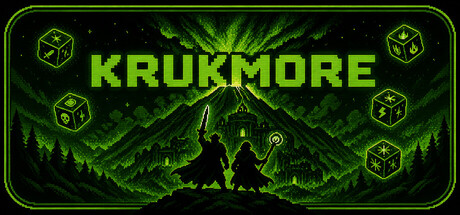
Krukmore is developed by a solo developer who uses generative AI as part of the production pipeline. Character and environment sprite art was created using AI image generation, then processed, edited, and integrated by hand. Portions of the game's code were written with AI assistance under the developer's direction, with all systems designed, reviewed, and tested by the developer. All AI-generated content is created during development ("pre-generated") — the game does not generate any content while you play, and no AI runs on your machine. Game design, writing, and all creative decisions are the work of the developer.
Ring Cosmos was developed by a solo developer with AI assistance during programming. The store page capsule images were also produced with AI assistance, generated programmatically through custom drawing code rather than image generation models. All game visuals are drawn in real time by the game's own rendering code. The soundtrack is licensed human-made music by JDSherbert. No AI content is generated while you play.
Generative AI was used to assist in the creation of character illustrations, selected artwork, store page assets, and localization. All AI-assisted content has been reviewed, edited, and integrated by the developer. The game does not use generative AI to create content during gameplay.
Generative AI tools were used during development to assist with portions of programming and to create selected pre-generated audio and visual assets. These include some character and commentator voice lines and branding artwork. All AI-assisted content was reviewed and integrated by the developer. No generative AI runs during gameplay, and no player input or personal data is sent to AI services.
Some environment and concept art in Stick Together was created with the help of generative AI tools, then edited and approved by our team. All visuals are fixed at release, and players cannot generate their own AI content in‑game.
Generative AI was occasionally used to prototype assets and give ideas\reference for assets. It was also occasionally used to generate normal maps on textures I had created. Sometimes this had disastrous results.
Crownsink is a hand-crafted game built the modern way: the developer writes and directs the code with the support of AI tools, while every sprite, sound and note of music springs from the game's own hand-written algorithms.
OpenSheet uses generative AI for optional artwork only. This is disabled by default.
Pre-rendered: the decorative art that ships with the app — character portraits, race and class backgrounds, creature illustrations, interface icons and stat-panel frames — was produced with OpenAI's image models, as were the application icon and this store page's artwork. All of it is decoration, every family of it can be switched off in Settings, and a new installation shows none of it by default.
No rules content is AI-generated. Every rule, statistic, feat, spell, item, monster and table comes from the published 3.5 Edition SRD source material and the PCGen data set. The app is built so the book always wins.
AI tools are used to assist with the localization of in-game and store page text into other languages. All translations are reviewed by the development team and improved with community feedback.
Some marketing artwork (store capsules and promotional images) was created with AI assistance, based on the game's own assets, characters and art style. All in-game content, gameplay, art assets and audio design are created by the development team.
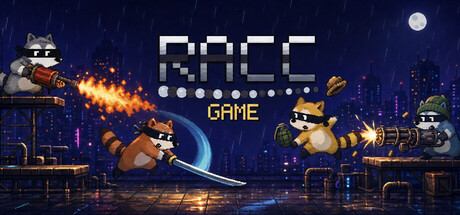
Pre-generated AI was used for store text and five original rank-emblem images (Bronze, Silver, Gold, Diamond, and Grand Racc) shown in the ranked hub and marketing. The emblems were made from our own prompts with OpenAI Codex ImageGen, reviewed and processed by us, and use no third-party source art. The game generates no AI content during play.
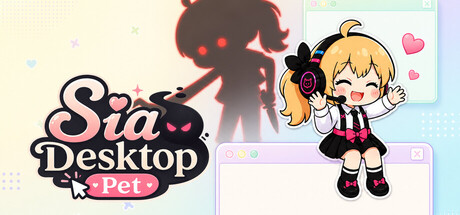
Sia's art and sound - her sprites, the outfits, the tarot cards, the item and monster icons, the sound effects - were produced with the help of generative AI tools and then edited and assembled by hand. The store images were made the same way. The game's text was written in Korean by hand; the seven other language translations were AI-assisted and reviewed by a human.
Nothing is generated while you play. The game ships as fixed image, sound and text files and never contacts an AI service.
Generative AI was used during development to create or assist with some pre-generated visual assets, including character, item, environment, and Steam store capsule, library, and marketing artwork. All output is selected, edited, integrated, and reviewed by the developer. No content is generated during gameplay.
AI tools including ChatGPT, Lovart, and others were used during development to generate early concept art for characters, weapons, props, UI, and pet animations. All final in-game assets were manually redrawn and refined by our art team.
Generative AI tools were used during the development of ScrapBound to assist with the creation of some visual and audio assets. AI-generated imagery was used as a starting point for various game assets, which were then modified, edited, and integrated to fit the game's visual style. Many of these assets will over time be replaced as the development of the game continues.
Generative AI was only used to assist in creating some of the inventory icons and promotional artwork, as TEMPORARY PLACEHOLDERS.
The game's environments, gameplay systems, characters, mechanics, world design, and narrative were created by the developer. No AI content is generated during gameplay.
- AI coding agents were used to assist with general game programming for Sudden Death Golf in order to iterate over gameplay ideas faster as a solo dev
- Some parts of in-game UI/UX design were created with the assist of AI
- No 3D models or textures were made with AI. Most were made by hand by me, some were bought or commissioned
Some Steam store and library presentation artwork was created with assistance from generative AI tools, then selected and edited by the developer. Localization was completed conventionally, with AI used to assist in verification and quality checks.
Some images in the current version were created with the assistance of generative AI. These assets are planned to be replaced with original artwork during development.
Neverrest uses generative AI tools during development to assist with the creation of some pre-rendered 2D artwork and visual assets. All AI-assisted content is reviewed, edited, and integrated by the developer. The game does not generate AI content during gameplay.
Generative AI tools were used during development to assist with game code, localization, concept development, selected environmental and shop-interior images and textures, and store and marketing artwork. All AI-assisted outputs were reviewed, edited, and integrated by the developer before inclusion. The game does not use generative AI during runtime, and players cannot generate AI content within the game.
Generative AI was used during development to create and refine some pre-generated visual assets, including cat character and animation sprites, backgrounds, decorative items, achievement icons, and selected store and marketing artwork. Every generated asset was reviewed, edited, and integrated by the developer before inclusion. The game does not generate AI content at runtime and does not connect to external AI services during play.
We use generative AI to help identify coding errors that could otherwise take a significant amount of time to find manually.
We also use it during brainstorming to generate textures that would take a long time to create by hand and may ultimately be discarded.
All AI-generated feedback/content is reviewed and modified by a team member until it fits what we really want to do.
The images in this game start from generative AI output and are then redrawn pixel by pixel by the developer. This covers equipment icons, character and enemy sprites, backgrounds, and the images on this store page.
The music was created with a generative AI music service under a commercial-use license.
The text is written in Japanese and machine-translated into other languages.
Some of our store and marketing art started as AI-generated images. We used Midjourney to create the base key art for the Steam capsules, the library hero and the page background, then edited and composited those into the final images ourselves. The logo, wordmark and typography are our own work.
The game itself does not use generative AI. Every in-game asset (art, animation, UI, music, sound, and code) was made by us, by hand or with our own tools.
We’ve reviewed the AI-assisted art, we hold the rights to use it commercially, and as far as we’re aware it doesn’t infringe anyone else’s work.
All artwork, character art, animation and audio in Fleshgrinder were created by human artists — the use of generative AI for art was contractually prohibited on this project. Generative AI was used to translate the game's text into its ten non-English languages, and to draft a portion of the in-game item descriptions and dialogue. No generative AI runs while you play; nothing is generated at runtime.
RUSTCAN includes an optional live-generated AI guide called the Gnome. Players can ask the Gnome questions about gameplay, controls, progression, and the in-game world. The Gnome generates text responses at runtime through a server-side AI service.
Responses may be inaccurate and are provided for entertainment and gameplay guidance only. The Gnome does not provide professional, financial, medical, or legal advice.
Players access the feature after signing in, entering Hollow Pines, and selecting Ask the Gnome or speaking with the Gnome in town.
Requests require an authenticated RUSTCAN account and server-side application verification. Requests are rate-limited and monitored. Server-side input moderation blocks or flags severe illegal, exploitative, violent, self-harm, and other prohibited requests.
Generated replies are sanitized before display, and fallback responses are used when the AI service fails or produces no usable response. Players can report problems through the in-game bug/report tools.
Most of the visual assets used in the game's promotional materials and Steam Store page were created with the assistance of AI image generation tools, and were subsequently selected and refined by the developer. The game's gameplay, level design, programming, and game logic were developed by the developer with input from AI throughout the development process. The game does not use AI to generate any content during gameplay.
This game is a solo project developed by a student. Due to limited resources and budget, Generative AI tools were utilized to create store page visuals and capsule designs, as well as to localize and draft store descriptions; these elements were personally edited, refined, and finalized by the developer.
During development we may use procedural and AI-based tools to assist with sound effects creation. The final result is always chosen and edited by the developer.
Some raster artwork, interface and marketing artwork, sprite animation frames, and authored music were created with assistance from generative AI tools during development. All shipped output was artist-directed, reviewed, edited, and integrated specifically for Bunnyhop. No content is generated by AI while the game is running.
This game uses generative AI to power the pet's dialogue system. Players can choose to enable AI chat and freely select a local model (running offline) or a cloud API (requires their own API key), or completely disable AI chat and use preset or custom dialogue instead. Every AI conversation is generated in real time.
In game development, artificial intelligence is used solely as a supporting tool. We employ neural networks to enhance and refine 2D art (loading screens and promo banners) created using our in-game screenshots, after which they undergo manual color correction and artifact removal. AI also assists us with translating in-game text and generating the announcer's voice for racing modes. All key game elements, including 3D car models, tuning, and the open world, are created entirely by hand by our team.
Rockinforged is a studio that develops games with an AI-assisted production pipeline. Generative AI tools are used across development — including 2D art, cinematic and video footage, sound, localization, store page text, and marketing materials — always under the developer's direct authorship, curation, and review. The game does not generate any content with AI at runtime.
Krukmore is developed by a solo developer who uses generative AI as part of the production pipeline. Character and environment sprite art was created using AI image generation, then processed, edited, and integrated by hand. Portions of the game's code were written with AI assistance under the developer's direction, with all systems designed, reviewed, and tested by the developer. All AI-generated content is created during development ("pre-generated") — the game does not generate any content while you play, and no AI runs on your machine. Game design, writing, and all creative decisions are the work of the developer.
Ring Cosmos was developed by a solo developer with AI assistance during programming. The store page capsule images were also produced with AI assistance, generated programmatically through custom drawing code rather than image generation models. All game visuals are drawn in real time by the game's own rendering code. The soundtrack is licensed human-made music by JDSherbert. No AI content is generated while you play.
Generative AI was used to assist in the creation of character illustrations, selected artwork, store page assets, and localization. All AI-assisted content has been reviewed, edited, and integrated by the developer. The game does not use generative AI to create content during gameplay.
Generative AI tools were used during development to assist with portions of programming and to create selected pre-generated audio and visual assets. These include some character and commentator voice lines and branding artwork. All AI-assisted content was reviewed and integrated by the developer. No generative AI runs during gameplay, and no player input or personal data is sent to AI services.
Some environment and concept art in Stick Together was created with the help of generative AI tools, then edited and approved by our team. All visuals are fixed at release, and players cannot generate their own AI content in‑game.
Generative AI was occasionally used to prototype assets and give ideas\reference for assets. It was also occasionally used to generate normal maps on textures I had created. Sometimes this had disastrous results.
Crownsink is a hand-crafted game built the modern way: the developer writes and directs the code with the support of AI tools, while every sprite, sound and note of music springs from the game's own hand-written algorithms.
OpenSheet uses generative AI for optional artwork only. This is disabled by default.
Pre-rendered: the decorative art that ships with the app — character portraits, race and class backgrounds, creature illustrations, interface icons and stat-panel frames — was produced with OpenAI's image models, as were the application icon and this store page's artwork. All of it is decoration, every family of it can be switched off in Settings, and a new installation shows none of it by default.
No rules content is AI-generated. Every rule, statistic, feat, spell, item, monster and table comes from the published 3.5 Edition SRD source material and the PCGen data set. The app is built so the book always wins.
AI tools are used to assist with the localization of in-game and store page text into other languages. All translations are reviewed by the development team and improved with community feedback.
Some marketing artwork (store capsules and promotional images) was created with AI assistance, based on the game's own assets, characters and art style. All in-game content, gameplay, art assets and audio design are created by the development team.
Pre-generated AI was used for store text and five original rank-emblem images (Bronze, Silver, Gold, Diamond, and Grand Racc) shown in the ranked hub and marketing. The emblems were made from our own prompts with OpenAI Codex ImageGen, reviewed and processed by us, and use no third-party source art. The game generates no AI content during play.
Sia's art and sound - her sprites, the outfits, the tarot cards, the item and monster icons, the sound effects - were produced with the help of generative AI tools and then edited and assembled by hand. The store images were made the same way. The game's text was written in Korean by hand; the seven other language translations were AI-assisted and reviewed by a human.
Nothing is generated while you play. The game ships as fixed image, sound and text files and never contacts an AI service.
Generative AI was used during development to create or assist with some pre-generated visual assets, including character, item, environment, and Steam store capsule, library, and marketing artwork. All output is selected, edited, integrated, and reviewed by the developer. No content is generated during gameplay.