Public Steam disclosure research25,383 disclosures tracked
Where do games disclose AI use?
Search developers’ Steam disclosures, compare classified AI use across
games, and follow recorded changes.
This index adds cross-game classifications and statistics to
statements published on individual store pages.
Groups reflect automatic analysis of public disclosures; mature records are excluded. These counts do not measure AI use across all of Steam.
Missing or unclear statements cannot establish whether a game uses AI.
Generative AI tools were used during the development of the game in the following areas:
Programming & Code: The vast majority of the game's codebase was written with the assistance of AI.
Graphics & Visuals: A portion of the 2D artwork, promotional graphics, and UI icons were generated or created using AI tools.
Audio & Music: AI tools were used to generate some of the soundtrack.
All AI-generated content was reviewed, edited, and integrated into the final game by human developers.
Generative AI tools were used during development to assist with the creation of some game artwork, audio, localization text, and other game content. All AI-assisted outputs were reviewed and, where necessary, edited by the developer before being included in the game. The game does not generate AI content during gameplay.
Some pre-generated visual artwork used in Vitro: Bloodstream (including store artwork) was created with the assistance of generative AI tools and reviewed, edited, and integrated by the developer. No generative AI is used during gameplay or to generate content at runtime.
Some graphic and sound assets included in the game were created using generative AI tools during development. The game does not use real-time generative AI and does not connect to external AI services during gameplay.
ChromaFlow was developed with assistance from generative AI tools (such as Large Language Models) to help write and structure the source code and draft store descriptions. All AI-generated content was reviewed, edited, and integrated manually. The game does not feature live, runtime generative AI or external API connections during gameplay.
Generative AI was used as an assistance tool during development, including assistance with programming/code, visual assets, artwork, and game content. Generative AI was also used to assist with some promotional and Steam Store artwork. All AI-assisted content was reviewed and integrated by the developer. The game does not generate AI content during gameplay.
All spoken dialogue in KRIS: The Last Good Summer is generated using AI text-to-speech technology, in both English and German. No other game content (art, music, writing, or code) uses generative AI.
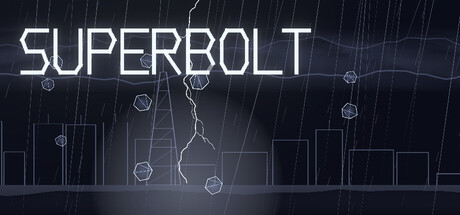
SUPERBOLT is built almost entirely from code: the lightning, the effects, the interface and the audio are generated by the game as it runs. Generative AI was used during production to help prepare some supporting artwork — background layers and achievement icons — and to draft some of the written text. Nothing is generated by AI while you play, and the game connects to no AI service.
Generative AI was used during development to assist with programming and to help
produce some 3D models and logo artwork, all reviewed and integrated by the developer.
No AI runs while you play: the game is fully offline and generates no content at runtime.
Generative AI tools were used during development to assist with creating and refining some pre-generated artwork and other media assets, including assets used in the game and on its Steam store page. All AI-assisted content was reviewed, edited, and integrated by the developer. The game does not generate AI content during gameplay or connect to external AI services.
Some visual assets, branding exploration, and first-pass localization drafts were created or assisted with generative AI tools. All content is reviewed, edited, and integrated by the developer before being included in the game or store materials. The game does not generate AI content in real time during gameplay.
AI is used in part for translating text from Japanese into the supported languages.
AI is not used for game development, content generation, or any purposes other than translation.
Source code and store page copy were written with AI assistance (Claude), reviewed and edited by the developer before shipping. No AI-generated artwork, music, voice or narrative content ships in this game. All in-game visuals are hand-written shaders and code-drawn geometry; sound effects are procedurally synthesised by a deterministic script; music is licensed from a human artist; fonts are licensed typefaces. No generative AI runs at runtime.
We are committed to the ethical use of AI. As such, limited assistance with some text, spoken dialogue, narrative, localization, and store/marketing copy may have been utilized.
It is not used to generate artwork or live gameplay content, and all final content is reviewed by the team.
The 2D art in OBOLUS is made with image generation models running locally on my own machine — Stable Diffusion XL through ComfyUI, including a style model I trained myself on 1930s cartoon references. None of it is a raw output: every sprite, backdrop, card frame and icon was directed through many passes, then cut out, colour-corrected, upscaled and assembled frame by frame into animation sheets.
Everything else is not AI: the rules, every card and every number on it, the balance, the 22 heroes, the six lands, the writing and the interface. The sound effects are synthesised by code written for this game.
Nothing is generated while you play. The game makes no network calls and ships with no model — nothing runs on your machine, and none of your data goes anywhere.
AI Was used to generate the page description, it was also used to test certain parts of the game and help debug a few problems, there was partial AI usage also for the game music, while the music itself was created in FL Studio there was usage to generate some of the variants of the tracks
Generative AI tools were used during development to assist with the creation and iteration of some game assets and development code. AI-assisted content included in the final game is pre-generated and reviewed by the developer. The game does not generate AI content during gameplay.
AI tools were used for some initial concept designs. All final in-game assets, characters and scenes have been extensively hand-edited, redrawn and post-processed by the developer to achieve a consistent hand-drawn comic style.
NovaShift: Universe uses AI-generated art. Some 2D artwork — enemy, boss and item sprites for several game universes, boss projectile sprites, and store/marketing images (capsules, key art, logo) — was created with the assistance of AI image-generation tools, then curated, edited, transparency-cleaned and integrated by the developer. All gameplay code, procedural art, audio and game design are human-made. No content is generated by AI at runtime; players never interact with a live AI system.
During Early Access, AI placeholders might be used in lieu of handcrafted assets to speed up development and to improve the game’s visual fidelity. It is currently our plan to gradually replace all AI-generated assets by the final release.
Some of this game's assets were made with generative AI tools: the music, the store artwork, and the French translation. Everything ships as fixed files that were generated, chosen, and edited by the developer. Nothing is generated while you play, and the game never connects to an AI service.
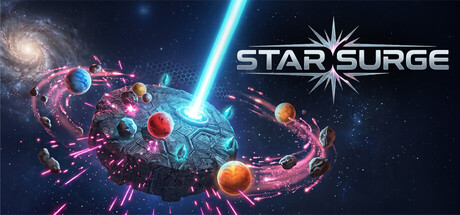
During the development of Star Surge, generative AI tools were used to assist in designing certain in-game visuals (such as achievement icons) and promotional materials. AI was utilized as an aid to accelerate the visual production process, and all generated content was adjusted to fit the game's sci-fi theme. The core mechanics and coding of the game were developed entirely by hand.
Generative AI was used to help create certain visual assets and promotional materials. Originally hand-drawn building graphics were processed with AI tools to increase detail and were subsequently manually edited.
Some assets in Starfort, including selected voice lines, artwork, and marketing materials, were created with the help of generative AI tools during development. All such content was reviewed, edited, curated, and finalized by the developer and is pre-generated. Starfort does not generate content during gameplay or connect to external AI services.
The visual art, music, sound effects, pilot voice lines and written text in Starhand were created using generative AI tools — Recraft for illustration, Suno for music, and ElevenLabs for voice and sound effects — and were then selected, edited and assembled by the developer. All of it is generated ahead of time and ships as fixed assets: the game does not generate any content while you play, and it does not connect to any AI service at runtime.
Some Steam store and library presentation artwork was created with assistance from generative AI tools, then selected and edited by the developer. Localization was completed conventionally, with AI used to assist in verification and quality checks.
Some images in the current version were created with the assistance of generative AI. These assets are planned to be replaced with original artwork during development.
Some artwork (ship, station and environment sprites, icons) and sound effects were created using generative AI tools during development, then curated and hand-edited by the developer. All AI-generated content was reviewed before inclusion.
AI tools were used to create some of the game's artwork, UI elements, backgrounds, music and sound effects. Visual effects generally combine or modify multiple generated assets, while sound effects are edited and layered from multiple generated sounds. Some generated artwork, including backgrounds and UI elements, is used largely as originally created. No AI content is generated during gameplay.
Generative AI tools were used during the development of the game in the following areas:
Programming & Code: The vast majority of the game's codebase was written with the assistance of AI.
Graphics & Visuals: A portion of the 2D artwork, promotional graphics, and UI icons were generated or created using AI tools.
Audio & Music: AI tools were used to generate some of the soundtrack.
All AI-generated content was reviewed, edited, and integrated into the final game by human developers.
Generative AI tools were used during development to assist with the creation of some game artwork, audio, localization text, and other game content. All AI-assisted outputs were reviewed and, where necessary, edited by the developer before being included in the game. The game does not generate AI content during gameplay.
Some pre-generated visual artwork used in Vitro: Bloodstream (including store artwork) was created with the assistance of generative AI tools and reviewed, edited, and integrated by the developer. No generative AI is used during gameplay or to generate content at runtime.
Some graphic and sound assets included in the game were created using generative AI tools during development. The game does not use real-time generative AI and does not connect to external AI services during gameplay.
ChromaFlow was developed with assistance from generative AI tools (such as Large Language Models) to help write and structure the source code and draft store descriptions. All AI-generated content was reviewed, edited, and integrated manually. The game does not feature live, runtime generative AI or external API connections during gameplay.
Generative AI was used as an assistance tool during development, including assistance with programming/code, visual assets, artwork, and game content. Generative AI was also used to assist with some promotional and Steam Store artwork. All AI-assisted content was reviewed and integrated by the developer. The game does not generate AI content during gameplay.
All spoken dialogue in KRIS: The Last Good Summer is generated using AI text-to-speech technology, in both English and German. No other game content (art, music, writing, or code) uses generative AI.
SUPERBOLT is built almost entirely from code: the lightning, the effects, the interface and the audio are generated by the game as it runs. Generative AI was used during production to help prepare some supporting artwork — background layers and achievement icons — and to draft some of the written text. Nothing is generated by AI while you play, and the game connects to no AI service.
Generative AI was used during development to assist with programming and to help
produce some 3D models and logo artwork, all reviewed and integrated by the developer.
No AI runs while you play: the game is fully offline and generates no content at runtime.
Generative AI tools were used during development to assist with creating and refining some pre-generated artwork and other media assets, including assets used in the game and on its Steam store page. All AI-assisted content was reviewed, edited, and integrated by the developer. The game does not generate AI content during gameplay or connect to external AI services.
Some visual assets, branding exploration, and first-pass localization drafts were created or assisted with generative AI tools. All content is reviewed, edited, and integrated by the developer before being included in the game or store materials. The game does not generate AI content in real time during gameplay.
AI is used in part for translating text from Japanese into the supported languages.
AI is not used for game development, content generation, or any purposes other than translation.
Source code and store page copy were written with AI assistance (Claude), reviewed and edited by the developer before shipping. No AI-generated artwork, music, voice or narrative content ships in this game. All in-game visuals are hand-written shaders and code-drawn geometry; sound effects are procedurally synthesised by a deterministic script; music is licensed from a human artist; fonts are licensed typefaces. No generative AI runs at runtime.
We are committed to the ethical use of AI. As such, limited assistance with some text, spoken dialogue, narrative, localization, and store/marketing copy may have been utilized.
It is not used to generate artwork or live gameplay content, and all final content is reviewed by the team.
The 2D art in OBOLUS is made with image generation models running locally on my own machine — Stable Diffusion XL through ComfyUI, including a style model I trained myself on 1930s cartoon references. None of it is a raw output: every sprite, backdrop, card frame and icon was directed through many passes, then cut out, colour-corrected, upscaled and assembled frame by frame into animation sheets.
Everything else is not AI: the rules, every card and every number on it, the balance, the 22 heroes, the six lands, the writing and the interface. The sound effects are synthesised by code written for this game.
Nothing is generated while you play. The game makes no network calls and ships with no model — nothing runs on your machine, and none of your data goes anywhere.
AI Was used to generate the page description, it was also used to test certain parts of the game and help debug a few problems, there was partial AI usage also for the game music, while the music itself was created in FL Studio there was usage to generate some of the variants of the tracks
Generative AI tools were used during development to assist with the creation and iteration of some game assets and development code. AI-assisted content included in the final game is pre-generated and reviewed by the developer. The game does not generate AI content during gameplay.
AI tools were used for some initial concept designs. All final in-game assets, characters and scenes have been extensively hand-edited, redrawn and post-processed by the developer to achieve a consistent hand-drawn comic style.
NovaShift: Universe uses AI-generated art. Some 2D artwork — enemy, boss and item sprites for several game universes, boss projectile sprites, and store/marketing images (capsules, key art, logo) — was created with the assistance of AI image-generation tools, then curated, edited, transparency-cleaned and integrated by the developer. All gameplay code, procedural art, audio and game design are human-made. No content is generated by AI at runtime; players never interact with a live AI system.
During Early Access, AI placeholders might be used in lieu of handcrafted assets to speed up development and to improve the game’s visual fidelity. It is currently our plan to gradually replace all AI-generated assets by the final release.
Some of this game's assets were made with generative AI tools: the music, the store artwork, and the French translation. Everything ships as fixed files that were generated, chosen, and edited by the developer. Nothing is generated while you play, and the game never connects to an AI service.
During the development of Star Surge, generative AI tools were used to assist in designing certain in-game visuals (such as achievement icons) and promotional materials. AI was utilized as an aid to accelerate the visual production process, and all generated content was adjusted to fit the game's sci-fi theme. The core mechanics and coding of the game were developed entirely by hand.
Generative AI was used to help create certain visual assets and promotional materials. Originally hand-drawn building graphics were processed with AI tools to increase detail and were subsequently manually edited.
Some assets in Starfort, including selected voice lines, artwork, and marketing materials, were created with the help of generative AI tools during development. All such content was reviewed, edited, curated, and finalized by the developer and is pre-generated. Starfort does not generate content during gameplay or connect to external AI services.
The visual art, music, sound effects, pilot voice lines and written text in Starhand were created using generative AI tools — Recraft for illustration, Suno for music, and ElevenLabs for voice and sound effects — and were then selected, edited and assembled by the developer. All of it is generated ahead of time and ships as fixed assets: the game does not generate any content while you play, and it does not connect to any AI service at runtime.
Some Steam store and library presentation artwork was created with assistance from generative AI tools, then selected and edited by the developer. Localization was completed conventionally, with AI used to assist in verification and quality checks.
Some images in the current version were created with the assistance of generative AI. These assets are planned to be replaced with original artwork during development.
Some artwork (ship, station and environment sprites, icons) and sound effects were created using generative AI tools during development, then curated and hand-edited by the developer. All AI-generated content was reviewed before inclusion.
AI tools were used to create some of the game's artwork, UI elements, backgrounds, music and sound effects. Visual effects generally combine or modify multiple generated assets, while sound effects are edited and layered from multiple generated sounds. Some generated artwork, including backgrounds and UI elements, is used largely as originally created. No AI content is generated during gameplay.