Public Steam disclosure research25,380 disclosures tracked
Where do games disclose AI use?
Search developers’ Steam disclosures, compare classified AI use across
games, and follow recorded changes.
This index adds cross-game classifications and statistics to
statements published on individual store pages.
Groups reflect automatic analysis of public disclosures; mature records are excluded. These counts do not measure AI use across all of Steam.
Missing or unclear statements cannot establish whether a game uses AI.
Artificial Intelligence Usage Notice:
We have used some generative models to prototype new ideas, and some of them have been made into production. However, AI-generated content is no more than 1% of the total game assets and arts.
Generative AI tools were used to assist with the localization of this game into English, Simplified Chinese, Traditional Chinese, and Korean. 本作は、英語、簡体字中国語、繁体字中国語、韓国語へのローカライズの補助として生成AIツールを使用しました。
Loop 9 uses generative AI to power text-only dialogue with Dragojlo, a fictional in-game coworker. Player-written messages and limited game-state context are sent through our backend to OpenAI to generate brief in-character replies. Some store marketing artwork was created with AI assistance and reviewed and edited by the developer. Player messages and generated replies are not shared with other players.
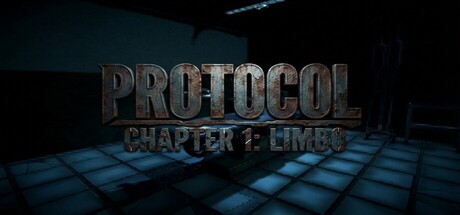
Generative AI tools were used during the development of Protocol as development assistance. AI was used to help with brainstorming, programming assistance, troubleshooting, and other development-related tasks. The final game content was reviewed, edited, and implemented by the developer.
Explanation about the game development process:
In the early concept design and creative ideation stage of this game, we did use AI technology as an auxiliary tool to help us explore and validate various artistic styles and creative directions more quickly. These AI-generated reference materials provided us with initial inspiration.
However, the core creative concepts, story writing, character design, and all artistic assets presented in the final game were personally conceived and carefully crafted by our creative team. Each game element underwent repeated human optimization and fine-tuning to ensure the best gaming experience.
AI was only used as an auxiliary tool, and the final game content presented is the result of human creation. We have always adhered to human creation as the main driver, committed to bringing players a unique and meticulously polished gaming experience.
We used generative AI on fighter portraits for deeper immersion and as a pre-production tool for early concept layouts. From there, all character assets and visual elements were extensively edited and manually hand-painted by human artists to ensure high visual quality and artistic control.
Most of the game’s art, music, and other audiovisual assets were first generated with AI tools, then hand-picked, cropped, retouched, and reworked by the developer so they fit this game’s look, feel, and systems.
Nothing is generated by AI while you play. Combat, cooking, exploration, and story presentation use only content that shipped with the game after that human edit pass.
This game uses AI-generated imagery. Character portraits, backgrounds, card illustrations, and UI assets were created with generative AI image tools, then reviewed, edited to fit the game's art direction. Store page capsules use the same artwork.
Writing, game design, code, and systems are authored by a human developer. Nothing is generated while the game is running.
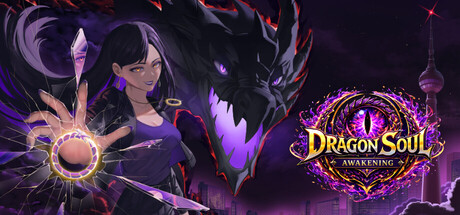
Dragon Soul: Awakening is a solo-developed game that uses generative AI as one of many creative tools during development. The logo, some backgrounds, character sprites, UI elements, and music were created using AI-assisted workflows alongside original writing, design, editing, and human-created artwork. Some AI-assisted assets currently serve as placeholders during development and will be replaced before the full release.
Some non-gameplay materials in this project were created with the help of generative AI tools, such as certain promotional visuals, store page imagery, and supporting text. All core game design, mechanics, story, and gameplay content were created by the developer. AI-assisted materials were reviewed and edited by the developer before release.
Generative AI tools were used during development to assist with certain pre-generated visual elements and sequences in the game. All such materials were reviewed, selected, edited, and integrated into the final video content by the Dev team. The game’s narrative, interactive structure, gameplay logic, and final presentation are created and controlled by the Dev team.
No generative AI is used during gameplay, and no content is generated dynamically for players.
This game used generative AI tools during development to assist with a limited portion of visual and audio asset creation. All AI-assisted content was reviewed and curated by the developer before release. No AI content is generated live during gameplay.
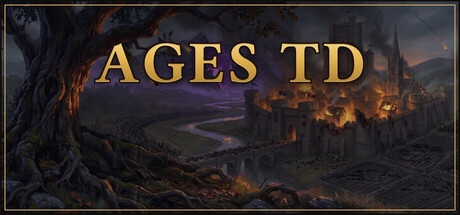
Ages TD was made with the help of generative AI tools. All AI-generated content is
pre-generated during development, reviewed and edited by the developer; nothing is
generated live while you play.
- Some 3D models and their textures (enemies, towers, props) — generated with Meshy,
then edited and integrated by the developer.
- Music — generated with Suno from prompts written by the developer.
- Cutscene illustrations and store page artwork — created with AI image tools,
then edited by the developer.
- Parts of the in-game dialogue and hint texts — drafted with AI assistance and
rewritten by the developer.
There is no AI-generated voice acting in the game.
AI-assisted translation tools are used to help localize this game's text for international audiences, including English and any additional languages added in the future.
No AI-generated content is used for graphics, sound, or narrative/story content.
As a small independent developer, obviously AI tools was used to assist in the development of this game, including working on graphical elements as well as writing code.
Portions of the in-game codex (character biographies, historical battle summaries) were drafted with the assistance of a large language model based on the developer's own lore notes and edited by hand. A subset of pixel-art tile and prop textures were procedurally generated from developer-written Python scripts. All content is reviewed and finalized by the developer; no generative image models (e.g. Stable Diffusion, Midjourney) were used to produce in-game art.
In-game background and character artwork, as well as store graphical assets, were pre-rendered using generative AI and manually reviewed and edited by the developer. All narrative text was written by the developer. No live-generated content.
Character/background art: ChatGPT (image generation)
Music: SOUNDRAW (AI music generation)
Translations other than Japanese (10 languages): Machine-translated via ChatGPT
No AI runs at runtime — everything is pre-generated and bundled
We use AI-based text-to-speech tools to generate the character voice-over in this game. Everything else that ships in the game is made by our own development team.
The background images featured in the game were created using AI.
Some of the images used in the in-game UI were generated using AI.
The in-game background music (BGM) was created using AI.
Generative AI tools were used in the artwork production process for this game. The resulting images were selected, edited, and integrated by the developer to match the game’s atmosphere and direction.
Generative AI was used in the development of this game. The background art and character illustrations were created with an image generation model; all images were selected, edited, and processed by the developer. The story text and game logic were drafted and implemented with a large language model, with the developer directing the story and scene design, reviewing and approving all content, and requesting revisions. No generative AI runs at runtime during gameplay.
Generative AI tools were used during the early production stage to create preliminary visual assets and reference materials. All AI-assisted assets included in the final game were manually edited, refined, and reviewed by our designers.
The six staff portrait images currently in the game are AI-generated placeholders. They are being replaced with commissioned, hand-painted portraits by a human artist before release. Everything else — the key art, the store art, every case, every line of dialogue, the music, and the simulation itself — is human-made. The game runs no AI at play time.
Generative AI tools were used during development to assist with programming, game systems, debugging, visual assets and written content. All AI-assisted work is reviewed, tested, edited, and integrated by the developer before being included.
Generative AI was used as an occasional development aid for some dialogue wording, localization, and marketing / store texts.
The game's story, characters, and game design were created by the developer.
AI-assisted dialogue is reviewed and edited by the developer, and AI-assisted translations are reviewed and edited by native speakers.
The game does not use AI-generated images, voices, music, or other AI-generated audiovisual assets.
Ward 9 uses developer-curated generative AI tools during production for selected marketing/community artwork, narrative drafting support, and voice/audio asset creation. All AI-assisted content is reviewed, edited, and approved by the developer before inclusion. The game does not use live generative AI to create player-facing content during gameplay.
Generative AI was used as an assistive tool for translating parts of the scenario and in-game text. All translated content has been thoroughly reviewed, refined, and proofread manually by the developer to ensure natural phrasing and quality.
Generative AI was used selectively during development for certain materials; all final content was refined by the developer. No real-time AI generation is used.
Generative AI tools were used during development to create or process some pre-generated voice audio and selected 2D visual assets, including stylized character and news-related images.
All AI-assisted content is created before release and manually reviewed, edited, and curated by the developer before being included in the game.
No generative AI runs during gameplay, and no player input or data is sent to generative AI services.
During the development of The Sin of Ritter, generative AI tools were used as support in the content creation process. These tools assisted with the production of voice acting in different languages, the translation and localization of the game's text, as well as the creation of some textures used in the composition of the environments.
All speech audio is generated at runtime by a local text-to-speech model (Kokoro) running on the player's PC. Memnon reads text that is already visible on the player's screen and speaks it aloud. It does not write stories, create images, or generate any other content. If the player connects their own cloud API key, those voices are synthesized by their chosen provider under their own account.
Some of the app's code was written with the assistance of AI coding tools. All artwork and store assets are human-made.
Artificial Intelligence Usage Notice:
We have used some generative models to prototype new ideas, and some of them have been made into production. However, AI-generated content is no more than 1% of the total game assets and arts.
Generative AI tools were used to assist with the localization of this game into English, Simplified Chinese, Traditional Chinese, and Korean. 本作は、英語、簡体字中国語、繁体字中国語、韓国語へのローカライズの補助として生成AIツールを使用しました。
Loop 9 uses generative AI to power text-only dialogue with Dragojlo, a fictional in-game coworker. Player-written messages and limited game-state context are sent through our backend to OpenAI to generate brief in-character replies. Some store marketing artwork was created with AI assistance and reviewed and edited by the developer. Player messages and generated replies are not shared with other players.
Generative AI tools were used during the development of Protocol as development assistance. AI was used to help with brainstorming, programming assistance, troubleshooting, and other development-related tasks. The final game content was reviewed, edited, and implemented by the developer.
Explanation about the game development process:
In the early concept design and creative ideation stage of this game, we did use AI technology as an auxiliary tool to help us explore and validate various artistic styles and creative directions more quickly. These AI-generated reference materials provided us with initial inspiration.
However, the core creative concepts, story writing, character design, and all artistic assets presented in the final game were personally conceived and carefully crafted by our creative team. Each game element underwent repeated human optimization and fine-tuning to ensure the best gaming experience.
AI was only used as an auxiliary tool, and the final game content presented is the result of human creation. We have always adhered to human creation as the main driver, committed to bringing players a unique and meticulously polished gaming experience.
We used generative AI on fighter portraits for deeper immersion and as a pre-production tool for early concept layouts. From there, all character assets and visual elements were extensively edited and manually hand-painted by human artists to ensure high visual quality and artistic control.
Most of the game’s art, music, and other audiovisual assets were first generated with AI tools, then hand-picked, cropped, retouched, and reworked by the developer so they fit this game’s look, feel, and systems.
Nothing is generated by AI while you play. Combat, cooking, exploration, and story presentation use only content that shipped with the game after that human edit pass.
This game uses AI-generated imagery. Character portraits, backgrounds, card illustrations, and UI assets were created with generative AI image tools, then reviewed, edited to fit the game's art direction. Store page capsules use the same artwork.
Writing, game design, code, and systems are authored by a human developer. Nothing is generated while the game is running.
Dragon Soul: Awakening is a solo-developed game that uses generative AI as one of many creative tools during development. The logo, some backgrounds, character sprites, UI elements, and music were created using AI-assisted workflows alongside original writing, design, editing, and human-created artwork. Some AI-assisted assets currently serve as placeholders during development and will be replaced before the full release.
Some non-gameplay materials in this project were created with the help of generative AI tools, such as certain promotional visuals, store page imagery, and supporting text. All core game design, mechanics, story, and gameplay content were created by the developer. AI-assisted materials were reviewed and edited by the developer before release.
Generative AI tools were used during development to assist with certain pre-generated visual elements and sequences in the game. All such materials were reviewed, selected, edited, and integrated into the final video content by the Dev team. The game’s narrative, interactive structure, gameplay logic, and final presentation are created and controlled by the Dev team.
No generative AI is used during gameplay, and no content is generated dynamically for players.
This game used generative AI tools during development to assist with a limited portion of visual and audio asset creation. All AI-assisted content was reviewed and curated by the developer before release. No AI content is generated live during gameplay.
Ages TD was made with the help of generative AI tools. All AI-generated content is
pre-generated during development, reviewed and edited by the developer; nothing is
generated live while you play.
- Some 3D models and their textures (enemies, towers, props) — generated with Meshy,
then edited and integrated by the developer.
- Music — generated with Suno from prompts written by the developer.
- Cutscene illustrations and store page artwork — created with AI image tools,
then edited by the developer.
- Parts of the in-game dialogue and hint texts — drafted with AI assistance and
rewritten by the developer.
There is no AI-generated voice acting in the game.
AI-assisted translation tools are used to help localize this game's text for international audiences, including English and any additional languages added in the future.
No AI-generated content is used for graphics, sound, or narrative/story content.
As a small independent developer, obviously AI tools was used to assist in the development of this game, including working on graphical elements as well as writing code.
Portions of the in-game codex (character biographies, historical battle summaries) were drafted with the assistance of a large language model based on the developer's own lore notes and edited by hand. A subset of pixel-art tile and prop textures were procedurally generated from developer-written Python scripts. All content is reviewed and finalized by the developer; no generative image models (e.g. Stable Diffusion, Midjourney) were used to produce in-game art.
In-game background and character artwork, as well as store graphical assets, were pre-rendered using generative AI and manually reviewed and edited by the developer. All narrative text was written by the developer. No live-generated content.
Character/background art: ChatGPT (image generation)
Music: SOUNDRAW (AI music generation)
Translations other than Japanese (10 languages): Machine-translated via ChatGPT
No AI runs at runtime — everything is pre-generated and bundled
We use AI-based text-to-speech tools to generate the character voice-over in this game. Everything else that ships in the game is made by our own development team.
The background images featured in the game were created using AI.
Some of the images used in the in-game UI were generated using AI.
The in-game background music (BGM) was created using AI.
Generative AI tools were used in the artwork production process for this game. The resulting images were selected, edited, and integrated by the developer to match the game’s atmosphere and direction.
Generative AI was used in the development of this game. The background art and character illustrations were created with an image generation model; all images were selected, edited, and processed by the developer. The story text and game logic were drafted and implemented with a large language model, with the developer directing the story and scene design, reviewing and approving all content, and requesting revisions. No generative AI runs at runtime during gameplay.
Generative AI tools were used during the early production stage to create preliminary visual assets and reference materials. All AI-assisted assets included in the final game were manually edited, refined, and reviewed by our designers.
The six staff portrait images currently in the game are AI-generated placeholders. They are being replaced with commissioned, hand-painted portraits by a human artist before release. Everything else — the key art, the store art, every case, every line of dialogue, the music, and the simulation itself — is human-made. The game runs no AI at play time.
Generative AI tools were used during development to assist with programming, game systems, debugging, visual assets and written content. All AI-assisted work is reviewed, tested, edited, and integrated by the developer before being included.
Generative AI was used as an occasional development aid for some dialogue wording, localization, and marketing / store texts.
The game's story, characters, and game design were created by the developer.
AI-assisted dialogue is reviewed and edited by the developer, and AI-assisted translations are reviewed and edited by native speakers.
The game does not use AI-generated images, voices, music, or other AI-generated audiovisual assets.
Ward 9 uses developer-curated generative AI tools during production for selected marketing/community artwork, narrative drafting support, and voice/audio asset creation. All AI-assisted content is reviewed, edited, and approved by the developer before inclusion. The game does not use live generative AI to create player-facing content during gameplay.
Generative AI was used as an assistive tool for translating parts of the scenario and in-game text. All translated content has been thoroughly reviewed, refined, and proofread manually by the developer to ensure natural phrasing and quality.
Generative AI was used selectively during development for certain materials; all final content was refined by the developer. No real-time AI generation is used.
Generative AI tools were used during development to create or process some pre-generated voice audio and selected 2D visual assets, including stylized character and news-related images.
All AI-assisted content is created before release and manually reviewed, edited, and curated by the developer before being included in the game.
No generative AI runs during gameplay, and no player input or data is sent to generative AI services.
During the development of The Sin of Ritter, generative AI tools were used as support in the content creation process. These tools assisted with the production of voice acting in different languages, the translation and localization of the game's text, as well as the creation of some textures used in the composition of the environments.
All speech audio is generated at runtime by a local text-to-speech model (Kokoro) running on the player's PC. Memnon reads text that is already visible on the player's screen and speaks it aloud. It does not write stories, create images, or generate any other content. If the player connects their own cloud API key, those voices are synthesized by their chosen provider under their own account.
Some of the app's code was written with the assistance of AI coding tools. All artwork and store assets are human-made.