Public Steam disclosure research25,380 disclosures tracked
Where do games disclose AI use?
Search developers’ Steam disclosures, compare classified AI use across
games, and follow recorded changes.
This index adds cross-game classifications and statistics to
statements published on individual store pages.
Groups reflect automatic analysis of public disclosures; mature records are excluded. These counts do not measure AI use across all of Steam.
Missing or unclear statements cannot establish whether a game uses AI.
Foundation Typer uses generative AI-assisted artwork, voice, and cinematic media elements for certain visual and promotional content, including portions of trailers, character presentation, and store assets. All gameplay systems, lesson structure, progression design, typing mechanics, interface functionality, and core training content were created and assembled as part of the game's original development.
This title was developed with substantial assistance from generative AI.[Store Assets — Visual Content]The key visual, store capsule images, library assets (including the library hero), and certain screenshot backgrounds were produced using image generation AI ("Midjourney v7 / Niji v7") under a commercial license (Standard tier).[Source Code, Game Design, and In-Game Text]The C++ source code, data structures, system architecture, gameplay mechanics specifications, in-game text, item naming conventions, job names, and skill names were developed in collaboration with conversational AI ("Claude" by Anthropic and "Gemini" by Google).[The Developer's Role]Quench Forge handles concept, product vision, product management, final specification decisions, hands-on PIE (Play-In-Editor) testing, bug reports, and release decisions.Code generation, code review, test design, system architecture, game mechanics specifications, in-game text, and marketing materials are all created in collaboration with Claude (Anthropic) and Gemini (Google). Every AI-generated artifact is filtered through the developer's "appraiser's eye" — selected, approved, and revised through specification feedback — before being incorporated into the product.This game applies its own core theme — "an appraiser-shopkeeper who reads materials and Modifiers to forge the right blade" — to its own development process.[Runtime Behavior]No generative AI runs during gameplay. All in-game mechanics operate on compiled, deterministic algorithms (with optional reproducible random seeds). The game does not require any online connection to AI services during play.
Coding
Supported by anthropic Opus 4.6 & Opus 4.7
Music
13 era-specific tracks generated with Google Lyria · manually curated and mastered
Voice (Klammi)
Google Gemini TTS "Puck" · German · Opus 96 kbit/s WebM
Avatars & Images
Generated with DALL-E / Google Gemini Image · manually selected and background-removed
Mascot Videos (Klammi)
Google Veo 2.0 · Luma-Key + VP9-Alpha pipeline · 480×480 px
Logo & Branding
Generated with Google Gemini · background removed with rembg
Translation
Original content written in german, translated by Claude Sonett 4.6
The game uses generative AI solely for the creation of certain visual and text assets.
AI does not affect gameplay, player behavior, or core game mechanics.
This game uses the DeepSeek AI model to generate character dialogue in real time. Based on player input, the AI responds according to preset character personalities, creating an immersive role-playing experience. All generated content is filtered through a content moderation system to prevent inappropriate or policy-violating outputs.
API and Billing Notice:
To use this feature, you need to register a DeepSeek account and add API credits at: https://platform.deepseek.com/usage
The AI service costs are charged directly by DeepSeek. The game developer does not collect any API fees.
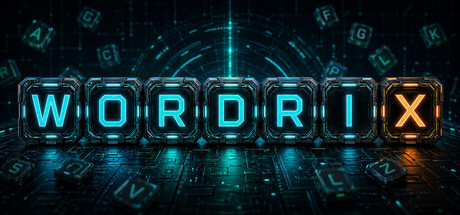
Some visual assets, promotional materials, and portions of development assistance for Word Rift were created with the help of generative AI tools under the direction and supervision of the developer.
Some visual assets, store assets, localization drafts, and marketing materials for SEO OR DIE were created or enhanced with the assistance of generative AI tools.
All AI-assisted content was reviewed, edited, and integrated by the developer to match the game's final art direction, narrative tone, and quality standards.
The game does not use real-time AI generation during gameplay.
The game's initial photos were taken from free resources and stock photos. AI was used to accelerate image processing to match the game's style, as envisioned by the author.
The music featured in the trailer was composed using generative AI tools.
Crucially, all game characters and animations are entirely hand-drawn and manually animated by the developer.
Some static 2D artwork used in the game and Steam marketing materials was created with assistance from generative AI, then curated, edited, and integrated by the developer. The game does not generate AI content during gameplay and does not connect to external AI services.
AI was used to accelerate the creation of this game, specifically, the audio, graphics, and code for the game to function. The idea came from a man with many years of dating experience, and looking to create a fun game to share with the world.
Generative AI tools were used during the development of this game for programming assistance, localization, and partial text generation.
Some localized text and in-game written content were generated with the assistance of AI-based tools.
This game utilizes artificial intelligence without incorporating third-party resources. Its primary function is to assist in game functionality implementation, creative refinement, and saving human time through algorithms.
This game uses generative AI tools during development.
All voice-over audio is generated using AI tools.
The game does not use live generative AI during gameplay.
Generative Artificial Intelligence was used to assist in the development of this game, including support with aspects of the game's code.
AI tools were also used to create some graphical assets, including selected images used for promotional material and the Steam store page.
This game used generative AI as part of an AI-assisted development workflow for selected pre-rendered assets and supporting materials, including some illustrations, video assets, audio/music production support, localization text, and store promotional materials. All AI-assisted materials were selected, edited, revised, proofread, and integrated by the developer. The game does not contain real-time AI generation, player-generated AI content, or any AI system that generates content during gameplay.
Chrongrid is a narrative experience product powered by large language models (LLMs). In-game dialogue, scene descriptions, and character responses are generated in real time by an AI model — you can choose a third-party API service (such as DeepSeek, OpenAI, or Anthropic), or run a model locally on your machine via Ollama. You provide your own API credentials and bear the associated costs; we do not operate any server to relay your requests. The AI generates dialogue and descriptive text at runtime, always within the constraints of pre-authored narrative blueprints, characters, and world settings.
I believe in being fully transparent with my players regarding the tools used to bring this project to life. As a solo developer and non-native English speaker, I have utilized AI as a supportive tool to enhance the experience, though the core vision and logic of the game remain my own.
Art & Visuals: To ensure the game has a polished aesthetic, I used AI to refine my hand-drawn concepts into final assets. This allowed me to translate my original sketches into high-quality visuals that I otherwise could not have afforded as an independent creator.
Language & Localization: With over 1,500 unique glyphs and numerous Rune combinations, I used AI to assist with naming and linguistic consistency. This ensures that the English translation is natural and clear for all players.
Real-Time Community Chat: To foster an inclusive community, the game features an integrated translation tool. This allows players to chat in their native languages while providing instant translations for others, ensuring everyone can participate in the conversation.
Development & Optimization: AI assisted in proofing my original combat code and expanding on my base mechanics to create more diverse gameplay options. It also serves as a diagnostic tool to help me identify and patch bugs quickly, ensuring a stable and fair experience for everyone.
AI is a tool to empower my creativity, not a replacement for it. My goal is to use these technologies to deliver a deeper, more polished game than a solo project would typically allow.
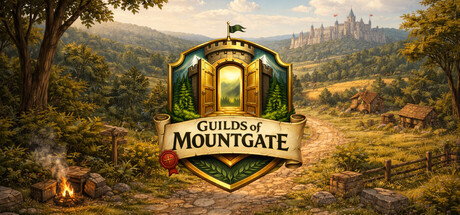
Guilds of Mountgate currently uses AI-generated visual assets during Early Access, primarily for environmental backgrounds and UI-related imagery.
All assets are individually selected and refined to ensure visual consistency within the game world.
This approach allows development to focus on the core systems that define the game — including progression, economy and world simulation.
As development continues, many of these assets — especially location backgrounds — are planned to be replaced with handcrafted, pre-rendered 3D scenes created in Blender for the full release (v1.0).
Some visual assets in this game have been created with the assistance of AI tools, then refined and integrated to fit the artistic direction of the project.
All music featured in the game is original and performed by a real pianist, composed specifically to enhance the emotional experience.
Nexus Legacy is made by a solo developer using AI-assisted production tools. These tools were used during development to help with visual iteration, asset production, prototyping and code assistance, making a larger persistent MMO possible with a small production pipeline.
The final game is not a live AI generator. Gameplay design, balance, economy, progression, PvE/PvP rules, server logic, world structure, final visuals and updates are selected, reviewed, edited and maintained by the developer.
No live generative AI is used to create player-facing content while the game is running.
EQUILIBRIUM uses generative AI to power its core gameplay mechanic: the Policy Terminal.
LIVE-GENERATED CONTENT
When a player types a directive or law in natural language (e.g., "Abolish the luxury car tax"), the AI Engine analyzes the request in real time and generates a structured governmental dossier, including:
- Legislative feasibility analysis
- Budget impact and financial coverage
- Macroeconomic effects (GDP, debt, inflation)
- Social and political consensus projections
- Parliamentary vote simulation
Model used: Anthropic Claude, accessed via API.
Guardrails: AI output is constrained to a fixed set of structured fields defined by the developer. All numeric effects are clamped within bounds enforced by the simulation engine, so no AI output can produce values outside the game's defined ranges. The model operates only on the simulation state provided to it and cannot invent game data: commands that cannot be mapped to a valid government action are refused, and the player is offered bounded policy alternatives instead. No image, audio, or user-data generation is involved, and no player data is used to train any model.
Because responses are generated at runtime, outputs vary between playthroughs: the same directive may produce different wording and different outcomes.
PRE-GENERATED CONTENT
The game's background music track was generated using AI tools during development and ships with the game.
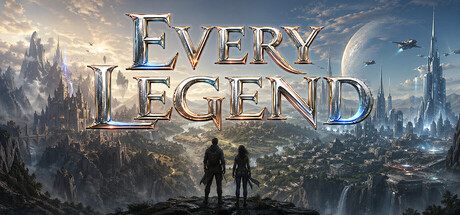
Every Legend uses AI to generate dynamic role-playing content during gameplay. This includes story text, characters, quests, dialogue, scene descriptions, images, speech, and music.
The game can use bundled local AI models on your computer, and it can also use optional third-party cloud AI providers if you configure API keys in the settings. When cloud providers are used, your prompts and relevant game context may be sent to those external services to generate content.
AI-generated content may vary between playthroughs and can occasionally be inaccurate, unexpected, or inconsistent.
This game incorporates generative AI to enhance visual storytelling and character depth in the following ways:
Video Content: A portion of the ending cinematic utilizes footage generated by Sora 2, which can be identified by its watermark.
Character Illustrations: Three soldier profile photos displayed within the Personnel Search Center were created using ChatGPT (DALL-E).
We have used these tools to supplement the creative vision of our team and ensure a more immersive atmosphere for our players.
After I personally finalized the design phase, some art assets were first rendered using generative AI tools, and I then manually refined and detailed them.
Similarly, certain background music pieces were developed with the help of generative AI tools.
Should you have any concerns about these methods, please feel free to experience the game according to your own preferences. Thank you for your understanding and consideration.
AI-assisted tools were used in the creation of some background images included in the game.
AI-assisted translation was also used for the English and Korean localization. The translated text was reviewed and adjusted during development.
There is no content generated by AI in real time during gameplay.
The game uses AI voice generation tools to create audio voiceovers for partial narrative texts and dialogue. All underlying text and story are originally created by the developer.
This game uses generative artificial intelligence to dynamically create towns, facilities, dungeons, NPCs, dialogue, event text, and some illustrations based on the player's actions and the current game state.
Rather than relying only on fixed scenarios, the game is designed so that each playthrough can produce different events, encounters, and story developments.
Some character images, backgrounds, and illustrations are also generated by AI.
Generated content is controlled according to the game's design rules and moderation systems.
Steam page design and English localization - This is an unusual game. It consists of a huge amount of text. We couldn't translate it with a professional translator due to the enormous cost. Despite this, we really want as many people as possible to play our game. That's why we made the game free. We also hope that this game will become a great experience for our next game.
All code in this game is generated with AI assistance. The game’s visuals and music also involve AI-aided processes, including image adjustments and extension of music segments. The gameplay concepts and skill/item designs are partially inspired by AI, with some skill and item names originating from AI-generated ideas.
AI-based translation tools were used for localizing the in-game text and store page descriptions from Japanese to English. All translated content has been reviewed and refined by the developer.
Foundation Typer uses generative AI-assisted artwork, voice, and cinematic media elements for certain visual and promotional content, including portions of trailers, character presentation, and store assets. All gameplay systems, lesson structure, progression design, typing mechanics, interface functionality, and core training content were created and assembled as part of the game's original development.
This title was developed with substantial assistance from generative AI.[Store Assets — Visual Content]The key visual, store capsule images, library assets (including the library hero), and certain screenshot backgrounds were produced using image generation AI ("Midjourney v7 / Niji v7") under a commercial license (Standard tier).[Source Code, Game Design, and In-Game Text]The C++ source code, data structures, system architecture, gameplay mechanics specifications, in-game text, item naming conventions, job names, and skill names were developed in collaboration with conversational AI ("Claude" by Anthropic and "Gemini" by Google).[The Developer's Role]Quench Forge handles concept, product vision, product management, final specification decisions, hands-on PIE (Play-In-Editor) testing, bug reports, and release decisions.Code generation, code review, test design, system architecture, game mechanics specifications, in-game text, and marketing materials are all created in collaboration with Claude (Anthropic) and Gemini (Google). Every AI-generated artifact is filtered through the developer's "appraiser's eye" — selected, approved, and revised through specification feedback — before being incorporated into the product.This game applies its own core theme — "an appraiser-shopkeeper who reads materials and Modifiers to forge the right blade" — to its own development process.[Runtime Behavior]No generative AI runs during gameplay. All in-game mechanics operate on compiled, deterministic algorithms (with optional reproducible random seeds). The game does not require any online connection to AI services during play.
Coding
Supported by anthropic Opus 4.6 & Opus 4.7
Music
13 era-specific tracks generated with Google Lyria · manually curated and mastered
Voice (Klammi)
Google Gemini TTS "Puck" · German · Opus 96 kbit/s WebM
Avatars & Images
Generated with DALL-E / Google Gemini Image · manually selected and background-removed
Mascot Videos (Klammi)
Google Veo 2.0 · Luma-Key + VP9-Alpha pipeline · 480×480 px
Logo & Branding
Generated with Google Gemini · background removed with rembg
Translation
Original content written in german, translated by Claude Sonett 4.6
The game uses generative AI solely for the creation of certain visual and text assets.
AI does not affect gameplay, player behavior, or core game mechanics.
This game uses the DeepSeek AI model to generate character dialogue in real time. Based on player input, the AI responds according to preset character personalities, creating an immersive role-playing experience. All generated content is filtered through a content moderation system to prevent inappropriate or policy-violating outputs.
API and Billing Notice:
To use this feature, you need to register a DeepSeek account and add API credits at: https://platform.deepseek.com/usage
The AI service costs are charged directly by DeepSeek. The game developer does not collect any API fees.
Some visual assets, promotional materials, and portions of development assistance for Word Rift were created with the help of generative AI tools under the direction and supervision of the developer.
Some visual assets, store assets, localization drafts, and marketing materials for SEO OR DIE were created or enhanced with the assistance of generative AI tools.
All AI-assisted content was reviewed, edited, and integrated by the developer to match the game's final art direction, narrative tone, and quality standards.
The game does not use real-time AI generation during gameplay.
The game's initial photos were taken from free resources and stock photos. AI was used to accelerate image processing to match the game's style, as envisioned by the author.
The music featured in the trailer was composed using generative AI tools.
Crucially, all game characters and animations are entirely hand-drawn and manually animated by the developer.
Some static 2D artwork used in the game and Steam marketing materials was created with assistance from generative AI, then curated, edited, and integrated by the developer. The game does not generate AI content during gameplay and does not connect to external AI services.
AI was used to accelerate the creation of this game, specifically, the audio, graphics, and code for the game to function. The idea came from a man with many years of dating experience, and looking to create a fun game to share with the world.
Generative AI tools were used during the development of this game for programming assistance, localization, and partial text generation.
Some localized text and in-game written content were generated with the assistance of AI-based tools.
This game utilizes artificial intelligence without incorporating third-party resources. Its primary function is to assist in game functionality implementation, creative refinement, and saving human time through algorithms.
This game uses generative AI tools during development.
All voice-over audio is generated using AI tools.
The game does not use live generative AI during gameplay.
Generative Artificial Intelligence was used to assist in the development of this game, including support with aspects of the game's code.
AI tools were also used to create some graphical assets, including selected images used for promotional material and the Steam store page.
This game used generative AI as part of an AI-assisted development workflow for selected pre-rendered assets and supporting materials, including some illustrations, video assets, audio/music production support, localization text, and store promotional materials. All AI-assisted materials were selected, edited, revised, proofread, and integrated by the developer. The game does not contain real-time AI generation, player-generated AI content, or any AI system that generates content during gameplay.
Chrongrid is a narrative experience product powered by large language models (LLMs). In-game dialogue, scene descriptions, and character responses are generated in real time by an AI model — you can choose a third-party API service (such as DeepSeek, OpenAI, or Anthropic), or run a model locally on your machine via Ollama. You provide your own API credentials and bear the associated costs; we do not operate any server to relay your requests. The AI generates dialogue and descriptive text at runtime, always within the constraints of pre-authored narrative blueprints, characters, and world settings.
I believe in being fully transparent with my players regarding the tools used to bring this project to life. As a solo developer and non-native English speaker, I have utilized AI as a supportive tool to enhance the experience, though the core vision and logic of the game remain my own.
Art & Visuals: To ensure the game has a polished aesthetic, I used AI to refine my hand-drawn concepts into final assets. This allowed me to translate my original sketches into high-quality visuals that I otherwise could not have afforded as an independent creator.
Language & Localization: With over 1,500 unique glyphs and numerous Rune combinations, I used AI to assist with naming and linguistic consistency. This ensures that the English translation is natural and clear for all players.
Real-Time Community Chat: To foster an inclusive community, the game features an integrated translation tool. This allows players to chat in their native languages while providing instant translations for others, ensuring everyone can participate in the conversation.
Development & Optimization: AI assisted in proofing my original combat code and expanding on my base mechanics to create more diverse gameplay options. It also serves as a diagnostic tool to help me identify and patch bugs quickly, ensuring a stable and fair experience for everyone.
AI is a tool to empower my creativity, not a replacement for it. My goal is to use these technologies to deliver a deeper, more polished game than a solo project would typically allow.
Guilds of Mountgate currently uses AI-generated visual assets during Early Access, primarily for environmental backgrounds and UI-related imagery.
All assets are individually selected and refined to ensure visual consistency within the game world.
This approach allows development to focus on the core systems that define the game — including progression, economy and world simulation.
As development continues, many of these assets — especially location backgrounds — are planned to be replaced with handcrafted, pre-rendered 3D scenes created in Blender for the full release (v1.0).
Some visual assets in this game have been created with the assistance of AI tools, then refined and integrated to fit the artistic direction of the project.
All music featured in the game is original and performed by a real pianist, composed specifically to enhance the emotional experience.
Nexus Legacy is made by a solo developer using AI-assisted production tools. These tools were used during development to help with visual iteration, asset production, prototyping and code assistance, making a larger persistent MMO possible with a small production pipeline.
The final game is not a live AI generator. Gameplay design, balance, economy, progression, PvE/PvP rules, server logic, world structure, final visuals and updates are selected, reviewed, edited and maintained by the developer.
No live generative AI is used to create player-facing content while the game is running.
EQUILIBRIUM uses generative AI to power its core gameplay mechanic: the Policy Terminal.
LIVE-GENERATED CONTENT
When a player types a directive or law in natural language (e.g., "Abolish the luxury car tax"), the AI Engine analyzes the request in real time and generates a structured governmental dossier, including:
- Legislative feasibility analysis
- Budget impact and financial coverage
- Macroeconomic effects (GDP, debt, inflation)
- Social and political consensus projections
- Parliamentary vote simulation
Model used: Anthropic Claude, accessed via API.
Guardrails: AI output is constrained to a fixed set of structured fields defined by the developer. All numeric effects are clamped within bounds enforced by the simulation engine, so no AI output can produce values outside the game's defined ranges. The model operates only on the simulation state provided to it and cannot invent game data: commands that cannot be mapped to a valid government action are refused, and the player is offered bounded policy alternatives instead. No image, audio, or user-data generation is involved, and no player data is used to train any model.
Because responses are generated at runtime, outputs vary between playthroughs: the same directive may produce different wording and different outcomes.
PRE-GENERATED CONTENT
The game's background music track was generated using AI tools during development and ships with the game.
Every Legend uses AI to generate dynamic role-playing content during gameplay. This includes story text, characters, quests, dialogue, scene descriptions, images, speech, and music.
The game can use bundled local AI models on your computer, and it can also use optional third-party cloud AI providers if you configure API keys in the settings. When cloud providers are used, your prompts and relevant game context may be sent to those external services to generate content.
AI-generated content may vary between playthroughs and can occasionally be inaccurate, unexpected, or inconsistent.
This game incorporates generative AI to enhance visual storytelling and character depth in the following ways:
Video Content: A portion of the ending cinematic utilizes footage generated by Sora 2, which can be identified by its watermark.
Character Illustrations: Three soldier profile photos displayed within the Personnel Search Center were created using ChatGPT (DALL-E).
We have used these tools to supplement the creative vision of our team and ensure a more immersive atmosphere for our players.
After I personally finalized the design phase, some art assets were first rendered using generative AI tools, and I then manually refined and detailed them.
Similarly, certain background music pieces were developed with the help of generative AI tools.
Should you have any concerns about these methods, please feel free to experience the game according to your own preferences. Thank you for your understanding and consideration.
AI-assisted tools were used in the creation of some background images included in the game.
AI-assisted translation was also used for the English and Korean localization. The translated text was reviewed and adjusted during development.
There is no content generated by AI in real time during gameplay.
The game uses AI voice generation tools to create audio voiceovers for partial narrative texts and dialogue. All underlying text and story are originally created by the developer.
This game uses generative artificial intelligence to dynamically create towns, facilities, dungeons, NPCs, dialogue, event text, and some illustrations based on the player's actions and the current game state.
Rather than relying only on fixed scenarios, the game is designed so that each playthrough can produce different events, encounters, and story developments.
Some character images, backgrounds, and illustrations are also generated by AI.
Generated content is controlled according to the game's design rules and moderation systems.
Steam page design and English localization - This is an unusual game. It consists of a huge amount of text. We couldn't translate it with a professional translator due to the enormous cost. Despite this, we really want as many people as possible to play our game. That's why we made the game free. We also hope that this game will become a great experience for our next game.
All code in this game is generated with AI assistance. The game’s visuals and music also involve AI-aided processes, including image adjustments and extension of music segments. The gameplay concepts and skill/item designs are partially inspired by AI, with some skill and item names originating from AI-generated ideas.
AI-based translation tools were used for localizing the in-game text and store page descriptions from Japanese to English. All translated content has been reviewed and refined by the developer.