


Disclosure
Store page materails and a few of the in game visuals are created with the help of the ai.
- Creator
- One-legged Ronin
- Reviews
- -
- Added
- Nov 26, 2026
Public Steam disclosure research 27,951 disclosures tracked
Search developers’ Steam disclosures, compare classified AI use across games, and follow recorded changes. This index adds cross-game classifications and statistics to statements published on individual store pages.
Code help, debugging and other development work.
Capsule art, trailers and promotional material.
Pre-made art, audio, writing and other game assets.
Interactive or runtime AI features disclosed by the developer.
Groups reflect automatic analysis of public disclosures; mature records are excluded. These counts do not measure AI use across all of Steam. Missing or unclear statements cannot establish whether a game uses AI.
Store page materails and a few of the in game visuals are created with the help of the ai.
Some assets were created with the help of generative AI tools and then curated and edited by the developer. This includes Steam store and library artwork, arena backgrounds, player portraits, logos for fictional clubs, sponsors and competitions, and the soundtrack. No generative AI is used to create content while the game is running.
We wrote small recoloring scripts with help from AI coding tools to create different color versions of art, such as recolored enemies. The scripts only shift the colors of our existing pixel art. We did not use AI image generators. Our artists checked every variant before it went into the game.
Generative AI tools were used to assist in drafting initial concept art and early localization drafts. All final visual assets, narrative scripts, and in-game text have been manually edited, refined, and curated by the developer.
Some visual assets in this game — the title logo, the logos and emblems of the fictional teams and leagues, icons, and store capsule artwork — were created using generative AI tools and then reviewed and edited by the developer. No content is generated by AI at runtime. All players, teams, and leagues in the game are fictional.
Generative AI was used in developing this game. The game does not call any AI while it runs, and it generates no new content during play. Art: the ink illustrations in the game (places, secret realms, item icons, the ending, and the paper texture and distant mountains behind the interface) and the base images for the store page art were generated by the developer with OpenAI's GPT Image, then chosen and cropped by hand; the title text on the store art is typeset in a font. Music: the game's two music tracks were generated by the developer with ElevenLabs' Eleven Music and chosen by hand. Text: the Chinese text in the game (realm descriptions, the journal's sentence templates and interface text) and on the store page was mainly drafted by AI (Anthropic's Claude); the developer set the direction, checked it and revised it. The English text in the game and on the store page was also drafted by AI (Claude), following a glossary of terms, and read through by AI reviewers. No native speaker or fluent reader of English has been asked to read through the English text.
Flickerwake was developed over more than a year through a human-directed creative and development process, with generative AI tools used to assist in the creation of selected visual and audio assets, including character portraits, environmental artwork, cinematic sequences, and limited voice acting. All creative direction, gameplay design, narrative decisions, artistic selection, revisions, and final implementation were guided and approved by the developer. Music and sound effects were primarily sourced from licensed audio libraries, including Pixabay. All AI-assisted content was created during development and incorporated into the finished game. Flickerwake does not generate AI content during gameplay or use live generative AI services.
Some of this game's audio and text were produced with generative AI. Ambient sound effects and some character voice lines were generated with AI audio tools, and the English localization was produced with AI translation; all of it was reviewed and edited by the developer before release. Backgrounds, character art and the original script were created by human artists and writers. No content is generated while you play. Name of AI model included with the game: ByteDance Seed-Audio, GPT-6 Astra
Generated location imagery and music
The game's art assets (character designs, backgrounds, etc.) were generated with Stable Diffusion and Google Gemini's Nano Banana, and some music (including the opening theme and some BGM tracks) was generated with Suno. The story was conceived by the author, who discussed and refined the text with Gemini-series models, evaluated the AI's suggestions, then finalized the text and tested it in-game. All of the above are pre-generated content shipped with the game; no AI content is generated at runtime.
Voice Notes uses AI that runs on your own PC. Speech recognition turns your voice into text, and an optional on-device language model rewrites or translates your own words when you pick a compose mode, such as tidying a message or translating it. Voice clips are read aloud with the voices installed in Windows. Nothing you say is sent to an AI service, and everything the AI produces comes from your own words and is shown to you before it is used. Name of AI model included with the game: Qwen3-4B-Instruct-2507 (default) and Qwen2.5-1.5B-Instruct, open language models from Alibaba's Qwen team (Apache-2.0), run on your own PC with llama.cpp. Speech recognition uses OpenAI Whisper (MIT), also running on your PC with whisper.cpp. Read-aloud uses the voices built into Windows. No online AI service is used.
Tapal uses generative AI to create the character’s text, image, and voice replies in real time. These replies draw on what you say, the character’s settings, the current conversation, and saved memories of past interactions. Some dialogue is written in advance by the developers; the rest changes as you interact with the character. Name of AI model included with the game: Tapal Cloud
The game’s artwork, store page images, trailer visuals, and trailer music were created with the help of generative AI.
Generative AI was used to create the thumbnails for the store page. Assist with written content. This content is included in the game ahead of time. No AI content is generated during gameplay, and the game does not connect to an AI service.
AI was used to develop the game's code and user interface. The core gameplay content, including the story and deductive reasoning, was created entirely without AI involvement.
Generative AI was used during development to create background and character illustrations, store promotional artwork, and drafts of some text and localization. Content is included in the game in advance. The game does not generate new AI content or connect to external AI services during play.
The creator is a Japanese speaker. For localization from Japanese into other languages, the creator uses generative AI to produce an initial translation, then carefully reviews and refines it with additions and revisions as needed to finalize the text. While the creator has no plans to localize the game into languages they cannot understand, should that ever happen, they will commission qualified individuals to thoroughly review the translation.
Generative AI was used to translate the in-game text and store page into the supported languages, and to help write the text of this store page. The game does not generate any content with AI while it is running.
Some visual elements use AI-generated images to illustrate the behaviour of the AI itself. Some of the music is provided by the Mubert music-generation platform. Name of AI model included with the game: Qwen/Qwen3-4B-GGUF,Q4_K_M
Generative AI was used only to assist with localization. All AI-assisted translations were reviewed and edited by the developer before release. The game does not use live-generated AI.
AI has been used only in some models and interfaces.
Generative AI tools were used during development for the illustrations and synthesized narration and character voices, and to assist with the English adaptation and localization of the original German novel. These assets are produced in advance and shipped as fixed files. The game does not generate new AI content during gameplay or connect to external AI services at runtime.
Generative AI was used to create some visual assets: title/menu artwork, character portraits, UI illustrations, and Steam store and library artwork.
AI Creation Statement: The places where AI (deepseekV4.1flash) was used in this project are: Multilingual translation (100%): Apart from the Simplified Chinese text, which the author typed manually, all translations into other languages were completed by AI. Movie reviews (100%): Characters’ movie reviews. Script structure optimization (0.5%–1%): Bugs in the code that were difficult to fix were optimized by AI.
Generative AI tools were used during development as part of the production pipeline for visual assets and localization. AI-assisted visual material undergoes manual curation, editing, compositing, and final integration in image-editing software by the development team. AI-assisted localization goes through a multi-stage workflow that includes terminology and consistency checks, human proofreading, and final verification.
Generative AI was used to translate and localize the game's original Japanese text and Steam store page into other languages. All scenarios and dialogue were written by the developer. No generative AI was used to create the game's artwork.
This is my first game with a tiny budget, AI was used for visual assets.
Generative AI tools were used during development to assist with portions of the pre-generated pixel-art visuals, early text drafts, and Steam promotional artwork. All generated material was reviewed, edited, arranged, and integrated by the developer before release. The game does not use generative AI at runtime, generate content in real time, or send player input to external AI services.
The visual production of this game was partially supported by AI.
Background artwork and character sprites were created using generative AI and then manually retouched and refined. AI tools will also assist with localization.
Some of the art creatives, animations, and video content in this game were created with the assistance of generative AI tools. All AI-generated content has been manually reviewed, edited, and post-processed to ensure it aligns with the game's worldbuilding and content specifications.
AI tools were used during development to help write and debug the game’s code, tune game balance, and assemble store images from the game’s own art. All content is pre-made: the game doesn’t generate anything with AI while you play.
Pre-Generated AI Content: Yes. Development assistance — parts of the game's source code (GDScript) were written with AI coding assistance and were reviewed, edited, and tested by the developer. The game contains no AI-generated art, music, or text: all interface icons come from the CC0 Skymon Icon Pack, and the music and sound effects are produced by deterministic script-based procedural synthesis rather than machine-learning models. All game data (cards, events, identities, schools, endings) is edited by a human and stored locally in the game. Store media — the store trailer contains one AI-generated animated segment of about eight seconds (a watercolour stack of books and blank cards), generated and reviewed by the developer. No other AI-generated material appears on the store page. Live-Generated AI Content: No. The game does not use AI or machine-learning models to generate content during play. It makes no network requests to AI services, and all data is stored locally.
Some images on the game store page (such as capsule images) are generated using AI image tools and manually edited.
In making this game, AI contributed in these areas: visual image generation; script and dialogue rewriting; implementation of game features; testing; and additional guidance on design and technical topics. Human creators were involved throughout and reviewed all such work—none of it was left solely to AI.
AI was used to provide text translations into languages other than English. If any native speakers wish to offer critique or correct these translations, we would be much obliged for your feedback and support.
AI tools were used to assist with portions of the game's localization. All translated text was subsequently reviewed and edited by the developer. All artwork, environments, characters, maps, and audio assets were created without generative AI.
Generative AI tools were used to create selected visual assets for the game, including background illustrations, character pixel art, event badge icons, radio emblem icons, and the application icon. These assets were generated prior to release and reviewed by the developer before being incorporated into the game. The game does not use generative AI to create content during gameplay.
The game's code and written text were developed with the assistance of AI tools, then reviewed, edited and tested by the developer. No content is generated by AI while you play.
Some visual assets in EXODUS DIRECTIVE, including the intro cinematic and parts of the promotional material, were created with the help of generative AI tools. All AI-assisted content was reviewed, edited and curated by the developer. The game's design, systems and writing are created by hand.
This game uses generative AI to create character illustrations and some graphical assets. All AI-generated materials are reviewed and adjusted during development before being incorporated into the game. No real-time AI generation is used during gameplay.
Generative AI tools were used to create source artwork for scene backgrounds, character portraits and ending illustrations; the artwork was processed into the two-color pixel style before inclusion in the game. The background music for each act was also generated with an AI music tool. All of this content was made before release. The in-game model conversations are pre-written text; no content is generated during gameplay and the game does not connect to an external AI service.
Dungeon Stage uses AI during play to create adventure narration, character dialogue and story details. The Steam edition defaults to a local language model selected for your PC. After its initial download, this model generates text on your computer without sending your prompts or adventure context to an external AI service. Players can use choose an external AI settings instead, using their own OpenAI, Anthropic (Claude) or Google Gemini API key, a supported account sign-in, or a compatible server. With an external provider selected, the text needed for a reply - including your input, relevant character and world information, recent dialogue and remembered adventure events - is sent directly from your PC to that provider. The developer does not receive these requests, your adventure data or your credentials. Provider privacy policies and usage terms apply, and any service charges are paid through your own account. API keys remembered by the game are encrypted by Windows and stored locally. You can switch back to local AI in Options. Optional AI voices use your chosen OpenAI, ElevenLabs or compatible speech service. When enabled, dialogue text and any voice instructions go directly to that service under its terms and billing. Voice services are separate from the local text model. The Steam edition applies built-in text filters to AI responses, with fantasy adventure content in mind. Some included character art, scene artwork and promotional images were created with generative AI before release. Live image generation is disabled in the Steam edition.
The music and game backgrounds are generated by AI
Generative AI was used to create some images for this game. These assets were generated during development.The game does not generate content with generative AI at runtime.
AI tools were used during development to help with code, art (backgrounds, portraits, creatures and items), translations and some sound effects. Every asset was reviewed and edited by the developer. The books, crafting minigames and music were made without AI. No content is generated while the game is running.
Generative AI tools were used during game development to assist with adapting and expanding in-game text and preparing translations. Generative AI was also used to create promotional artwork. All in-game text is prepared in advance. The game does not generate AI content during gameplay or connect to external AI services.
Artwork: The player and coach portraits, team logos, and parts of the store artwork were created with AI image generation. Each one was directed, reviewed, and corrected by me, and many were rejected or redone along the way. I used coding assistants to help write and test the game's code and interface, under my direction.
Made with AI assistance for translation/localisation. No image, music or voice was generated through AI.
The game texts are polished with AI assistance. Artwork and background music are generated by AI. The core story framework, character relationships and plot design are originally created by the developer. No runtime AI content will be produced during gameplay.
| Title⇅ | Disclosure | Creator⇅ | Src | Reviews⇅ | Added↓ |
|---|---|---|---|---|---|
 What Have I Become? | Store page materails and a few of the in game visuals are created with the help of the ai. | One-legged Ronin | - | Nov 26, 2026 | |
 Basketball Manager 2027 In-game content artaudio | Some assets were created with the help of generative AI tools and then curated and edited by the developer. This includes Steam store and library artwork, arena backgrounds, player portraits, logos for fictional clubs, sponsors and competitions, and the soundtrack. No generative AI is used to create content while the game is running. | VIN Studios | - | Nov 24, 2026 | |
 Desk Guards In-game content artcode | We wrote small recoloring scripts with help from AI coding tools to create different color versions of art, such as recolored enemies. The scripts only shift the colors of our existing pixel art. We did not use AI image generators. Our artists checked every variant before it went into the game. | GameCoder Studios | - | Nov 23, 2026 | |
 这不是罗马 In-game content arttext | Generative AI tools were used to assist in drafting initial concept art and early localization drafts. All final visual assets, narrative scripts, and in-game text have been manually edited, refined, and curated by the developer. | hope | - | Nov 23, 2026 | |
 Pro Yakyu Front Office In-game content art | Some visual assets in this game — the title logo, the logos and emblems of the fictional teams and leagues, icons, and store capsule artwork — were created using generative AI tools and then reviewed and edited by the developer. No content is generated by AI at runtime. All players, teams, and leagues in the game are fictional. | Diamond Ledger Studio | - | Nov 23, 2026 | |
 The Unsung Cultivator In-game content artaudiotext | Generative AI was used in developing this game. The game does not call any AI while it runs, and it generates no new content during play. Art: the ink illustrations in the game (places, secret realms, item icons, the ending, and the paper texture and distant mountains behind the interface) and the base images for the store page art were generated by the developer with OpenAI's GPT Image, then chosen and cropped by hand; the title text on the store art is typeset in a font. Music: the game's two music tracks were generated by the developer with ElevenLabs' Eleven Music and chosen by hand. Text: the Chinese text in the game (realm descriptions, the journal's sentence templates and interface text) and on the store page was mainly drafted by AI (Anthropic's Claude); the developer set the direction, checked it and revised it. The English text in the game and on the store page was also drafted by AI (Claude), following a glossary of terms, and read through by AI reviewers. No native speaker or fluent reader of English has been asked to read through the English text. | SanXiu | - | Nov 22, 2026 | |
 Flickerwake In-game content artaudio | Flickerwake was developed over more than a year through a human-directed creative and development process, with generative AI tools used to assist in the creation of selected visual and audio assets, including character portraits, environmental artwork, cinematic sequences, and limited voice acting.
All creative direction, gameplay design, narrative decisions, artistic selection, revisions, and final implementation were guided and approved by the developer.
Music and sound effects were primarily sourced from licensed audio libraries, including Pixabay.
All AI-assisted content was created during development and incorporated into the finished game. Flickerwake does not generate AI content during gameplay or use live generative AI services. | Emberfall Studios | - | Nov 21, 2026 | |
 模联人 In-game content audiotext | Some of this game's audio and text were produced with generative AI. Ambient sound effects and some character voice lines were generated with AI audio tools, and the English localization was produced with AI translation; all of it was reviewed and edited by the developer before release. Backgrounds, character art and the original script were created by human artists and
writers. No content is generated while you play.
Name of AI model included with the game: ByteDance Seed-Audio, GPT-6 Astra | 小熊猫工作室 | - | Nov 19, 2026 | |
 The Seven Spells Of Destruction In-game content artaudio | Generated location imagery and music | Brainbox.cc | - | Nov 19, 2026 | |
 恩波聆曲 In-game content artaudiotext | The game's art assets (character designs, backgrounds, etc.) were generated with Stable Diffusion and Google Gemini's Nano Banana, and some music (including the opening theme and some BGM tracks) was generated with Suno. The story was conceived by the author, who discussed and refined the text with Gemini-series models, evaluated the AI's suggestions, then finalized the text and tested it in-game. All of the above are pre-generated content shipped with the game; no AI content is generated at runtime. | 恩波聆曲制作组 | - | Nov 18, 2026 | |
 Voice Notes Live AI text | Voice Notes uses AI that runs on your own PC. Speech recognition turns your voice into text, and an optional on-device language model rewrites or translates your own words when you pick a compose mode, such as tidying a message or translating it. Voice clips are read aloud with the voices installed in Windows. Nothing you say is sent to an AI service, and everything the AI produces comes from your own words and is shown to you before it is used.
Name of AI model included with the game: Qwen3-4B-Instruct-2507 (default) and Qwen2.5-1.5B-Instruct, open language models from Alibaba's Qwen team (Apache-2.0), run on your own PC with llama.cpp. Speech recognition uses OpenAI Whisper (MIT), also running on your PC with whisper.cpp. Read-aloud uses the voices built into Windows. No online AI service is used. | BlackSails.com | - | Nov 18, 2026 | |
 Tapal Live AI textartaudio | Tapal uses generative AI to create the character’s text, image, and voice replies in real time. These replies draw on what you say, the character’s settings, the current conversation, and saved memories of past interactions. Some dialogue is written in advance by the developers; the rest changes as you interact with the character.
Name of AI model included with the game: Tapal Cloud | Tapal Studio | - | Nov 16, 2026 | |
 Sincerely, Your Diary Store/marketing artaudio | The game’s artwork, store page images, trailer visuals, and trailer music were created with the help of generative AI. | One Ink Studio | - | Nov 15, 2026 | |
 BORK In-game content arttext | Generative AI was used to create the thumbnails for the store page. Assist with written content. This content is included in the game ahead of time. No AI content is generated during gameplay, and the game does not connect to an AI service. | halfdrunkinteractive | - | Nov 15, 2026 | |
 Excellent Expactations 2 Dev only code | AI was used to develop the game's code and user interface.
The core gameplay content, including the story and deductive reasoning, was created entirely without AI involvement. | 内购人生PABL | - | Nov 13, 2026 | |
 Detective Club In-game content arttext | Generative AI was used during development to create background and character illustrations, store promotional artwork, and drafts of some text and localization. Content is included in the game in advance. The game does not generate new AI content or connect to external AI services during play. | ILGUPALO | - | Nov 12, 2026 | |
 With flowers, fringe of fondness In-game content text | The creator is a Japanese speaker. For localization from Japanese into other languages, the creator uses generative AI to produce an initial translation, then carefully reviews and refines it with additions and revisions as needed to finalize the text. While the creator has no plans to localize the game into languages they cannot understand, should that ever happen, they will commission qualified individuals to thoroughly review the translation. | Paleclat | - | Nov 10, 2026 | |
 RecoverSploit In-game content text | Generative AI was used to translate the in-game text and store page into the supported languages, and to help write the text of this store page. The game does not generate any content with AI while it is running. | Dreaming Rabbit | - | Nov 10, 2026 | |
 Lily出生之前 In-game content artaudio | Some visual elements use AI-generated images to illustrate the behaviour of the AI itself. Some of the music is provided by the Mubert music-generation platform.
Name of AI model included with the game: Qwen/Qwen3-4B-GGUF,Q4_K_M | 单刀双掷 | - | Nov 9, 2026 | |
 フルボッコようちえん In-game content text | Generative AI was used only to assist with localization. All AI-assisted translations were reviewed and edited by the developer before release. The game does not use live-generated AI. | STUDIO CHARON | - | Nov 9, 2026 | |
 OpSec Simulator Unclear | AI has been used only in some models and interfaces. | Kalze | - | Nov 8, 2026 | |
 Lianur: Shadows of the Divine In-game content artaudiotext | Generative AI tools were used during development for the illustrations and synthesized narration and character voices, and to assist with the English adaptation and localization of the original German novel. These assets are produced in advance and shipped as fixed files. The game does not generate new AI content during gameplay or connect to external AI services at runtime. | Abyssal Bloom | - | Nov 6, 2026 | |
 SearchBattle Store/marketing art | Generative AI was used to create some visual assets: title/menu artwork, character portraits, UI illustrations, and Steam store and library artwork. | βETALCA Games | - | Nov 6, 2026 | |
 Return to college In-game content textcode | AI Creation Statement:
The places where AI (deepseekV4.1flash) was used in this project are:
Multilingual translation (100%): Apart from the Simplified Chinese text, which the author typed manually, all translations into other languages were completed by AI.
Movie reviews (100%): Characters’ movie reviews.
Script structure optimization (0.5%–1%): Bugs in the code that were difficult to fix were optimized by AI. | 千琅邪 | - | Nov 5, 2026 | |
 Severed Souls — Chapter I In-game content arttext | Generative AI tools were used during development as part of the production pipeline for visual assets and localization.
AI-assisted visual material undergoes manual curation, editing, compositing, and final integration in image-editing software by the development team. AI-assisted localization goes through a multi-stage workflow that includes terminology and consistency checks, human proofreading, and final verification. | Lakos and Friends | - | Nov 4, 2026 | |
 やさ死くシて In-game content text | Generative AI was used to translate and localize the game's original Japanese text and Steam store page into other languages.
All scenarios and dialogue were written by the developer. No generative AI was used to create the game's artwork. | すずはるひろみ | - | Nov 3, 2026 | |
 Bureau of Compliance In-game content art | This is my first game with a tiny budget, AI was used for visual assets. | Terribl Games | - | Nov 3, 2026 | |
 语界奇旅 · Language Learning Quest Store/marketing arttext | Generative AI tools were used during development to assist with portions of the pre-generated pixel-art visuals, early text drafts, and Steam promotional artwork. All generated material was reviewed, edited, arranged, and integrated by the developer before release. The game does not use generative AI at runtime, generate content in real time, or send player input to external AI services. | Pandas League | - | Nov 3, 2026 | |
 その天使、小悪魔系につき Unclear art | The visual production of this game was partially supported by AI. | XrayWorks | - | Nov 2, 2026 | |
 池田バルブ株式会社 In-game content arttext | Background artwork and character sprites were created using generative AI and then manually retouched and refined. AI tools will also assist with localization. | Rumop | - | Oct 31, 2026 | |
 红楼梦:林黛玉与北静王 In-game content artaudio | Some of the art creatives, animations, and video content in this game were created with the assistance of generative AI tools. All AI-generated content has been manually reviewed, edited, and post-processed to ensure it aligns with the game's worldbuilding and content specifications. | LinearGame Pte. Ltd. | - | Oct 31, 2026 | |
 Most Games Flop Store/marketing codeart | AI tools were used during development to help write and debug the game’s code, tune game balance, and assemble store images from the game’s own art. All content is pre-made: the game doesn’t generate anything with AI while you play. | Zibo | - | Oct 31, 2026 | |
 升学模拟器 Store/marketing codeart | Pre-Generated AI Content: Yes.
Development assistance — parts of the game's source code (GDScript) were written with AI coding assistance and were reviewed, edited, and tested by the developer. The game contains no AI-generated art, music, or text: all interface icons come from the CC0 Skymon Icon Pack, and the music and sound effects are produced by deterministic script-based procedural synthesis rather than machine-learning models. All game data (cards, events, identities, schools, endings) is edited by a human and stored locally in the game.
Store media — the store trailer contains one AI-generated animated segment of about eight seconds (a watercolour stack of books and blank cards), generated and reviewed by the developer. No other AI-generated material appears on the store page.
Live-Generated AI Content: No.
The game does not use AI or machine-learning models to generate content during play. It makes no network requests to AI services, and all data is stored locally. | 八苦游戏 | - | Oct 30, 2026 | |
 夜行录 Store/marketing art | Some images on the game store page (such as capsule images) are generated using AI image tools and manually edited. | MuHua | - | Oct 30, 2026 | |
 The Compliant In-game content arttextcode | In making this game, AI contributed in these areas: visual image generation; script and dialogue rewriting; implementation of game features; testing; and additional guidance on design and technical topics. Human creators were involved throughout and reviewed all such work—none of it was left solely to AI. | fishenal studio | - | Oct 30, 2026 | |
 The Hundred Days In-game content text | AI was used to provide text translations into languages other than English. If any native speakers wish to offer critique or correct these translations, we would be much obliged for your feedback and support. | Halcyon Redworks | 21 | Oct 30, 2026 | |
 NIGHTSOMNIA In-game content text | AI tools were used to assist with portions of the game's localization. All translated text was subsequently reviewed and edited by the developer.
All artwork, environments, characters, maps, and audio assets were created without generative AI. | Dmytro Osypiuk | - | Oct 28, 2026 | |
 온에어, 온기 In-game content art | Generative AI tools were used to create selected visual assets for the game, including background illustrations, character pixel art, event badge icons, radio emblem icons, and the application icon.
These assets were generated prior to release and reviewed by the developer before being incorporated into the game.
The game does not use generative AI to create content during gameplay. | KimVuelle Games | - | Oct 28, 2026 | |
 APEX: Black Monday Dev only codetext | The game's code and written text were developed with the assistance of AI tools, then reviewed, edited and tested by the developer. No content is generated by AI while you play. | HuysBuilt | - | Oct 27, 2026 | |
 Exodus Directive Store/marketing art | Some visual assets in EXODUS DIRECTIVE, including the intro cinematic and parts of the promotional material, were created with the help of generative AI tools. All AI-assisted content was reviewed, edited and curated by the developer. The game's design, systems and writing are created by hand. | Exsurge | - | Oct 27, 2026 | |
 高校野球2100 In-game content art | This game uses generative AI to create character illustrations and some graphical assets. All AI-generated materials are reviewed and adjusted during development before being incorporated into the game. No real-time AI generation is used during gameplay. | Terabithia Limited | - | Oct 25, 2026 | |
 SCALING LAW In-game content artaudio | Generative AI tools were used to create source artwork for scene backgrounds, character portraits and ending illustrations; the artwork was processed into the two-color pixel style before inclusion in the game. The background music for each act was also generated with an AI music tool. All of this content was made before release. The in-game model conversations are pre-written text; no content is generated during gameplay and the game does not connect to an external AI service. | Peter | - | Oct 25, 2026 | |
 Dungeon Stage Live AI text | Dungeon Stage uses AI during play to create adventure narration, character dialogue and story details. The Steam edition defaults to a local language model selected for your PC. After its initial download, this model generates text on your computer without sending your prompts or adventure context to an external AI service.
Players can use choose an external AI settings instead, using their own OpenAI, Anthropic (Claude) or Google Gemini API key, a supported account sign-in, or a compatible server. With an external provider selected, the text needed for a reply - including your input, relevant character and world information, recent dialogue and remembered adventure events - is sent directly from your PC to that provider. The developer does not receive these requests, your adventure data or your credentials. Provider privacy policies and usage terms apply, and any service charges are paid through your own account. API keys remembered by the game are encrypted by Windows and stored locally. You can switch back to local AI in Options.
Optional AI voices use your chosen OpenAI, ElevenLabs or compatible speech service. When enabled, dialogue text and any voice instructions go directly to that service under its terms and billing. Voice services are separate from the local text model.
The Steam edition applies built-in text filters to AI responses, with fantasy adventure content in mind. Some included character art, scene artwork and promotional images were created with generative AI before release. Live image generation is disabled in the Steam edition. | Colette | - | Oct 24, 2026 | |
 精神侦查β In-game content audio | The music and game backgrounds are generated by AI | 七月柒月七 | - | Oct 24, 2026 | |
 《最后的紫水仙》 In-game content art | Generative AI was used to create some images for this game. These assets were generated during development.The game does not generate content with generative AI at runtime. | 鉴赏家协会-小罗 | - | Oct 24, 2026 | |
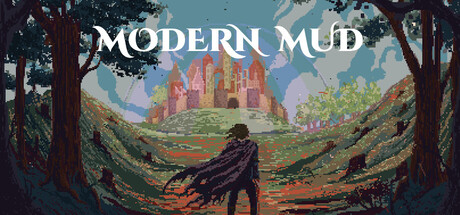 Modern Mud In-game content artaudiotext | AI tools were used during development to help with code, art (backgrounds, portraits, creatures and items), translations and some sound effects. Every asset was reviewed and edited by the developer. The books, crafting minigames and music were made without AI. No content is generated while the game is running. | Jacobo Caraballo | - | Oct 23, 2026 | |
 A Cat Lived Here In-game content textart | Generative AI tools were used during game development to assist with adapting and expanding in-game text and preparing translations. Generative AI was also used to create promotional artwork.
All in-game text is prepared in advance. The game does not generate AI content during gameplay or connect to external AI services. | Hayan Ryu | - | Oct 22, 2026 | |
 Brackets & Banners In-game content artcode | Artwork: The player and coach portraits, team logos, and parts of the store artwork were created with AI image generation. Each one was directed, reviewed, and corrected by me, and many were rejected or redone along the way. I used coding assistants to help write and test the game's code and interface, under my direction. | Reed Arcade | - | Oct 22, 2026 | |
 Fantasy Guild Manager In-game content text | Made with AI assistance for translation/localisation. No image, music or voice was generated through AI. | Auroso Games | - | Oct 22, 2026 | |
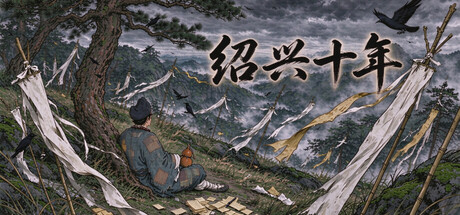 绍兴十年 In-game content textartaudio | The game texts are polished with AI assistance. Artwork and background music are generated by AI. The core story framework, character relationships and plot design are originally created by the developer. No runtime AI content will be produced during gameplay. | 蓝莓杀手 | - | Oct 22, 2026 |


