Public Steam disclosure research25,514 disclosures tracked
Where do games disclose AI use?
Search developers’ Steam disclosures, compare classified AI use across
games, and follow recorded changes.
This index adds cross-game classifications and statistics to
statements published on individual store pages.
Groups reflect automatic analysis of public disclosures; mature records are excluded. These counts do not measure AI use across all of Steam.
Missing or unclear statements cannot establish whether a game uses AI.
AI Usage Overview
• Core Framework – The game is built on a licensed third-party action-RPG engine.
• Custom Code – A few ability scripts were drafted with the help of an offline AI coding assistant and then manually reviewed and tested by the developer.
• Art Prototypes – Early concept portraits were produced with an offline AI art tool; every final in-game asset will be hand-painted.
The released game never connects to any online AI services while you play, and all shipped content has passed copyright and quality checks.
Just so you know, a few parts of this game were made with the help of AI tools - some environmental props and assets were created using AI-assisted 3D tools. Everything was carefully tweaked, reviewed and brought together to make sure it all fits the game's style as per the developer's direction. AI helped speed things up, but the creative vision is all human.
As a two-person indie team, we utilize AI-assisted tools for artwork, voice acting, and select textual content. This allows us to:
✓ Maintain visual consistency
✓ Accelerate content iteration
✓ Focus on perfecting core gameplay
All AI-generated assets are manually curated to align with the game's vision. We're committed to continuously refining the final quality.
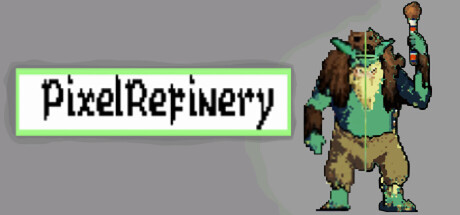
PixelRefinery uses AI-powered algorithms to analyze pixel art and automatically convert it into clean, fully editable vector graphics while preserving the original style, proportions, and colors. The AI operates only on user-provided images and does not generate independent or unpredictable content. All output is deterministic and based solely on the input artwork.
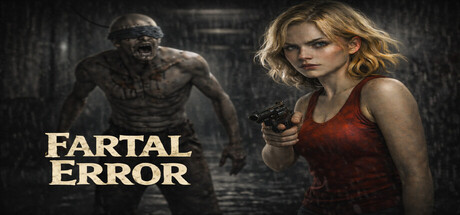
Fartal Error is developed by a very small independent studio. Due to limited resources, we occasionally rely on generative AI tools for specific visual elements, such as some in-game illustrations, assets and marketing materials.
These tools are used thoughtfully and selectively, always under human direction, to preserve a cohesive artistic vision.
We value transparency, and we encourage players to consider this information when deciding whether the game is right for them.
The game's store capsule image was created using AI tools. This is limited to promotional artwork only and does not affect the gameplay or in-game content.
Some visual assets such as in-game icons, item illustrations, and store page artwork were created using generative AI tools. All AI-generated content was reviewed and edited to match the game’s aesthetic and ensure originality. No AI is used to generate content during gameplay.
We use AI to quickly generate marketing materials—both images and text—during development to save time and explore ideas. These help us share the game's vision early, even as assets are still being created. All AI-generated content will be replaced with in-game footage and original art from our team as development progresses.
Some promotional images used on the store page were created with the assistance of artificial intelligence tools. This usage was strictly for aesthetic and visual presentation purposes and did not impact the playable content or internal development of the gameplay.
Artificial intelligence technologies were utilized in the development process of this game for the creation of audio and text-based content.
Character voiceovers, music, sound effects, and certain in-game text/dialogues were pre-generated using AI tools. All such generated audio and written content has been manually reviewed, verified, and edited by the developer to ensure it meets the game's quality standards. No live (runtime) AI generation occurs during gameplay.
Playback uses generative AI tools during the development process to assist with localized text translations and to help refine narrative documentation. All AI-assisted content has been manually reviewed, edited, and integrated by the developer to ensure quality and consistency. No content is generated in real-time during gameplay.
AI tools were utilized to generate character voice lines and audio dialogues, bringing more depth and realism to in-game interactions. Additionally, AI-generated artwork was used to create the various paintings featured throughout the game, helping us achieve a unique and immersive visual style.
The game’s soundtrack was created using Suno AI music generation tools, then reviewed and refined by our team. The final tracks are included directly in the game files and played during gameplay like a traditional soundtrack.
Some store artwork (such as capsule images and promotional banners) was created using AI tools and manually edited. The game content itself does not use AI-generated assets.
Human touch + AI. Artificial Intelligence (AI) was used to enhance code efficiency and optimize selected graphical elements, improving the overall performance and visual quality of the project — while preserving its handcrafted style and unique artistic identity.
AI Usage Overview
• Core Framework – The game is built on a licensed third-party action-RPG engine.
• Custom Code – A few ability scripts were drafted with the help of an offline AI coding assistant and then manually reviewed and tested by the developer.
• Art Prototypes – Early concept portraits were produced with an offline AI art tool; every final in-game asset will be hand-painted.
The released game never connects to any online AI services while you play, and all shipped content has passed copyright and quality checks.
Just so you know, a few parts of this game were made with the help of AI tools - some environmental props and assets were created using AI-assisted 3D tools. Everything was carefully tweaked, reviewed and brought together to make sure it all fits the game's style as per the developer's direction. AI helped speed things up, but the creative vision is all human.
As a two-person indie team, we utilize AI-assisted tools for artwork, voice acting, and select textual content. This allows us to:
✓ Maintain visual consistency
✓ Accelerate content iteration
✓ Focus on perfecting core gameplay
All AI-generated assets are manually curated to align with the game's vision. We're committed to continuously refining the final quality.
PixelRefinery uses AI-powered algorithms to analyze pixel art and automatically convert it into clean, fully editable vector graphics while preserving the original style, proportions, and colors. The AI operates only on user-provided images and does not generate independent or unpredictable content. All output is deterministic and based solely on the input artwork.
Fartal Error is developed by a very small independent studio. Due to limited resources, we occasionally rely on generative AI tools for specific visual elements, such as some in-game illustrations, assets and marketing materials.
These tools are used thoughtfully and selectively, always under human direction, to preserve a cohesive artistic vision.
We value transparency, and we encourage players to consider this information when deciding whether the game is right for them.
The game's store capsule image was created using AI tools. This is limited to promotional artwork only and does not affect the gameplay or in-game content.
Some visual assets such as in-game icons, item illustrations, and store page artwork were created using generative AI tools. All AI-generated content was reviewed and edited to match the game’s aesthetic and ensure originality. No AI is used to generate content during gameplay.
We use AI to quickly generate marketing materials—both images and text—during development to save time and explore ideas. These help us share the game's vision early, even as assets are still being created. All AI-generated content will be replaced with in-game footage and original art from our team as development progresses.
Some promotional images used on the store page were created with the assistance of artificial intelligence tools. This usage was strictly for aesthetic and visual presentation purposes and did not impact the playable content or internal development of the gameplay.
Artificial intelligence technologies were utilized in the development process of this game for the creation of audio and text-based content.
Character voiceovers, music, sound effects, and certain in-game text/dialogues were pre-generated using AI tools. All such generated audio and written content has been manually reviewed, verified, and edited by the developer to ensure it meets the game's quality standards. No live (runtime) AI generation occurs during gameplay.
Playback uses generative AI tools during the development process to assist with localized text translations and to help refine narrative documentation. All AI-assisted content has been manually reviewed, edited, and integrated by the developer to ensure quality and consistency. No content is generated in real-time during gameplay.
AI tools were utilized to generate character voice lines and audio dialogues, bringing more depth and realism to in-game interactions. Additionally, AI-generated artwork was used to create the various paintings featured throughout the game, helping us achieve a unique and immersive visual style.
The game’s soundtrack was created using Suno AI music generation tools, then reviewed and refined by our team. The final tracks are included directly in the game files and played during gameplay like a traditional soundtrack.
Some store artwork (such as capsule images and promotional banners) was created using AI tools and manually edited. The game content itself does not use AI-generated assets.
Human touch + AI. Artificial Intelligence (AI) was used to enhance code efficiency and optimize selected graphical elements, improving the overall performance and visual quality of the project — while preserving its handcrafted style and unique artistic identity.