Public Steam disclosure research25,383 disclosures tracked
Where do games disclose AI use?
Search developers’ Steam disclosures, compare classified AI use across
games, and follow recorded changes.
This index adds cross-game classifications and statistics to
statements published on individual store pages.
Groups reflect automatic analysis of public disclosures; mature records are excluded. These counts do not measure AI use across all of Steam.
Missing or unclear statements cannot establish whether a game uses AI.
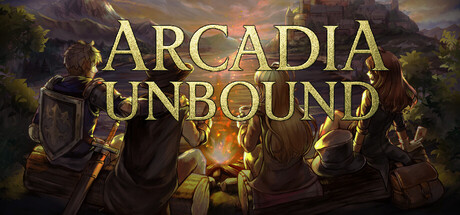
Arcadia Unbound does not use AI-generated artwork, music, sound effects, voice acting, story content, quests, localization, or character dialogue.
Arcadia Unbound uses a locally running language model as part of the AURA Framework to interpret player speech during specific conversation sequences. The model analyzes player intent and conversational context, and then selects from developer-authored dialogue responses and narrative outcomes.
All artwork, music, voice acting, story content, character dialogue, and gameplay content presented to players are created and curated by the development team and performed by professional voice actors where applicable. No AI system generates any type of dialogue, story events, artwork, audio, or player-facing content.
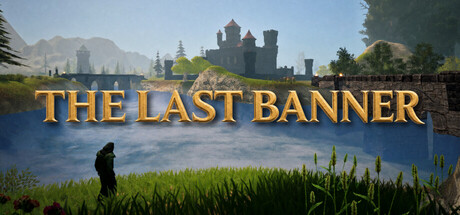
Built by a two-person studio, The Last Banner deploys AI tools as supplements only. All art and code are curated, hand crafted and built by us. We strive to create the best game possible with the best tools of the modern day.
Generative AI was used to assist in the creation of certain UI icons and interface artwork. All generated content was reviewed, modified, and integrated by the developer before being used in the game.
All character and unit art is hand-drawn; audio and music contain no AI. Some background art and UI icons were made with help from generative AI tools and then edited by the developer. AI also assists translation, with every translation human-reviewed before release.
This product uses generative AI only for a limited amount of pre-generated visual assets. These include certain user interface artwork used in the game menus, as well as some promotional/store page visual assets such as header images and the game logo.
Generative AI is not used to generate gameplay, characters, levels, story content, player-facing text, or any real-time content during gameplay. All AI-assisted assets are manually reviewed, edited where necessary, and selected by the developer before being included in the product or its store page.
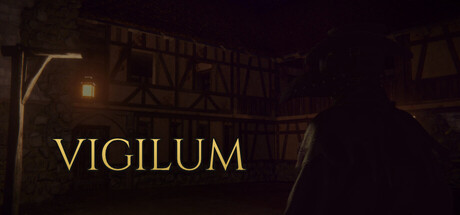
I use generative AI exclusively as a temporary tool for rapid prototyping and placeholder content during early solo development. All AI-generated elements in Vigilum are planned to be fully replaced with custom, human-made assets for the final v1.0 release.
-> 3D Models: I used generative AI tools to create two 3D assets (the Vylem gem and the Blood Sigil element). These are temporary placeholders, and I am currently prioritizing remaking them myself during the Early Access phase.
-> 2D Assets: A few UI icons and images were generated with AI. I intend to commission a professional artist to completely replace these 2D elements as soon as funding allows.
During the early stages of development, generative AI was used to create prototypes for some visual assets. These assets were manually redrawn and revised by the developer before being included in the game.
Artificial Intelligence was used to help in the development of game code only. No art, sound, or other visual assets use or employed AI and were done by a real artist on the team.
This game uses generative AI to assist with parts of the creative process, including some artwork, voice/audio content, written text, localization, and marketing materials. AI-assisted content is reviewed, edited, and selected by the developer before being included in the game.
The overall story direction, game design, character concepts, and final creative decisions are made by the developer.
Our team used generative AI tools to help develop some in-game card images and the images for our Steam Achievements. For any assets acquired from third-party artists, we were not always able to confirm whether generative AI was used in their creation. This is the full extent of our AI usage.
Some store page promotional artworks and trailer footage materials are assisted and initially generated by AI tools. All AI-generated content has been deeply manually revised, adjusted and optimized by our development team to ensure originality and compliance. No runtime AI dynamic content will be generated during the game running process.
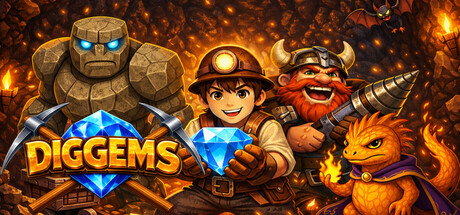
Diggems is developed by a very small team, and we use generative AI tools to assist with some pre-generated 2D and 3D art assets outside our core skill set. All AI-assisted assets are reviewed and adjusted before being included in the game.
The developers utilize AI tools to assist in the initial concepting and intermediate rendering phases of certain 2D art assets, UI elements, and narrative cutscenes. However, all generated materials are heavily repainted, manually edited, and refined by our artists to ensure they align with the game's dark fantasy aesthetic. No raw, unedited AI generation is used in the final product. All core gameplay mechanics, level design, and technical systems are 100%
This game includes content created with the assistance of generative AI tools. Some character and UI artwork was produced using AI image generation (ChatGPT) and then edited by the developer, and the background music was generated using ACE-Step (an open-source model whose output permits commercial use). All AI-assisted assets were reviewed by the developer to ensure they do not infringe the intellectual property of third parties. No AI is used at runtime—all generation occurred during development (pre-generated).
Some 2D art (icons and illustrations) was created with the help of generative AI tools and refined by the developer. No AI content is generated during gameplay.
This game uses generative artificial intelligence to create portions of its GDScript code, Steam store promotional graphics, character designs, skills, in‑game items, environment maps, sound effects, background audio, and various dynamic content. All AI‑generated content is manually reviewed and adjusted before release to ensure quality, consistency, and safety, and many AI outputs undergo significant hand‑editing.
During game development, some NPC dialogue was first refined and translated using generative AI, after which filtering and moderation mechanisms were applied to ensure the dialogue remained safe, appropriate, and consistent with the game’s world. No unreviewed real‑time AI output is used in the game.
This game uses generative AI to produce certain content, and all AI outputs are subject to human review and filtering to ensure compliance with Steam’s guidelines and the game’s content standards. No unauthorized copyrighted material is included.
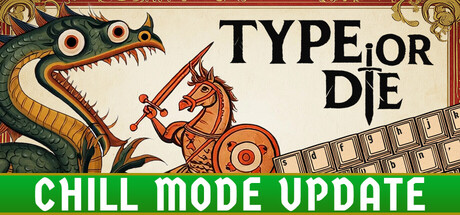
I want to clarify right away that I am not an AI enthusiast, though I understand that this topic can be sensitive for some. Type Or Die uses AI for card icons and sprite animations. All other aspects of the game (design, programming, voice acting, music, interface, and the majority of the artwork) were created manually. If the game achieves a certain level of success after its release, I will hire a specialist artist to handle all of that.
Some marketing and store page artwork (capsule
images, avatars and banners) were created with
the assistance of generative AI tools. Some
audio assets were also generated or assisted
with AI tools. All AI-generated assets are
reviewed and edited by the developer to ensure
quality and consistency with the game's
identity.
Some of this game's assets were created with the assistance of generative AI tools. Character, enemy, and background artwork was created using Stable Diffusion and then manually edited and retouched by the developer. Background music and the ending theme songs were generated using ACE-Step v1.5. All AI-assisted assets were reviewed and curated by the developer. No content is generated by AI during gameplay.
This project uses a mix of human-made and AI-assisted content. The majority of visual assets are human-made. Some 3D character models, item models, and textures were generated with the help of AI tools. All animation, audio, music, sound design, and writing are entirely human-made.
Some game assets and content were created with the assistance of generative AI tools during development. AI-assisted content was reviewed, curated, edited, and integrated into the final game by the developer. Generative AI is not used to create content during gameplay.
Hire uses AI for its live character conversations and generated portraits, connecting to your own ChatGPT account (it uses your existing ChatGPT plan, with no separate purchase).
AI-supported tools (Photoshop) were used to assist in the creation of selected pre-generated art and UI elements. There is no live-generated AI content.
The game includes generative AI in the form of relatively structured conversation (voice and/or text to prompt) in context with the setting and era of the documented sites (caravanserai) you will visit.
Finesse uses generative AI tools for select pre-generated content created during development:
- Meshy — 3D model generation for some character and environment assets
- ElevenLabs — voice line generation for in-game audio
- Suno — music track generation for soundtrack and ambient audio
- Anthropic Claude — assistance with in-game text content (descriptions, narrative copy)
All AI-generated content is pre-rendered during development and shipped as static assets. No generative AI runs at runtime; nothing is generated live or unique per player. All AI outputs are reviewed, edited, and curated by the developer before being included in the final game.
Generative AI was used as a development assistant for pre-release asset iteration, writing support, localization drafts, ideation and productivity tasks. Some visual assets and draft text/assets may have been assisted or iterated with generative AI before being reviewed and integrated into the game. This content is static and does not generate new content at runtime. The game does not use live generative AI to create content during gameplay. No player prompts are sent to an AI service at runtime. AI-assisted material is reviewed manually before inclusion. It is adjusted to match the game's style, naming, tone and technical requirements, and content that would be inappropriate, infringing or inconsistent with the project is not intentionally included.
Some visual assets used in the game were created or refined with the assistance of generative AI tools. These assets include certain icons, UI elements, and promotional artwork. All AI-generated content has been reviewed, edited, and integrated by the developer to ensure consistency with the game's artistic direction and quality standards. No real-time AI-generated content is used during gameplay.
A Quick Note on AI Tools:
To give our loading screens a cinematic, atmospheric feel, we took screenshots of our actual game environments and used AI tools solely to enhance the lighting, details, and decals for those transition images. For our Achievement Icons, we used AI-generated imagery only for the background fillers, while the main icon artwork was manually created.
Rest assured, 100% of the actual playable game, including all 3D models, world textures, animations, and code was fully handcrafted by our team.
This game uses generative AI tools during development for selected visual, audio, and programming-related tasks.
【AI-assisted content and development】
• Visual assets: Some in-game visuals, including ship sprites, scenario artwork, terrain textures, UI illustrations, and other decorative assets, were created with generative AI image tools, then selected, edited, modified, and integrated by the developer.
• Audio assets: Some background and combat music tracks were created with AI music generation tools, then edited, mastered, and loudness-normalized for in-game use.
• Programming assistance: AI coding tools are used to assist with code generation, implementation, debugging, and development. Game systems, mechanics, simulation rules, balance, and overall technical design are directed and determined by the developer.
【Runtime and game content】
• No generative AI operates during gameplay or at runtime. All required assets and game logic are included with the game and run locally.
• Scenario design, gameplay rules, ship statistics, historical information, and overall game design are researched, designed, reviewed, and integrated by the developer.
All AI-assisted assets and generated code are reviewed, tested, and integrated by the developer before being included in the released game.
Arcadia Unbound does not use AI-generated artwork, music, sound effects, voice acting, story content, quests, localization, or character dialogue.
Arcadia Unbound uses a locally running language model as part of the AURA Framework to interpret player speech during specific conversation sequences. The model analyzes player intent and conversational context, and then selects from developer-authored dialogue responses and narrative outcomes.
All artwork, music, voice acting, story content, character dialogue, and gameplay content presented to players are created and curated by the development team and performed by professional voice actors where applicable. No AI system generates any type of dialogue, story events, artwork, audio, or player-facing content.
Built by a two-person studio, The Last Banner deploys AI tools as supplements only. All art and code are curated, hand crafted and built by us. We strive to create the best game possible with the best tools of the modern day.
Generative AI was used to assist in the creation of certain UI icons and interface artwork. All generated content was reviewed, modified, and integrated by the developer before being used in the game.
All character and unit art is hand-drawn; audio and music contain no AI. Some background art and UI icons were made with help from generative AI tools and then edited by the developer. AI also assists translation, with every translation human-reviewed before release.
This product uses generative AI only for a limited amount of pre-generated visual assets. These include certain user interface artwork used in the game menus, as well as some promotional/store page visual assets such as header images and the game logo.
Generative AI is not used to generate gameplay, characters, levels, story content, player-facing text, or any real-time content during gameplay. All AI-assisted assets are manually reviewed, edited where necessary, and selected by the developer before being included in the product or its store page.
I use generative AI exclusively as a temporary tool for rapid prototyping and placeholder content during early solo development. All AI-generated elements in Vigilum are planned to be fully replaced with custom, human-made assets for the final v1.0 release.
-> 3D Models: I used generative AI tools to create two 3D assets (the Vylem gem and the Blood Sigil element). These are temporary placeholders, and I am currently prioritizing remaking them myself during the Early Access phase.
-> 2D Assets: A few UI icons and images were generated with AI. I intend to commission a professional artist to completely replace these 2D elements as soon as funding allows.
During the early stages of development, generative AI was used to create prototypes for some visual assets. These assets were manually redrawn and revised by the developer before being included in the game.
Artificial Intelligence was used to help in the development of game code only. No art, sound, or other visual assets use or employed AI and were done by a real artist on the team.
This game uses generative AI to assist with parts of the creative process, including some artwork, voice/audio content, written text, localization, and marketing materials. AI-assisted content is reviewed, edited, and selected by the developer before being included in the game.
The overall story direction, game design, character concepts, and final creative decisions are made by the developer.
Our team used generative AI tools to help develop some in-game card images and the images for our Steam Achievements. For any assets acquired from third-party artists, we were not always able to confirm whether generative AI was used in their creation. This is the full extent of our AI usage.
Some store page promotional artworks and trailer footage materials are assisted and initially generated by AI tools. All AI-generated content has been deeply manually revised, adjusted and optimized by our development team to ensure originality and compliance. No runtime AI dynamic content will be generated during the game running process.
Diggems is developed by a very small team, and we use generative AI tools to assist with some pre-generated 2D and 3D art assets outside our core skill set. All AI-assisted assets are reviewed and adjusted before being included in the game.
The developers utilize AI tools to assist in the initial concepting and intermediate rendering phases of certain 2D art assets, UI elements, and narrative cutscenes. However, all generated materials are heavily repainted, manually edited, and refined by our artists to ensure they align with the game's dark fantasy aesthetic. No raw, unedited AI generation is used in the final product. All core gameplay mechanics, level design, and technical systems are 100%
This game includes content created with the assistance of generative AI tools. Some character and UI artwork was produced using AI image generation (ChatGPT) and then edited by the developer, and the background music was generated using ACE-Step (an open-source model whose output permits commercial use). All AI-assisted assets were reviewed by the developer to ensure they do not infringe the intellectual property of third parties. No AI is used at runtime—all generation occurred during development (pre-generated).
Some 2D art (icons and illustrations) was created with the help of generative AI tools and refined by the developer. No AI content is generated during gameplay.
This game uses generative artificial intelligence to create portions of its GDScript code, Steam store promotional graphics, character designs, skills, in‑game items, environment maps, sound effects, background audio, and various dynamic content. All AI‑generated content is manually reviewed and adjusted before release to ensure quality, consistency, and safety, and many AI outputs undergo significant hand‑editing.
During game development, some NPC dialogue was first refined and translated using generative AI, after which filtering and moderation mechanisms were applied to ensure the dialogue remained safe, appropriate, and consistent with the game’s world. No unreviewed real‑time AI output is used in the game.
This game uses generative AI to produce certain content, and all AI outputs are subject to human review and filtering to ensure compliance with Steam’s guidelines and the game’s content standards. No unauthorized copyrighted material is included.
I want to clarify right away that I am not an AI enthusiast, though I understand that this topic can be sensitive for some. Type Or Die uses AI for card icons and sprite animations. All other aspects of the game (design, programming, voice acting, music, interface, and the majority of the artwork) were created manually. If the game achieves a certain level of success after its release, I will hire a specialist artist to handle all of that.
Some marketing and store page artwork (capsule
images, avatars and banners) were created with
the assistance of generative AI tools. Some
audio assets were also generated or assisted
with AI tools. All AI-generated assets are
reviewed and edited by the developer to ensure
quality and consistency with the game's
identity.
Some of this game's assets were created with the assistance of generative AI tools. Character, enemy, and background artwork was created using Stable Diffusion and then manually edited and retouched by the developer. Background music and the ending theme songs were generated using ACE-Step v1.5. All AI-assisted assets were reviewed and curated by the developer. No content is generated by AI during gameplay.
This project uses a mix of human-made and AI-assisted content. The majority of visual assets are human-made. Some 3D character models, item models, and textures were generated with the help of AI tools. All animation, audio, music, sound design, and writing are entirely human-made.
Some game assets and content were created with the assistance of generative AI tools during development. AI-assisted content was reviewed, curated, edited, and integrated into the final game by the developer. Generative AI is not used to create content during gameplay.
Hire uses AI for its live character conversations and generated portraits, connecting to your own ChatGPT account (it uses your existing ChatGPT plan, with no separate purchase).
AI-supported tools (Photoshop) were used to assist in the creation of selected pre-generated art and UI elements. There is no live-generated AI content.
The game includes generative AI in the form of relatively structured conversation (voice and/or text to prompt) in context with the setting and era of the documented sites (caravanserai) you will visit.
Finesse uses generative AI tools for select pre-generated content created during development:
- Meshy — 3D model generation for some character and environment assets
- ElevenLabs — voice line generation for in-game audio
- Suno — music track generation for soundtrack and ambient audio
- Anthropic Claude — assistance with in-game text content (descriptions, narrative copy)
All AI-generated content is pre-rendered during development and shipped as static assets. No generative AI runs at runtime; nothing is generated live or unique per player. All AI outputs are reviewed, edited, and curated by the developer before being included in the final game.
Generative AI was used as a development assistant for pre-release asset iteration, writing support, localization drafts, ideation and productivity tasks. Some visual assets and draft text/assets may have been assisted or iterated with generative AI before being reviewed and integrated into the game. This content is static and does not generate new content at runtime. The game does not use live generative AI to create content during gameplay. No player prompts are sent to an AI service at runtime. AI-assisted material is reviewed manually before inclusion. It is adjusted to match the game's style, naming, tone and technical requirements, and content that would be inappropriate, infringing or inconsistent with the project is not intentionally included.
Some visual assets used in the game were created or refined with the assistance of generative AI tools. These assets include certain icons, UI elements, and promotional artwork. All AI-generated content has been reviewed, edited, and integrated by the developer to ensure consistency with the game's artistic direction and quality standards. No real-time AI-generated content is used during gameplay.
A Quick Note on AI Tools:
To give our loading screens a cinematic, atmospheric feel, we took screenshots of our actual game environments and used AI tools solely to enhance the lighting, details, and decals for those transition images. For our Achievement Icons, we used AI-generated imagery only for the background fillers, while the main icon artwork was manually created.
Rest assured, 100% of the actual playable game, including all 3D models, world textures, animations, and code was fully handcrafted by our team.
This game uses generative AI tools during development for selected visual, audio, and programming-related tasks.
【AI-assisted content and development】
• Visual assets: Some in-game visuals, including ship sprites, scenario artwork, terrain textures, UI illustrations, and other decorative assets, were created with generative AI image tools, then selected, edited, modified, and integrated by the developer.
• Audio assets: Some background and combat music tracks were created with AI music generation tools, then edited, mastered, and loudness-normalized for in-game use.
• Programming assistance: AI coding tools are used to assist with code generation, implementation, debugging, and development. Game systems, mechanics, simulation rules, balance, and overall technical design are directed and determined by the developer.
【Runtime and game content】
• No generative AI operates during gameplay or at runtime. All required assets and game logic are included with the game and run locally.
• Scenario design, gameplay rules, ship statistics, historical information, and overall game design are researched, designed, reviewed, and integrated by the developer.
All AI-assisted assets and generated code are reviewed, tested, and integrated by the developer before being included in the released game.