Public Steam disclosure research25,383 disclosures tracked
Where do games disclose AI use?
Search developers’ Steam disclosures, compare classified AI use across
games, and follow recorded changes.
This index adds cross-game classifications and statistics to
statements published on individual store pages.
Groups reflect automatic analysis of public disclosures; mature records are excluded. These counts do not measure AI use across all of Steam.
Missing or unclear statements cannot establish whether a game uses AI.
AI image tools supported the creation of some 2D illustrations and promotional assets. Every asset was designed, reworked, and finished by our artists, and all writing, game design, and code are entirely human-made. Nothing in the game is AI-generated at runtime.
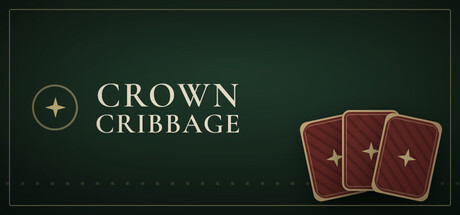
Some assets in Crown Cribbage were made with the help of generative AI tools:
- in-game music was generated with AI music tools
- capsule/key art
- marketing copy drafts
- assistance with programming
One point of emphasis:
The computer opponents in this game are not generative AI. They are hand-written heuristics, a fixed set of rules for discarding and pegging, tuned by
difficulty.
They see only what you see. They do not look at your hand, and nothing about them is generated while you play.
No AI content of any kind is created during a match.
Generative AI tools were used during development to assist with programming, game systems, debugging, visual assets and written content. All AI-assisted work is reviewed, tested, edited, and integrated by the developer before being included.
Generative AI was used to write, edit, and translate text on this Steam store page. It is not used during gameplay, and no AI-generated images, audio, or in-game assets are included.
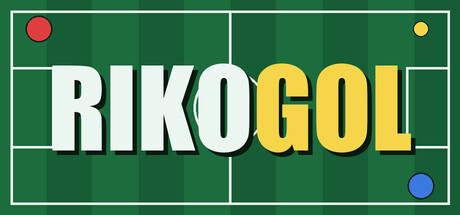
The written text for Rikogol — this store page, its marketing copy and the game's in-game text — was drafted with AI assistance. No generative AI model produced any of the game's visuals or audio: everything you see in a match is drawn at runtime by our own code from plain geometric shapes, every sound effect is synthesised procedurally in code, and the store artwork comes from a deterministic drawing script. The game generates no content while you play and connects to no AI service.
Generative AI technologies were utilized during the development of this project in the following ways:
1. Visual Art: AI tools were used to assist in generating and optimizing certain visual assets (such as table backgrounds, card backs, and UI elements).
2. Translation: AI was used to assist in the multi-language localization of in-game text and rule descriptions.
This game uses an open-source language model (Qwen2.5) bundled with the game to generate real-time NPC dialogue and ambient chatter entirely offline on the player's own machine via llama.cpp. No external server, no third-party API, and no internet connection are required. Players can toggle this feature on or off. The model runs locally using the player's CPU — no data is uploaded, collected, stored, or used for training.
Portions of this game's code were written with the assistance of an AI coding tool, working under the developer's direction, with all output reviewed, tested, and integrated by hand. All artwork, animation, music, and sound effects are human-created licensed assets — no AI-generated art or audio is used. The game does not generate any content with AI at runtime; computer opponents use traditional hand-written game logic.
Some pre-rendered assets were created with the assistance of generative AI tools during development: the key art illustration, the store capsule images derived from it, and parts of the localization (translated interface text). All AI-assisted content was reviewed and curated by the developer. The game does not generate any content with AI at runtime.
Generative AI may have been used in creating pre-rendered content for this game. All such content is the result of a human-led artistic and creative process
We use generative AI to assist with writing and localizing the game's text. All art and audio are procedurally generated by our own code or sourced from CC0 libraries. No content is generated by AI in real time during gameplay.
Generative AI tools were used during development to assist with the creation of selected promotional and visual assets. During gameplay, an AI-based analysis service may also be used to evaluate submitted player-created clay sculptures and determine how closely they match the given challenge.
The game's core visual presentation is built around human-created playable character sprite sheets and map artwork, while the level layouts and game design are created by the developer. Generative AI was used for selected pre-generated audio, localization, and supporting visual content such as the logo and key art. No generative AI content is generated during gameplay.
AI was used to create textures, some of the code, create a player model and rig it for animation. The sounds of footsteps, goals and ball bounces, albeit mastered, started as AI generated before being edited and mastered. Localization languages were also created by AI. (Therefore any corrections will be welcome)
Animations, music, game design, and all other elements of creativity are the work of a human exclusively.
Badgerworks Studios will never rely on AI for creativity, music, ideas for games, and once an artist has been hired, AI models either. Due to lack of in-house ability to rig models or create them from scratch, the current player model was generated and rigged (skeleton matched to model) by AI. Animations were hand made, but on the AI created and rigged model.
No AI, LLM, of frontier models are being called during game play nor will any introduced features be allowed to do so.
During development, we used procedural and AI-assisted tools to analyze, merge, refine, and polish systems that were originally developed through years of our own experimentation, iteration, and hands-on exploration. These tools accelerated implementation and helped unify complex ideas beyond what would have been practical through manual development alone, while the underlying concepts, creative direction, design decisions, and final implementation remain the work of our development team.
Some store-page text and marketing images (capsules, screenshots, and similar key art) were drafted or generated with generative AI, then selected and edited by the developer.
The game itself is a hand-authored Unreal Engine title. Combat, physics, and play are not generated by AI while you play. There is no live generative AI in the build.
If later updates include AI-assisted in-game art or audio, this notice will be updated.
Generative AI was used during development to assist in the creation of certain pre-generated visual assets, including some UI artwork, icons, textures, and other 2D art. All AI-assisted content was reviewed and integrated by the developer before being included in the game. The game does not use live-generated AI during gameplay.
Generative AI was used only for a small set of supporting assets — some interface icons, a few decorative visuals and some sound effects. It is not used while the game is running, and no part of the gameplay or the paintings depends on it.
This game uses generative AI tools for parts of its 3D model creation and music/sound effect production.
Core elements of the game experience — including the scenario, game design, AI logic design and implementation, and part balance adjustments — are created and decided primarily by the developer himself.
In keeping with the game's own concept of "designing AI logic to fight," the development process itself also actively incorporates collaboration with AI. This game was completed by using dialogue with AI to work around the limitations of a one-person team.
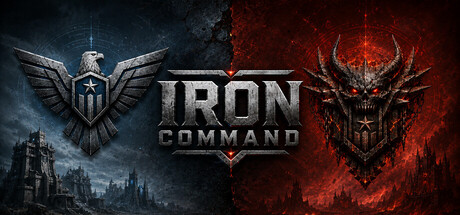
Iron Command uses generative AI for part of its content:
• 3D models and their textures were generated with AI. Every model was then cleaned up, scaled, oriented and assembled into the game by hand.
• The key art used on the title screen and for the store images was generated with an image model and edited afterwards.
• The spoken mission briefings and unit voice lines are produced with a text-to-speech system from scripts written by the developer.
Game design, programming, level design, balancing and all written text are the developer's own work, created without generative AI.
Some pre-rendered assets in this game and its store presence were created with the assistance of generative AI tools: portions of the 2D artwork (such as backdrop and ramp textures, marketing and capsule images) and some sound effects. All AI-assisted assets were reviewed, selected, and edited by the developer before inclusion. The game's design, code, gameplay systems, writing, and balance are entirely human-made. No content is generated by AI at runtime.
AI tools were used during development, with all output directed and reviewed by the developer: store artwork and icons, store descriptions, in-game text including the English localization, and portions of the game code. Screenshots show real, unedited gameplay. The game does not generate any content with AI at runtime.
Generative AI tools were used to help create some of the game's assets (such as certain textures, icons, and 3D models), some store page text, and store page artwork (capsules and library art). All AI-assisted content was directed, curated, and edited by the developer. No AI content is generated during gameplay.
Some pre-generated 2D illustrations (menu backgrounds, mode card images, app icon, and store capsule artwork) were created with AI image generation tools and reviewed by a human. The game itself contains no live-generated AI content — all gameplay, 3D models, audio, and code are human-made.
Generative AI was used to create some of the image and sound assets used in the game. These include character illustrations, card artwork, design elements, and some sound assets. All AI-generated content was reviewed and edited as necessary by the developer before being included in the game. The game does not generate AI content during gameplay and does not connect to external AI services.
Leveraged AIGC tools to assist with the creation of the Steam store page, marketing assets, promotional videos, in-game UI/GUI elements, visual assets, and parts of the frontend implementation.
Generative AI tools were used during development to assist with programming and implementation. The developer created the original game and codebase, with AI assistance used to modify and expand portions of the code, including implementation of the graphics and other visual/gameplay elements.
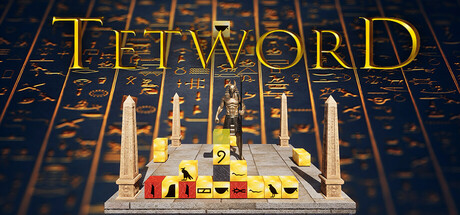
Some of the art assets in TETWORD were created with the help of generative AI tools. Certain textures and 2D artwork were produced using AI image-generation tools, and some 3D models were generated using Meshy AI. Generative AI assistants (ChatGPT and Claude) were also used during development. All AI-assisted assets were reviewed, edited, and curated by the developer before being included in the game. The game's design, code, gameplay, and word content were created by the developer.
Some 2D artwork in the game and store assets (island background images, UI icons, and the logo/key art) was pre-generated with AI image tools, then manually reviewed, curated and edited by the developer. No AI content is generated live at runtime. The game contains no AI-generated code, text or audio dialogue.
Generative AI tools were used during development to assist with visual artwork and programming. All AI-assisted outputs were reviewed, edited, and integrated by the developer before inclusion in the game. No generative AI content is created during gameplay.
Generative AI was used to assist in creating some UI elements and sound effects. All AI-generated assets were reviewed and edited by the developer before being included in the game.
AI image tools supported the creation of some 2D illustrations and promotional assets. Every asset was designed, reworked, and finished by our artists, and all writing, game design, and code are entirely human-made. Nothing in the game is AI-generated at runtime.
Some assets in Crown Cribbage were made with the help of generative AI tools:
- in-game music was generated with AI music tools
- capsule/key art
- marketing copy drafts
- assistance with programming
One point of emphasis:
The computer opponents in this game are not generative AI. They are hand-written heuristics, a fixed set of rules for discarding and pegging, tuned by
difficulty.
They see only what you see. They do not look at your hand, and nothing about them is generated while you play.
No AI content of any kind is created during a match.
Generative AI tools were used during development to assist with programming, game systems, debugging, visual assets and written content. All AI-assisted work is reviewed, tested, edited, and integrated by the developer before being included.
Generative AI was used to write, edit, and translate text on this Steam store page. It is not used during gameplay, and no AI-generated images, audio, or in-game assets are included.
The written text for Rikogol — this store page, its marketing copy and the game's in-game text — was drafted with AI assistance. No generative AI model produced any of the game's visuals or audio: everything you see in a match is drawn at runtime by our own code from plain geometric shapes, every sound effect is synthesised procedurally in code, and the store artwork comes from a deterministic drawing script. The game generates no content while you play and connects to no AI service.
Generative AI technologies were utilized during the development of this project in the following ways:
1. Visual Art: AI tools were used to assist in generating and optimizing certain visual assets (such as table backgrounds, card backs, and UI elements).
2. Translation: AI was used to assist in the multi-language localization of in-game text and rule descriptions.
This game uses an open-source language model (Qwen2.5) bundled with the game to generate real-time NPC dialogue and ambient chatter entirely offline on the player's own machine via llama.cpp. No external server, no third-party API, and no internet connection are required. Players can toggle this feature on or off. The model runs locally using the player's CPU — no data is uploaded, collected, stored, or used for training.
Portions of this game's code were written with the assistance of an AI coding tool, working under the developer's direction, with all output reviewed, tested, and integrated by hand. All artwork, animation, music, and sound effects are human-created licensed assets — no AI-generated art or audio is used. The game does not generate any content with AI at runtime; computer opponents use traditional hand-written game logic.
Some pre-rendered assets were created with the assistance of generative AI tools during development: the key art illustration, the store capsule images derived from it, and parts of the localization (translated interface text). All AI-assisted content was reviewed and curated by the developer. The game does not generate any content with AI at runtime.
Generative AI may have been used in creating pre-rendered content for this game. All such content is the result of a human-led artistic and creative process
We use generative AI to assist with writing and localizing the game's text. All art and audio are procedurally generated by our own code or sourced from CC0 libraries. No content is generated by AI in real time during gameplay.
Generative AI tools were used during development to assist with the creation of selected promotional and visual assets. During gameplay, an AI-based analysis service may also be used to evaluate submitted player-created clay sculptures and determine how closely they match the given challenge.
The game's core visual presentation is built around human-created playable character sprite sheets and map artwork, while the level layouts and game design are created by the developer. Generative AI was used for selected pre-generated audio, localization, and supporting visual content such as the logo and key art. No generative AI content is generated during gameplay.
AI was used to create textures, some of the code, create a player model and rig it for animation. The sounds of footsteps, goals and ball bounces, albeit mastered, started as AI generated before being edited and mastered. Localization languages were also created by AI. (Therefore any corrections will be welcome)
Animations, music, game design, and all other elements of creativity are the work of a human exclusively.
Badgerworks Studios will never rely on AI for creativity, music, ideas for games, and once an artist has been hired, AI models either. Due to lack of in-house ability to rig models or create them from scratch, the current player model was generated and rigged (skeleton matched to model) by AI. Animations were hand made, but on the AI created and rigged model.
No AI, LLM, of frontier models are being called during game play nor will any introduced features be allowed to do so.
During development, we used procedural and AI-assisted tools to analyze, merge, refine, and polish systems that were originally developed through years of our own experimentation, iteration, and hands-on exploration. These tools accelerated implementation and helped unify complex ideas beyond what would have been practical through manual development alone, while the underlying concepts, creative direction, design decisions, and final implementation remain the work of our development team.
Some store-page text and marketing images (capsules, screenshots, and similar key art) were drafted or generated with generative AI, then selected and edited by the developer.
The game itself is a hand-authored Unreal Engine title. Combat, physics, and play are not generated by AI while you play. There is no live generative AI in the build.
If later updates include AI-assisted in-game art or audio, this notice will be updated.
Generative AI was used during development to assist in the creation of certain pre-generated visual assets, including some UI artwork, icons, textures, and other 2D art. All AI-assisted content was reviewed and integrated by the developer before being included in the game. The game does not use live-generated AI during gameplay.
Generative AI was used only for a small set of supporting assets — some interface icons, a few decorative visuals and some sound effects. It is not used while the game is running, and no part of the gameplay or the paintings depends on it.
This game uses generative AI tools for parts of its 3D model creation and music/sound effect production.
Core elements of the game experience — including the scenario, game design, AI logic design and implementation, and part balance adjustments — are created and decided primarily by the developer himself.
In keeping with the game's own concept of "designing AI logic to fight," the development process itself also actively incorporates collaboration with AI. This game was completed by using dialogue with AI to work around the limitations of a one-person team.
Iron Command uses generative AI for part of its content:
• 3D models and their textures were generated with AI. Every model was then cleaned up, scaled, oriented and assembled into the game by hand.
• The key art used on the title screen and for the store images was generated with an image model and edited afterwards.
• The spoken mission briefings and unit voice lines are produced with a text-to-speech system from scripts written by the developer.
Game design, programming, level design, balancing and all written text are the developer's own work, created without generative AI.
Some pre-rendered assets in this game and its store presence were created with the assistance of generative AI tools: portions of the 2D artwork (such as backdrop and ramp textures, marketing and capsule images) and some sound effects. All AI-assisted assets were reviewed, selected, and edited by the developer before inclusion. The game's design, code, gameplay systems, writing, and balance are entirely human-made. No content is generated by AI at runtime.
AI tools were used during development, with all output directed and reviewed by the developer: store artwork and icons, store descriptions, in-game text including the English localization, and portions of the game code. Screenshots show real, unedited gameplay. The game does not generate any content with AI at runtime.
Generative AI tools were used to help create some of the game's assets (such as certain textures, icons, and 3D models), some store page text, and store page artwork (capsules and library art). All AI-assisted content was directed, curated, and edited by the developer. No AI content is generated during gameplay.
Some pre-generated 2D illustrations (menu backgrounds, mode card images, app icon, and store capsule artwork) were created with AI image generation tools and reviewed by a human. The game itself contains no live-generated AI content — all gameplay, 3D models, audio, and code are human-made.
Generative AI was used to create some of the image and sound assets used in the game. These include character illustrations, card artwork, design elements, and some sound assets. All AI-generated content was reviewed and edited as necessary by the developer before being included in the game. The game does not generate AI content during gameplay and does not connect to external AI services.
Leveraged AIGC tools to assist with the creation of the Steam store page, marketing assets, promotional videos, in-game UI/GUI elements, visual assets, and parts of the frontend implementation.
Generative AI tools were used during development to assist with programming and implementation. The developer created the original game and codebase, with AI assistance used to modify and expand portions of the code, including implementation of the graphics and other visual/gameplay elements.
Some of the art assets in TETWORD were created with the help of generative AI tools. Certain textures and 2D artwork were produced using AI image-generation tools, and some 3D models were generated using Meshy AI. Generative AI assistants (ChatGPT and Claude) were also used during development. All AI-assisted assets were reviewed, edited, and curated by the developer before being included in the game. The game's design, code, gameplay, and word content were created by the developer.
Some 2D artwork in the game and store assets (island background images, UI icons, and the logo/key art) was pre-generated with AI image tools, then manually reviewed, curated and edited by the developer. No AI content is generated live at runtime. The game contains no AI-generated code, text or audio dialogue.
Generative AI tools were used during development to assist with visual artwork and programming. All AI-assisted outputs were reviewed, edited, and integrated by the developer before inclusion in the game. No generative AI content is created during gameplay.
Generative AI was used to assist in creating some UI elements and sound effects. All AI-generated assets were reviewed and edited by the developer before being included in the game.