Public Steam disclosure research25,882 disclosures tracked
Where do games disclose AI use?
Search developers’ Steam disclosures, compare classified AI use across
games, and follow recorded changes.
This index adds cross-game classifications and statistics to
statements published on individual store pages.
Groups reflect automatic analysis of public disclosures; mature records are excluded. These counts do not measure AI use across all of Steam.
Missing or unclear statements cannot establish whether a game uses AI.
The game was designed, assembled, reworked, tested, and integrated by the developer, with a manually defined artistic direction and gameplay experience.
Generative AI tools were used as creative assistance for certain visual, audio, cinematic, code-related, and promotional content.
This content was then selected, edited, adapted, and adjusted to match the game’s artistic identity, gameplay, and final experience.
Some art assets in this game were created with the assistance of generative AI, used for concept design and texture generation of characters, enemies, and environments. All gameplay logic, code, balance tuning, and game design were hand-crafted.
The game was vibe coded. Many of the current assets were generated by various GenAI models, some of which will be staying but some of which are just placeholders for the time being. Much manual work still goes into making everything look good and come together even when using GenAI.
Generative AI (a large language model) was used to assist in drafting text content — store page descriptions, in-game text, and marketing copy — and to assist with code. All output was reviewed and edited by the developer. Game art is from licensed/CC0 asset packs and procedural rendering; audio is procedurally synthesized. No AI-generated imagery or audio ships in the game, and no AI is generated live at runtime.
Generative AI was used to assist in creating some visual assets during development. All final in-game artwork was manually retouched and finalized by human artists.
AI generation tools were used to assist in creating 2D asset designs, specifically the main menu background artwork, enemy sprites, and power-up graphics. All code, level design, and core gameplay mechanics were traditionally developed.
Because I am a dev team of 1, yes, I have used AI specifically for working on multiplayer code - that's an area of coding I'm just not up to speed on. The in-game code is all me though. As for art, having 10 years experience in game-dev GFX, that's me - 99% of it. I'm highly proficient in using the tools of the trade )Pshop, Blender, 3d MAx etc), but yes, I have used some highly modified bits and pieces for the landing screen and outros, but everything in-game (100%) is me. The SFX, music and voice acting, me too... for my sins. I'm no Mozart or Lawrence Olivier, but, yakknow... it's passable :)
AI has been used to generate some graphics, music, and translations.
As the story of this game may suggest, I understand (and even share) most of the criticisms regarding AI, but it is also a tool that has enabled small creators like myself to achieve bigger things that would have been difficult without it.
I am writing to provide further explanation regarding the AI content disclosure. We used an AI-assisted video and image editing tool, specifically CapCut (also known as JianYing), to help edit and generate some of the assets for our promotional trailer and store page images. The AI features within this software were utilized to assist in the editing, effects, and visual generation process for these store page assets.
Everything is AI generated... I built my own Agentic AI harness, and then used it to build this game (as well as generating images, soundtrack, and 1000s of lines of text content etc)... I'm not a developer, I'm a Functional/UX/Graphic Designer that finally found a tool that could help me build my dream games... I wouldn't consider the game "vibe coded", it has been months of obsessive iterations to ensure the functionality and user experience is of the highest level, which was 100% designed and directed by me, using Agentic AI to build to order. It's far from a "one-shot" prompt hope and prayer... and I think you'll be surprised when you see it.
In this game, questions and answers (yes/no) are sent to Amazon Bedrock to generate in-game text. Personal information like your name is not sent. Progress data is saved on your device.
Some visual assets were created with the assistance of generative AI tools and then manually edited, adjusted, and finalized by the developer. The game does not use real-time generative AI during gameplay.
This game was developed with the assistance of generative AI (Claude) in the following ways:
- Authoring and editing C# scripts for game systems
- Translation of in-game text into English and Chinese
- Debugging and optimization assistance
No AI runs at runtime within the game itself.
Solvizz was designed, written, and hand-crafted by a small team, but generative AI played a supporting role in parts of production. Specifically, some placeholder art (achievement icons, region glyph references) and placeholder audio (background music tracks and sound effects) were generated with AI tooling to prototype the game's mood before final assets. AI was also used as a coding assistant during development. All puzzle design, game mechanics, story, level content, and code decisions were authored and reviewed by humans. No player-submitted data is sent to any AI system at runtime — the game is fully offline.
(This text was also generated with the help of AI)
Portions of the game's visual assets were created with the assistance of generative AI and subsequently reviewed, edited, and integrated by the developer. All gameplay systems, game design, programming, balancing, and final implementation were developed by the developer.
Store page artwork (capsule images and header) was created with
the assistance of AI image generation tools (Stable Diffusion /
Flux). All in-game content, text, and gameplay logic is
human-authored. No AI is used to generate content during gameplay.
Artificial intelligence tools were used to refine part of the game's music and certain sound effects, as well as specific graphical assets, support programming, debugging, and bug-fixing tasks
Some of Citadel Zero's visual assets (pixel-art sprites, icons, and backgrounds) were created with the help of generative AI tools, then reviewed and refined by the developer. All such content is pre-generated and baked into the game — Citadel Zero performs no real-time AI generation and connects to no AI service while you play.
I used AI to help review code and check for any bugs. Also a few small pieces of art that will be changed/updated by release while we get artists commissioned.
Some of this game's images and artwork, its background music, and parts of its translated text were created with the help of generative AI tools. All AI-assisted content was reviewed by the developer before being included. The Sudoku puzzles themselves are generated by traditional (non-AI) algorithms, and no content is generated by AI while you play.
> **AI was used exclusively for the creation of certain artwork and promotional materials for the game. All programming, mechanics, systems, achievements, and playable content were developed manually by the developer. The game does not use generative AI during execution.**
This game lets you converse with a character based on the historical Japanese warlord Oda Nobunaga. The character's reply text is generated on the fly by a language AI that runs locally on your own PC in response to your input.
・Everything runs entirely on your PC. No data is sent to any external server, and the game works without an internet connection.
・A system prompt (character definition) keeps the AI in role: speaking in Nobunaga's style and offering encouragement. It answers based on the historical record and will honestly say it doesn't know when it doesn't.
・The only thing generated at runtime is conversation text. The portrait uses a public-domain painting, and the talking and blinking animations based on that portrait are fixed clips created with a video-generation AI during development and played on a loop. Speech is produced by a voice-synthesis engine (VOICEVOX).
・This is a conversational app made for encouragement and light counsel. The AI's responses vary every time and are not guaranteed to be accurate. Please enjoy it as entertainment.
Idle Startup is made by a solo developer with the help of generative AI. The milestone background artwork — the illustrations that unlock as each skill levels up — is generated with AI image tools and then selected and curated by the developer. The game's code is also written with the assistance of AI coding tools. All music and sound effects are generated procedurally in code, the interface art and icons are hand-drawn, and all in-game text is written by the developer.
Some visual assets used in this game were created or assisted using generative AI during development and have been reviewed and edited by the developer before being included in the final game. The game does not use generative AI during gameplay and does not generate content in real time.
Some asset textures, background music, and assistance with game development questions include AI-generated content.
No AI translation was used for Japanese, English, Korean, or Czech.
This game uses pre-generated AI-assisted content in a limited way. Some selected audio assets and minor in-game written/visual elements may have been created or edited with AI-assisted tools during development. The game does not use live-generated AI during gameplay and does not connect to any external AI service during gameplay.
Generative AI tools were used during development to assist with drafting, revising, and refactoring portions of the game’s source code. It was reviewed, edited, compiled, and tested by the developer before inclusion.
This game employs AI-generated materials to enhance overall development efficiency. Every asset has been manually reviewed, checked, and revised by our team.
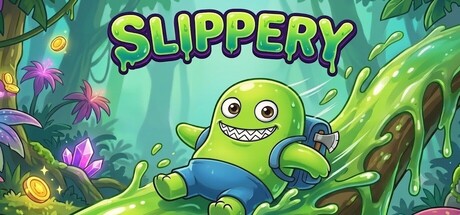
Generative AI was used during the development of Slippery to assist in creating certain static visual assets, including [store page artwork / background images / character concepts / UI elements]. All AI-generated content was reviewed, modified, and integrated by hand to match the game's overall visual style. The game does not generate any AI content in real-time during gameplay.
This game uses generative AI tools to assist with the creation of some pre-rendered visual assets and marketing materials. No live AI-generated content is created during gameplay. All AI-assisted content is reviewed and edited by the developer before release.
The game was designed, assembled, reworked, tested, and integrated by the developer, with a manually defined artistic direction and gameplay experience.
Generative AI tools were used as creative assistance for certain visual, audio, cinematic, code-related, and promotional content.
This content was then selected, edited, adapted, and adjusted to match the game’s artistic identity, gameplay, and final experience.
Some art assets in this game were created with the assistance of generative AI, used for concept design and texture generation of characters, enemies, and environments. All gameplay logic, code, balance tuning, and game design were hand-crafted.
The game was vibe coded. Many of the current assets were generated by various GenAI models, some of which will be staying but some of which are just placeholders for the time being. Much manual work still goes into making everything look good and come together even when using GenAI.
Generative AI (a large language model) was used to assist in drafting text content — store page descriptions, in-game text, and marketing copy — and to assist with code. All output was reviewed and edited by the developer. Game art is from licensed/CC0 asset packs and procedural rendering; audio is procedurally synthesized. No AI-generated imagery or audio ships in the game, and no AI is generated live at runtime.
Generative AI was used to assist in creating some visual assets during development. All final in-game artwork was manually retouched and finalized by human artists.
AI generation tools were used to assist in creating 2D asset designs, specifically the main menu background artwork, enemy sprites, and power-up graphics. All code, level design, and core gameplay mechanics were traditionally developed.
Because I am a dev team of 1, yes, I have used AI specifically for working on multiplayer code - that's an area of coding I'm just not up to speed on. The in-game code is all me though. As for art, having 10 years experience in game-dev GFX, that's me - 99% of it. I'm highly proficient in using the tools of the trade )Pshop, Blender, 3d MAx etc), but yes, I have used some highly modified bits and pieces for the landing screen and outros, but everything in-game (100%) is me. The SFX, music and voice acting, me too... for my sins. I'm no Mozart or Lawrence Olivier, but, yakknow... it's passable :)
AI has been used to generate some graphics, music, and translations.
As the story of this game may suggest, I understand (and even share) most of the criticisms regarding AI, but it is also a tool that has enabled small creators like myself to achieve bigger things that would have been difficult without it.
I am writing to provide further explanation regarding the AI content disclosure. We used an AI-assisted video and image editing tool, specifically CapCut (also known as JianYing), to help edit and generate some of the assets for our promotional trailer and store page images. The AI features within this software were utilized to assist in the editing, effects, and visual generation process for these store page assets.
Everything is AI generated... I built my own Agentic AI harness, and then used it to build this game (as well as generating images, soundtrack, and 1000s of lines of text content etc)... I'm not a developer, I'm a Functional/UX/Graphic Designer that finally found a tool that could help me build my dream games... I wouldn't consider the game "vibe coded", it has been months of obsessive iterations to ensure the functionality and user experience is of the highest level, which was 100% designed and directed by me, using Agentic AI to build to order. It's far from a "one-shot" prompt hope and prayer... and I think you'll be surprised when you see it.
In this game, questions and answers (yes/no) are sent to Amazon Bedrock to generate in-game text. Personal information like your name is not sent. Progress data is saved on your device.
Some visual assets were created with the assistance of generative AI tools and then manually edited, adjusted, and finalized by the developer. The game does not use real-time generative AI during gameplay.
This game was developed with the assistance of generative AI (Claude) in the following ways:
- Authoring and editing C# scripts for game systems
- Translation of in-game text into English and Chinese
- Debugging and optimization assistance
No AI runs at runtime within the game itself.
Solvizz was designed, written, and hand-crafted by a small team, but generative AI played a supporting role in parts of production. Specifically, some placeholder art (achievement icons, region glyph references) and placeholder audio (background music tracks and sound effects) were generated with AI tooling to prototype the game's mood before final assets. AI was also used as a coding assistant during development. All puzzle design, game mechanics, story, level content, and code decisions were authored and reviewed by humans. No player-submitted data is sent to any AI system at runtime — the game is fully offline.
(This text was also generated with the help of AI)
Portions of the game's visual assets were created with the assistance of generative AI and subsequently reviewed, edited, and integrated by the developer. All gameplay systems, game design, programming, balancing, and final implementation were developed by the developer.
Store page artwork (capsule images and header) was created with
the assistance of AI image generation tools (Stable Diffusion /
Flux). All in-game content, text, and gameplay logic is
human-authored. No AI is used to generate content during gameplay.
Artificial intelligence tools were used to refine part of the game's music and certain sound effects, as well as specific graphical assets, support programming, debugging, and bug-fixing tasks
Some of Citadel Zero's visual assets (pixel-art sprites, icons, and backgrounds) were created with the help of generative AI tools, then reviewed and refined by the developer. All such content is pre-generated and baked into the game — Citadel Zero performs no real-time AI generation and connects to no AI service while you play.
I used AI to help review code and check for any bugs. Also a few small pieces of art that will be changed/updated by release while we get artists commissioned.
Some of this game's images and artwork, its background music, and parts of its translated text were created with the help of generative AI tools. All AI-assisted content was reviewed by the developer before being included. The Sudoku puzzles themselves are generated by traditional (non-AI) algorithms, and no content is generated by AI while you play.
> **AI was used exclusively for the creation of certain artwork and promotional materials for the game. All programming, mechanics, systems, achievements, and playable content were developed manually by the developer. The game does not use generative AI during execution.**
This game lets you converse with a character based on the historical Japanese warlord Oda Nobunaga. The character's reply text is generated on the fly by a language AI that runs locally on your own PC in response to your input.
・Everything runs entirely on your PC. No data is sent to any external server, and the game works without an internet connection.
・A system prompt (character definition) keeps the AI in role: speaking in Nobunaga's style and offering encouragement. It answers based on the historical record and will honestly say it doesn't know when it doesn't.
・The only thing generated at runtime is conversation text. The portrait uses a public-domain painting, and the talking and blinking animations based on that portrait are fixed clips created with a video-generation AI during development and played on a loop. Speech is produced by a voice-synthesis engine (VOICEVOX).
・This is a conversational app made for encouragement and light counsel. The AI's responses vary every time and are not guaranteed to be accurate. Please enjoy it as entertainment.
Idle Startup is made by a solo developer with the help of generative AI. The milestone background artwork — the illustrations that unlock as each skill levels up — is generated with AI image tools and then selected and curated by the developer. The game's code is also written with the assistance of AI coding tools. All music and sound effects are generated procedurally in code, the interface art and icons are hand-drawn, and all in-game text is written by the developer.
Some visual assets used in this game were created or assisted using generative AI during development and have been reviewed and edited by the developer before being included in the final game. The game does not use generative AI during gameplay and does not generate content in real time.
Some asset textures, background music, and assistance with game development questions include AI-generated content.
No AI translation was used for Japanese, English, Korean, or Czech.
This game uses pre-generated AI-assisted content in a limited way. Some selected audio assets and minor in-game written/visual elements may have been created or edited with AI-assisted tools during development. The game does not use live-generated AI during gameplay and does not connect to any external AI service during gameplay.
Generative AI tools were used during development to assist with drafting, revising, and refactoring portions of the game’s source code. It was reviewed, edited, compiled, and tested by the developer before inclusion.
This game employs AI-generated materials to enhance overall development efficiency. Every asset has been manually reviewed, checked, and revised by our team.
Generative AI was used during the development of Slippery to assist in creating certain static visual assets, including [store page artwork / background images / character concepts / UI elements]. All AI-generated content was reviewed, modified, and integrated by hand to match the game's overall visual style. The game does not generate any AI content in real-time during gameplay.
This game uses generative AI tools to assist with the creation of some pre-rendered visual assets and marketing materials. No live AI-generated content is created during gameplay. All AI-assisted content is reviewed and edited by the developer before release.