Public Steam disclosure research25,383 disclosures tracked
Where do games disclose AI use?
Search developers’ Steam disclosures, compare classified AI use across
games, and follow recorded changes.
This index adds cross-game classifications and statistics to
statements published on individual store pages.
Groups reflect automatic analysis of public disclosures; mature records are excluded. These counts do not measure AI use across all of Steam.
Missing or unclear statements cannot establish whether a game uses AI.
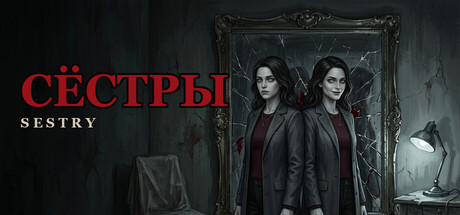
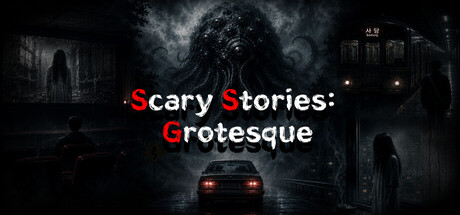
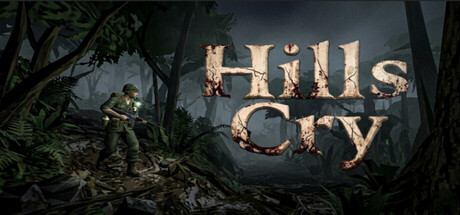
Some backgrounds and sprites in this game have been generated or edited using artificial intelligence tools. Various visual elements, including modified images and photographs, are combined to create a deliberately disturbing and unsettling atmosphere.
We used a Gen AI powered tool to localize the following:
- (in some languages) In-game text
- (in some languages) Steam store descriptions
We plan to replace these with human translation and LQA when we can afford it.
Until then, we are using Gen AI temporarily.
We used a Gen AI powered tool to localize the following:
- (in some languages) In-game text
- (in some languages) Steam store descriptions
We plan to replace these with human translation and LQA when we can afford it.
Until then, we are using Gen AI temporarily.
The background music was created with Suno and the intro narration with ElevenLabs. This content was generated during development, reviewed by the developer, and baked into the build. All sound effects are synthesized in code at runtime and all art is generated procedurally in code — neither is AI.
Pre-generated AI content: character art, backgrounds, icons and key art images, music and sound effects, and portions of the story text were created with generative AI tools (Google Gemini, fal.ai, Anthropic Claude) and were reviewed and edited by the developers. No AI content is generated at runtime.
Generative AI was used during parts of the production process for the game’s graphics, music, and narrative content.
AI-generated outputs were edited, revised, and restructured by the developer and were not used in the game without modification.
The final gameplay experience, narrative structure, character portrayal, and presentation were designed, curated, and supervised by the developer.
Generative AI tools were used during development to assist with visual asset creation, programming support, background music generation, and writing/editing structured script data such as dialogue and localization files.
Some in-game UI artwork was created with the assistance of generative AI. All AI-assisted assets were reviewed, edited, and curated by the developer before being included in the game. The game does not use live AI-generated content during gameplay.
Generative AI was used as an assistive tool for proofreading in-game text and store page text, as well as for English and Korean localization. All final content was reviewed and edited by the developer.
No AI-generated images, audio, or 3D models are used. The game does not use generative AI to create content in real time during gameplay.
Utilizing artificial intelligence, we enhanced vintage photographs and photographs of the development team to align with the game’s aesthetic for paintings in game.
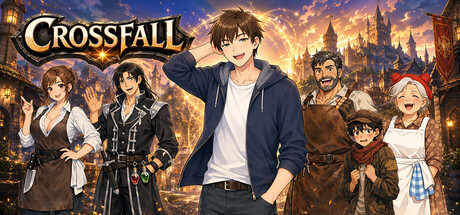
During the development of Crossfall, generative AI is used as an auxiliary tool for creating game content. The following materials have been created or prepared with its help:
Images. Some of the game’s visual content has been created using generative AI, including character images, as well as some sprites and icons. Other parts of the artwork were made manually.
Text. AI helps me prepare some of the text content, including drafts of item names and descriptions, text for certain in-game events, as well as translation and localization of texts into other languages.
Music. The game’s musical soundtrack was created using generative AI.
All content generated with the help of AI is reviewed, selected, and, if necessary, refined by me before being added to the game.
The game itself does not use generative AI during gameplay: no content is generated in real time on the player’s side, and the game does not require an internet connection or access to any AI services.
The coding, general game mechanics, story and brancing paths are all human designed. The art and audio content of this game is strategically and intentionally produced by AI generation.
Some portions of the game's source code were developed with the assistance of generative AI tools. All gameplay design, story, puzzles, dialogue, creative direction, and final implementation decisions were created, reviewed, and controlled by the developer.
Some promotional artwork and marketing materials may also have been created with the assistance of generative AI tools and subsequently reviewed and edited by the developer.
No generative AI is used during gameplay, and no content is generated dynamically for players.
For the store page and in-game multilingual texts, the Simplified Chinese version was written entirely by the developer. All other languages (Traditional Chinese, English, Russian, French, Japanese, and Latin American Spanish) were translated with the assistance of generative AI. All core content of the game (mechanic design, scene construction, character and story development, art assets, and audio) was independently created by the developer. AI was used solely for language localization and did not participate in the generation of any other content.
Generative AI was used solely to assist in creating certain graphical assets for the Steam store page, including store capsules, banners, and promotional images. All game content, including programming, gameplay mechanics, in-game art, music, and other assets, was created and reviewed by the developer and does not rely on generative AI during gameplay.
This game uses pre-generated AI-assisted visual assets and background music. These assets were created before release, manually selected, edited, integrated, and reviewed for use in the shipped build and store materials. The game does not include live generative AI, user-facing AI prompts, AI chat, or dynamically generated content during gameplay.
This game makes extensive use of generative AI for nearly all player-facing content.
All assets, textures, shaders, fonts, some animations, sound effects, and music are fully generated using AI tools and then integrated and refined within the game. As a core rule of the project, everything the player sees and hears has to be AI-generated.
Game design, mechanics, level design, and technical implementation are created and controlled by the developer. AI is used as a content creation tool and does not dynamically generate gameplay content or influence player experience in real time.
No personal player data is processed by AI systems during gameplay.
A Note on AI in This Game
Almost all of the visuals and music you'll experience in this game were created with the help of generative AI tools. These AI-generated assets were curated, refined, and integrated by me to bring the game's world to life.
I believe in being upfront with my players — AI was a creative tool in my process, not a replacement for the care and intention I put into making this experience for you.
The development team used generative AI tools only during the to create asset icons for Steam Achievements and to generate Voice-Over assets for localization.
The game uses generative artificial intelligence to create some of its images, and a portion of the visual content was produced with AI tools, but all such assets have been reviewed to ensure they do not infringe copyrights and comply with Steam’s rules.
Generative AI was used only for limited enhancements to marketing visuals, texture edits, and selected SFX.
Gameplay systems and mechanics do not rely on AI-generated content.
All generated assets are owned and licensed by us.
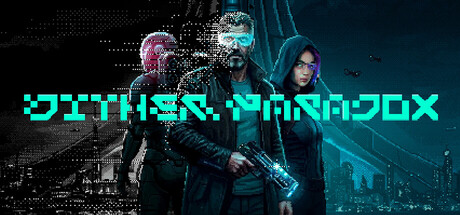
Dither Paradox is created and directed by Michał Kita. The game's final pixel art, animation, and visual design are made by hand, and every artistic and creative decision is made by people.
We use generative AI as a production tool that supports - but does not replace - this work. In the visual layer, AI is sometimes used during the concept and iteration stage - to explore ideas and variations - while the final art assets that ship in the game are made by hand. AI also assists in producing music and voiceover, which are then curated, edited, and approved by the team, as well as some promotional materials.
AI lets us reach a higher level of polish in less time, but authorship, art direction, and final responsibility for everything players see and hear remain with the people who make the game.
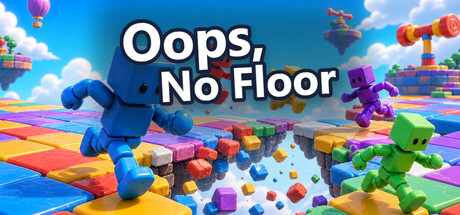
As an independent development team, we use generative AI tools to assist in creating some of the game’s background artwork and decorative wallpapers. These images are used as supporting visual elements and do not replace the game’s 3D assets, animation, gameplay design, programming, or overall creative direction.
All AI-assisted artwork is selected, reviewed, edited, and integrated by our development team to ensure it fits the visual identity of Oops, No Floor. The game does not generate content during gameplay.
We respect and value the work of professional artists. Our use of AI reflects the practical resources available to us as a small indie team and allows us to focus our budget and time on building, polishing, and supporting the game.
During development, some of the game's art assets (including icons, UI elements, scene backgrounds, and character visuals) were created with the help of AI image-generation tools, then curated, adjusted, and integrated by hand. The game does not generate any AI content in real time during play.
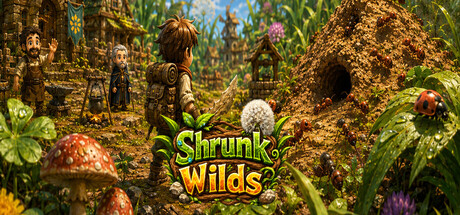
Some visual assets and artwork used during the development of Shrunk Wilds were created with the assistance of AI image generation tools. All generated assets are manually reviewed, modified, and curated by the developer before being implemented into the game. Players do not interact with AI systems during gameplay, and the game does not generate content in real time.
This game contains a limited amount of AI-assisted content, including some visual assets and music. All such content was reviewed and integrated by the developer.
Portions of the game's visual artwork, in-game scenes and graphical assets are created with generative AI technology, which helps us deliver rich and immersive visual experiences for players.
Some backgrounds and sprites in this game have been generated or edited using artificial intelligence tools. Various visual elements, including modified images and photographs, are combined to create a deliberately disturbing and unsettling atmosphere.
We used a Gen AI powered tool to localize the following:
- (in some languages) In-game text
- (in some languages) Steam store descriptions
We plan to replace these with human translation and LQA when we can afford it.
Until then, we are using Gen AI temporarily.
We used a Gen AI powered tool to localize the following:
- (in some languages) In-game text
- (in some languages) Steam store descriptions
We plan to replace these with human translation and LQA when we can afford it.
Until then, we are using Gen AI temporarily.
The background music was created with Suno and the intro narration with ElevenLabs. This content was generated during development, reviewed by the developer, and baked into the build. All sound effects are synthesized in code at runtime and all art is generated procedurally in code — neither is AI.
Pre-generated AI content: character art, backgrounds, icons and key art images, music and sound effects, and portions of the story text were created with generative AI tools (Google Gemini, fal.ai, Anthropic Claude) and were reviewed and edited by the developers. No AI content is generated at runtime.
Generative AI was used during parts of the production process for the game’s graphics, music, and narrative content.
AI-generated outputs were edited, revised, and restructured by the developer and were not used in the game without modification.
The final gameplay experience, narrative structure, character portrayal, and presentation were designed, curated, and supervised by the developer.
Generative AI tools were used during development to assist with visual asset creation, programming support, background music generation, and writing/editing structured script data such as dialogue and localization files.
Some in-game UI artwork was created with the assistance of generative AI. All AI-assisted assets were reviewed, edited, and curated by the developer before being included in the game. The game does not use live AI-generated content during gameplay.
Generative AI was used as an assistive tool for proofreading in-game text and store page text, as well as for English and Korean localization. All final content was reviewed and edited by the developer.
No AI-generated images, audio, or 3D models are used. The game does not use generative AI to create content in real time during gameplay.
Utilizing artificial intelligence, we enhanced vintage photographs and photographs of the development team to align with the game’s aesthetic for paintings in game.
During the development of Crossfall, generative AI is used as an auxiliary tool for creating game content. The following materials have been created or prepared with its help:
Images. Some of the game’s visual content has been created using generative AI, including character images, as well as some sprites and icons. Other parts of the artwork were made manually.
Text. AI helps me prepare some of the text content, including drafts of item names and descriptions, text for certain in-game events, as well as translation and localization of texts into other languages.
Music. The game’s musical soundtrack was created using generative AI.
All content generated with the help of AI is reviewed, selected, and, if necessary, refined by me before being added to the game.
The game itself does not use generative AI during gameplay: no content is generated in real time on the player’s side, and the game does not require an internet connection or access to any AI services.
The coding, general game mechanics, story and brancing paths are all human designed. The art and audio content of this game is strategically and intentionally produced by AI generation.
Some portions of the game's source code were developed with the assistance of generative AI tools. All gameplay design, story, puzzles, dialogue, creative direction, and final implementation decisions were created, reviewed, and controlled by the developer.
Some promotional artwork and marketing materials may also have been created with the assistance of generative AI tools and subsequently reviewed and edited by the developer.
No generative AI is used during gameplay, and no content is generated dynamically for players.
For the store page and in-game multilingual texts, the Simplified Chinese version was written entirely by the developer. All other languages (Traditional Chinese, English, Russian, French, Japanese, and Latin American Spanish) were translated with the assistance of generative AI. All core content of the game (mechanic design, scene construction, character and story development, art assets, and audio) was independently created by the developer. AI was used solely for language localization and did not participate in the generation of any other content.
Generative AI was used solely to assist in creating certain graphical assets for the Steam store page, including store capsules, banners, and promotional images. All game content, including programming, gameplay mechanics, in-game art, music, and other assets, was created and reviewed by the developer and does not rely on generative AI during gameplay.
This game uses pre-generated AI-assisted visual assets and background music. These assets were created before release, manually selected, edited, integrated, and reviewed for use in the shipped build and store materials. The game does not include live generative AI, user-facing AI prompts, AI chat, or dynamically generated content during gameplay.
This game makes extensive use of generative AI for nearly all player-facing content.
All assets, textures, shaders, fonts, some animations, sound effects, and music are fully generated using AI tools and then integrated and refined within the game. As a core rule of the project, everything the player sees and hears has to be AI-generated.
Game design, mechanics, level design, and technical implementation are created and controlled by the developer. AI is used as a content creation tool and does not dynamically generate gameplay content or influence player experience in real time.
No personal player data is processed by AI systems during gameplay.
A Note on AI in This Game
Almost all of the visuals and music you'll experience in this game were created with the help of generative AI tools. These AI-generated assets were curated, refined, and integrated by me to bring the game's world to life.
I believe in being upfront with my players — AI was a creative tool in my process, not a replacement for the care and intention I put into making this experience for you.
The development team used generative AI tools only during the to create asset icons for Steam Achievements and to generate Voice-Over assets for localization.
The game uses generative artificial intelligence to create some of its images, and a portion of the visual content was produced with AI tools, but all such assets have been reviewed to ensure they do not infringe copyrights and comply with Steam’s rules.
Generative AI was used only for limited enhancements to marketing visuals, texture edits, and selected SFX.
Gameplay systems and mechanics do not rely on AI-generated content.
All generated assets are owned and licensed by us.
Dither Paradox is created and directed by Michał Kita. The game's final pixel art, animation, and visual design are made by hand, and every artistic and creative decision is made by people.
We use generative AI as a production tool that supports - but does not replace - this work. In the visual layer, AI is sometimes used during the concept and iteration stage - to explore ideas and variations - while the final art assets that ship in the game are made by hand. AI also assists in producing music and voiceover, which are then curated, edited, and approved by the team, as well as some promotional materials.
AI lets us reach a higher level of polish in less time, but authorship, art direction, and final responsibility for everything players see and hear remain with the people who make the game.
As an independent development team, we use generative AI tools to assist in creating some of the game’s background artwork and decorative wallpapers. These images are used as supporting visual elements and do not replace the game’s 3D assets, animation, gameplay design, programming, or overall creative direction.
All AI-assisted artwork is selected, reviewed, edited, and integrated by our development team to ensure it fits the visual identity of Oops, No Floor. The game does not generate content during gameplay.
We respect and value the work of professional artists. Our use of AI reflects the practical resources available to us as a small indie team and allows us to focus our budget and time on building, polishing, and supporting the game.
During development, some of the game's art assets (including icons, UI elements, scene backgrounds, and character visuals) were created with the help of AI image-generation tools, then curated, adjusted, and integrated by hand. The game does not generate any AI content in real time during play.
Some visual assets and artwork used during the development of Shrunk Wilds were created with the assistance of AI image generation tools. All generated assets are manually reviewed, modified, and curated by the developer before being implemented into the game. Players do not interact with AI systems during gameplay, and the game does not generate content in real time.
This game contains a limited amount of AI-assisted content, including some visual assets and music. All such content was reviewed and integrated by the developer.
Portions of the game's visual artwork, in-game scenes and graphical assets are created with generative AI technology, which helps us deliver rich and immersive visual experiences for players.