Public Steam disclosure research27,951 disclosures tracked
Where do games disclose AI use?
Search developers’ Steam disclosures, compare classified AI use across
games, and follow recorded changes.
This index adds cross-game classifications and statistics to
statements published on individual store pages.
Groups reflect automatic analysis of public disclosures; mature records are excluded. These counts do not measure AI use across all of Steam.
Missing or unclear statements cannot establish whether a game uses AI.
Music was produced with generative AI tools. All artwork in story mode was licensed from an artist, and it is not known whether it was made with AI tools. The developers plan to replace it with work from real artists, after submissions are received and approved.
Generative AI tools were used in parts of the developer's workflow: some texture source images (such as water splash sprites and certain ground materials) originate from AI image tools, and the dragon character's base mesh was initially created with AI assistance. All of this content was then extensively hand-edited, sculpted, rigged and integrated by the developer. Some music tracks were generated with Suno (licensed under a paid subscription). The world itself, the environment models and the game's art direction are hand-made. The game does not generate any content at runtime.
Some of the pre-made content in this game (such as artwork, audio and/or text) was created with the help of generative AI tools and was reviewed and edited by the developer. No AI content is generated during gameplay.
Visual Arts: Generative AI tools were used solely to create early-concept drafts and visual inspiration for certain art assets. All final in-game graphics, UI, and pixel art were manually redesigned, drawn, and polished by human artists.
Localization: Generative AI tools were used to assist with the initial translation of supported non-primary languages. While we have conducted basic checks, these translations may still contain errors or awkward phrasing. We warmly welcome community feedback to help us improve localization over time!
Generative AI was used to assist in creating some store promotional images with manual post-compositing. Generative AI was also used to produce part of the 2D assets within the game, and to assist with translation and localization for portions of the game text. All AI-assisted content has been reviewed, edited and refined by our development team.
Generative AI was used to assist with English texts, localizations, and some pre-generated 3D character models, with all content manually reviewed and edited by the developer.
This game contains content created with the assistance of AI tools. AI was used during development to assist with programming, visual assets, and other creative elements. All generated content was reviewed, edited, and integrated by the dev.
This game was made by a two-person team: a developer and a designer/artist. AI tools were used only as an aid during development. An AI 3D generator provided rough starting shapes for the capybara figurines, which the team then remodeled, textured and set up in the game engine. level design, gameplay, art direction, UI and text was designed and made by the team. The game does not generate any AI content while you play.
Garden Diary uses generative AI in these places, all reviewed and edited by me:
• Code - written with an AI coding assistant.
• Text - the interface text, hints and the game's written lines were drafted with AI help and edited by hand. This store description was written the same way.
• Interface icons- the small line glyphs are hand-authored SVG produced with the same assistant.
No AI-generated 3D art, textures, voice or music. Every 3D asset comes from licensed, human-made packs; the fonts are open-licensed human work; the wind, crickets, bells and lullaby are synthesised by the game's own audio code, and the rain is a licensed recording.
Generative AI tools were used during development to assist with selected visual and promotional assets, as well as localization. All AI-assisted content is reviewed, edited, and curated by the developer before being included in the game or store materials. KEYLINGS does not generate AI content during gameplay and does not connect to external AI services.
The music in this game was created using the Suno AI music generation tool. All other content — including all art and pixel art, level and puzzle design, mechanics, writing, — was created by hand by the developer, without generative AI.
In-game text (bee facts, item descriptions, achievement lines) and store page copy were written with the assistance of an AI writing tool, under the developer's direction and review. All artwork is pixel art drawn by the game's own code, and all audio is synthesized or CC0 field recordings — no AI-generated images, audio, or music.
The game uses generative AI to create some of the 2D pixel-art sprites and character animations. All such content is manually reviewed and edited before being included in the game.
NBD2 is an AI game development studio. As a solo indie dev who is unlikely to ever make a dime from any of my games, there's no other way I could bring my ideas to life.
Tooth and Tusk was created using generative AI throughout development, including its artwork and visuals, music, sound effects, character voices, text and dialogue, and game code. All AI generation took place during development. The game does not generate AI content or code during play or connect to an external AI service.
I recognize AI in game development is an extremely sensitive topic and I appreciate both sides. I only hope the game is fun.
The goal should always be making something that human beings will enjoy.
Like many small studios, we used AI image tools for Wobblebound's painted artwork and store images. The toys' shapes, faces and physics are made in code. We wrote the English text ourselves and improved it with AI tools; the translations were made with AI. Music and sound effects come from human composers and licensed sound libraries. Screenshots and trailers show real gameplay. No AI runs while you play.
Generative AI tools were used during development to assist with portions of the source code. All AI-assisted output included in the game was reviewed, edited, tested, and integrated by the developer. The game does not use generative AI during gameplay, does not generate content in real time, and does not connect to any external AI service.
Pre-generated content: some character and venue artwork, some 3D props, the cast voice lines, the intro films and the translations were created with AI tools and reviewed by the developer. No content is generated at runtime.
Some visual assets used on the Steam store page were created with the assistance of generative AI. The game itself does not contain AI-generated content and does not include any live-generated AI features.
Generative AI tools were used to assist in the creation of certain visual assets during development. All final in-game content was reviewed and edited by the developer. No AI-generated content is produced during gameplay.
Generative AI tools were used during development to assist with some pre-generated 2D visual assets, marketing artwork, and localized text. All AI-assisted content was reviewed and edited by the developer before inclusion. The game does not generate AI content or code during play and does not connect to external AI services.
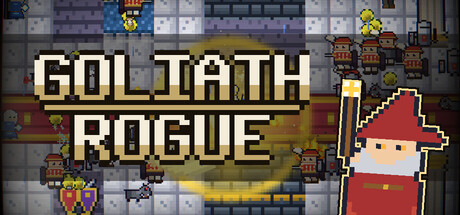
Goliath Rogue was made with the help of generative AI. The 2D art, the music and the sound effects were AI-generated — some of the art was then retouched by hand — and the Spanish and French translations were AI-assisted. All of it ships as fixed assets in the game; nothing is generated while you play. AI coding tools were also used during development to help write the game's code.
The game's code was written by AI coding tools under the developer's direction. This includes gameplay systems, aircraft models, procedural environments, rendering and user interface code. The developer reviews, tests and edits the results. AI tools were also used to draft and revise in-game text and store-page copy.
The soundtrack and many sound effects were generated using AI during development, then reviewed, selected and processed before being included in the game.
The game's visuals are rendered from geometry and materials defined in code. Store screenshots come from the game, and capsule artwork is composed from in-game renders with added typography.
No generative AI models run while you play. The game is playable offline. When online, it uses Steam features and sends gameplay analytics.
The game was 100% designed and tested by me and my kids. I did use AI tools to help create the logo, some of the 3d objects in the game (portion of the buildings) and the voice narration in the trailer.
AI-assisted programming tools were used during development to help write game code. Generative AI was also used to create or assist with portions of the artwork and logo, music, sound effects, written text, and localization in the game and its store and marketing materials. These uses take place during development and content production. The game does not use AI to generate content or code during gameplay and does not connect to external AI services during gameplay.
AI-Generated Content Disclosure
This game includes a small number of visual assets, such as certain images and food ingredient models, that were created with the assistance of generative AI. These assets have been carefully curated and refined by the development team to align with the game’s style and quality.
All core gameplay, design, player character, dragon character, and player interactions are handcrafted.
Generative AI was used during development to create image assets, including characters, environments, items and titles, and to create background music. Selected images were adapted into the game's pixel-art assets. AI and machine translation were also used when preparing localized text. These assets are prepared in advance; the game does not generate images, music or text with AI during play.
Generative AI tools were used to assist with translating and proofreading text for the game and its Steam store page. All translated and revised text was reviewed and approved by the developer.
Generative AI was used to create some store page images, in-game images, and concept art for certain 3D models. All generated content was reviewed and edited by the development team.
Some of this game's pixel art was generated with AI tools (PixelLab) and then edited by hand — the boats, the fauna, the bosses and the hats. The backgrounds come from licensed art packs by human artists, credited in the game's Credits screen. All audio is from human-made sound packs, also credited. No AI runs while you play: everything was generated ahead of time.
Some of the store artwork, the game icon and some sound effects were created with generative AI tools and then edited by hand before release. The simulation, the program code, the 3D models and the text in the game were made without generative AI. Nothing is generated by AI while you play.
Programming with AI.
For the art assets, the demo currently uses AI-generated art assets, which will be gradually replaced with artwork created by professional artists before the game’s release.
Some in-app text (character dialogue) and translations were drafted with AI writing assistance and edited by the developer. All graphics are drawn at runtime by hand-written code, and all sounds and music are synthesised by code; no AI image, voice or music models are used, and nothing is AI-generated while you use the app.
AI tools were used to assist with writing and reviewing game code during development. No AI-generated art, audio, or narrative content ships in the final game.
VibeMarket uses AI image generation to turn real artists' card art into Vibers: each card's art is redrawn as a small pixel character. The card art itself comes from the artists and creators who make the packs. Some store and marketing artwork was also made with the help of AI tools.
Connects to 3rd-Party Service for AI Content Generation: Cloudflare Workers AI
AI was used for:
developing content concepts, such as structures, locations, and some smaller details;
creating parts of the environment, such as the day/night cycle and clouds;
generating animals.
Some of the programming made use of AI tools to assist with identifying bugs.
ALL visual assets in this game are 100% HUMAN MADE, from the ground up. All sound effects and music are also 100% made by me, with NO AI. All in-game imagery is entirely human made. The store page graphics and text description are also 100% human made with no AI.
During development, some of the game's art assets were created with the help of AI image-generation tools, then curated, adjusted, and integrated by hand. The game does not generate any AI content in real time during play.
Visual assets and music in Homeward on the Wind were created with the assistance of generative AI tools and were reviewed and refined by the development team. The game does not generate content in real time. All storylines, choices, and interactions are pre-designed.