Public Steam disclosure research25,383 disclosures tracked
Where do games disclose AI use?
Search developers’ Steam disclosures, compare classified AI use across
games, and follow recorded changes.
This index adds cross-game classifications and statistics to
statements published on individual store pages.
Groups reflect automatic analysis of public disclosures; mature records are excluded. These counts do not measure AI use across all of Steam.
Missing or unclear statements cannot establish whether a game uses AI.
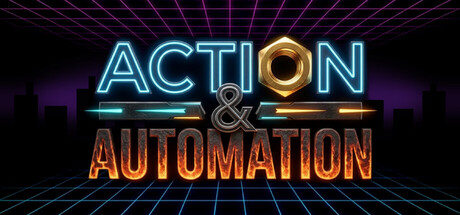
Action & Automation is not only how the game plays, it is how the game was made.
As the game’s sole human developer, game director, and system architect, I designed the core gameplay systems, software architecture, worldbuilding, narrative framework, story design, and gameplay balance. That is the Action.
For the Automation, I deliberately pushed generative AI throughout the production pipeline, with quality and player experience as the only limits. Following my direction and specifications, AI produced much of the code, artwork, animation, VFX, and UI, and was used for text polishing and localization.
No generative AI model or external AI service runs during gameplay. The game requires no AI account, API key, subscription, or token credits. Any apparent AI thinking or reasoning is scripted or driven by conventional game AI systems.
Human-designed. AI-produced. That is Action & Automation.
I have updated the AI Content Survey to better reflect the content used in the game.
Some background images were created with the assistance of generative AI. A small number of player card artworks were also created using generative AI, but the majority of the cards were created without AI-generated artwork. Additionally, some promotional/store images contain AI-generated elements, while many others do not.
The AI-generated content is limited to certain visual assets and does not affect gameplay or game logic.
This game contains pre-generated AI-assisted content, including some character artwork, visual assets, and audio. All AI-generated content has been reviewed, edited, and integrated into the game by the developer.
AI was used as a creative tool for:
Generating and refining background art (later curated by our artists)
Creating early atmospheric textures for the soundtrack (finished by human composers)
All AI-generated content was reviewed, edited, and finalized by the team to ensure quality and consistency.
AI generation tools were used to assist in creating 2D asset designs, specifically the main menu background artwork, enemy sprites, and power-up graphics. All code, level design, and core gameplay mechanics were traditionally developed.
Because I am a dev team of 1, yes, I have used AI specifically for working on multiplayer code - that's an area of coding I'm just not up to speed on. The in-game code is all me though. As for art, having 10 years experience in game-dev GFX, that's me - 99% of it. I'm highly proficient in using the tools of the trade )Pshop, Blender, 3d MAx etc), but yes, I have used some highly modified bits and pieces for the landing screen and outros, but everything in-game (100%) is me. The SFX, music and voice acting, me too... for my sins. I'm no Mozart or Lawrence Olivier, but, yakknow... it's passable :)
AI has been used to generate some graphics, music, and translations.
As the story of this game may suggest, I understand (and even share) most of the criticisms regarding AI, but it is also a tool that has enabled small creators like myself to achieve bigger things that would have been difficult without it.
Everything is AI generated... I built my own Agentic AI harness, and then used it to build this game (as well as generating images, soundtrack, and 1000s of lines of text content etc)... I'm not a developer, I'm a Functional/UX/Graphic Designer that finally found a tool that could help me build my dream games... I wouldn't consider the game "vibe coded", it has been months of obsessive iterations to ensure the functionality and user experience is of the highest level, which was 100% designed and directed by me, using Agentic AI to build to order. It's far from a "one-shot" prompt hope and prayer... and I think you'll be surprised when you see it.
This game includes live-generated AI features that run locally on the player's computer and do not rely on external AI services.
The game uses AI to:
- interpret the player's spoken voice commands in real time to support gameplay interactions;
- generate voice audio for in-game pilot communications in real time.
The AI systems are used exclusively for these gameplay functions. They do not generate user-visible images, text, or other open-ended content.
The game is designed so that AI-generated output is limited to its intended gameplay purpose and cannot be used to create illegal, infringing, or otherwise prohibited content.
This game contains some pre-generated AI-created artwork. AI-assisted images are used for certain visual assets, such as event illustrations (for example, cup draw graphics), news imagery, and other decorative artwork. These images are pre-generated during development and are not created dynamically during gameplay. All gameplay, mechanics, and player decisions are authored by the developer.
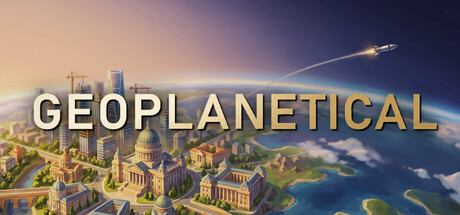
Yes. Geoplanetical is a solo project, just me. I use generative AI in a few places. It helps me translate the game and this Steam page into other languages, though I check every translation myself. It also helps me research and format the game's real world starting data, which comes from public sources like the World Bank, the IMF and Natural Earth, and I verify all of that data myself too. The character portraits, around 60,000 of them, are generated with AI. The promotional images and text on this store page were made with AI as well. That's it. Nothing else in the game uses generative AI, and none of it runs while you play. If you want to know where the rest of the game's content comes from, like the real world datasets, the hand made assets and the Creative Commons icons, it's all documented in the About section inside the game.
AI has been used to refine the game balance, produce the graphics and the code for Conglomerate. As a solo indie dev, AI is used to bounce ideas and support the game development, replicating having a development partner.
Some pre-generated visual and audio assets were created or assisted with generative AI tools and then selected, edited, integrated, and reviewed by the developer. The game does not use live generative AI to create content during gameplay.
Generative AI tools were used during the development of this game to assist with programming, game logic implementation, written content, visual assets, and other development workflows. AI-generated code, text, images, and design elements were reviewed, modified, and approved by the developer before being included in the final product.
Generative AI tools were used to assist with translation/localization and parts of the in-game artwork production.
No generative AI tools are used for sound effects, music, story content, or live-generated gameplay content.
Generative AI was used as a supporting tool during the creation of some of the Steam Community assets, with all AI-generated images being carefully refined and significantly reworked by a professional graphic artist. The game itself (and all in-game artwork) was created entirely by human developers and artists, without the use of generative AI.
Generative AI was used during development to assist with creating some art assets, music, sound effects, gameplay prototypes, text, and code iteration. All AI-generated content used in the game has been manually reviewed, edited, integrated, and tested before inclusion.
Football Academy Director includes pre-generated fictional player portraits and selected promotional artwork created with the assistance of generative AI. All AI-generated content is created before release and manually reviewed and curated. The game does not generate AI content during gameplay.
Football Academy Director uses the NG_Regens facepack for fictional player portraits, with permission from the creator. NG_Regens can be found at: https://ngregens.org/
Some of the artwork on this game's Steam store page and library/marketing assets — including the capsule images and library hero — was created with the assistance of generative AI image tools. All such artwork was reviewed and edited by us prior to use to ensure it is appropriate and does not contain any content that infringes the intellectual property rights of any third party. The game itself does not generate any content using AI at runtime.
Spire of Legends uses generative AI as part of the development process for certain visual assets, sound effects, and localization content. AI-generated content is not used directly without review; assets and text are edited, refined, and integrated by the developer to meet the game's artistic and gameplay requirements. All game design, programming, mechanics, balance decisions, and overall creative direction are created by the developer.
All character and unit art is hand-drawn; audio and music contain no AI. Some background art and UI icons were made with help from generative AI tools and then edited by the developer. AI also assists translation, with every translation human-reviewed before release.
Generative AI tools were used during development to create and edit some visual assets, including character, unit, action, and background artwork. Generative AI was also used in the creation of some sound and audio assets. All generated materials were reviewed, selected, and edited by the developer before being included in the game or its store assets. The game does not generate AI content during gameplay.
During the early stages of development, generative AI was used to create prototypes for some visual assets. These assets were manually redrawn and revised by the developer before being included in the game.
This game uses generative AI tools during development to create or assist with some pre-generated content. This includes code assistance, visual asset creation, and music creation.
Generative AI tools are used to assist with programming during development, to create or assist with character artwork, background artwork, store page graphics, Steam community assets, and marketing materials, and to create or assist with background music.
AI-assisted assets and code are reviewed, edited, and integrated by the developer before release. The game does not use generative AI to generate real-time content during gameplay, and players do not directly interact with a generative AI system.
The “combat AI” described in the game is a gameplay system that controls enemy behavior and tactical decision-making. It is not generative AI.
Some store assets (capsules, library art, promotional images) and some in-game terrain sprites (such as mountains and forests) started from drafts produced with AI image tools, then selected, color-graded, composited, and cropped by the developer. All publicly released assets are human-reviewed. UI, fonts, icons, player avatars, faction emblems, and other non-terrain art are drawn directly by the developer or built from licensed fonts / open-source resources — no AI generation involved. Player-to-player text messages produced at runtime by the AI model each player has chosen are disclosed separately under "Live-Generated AI".
The developer used generative AI tools during the development process to assist in creating visual assets and concept art. All content in the final game is pre-rendered and static; the game does not generate new content in real-time or connect to external AI services during execution.
This game utilizes generative artificial intelligence tools in its development to assist our small team. Specifically, AI was used to help localize our Steam store listing text into multiple languages to reach a broader audience. Additionally, AI tools were used to help refine and format certain store promotional images and icons, which are strictly based on and adapted from our original, human-created hand-drawn concept art. No live-generated AI content is used during active gameplay.
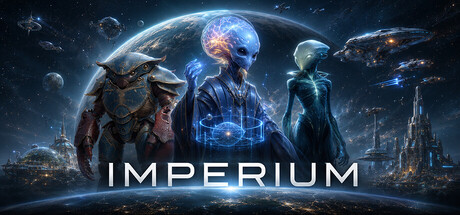
Imperium is a solo-developed game that makes extensive use of generative AI
to create its content:
• Visual art and graphical assets — planet surfaces, buildings, species and
ship artwork, interface art, and store/marketing imagery — were generated
using Midjourney and ChatGPT, then extensively edited, composited, and
refined by hand in Photoshop (including Photoshop's AI tools) to fit the
game's art direction.
• Music was generated using Suno.
• Sound effects were generated using ElevenLabs.
Every asset is reviewed, edited, and approved by the developer before it
ships, and the game's design, systems, and balance are the developer's own.
Imperium's in-game opponents use traditional algorithmic AI, not generative AI.
The Early Access build includes some static pre-generated AI placeholder artwork used as temporary in-game assets during development. This content is not generated during gameplay, is not user-generated, and does not connect to any external AI service. Placeholder artwork may be replaced or polished during Early Access as final art is completed.
Generative AI tools were used only to assist in the creation of certain store page and marketing images. No AI-generated content is created during gameplay, and the game does not use live AI systems or connect to external AI services while running.
Action & Automation is not only how the game plays, it is how the game was made.
As the game’s sole human developer, game director, and system architect, I designed the core gameplay systems, software architecture, worldbuilding, narrative framework, story design, and gameplay balance. That is the Action.
For the Automation, I deliberately pushed generative AI throughout the production pipeline, with quality and player experience as the only limits. Following my direction and specifications, AI produced much of the code, artwork, animation, VFX, and UI, and was used for text polishing and localization.
No generative AI model or external AI service runs during gameplay. The game requires no AI account, API key, subscription, or token credits. Any apparent AI thinking or reasoning is scripted or driven by conventional game AI systems.
Human-designed. AI-produced. That is Action & Automation.
I have updated the AI Content Survey to better reflect the content used in the game.
Some background images were created with the assistance of generative AI. A small number of player card artworks were also created using generative AI, but the majority of the cards were created without AI-generated artwork. Additionally, some promotional/store images contain AI-generated elements, while many others do not.
The AI-generated content is limited to certain visual assets and does not affect gameplay or game logic.
This game contains pre-generated AI-assisted content, including some character artwork, visual assets, and audio. All AI-generated content has been reviewed, edited, and integrated into the game by the developer.
AI was used as a creative tool for:
Generating and refining background art (later curated by our artists)
Creating early atmospheric textures for the soundtrack (finished by human composers)
All AI-generated content was reviewed, edited, and finalized by the team to ensure quality and consistency.
AI generation tools were used to assist in creating 2D asset designs, specifically the main menu background artwork, enemy sprites, and power-up graphics. All code, level design, and core gameplay mechanics were traditionally developed.
Because I am a dev team of 1, yes, I have used AI specifically for working on multiplayer code - that's an area of coding I'm just not up to speed on. The in-game code is all me though. As for art, having 10 years experience in game-dev GFX, that's me - 99% of it. I'm highly proficient in using the tools of the trade )Pshop, Blender, 3d MAx etc), but yes, I have used some highly modified bits and pieces for the landing screen and outros, but everything in-game (100%) is me. The SFX, music and voice acting, me too... for my sins. I'm no Mozart or Lawrence Olivier, but, yakknow... it's passable :)
AI has been used to generate some graphics, music, and translations.
As the story of this game may suggest, I understand (and even share) most of the criticisms regarding AI, but it is also a tool that has enabled small creators like myself to achieve bigger things that would have been difficult without it.
Everything is AI generated... I built my own Agentic AI harness, and then used it to build this game (as well as generating images, soundtrack, and 1000s of lines of text content etc)... I'm not a developer, I'm a Functional/UX/Graphic Designer that finally found a tool that could help me build my dream games... I wouldn't consider the game "vibe coded", it has been months of obsessive iterations to ensure the functionality and user experience is of the highest level, which was 100% designed and directed by me, using Agentic AI to build to order. It's far from a "one-shot" prompt hope and prayer... and I think you'll be surprised when you see it.
This game includes live-generated AI features that run locally on the player's computer and do not rely on external AI services.
The game uses AI to:
- interpret the player's spoken voice commands in real time to support gameplay interactions;
- generate voice audio for in-game pilot communications in real time.
The AI systems are used exclusively for these gameplay functions. They do not generate user-visible images, text, or other open-ended content.
The game is designed so that AI-generated output is limited to its intended gameplay purpose and cannot be used to create illegal, infringing, or otherwise prohibited content.
This game contains some pre-generated AI-created artwork. AI-assisted images are used for certain visual assets, such as event illustrations (for example, cup draw graphics), news imagery, and other decorative artwork. These images are pre-generated during development and are not created dynamically during gameplay. All gameplay, mechanics, and player decisions are authored by the developer.
Yes. Geoplanetical is a solo project, just me. I use generative AI in a few places. It helps me translate the game and this Steam page into other languages, though I check every translation myself. It also helps me research and format the game's real world starting data, which comes from public sources like the World Bank, the IMF and Natural Earth, and I verify all of that data myself too. The character portraits, around 60,000 of them, are generated with AI. The promotional images and text on this store page were made with AI as well. That's it. Nothing else in the game uses generative AI, and none of it runs while you play. If you want to know where the rest of the game's content comes from, like the real world datasets, the hand made assets and the Creative Commons icons, it's all documented in the About section inside the game.
AI has been used to refine the game balance, produce the graphics and the code for Conglomerate. As a solo indie dev, AI is used to bounce ideas and support the game development, replicating having a development partner.
Some pre-generated visual and audio assets were created or assisted with generative AI tools and then selected, edited, integrated, and reviewed by the developer. The game does not use live generative AI to create content during gameplay.
Generative AI tools were used during the development of this game to assist with programming, game logic implementation, written content, visual assets, and other development workflows. AI-generated code, text, images, and design elements were reviewed, modified, and approved by the developer before being included in the final product.
Generative AI tools were used to assist with translation/localization and parts of the in-game artwork production.
No generative AI tools are used for sound effects, music, story content, or live-generated gameplay content.
Generative AI was used as a supporting tool during the creation of some of the Steam Community assets, with all AI-generated images being carefully refined and significantly reworked by a professional graphic artist. The game itself (and all in-game artwork) was created entirely by human developers and artists, without the use of generative AI.
Generative AI was used during development to assist with creating some art assets, music, sound effects, gameplay prototypes, text, and code iteration. All AI-generated content used in the game has been manually reviewed, edited, integrated, and tested before inclusion.
Football Academy Director includes pre-generated fictional player portraits and selected promotional artwork created with the assistance of generative AI. All AI-generated content is created before release and manually reviewed and curated. The game does not generate AI content during gameplay.
Football Academy Director uses the NG_Regens facepack for fictional player portraits, with permission from the creator. NG_Regens can be found at: https://ngregens.org/
Some of the artwork on this game's Steam store page and library/marketing assets — including the capsule images and library hero — was created with the assistance of generative AI image tools. All such artwork was reviewed and edited by us prior to use to ensure it is appropriate and does not contain any content that infringes the intellectual property rights of any third party. The game itself does not generate any content using AI at runtime.
Spire of Legends uses generative AI as part of the development process for certain visual assets, sound effects, and localization content. AI-generated content is not used directly without review; assets and text are edited, refined, and integrated by the developer to meet the game's artistic and gameplay requirements. All game design, programming, mechanics, balance decisions, and overall creative direction are created by the developer.
All character and unit art is hand-drawn; audio and music contain no AI. Some background art and UI icons were made with help from generative AI tools and then edited by the developer. AI also assists translation, with every translation human-reviewed before release.
Generative AI tools were used during development to create and edit some visual assets, including character, unit, action, and background artwork. Generative AI was also used in the creation of some sound and audio assets. All generated materials were reviewed, selected, and edited by the developer before being included in the game or its store assets. The game does not generate AI content during gameplay.
During the early stages of development, generative AI was used to create prototypes for some visual assets. These assets were manually redrawn and revised by the developer before being included in the game.
This game uses generative AI tools during development to create or assist with some pre-generated content. This includes code assistance, visual asset creation, and music creation.
Generative AI tools are used to assist with programming during development, to create or assist with character artwork, background artwork, store page graphics, Steam community assets, and marketing materials, and to create or assist with background music.
AI-assisted assets and code are reviewed, edited, and integrated by the developer before release. The game does not use generative AI to generate real-time content during gameplay, and players do not directly interact with a generative AI system.
The “combat AI” described in the game is a gameplay system that controls enemy behavior and tactical decision-making. It is not generative AI.
Some store assets (capsules, library art, promotional images) and some in-game terrain sprites (such as mountains and forests) started from drafts produced with AI image tools, then selected, color-graded, composited, and cropped by the developer. All publicly released assets are human-reviewed. UI, fonts, icons, player avatars, faction emblems, and other non-terrain art are drawn directly by the developer or built from licensed fonts / open-source resources — no AI generation involved. Player-to-player text messages produced at runtime by the AI model each player has chosen are disclosed separately under "Live-Generated AI".
The developer used generative AI tools during the development process to assist in creating visual assets and concept art. All content in the final game is pre-rendered and static; the game does not generate new content in real-time or connect to external AI services during execution.
This game utilizes generative artificial intelligence tools in its development to assist our small team. Specifically, AI was used to help localize our Steam store listing text into multiple languages to reach a broader audience. Additionally, AI tools were used to help refine and format certain store promotional images and icons, which are strictly based on and adapted from our original, human-created hand-drawn concept art. No live-generated AI content is used during active gameplay.
Imperium is a solo-developed game that makes extensive use of generative AI
to create its content:
• Visual art and graphical assets — planet surfaces, buildings, species and
ship artwork, interface art, and store/marketing imagery — were generated
using Midjourney and ChatGPT, then extensively edited, composited, and
refined by hand in Photoshop (including Photoshop's AI tools) to fit the
game's art direction.
• Music was generated using Suno.
• Sound effects were generated using ElevenLabs.
Every asset is reviewed, edited, and approved by the developer before it
ships, and the game's design, systems, and balance are the developer's own.
Imperium's in-game opponents use traditional algorithmic AI, not generative AI.
The Early Access build includes some static pre-generated AI placeholder artwork used as temporary in-game assets during development. This content is not generated during gameplay, is not user-generated, and does not connect to any external AI service. Placeholder artwork may be replaced or polished during Early Access as final art is completed.
Generative AI tools were used only to assist in the creation of certain store page and marketing images. No AI-generated content is created during gameplay, and the game does not use live AI systems or connect to external AI services while running.