Public Steam disclosure research25,380 disclosures tracked
Where do games disclose AI use?
Search developers’ Steam disclosures, compare classified AI use across
games, and follow recorded changes.
This index adds cross-game classifications and statistics to
statements published on individual store pages.
Groups reflect automatic analysis of public disclosures; mature records are excluded. These counts do not measure AI use across all of Steam.
Missing or unclear statements cannot establish whether a game uses AI.
MetaDoc uses generative AI to assist users in writing, editing, and structuring documents. AI features include text generation, rewriting, summarization, and outline creation.
AI services are provided and managed by MetaDoc through its own backend infrastructure. Users can access AI features using in-app credits or subscriptions purchased via Steam.
A limited free quota may be available for initial experience and testing purposes.
All AI-generated content is initiated, controlled, and reviewed by the user. Users are responsible for the content they generate and choose to use.
LingoHUD's output is strictly limited to language translation and speech-to-text
transcription of content already present on the user's screen or audio. It does not
generate creative, original, or open-ended content.
Content moderation: The translation and recognition models process only user-initiated
input that the user explicitly captures via a hotkey. The software does not produce
novel content; it converts existing content from one language to another, or from
speech and images to text. All processing is deterministic and bounded to the captured
input.
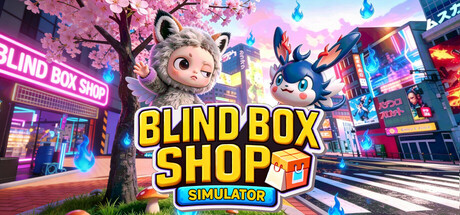
Some videos and images in this game are generated using artificial intelligence. AI tools were used to enhance visual effects and create unique scenes, carefully aligned with the game's art style.
This game has used AI in debugging and some code tweaks with help from a human, and some development assets that have since been replaced with human made assets
Generative AI is used to assist with the creation of some art assets, voice content, and localization/translation. All localized text is reviewed and edited by the developer.
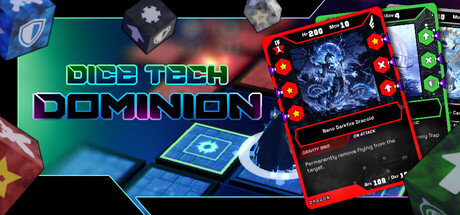
Dice Tech Dominion was developed as a solo indie project with the help of several AI tools during production.
Meshy.ai was used to create temporary 3D monster model assets. Midjourney was used to create temporary monster portrait images and related visual concept material. Claude and Codex were used as coding assistants for implementation support, debugging help, project organization, documentation, and assistance with some visual effect and animation logic.
All gameplay design decisions, balancing decisions, final implementation choices, editing, integration, testing, and publishing decisions are made by the developer.
Some current visual assets are AI-generated or AI-assisted. My goal is to replace the AI-generated imagery and temporary visual assets with original artwork and models created by human artists as the project grows. I am opening paid work opportunities and commissions for artists to help create final human-made monster artwork, illustrations, and visual assets for the game.
No AI tool is used to generate live gameplay content during play. The AI tools were used during development as production assistance and temporary asset creation tools.
Currently, we use AI to modify some of the character voices featured in the game. Additionally, we are planning to introduce several features that leverage Generative, including:
- Seedling Speech Bubbles: AI-generated dialogue for Seedlings to enhance their interactions.
- Seedling Thought Bubbles: AI-generated internal thoughts to give Seedlings more personality and depth.
- Seedling Responses: AI-driven replies to messages that players send to their Seedlings.
Some voice acting, music, and graphics(SVG) and game capsules/main menu art were created using AI generation tools All content was reviewed and curated by the developer.
Infinite GalGame is an AI-driven visual novel engine that generates a completely unique story every time you play.
There is no fixed script. No predetermined ending. You type — and the AI writes the next scene.
🎮 How It Works
Launch the game, click Start, and an opening scene is generated instantly. From there, choose from suggested options or type your own response freely. The AI director crafts each turn: dialogue, character emotion, scene atmosphere, and a matching anime-style CG illustration — all in real time.
✨ Features
∙ Truly Infinite Stories Every playthrough is different. The AI generates dialogue, plot twists, and character moments on the fly — no two sessions will ever be alike.
∙ Anime CG Illustration Each scene is paired with a freshly generated visual novel-style illustration. Characters maintain a consistent appearance throughout your story.
∙ Custom Character Cards Import SillyTavern-compatible character cards (PNG) to play with your own characters — complete with custom personality, backstory, scenario, and opening lines.
∙ Save & Load System Save your story progress at any point and pick up right where you left off.
∙ Bilingual Support Switch seamlessly between Chinese and English. Story content, UI, and AI output all adapt to your chosen language.
∙ Optional AI Voice Characters can speak their lines aloud with AI-generated voices matched to their gender, age, and personality.
∙ Safe & Moderated Built-in multi-layer content safety: keyword filtering on both input and output, AI self-review on every response, and a one-click in-game report system.
📝 Note Infinite GalGame requires an internet connection to generate stories. Content is produced by AI and may occasionally be imperfect — use the in-game report button to flag anything unusual.
The developer used generative AI tools to assist in creating some of the game's visual assets (such as certain background environments, UI elements, or base sketches for character portraits). All AI-generated assets have been strictly reviewed, manually edited, and pixel-refined by the developer to ensure they fully align with the game's overall retro art style and world-building.
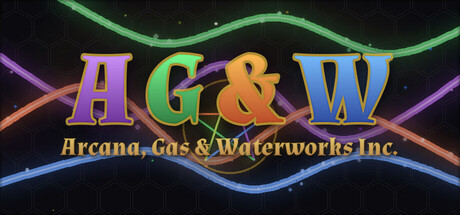
The pipes, ley lines, and gas mains of Arcana, Gas & Waterworks Inc. were designed, debated, and duct-taped together by a single developer. All music was licensed from real indie musicians, who did NOT use generative AI in any way, and who are credited in the game. Generative AI tools helped bring AGW Inc. to life by turning hand-drawn sketches into finished art, scripting sound effects, and contributing early drafts of in-game text. All of this content was rewritten, expanded, or replaced by the developer to fit the game's voice and world. Thanks to the help of these AI tools, I was able to finally answer the burning question, "What if fantasy worlds needed infrastructure?"
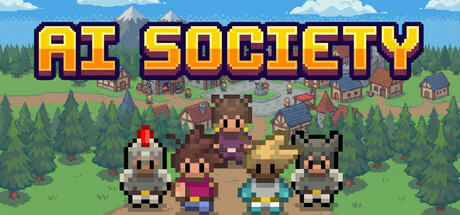
AI Society uses local generative AI (via Ollama) to power each character's behavior, dialogue, and decision-making. Based on the personality traits, hobbies, and description you set for each character, the AI determines their daily routines, job choices, relationships, and what they post on the in-game social media feed. All AI processing runs entirely on the player's machine — no data is sent to external servers.
Generative AI was used in a limited and supportive way during development. AI tools were utilized to help draft and refine parts of the store page description, and to assist in editing or enhancing some visual assets for presentation and marketing purposes.
AI coding assistants were used during development to help write and debug game code. All game content — visuals, audio, color palettes, recipes, and gameplay mechanics — is procedurally generated by the game's own algorithms, not by generative AI.
Some in-game visual assets, including background images and thematic artwork, were created using generative AI tools and are included as part of the game’s environment and UI customization themes. All AI-generated content was reviewed and edited prior to inclusion.
We use AI selectively to generate pre-rendered backgrounds for our games, as well as supporting assets for store page, marketing materials and game assets, while ensuring all content is polished to maintain a consistent artistic style.
Generative AI tools were used during development to assist in creating art, 3D models, music, and code. All AI-assisted content was manually reviewed and altered for optimization to align with the aesthetic and vision for the game.
Mithril & Mud uses AI-assisted development tools during the programming process. All game design, systems, and content decisions are made by the developer. No AI-generated content is presented to players during gameplay — all visuals and audio are created through procedural generation algorithms, not generative AI.
Generative AI was used to help code the game, create music, create sound effects (including voice lines), and create marketing assets such as the capsule and other images.
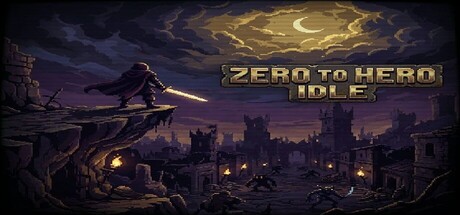
The development of Zero to Hero was assisted by Generative AI tools (Large Language Models). As a solo developer and non-programmer, I utilized AI to help write the game's source code, debug errors, extensive refactoring, and assist in designing mathematical progression systems. All AI-generated code and content were manually reviewed, tested, and refined to ensure a cohesive and fun gameplay experience. The game's core design, vision, and final polish are human-curated.
MetaDoc uses generative AI to assist users in writing, editing, and structuring documents. AI features include text generation, rewriting, summarization, and outline creation.
AI services are provided and managed by MetaDoc through its own backend infrastructure. Users can access AI features using in-app credits or subscriptions purchased via Steam.
A limited free quota may be available for initial experience and testing purposes.
All AI-generated content is initiated, controlled, and reviewed by the user. Users are responsible for the content they generate and choose to use.
LingoHUD's output is strictly limited to language translation and speech-to-text
transcription of content already present on the user's screen or audio. It does not
generate creative, original, or open-ended content.
Content moderation: The translation and recognition models process only user-initiated
input that the user explicitly captures via a hotkey. The software does not produce
novel content; it converts existing content from one language to another, or from
speech and images to text. All processing is deterministic and bounded to the captured
input.
Some videos and images in this game are generated using artificial intelligence. AI tools were used to enhance visual effects and create unique scenes, carefully aligned with the game's art style.
This game has used AI in debugging and some code tweaks with help from a human, and some development assets that have since been replaced with human made assets
Generative AI is used to assist with the creation of some art assets, voice content, and localization/translation. All localized text is reviewed and edited by the developer.
Dice Tech Dominion was developed as a solo indie project with the help of several AI tools during production.
Meshy.ai was used to create temporary 3D monster model assets. Midjourney was used to create temporary monster portrait images and related visual concept material. Claude and Codex were used as coding assistants for implementation support, debugging help, project organization, documentation, and assistance with some visual effect and animation logic.
All gameplay design decisions, balancing decisions, final implementation choices, editing, integration, testing, and publishing decisions are made by the developer.
Some current visual assets are AI-generated or AI-assisted. My goal is to replace the AI-generated imagery and temporary visual assets with original artwork and models created by human artists as the project grows. I am opening paid work opportunities and commissions for artists to help create final human-made monster artwork, illustrations, and visual assets for the game.
No AI tool is used to generate live gameplay content during play. The AI tools were used during development as production assistance and temporary asset creation tools.
Currently, we use AI to modify some of the character voices featured in the game. Additionally, we are planning to introduce several features that leverage Generative, including:
- Seedling Speech Bubbles: AI-generated dialogue for Seedlings to enhance their interactions.
- Seedling Thought Bubbles: AI-generated internal thoughts to give Seedlings more personality and depth.
- Seedling Responses: AI-driven replies to messages that players send to their Seedlings.
Some voice acting, music, and graphics(SVG) and game capsules/main menu art were created using AI generation tools All content was reviewed and curated by the developer.
Infinite GalGame is an AI-driven visual novel engine that generates a completely unique story every time you play.
There is no fixed script. No predetermined ending. You type — and the AI writes the next scene.
🎮 How It Works
Launch the game, click Start, and an opening scene is generated instantly. From there, choose from suggested options or type your own response freely. The AI director crafts each turn: dialogue, character emotion, scene atmosphere, and a matching anime-style CG illustration — all in real time.
✨ Features
∙ Truly Infinite Stories Every playthrough is different. The AI generates dialogue, plot twists, and character moments on the fly — no two sessions will ever be alike.
∙ Anime CG Illustration Each scene is paired with a freshly generated visual novel-style illustration. Characters maintain a consistent appearance throughout your story.
∙ Custom Character Cards Import SillyTavern-compatible character cards (PNG) to play with your own characters — complete with custom personality, backstory, scenario, and opening lines.
∙ Save & Load System Save your story progress at any point and pick up right where you left off.
∙ Bilingual Support Switch seamlessly between Chinese and English. Story content, UI, and AI output all adapt to your chosen language.
∙ Optional AI Voice Characters can speak their lines aloud with AI-generated voices matched to their gender, age, and personality.
∙ Safe & Moderated Built-in multi-layer content safety: keyword filtering on both input and output, AI self-review on every response, and a one-click in-game report system.
📝 Note Infinite GalGame requires an internet connection to generate stories. Content is produced by AI and may occasionally be imperfect — use the in-game report button to flag anything unusual.
The developer used generative AI tools to assist in creating some of the game's visual assets (such as certain background environments, UI elements, or base sketches for character portraits). All AI-generated assets have been strictly reviewed, manually edited, and pixel-refined by the developer to ensure they fully align with the game's overall retro art style and world-building.
The pipes, ley lines, and gas mains of Arcana, Gas & Waterworks Inc. were designed, debated, and duct-taped together by a single developer. All music was licensed from real indie musicians, who did NOT use generative AI in any way, and who are credited in the game. Generative AI tools helped bring AGW Inc. to life by turning hand-drawn sketches into finished art, scripting sound effects, and contributing early drafts of in-game text. All of this content was rewritten, expanded, or replaced by the developer to fit the game's voice and world. Thanks to the help of these AI tools, I was able to finally answer the burning question, "What if fantasy worlds needed infrastructure?"
AI Society uses local generative AI (via Ollama) to power each character's behavior, dialogue, and decision-making. Based on the personality traits, hobbies, and description you set for each character, the AI determines their daily routines, job choices, relationships, and what they post on the in-game social media feed. All AI processing runs entirely on the player's machine — no data is sent to external servers.
Generative AI was used in a limited and supportive way during development. AI tools were utilized to help draft and refine parts of the store page description, and to assist in editing or enhancing some visual assets for presentation and marketing purposes.
AI coding assistants were used during development to help write and debug game code. All game content — visuals, audio, color palettes, recipes, and gameplay mechanics — is procedurally generated by the game's own algorithms, not by generative AI.
Some in-game visual assets, including background images and thematic artwork, were created using generative AI tools and are included as part of the game’s environment and UI customization themes. All AI-generated content was reviewed and edited prior to inclusion.
We use AI selectively to generate pre-rendered backgrounds for our games, as well as supporting assets for store page, marketing materials and game assets, while ensuring all content is polished to maintain a consistent artistic style.
Generative AI tools were used during development to assist in creating art, 3D models, music, and code. All AI-assisted content was manually reviewed and altered for optimization to align with the aesthetic and vision for the game.
Mithril & Mud uses AI-assisted development tools during the programming process. All game design, systems, and content decisions are made by the developer. No AI-generated content is presented to players during gameplay — all visuals and audio are created through procedural generation algorithms, not generative AI.
Generative AI was used to help code the game, create music, create sound effects (including voice lines), and create marketing assets such as the capsule and other images.
The development of Zero to Hero was assisted by Generative AI tools (Large Language Models). As a solo developer and non-programmer, I utilized AI to help write the game's source code, debug errors, extensive refactoring, and assist in designing mathematical progression systems. All AI-generated code and content were manually reviewed, tested, and refined to ensure a cohesive and fun gameplay experience. The game's core design, vision, and final polish are human-curated.