Public Steam disclosure research25,383 disclosures tracked
Where do games disclose AI use?
Search developers’ Steam disclosures, compare classified AI use across
games, and follow recorded changes.
This index adds cross-game classifications and statistics to
statements published on individual store pages.
Groups reflect automatic analysis of public disclosures; mature records are excluded. These counts do not measure AI use across all of Steam.
Missing or unclear statements cannot establish whether a game uses AI.
Some visual assets in this game were created or enhanced using generative AI tools during development. These assets were reviewed and refined by the development team before being included in the final product.
The game does not use AI to generate content during gameplay.
At the core of Power Up, we believe in pushing the boundaries of creativity by blending human artistry with cutting-edge technology. To deliver a truly immersive and high-energy experience, we have utilized Generative AI tools in the following areas:
Music and Soundscapes: Some of the soundtracks and ambient audio elements in the game were composed or enhanced using AI-driven music generation tools. These were used as a foundational layer, then meticulously arranged and polished by our team to ensure they perfectly match the rhythm and atmosphere of the gameplay.
Visual Assets and World-Building: Certain environmental textures, concept art, and UI elements were developed with the assistance of AI image generation to create a diverse and visually rich world.
Narrative and Dialogue: AI tools were used to brainstorm dialogue variations and assist in localization, ensuring that the world feels alive and reactive to your progress.
Developer’s Commitment: Every AI-generated asset has been hand-reviewed, edited, and refined by our developers. We use AI not as a replacement for human creativity, but as a "Power Up" for our team to bring you a larger, more polished, and more melodic gaming experience than ever before.
This game includes elements using Generative AI in some pre-produced content such as intro videos.
These contents were created during the development process and finally used after editing and post-processing by the development team, and no Generative AI was used for gameplay.
Localization was assisted by AI for multilingual support.
A small number of UI icons (approx. 10) were created using AI tools and manually refined by the developer.
Generative AI was used during development to assist in creating certain visual assets (pixel art characters, scene tiles, etc.). All AI-generated content was reviewed, curated, and modified by hand. Game code, design, and narrative were created by human developers and assisted with Generative AI.
Generative AI tools were used as part of a human-led design workflow for a limited portion of the game’s pre-generated artwork and promotional materials, including Steam store assets. Professional graphic designers directed, edited, and finalized all visual assets, which were reviewed before inclusion. No content is generated using AI while the game is running.
During development, generative AI was used as a supporting tool to accelerate coding workflows and assist in creating pixel art assets. All game design, mechanics, and creative direction are human-driven.
The game's visuals heavily utilize generative artificial intelligence, and we promise to replace the AI-generated art assets for every 10,000 copies sold. After reaching 100,000 copies sold, all in-game art assets will be hand-drawn.
Developer’s Note:
Due to the challenges of solo game development and being a newcomer to the industry, I utilized AI tools to assist in certain areas of production. This includes specific textures, minor 3D models, and parts of the programming logic. However, all voice acting and musical scores are original works, created as a gesture of support by my close friends.
AI tools were used only to assist in the creation of certain marketing artwork for the Steam store page.
All in-game content, screenshots, and trailer were created without the use of generative AI.
The developer uses AI tools (such as ChatGPT, Claude, and Cursor) to assist with writing code, drafting in-game text like card effect descriptions, and brainstorming narrative elements. Additionally, AI is utilized to provide draft localizations for various languages.
However, all graphical assets (including character illustrations and monster designs) and audio are entirely human-made. No AI-generated images, pre-rendered graphics, or sound files are used in this game.
In this game, the developer uses AI tools in the creation of the following pre-generated content that players see:
1. Artwork: Image assets used on the store page and in the Steam library (capsule images, header images, etc.) and promotional materials.
2. Text: In-game text, store page descriptions, and their multilingual translations.
Currently only AI generated item is the Store graphics.
It is, however, intended in the future for the game itself to contain AI generated graphics as well.
We are an indie team of two programmers. We are currently using AI-generated art so we can start testing the game right away. Thank you for your understanding.
Some textures and 3D models in this game were created using AI-assisted procedural rendering during development. The game does not generate any content with AI at runtime.
This game utilizes generative AI tools to assist in the creation of select 2D artwork, specifically some UI icons, league background themes, and store page promotional materials. Other in-game assets, such as enemy art and player icon and GUI, were acquired through licensed asset stores.
In development and early prototyping, Rankbreaker used some generative art assets. These are being actively replaced with original work created by professional artists, and this transition is already underway.
Current contributions include:
Leonardo Veronesi: Disruptors “Void,” “Raven,” “Recoil,” and character card “Axl Rydell”
Samuele Colombini: Character cards “Bloodthirst,” “Ironjaw,” “Riff the Cat,” and “Stonewhal”
Richard Kessler: Location art “Deadspace,” “Sepulcher,” and “The Arc”
All generative assets are being phased out in favor of fully original artwork as development continues.
This game was developed with the assistance of AI tools during certain stages of production. These tools were used to support and enhance the creative process, while all final content was curated and integrated by the developer.
Programming Support: AI-assisted tools were used to help prototype and refine parts of the game logic and structure.
Image Generation: Some visual assets were created or enhanced using AI image generation, followed by manual selection and adjustments.
Music Generation: Portions of the soundtrack were generated with AI tools and further refined to match the game's atmosphere.
Text Generation: AI was used to assist in drafting and polishing certain in-game text and descriptions.
All AI-assisted content was reviewed, edited, and adapted to ensure consistency with the game’s design and artistic direction.
Some artwork used in store page capsule images and card illustrations was created with the assistance of AI image generation tools. All AI-generated assets were reviewed, curated, and edited by the developer. No AI is used during gameplay.
All narrative, lore, and in-game text were written entirely by our team. Music and sound design are produced by our talented sound designer. Character concepts and initial illustrations/visual designs are human created. AI tools were used to assist in the modeling pipeline, with all output reviewed, adjusted, and approved by the team. We are actively working towards bringing on a 3D artist as the project grows (reach out to us if this might be you).
All visual assets in this game — including character illustrations, environments, and card art — are designed and directed by a human artist, with AI tools used as an assistive means for iterative refinement and polish. The final in-game visuals are fully controlled by the designer. No AI-generated content involves copying from other games.
This game uses generative AI in the following limited ways:
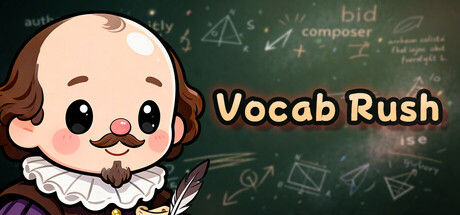
AI tools were used during development to assist in generating and organizing vocabulary word data.
AI may have been used to help draft or structure non-final text content, which has been manually reviewed and edited by the developer.
No generative AI is used in real-time gameplay, player interaction, or runtime content generation.
This game does not use external AI services during gameplay.
This product uses AI tools to assist in generating code, art assets, and other content. All AI-generated materials have been significantly edited, modified, and polished by human developers to ensure originality, quality, and compliance with copyright regulations.
Generative AI is used as an assistive tool in the development of this game, including visual assets (item, ability, and boss icons), code, and music. All AI-generated content is produced under direct human creative direction, with the developer serving as director and approver at every stage. AI assists — the human decides.
One developer. AI tools helped with images and text because some things are bigger than one pair of hands. Everything you see reflects my own creative decisions.
A pre-generated AI tool was used during development to help create the main menu background image. The final selected image was curated and integrated by the developer. No live AI-generated content is present in gameplay.
Generative AI "Gemini" was utilized across various stages of development, including coding and image generation.
While AI helped improve development efficiency, all final adjustments and quality control were performed manually with the utmost care to ensure the best possible experience for our players.
During the development of Furious Kitchen, we utilized generative Artificial Intelligence (AI) tools to assist in content creation and optimization. The specific implementations are as follows:
Programming & Scripts: We used AI programming assistants (Large Language Models) to help write and refactor underlying game logic code, as well as to assist with the implementation of the multi-language localization system and text translation.
Art Assets : Certain visual elements within the game (such as UI icons, background assets, or promotional base art) were created with the assistance of AI image generation tools. All generated images were subsequently redrawn, modified, and stylized manually by the developer to fit the game's aesthetic.
Music & Audio : Some background music or sound effect assets in the game were composed and arranged using AI audio generation tools.
This game does not feature any live-generated AI content (i.e., AI content generated in real-time while playing). All AI-assisted assets were pre-generated during the development phase and carefully reviewed to ensure they do not infringe upon any third-party copyrights.
Generative AI was carefully used for structuring the majority of content available in the decks, given the vast breadth of the topics/languages available. However, every piece of information was extracted from publicly available curated sources, where AI was used for the re-writing the facts into questions. Also, in general the distractors (wrong answers) are intelligently chosen at runtime based on similar answers of similar length, however it can occur that certain answer pools where too small for reasonable gameplay. For this, fake answers were generated by AI as well, albeit rarely.
AI-generated images were used during the concept and reference phase. All final in-game artwork, including card illustrations, backgrounds, UI elements, and promotional materials, was hand-crafted and finalized by the developer.
Some visual assets in this game were created or enhanced using generative AI tools during development. These assets were reviewed and refined by the development team before being included in the final product.
The game does not use AI to generate content during gameplay.
At the core of Power Up, we believe in pushing the boundaries of creativity by blending human artistry with cutting-edge technology. To deliver a truly immersive and high-energy experience, we have utilized Generative AI tools in the following areas:
Music and Soundscapes: Some of the soundtracks and ambient audio elements in the game were composed or enhanced using AI-driven music generation tools. These were used as a foundational layer, then meticulously arranged and polished by our team to ensure they perfectly match the rhythm and atmosphere of the gameplay.
Visual Assets and World-Building: Certain environmental textures, concept art, and UI elements were developed with the assistance of AI image generation to create a diverse and visually rich world.
Narrative and Dialogue: AI tools were used to brainstorm dialogue variations and assist in localization, ensuring that the world feels alive and reactive to your progress.
Developer’s Commitment: Every AI-generated asset has been hand-reviewed, edited, and refined by our developers. We use AI not as a replacement for human creativity, but as a "Power Up" for our team to bring you a larger, more polished, and more melodic gaming experience than ever before.
This game includes elements using Generative AI in some pre-produced content such as intro videos.
These contents were created during the development process and finally used after editing and post-processing by the development team, and no Generative AI was used for gameplay.
Localization was assisted by AI for multilingual support.
A small number of UI icons (approx. 10) were created using AI tools and manually refined by the developer.
Generative AI was used during development to assist in creating certain visual assets (pixel art characters, scene tiles, etc.). All AI-generated content was reviewed, curated, and modified by hand. Game code, design, and narrative were created by human developers and assisted with Generative AI.
Generative AI tools were used as part of a human-led design workflow for a limited portion of the game’s pre-generated artwork and promotional materials, including Steam store assets. Professional graphic designers directed, edited, and finalized all visual assets, which were reviewed before inclusion. No content is generated using AI while the game is running.
During development, generative AI was used as a supporting tool to accelerate coding workflows and assist in creating pixel art assets. All game design, mechanics, and creative direction are human-driven.
The game's visuals heavily utilize generative artificial intelligence, and we promise to replace the AI-generated art assets for every 10,000 copies sold. After reaching 100,000 copies sold, all in-game art assets will be hand-drawn.
Developer’s Note:
Due to the challenges of solo game development and being a newcomer to the industry, I utilized AI tools to assist in certain areas of production. This includes specific textures, minor 3D models, and parts of the programming logic. However, all voice acting and musical scores are original works, created as a gesture of support by my close friends.
AI tools were used only to assist in the creation of certain marketing artwork for the Steam store page.
All in-game content, screenshots, and trailer were created without the use of generative AI.
The developer uses AI tools (such as ChatGPT, Claude, and Cursor) to assist with writing code, drafting in-game text like card effect descriptions, and brainstorming narrative elements. Additionally, AI is utilized to provide draft localizations for various languages.
However, all graphical assets (including character illustrations and monster designs) and audio are entirely human-made. No AI-generated images, pre-rendered graphics, or sound files are used in this game.
In this game, the developer uses AI tools in the creation of the following pre-generated content that players see:
1. Artwork: Image assets used on the store page and in the Steam library (capsule images, header images, etc.) and promotional materials.
2. Text: In-game text, store page descriptions, and their multilingual translations.
Currently only AI generated item is the Store graphics.
It is, however, intended in the future for the game itself to contain AI generated graphics as well.
We are an indie team of two programmers. We are currently using AI-generated art so we can start testing the game right away. Thank you for your understanding.
Some textures and 3D models in this game were created using AI-assisted procedural rendering during development. The game does not generate any content with AI at runtime.
This game utilizes generative AI tools to assist in the creation of select 2D artwork, specifically some UI icons, league background themes, and store page promotional materials. Other in-game assets, such as enemy art and player icon and GUI, were acquired through licensed asset stores.
In development and early prototyping, Rankbreaker used some generative art assets. These are being actively replaced with original work created by professional artists, and this transition is already underway.
Current contributions include:
Leonardo Veronesi: Disruptors “Void,” “Raven,” “Recoil,” and character card “Axl Rydell”
Samuele Colombini: Character cards “Bloodthirst,” “Ironjaw,” “Riff the Cat,” and “Stonewhal”
Richard Kessler: Location art “Deadspace,” “Sepulcher,” and “The Arc”
All generative assets are being phased out in favor of fully original artwork as development continues.
This game was developed with the assistance of AI tools during certain stages of production. These tools were used to support and enhance the creative process, while all final content was curated and integrated by the developer.
Programming Support: AI-assisted tools were used to help prototype and refine parts of the game logic and structure.
Image Generation: Some visual assets were created or enhanced using AI image generation, followed by manual selection and adjustments.
Music Generation: Portions of the soundtrack were generated with AI tools and further refined to match the game's atmosphere.
Text Generation: AI was used to assist in drafting and polishing certain in-game text and descriptions.
All AI-assisted content was reviewed, edited, and adapted to ensure consistency with the game’s design and artistic direction.
Some artwork used in store page capsule images and card illustrations was created with the assistance of AI image generation tools. All AI-generated assets were reviewed, curated, and edited by the developer. No AI is used during gameplay.
All narrative, lore, and in-game text were written entirely by our team. Music and sound design are produced by our talented sound designer. Character concepts and initial illustrations/visual designs are human created. AI tools were used to assist in the modeling pipeline, with all output reviewed, adjusted, and approved by the team. We are actively working towards bringing on a 3D artist as the project grows (reach out to us if this might be you).
All visual assets in this game — including character illustrations, environments, and card art — are designed and directed by a human artist, with AI tools used as an assistive means for iterative refinement and polish. The final in-game visuals are fully controlled by the designer. No AI-generated content involves copying from other games.
This game uses generative AI in the following limited ways:
AI tools were used during development to assist in generating and organizing vocabulary word data.
AI may have been used to help draft or structure non-final text content, which has been manually reviewed and edited by the developer.
No generative AI is used in real-time gameplay, player interaction, or runtime content generation.
This game does not use external AI services during gameplay.
This product uses AI tools to assist in generating code, art assets, and other content. All AI-generated materials have been significantly edited, modified, and polished by human developers to ensure originality, quality, and compliance with copyright regulations.
Generative AI is used as an assistive tool in the development of this game, including visual assets (item, ability, and boss icons), code, and music. All AI-generated content is produced under direct human creative direction, with the developer serving as director and approver at every stage. AI assists — the human decides.
One developer. AI tools helped with images and text because some things are bigger than one pair of hands. Everything you see reflects my own creative decisions.
A pre-generated AI tool was used during development to help create the main menu background image. The final selected image was curated and integrated by the developer. No live AI-generated content is present in gameplay.
Generative AI "Gemini" was utilized across various stages of development, including coding and image generation.
While AI helped improve development efficiency, all final adjustments and quality control were performed manually with the utmost care to ensure the best possible experience for our players.
During the development of Furious Kitchen, we utilized generative Artificial Intelligence (AI) tools to assist in content creation and optimization. The specific implementations are as follows:
Programming & Scripts: We used AI programming assistants (Large Language Models) to help write and refactor underlying game logic code, as well as to assist with the implementation of the multi-language localization system and text translation.
Art Assets : Certain visual elements within the game (such as UI icons, background assets, or promotional base art) were created with the assistance of AI image generation tools. All generated images were subsequently redrawn, modified, and stylized manually by the developer to fit the game's aesthetic.
Music & Audio : Some background music or sound effect assets in the game were composed and arranged using AI audio generation tools.
This game does not feature any live-generated AI content (i.e., AI content generated in real-time while playing). All AI-assisted assets were pre-generated during the development phase and carefully reviewed to ensure they do not infringe upon any third-party copyrights.
Generative AI was carefully used for structuring the majority of content available in the decks, given the vast breadth of the topics/languages available. However, every piece of information was extracted from publicly available curated sources, where AI was used for the re-writing the facts into questions. Also, in general the distractors (wrong answers) are intelligently chosen at runtime based on similar answers of similar length, however it can occur that certain answer pools where too small for reasonable gameplay. For this, fake answers were generated by AI as well, albeit rarely.
AI-generated images were used during the concept and reference phase. All final in-game artwork, including card illustrations, backgrounds, UI elements, and promotional materials, was hand-crafted and finalized by the developer.