Public Steam disclosure research25,383 disclosures tracked
Where do games disclose AI use?
Search developers’ Steam disclosures, compare classified AI use across
games, and follow recorded changes.
This index adds cross-game classifications and statistics to
statements published on individual store pages.
Groups reflect automatic analysis of public disclosures; mature records are excluded. These counts do not measure AI use across all of Steam.
Missing or unclear statements cannot establish whether a game uses AI.
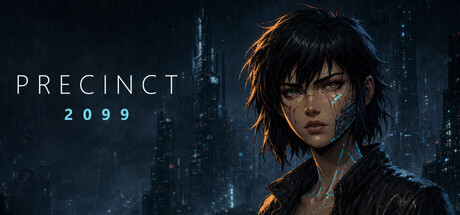
Precinct 2099 uses generative AI as a production tool. Part of the visual material (backgrounds, character art and store images) and the music were created with AI tools and then selected, edited and art-directed by hand by our team. Some of the localisation work is AI-assisted. The story, script, characters and game design are written by humans. The game does not generate any content live while you play: everything ships pre-generated with the build.
Pre-generated generative AI was used during development to assist with visual artwork, music, sound effects, spoken audio, narrative and dialogue, and portions of the game code. The developer directed, reviewed, selected, edited, arranged, tested, and integrated the final content. No generative AI content is created while the game is running.
Some 3D assets in this game were created with the help of AI generation tools, then edited, retextured and integrated by hand. Parts of the written text, including store page copy and in-game text translations, were drafted with AI assistance and reviewed by the developer. No content is generated live while you play, and no AI-generated voice acting is used. Everything is created and checked before release.
Portions of this game's artwork were created with generative AI tools under human direction, curation, and editing — including aircraft counter sprites, scene illustrations, character portraits, achievement icons, and some store/marketing images. The store trailer's narration is AI-generated voiceover. Some code was developed with AI assistance and human review. The game does not generate any content with AI while running.
Generative AI was used to create initial concept art, background environment artwork, and promotional marketing materials for the Steam Store page. All generated assets were subsequently refined, edited, and formatted by the developer before final implementation into the project
Generative AI tools were used as an editorial and localization assistant for some written content in the game and on the Steam store page. All such text is reviewed, revised, and approved by the development team. The game does not use generative AI at runtime.
This game uses generative artificial intelligence in part to improve development efficiency.
It is primarily utilized to assist with programming implementation and development tasks, as well as for generating BGM melodies and assisting in the creation of in-game messages.
However, all final decisions regarding game specifications and quality control are made by the developer, and only AI-generated content that has been reviewed and adjusted by human hands is used.
All 2D artwork (hwatu card illustrations, character portraits, backgrounds) and music tracks were created using generative AI tools, then curated, edited, and assembled by the developer. All AI content is pre-rendered during development — nothing is generated live at runtime. Localization was machine-assisted and human-reviewed. Store page assets were produced the same way.
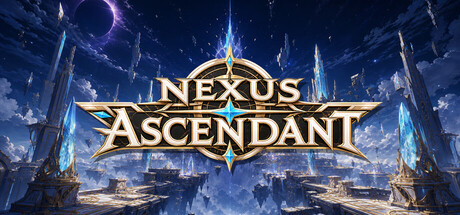
Nexus Ascendant contains pre-generated content created with the assistance of generative AI tools during development. This includes portions of the character and environment artwork, animated visual assets, user-interface graphics, gameplay textures, narrative writing, Japanese voice audio, and marketing materials. All AI-assisted content was selected, edited, reviewed, and integrated by the developer before inclusion. The game does not generate AI content during gameplay or transmit player data to generative AI services.
Some visual assets in the game (character portraits, photographs and website imagery) were created with the assistance of AI image generation tools, then curated and edited by the developer. Portions of the game's code were written with AI coding assistance. All narrative, game design, voice acting and story content were created by humans. The game does not generate any content at runtime using AI.
This game uses generative AI to create some of its visual assets, including artwork, background imagery, and marketing graphics. All AI-generated images are reviewed and edited by a human before release.
Narrative dialogue and story text were generated with AI assistance. Placeholder textures generated with AI appear in store page screenshots and marketing assets.
As an indie dev, I leveraged AI to create this game. Some voices are AI-generated. Concept art was generated for inspiration and then built from scratch.
The cinematic artworks were created using AI and are based on my own concept sketches. They were used to reinforce the emotional atmosphere and my vision of the game world, while the game itself is designed entirely in hand-drawn pixel art.
AI was used for programming
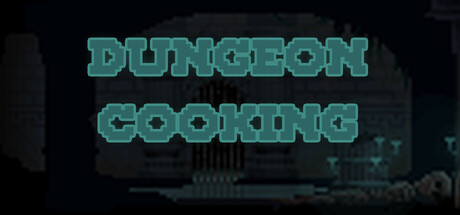
Dungeon Cooking uses generative AI tools for some of its content, created during development (pre-generated, not generated in real time):
- Part of the creature art: 6 of the game's 18 monsters were made with AI image tools, then edited and integrated by the developer.
- Some in-game dungeon event content was drafted with AI assistance and edited by the developer.
- The announcement trailer was produced using AI tools.
The rest of the game's art comes from licensed asset packs and the developer's own work. All AI-generated content was reviewed and curated by the developer before shipping.
During the development process, I use procedural and AI-based tools to assist with content creation. In all such cases, the final product reflects my own creativity and vision as a solo developer. Examples include utilizing AI tools to help generate and refine certain textures and 3D models in the game.
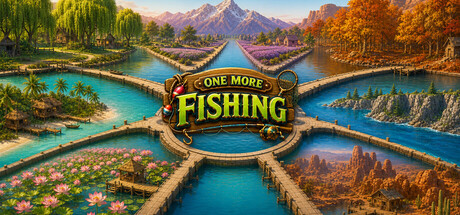
One More Fishing contains selected pre-generated content created or refined with generative AI tools during development. This includes selected in-game artwork and UI assets, selected Steam store and marketing artwork, audio assets such as music, ambience, sound effects and selected character voice lines, plus assistance with narrative and quest drafting and localization. All shipped content is selected, edited and integrated before release.
The game does not use live-generated AI. It does not contact generative AI services while running and does not send player prompts or player data to such services. At runtime it only loads, selects, animates, processes and mixes fixed content prepared before shipping.
Algumas imagens presentes neste jogo foram criadas com auxílio de inteligência artificial generativa e posteriormente revisadas, editadas e integradas pelo desenvolvedor. Todo o restante do jogo, incluindo programação, design, mecânicas e direção criativa, foi desenvolvido manualmente.
This game uses AI technology in the production of some of its illustrations, music, voice, and text assets. All generated assets have been reviewed and adjusted by the developer before inclusion.
The game also includes an "offline AI study assistant." This assistant does NOT generate text. It identifies the intent of the player's question and searches through study data that the developer has written and verified in advance, then displays the matching explanation as-is. It uses two bundled machine-learning models to improve search accuracy (an embedding model, multilingual-e5-large / MIT, and a re-ranking model, ms-marco-MiniLM-L-6-v2 / Apache-2.0), but these models do not generate any answer text. All processing runs entirely on the player's device with no external data transmission (no GPU required; runs on CPU). Any explanation shown was written and verified in advance by the developer. Note that it cannot answer topics outside the included data, and content may become outdated due to changes in exam rules or laws, so please confirm important matters with official exam information. This AI assistant is a supplementary study feature.
Some UI elements and 2D visual assets were created with the assistance of generative AI tools and then manually edited and refined in Photoshop. All AI-assisted content has been reviewed by the developer to ensure it does not infringe on third-party intellectual property.
Character portraits are entirely hand-drawn by artists. Background assets are created using AI as preliminary sketches, then comprehensively revised and manually reworked to achieve consistent art style.
This game uses AI tools in a supporting capacity during the creation of some assets (such as background images, music, and sound effects).
No generated assets are used as-is; all have been processed, adjusted, and composited by human hands before being included in the game.
Some visual assets in this demo are AI-generated placeholders, used temporarily due to budget constraints as a solo developer. These are planned to be replaced with final hand-crafted art before the game's full release.
This game uses generative AI to assist in the creation of certain illustrations, visual assets, and some monster graphics. These assets are carefully selected, edited, and integrated into the game by the developer. The game design, scenario, systems, programming, gameplay, maps, and event content are all created by the developer.
This game uses content created or assisted by generative AI. Generative AI was used to help create and edit some visual assets, music/sound materials, and scripts. All final content was reviewed, selected, and adjusted by the developer before being included in the game.
This game includes optional local AI features:
Text Generation: A local language model periodically generates in-game short story events based on the player's typing activity.
Image Generation: A local image generation model may probabilistically generate illustrations for the corresponding story when a story event is triggered.
The AI features are purely an advanced option; whether you use them or not does not affect the core gameplay experience.
BirdBots uses generative AI tools during development to assist in the creation of certain promotional images, visual concepts, illustrations, and marketing materials. All AI-generated content has been reviewed, edited, and integrated by the developer. AI is not used during gameplay and does not affect the game's mechanics.
Generative AI tools were used only as a development assistant to help prototype and refine accessibility-related code and interface behavior. The game does not include AI-generated narrative, artwork, audio, characters, translations, or live-generated AI content.
This is a visual novel independently developed by an individual with no budget. It is based on an existing novel, with parts of the narrative text synthesized and refined using AI, which has been repeatedly checked, edited, and approved by the developer. The game's scenes and character models are also AI-generated, and have undergone extensive debugging, deletion, revision, and final confirmation before release to ensure compliance and quality.
AI was primarily used to assist in the creation of the game's music and sound effects. Most of the music tracks and sound effects were generated using AI tools and then edited and adapted for use in the game.
All visual assets, characters, environments, puzzles, story, and gameplay mechanics were created and designed manually by the developer.
This game uses generative AI for the following content. All of it was generated during development and shipped with the game; no content is generated at runtime.
- Music and sound effects (2 theme songs, in-game BGM, SFX): Suno
- Graphics (character art, backgrounds, event CGs, store page images): OpenAI
- Extra scenarios, concept and writing: OpenAI, Claude Code
- English text (translation of the main story and extras): Claude Code, OpenAI
- Game implementation (engine, game code): Claude Code
All art, music and story are 100% human created. All voice acting has a live voice actor recording/performance for every line of dialogue, voice changers were used on certain characters to pitch the sound higher or lower to better suit those specific characters. Some artist-created hand-painted assets were positioned into specific starting poses and ending poses, with in-between frames generated (affecting less-than 1% of the game animations, majority (99%) are animated by hand using 2D-bone-rigging and frame-by-frame animation), some generated in-between frames were then hand-painted over before being included in the game.
AI-generated content was used for some 2D artwork, loading screen assets, and some secondary 3D models. I reviewed, edited, and integrated all AI-assisted content into the game. The main game systems, world design, gameplay, narrative, and historical research were created and developed by me.
This game used generative AI as an assistive tool during development to help create some art assets and promotional materials. All AI-generated content was selected, modified, integrated, and quality-checked by the developer before being included in the final product. The game’s story, world-building, character design, gameplay systems, programming, and overall creative direction are original works designed and produced by the developer.
Generative AI tools were used to assist with the creation of some visual assets and music for the game. The resulting content was reviewed, edited, and integrated by the development team.
At this stage, some in-game text is translated using generative AI tools as a temporary solution. All other content — art, models, audio, and design — is created manually. AI translation will be replaced with professional human localization for the full release.
Some of this game's localized text was translated with AI assistance. All translated content has been manually reviewed and proofread to ensure quality and accuracy, and does not contain any illegal or infringing material.
Generative AI was used to assist in the creation of certain sound effects included in the game. These assets were generated during the development phase and are included as static elements in the final build. The AI was used as a supplementary tool to enhance environmental audio, while all creative direction, editing, and integration were performed by me as the solo developer
Precinct 2099 uses generative AI as a production tool. Part of the visual material (backgrounds, character art and store images) and the music were created with AI tools and then selected, edited and art-directed by hand by our team. Some of the localisation work is AI-assisted. The story, script, characters and game design are written by humans. The game does not generate any content live while you play: everything ships pre-generated with the build.
Pre-generated generative AI was used during development to assist with visual artwork, music, sound effects, spoken audio, narrative and dialogue, and portions of the game code. The developer directed, reviewed, selected, edited, arranged, tested, and integrated the final content. No generative AI content is created while the game is running.
Some 3D assets in this game were created with the help of AI generation tools, then edited, retextured and integrated by hand. Parts of the written text, including store page copy and in-game text translations, were drafted with AI assistance and reviewed by the developer. No content is generated live while you play, and no AI-generated voice acting is used. Everything is created and checked before release.
Portions of this game's artwork were created with generative AI tools under human direction, curation, and editing — including aircraft counter sprites, scene illustrations, character portraits, achievement icons, and some store/marketing images. The store trailer's narration is AI-generated voiceover. Some code was developed with AI assistance and human review. The game does not generate any content with AI while running.
Generative AI was used to create initial concept art, background environment artwork, and promotional marketing materials for the Steam Store page. All generated assets were subsequently refined, edited, and formatted by the developer before final implementation into the project
Generative AI tools were used as an editorial and localization assistant for some written content in the game and on the Steam store page. All such text is reviewed, revised, and approved by the development team. The game does not use generative AI at runtime.
This game uses generative artificial intelligence in part to improve development efficiency.
It is primarily utilized to assist with programming implementation and development tasks, as well as for generating BGM melodies and assisting in the creation of in-game messages.
However, all final decisions regarding game specifications and quality control are made by the developer, and only AI-generated content that has been reviewed and adjusted by human hands is used.
All 2D artwork (hwatu card illustrations, character portraits, backgrounds) and music tracks were created using generative AI tools, then curated, edited, and assembled by the developer. All AI content is pre-rendered during development — nothing is generated live at runtime. Localization was machine-assisted and human-reviewed. Store page assets were produced the same way.
Nexus Ascendant contains pre-generated content created with the assistance of generative AI tools during development. This includes portions of the character and environment artwork, animated visual assets, user-interface graphics, gameplay textures, narrative writing, Japanese voice audio, and marketing materials. All AI-assisted content was selected, edited, reviewed, and integrated by the developer before inclusion. The game does not generate AI content during gameplay or transmit player data to generative AI services.
Some visual assets in the game (character portraits, photographs and website imagery) were created with the assistance of AI image generation tools, then curated and edited by the developer. Portions of the game's code were written with AI coding assistance. All narrative, game design, voice acting and story content were created by humans. The game does not generate any content at runtime using AI.
This game uses generative AI to create some of its visual assets, including artwork, background imagery, and marketing graphics. All AI-generated images are reviewed and edited by a human before release.
Narrative dialogue and story text were generated with AI assistance. Placeholder textures generated with AI appear in store page screenshots and marketing assets.
As an indie dev, I leveraged AI to create this game. Some voices are AI-generated. Concept art was generated for inspiration and then built from scratch.
The cinematic artworks were created using AI and are based on my own concept sketches. They were used to reinforce the emotional atmosphere and my vision of the game world, while the game itself is designed entirely in hand-drawn pixel art.
AI was used for programming
Dungeon Cooking uses generative AI tools for some of its content, created during development (pre-generated, not generated in real time):
- Part of the creature art: 6 of the game's 18 monsters were made with AI image tools, then edited and integrated by the developer.
- Some in-game dungeon event content was drafted with AI assistance and edited by the developer.
- The announcement trailer was produced using AI tools.
The rest of the game's art comes from licensed asset packs and the developer's own work. All AI-generated content was reviewed and curated by the developer before shipping.
During the development process, I use procedural and AI-based tools to assist with content creation. In all such cases, the final product reflects my own creativity and vision as a solo developer. Examples include utilizing AI tools to help generate and refine certain textures and 3D models in the game.
One More Fishing contains selected pre-generated content created or refined with generative AI tools during development. This includes selected in-game artwork and UI assets, selected Steam store and marketing artwork, audio assets such as music, ambience, sound effects and selected character voice lines, plus assistance with narrative and quest drafting and localization. All shipped content is selected, edited and integrated before release.
The game does not use live-generated AI. It does not contact generative AI services while running and does not send player prompts or player data to such services. At runtime it only loads, selects, animates, processes and mixes fixed content prepared before shipping.
Algumas imagens presentes neste jogo foram criadas com auxílio de inteligência artificial generativa e posteriormente revisadas, editadas e integradas pelo desenvolvedor. Todo o restante do jogo, incluindo programação, design, mecânicas e direção criativa, foi desenvolvido manualmente.
This game uses AI technology in the production of some of its illustrations, music, voice, and text assets. All generated assets have been reviewed and adjusted by the developer before inclusion.
The game also includes an "offline AI study assistant." This assistant does NOT generate text. It identifies the intent of the player's question and searches through study data that the developer has written and verified in advance, then displays the matching explanation as-is. It uses two bundled machine-learning models to improve search accuracy (an embedding model, multilingual-e5-large / MIT, and a re-ranking model, ms-marco-MiniLM-L-6-v2 / Apache-2.0), but these models do not generate any answer text. All processing runs entirely on the player's device with no external data transmission (no GPU required; runs on CPU). Any explanation shown was written and verified in advance by the developer. Note that it cannot answer topics outside the included data, and content may become outdated due to changes in exam rules or laws, so please confirm important matters with official exam information. This AI assistant is a supplementary study feature.
Some UI elements and 2D visual assets were created with the assistance of generative AI tools and then manually edited and refined in Photoshop. All AI-assisted content has been reviewed by the developer to ensure it does not infringe on third-party intellectual property.
Character portraits are entirely hand-drawn by artists. Background assets are created using AI as preliminary sketches, then comprehensively revised and manually reworked to achieve consistent art style.
This game uses AI tools in a supporting capacity during the creation of some assets (such as background images, music, and sound effects).
No generated assets are used as-is; all have been processed, adjusted, and composited by human hands before being included in the game.
Some visual assets in this demo are AI-generated placeholders, used temporarily due to budget constraints as a solo developer. These are planned to be replaced with final hand-crafted art before the game's full release.
This game uses generative AI to assist in the creation of certain illustrations, visual assets, and some monster graphics. These assets are carefully selected, edited, and integrated into the game by the developer. The game design, scenario, systems, programming, gameplay, maps, and event content are all created by the developer.
This game uses content created or assisted by generative AI. Generative AI was used to help create and edit some visual assets, music/sound materials, and scripts. All final content was reviewed, selected, and adjusted by the developer before being included in the game.
This game includes optional local AI features:
Text Generation: A local language model periodically generates in-game short story events based on the player's typing activity.
Image Generation: A local image generation model may probabilistically generate illustrations for the corresponding story when a story event is triggered.
The AI features are purely an advanced option; whether you use them or not does not affect the core gameplay experience.
BirdBots uses generative AI tools during development to assist in the creation of certain promotional images, visual concepts, illustrations, and marketing materials. All AI-generated content has been reviewed, edited, and integrated by the developer. AI is not used during gameplay and does not affect the game's mechanics.
Generative AI tools were used only as a development assistant to help prototype and refine accessibility-related code and interface behavior. The game does not include AI-generated narrative, artwork, audio, characters, translations, or live-generated AI content.
This is a visual novel independently developed by an individual with no budget. It is based on an existing novel, with parts of the narrative text synthesized and refined using AI, which has been repeatedly checked, edited, and approved by the developer. The game's scenes and character models are also AI-generated, and have undergone extensive debugging, deletion, revision, and final confirmation before release to ensure compliance and quality.
AI was primarily used to assist in the creation of the game's music and sound effects. Most of the music tracks and sound effects were generated using AI tools and then edited and adapted for use in the game.
All visual assets, characters, environments, puzzles, story, and gameplay mechanics were created and designed manually by the developer.
This game uses generative AI for the following content. All of it was generated during development and shipped with the game; no content is generated at runtime.
- Music and sound effects (2 theme songs, in-game BGM, SFX): Suno
- Graphics (character art, backgrounds, event CGs, store page images): OpenAI
- Extra scenarios, concept and writing: OpenAI, Claude Code
- English text (translation of the main story and extras): Claude Code, OpenAI
- Game implementation (engine, game code): Claude Code
All art, music and story are 100% human created. All voice acting has a live voice actor recording/performance for every line of dialogue, voice changers were used on certain characters to pitch the sound higher or lower to better suit those specific characters. Some artist-created hand-painted assets were positioned into specific starting poses and ending poses, with in-between frames generated (affecting less-than 1% of the game animations, majority (99%) are animated by hand using 2D-bone-rigging and frame-by-frame animation), some generated in-between frames were then hand-painted over before being included in the game.
AI-generated content was used for some 2D artwork, loading screen assets, and some secondary 3D models. I reviewed, edited, and integrated all AI-assisted content into the game. The main game systems, world design, gameplay, narrative, and historical research were created and developed by me.
This game used generative AI as an assistive tool during development to help create some art assets and promotional materials. All AI-generated content was selected, modified, integrated, and quality-checked by the developer before being included in the final product. The game’s story, world-building, character design, gameplay systems, programming, and overall creative direction are original works designed and produced by the developer.
Generative AI tools were used to assist with the creation of some visual assets and music for the game. The resulting content was reviewed, edited, and integrated by the development team.
At this stage, some in-game text is translated using generative AI tools as a temporary solution. All other content — art, models, audio, and design — is created manually. AI translation will be replaced with professional human localization for the full release.
Some of this game's localized text was translated with AI assistance. All translated content has been manually reviewed and proofread to ensure quality and accuracy, and does not contain any illegal or infringing material.
Generative AI was used to assist in the creation of certain sound effects included in the game. These assets were generated during the development phase and are included as static elements in the final build. The AI was used as a supplementary tool to enhance environmental audio, while all creative direction, editing, and integration were performed by me as the solo developer