Public Steam disclosure research25,383 disclosures tracked
Where do games disclose AI use?
Search developers’ Steam disclosures, compare classified AI use across
games, and follow recorded changes.
This index adds cross-game classifications and statistics to
statements published on individual store pages.
Groups reflect automatic analysis of public disclosures; mature records are excluded. These counts do not measure AI use across all of Steam.
Missing or unclear statements cannot establish whether a game uses AI.
Some of this game's assets were created with the assistance of generative AI tools. Character, enemy, and background artwork was created using Stable Diffusion and then manually edited and retouched by the developer. Background music and the ending theme songs were generated using ACE-Step v1.5. All AI-assisted assets were reviewed and curated by the developer. No content is generated by AI during gameplay.
Character art, card illustrations, and store marketing images in this game were initially generated using AI tools during development, then manually edited, reviewed, and finalized before being packaged into the build. There is no live AI-generated content triggered by players during gameplay; all AI-related content is pre-generated static material.
OrderlyWorld currently uses a limited number of pre-generated AI visual assets in the development build and store materials, including the main menu background. These assets are static and curated by the developer. The game does not generate content during play or connect to external AI services.
Some images featured on this store page and parts of the game's localization were created with the assistance of generative AI tools and have been reviewed for the final release.
We use generative AI as part of our development workflow to accelerate our production pipeline. Our artists use generative AI to quickly produce concept artwork. They then manually rework the selected pieces in Photoshop and other tools as needed, refining the work and adding or removing elements to reach the quality we require. Our Art Director gives final approval on all artwork. All AI-assisted content is generated during development and reworked by our team before it ships; no content is generated by AI at runtime. We have taken care to ensure this content does not include illegal or infringing material.
This game does not contain any real-time generative AI features. Some game assets, including but not limited to animation effects, videos, card effects, and similar materials, were created with the assistance of AI.
This game utilizes generative AI technology to assist in the batch processing and optimization of certain art assets, including but not limited to: style unification of character sprites, detail enhancement of background elements, and rapid generation of some UI icons. All AI-generated content has been manually reviewed, adjusted, and integrated by the developers to ensure consistency with the game's overall art direction. The core gameplay design, system architecture, balance tuning, and all other critical elements were completed independently by the developers.
Some temporary placeholder visuals currently used in the game were created with the help of AI-assisted image generation tools. These assets are only used during early development and will gradually be replaced with original or professionally refined artwork.
Some promotional art assets, such as posters and icons, were created with the assistance of generative AI. These materials are used only for marketing and store presentation purposes.
Generative AI was used as part of the art production process for selected store page visuals, story illustrations, and some card artwork. All AI-assisted assets were reviewed and refined before being included in the game.
As a solo developer handling the entire scope of code, systems architecture, and design, generative AI tools were utilized during development to handle the massive volume of graphic assets. This includes illustrative 2D artwork for specific field environments, background landscapes, UI map layouts, and card illustration frames. Leveraging these tools allowed me to focus my full energy on what matters most: creating deep tactical gameplay, tight mechanical balance, and a compelling narrative. Every asset generated was extensively curated, manually edited, and visually polished to align perfectly with the game's aesthetic, storytelling, and tactical user interface. No live generative AI is used while the game is running.
During development, generative AI tools were used as supplementary assistance for document writing, draft store page text, UI text, localization drafts, and the planning of some concept visual materials.
All final content included in the release build, store page, and marketing materials is reviewed, selected, and edited by the developer before use.
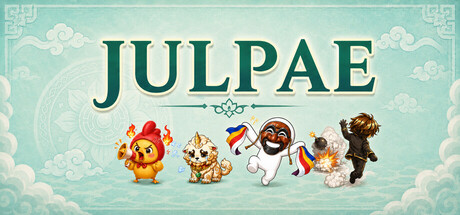
JULPAE does not use real-time generative AI during gameplay, does not generate player-facing content with AI at runtime, and does not connect players to any external generative AI service.
Portions of in-game art assets were initially generated with generative AI, followed by extensive manual hand-drawn revision, restructuring and detailed painting by the developer. Game text and localization drafts were AI-assisted then fully proofread and revised manually. All background music and sound effects are licensed free commercial assets downloaded from authorized resource websites; no generative AI was used for audio production. Source code was written with coding assistant tools.
This game made extensive use of generative AI during development.
Most of the images in the game were created with the assistance of generative AI. Generative AI was also used for concept work, visual drafts, UI text, translation drafts, and promotional materials.
All AI-assisted content was reviewed and edited by the developer before being included in the game.
Generative AI is not used during gameplay to create real-time content or player-specific responses.
This disclosure message was also written with the assistance of generative AI.
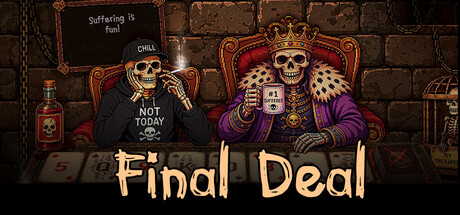
Final Deal is a human-created game. Generative AI tools were used as part of the development process for brainstorming and concept exploration of some visual assets. All gameplay mechanics, systems, writing, artistic direction, and final creative were made by the developer.
Some card illustrations were created with the assistance of image-generation tools, then hand-selected, edited, and arranged by the developer. Game design, rules, code, UI, and writing are human-made
AI tools were used to assist in creating some store page descriptions and promotional graphics. The game itself does not use AI-generated content during gameplay.
Some in-game images and user interface (UI) elements were created with generative AI assistance, then reviewed and edited by our team for use in the game and store materials.
Some visual assets (pixel art backgrounds, card sprites) and marketing copy (store descriptions) were created with the assistance of generative AI tools. All AI-generated content was reviewed, curated, and refined by the developer.
Portions of the game's visual assets and promotional artwork were created or enhanced using generative AI tools and were subsequently reviewed, edited, and integrated into the final product by the developer.
Generative AI is used across this game's development — including store-page marketing artwork, in-game art (cards, UI elements), and source code. All AI-generated content is human-directed, reviewed, and edited by the developer. No AI runs at game time; everything ships as static, pre-rendered assets.
Some of the art assets, music materials, and code-assisted compilation in this game utilize generative artificial intelligence (AI) technology. All such content has been manually reviewed and optimized
Warning: This game contains trace amounts of human effort—mostly restricted to pressing "Ctrl+C" and "Ctrl+V."
In the spirit of our title, "AI Slop" was created using generative artificial intelligence for practically every asset, line of code, and marketing material in existence.
Here is exactly how we let the machine do our jobs:
- Art & Assets: Every single visual asset, from the UI to the 6-fingered anime girls and the melting hands of our characters, was generated using text-to-image AI tools. No digital painters were harmed in the making of this game, because we didn't hire any.
- Narrative & Writing: The dialogue, item descriptions, and this very disclosure statement were generated by LLMs. We simply prompted a chatbot to "be funny and cynical" and copied the output without editing the typos.
- Code & Mechanics: The logic powering our card games and botnet automation was largely assembled by AI coding assistants. If the game crashes, please blame the algorithm, as our "lead developer" is actually just a prompt engineer.
- Music & Sound: The background tracks were generated by synthetic audio engines to ensure a continuous stream of procedurally generated slop-lofi beats.
We believe in a future where humans do not have to create things, freeing us up to spend more time looking at screens. We hope you enjoy consuming this premium, 100% synthetic digital garbage.
Static art assets (store-page capsules, in-game card art, in-game icons) and audio placeholders are generated via Replicate (Google Nano Banana Pro for image, Lyria-2 / AudioGen for audio) using human-authored prompts. Outputs are reviewed by the developer before shipping. No live AI generation occurs during gameplay; all assets are baked at build time.
I would like to pay for human assets, but I am moving fast. In the same way that AI turned 12 months of dev time into 2, it also affected how I skinned the MVP. This is best for communicating intention, and I can polish it with human art if there is traction.
Character portraits and some narrative text were created with AI tool assistance during development. Game design, story direction, building sprites, music, and sound effects are human-authored. All content is reviewed and approved by the developer.
Some art assets are generative and some are not. Many assets were purchased and then updated with generative AI in order to look different from the original purchased assets. We would love to change these out for custom art if the game does well.
Generative AI tools were used exclusively to create the main menu background illustration and the visual assets/textures for the enemy characters. No other parts of the game utilize artificial intelligence, and all other assets were created or acquired manually by the developers. The game does not contain any live-generated or real-time AI content.
This game used generative AI as an auxiliary tool during development, mainly for early concept references, draft store assets, text drafts, and code-related development assistance. All final content used in the game and on the store page has been reviewed, edited, integrated, and approved by the development team. The game does not use generative AI services during gameplay and does not generate images, audio, text, code, or other content in real time based on player input.
Some of this game's assets were created with the assistance of generative AI tools. Character, enemy, and background artwork was created using Stable Diffusion and then manually edited and retouched by the developer. Background music and the ending theme songs were generated using ACE-Step v1.5. All AI-assisted assets were reviewed and curated by the developer. No content is generated by AI during gameplay.
Character art, card illustrations, and store marketing images in this game were initially generated using AI tools during development, then manually edited, reviewed, and finalized before being packaged into the build. There is no live AI-generated content triggered by players during gameplay; all AI-related content is pre-generated static material.
OrderlyWorld currently uses a limited number of pre-generated AI visual assets in the development build and store materials, including the main menu background. These assets are static and curated by the developer. The game does not generate content during play or connect to external AI services.
Some images featured on this store page and parts of the game's localization were created with the assistance of generative AI tools and have been reviewed for the final release.
We use generative AI as part of our development workflow to accelerate our production pipeline. Our artists use generative AI to quickly produce concept artwork. They then manually rework the selected pieces in Photoshop and other tools as needed, refining the work and adding or removing elements to reach the quality we require. Our Art Director gives final approval on all artwork. All AI-assisted content is generated during development and reworked by our team before it ships; no content is generated by AI at runtime. We have taken care to ensure this content does not include illegal or infringing material.
This game does not contain any real-time generative AI features. Some game assets, including but not limited to animation effects, videos, card effects, and similar materials, were created with the assistance of AI.
This game utilizes generative AI technology to assist in the batch processing and optimization of certain art assets, including but not limited to: style unification of character sprites, detail enhancement of background elements, and rapid generation of some UI icons. All AI-generated content has been manually reviewed, adjusted, and integrated by the developers to ensure consistency with the game's overall art direction. The core gameplay design, system architecture, balance tuning, and all other critical elements were completed independently by the developers.
Some temporary placeholder visuals currently used in the game were created with the help of AI-assisted image generation tools. These assets are only used during early development and will gradually be replaced with original or professionally refined artwork.
Some promotional art assets, such as posters and icons, were created with the assistance of generative AI. These materials are used only for marketing and store presentation purposes.
Generative AI was used as part of the art production process for selected store page visuals, story illustrations, and some card artwork. All AI-assisted assets were reviewed and refined before being included in the game.
As a solo developer handling the entire scope of code, systems architecture, and design, generative AI tools were utilized during development to handle the massive volume of graphic assets. This includes illustrative 2D artwork for specific field environments, background landscapes, UI map layouts, and card illustration frames. Leveraging these tools allowed me to focus my full energy on what matters most: creating deep tactical gameplay, tight mechanical balance, and a compelling narrative. Every asset generated was extensively curated, manually edited, and visually polished to align perfectly with the game's aesthetic, storytelling, and tactical user interface. No live generative AI is used while the game is running.
During development, generative AI tools were used as supplementary assistance for document writing, draft store page text, UI text, localization drafts, and the planning of some concept visual materials.
All final content included in the release build, store page, and marketing materials is reviewed, selected, and edited by the developer before use.
JULPAE does not use real-time generative AI during gameplay, does not generate player-facing content with AI at runtime, and does not connect players to any external generative AI service.
Portions of in-game art assets were initially generated with generative AI, followed by extensive manual hand-drawn revision, restructuring and detailed painting by the developer. Game text and localization drafts were AI-assisted then fully proofread and revised manually. All background music and sound effects are licensed free commercial assets downloaded from authorized resource websites; no generative AI was used for audio production. Source code was written with coding assistant tools.
This game made extensive use of generative AI during development.
Most of the images in the game were created with the assistance of generative AI. Generative AI was also used for concept work, visual drafts, UI text, translation drafts, and promotional materials.
All AI-assisted content was reviewed and edited by the developer before being included in the game.
Generative AI is not used during gameplay to create real-time content or player-specific responses.
This disclosure message was also written with the assistance of generative AI.
Final Deal is a human-created game. Generative AI tools were used as part of the development process for brainstorming and concept exploration of some visual assets. All gameplay mechanics, systems, writing, artistic direction, and final creative were made by the developer.
Some card illustrations were created with the assistance of image-generation tools, then hand-selected, edited, and arranged by the developer. Game design, rules, code, UI, and writing are human-made
AI tools were used to assist in creating some store page descriptions and promotional graphics. The game itself does not use AI-generated content during gameplay.
Some in-game images and user interface (UI) elements were created with generative AI assistance, then reviewed and edited by our team for use in the game and store materials.
Some visual assets (pixel art backgrounds, card sprites) and marketing copy (store descriptions) were created with the assistance of generative AI tools. All AI-generated content was reviewed, curated, and refined by the developer.
Portions of the game's visual assets and promotional artwork were created or enhanced using generative AI tools and were subsequently reviewed, edited, and integrated into the final product by the developer.
Generative AI is used across this game's development — including store-page marketing artwork, in-game art (cards, UI elements), and source code. All AI-generated content is human-directed, reviewed, and edited by the developer. No AI runs at game time; everything ships as static, pre-rendered assets.
Some of the art assets, music materials, and code-assisted compilation in this game utilize generative artificial intelligence (AI) technology. All such content has been manually reviewed and optimized
Warning: This game contains trace amounts of human effort—mostly restricted to pressing "Ctrl+C" and "Ctrl+V."
In the spirit of our title, "AI Slop" was created using generative artificial intelligence for practically every asset, line of code, and marketing material in existence.
Here is exactly how we let the machine do our jobs:
- Art & Assets: Every single visual asset, from the UI to the 6-fingered anime girls and the melting hands of our characters, was generated using text-to-image AI tools. No digital painters were harmed in the making of this game, because we didn't hire any.
- Narrative & Writing: The dialogue, item descriptions, and this very disclosure statement were generated by LLMs. We simply prompted a chatbot to "be funny and cynical" and copied the output without editing the typos.
- Code & Mechanics: The logic powering our card games and botnet automation was largely assembled by AI coding assistants. If the game crashes, please blame the algorithm, as our "lead developer" is actually just a prompt engineer.
- Music & Sound: The background tracks were generated by synthetic audio engines to ensure a continuous stream of procedurally generated slop-lofi beats.
We believe in a future where humans do not have to create things, freeing us up to spend more time looking at screens. We hope you enjoy consuming this premium, 100% synthetic digital garbage.
Static art assets (store-page capsules, in-game card art, in-game icons) and audio placeholders are generated via Replicate (Google Nano Banana Pro for image, Lyria-2 / AudioGen for audio) using human-authored prompts. Outputs are reviewed by the developer before shipping. No live AI generation occurs during gameplay; all assets are baked at build time.
I would like to pay for human assets, but I am moving fast. In the same way that AI turned 12 months of dev time into 2, it also affected how I skinned the MVP. This is best for communicating intention, and I can polish it with human art if there is traction.
Character portraits and some narrative text were created with AI tool assistance during development. Game design, story direction, building sprites, music, and sound effects are human-authored. All content is reviewed and approved by the developer.
Some art assets are generative and some are not. Many assets were purchased and then updated with generative AI in order to look different from the original purchased assets. We would love to change these out for custom art if the game does well.
Generative AI tools were used exclusively to create the main menu background illustration and the visual assets/textures for the enemy characters. No other parts of the game utilize artificial intelligence, and all other assets were created or acquired manually by the developers. The game does not contain any live-generated or real-time AI content.
This game used generative AI as an auxiliary tool during development, mainly for early concept references, draft store assets, text drafts, and code-related development assistance. All final content used in the game and on the store page has been reviewed, edited, integrated, and approved by the development team. The game does not use generative AI services during gameplay and does not generate images, audio, text, code, or other content in real time based on player input.