Public Steam disclosure research25,383 disclosures tracked
Where do games disclose AI use?
Search developers’ Steam disclosures, compare classified AI use across
games, and follow recorded changes.
This index adds cross-game classifications and statistics to
statements published on individual store pages.
Groups reflect automatic analysis of public disclosures; mature records are excluded. These counts do not measure AI use across all of Steam.
Missing or unclear statements cannot establish whether a game uses AI.
Generative AI has been used solely as a supporting tool to create some of the icons used for the character's abilities and upgrades, as well as to assist with translating the game's text into other languages.
Generative AI tools were used during development to assist with selected 2D and 3D visual assets, sounds, localization, and marketing materials.
All AI-assisted content was reviewed, edited, and integrated by the developer to ensure consistency with the game's visual style and intended design.
Some non-gameplay materials in this project were created with the help of generative AI tools, such as certain promotional visuals, store page imagery, and supporting text. All core game design, mechanics, story, and gameplay content were created by the developer. AI-assisted materials were reviewed and edited by the developer before release.
Generative AI tools were used to assist with the enhancement of certain promotional images, store page artwork, and place holder UI promotional content including lighting, color grading, atmospheric effects, and visual cleanup.
The game's models, environments, gameplay systems, animations, and other in-game content are created by the developer. The game does not use live-generated AI during gameplay.
Generative AI was used to create and/or assist with some promotional and marketing materials for the game, including store capsule artwork, cover images, and other store page visuals. Generative AI was not used to generate gameplay content or content during gameplay.
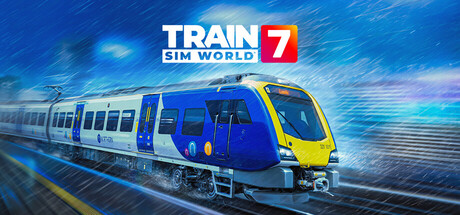
We are utilising ElevenLabs’ text-to-speech tool, to generate some voice-over elements within Train Sim World 7. This is utilised in features such as training modules, as well as platform and onboard train announcements. All scripts and content are written by Dovetail Games staff, with ElevenLabs used to generate the audio in these instances.
As a small independent developer, obviously AI tools was used to assist in the development of this game, including working on graphical elements as well as writing code.
Generative AI was used during development to assist with the creation of some pre-generated assets. The game does not generate AI content during gameplay and does not connect to any external AI services.
In-game background and character artwork, as well as store graphical assets, were pre-rendered using generative AI and manually reviewed and edited by the developer. All narrative text was written by the developer. No live-generated content.
AI generation tools were used to help create the character art on the Steam capsule and the in-game skill icons. AI was also used to assist with localization/translation. All assets were reviewed and finalized by the developer.
Generative AI tools were used to assist in the creation and enhancement of selected promotional artwork and Store Page imagery. All generated materials were reviewed, edited, and curated by the development team. The game itself does not use generative AI to create content dynamically during gameplay.
Some art assets, localized text, and store marketing materials were created with the assistance of generative AI during development, then reviewed, edited, and integrated by the developer. The game does not use generative AI to create content during gameplay.
Game Arena X uses AI-generated content only to a very limited extent. A small number of UI elements were initially created with the assistance of AI, after which they were extensively refined, adjusted, and customized by our in-house design team.
All other aspects of Game Arena X — including the platform’s concept, visual design, competitive systems, gameplay features, user experience, and overall development — are entirely original and created by our team.
AI was used on a limited basis to assist with the refinement of certain visual designs. All VHS artwork and other licensed imagery is based on artwork created by human artists, and we hold the appropriate licenses for all third-party images used.
Artificial intelligence tools were used as part of the development process for selected visual and audio elements, design references, and text translations. All final content was reviewed and curated by the development team.
3D models for props and buildings have been generated with code developed by AI. The game splash screens and logo have been generated by AI. Music is generated live with code developed by AI.
Generative AI tools were used during development to assist with some pre-generated visual assets, including selected pixel-art environments, characters, illustrations, icons, and promotional artwork. These assets are included with the game and are not generated live during gameplay. The game does not use a live AI service or send player data to an AI service. Shipped assets were reviewed, edited, and integrated by the development team.
We use generative AI across all disciplines of game development with heavy amounts of human editing. That involves audio and visual art. We use it as a productivity tool so we can achieve a higher level of quality, faster, than we would have been able to.
We used AI image-generation tools to help create some 2D art assets in the game, such as in-game banners, posters, and signage. All AI-assisted content was reviewed and edited by the developer.
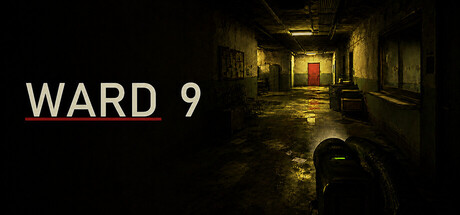
Ward 9 uses developer-curated generative AI tools during production for selected marketing/community artwork, narrative drafting support, and voice/audio asset creation. All AI-assisted content is reviewed, edited, and approved by the developer before inclusion. The game does not use live generative AI to create player-facing content during gameplay.
Portions of the game's code were written with AI assistance and reviewed, tested and integrated by the developer. Localization into non-English languages was machine-assisted and human-reviewed. Some 2D concept/marketing artwork was AI-assisted and manually refined. All gameplay, game design and audio are human-made. The game does not generate any content with AI at runtime.
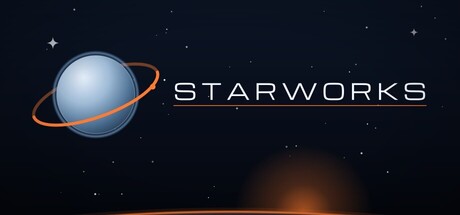
The game's surface textures — the colour and relief maps applied to parts,
buildings, terrain and visual effects — and its sound effects were created
with generative AI tools during development. They are generated ahead of
time, reviewed and integrated by hand, and ship with the game as ordinary
image and audio files.
Nothing is generated while you play, and the game never connects to an AI
service.
The simulation itself — orbital mechanics, aerodynamics, the production chains — is written by hand.
Generative AI tools were used during development to assist with programming, debugging, optimization, gameplay design, and the review or translation of some written content. The game does not use live-generated AI and does not connect to an AI service during gameplay.
Generative AI tools were used during development to create or process some pre-generated voice audio and selected 2D visual assets, including stylized character and news-related images.
All AI-assisted content is created before release and manually reviewed, edited, and curated by the developer before being included in the game.
No generative AI runs during gameplay, and no player input or data is sent to generative AI services.
The text on this game's Steam store page was drafted with the help of generative AI and then edited by the developer. All in-game art, models, sounds and the game's logo are made by hand. No AI-generated content is produced while the game is running.
Artificial intelligence was used to assist with interface localization and adaptation of in-game textures.
There was a time when people used Google Translate, and terrible localization for many languages was common. Times have changed, progress does not stand still. Today, new and more advanced tools have emerged, and people now use them instead of outdated ones.
During the development of The Sin of Ritter, generative AI tools were used as support in the content creation process. These tools assisted with the production of voice acting in different languages, the translation and localization of the game's text, as well as the creation of some textures used in the composition of the environments.
This game uses a few assets purchased from FAB which may or may not contain AI-generated content. I have personally done my best to scrub AI out of those few purchased assets. There are also two images and two short instrumentals, and that's it.
We integrate artificial intelligence solely as a creative assistance tool during pre-production and artistic exploration phases.
Specifically, we use image generators to produce preliminary concept art, explore different visual directions, and accelerate iteration on our graphic ideas.
AI serves only as a source of inspiration, while the entire final content is fully created, curated, and refined by our human team.
Generated images are never used as-is in the final product.
Every visual element in the game (textures, characters, environments, illustrations, etc.) is recreated, retouched, painted, recomposed, or manually validated by our artists to ensure:
originality of the content,
respect for copyright,
artistic consistency,
and compliance with Steam/Valve guidelines.
AI does not contribute to the generation of final assets, 3D models, animations, sounds, or any other elements directly integrated into the game.
Its role is strictly limited to providing visual references, aesthetic guidance, and starting points to help our team work more efficiently.
This approach allows us to maintain a strong and authentic artistic identity while benefiting from a more fluid, inspiring, and innovative creation process — directly reflected in the quality, coherence, and originality of our game.
Yayoi Kaihatsu, the developer, takes full responsibility for the use of generative AI in this work.
If any issues arise regarding the use of generative AI in this work, please contact the representative of Yayoi Kaihatsu via the Steam Community or other channels.
Generative AI is used in this work according to the following policy:
・Code generation and tool operations related to game development
・Translation of text used on the store page and in-game (original source is Japanese)
I used AI as an aid for a few things: parts of the writing, the translations into
French, Spanish and Italian, and some of the more complex store artwork. Everything
that came out of it was reworked by hand before it went in. It isn't something I'm a
fan of, but as a solo developer without a studio behind me, some things are simply out
of reach otherwise.
AI was used during development to assist with the creation of certain visual elements.
All AI-assisted content is reviewed, edited, and approved by the developer before being integrated into the game.
The game's menu interface and Steam store page assets (capsule images and other promotional artwork) were designed with the assistance of an AI-based design tool. All other art, environments, characters, and audio in the game were created without the use of generative AI.
Generative AI has been used solely as a supporting tool to create some of the icons used for the character's abilities and upgrades, as well as to assist with translating the game's text into other languages.
Generative AI tools were used during development to assist with selected 2D and 3D visual assets, sounds, localization, and marketing materials.
All AI-assisted content was reviewed, edited, and integrated by the developer to ensure consistency with the game's visual style and intended design.
Some non-gameplay materials in this project were created with the help of generative AI tools, such as certain promotional visuals, store page imagery, and supporting text. All core game design, mechanics, story, and gameplay content were created by the developer. AI-assisted materials were reviewed and edited by the developer before release.
Generative AI tools were used to assist with the enhancement of certain promotional images, store page artwork, and place holder UI promotional content including lighting, color grading, atmospheric effects, and visual cleanup.
The game's models, environments, gameplay systems, animations, and other in-game content are created by the developer. The game does not use live-generated AI during gameplay.
Generative AI was used to create and/or assist with some promotional and marketing materials for the game, including store capsule artwork, cover images, and other store page visuals. Generative AI was not used to generate gameplay content or content during gameplay.
We are utilising ElevenLabs’ text-to-speech tool, to generate some voice-over elements within Train Sim World 7. This is utilised in features such as training modules, as well as platform and onboard train announcements. All scripts and content are written by Dovetail Games staff, with ElevenLabs used to generate the audio in these instances.
As a small independent developer, obviously AI tools was used to assist in the development of this game, including working on graphical elements as well as writing code.
Generative AI was used during development to assist with the creation of some pre-generated assets. The game does not generate AI content during gameplay and does not connect to any external AI services.
In-game background and character artwork, as well as store graphical assets, were pre-rendered using generative AI and manually reviewed and edited by the developer. All narrative text was written by the developer. No live-generated content.
AI generation tools were used to help create the character art on the Steam capsule and the in-game skill icons. AI was also used to assist with localization/translation. All assets were reviewed and finalized by the developer.
Generative AI tools were used to assist in the creation and enhancement of selected promotional artwork and Store Page imagery. All generated materials were reviewed, edited, and curated by the development team. The game itself does not use generative AI to create content dynamically during gameplay.
Some art assets, localized text, and store marketing materials were created with the assistance of generative AI during development, then reviewed, edited, and integrated by the developer. The game does not use generative AI to create content during gameplay.
Game Arena X uses AI-generated content only to a very limited extent. A small number of UI elements were initially created with the assistance of AI, after which they were extensively refined, adjusted, and customized by our in-house design team.
All other aspects of Game Arena X — including the platform’s concept, visual design, competitive systems, gameplay features, user experience, and overall development — are entirely original and created by our team.
AI was used on a limited basis to assist with the refinement of certain visual designs. All VHS artwork and other licensed imagery is based on artwork created by human artists, and we hold the appropriate licenses for all third-party images used.
Artificial intelligence tools were used as part of the development process for selected visual and audio elements, design references, and text translations. All final content was reviewed and curated by the development team.
3D models for props and buildings have been generated with code developed by AI. The game splash screens and logo have been generated by AI. Music is generated live with code developed by AI.
Generative AI tools were used during development to assist with some pre-generated visual assets, including selected pixel-art environments, characters, illustrations, icons, and promotional artwork. These assets are included with the game and are not generated live during gameplay. The game does not use a live AI service or send player data to an AI service. Shipped assets were reviewed, edited, and integrated by the development team.
We use generative AI across all disciplines of game development with heavy amounts of human editing. That involves audio and visual art. We use it as a productivity tool so we can achieve a higher level of quality, faster, than we would have been able to.
We used AI image-generation tools to help create some 2D art assets in the game, such as in-game banners, posters, and signage. All AI-assisted content was reviewed and edited by the developer.
Ward 9 uses developer-curated generative AI tools during production for selected marketing/community artwork, narrative drafting support, and voice/audio asset creation. All AI-assisted content is reviewed, edited, and approved by the developer before inclusion. The game does not use live generative AI to create player-facing content during gameplay.
Portions of the game's code were written with AI assistance and reviewed, tested and integrated by the developer. Localization into non-English languages was machine-assisted and human-reviewed. Some 2D concept/marketing artwork was AI-assisted and manually refined. All gameplay, game design and audio are human-made. The game does not generate any content with AI at runtime.
The game's surface textures — the colour and relief maps applied to parts,
buildings, terrain and visual effects — and its sound effects were created
with generative AI tools during development. They are generated ahead of
time, reviewed and integrated by hand, and ship with the game as ordinary
image and audio files.
Nothing is generated while you play, and the game never connects to an AI
service.
The simulation itself — orbital mechanics, aerodynamics, the production chains — is written by hand.
Generative AI tools were used during development to assist with programming, debugging, optimization, gameplay design, and the review or translation of some written content. The game does not use live-generated AI and does not connect to an AI service during gameplay.
Generative AI tools were used during development to create or process some pre-generated voice audio and selected 2D visual assets, including stylized character and news-related images.
All AI-assisted content is created before release and manually reviewed, edited, and curated by the developer before being included in the game.
No generative AI runs during gameplay, and no player input or data is sent to generative AI services.
The text on this game's Steam store page was drafted with the help of generative AI and then edited by the developer. All in-game art, models, sounds and the game's logo are made by hand. No AI-generated content is produced while the game is running.
Artificial intelligence was used to assist with interface localization and adaptation of in-game textures.
There was a time when people used Google Translate, and terrible localization for many languages was common. Times have changed, progress does not stand still. Today, new and more advanced tools have emerged, and people now use them instead of outdated ones.
During the development of The Sin of Ritter, generative AI tools were used as support in the content creation process. These tools assisted with the production of voice acting in different languages, the translation and localization of the game's text, as well as the creation of some textures used in the composition of the environments.
This game uses a few assets purchased from FAB which may or may not contain AI-generated content. I have personally done my best to scrub AI out of those few purchased assets. There are also two images and two short instrumentals, and that's it.
We integrate artificial intelligence solely as a creative assistance tool during pre-production and artistic exploration phases.
Specifically, we use image generators to produce preliminary concept art, explore different visual directions, and accelerate iteration on our graphic ideas.
AI serves only as a source of inspiration, while the entire final content is fully created, curated, and refined by our human team.
Generated images are never used as-is in the final product.
Every visual element in the game (textures, characters, environments, illustrations, etc.) is recreated, retouched, painted, recomposed, or manually validated by our artists to ensure:
originality of the content,
respect for copyright,
artistic consistency,
and compliance with Steam/Valve guidelines.
AI does not contribute to the generation of final assets, 3D models, animations, sounds, or any other elements directly integrated into the game.
Its role is strictly limited to providing visual references, aesthetic guidance, and starting points to help our team work more efficiently.
This approach allows us to maintain a strong and authentic artistic identity while benefiting from a more fluid, inspiring, and innovative creation process — directly reflected in the quality, coherence, and originality of our game.
Yayoi Kaihatsu, the developer, takes full responsibility for the use of generative AI in this work.
If any issues arise regarding the use of generative AI in this work, please contact the representative of Yayoi Kaihatsu via the Steam Community or other channels.
Generative AI is used in this work according to the following policy:
・Code generation and tool operations related to game development
・Translation of text used on the store page and in-game (original source is Japanese)
I used AI as an aid for a few things: parts of the writing, the translations into
French, Spanish and Italian, and some of the more complex store artwork. Everything
that came out of it was reworked by hand before it went in. It isn't something I'm a
fan of, but as a solo developer without a studio behind me, some things are simply out
of reach otherwise.
AI was used during development to assist with the creation of certain visual elements.
All AI-assisted content is reviewed, edited, and approved by the developer before being integrated into the game.
The game's menu interface and Steam store page assets (capsule images and other promotional artwork) were designed with the assistance of an AI-based design tool. All other art, environments, characters, and audio in the game were created without the use of generative AI.