Public Steam disclosure research25,383 disclosures tracked
Where do games disclose AI use?
Search developers’ Steam disclosures, compare classified AI use across
games, and follow recorded changes.
This index adds cross-game classifications and statistics to
statements published on individual store pages.
Groups reflect automatic analysis of public disclosures; mature records are excluded. These counts do not measure AI use across all of Steam.
Missing or unclear statements cannot establish whether a game uses AI.
We used Generative AI tools solely for localizing the store page descriptions, brainstorming promotional texts, and translating "About This Game" sections into multiple languages to make the game accessible to a wider audience. No AI-generated assets (such as art, code, or audio) are used within the game build itself.
We used generative AI mainly for generating code. It has also been used for writing flavour text, many interface descriptions and some lines for an AI character. Finally it has also been used for proofreading.
This application uses AI tools in parts of its development process, including creating the in-character dialogue text and some artwork (such as character part images), as well as tuning behavioral algorithms. All AI-generated assets are produced and reviewed in advance and built into the product; no generative AI runs during gameplay.
While developing this game I used AI Tools to assist in many aspects of the game creation process. I used MidJourney to create background images, Mureka to create the sound track, and Ludo to generate sprites.
All game design, logic, formulas, gameplay modes, powers, balancing, etc. I handled myself over months of development time.
Cellula was developed with the assistance of generative AI tools. The developer used AI to help write C++ code, generate 3D organelle models from text descriptions, and create UI button artwork. No AI-generated content appears in the final game without human modification, curation, and integration.
This project is itself a demonstration of how AI can democratize game development — allowing a single developer with domain expertise but limited programming experience to build something that previously required a full studio.
All game design, biological accuracy, educational content, and creative direction were provided by a human physician and educator.
AI-assisted tools were used only to help create some sound assets. All audio was carefully reviewed and approved by the developer before being included in the game.
Generative AI tools were used during development to assist with programming, concept art, marketing artwork, and the creation of some 3D assets. All AI-assisted content was reviewed, modified where necessary, and approved by the developer before being included in the game.
The game does not use generative AI to create content in real time for players.
Ashen Crown was built almost entirely with the help of generative AI. The game's code was written through conversation with an AI assistant (Claude), with me directing, correcting, testing, and deciding what the game should be. All in-game visuals are drawn in code rather than created by an artist, and the sound and music were generated with AI as well. No third-party art, audio, or text assets were used. AI was a tool throughout development; the design, direction, and final decisions are mine.
"Generative AI was utilized to assist with the initial translation and localization of the game's text assets. All AI-assisted content underwent thorough manual review, editing, and refinement by our development team to ensure cultural accuracy and a high-quality narrative experience for players."
In the development of this game, generative AI tools are used in the processes of programming code assistance and multilingual text translation to improve efficiency and quality.
During development, we used generative AI tools to assist in creating certain game content. This includes using AI to generate base concepts and visual assets for specific in-game items or backgrounds (which were subsequently refined manually), as well as using AI for multilingual localization and text polishing.
Generative AI tools were used to assist with drafting and editing store page text and marketing descriptions. All final content is reviewed and edited by the developer.
AI Disclosure
This game was developed entirely with the assistance of large language models and generative AI tools. AI systems were used for graphic asset generation, concept art, narrative text drafting, lore writing, design review, creative critique, initial structural planning, code architecture, system design, feature implementation, iterative refinement, and debugging. All lore, mechanics, story, art, and game systems are pre-authored and fully static. No AI processing or generation occurs at runtime — the game runs entirely on pre-built code with no live model calls. This disclosure is provided in compliance with Steam's AI Content Policy and Valve developer transparency guidelines.
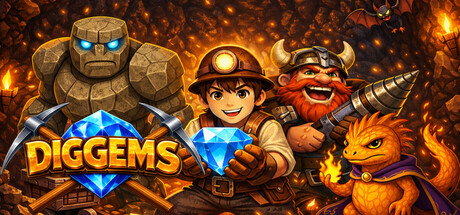
Diggems is developed by a very small team, and we use generative AI tools to assist with some pre-generated 2D and 3D art assets outside our core skill set. All AI-assisted assets are reviewed and adjusted before being included in the game.
Pre-generated content (Pre-Generated)
During the development of this game, AI tools were used to assist in the creation of the following pre-generated content:
Code assistance: Some game logic codes are written and debugged with the help of AI. All the codes have been reviewed and tested by humans.
Localization and store copy: The English translation and Steam store page copy were initially drafted with the assistance of AI, and then reviewed and refined by the developers.
Real-time Generated Content (Live-Generated)
This game does not contain any real-time AI-generated content during its operation. All game graphics, text, and numerical values are pre-set content or determined through player actions in a deterministic manner, and no generative AI interfaces are invoked.
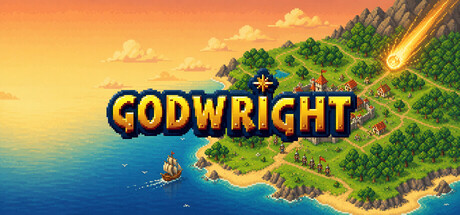
Godwright ships some generative-AI content, all pre-rendered (baked into the build, never live-generated):
Localization: the non-English UI text (Simplified Chinese, Spanish, Portuguese-BR, Russian, German, French, Japanese, Korean, Turkish, Indonesian) was machine-translated.
AI was used to create background images in the novel, as well as objects in the levels, but the levels are drawn to the final stage manually by an artist.
Hi everyone! I'm currently a student and this is my very first indie game. While I'm completely at home with coding and game engines, handling all the visual design and localization entirely by myself was quite a challenge.
I created all the promotional capsule art and designs you see on the Steam store page manually from scratch. However, I did use AI generation tools as a starting base for some of the in-game UI overlays and minor textures. Afterward, I manually edited and color-corrected them to ensure they perfectly match the game's dark atmosphere. I also used AI text models to assist with translation and localization. There are no real-time AI generation systems running while you play. Thank you so much for your support and understanding!
Generative AI was used to assist with the translation and localization of menu text and interface elements, and to help create graphic assets for the Steam store page. All content was reviewed and approved by the developer before publication.
This game was developed by a solo developer with the help of generative AI tools.
Pre-Generated AI Use (during development):
- Some icons and illustrations (achievements, graphical elements) were created using AI image generation tools
- Source code was written with the assistance of AI coding tools
- Multilingual translations were reviewed and refined with AI assistance
No generative AI runs while you play. All dialogues, events, gameplay mechanics, and in-game content were designed and written manually by the developer. No player data is sent to any external AI service.
---
Ce jeu a été développé par un développeur solo avec l'aide d'outils d'intelligence artificielle générative.
Utilisation de l'IA pendant le développement (Pre-Generated) :
- Génération de certaines icônes et illustrations (succès, éléments graphiques) à l'aide d'outils d'IA d'image
- Assistance à l'écriture du code source via des assistants IA (similaire à GitHub Copilot)
- Vérification et révision des traductions multilingues
Aucune IA générative ne tourne pendant que vous jouez. Tous les dialogues, événements, mécaniques et contenus du jeu ont été conçus et écrits manuellement par le développeur. Aucune donnée joueur n'est envoyée à un service d'IA externe.
AI tools were used to assist with concept art direction, store artwork iteration, written content, UI text refinement, and creative planning. All final content was reviewed, edited, and implemented by the developer.
OUTWORKS was developed with the help of AI-based coding assistants, which we used to write parts of the game's source code. Everything you see and hear in the game is then generated procedurally by that code — all graphics are drawn in code (SVG/CSS) and all sound is synthesized in code (Web Audio). The game contains no AI-generated image or audio assets, and no generative AI runs while you play.
FLOWORKS was developed with the help of AI-based coding assistants, which we used to write parts of the game's source code. Everything you see and hear in the game is then generated procedurally by that code — all graphics are drawn in code (SVG/CSS) and all sound is synthesized in code (Web Audio).
The game contains no AI-generated image or audio assets, and no generative AI runs while you play.
Generative AI tools were used to assist with store page text, trailer captions, and marketing copy. The game does not use live generative AI during gameplay.
Generative AI was used to code & write elements of this game including but not limited to items, default hero names, default party names, SVG Vectors and to make balance decisions and other elements of game play.
Some of the game's 2D art assets (creature/lifeform illustrations and background imagery) were created with the help of generative AI image-generation tools. All AI-generated assets were hand-selected, edited and curated by the developer before being included in the build. The game does not generate any AI content live at runtime — all content ships pre-made.
We used Generative AI tools solely for localizing the store page descriptions, brainstorming promotional texts, and translating "About This Game" sections into multiple languages to make the game accessible to a wider audience. No AI-generated assets (such as art, code, or audio) are used within the game build itself.
We used generative AI mainly for generating code. It has also been used for writing flavour text, many interface descriptions and some lines for an AI character. Finally it has also been used for proofreading.
This application uses AI tools in parts of its development process, including creating the in-character dialogue text and some artwork (such as character part images), as well as tuning behavioral algorithms. All AI-generated assets are produced and reviewed in advance and built into the product; no generative AI runs during gameplay.
While developing this game I used AI Tools to assist in many aspects of the game creation process. I used MidJourney to create background images, Mureka to create the sound track, and Ludo to generate sprites.
All game design, logic, formulas, gameplay modes, powers, balancing, etc. I handled myself over months of development time.
Cellula was developed with the assistance of generative AI tools. The developer used AI to help write C++ code, generate 3D organelle models from text descriptions, and create UI button artwork. No AI-generated content appears in the final game without human modification, curation, and integration.
This project is itself a demonstration of how AI can democratize game development — allowing a single developer with domain expertise but limited programming experience to build something that previously required a full studio.
All game design, biological accuracy, educational content, and creative direction were provided by a human physician and educator.
AI-assisted tools were used only to help create some sound assets. All audio was carefully reviewed and approved by the developer before being included in the game.
Generative AI tools were used during development to assist with programming, concept art, marketing artwork, and the creation of some 3D assets. All AI-assisted content was reviewed, modified where necessary, and approved by the developer before being included in the game.
The game does not use generative AI to create content in real time for players.
Ashen Crown was built almost entirely with the help of generative AI. The game's code was written through conversation with an AI assistant (Claude), with me directing, correcting, testing, and deciding what the game should be. All in-game visuals are drawn in code rather than created by an artist, and the sound and music were generated with AI as well. No third-party art, audio, or text assets were used. AI was a tool throughout development; the design, direction, and final decisions are mine.
"Generative AI was utilized to assist with the initial translation and localization of the game's text assets. All AI-assisted content underwent thorough manual review, editing, and refinement by our development team to ensure cultural accuracy and a high-quality narrative experience for players."
In the development of this game, generative AI tools are used in the processes of programming code assistance and multilingual text translation to improve efficiency and quality.
During development, we used generative AI tools to assist in creating certain game content. This includes using AI to generate base concepts and visual assets for specific in-game items or backgrounds (which were subsequently refined manually), as well as using AI for multilingual localization and text polishing.
Generative AI tools were used to assist with drafting and editing store page text and marketing descriptions. All final content is reviewed and edited by the developer.
AI Disclosure
This game was developed entirely with the assistance of large language models and generative AI tools. AI systems were used for graphic asset generation, concept art, narrative text drafting, lore writing, design review, creative critique, initial structural planning, code architecture, system design, feature implementation, iterative refinement, and debugging. All lore, mechanics, story, art, and game systems are pre-authored and fully static. No AI processing or generation occurs at runtime — the game runs entirely on pre-built code with no live model calls. This disclosure is provided in compliance with Steam's AI Content Policy and Valve developer transparency guidelines.
Diggems is developed by a very small team, and we use generative AI tools to assist with some pre-generated 2D and 3D art assets outside our core skill set. All AI-assisted assets are reviewed and adjusted before being included in the game.
Pre-generated content (Pre-Generated)
During the development of this game, AI tools were used to assist in the creation of the following pre-generated content:
Code assistance: Some game logic codes are written and debugged with the help of AI. All the codes have been reviewed and tested by humans.
Localization and store copy: The English translation and Steam store page copy were initially drafted with the assistance of AI, and then reviewed and refined by the developers.
Real-time Generated Content (Live-Generated)
This game does not contain any real-time AI-generated content during its operation. All game graphics, text, and numerical values are pre-set content or determined through player actions in a deterministic manner, and no generative AI interfaces are invoked.
Godwright ships some generative-AI content, all pre-rendered (baked into the build, never live-generated):
Localization: the non-English UI text (Simplified Chinese, Spanish, Portuguese-BR, Russian, German, French, Japanese, Korean, Turkish, Indonesian) was machine-translated.
AI was used to create background images in the novel, as well as objects in the levels, but the levels are drawn to the final stage manually by an artist.
Hi everyone! I'm currently a student and this is my very first indie game. While I'm completely at home with coding and game engines, handling all the visual design and localization entirely by myself was quite a challenge.
I created all the promotional capsule art and designs you see on the Steam store page manually from scratch. However, I did use AI generation tools as a starting base for some of the in-game UI overlays and minor textures. Afterward, I manually edited and color-corrected them to ensure they perfectly match the game's dark atmosphere. I also used AI text models to assist with translation and localization. There are no real-time AI generation systems running while you play. Thank you so much for your support and understanding!
Generative AI was used to assist with the translation and localization of menu text and interface elements, and to help create graphic assets for the Steam store page. All content was reviewed and approved by the developer before publication.
This game was developed by a solo developer with the help of generative AI tools.
Pre-Generated AI Use (during development):
- Some icons and illustrations (achievements, graphical elements) were created using AI image generation tools
- Source code was written with the assistance of AI coding tools
- Multilingual translations were reviewed and refined with AI assistance
No generative AI runs while you play. All dialogues, events, gameplay mechanics, and in-game content were designed and written manually by the developer. No player data is sent to any external AI service.
---
Ce jeu a été développé par un développeur solo avec l'aide d'outils d'intelligence artificielle générative.
Utilisation de l'IA pendant le développement (Pre-Generated) :
- Génération de certaines icônes et illustrations (succès, éléments graphiques) à l'aide d'outils d'IA d'image
- Assistance à l'écriture du code source via des assistants IA (similaire à GitHub Copilot)
- Vérification et révision des traductions multilingues
Aucune IA générative ne tourne pendant que vous jouez. Tous les dialogues, événements, mécaniques et contenus du jeu ont été conçus et écrits manuellement par le développeur. Aucune donnée joueur n'est envoyée à un service d'IA externe.
AI tools were used to assist with concept art direction, store artwork iteration, written content, UI text refinement, and creative planning. All final content was reviewed, edited, and implemented by the developer.
OUTWORKS was developed with the help of AI-based coding assistants, which we used to write parts of the game's source code. Everything you see and hear in the game is then generated procedurally by that code — all graphics are drawn in code (SVG/CSS) and all sound is synthesized in code (Web Audio). The game contains no AI-generated image or audio assets, and no generative AI runs while you play.
FLOWORKS was developed with the help of AI-based coding assistants, which we used to write parts of the game's source code. Everything you see and hear in the game is then generated procedurally by that code — all graphics are drawn in code (SVG/CSS) and all sound is synthesized in code (Web Audio).
The game contains no AI-generated image or audio assets, and no generative AI runs while you play.
Generative AI tools were used to assist with store page text, trailer captions, and marketing copy. The game does not use live generative AI during gameplay.
Generative AI was used to code & write elements of this game including but not limited to items, default hero names, default party names, SVG Vectors and to make balance decisions and other elements of game play.
Some of the game's 2D art assets (creature/lifeform illustrations and background imagery) were created with the help of generative AI image-generation tools. All AI-generated assets were hand-selected, edited and curated by the developer before being included in the build. The game does not generate any AI content live at runtime — all content ships pre-made.