Public Steam disclosure research26,946 disclosures tracked
Where do games disclose AI use?
Search developers’ Steam disclosures, compare classified AI use across
games, and follow recorded changes.
This index adds cross-game classifications and statistics to
statements published on individual store pages.
Groups reflect automatic analysis of public disclosures; mature records are excluded. These counts do not measure AI use across all of Steam.
Missing or unclear statements cannot establish whether a game uses AI.
In this game, the developer uses AI tools in the creation of the following pre-generated content that players see:
1. Artwork: Image assets and promotional materials.
2. Text: In-game text, store page descriptions, and their multilingual translations.
Pre-generated: Store page capsule art and marketing images were created with AI assistance. In-game text (unit descriptions, UI copy) and the store description were written with AI assistance. All in-game visuals are drawn procedurally at runtime by the game's own code. No AI model runs in the game and no content is generated during play. All AI-assisted output was reviewed and edited by the developer and contains no third-party or infringing material.
This game uses generative AI to pre-generate visual assets (character portraits, capsule/marketing art) and voice narration (TTS). All AI-generated content is created during development and reviewed/curated
by the developer before shipping. No generative AI runs live during gameplay. We have the necessary rights to use the AI tools and their outputs, and the content does not infringe third-party IP.
Generative AI was used during development to assist with selected fictional product labels, packaging textures, item icons, and visual reference materials.
This game uses generative AI in limited, non-gameplay-critical areas:
- AI-assisted code refactoring and performance optimization during development
- AI-assisted translation polishing for multi-language support
- UI layout refinement suggested by AI tools during the design process
All core gameplay logic, the unique drawing-and-deduction design, and all original game artwork were created, reviewed and refined by human developers.
This game uses generative AI tools in parts of its development. Some code was written with AI coding assistants, and some marketing and store artwork — including the capsule art and logo — was produced with AI assistance, based on and matched to in-game assets we created ourselves. Some 3D assets were created with AI-assisted tools All screenshots show real gameplay, all AI-assisted output is reviewed by a human before it ships, and no AI-generated content is produced live during play.
Some in-game visual assets were created or refined using generative AI during development. These assets are pre-generated and included with the game. The game does not generate AI content while running.
Some graphics (e.g. backgrounds, unit art, UI elements and store page images) were created by the developer with AI assistance. AI also assisted in writing the in-game texts and in translating game and store page texts into the supported languages.
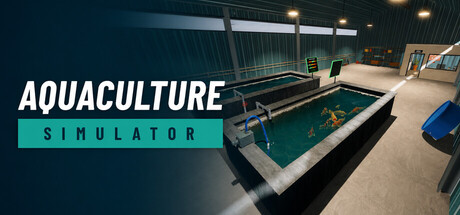
Some of this game's assets were created with generative AI tools and then integrated by hand: the fish models, the facility hall, and the tanks. Some in-game text, the tutorial and the customer emails, was written with the help of an AI language model. All other assets (music, sound, icons, textures, remaining UI) are hand-made or CC0. Every game system, the water simulation, koi grading, economy, customer and calendar logic, is hand-written code. No generative AI runs at runtime; nothing is generated live while you play.
Ai is used to create some loading-screens and other branding materials, also can be used in descriptive texts of the game.
All game code/assets are 100% made by humans.
Character portraits and evidence images were created with OpenAI's image generation; some diagrams were authored as SVG with OpenAI Codex. These assets were reviewed before release (originality and likeness pass). Sound effects and the ambient music bed are produced by a deterministic synthesis program (oscillators, filtered noise, and math-based DSP), not by a generative-AI audio model, and from no sampled or library audio; the synthesis script itself was written with AI coding assistance (AI-assisted code, not AI-generated audio). Fonts, engine, and runtime are non-AI third-party components under their own licenses.
Some placeholder artwork and images currently use generative AI or AI-assisted enhancement. These assets may be replaced or revised during development.
Generative AI tools were used during development to assist with portions of the game’s code. All AI-assisted code was reviewed, edited, and tested by the developer. The game does not generate AI content during gameplay and does not connect to external AI services.
Some of the graphical assets in this game were created using generative AI tools. This includes certain 3D models (characters and props), textures, background illustrations, and UI images; some of the key art on this store page was created the same way. All AI-generated assets were curated, edited, and placed by the developer, and no AI content is generated in real time during gameplay.
Some in-game text, store page copy, and 2D marketing assets were created with the assistance of AI tools. All AI-assisted content was reviewed and curated by the developer. The game does not generate any content using AI during gameplay.
Generative AI was used for some game assets, music, and promotional materials. All content was manually reviewed and selected. No AI is used during gameplay.
AI tools were used to assist development, including code, Chinese/Spanish localization text and store page copy. All AI-assisted content was reviewed and curated by the developer. The game does not generate any content with AI at runtime.
This game is built by a two-member team: a human developer and an AI assistant working under his direction. Large parts of the game code and many pre-rendered assets (enemy creatures, towers, environment props, marketing artwork) were created with the assistance of generative AI — always based on human design decisions, and reviewed, tested and curated by the developer. The game does not generate any content at runtime using AI.
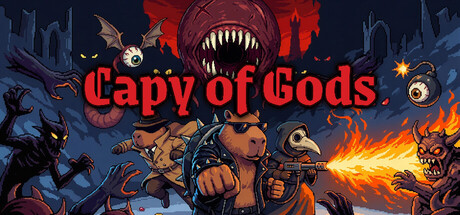
Capy of Gods is built on the work of 22 independent pixel artists. Most of the enemies, bosses, weapons, effects and traps come from asset packs purchased on itch.io from creators like Admurin, Clembod, elesrech, Fellor, GandalfHardcore, Penusbmic and many more. Full credits are listed in the game.
As a solo developer, I used generative AI as a supplementary tool to create original content not covered by those asset packs, including some sprites, item icons, illustrations, sounds, and translations into languages beyond English and Spanish. Every AI-assisted visual was reviewed and repainted by hand to match the overall artistic style and my vision for the game.
Nothing is generated while you play.
This game uses generative AI tools to create some of its artwork: promotional art such as the key visual and store capsule images, and some in-game image assets such as character portraits and map textures. All of it was reviewed, curated, and adjusted by the developer before use. Every screenshot shown on the store page is captured from actual gameplay and is not AI-generated. The shipped game does not use any AI to generate images, text, or audio at runtime.
NarrationOS uses generative AI to create its output. It synthesizes speech from your books using an AI voice model (Resemble AI's Chatterbox) and can generate a custom voice from a short recording you supply. A local AI language model assists with text analysis. All generation happens locally on your device. You are responsible for having the rights to any content or voice you use, and voice cloning requires your confirmation of consent.
AI was used strictly to block out a few initial base meshes, which I then manually reworked to fit the game's style & performance.
No AI runs at runtime.
This application uses AI-powered text-to-speech (Microsoft Edge-TTS) to read
aloud text files that you import yourself. An on-device language model (or an
optional API you configure) analyzes the imported text to identify speakers and
assign voices. The app does not generate any original story, art, or music
content — all audio is synthesized from text you provide.
Some visual and audio assets in this game were created with the assistance of generative AI tools, then selected, edited, and integrated by the developer.
Some of this game's code was written with the assistance of AI development tools. All art, music, audio, and text that ship in the game are human-created (from licensed asset packs) or procedurally rendered — no AI-generated art, audio, or text is included in the game.
The development of Memento made use of generative AI tools across several stages of production. Cutscenes are created using AI-based video generation tools. Graphic elements such as environments, characters, and card illustrations were created or refined with the help of generative AI tools. Parts of the soundtrack and text were also produced with AI assistance. All content was manually selected, edited, and integrated by the developer.
Gameplay, visuals, and code were built by hand. Only the bundled soundtrack used AI-assisted music tools, all of which I reviewed. Soundway is made for your own music — the built-in tracks just get you started.
In the development process of this game, we utilized pre-generated AI tools as follows:
* 2D Assets (Backgrounds, Photos, Various Images): After generating base images using AI, we manually added, modified, and processed them before implementing them in the game.
* 3D Assets: AI generation was used for some 3D models, and the output models were then manually adjusted and processed before use.
* Audio: Generation AI tools (text-to-speech and speech synthesis) were used for some sound effects (SE) and character voices.
Please note that we did not use any live-generated AI systems that generate content in real time during game execution.
Some game text, procedural artwork, sound effects, and store page copy were created with AI assistance, then reviewed and curated by the developer. Character and enemy sprites are licensed, human-made pixel art. No content is AI-generated during gameplay.
Generative AI was used during the development of this game. Specifically, AI tools were utilized to assist in the creation and optimization of [some art assets / text localization / narrative polish]. All AI-generated content has been thoroughly reviewed and manually refined by the development team to ensure quality.