Public Steam disclosure research25,394 disclosures tracked
Where do games disclose AI use?
Search developers’ Steam disclosures, compare classified AI use across
games, and follow recorded changes.
This index adds cross-game classifications and statistics to
statements published on individual store pages.
Groups reflect automatic analysis of public disclosures; mature records are excluded. These counts do not measure AI use across all of Steam.
Missing or unclear statements cannot establish whether a game uses AI.
This game uses generative artificial intelligence as part of its development process. AI tools were used to assist in creating early concept art, drafting dialogue, generating ideas during brainstorming, producing some 3D assets, and supporting debugging and problem-solving during development.
All AI-assisted content and outputs were reviewed, edited, and refined by our development team. Final assets, writing, and implementation were curated to ensure consistency, quality, and alignment with the game’s vision.
AI is not used to generate content dynamically during gameplay; all in-game content is pre-created and finalized by the developers.
We are committed to using these tools responsibly and transparently, with strong human oversight across all aspects of the game.
Some character portraits and CG illustrations in this game were created with reference to AI-generated images for visual inspiration and compositional guidance. All final artwork was manually produced by our art team.
This game includes some content created with the assistance of generative AI during development, such as visual assets, text, and a small portion of background music.
All generated content has been carefully reviewed, refined, and integrated by the developer to ensure a consistent artistic direction.
This game utilized pre-generated AI as an assistive tool during the development process. The specific use cases are as follows:
UI/UX: Generation and modification of UI elements such as buttons and frames.
2D Graphics: Generation, background removal, and retouching of puzzle clue images.
3D Assets: Creation of select 3D models and textures.
Audio: Generation of background music (BGM).
Some content in this game, such as text, translations, or visual elements, was initially generated with the assistance of AI tools and later reviewed, edited, and integrated by the developer. All final content was curated to ensure it fits the game's narrative, style, and quality standards.
We use generative AI only for temporary placeholder images during development. All AI-generated placeholders will be removed and replaced with human-created artwork before release.
Artificial intelligence tools were used during certain stages of the development of The Letter as supportive tools to assist the creative process. AI was primarily utilized for concept ideation, early visual references, and iterative design exploration.
These tools helped accelerate prototyping, generate visual inspiration, and assist with writing drafts during early development phases. However, all core gameplay systems, narrative design, environmental storytelling, and final artistic direction were created, reviewed, and curated by the developer.
AI tools were used as creative assistants rather than autonomous content generators, ensuring that the final experience remains a carefully crafted and human-directed project.
The images for the steam store were created using concept images, some of which were ai-generated.
And the text for the steam store page was translated using google translate. Except for english, dutch/nederlands, and german/deutsch.
AI was used only for creating a small number of store page promotional images (capsule and marketing visuals).
All in-game content, including gameplay, visuals, and assets, was created manually by the developer or uses properly licensed assets.
No AI is used during gameplay.
Generative AI is used to create base materials for certain image assets, including character portraits, enemies, and UI. These generated images are not used as-is; they undergo manual processing such as retouching or animation before being implemented into the game.
The Steam library and store pages use AI generated graphic elements, but the game itself doesn't. All graphics in the game are hand made, created by our graphics designer in our self developed editor.
Generative AI was used to create several environmental textures (such as stone and ground textures), some ui elements (such as buttons and icons), Capsule and Library images in Steam. All AI-generated content was manually reviewed and refined by the developer to ensure quality and compliance.
Generative AI was used to create certain 2D background assets within the game world. This includes some family group photographs used as props, visuals shown on in-game television screens, and decorative wall posters. These AI-generated elements are static environmental assets only and were not used for in-game cinematics, character models, or animations.
This game uses pre-generated visual assets, including images and cinematic sequences created with external tools. These assets are used for environmental storytelling and menu presentation, and do not involve real-time AI generation.
Some background scenes, supporting character artwork, music, and localization text in this game were created with the assistance of AI generation tools. All main character artwork, UI design, and core visual assets were created by human artists.
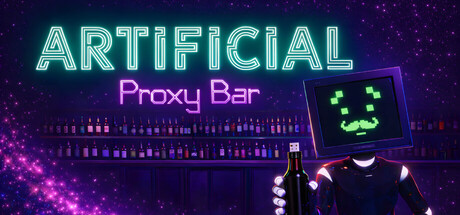
Artificial: Proxy Bar uses artificial intelligence to generate dynamic dialogue content in real time.
The game integrates AI technologies including Ollama, OpenAI Whisper (speech recognition), and Google Gemma language models. Because of this, in-game conversations and responses are generated automatically and may be unpredictable.
AI-generated content may be inaccurate, nonsensical, inappropriate, or offensive. The developer does not guarantee the accuracy or suitability of AI-generated content and is not responsible for outputs produced by the AI systems.
By using the AI features in the game, players acknowledge that they interact with AI-generated content at their own discretion and risk.
Music: AI was used to generate the initial tracks, but every song was then heavily edited, rearranged, and mastered by a human. Nothing went straight from the algorithm to your headphones.
No AI was used to write the storyline or visual assets in the game. All of it is my own creative work. However, AI was used to assist in the creation of game artwork used for the store page and for helping craft and improve store descriptions.
Remember to Die was built solo with no official budget using AI as a creative instrument — not to replace the human decisions, but to handle the ones that would have made this game impossible otherwise. No jobs were lost, but a game was made possible.
All characters, CG, and UI resources in the game were either commissioned or self-drawn by the developer.
Currently, the background resources are placeholders generated using commercial AI to match the overall artistic style. All content is reviewed and finalized by the developer.
Once developers secure sufficient budget, these AI-generated contents will be replaced.
Generative AI was not used for in-game art, gameplay assets, systems, or core game content.
AI translation tools were used only for some additional text added later during development. Most localization was handled by a professional translation vendor.
The only AI-generated visual assets currently used are the Steam header capsule and library logo illustrations, which were manually retouched. They are not used inside the actual game, and I plan to replace them after release if the game earns enough revenue.
There is AI-generated audio used within the game. All AI-generated content is pre-rendered and static. No AI is used to generate visuals, gameplay content, or content at runtime.
I was working on this game for more than 2 years without ai.
I started to use ai 1-2 months ago for:
Due to a lack of capital for professional sounds i bought sound packages and for
some few sounds i used AI software. Depending on the game's success, I will invest in replacing sounds and self-created elements with professional assistance.
AI was used mainly for bug fixing in the code and for translating the game text into different languages.
This game contains a limited amount of AI-generated visual content created during development due to the project's low budget. Specifically, suspect profile images and some evidence-related visual assets or models were created with the help of generative AI tools. Not all evidence assets are AI-generated.
The use of AI is limited to pre-made visual content only. No gameplay systems, dialogue, story logic, code, or real-time interactive content is generated by AI during play. All gameplay mechanics, case logic, interactions, and progression were designed and implemented by the developer.
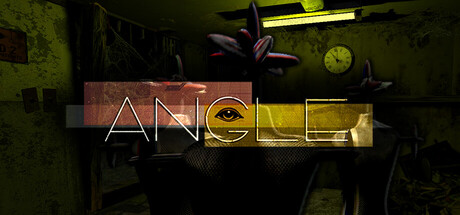
The promotional banner located in the "About This Game" section of the store page was created using AI-generative tools. This illustration was specifically crafted by referencing the game's actual in-game assets and visuals to represent the game's atmosphere. Please note that there is no AI-generated content or assets present within the actual gameplay of 'ANGLE'.
Most of the game's graphics assets were created using pose sketches (ControlNet) and then adjusted in the graphics editor to maintain consistency. The game does not use any real-time AI-generated content.
The card artwork in the current version of the game was created using generative AI tools and then manually edited and refined by the developer. AI was not used for gameplay code or core story content. These artworks are intended as temporary assets and are planned to be replaced with commissioned artwork in the future.
The game includes only a few background radio tracks and some NPC voice lines created with the help of AI tools, which will be replaced in future updates.
Grok AI was used in order to make some of the pictures in the library, game store page, and some intro./outro. picture in the game representing Dream Dazia.
AI-assisted translation tools were used for the store page and for localizing in-game text into multiple languages. (Spanish, Italian, Japanese, Korean, Russian, German)
This game uses generative artificial intelligence as part of its development process. AI tools were used to assist in creating early concept art, drafting dialogue, generating ideas during brainstorming, producing some 3D assets, and supporting debugging and problem-solving during development.
All AI-assisted content and outputs were reviewed, edited, and refined by our development team. Final assets, writing, and implementation were curated to ensure consistency, quality, and alignment with the game’s vision.
AI is not used to generate content dynamically during gameplay; all in-game content is pre-created and finalized by the developers.
We are committed to using these tools responsibly and transparently, with strong human oversight across all aspects of the game.
Some character portraits and CG illustrations in this game were created with reference to AI-generated images for visual inspiration and compositional guidance. All final artwork was manually produced by our art team.
This game includes some content created with the assistance of generative AI during development, such as visual assets, text, and a small portion of background music.
All generated content has been carefully reviewed, refined, and integrated by the developer to ensure a consistent artistic direction.
This game utilized pre-generated AI as an assistive tool during the development process. The specific use cases are as follows:
UI/UX: Generation and modification of UI elements such as buttons and frames.
2D Graphics: Generation, background removal, and retouching of puzzle clue images.
3D Assets: Creation of select 3D models and textures.
Audio: Generation of background music (BGM).
Some content in this game, such as text, translations, or visual elements, was initially generated with the assistance of AI tools and later reviewed, edited, and integrated by the developer. All final content was curated to ensure it fits the game's narrative, style, and quality standards.
We use generative AI only for temporary placeholder images during development. All AI-generated placeholders will be removed and replaced with human-created artwork before release.
Artificial intelligence tools were used during certain stages of the development of The Letter as supportive tools to assist the creative process. AI was primarily utilized for concept ideation, early visual references, and iterative design exploration.
These tools helped accelerate prototyping, generate visual inspiration, and assist with writing drafts during early development phases. However, all core gameplay systems, narrative design, environmental storytelling, and final artistic direction were created, reviewed, and curated by the developer.
AI tools were used as creative assistants rather than autonomous content generators, ensuring that the final experience remains a carefully crafted and human-directed project.
The images for the steam store were created using concept images, some of which were ai-generated.
And the text for the steam store page was translated using google translate. Except for english, dutch/nederlands, and german/deutsch.
AI was used only for creating a small number of store page promotional images (capsule and marketing visuals).
All in-game content, including gameplay, visuals, and assets, was created manually by the developer or uses properly licensed assets.
No AI is used during gameplay.
Generative AI is used to create base materials for certain image assets, including character portraits, enemies, and UI. These generated images are not used as-is; they undergo manual processing such as retouching or animation before being implemented into the game.
The Steam library and store pages use AI generated graphic elements, but the game itself doesn't. All graphics in the game are hand made, created by our graphics designer in our self developed editor.
Generative AI was used to create several environmental textures (such as stone and ground textures), some ui elements (such as buttons and icons), Capsule and Library images in Steam. All AI-generated content was manually reviewed and refined by the developer to ensure quality and compliance.
Generative AI was used to create certain 2D background assets within the game world. This includes some family group photographs used as props, visuals shown on in-game television screens, and decorative wall posters. These AI-generated elements are static environmental assets only and were not used for in-game cinematics, character models, or animations.
This game uses pre-generated visual assets, including images and cinematic sequences created with external tools. These assets are used for environmental storytelling and menu presentation, and do not involve real-time AI generation.
Some background scenes, supporting character artwork, music, and localization text in this game were created with the assistance of AI generation tools. All main character artwork, UI design, and core visual assets were created by human artists.
Artificial: Proxy Bar uses artificial intelligence to generate dynamic dialogue content in real time.
The game integrates AI technologies including Ollama, OpenAI Whisper (speech recognition), and Google Gemma language models. Because of this, in-game conversations and responses are generated automatically and may be unpredictable.
AI-generated content may be inaccurate, nonsensical, inappropriate, or offensive. The developer does not guarantee the accuracy or suitability of AI-generated content and is not responsible for outputs produced by the AI systems.
By using the AI features in the game, players acknowledge that they interact with AI-generated content at their own discretion and risk.
Music: AI was used to generate the initial tracks, but every song was then heavily edited, rearranged, and mastered by a human. Nothing went straight from the algorithm to your headphones.
No AI was used to write the storyline or visual assets in the game. All of it is my own creative work. However, AI was used to assist in the creation of game artwork used for the store page and for helping craft and improve store descriptions.
Remember to Die was built solo with no official budget using AI as a creative instrument — not to replace the human decisions, but to handle the ones that would have made this game impossible otherwise. No jobs were lost, but a game was made possible.
All characters, CG, and UI resources in the game were either commissioned or self-drawn by the developer.
Currently, the background resources are placeholders generated using commercial AI to match the overall artistic style. All content is reviewed and finalized by the developer.
Once developers secure sufficient budget, these AI-generated contents will be replaced.
Generative AI was not used for in-game art, gameplay assets, systems, or core game content.
AI translation tools were used only for some additional text added later during development. Most localization was handled by a professional translation vendor.
The only AI-generated visual assets currently used are the Steam header capsule and library logo illustrations, which were manually retouched. They are not used inside the actual game, and I plan to replace them after release if the game earns enough revenue.
There is AI-generated audio used within the game. All AI-generated content is pre-rendered and static. No AI is used to generate visuals, gameplay content, or content at runtime.
I was working on this game for more than 2 years without ai.
I started to use ai 1-2 months ago for:
Due to a lack of capital for professional sounds i bought sound packages and for
some few sounds i used AI software. Depending on the game's success, I will invest in replacing sounds and self-created elements with professional assistance.
AI was used mainly for bug fixing in the code and for translating the game text into different languages.
This game contains a limited amount of AI-generated visual content created during development due to the project's low budget. Specifically, suspect profile images and some evidence-related visual assets or models were created with the help of generative AI tools. Not all evidence assets are AI-generated.
The use of AI is limited to pre-made visual content only. No gameplay systems, dialogue, story logic, code, or real-time interactive content is generated by AI during play. All gameplay mechanics, case logic, interactions, and progression were designed and implemented by the developer.
The promotional banner located in the "About This Game" section of the store page was created using AI-generative tools. This illustration was specifically crafted by referencing the game's actual in-game assets and visuals to represent the game's atmosphere. Please note that there is no AI-generated content or assets present within the actual gameplay of 'ANGLE'.
Most of the game's graphics assets were created using pose sketches (ControlNet) and then adjusted in the graphics editor to maintain consistency. The game does not use any real-time AI-generated content.
The card artwork in the current version of the game was created using generative AI tools and then manually edited and refined by the developer. AI was not used for gameplay code or core story content. These artworks are intended as temporary assets and are planned to be replaced with commissioned artwork in the future.
The game includes only a few background radio tracks and some NPC voice lines created with the help of AI tools, which will be replaced in future updates.
Grok AI was used in order to make some of the pictures in the library, game store page, and some intro./outro. picture in the game representing Dream Dazia.
AI-assisted translation tools were used for the store page and for localizing in-game text into multiple languages. (Spanish, Italian, Japanese, Korean, Russian, German)