Public Steam disclosure research26,946 disclosures tracked
Where do games disclose AI use?
Search developers’ Steam disclosures, compare classified AI use across
games, and follow recorded changes.
This index adds cross-game classifications and statistics to
statements published on individual store pages.
Groups reflect automatic analysis of public disclosures; mature records are excluded. These counts do not measure AI use across all of Steam.
Missing or unclear statements cannot establish whether a game uses AI.
Generative AI was used exclusively for marketing and promotional materials. This includes the store page capsule art, translations and the background music featured in the promotional trailer.
No AI generated assets, imagery or audio are used within the actual game build, game screenshots or gameplay experience.
Monotony Idle is made by a two-person team working alongside AI tools, and we want to be straightforward about where that shows up.
Some in-game text, imagery, and data were drafted with AI assistance.
Our store page materials - capsule art, store text, and trailer - were built from the game's real assets. All screenshots and trailer footage are captures of actual gameplay, not AI-fabricated imagery.
Live-generated content: none. The game does not use AI at runtime - nothing is generated while you play, and the game never sends your data to any AI service.
Every AI-assisted asset was directed, reviewed, and approved by a human before shipping.
World of ClaudeCraft is, unapologetically, a game built with AI — the name is a hint. We used AI in two ways, and we want to be clear about both.
During development, the game's code was written with an AI coding assistant, and we used AI generation tools to create some of the assets that ship in the game as ordinary, fixed files:
Sound: Most in-game sound effects and all spoken NPC voice lines were generated with ElevenLabs' AI audio and text-to-speech models. The written dialogue itself is authored by us; AI produced the spoken audio.
3D models: A small number of creature models (the "Drowned Litany") were generated with Meshy AI (text-to-3D).
Everything else is either created by the game's own code (the world, towns, terrain, water, weather, and the music soundtrack are all generated procedurally at runtime) or is licensed third-party art — CC0 model, texture, and HDRI packs plus a purchased commercial icon set. That content is not AI-generated.
Critically: no generative AI runs while you play. Every AI-made asset was generated once, offline, during development and baked into the game as a static file. The running game makes no AI or LLM calls, and none of your gameplay or personal data is ever sent to an AI system. The simulation is fully deterministic — the same inputs always produce the same result.
We’re currently using AI-generated images for our Steam page as temporary placeholders. We plan to replace them with original artwork as soon as possible.
Portions of the application code were developed with AI assistance. Some UI text translations were produced with AI tools and reviewed by the developer. All visual assets, artwork, and design are human-made.
How I Use AI
Human Craftsmanship First: Human creativity is always my highest priority. AI is never used to replace active human contribution in art or design.
Technical Assistance: As a solo developer, I use AI to bridge the resource gap. I specifically utilize it for C++ coding, creating workflow tools, and referencing UE5 documentation to speed up development.
Always Moving Forward: My focus is on momentum. I do not backtrack to rewrite functional, AI-assisted code or assets unless there is a strict technical or performance reason to do so.
The Bottom Line: I know AI is a sensitive topic, but I am committed to using every tool available to bring this project to life(so long as i lack resources). I am genuinely just happy to be building the game of my dreams, and if you are passionate about what is being built here, I always welcome you to join the community or lend a hand in development!
Some visual assets, 3D models, textures, UI images, promotional images, music, sound effects, and reference material used in this game were created or assisted with using generative AI tools. These assets were reviewed, edited, adjusted, and integrated by the developer.
The game itself does not generate AI content during gameplay.
Generative AI was used to enhance marketing assets such as steam capsule & early sketch concept before offloaded & polished by Humans.
All gameplay, art, and final content remain crafted by Human.
Some audio in Fill The Bucket, including sound effects and ambient music, is procedurally generated by code using generative techniques. All such content is created during development and ships with the game; no AI content is generated live during gameplay.
Generative AI was used to assist with store copy, marketing artwork, logo/capsule concepts, and some replacement visual/audio assets. All AI-assisted content is reviewed and integrated by the developer. The game does not use live generative AI during gameplay.
This game uses AI-generated artwork for store page assets, including capsule images,
promotional graphics, and character illustrations. The game logo and visual marketing
materials were created with the assistance of AI image generation tools.
No AI content is generated during gameplay — all in-game content is pre-authored.
No third-party AI services are connected during gameplay.
An AI assistant (Anthropic's Claude) helped write the game's code and draft store/marketing text, all reviewed by the developer. All art is hand-made and procedurally rendered; all music and sound effects are human-created or licensed (CC0 / commissioned). No AI-generated art, audio, or voice ships in the game, and no AI content is generated during play.
"AI offered the seeds, but I am the one who selected them with care, nurtured them with devotion, and waited for them to bloom.
I serve as a humble gardener, cultivating a flower that never fades, right there on your desktop. Within this space lies the fruit of countless nights at my desk; it holds the tenderness I wish to share—a sincere greeting to every lonely soul. May this bloom rest quietly on your screen, bringing a breath of peace and fragrance to your day."
This game uses generative AI to assist with creating some visual assets, including the default keyboard skin, decorative elements, and store promotional images. AI-generated content is manually reviewed, edited, and integrated before use. The game does not generate AI content in real time during gameplay.
During development we used generative AI tools to create some content that ships in the game:
- Visual art: Some 2D art (card illustrations, store/capsule art, boss and deity illustrations, UI seals, and marketing images) was generated with an image model, then hand-edited, composited, and curated by us.
- Music: The looping background music tracks were generated with an AI music tool, then edited and mastered (trimmed and crossfade-looped) by us before inclusion.
- Text / localization: Some in-game text and its translations (Traditional Chinese, Simplified Chinese, English) were produced with AI assistance and then reviewed and edited by us.
All AI-generated content was reviewed by a human before shipping.
We have confirmed our right to use these tools' output commercially, and have taken steps to ensure the content does not infringe third-party IP.
Our team uses generative AI tools to help develop some in game & marketing assets.
We don't use AI to replace artists and developers, but to improve our teams' productivity and offer you a more complete game at an affordable price.
Generative AI tools were used during development to assist with the creation of some 3D assets, music, and draft visual materials. Character concepts were based on human-made sketches, and AI was used only for early draft exploration; the final in-game characters were created by humans. All AI-assisted materials were reviewed, edited, and integrated into the game by the developer. AI is not used to generate content during gameplay.
Generative artificial intelligence has been used to generate store page thumbnails based on the developers artwork. All in game artwork has been drawn by hand by the developer.
During the development process, we may use AI-based tools. In all such cases, the final product reflects the creativity and expression of our own development team.
Generative AI was used to create marketing assets, including store capsules, library art, and banners. The AI was used to compose and refine visual compositions based on original in-game screenshots to ensure high-quality presentation in the Steam store. All core gameplay assets, including 3D models, textures, and code, were created manually without the use of AI.
Generative AI was used during development to assist in the creation of certain visual assets, including some textures and artwork featured in story sequences. All generated assets were reviewed, modified where necessary, and curated by the development team before inclusion in the game. No AI-generated content is created during gameplay.
Generative AI was used to enhance and improve some cutscene visuals. Apart from these specific visual assets, no other parts of the game were created using generative AI.
All gameplay systems, game design, programming, writing, balancing, and the majority of visual content were created manually by the developer.
Generative artificial intelligence has been used to create store page thumbnails based on the developer's scene work.
Generative artificial intelligence has been used by the developer to vastly improve the performance of the developers code with respect to loading times. The developer struggled for months to figure out how to reduce a 30 second+ loading time and thanks to the contributions of gen AI that has been brought down to 5 seconds.
Generative AI was used during development to create a limited number of in-game images and to generate translations for multiple languages. All AI-generated content was reviewed and edited as needed by the development team.
Some visuals (backgrounds, characters, icons, interface) and sounds (music, effects) were created using generative AI tools, then selected and integrated by the developer. No generation happens in real time during play.
AI tools were used during development to assist with the creation and refinement of some visual assets. All content included in the final game was selected, edited, and integrated by the developer.
This game uses AI-generated content in two areas: background music tracks were created using Mureka AI, and some pixel art assets were generated using PixelLab. All AI-generated content was reviewed, curated, and integrated by the developer.
Kaironia uses generative AI tools during the development process to create pre-rendered assets. Specifically, AI-assisted tools were used to help create background music tracks, certain 2D environmental icons and images, and to assist with multi-language text localization. None of these assets are generated dynamically or live during gameplay.
Generative AI was used to assist in the development of the game, including parts of the game engine code, internal development tools, some visual assets, and language proofreading. All AI-generated output was reviewed and supervised by a human. The game's audio was sourced from third-party providers outside the studio and, to the best of our knowledge, was not created using generative AI.
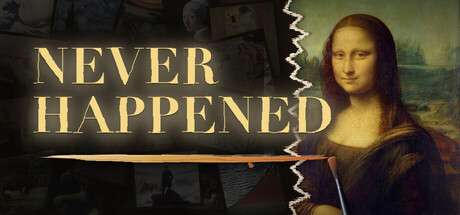
The masterpieces featured in this game are real public-domain paintings, digitized from high-resolution scans. They are not AI-generated.
Generative AI was used only in the following areas: some artwork other than the masterpieces (UI, characters, backgrounds), some sound, and localization.