








Disclosure
Generative AI was used only as a supporting tool in the design of some fictional red panda characters and for language translation.
- Creator
- Ms.RedPanda
- Reviews
- -
- Added
- Sep 30, 2026
Public Steam disclosure research 25,376 disclosures tracked
Search developers’ Steam disclosures, compare classified AI use across games, and follow recorded changes. This index adds cross-game classifications and statistics to statements published on individual store pages.
Code help, debugging and other development work.
Capsule art, trailers and promotional material.
Pre-made art, audio, writing and other game assets.
Interactive or runtime AI features disclosed by the developer.
Groups reflect automatic analysis of public disclosures; mature records are excluded. These counts do not measure AI use across all of Steam. Missing or unclear statements cannot establish whether a game uses AI.
Generative AI was used only as a supporting tool in the design of some fictional red panda characters and for language translation.
Psst! uses generative AI in two ways, and both run entirely on your own PC. Nothing you say or type is sent to a server, stored, or used to train anything. Live voices: Bot players and the host speak their hints and table talk out loud through a text-to-speech model (Supertonic) that runs on your computer. The spoken lines come from the game's own writing and word lists. The AI only turns that text into audio. Speech recognition: If you choose to play with your voice, a speech-to-text model (NVIDIA Parakeet) turns what you say into text so the game can read your hint or guess. This is optional, and you can always type instead. All artwork, writing and game design were made by the developer or bought as assets with licenses.
After a talk, audience questions are generated at runtime by a small open-weight language model (Qwen3) running locally on the player's computer, based on a transcript of what the player just said. Speech-to-text also runs locally (whisper.cpp). Nothing is sent to any server.
ARIA's dialogue and speech are generated on the player's own machine at runtime by a language model and a text-to-speech voice that ship with the game. Nothing is sent to an external service and no player data leaves the machine. What ARIA says is constrained to the station's fiction and to evidence the player has actually found in-game. Some art, audio and text assets in the game were produced with AI tools and reviewed by the developer before shipping.
Powered by some of the most advanced chess engines ever created. It also uses two neural networks to recognize chess positions directly from game diagrams, turning images into playable positions in seconds.
Generative AI tools were used to assist in creating selected store and promotional artwork. All such assets were subsequently edited, modified and finalized by a human artist. The game itself does not generate AI content at runtime.
Time Traveler: Divergence uses locally running generative AI to enable dynamic NPC conversations. AI-generated dialogue is constrained by the game's predefined rules, characters, world knowledge, and simulation state. AI is also used locally to generate voice-over for these dynamic conversations. No external AI service is required during gameplay.
Solis Chronicles uses generative AI for pre-rendered content. Character art, backgrounds, event illustrations, video sequences, the title artwork, and the logo were created with generative AI tools (Flux, Nano Banana, Seedream, PixVerse, WAN) under human art direction, with reference-locked character designs. The music was generated locally with ACE-Step under human direction. The story, characters, and game design are human-authored. Dialogue was written with substantial AI assistance and edited by the developer. No AI content is generated during gameplay; everything is pre-rendered and human-reviewed.
This game used generative AI for asset creation during development. The HQ statue's 3D model was created with Meshy AI, and background music was composed with Suno AI. Most in-game icons and images were created using Google Gemini and ChatGPT.
AI-generated content is used exclusively for promotional/store library imagery (e.g. store capsule and library artwork). No in-game assets — textures, models, environments, weapons, or character art used during gameplay — are AI-generated. All gameplay-facing art is sourced from licensed marketplace asset packs or created manually.
This game makes extensive use of generative AI during development to assist with visual, music, and written content, including background artwork, visual assets, game music, and discussion, revision, and polishing of the script. Generated content is reviewed, selected, edited, and integrated by the developer before being used in the game. The script, character settings, and overall creative direction are led by the developer and developed through an iterative collaboration with generative AI.
Hexpanse is a solo developer's experiment in building a game 100% with AI, and it is developed with AI assistance (including its source code). The game itself is built almost entirely from procedural, code-generated pixel art and synthesized audio — produced algorithmically by our own code, not by AI. Generative AI was used in two limited, pre-rendered ways: (1) as a starting point for some ship and station part illustrations, later cleaned up, processed and integrated by hand; and (2) to produce the neural text-to-speech voice-over of the intro cinematic. In Early Access, the community feedback I find relevant feeds the AI-assisted development. No generative AI runs while you play — nothing is generated live in-game.
Generative AI tools were used to create some pre-generated static artwork displayed as mission images in the campaign menu. All gameplay visuals, screenshots, and gameplay footage are rendered directly from the game. No AI-generated content is created during gameplay
AI was used to assist in creating the game thumbnail and a few elements on the store page, followed by additional manual editing.
Generative AI was used only to create artwork for the Steam store page and marketing materials. No generative AI is used in the game or during gameplay.
Some of the game's 3D models were created using generative AI (Tripo3D). The English localization and store page text were also prepared with the help of an AI assistant and reviewed by hand. The audio and gameplay were made without generative AI. Часть 3D-моделей в игре создана с помощью генеративного ИИ (Tripo3D). Английская локализация и тексты для страницы в магазине также подготовлены с помощью ИИ-ассистента и вычитаны вручную. Звук и геймплей созданы без генеративного ИИ.
Generative AI was used to create and refine the game's store capsule art and logo. No other in-game assets were generated with generative AI, and to the best of my knowledge, the same is true of third-party assets. Separately, a model trained with reinforcement learning controls enemy behavior. It does not generate content.
Generative AI was used with human review to assist with portions of the store page text, promotional artwork, and illustrative building blueprint previews. These illustrations are development artwork; actual gameplay appearance may vary. During gameplay, a locally running language model generates text responses in the AI OS tablet and robot chat interfaces. Robot gathering and construction actions use programmed game systems. The language model runs on the player’s computer and does not require an external third-party AI service.
Roadshift was developed with assistance from generative AI tools (such as Large Language Models) to help write and structure the source code and draft store descriptions, as well as generating in-game images, assets, art, and 3D models. The game does not feature live, runtime generative AI.
ComfyTrans uses an on-device AI language model to translate on-screen text into your language in real time. All AI processing runs locally on your PC — your screen content is not sent to external servers for translation.
This game's cat characters are based on art assets we created, expanded with generative AI into a variety of patterns and colors. Generative AI image tools were also used at the concept stage for the store page's capsule images and icons. Players can also optionally register their own free Google API key to chat with their cats or check today's fortune. This feature connects live to Google's Gemini API while the game is running to generate responses; the rest of the game can be enjoyed the same way without registering a key.
Concept Art and Design: Generative AI tools were used during the pre-production phase to brainstorm visual aesthetics and generate early concept art for the title screen and in-game graphic elements. Final Assets: While AI was used to establish the artistic direction and conceptual frameworks, all final assets, title screen graphics, and in-game artwork appearing in the released version of the game were manually refined to ensure a cohesive, high-quality experience.
The developer used generative AI tools during the development process to assist in creating pre-generated 2D visual assets (such as backgrounds and promotional art) and to help generate programming code. All AI-generated content was heavily modified, curated, and reviewed by the developer to fit the game's cyberpunk setting. There is no live-generated AI content in this game.
Some visual assets and store-related materials for this game were created with generative AI assistance, then reviewed and edited by humans before inclusion. In-game opponents use traditional search and position evaluation; moves are not generated by generative AI at runtime.
Generative AI was used to create background images and character artwork in the game. It was also used as a writing aid for proofreading and editing the narrative. AI-assisted content was reviewed and selected by the developer.
Use AI for drawing art materials, generating music, and writing game code.
Companion OS uses local LLM models and supported cloud AI providers to power some companion conversations and interactive responses.
During development, Google Gemini and OpenAI GPT were primarily used for programming assistance, debugging, and development workflow support. Nano Banana was used to generate some character sprite artwork and to redraw or adjust certain facial-expression variants of existing character sprites. All AI-assisted art assets were manually reviewed, selected, and edited by the developer before being included in the game.
Generative AI-assisted tools were used during development to assist with programming tasks and to create or refine selected 3D models. All AI-assisted code and 3D assets were reviewed, edited, tested, and integrated by the development team. AI-assisted tools were also used for selected Steam marketing artwork. The game does not generate content with AI during gameplay and does not connect to an external AI service.
Meeting the World (Aira) uses generative AI to create conversations and optional synthesized speech during gameplay. Depending on the enabled features, AI can also select predefined character actions and influence conversational emotion, autonomous behaviour and long-term understanding. The Windows build includes a local Gemma 4 e2b chat model. Players may optionally configure their own external AI provider. Local speech synthesis uses CosyVoice3 with a bundled reference voice or a voice reference selected by the player. AI responses may be inaccurate or inappropriate and should not be treated as professional advice.
Some visual assets were initially created with the help of AI tools and manually reworked
Voice lines and sound effects were produced with AI voice synthesis (ElevenLabs) during development. Some character portraits and UI/VFX textures were created with AI-assisted tools. All assets were reviewed, edited and integrated by the developer. No generative AI runs at runtime — the game ships only pre-generated, fixed assets.
NO HOOMAN
Generative AI tools helped create character portraits, illustrations, store and marketing artwork, music, sound effects, and player-facing text during development. These are pre-generated assets. No generative AI runs during gameplay, and the game does not connect to external generative AI services.
AI tools were used during development to help translate the user interface into its 14 languages and to produce the voice-over in the store trailer. All translations and marketing materials were reviewed by the developer. MacroPilot itself does not generate content with AI; users can optionally connect their own third-party AI assistant through the built-in MCP connection.
This game was vibe coded in C++ with Claude Code Opus 5, and some GPT-6 Astra while I operated Unreal Engine 5.7. Many of the assets were purchased at fab.com, and the voices are from elevenlabs.io. Call it shovelware if you like, I had fun shoveling.
During matches, AI characters generate text through our official service, which connects to a third-party AI provider. Players do not need to enter an API key or manage a third-party account. The game includes a limited number of Turing Tickets; creating a match normally uses one. Additional Tickets are planned for purchase through Steam in-game purchases, and some may be earned through gameplay. Generative AI was also used to create promotional illustrations and store artwork. These staged images are not gameplay screenshots.
This utility app uses artificial intelligence models to perform real-time speech-to-text transcription (ASR), live subtitle translation (MT), and local text-to-speech synthesis (TTS) based on the user's voice or PC audio stream.
Some of the artwork in Clash of Crests was produced with generative AI image tools and then cropped, composited, retouched and finished by the developer. This includes unit and character portraits, faction crests, campaign banners and key art, and some environment and prop art. Parts of the in-game lore and flavour text were drafted with AI assistance and then edited by the developer. Nothing is generated by AI while you play: all content ships with the game as fixed, pre-made assets.
1. This game uses AI to interact with the input text commands. 2. Some of the art resources and music assets in the game are generated by AI during the development stage.
The background music in this game was pre-generated with a generative AI tool. No AI-generated content is used for visuals, characters, environments, icons, store artwork, or text, and the game does not generate content at runtime or connect to external AI services.
The champion artwork, portraits and various visual assets are generated. The generated visuals are a starting point rather than a settled choice, and if the game's funding allows it I intend to have them redone by an artist. No content is generated by AI while you play, since the match simulation runs on a hand-written decision engine where each player evaluates their situation against authored rules, rather than on a generative model.
A local AI model writes personalized saju (Four Pillars) and compatibility readings from your birth details and selected topics. AI-assisted artwork and localized text are also used in the product and its store materials.
Some of the artwork in this game was created using generative AI. The illustrated backgrounds, character portraits and achievement icons were generated with Google Gemini and then edited, cropped and colour-matched by hand for use in the game. Everything else is hand-made: the code, the market simulation, all writing and dialogue, the interface, and the sound.
This game utilizes generative AI technologies in the following areas: [Pre-generated Content] Part of BGM: AI-generated audio is temporarily used as placeholder assets during development (to be progressively replaced in future updates). [Real-time Generation during Gameplay] In-Game Text: Dynamic generation of dialogues and narrative text tailored to in-game situations. Character Voice: Real-time speech synthesis for character voices based on generated text. *All real-time generation processes run entirely locally and securely on the player's machine, with no data transmitted to external servers. Furthermore, there is no feature allowing players to freely input custom text or prompts.
Generative AI was used during development for some visual and audio assets. During gameplay, narrative text and character dialogue are generated in real time by a third-party AI model selected and configured by the player.
AI was used only for localization and for generating some assets outside the game. The game itself does not use or integrate AI. Any AI use described in the game refers to players using their own external tools.
This game uses generative AI for some pre-produced visual assets, including character artwork and backgrounds, and for text generated during gameplay. A language model running locally on your computer generates VTuber dialogue and responses based on player input, character settings, and the current game situation. Generated dialogue can vary between playthroughs.
We want to be transparent about our use of AI. AI was used only as a supporting tool for selected textures and sounds. Due to our limited budget, it helped us create visual assets that would otherwise have been difficult to produce within our resources. We deeply respect the work of real artists. The game’s concept, creative direction, design, and programming were created entirely by humans. AI was used only as a supplementary tool in a limited part of the audio/visual production process.
Desktop Companion uses generative AI: your companion's replies are generated live by a large language model that runs entirely on your own PC. The app ships with its own safety-tuned model; nothing is sent to an external AI service. Built-in, application-level safeguards screen generated content to block prohibited output.
| Title⇅ | Disclosure | Creator⇅ | Src | Reviews⇅ | Added↓ |
|---|---|---|---|---|---|
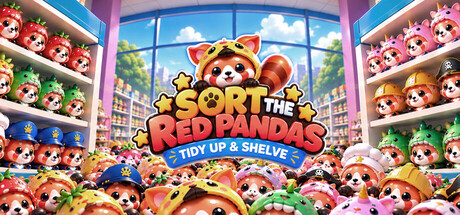 Sort the Red Pandas: Tidy Up & Shelve In-game content arttext | Generative AI was used only as a supporting tool in the design of some fictional red panda characters and for language translation. | Ms.RedPanda | - | Sep 30, 2026 | |
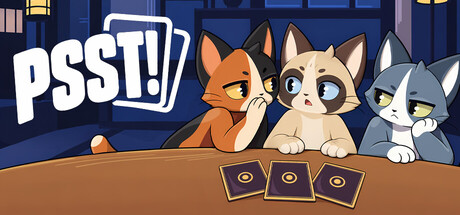 Psst! Live AI audiotext | Psst! uses generative AI in two ways, and both run entirely on your own PC. Nothing you say or type is sent to a server, stored, or used to train anything.
Live voices: Bot players and the host speak their hints and table talk out loud through a text-to-speech model (Supertonic) that runs on your computer. The spoken lines come from the game's own writing and word lists. The AI only turns that text into audio.
Speech recognition: If you choose to play with your voice, a speech-to-text model (NVIDIA Parakeet) turns what you say into text so the game can read your hint or guess. This is optional, and you can always type instead.
All artwork, writing and game design were made by the developer or bought as assets with licenses. | Teeny Tiny Games | - | Sep 30, 2026 | |
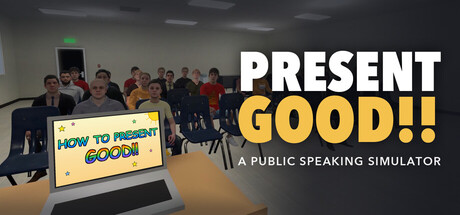 Present Good: A Public Speaking Simulator Live AI text | After a talk, audience questions are generated at runtime by a small open-weight language model (Qwen3) running locally on the player's computer, based on a transcript of what the player just said. Speech-to-text also runs locally (whisper.cpp). Nothing is sent to any server. | Playwithspect | - | Sep 30, 2026 | |
 ARIA Live AI textaudioart | ARIA's dialogue and speech are generated on the player's own machine at runtime by a language model and a text-to-speech voice that ship with the game. Nothing is sent to an external service and no player data leaves the machine. What ARIA says is constrained to the station's fiction and to evidence the player has actually found in-game. Some art, audio and text assets in the game were produced with AI tools and reviewed by the developer before shipping. | Dreamtime Game Studios | - | Sep 30, 2026 | |
 ChessGuardians Live AI artcode | Powered by some of the most advanced chess engines ever created. It also uses two neural networks to recognize chess positions directly from game diagrams, turning images into playable positions in seconds. | FoxCode | - | Sep 30, 2026 | |
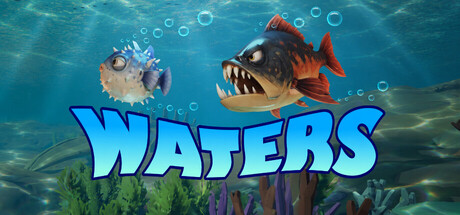 Waters Store/marketing art | Generative AI tools were used to assist in creating selected store and promotional artwork. All such assets were subsequently edited, modified and finalized by a human artist. The game itself does not generate AI content at runtime. | Mad Wizards | - | Sep 30, 2026 | |
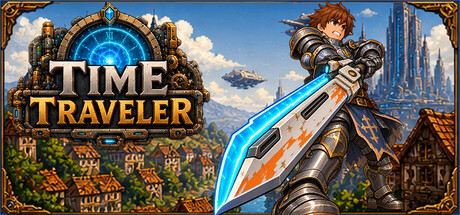 Time Traveler: Divergence Live AI textaudio | Time Traveler: Divergence uses locally running generative AI to enable dynamic NPC conversations. AI-generated dialogue is constrained by the game's predefined rules, characters, world knowledge, and simulation state. AI is also used locally to generate voice-over for these dynamic conversations. No external AI service is required during gameplay. | Fako's Studio | - | Sep 30, 2026 | |
 Solis Chronicles In-game content artaudiotext | Solis Chronicles uses generative AI for pre-rendered content. Character art, backgrounds, event illustrations, video sequences, the title artwork, and the logo were created with generative AI tools (Flux, Nano Banana, Seedream, PixVerse, WAN) under human art direction, with reference-locked character designs. The music was generated locally with ACE-Step under human direction. The story, characters, and game design are human-authored. Dialogue was written with substantial AI assistance and edited by the developer. No AI content is generated during gameplay; everything is pre-rendered and human-reviewed. | FrostByte Project | - | Sep 28, 2026 | |
 PanzerCity In-game content artaudio | This game used generative AI for asset creation during development. The HQ statue's 3D model was created with Meshy AI, and background music was composed with Suno AI. Most in-game icons and images were created using Google Gemini and ChatGPT. | Columbidae Games | - | Sep 28, 2026 | |
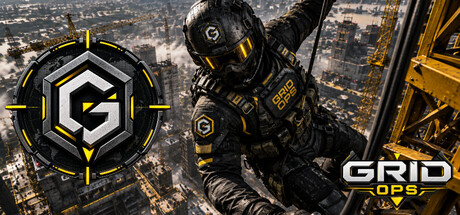 GRID OPS art | AI-generated content is used exclusively for promotional/store
library imagery (e.g. store capsule and library artwork). No
in-game assets — textures, models, environments, weapons, or
character art used during gameplay — are AI-generated. All
gameplay-facing art is sourced from licensed marketplace asset
packs or created manually. | XYNDICATE | - | Sep 28, 2026 | |
 Seri & Yuka with my heart In-game content artaudiotext | This game makes extensive use of generative AI during development to assist with visual, music, and written content, including background artwork, visual assets, game music, and discussion, revision, and polishing of the script.
Generated content is reviewed, selected, edited, and integrated by the developer before being used in the game.
The script, character settings, and overall creative direction are led by the developer and developed through an iterative collaboration with generative AI. | Fire & Works company | - | Sep 28, 2026 | |
 HEXPANSE In-game content artaudiotext | Hexpanse is a solo developer's experiment in building a game 100% with AI, and it is developed with AI assistance (including its source code). The game itself is built almost entirely from procedural, code-generated pixel art and synthesized audio — produced algorithmically by our own code, not by AI. Generative AI was used in two limited, pre-rendered ways: (1) as a starting point for some ship and station part illustrations, later cleaned up, processed and integrated by hand; and (2) to produce the neural text-to-speech voice-over of the intro cinematic. In Early Access, the community feedback I find relevant feeds the AI-assisted development. No generative AI runs while you play — nothing is generated live in-game. | Seedforge Studio | - | Sep 27, 2026 | |
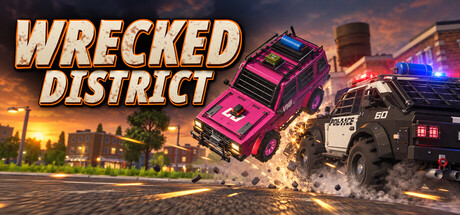 Wrecked District In-game content art | Generative AI tools were used to create some pre-generated static artwork displayed as mission images in the campaign menu. All gameplay visuals, screenshots, and gameplay footage are rendered directly from the game. No AI-generated content is created during gameplay | Sergei Dovidenko | - | Sep 27, 2026 | |
 Aqua Factory Simulator Store/marketing arttext | AI was used to assist in creating the game thumbnail and a few elements on the store page, followed by additional manual editing. | Bewolba Studios | - | Sep 27, 2026 | |
 Space Tanks Store/marketing art | Generative AI was used only to create artwork for the Steam store page and marketing materials. No generative AI is used in the game or during gameplay. | Black Blowfish Software Labs | - | Sep 26, 2026 | |
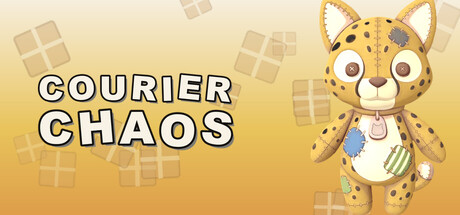 Courier Chaos In-game content arttext | Some of the game's 3D models were created using generative AI (Tripo3D). The English localization and store page text were also prepared with the help of an AI assistant and reviewed by hand. The audio and gameplay were made without generative AI.
Часть 3D-моделей в игре создана с помощью генеративного ИИ (Tripo3D). Английская локализация и тексты для страницы в магазине также подготовлены с помощью ИИ-ассистента и вычитаны вручную. Звук и геймплей созданы без генеративного ИИ. | J Games | - | Sep 25, 2026 | |
 Hunt or Pray Live AI art | Generative AI was used to create and refine the game's store capsule art and logo. No other in-game assets were generated with generative AI, and to the best of my knowledge, the same is true of third-party assets. Separately, a model trained with reinforcement learning controls enemy behavior. It does not generate content. | Rusty Clover | - | Sep 25, 2026 | |
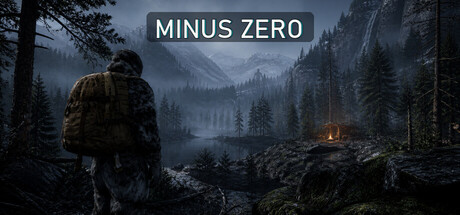 Minus Zero Live AI textart | Generative AI was used with human review to assist with portions of the store page text, promotional artwork, and illustrative building blueprint previews. These illustrations are development artwork; actual gameplay appearance may vary. During gameplay, a locally running language model generates text responses in the AI OS tablet and robot chat interfaces. Robot gathering and construction actions use programmed game systems. The language model runs on the player’s computer and does not require an external third-party AI service. | Black Thorn Labs LLC | - | Sep 25, 2026 | |
 Roadshift In-game content artcodetext | Roadshift was developed with assistance from generative AI tools (such as Large Language Models) to help write and structure the source code and draft store descriptions, as well as generating in-game images, assets, art, and 3D models. The game does not feature live, runtime generative AI. | RVLWorks | - | Sep 25, 2026 | |
 ComfyTrans: Realtime Screen Translator Live AI text | ComfyTrans uses an on-device AI language model to translate on-screen text into your language in real time. All AI processing runs locally on your PC — your screen content is not sent to external servers for translation. | CodeRoad | - | Sep 25, 2026 | |
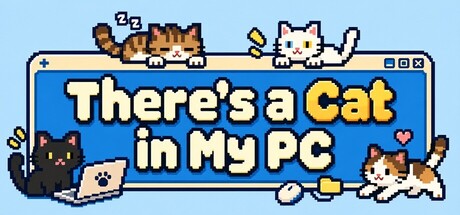 There's a Cat in My PC Live AI art | This game's cat characters are based on art assets we created, expanded with generative AI into a variety of patterns and colors. Generative AI image tools were also used at the concept stage for the store page's capsule images and icons.
Players can also optionally register their own free Google API key to chat with their cats or check today's fortune. This feature connects live to Google's Gemini API while the game is running to generate responses; the rest of the game can be enjoyed the same way without registering a key. | Dopamine | - | Sep 25, 2026 | |
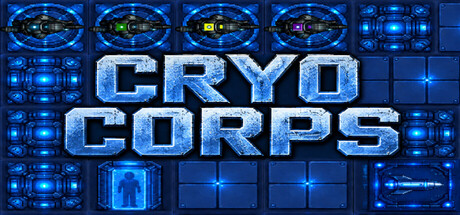 Cryo Corps In-game content art | Concept Art and Design:
Generative AI tools were used during the pre-production phase to brainstorm visual aesthetics and generate early concept art for the title screen and in-game graphic elements.
Final Assets:
While AI was used to establish the artistic direction and conceptual frameworks, all final assets, title screen graphics, and in-game artwork appearing in the released version of the game were manually refined to ensure a cohesive, high-quality experience. | 3HM Studios | - | Sep 25, 2026 | |
 Augment Mahjong Store/marketing artcode | The developer used generative AI tools during the development process to assist in creating pre-generated 2D visual assets (such as backgrounds and promotional art) and to help generate programming code. All AI-generated content was heavily modified, curated, and reviewed by the developer to fit the game's cyberpunk setting. There is no live-generated AI content in this game. | Astral Studio | - | Sep 25, 2026 | |
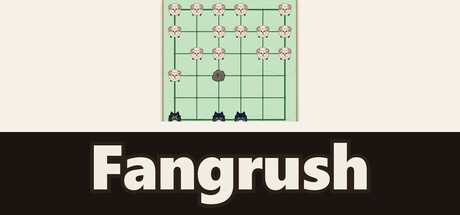 Fangrush In-game content art | Some visual assets and store-related materials for this game were created with generative AI assistance, then reviewed and edited by humans before inclusion. In-game opponents use traditional search and position evaluation; moves are not generated by generative AI at runtime. | Fangrush | - | Sep 24, 2026 | |
 アルテミスの誤算 In-game content arttext | Generative AI was used to create background images and character artwork in the game. It was also used as a writing aid for proofreading and editing the narrative. AI-assisted content was reviewed and selected by the developer. | 未明観測所 | - | Sep 24, 2026 | |
 重生之我在产业园当AI In-game content artaudiocode | Use AI for drawing art materials, generating music, and writing game code. | NextD STUDIO | - | Sep 24, 2026 | |
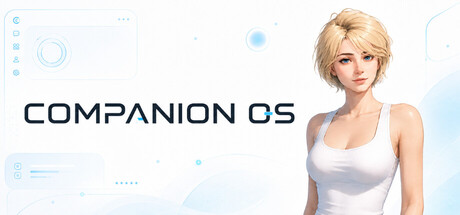 Companion OS Live AI text | Companion OS uses local LLM models and supported cloud AI providers to power some companion conversations and interactive responses. | Pedro Verpha | - | Sep 24, 2026 | |
 We, situated in a parallel world ~ Parallel Hearts ~ In-game content artcode | During development, Google Gemini and OpenAI GPT were primarily used for programming assistance, debugging, and development workflow support. Nano Banana was used to generate some character sprite artwork and to redraw or adjust certain facial-expression variants of existing character sprites. All AI-assisted art assets were manually reviewed, selected, and edited by the developer before being included in the game. | ShimimoStudios | - | Sep 24, 2026 | |
 SLAM TANK Store/marketing artcode | Generative AI-assisted tools were used during development to assist with programming tasks and to create or refine selected 3D models. All AI-assisted code and 3D assets were reviewed, edited, tested, and integrated by the development team. AI-assisted tools were also used for selected Steam marketing artwork. The game does not generate content with AI during gameplay and does not connect to an external AI service. | Next Stage Inc. | - | Sep 24, 2026 | |
 Meeting the World:AIRA Live AI text | Meeting the World (Aira) uses generative AI to create conversations and optional synthesized speech during gameplay. Depending on the enabled features, AI can also select predefined character actions and influence conversational emotion, autonomous behaviour and long-term understanding.
The Windows build includes a local Gemma 4 e2b chat model. Players may optionally configure their own external AI provider. Local speech synthesis uses CosyVoice3 with a bundled reference voice or a voice reference selected by the player.
AI responses may be inaccurate or inappropriate and should not be treated as professional advice. | wmdm | - | Sep 24, 2026 | |
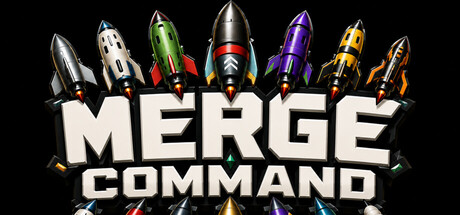 Merge Command In-game content art | Some visual assets were initially created with the help of AI tools and manually reworked | Dudindie | - | Sep 24, 2026 | |
 TASK: GOLIATH — The Last Organics In-game content audioart | Voice lines and sound effects were produced with AI voice synthesis
(ElevenLabs) during development. Some character portraits and UI/VFX
textures were created with AI-assisted tools. All assets were reviewed,
edited and integrated by the developer.
No generative AI runs at runtime — the game ships only pre-generated,
fixed assets. | Taskoft | - | Sep 24, 2026 | |
 Beat the Meat general | NO HOOMAN | UrbanWanderer | - | Sep 23, 2026 | |
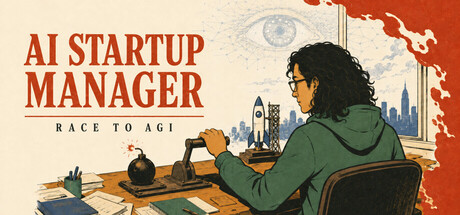 AI Startup Manager: Race to AGI In-game content artaudiotext | Generative AI tools helped create character portraits, illustrations, store and marketing artwork, music, sound effects, and player-facing text during development. These are pre-generated assets. No generative AI runs during gameplay, and the game does not connect to external generative AI services. | Sivas Games | - | Sep 22, 2026 | |
 MacroPilot In-game content textaudio | AI tools were used during development to help translate the user interface into its 14 languages and to produce the voice-over in the store trailer. All translations and marketing materials were reviewed by the developer. MacroPilot itself does not generate content with AI; users can optionally connect their own third-party AI assistant through the built-in MCP connection. | Kartal Labs | - | Sep 22, 2026 | |
 Leonard Sibelius Dev only code | This game was vibe coded in C++ with Claude Code Opus 5, and some GPT-6 Astra while I operated Unreal Engine 5.7. Many of the assets were purchased at fab.com, and the voices are from elevenlabs.io. Call it shovelware if you like, I had fun shoveling. | Walt Parkman | - | Sep 22, 2026 | |
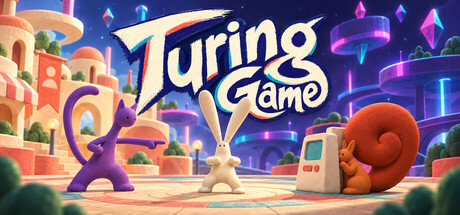 Turing Game Live AI text | During matches, AI characters generate text through our official service, which connects to a third-party AI provider. Players do not need to enter an API key or manage a third-party account. The game includes a limited number of Turing Tickets; creating a match normally uses one. Additional Tickets are planned for purchase through Steam in-game purchases, and some may be earned through gameplay. Generative AI was also used to create promotional illustrations and store artwork. These staged images are not gameplay screenshots. | Mobi Studio | - | Sep 22, 2026 | |
 TransBox Live AI audiotext | This utility app uses artificial intelligence models to perform real-time speech-to-text transcription (ASR), live subtitle translation (MT), and local text-to-speech synthesis (TTS) based on the user's voice or PC audio stream. | Daisen | - | Sep 22, 2026 | |
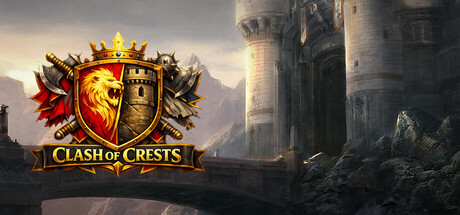 Clash of Crests In-game content arttext | Some of the artwork in Clash of Crests was produced with generative AI image tools and then cropped, composited, retouched and finished by the developer. This includes unit and character portraits, faction crests, campaign banners and key art, and some environment and prop art. Parts of the in-game lore and flavour text were drafted with AI assistance and then edited by the developer. Nothing is generated by AI while you play: all content ships with the game as fixed, pre-made assets. | The Real Z Studios | - | Sep 22, 2026 | |
 StoryRealm: AI Interactive Story Games Live AI text | 1. This game uses AI to interact with the input text commands.
2. Some of the art resources and music assets in the game are generated by AI during the development stage. | YS studiu | - | Sep 21, 2026 | |
 疯狂德州 In-game content audio | The background music in this game was pre-generated with a generative AI tool. No AI-generated content is used for visuals, characters, environments, icons, store artwork, or text, and the game does not generate content at runtime or connect to external AI services. | Jarvis788 | - | Sep 19, 2026 | |
 Esport Manager: Last Pick In-game content art | The champion artwork, portraits and various visual assets are generated. The generated visuals are a starting point rather than a settled choice, and if the game's funding allows it I intend to have them redone by an artist.
No content is generated by AI while you play, since the match simulation runs on a hand-written decision engine where each player evaluates their situation against authored rules, rather than on a generative model. | Daivly Games | - | Sep 19, 2026 | |
 Your Fortune Teller In-game content textart | A local AI model writes personalized saju (Four Pillars) and compatibility readings from your birth details and selected topics. AI-assisted artwork and localized text are also used in the product and its store materials. | Xtiama | - | Sep 19, 2026 | |
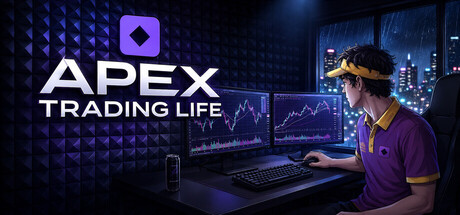 APEX Trading Life In-game content art | Some of the artwork in this game was created using generative AI. The illustrated
backgrounds, character portraits and achievement icons were generated with Google
Gemini and then edited, cropped and colour-matched by hand for use in the game.
Everything else is hand-made: the code, the market simulation, all writing and
dialogue, the interface, and the sound. | RavenStudio | - | Sep 19, 2026 | |
 Endless Tale Live AI audiotext | This game utilizes generative AI technologies in the following areas: [Pre-generated Content] Part of BGM: AI-generated audio is temporarily used as placeholder assets during development (to be progressively replaced in future updates). [Real-time Generation during Gameplay] In-Game Text: Dynamic generation of dialogues and narrative text tailored to in-game situations. Character Voice: Real-time speech synthesis for character voices based on generated text. *All real-time generation processes run entirely locally and securely on the player's machine, with no data transmitted to external servers. Furthermore, there is no feature allowing players to freely input custom text or prompts. | Ludogeist LLC | - | Sep 19, 2026 | |
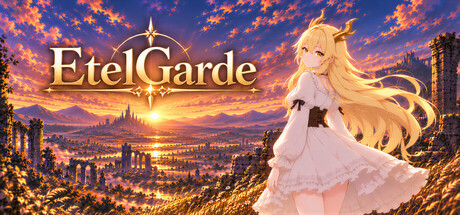 EtelGarde Live AI artaudiotext | Generative AI was used during development for some visual and audio assets.
During gameplay, narrative text and character dialogue are generated in real time by a third-party AI model selected and configured by the player. | Elrolin | - | Sep 19, 2026 | |
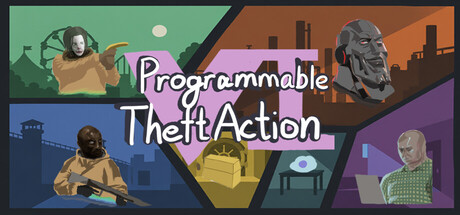 Programmable Theft Action VI / 拼题猎码手 VI In-game content textart | AI was used only for localization and for generating some assets outside the game. The game itself does not use or integrate AI. Any AI use described in the game refers to players using their own external tools. | GreatZaochen | - | Sep 19, 2026 | |
 VtuberCompanySimulator Live AI arttext | This game uses generative AI for some pre-produced visual assets, including character artwork and backgrounds, and for text generated during gameplay. A language model running locally on your computer generates VTuber dialogue and responses based on player input, character settings, and the current game situation. Generated dialogue can vary between playthroughs. | Deluxe Gaming | - | Sep 19, 2026 | |
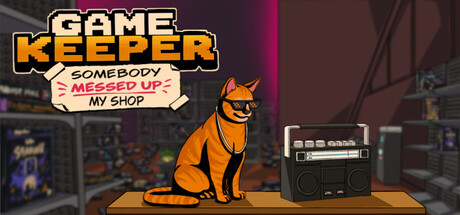 Game Keeper: Somebody Messed Up My Shop! In-game content artaudio | We want to be transparent about our use of AI.
AI was used only as a supporting tool for selected textures and sounds. Due to our limited budget, it helped us create visual assets that would otherwise have been difficult to produce within our resources.
We deeply respect the work of real artists. The game’s concept, creative direction, design, and programming were created entirely by humans. AI was used only as a supplementary tool in a limited part of the audio/visual production process. | VeinStudios | - | Sep 19, 2026 | |
 Desktop Companion Live AI text | Desktop Companion uses generative AI: your companion's replies are generated live by a large language model that runs entirely on your own PC. The app ships with its own safety-tuned model; nothing is sent to an external AI service. Built-in, application-level safeguards screen generated content to block prohibited output. | DokProd | - | Sep 19, 2026 |


