Public Steam disclosure research25,376 disclosures tracked
Where do games disclose AI use?
Search developers’ Steam disclosures, compare classified AI use across
games, and follow recorded changes.
This index adds cross-game classifications and statistics to
statements published on individual store pages.
Groups reflect automatic analysis of public disclosures; mature records are excluded. These counts do not measure AI use across all of Steam.
Missing or unclear statements cannot establish whether a game uses AI.
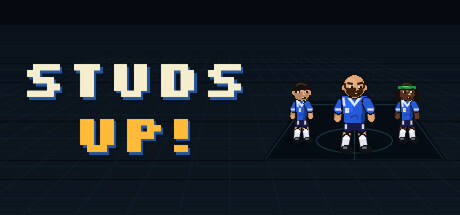
Studs Up! ships some pre-generated AI content. All of it was reviewed and edited by hand before it went into the game:
- Player portraits and the end-of-season win/loss backdrops: image generation, converted down to the game's limited-palette pixel formats.
- The match music loop and the match sound effects: audio generation, edited and loudness-normalised.
- The announcer voice in the trailer: voice generation.
No AI runs while you play. The game is fully offline and generates nothing at runtime.
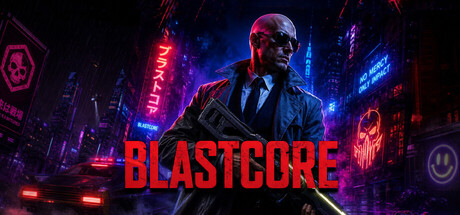
Artificial intelligence was used as a supportive developer tool. It helped create conceptual background environment art. It also generated ambient layers for the soundtrack. This was done solely to enhance the neon synthwave atmosphere. All content underwent manual selection and final refinement.
AI Disclosure Statement:Code Optimization: AI tools were used as an assistant during development to review the C# source code and optimize algorithms for better in-game performance (higher FPS).Localization: The translation of game texts into multiple languages was generated using AI translation tools and manually reviewed for quality.Visual Assets: The loading screens were created with the assistance of AI image generation tools and polished for in-game integration. All generated content has been verified to ensure it does not infringe on existing copyrights.
Generative AI was used to create pre-rendered story illustrations, horror encounter images, promotional artwork and music. AI tools also assisted with narrative text and localization. These assets are prepared in advance; the game does not generate AI content during play.
During the development of our game, pre-generated AI tools were used to assist with asset creation. We utilized Gemini 3.1 Pro to generate UI illustrations and localized text, and Suno AI to create the background music. All AI-assisted assets have been human-reviewed, edited, and integrated into the final build. The game does not contain any live-generated AI content.
Generative AI tools were used during development to assist with selected text content and localization. All AI-assisted content was reviewed and edited by the developer before inclusion. The game does not generate AI content during gameplay.
This game uses artwork, audio, and other assets created with generative AI during development. These assets are generated in advance and included in the game installation. Generative AI is also used to create Steam store artwork. The game does not generate AI content during gameplay or connect to external AI services.
Generative AI was used during development to create selected 2D visual assets, including menu and loading-screen artwork, interface icons and patterns, and the game's wordmark. AI tools also assist with store-page writing. This content is prepared in advance; the game does not generate AI content or connect to an AI service during gameplay.
I've used AI for a lot of things in this project. The code, 3D models, textures, 3D animations, music and more. I know a lot of people don't anything to do with AI so I want to be up front. This is a small pet project, I'm able to create a lot more of my vision than I could without AI. I do not dismiss the reasons people have for rejecting AI.
Generative AI was used during development to assist with some artwork and text, including the main menu background, achievement icons and draft translations for some localized text. This content was selected and edited during production and is included as pre-generated game assets. The game does not use generative AI services to create content at runtime.
Some of the image and audio assets were created with the help of generative AI.
All final design adjustments and processing were done by hand by the developer.
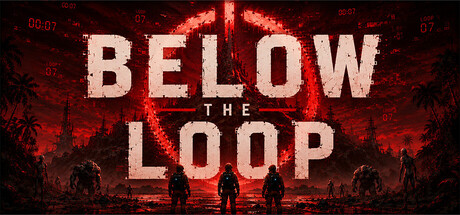
Below The Loop uses generative AI-assisted tools during development to create some visual assets and marketing artwork. These assets are pre-generated and reviewed and edited as part of the development process. The game does not use AI to generate content in real time during gameplay.
Generating base images and materials for certain environmental textures (such as doors and labels), which are then manually edited, dithered, and color-crushed to fit the game's low-poly PSX aesthetic.
Generating video clips, audio, and visual concepts for the television broadcasts (like the in-game cooking shows) that play on CRT monitors throughout the world.
Parts this game's visual assets — including concept art, textures, and character portraits — were pre-rendered with generative AI tools during development, then reviewed and hand-integrated by the developer. Store and marketing images were produced the same way. No content is generated by in real time while you play.
Generating general in-game scripts
Music
Level design
In general, the developer uses AI to create like a cubes; ultimately, they decide where to place each cube to build a castle—or, in this case, the video game itself.
AI Disclosure
WinterCore is a solo-developed game created over four years. Generative AI was used during development to create a small number of visual assets and selected promotional artwork. All AI-generated assets were subsequently edited, refined, and adapted by the developer to fit WinterCore’s art direction and overall visual style.
The game’s core design, programming, story, gameplay, and final implementation were created by the developer. The project also includes licensed assets and creative works from independent artists and creators, who are credited accordingly.
We used an AI diffusion tool in Krita to help create the background for the small capsule shown in search results. Our artist then worked over it with several extra layers, a bit like matte painting. For now, it's a placeholder until our artist finishes the hand-painted version of the small capsule.
The logo and the other capsule images were already hand-painted by our artist. The in-game portraits were also drawn by another artist on our team.
We have a devlog on our website about how we made the capsule artwork and hero portraits, and we'll share the full process on the Steam Community soon too.
The playtest build also includes a few placeholder assets made with AI tools in Krita. Our new UI artist is working on a new UI, so we'll be replacing those placeholders soon. As mentioned above, the hero portraits are also hand-drawn by our artist.
AI-assistive tools were used for development support, including prototyping, coding, testing, documentation, and workflows; all player-facing creative content such as Art, UI, VFX, music, voice acting, and marketing materials was created by human developers and artists.
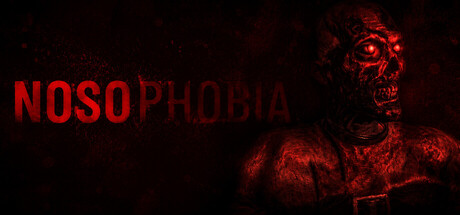
During the development of *A Bad Dream: Trypophobia*, generative AI was used as a supporting tool to create and refine certain textures, 3D models, and visual elements, as well as to assist in programming specific systems. All content was manually reviewed, edited, configured, and integrated by Big Mount Interactive. The game does not generate content via AI during gameplay, nor does it connect to external AI services.
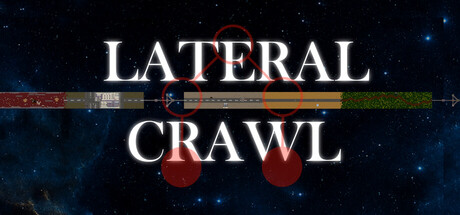
Lateral Crawl will launch in Early Access. The Early Access build will contain some AI-generated and developer-edited sound effects, which are planned to be replaced before the 1.0 release.
Generative AI tools were used during development of this game.
2D art, including character illustrations and in-game documents and photographs, was created with image generation tools, then edited and composed by hand.
Some 3D props and environment models were created with a model generation service, then adjusted for the game.
Background music was created with a music generation service. Sound effects are not generated; they are openly licensed recordings that we processed ourselves.
AI coding tools assisted with writing and reviewing code. All final decisions and edits are made by the developer.
Every generated asset was selected and reworked by a person before it went into the game.
Generative AI was used during development to assist with some pre-generated visual assets, including selected 3D models, textures, and animations. All such content is reviewed and edited by the development team. No generative AI runs during gameplay, and no player input is sent to an AI service.
Generative AI was used selectively during
development, always under direct human
authorship and review:
• Code — An AI coding assistant supported
development as a productivity tool; all systems
were designed, reviewed, and tested by the
developer.
• Key art — The Steam key art was created with
generative AI, then curated and hand-finished by
the developer. All in-game tilesets and
character art are licensed, human-made asset
packs.
• Music — Background music tracks were produced
with the assistance of generative AI tools, then
selected, edited, and mixed by the developer.
The game contains no live-generated AI content:
nothing is generated by AI at runtime.
AI tools were used in a limited way during development to assist with certain aspects of the game's creation. AI was mainly used for occasional assistance and brainstorming, while the majority of the game's design, development, artwork, and content were created and directed by the developer.
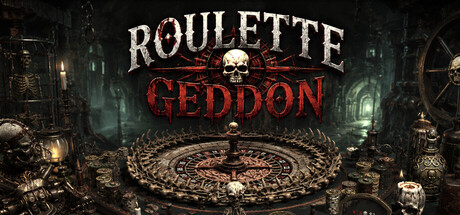
Some pre-generated visual assets used in Roulettegeddon, including portions of promotional artwork and certain in-game visual elements, were created or refined with the assistance of generative AI. The game's gameplay, mechanics, and player progression do not rely on AI-generated content during play.
Generative AI was used to create selected store and library artwork, music, and sound-effect source material. The outputs were curated and edited by the developer before inclusion. No generative AI runs during gameplay, and players cannot generate AI content.
Our work incorporates commissioned artwork, licensed and publicly available assets, and AI-generated content. Regardless of the source materials used, the final product is the creative expression of our development team.
This game includes AI-generated voice performances for certain characters. Players have the option to disable AI-generated voices in the game settings. During development, AI-assisted tools were also used as part of the concept and reference creation process for some visual assets. Final in-game artwork has been substantially modified or created by the development team and is not presented as raw AI-generated content.
We use generative AI across all disciplines of game development with heavy amounts of human editing. That involves audio and visual art. We use it as a productivity tool so we can achieve a higher level of quality, faster, than we would have been able to.
Studs Up! ships some pre-generated AI content. All of it was reviewed and edited by hand before it went into the game:
- Player portraits and the end-of-season win/loss backdrops: image generation, converted down to the game's limited-palette pixel formats.
- The match music loop and the match sound effects: audio generation, edited and loudness-normalised.
- The announcer voice in the trailer: voice generation.
No AI runs while you play. The game is fully offline and generates nothing at runtime.
Artificial intelligence was used as a supportive developer tool. It helped create conceptual background environment art. It also generated ambient layers for the soundtrack. This was done solely to enhance the neon synthwave atmosphere. All content underwent manual selection and final refinement.
AI Disclosure Statement:Code Optimization: AI tools were used as an assistant during development to review the C# source code and optimize algorithms for better in-game performance (higher FPS).Localization: The translation of game texts into multiple languages was generated using AI translation tools and manually reviewed for quality.Visual Assets: The loading screens were created with the assistance of AI image generation tools and polished for in-game integration. All generated content has been verified to ensure it does not infringe on existing copyrights.
Generative AI was used to create pre-rendered story illustrations, horror encounter images, promotional artwork and music. AI tools also assisted with narrative text and localization. These assets are prepared in advance; the game does not generate AI content during play.
During the development of our game, pre-generated AI tools were used to assist with asset creation. We utilized Gemini 3.1 Pro to generate UI illustrations and localized text, and Suno AI to create the background music. All AI-assisted assets have been human-reviewed, edited, and integrated into the final build. The game does not contain any live-generated AI content.
Generative AI tools were used during development to assist with selected text content and localization. All AI-assisted content was reviewed and edited by the developer before inclusion. The game does not generate AI content during gameplay.
This game uses artwork, audio, and other assets created with generative AI during development. These assets are generated in advance and included in the game installation. Generative AI is also used to create Steam store artwork. The game does not generate AI content during gameplay or connect to external AI services.
Generative AI was used during development to create selected 2D visual assets, including menu and loading-screen artwork, interface icons and patterns, and the game's wordmark. AI tools also assist with store-page writing. This content is prepared in advance; the game does not generate AI content or connect to an AI service during gameplay.
I've used AI for a lot of things in this project. The code, 3D models, textures, 3D animations, music and more. I know a lot of people don't anything to do with AI so I want to be up front. This is a small pet project, I'm able to create a lot more of my vision than I could without AI. I do not dismiss the reasons people have for rejecting AI.
Generative AI was used during development to assist with some artwork and text, including the main menu background, achievement icons and draft translations for some localized text. This content was selected and edited during production and is included as pre-generated game assets. The game does not use generative AI services to create content at runtime.
Some of the image and audio assets were created with the help of generative AI.
All final design adjustments and processing were done by hand by the developer.
Below The Loop uses generative AI-assisted tools during development to create some visual assets and marketing artwork. These assets are pre-generated and reviewed and edited as part of the development process. The game does not use AI to generate content in real time during gameplay.
Generating base images and materials for certain environmental textures (such as doors and labels), which are then manually edited, dithered, and color-crushed to fit the game's low-poly PSX aesthetic.
Generating video clips, audio, and visual concepts for the television broadcasts (like the in-game cooking shows) that play on CRT monitors throughout the world.
Parts this game's visual assets — including concept art, textures, and character portraits — were pre-rendered with generative AI tools during development, then reviewed and hand-integrated by the developer. Store and marketing images were produced the same way. No content is generated by in real time while you play.
Generating general in-game scripts
Music
Level design
In general, the developer uses AI to create like a cubes; ultimately, they decide where to place each cube to build a castle—or, in this case, the video game itself.
AI Disclosure
WinterCore is a solo-developed game created over four years. Generative AI was used during development to create a small number of visual assets and selected promotional artwork. All AI-generated assets were subsequently edited, refined, and adapted by the developer to fit WinterCore’s art direction and overall visual style.
The game’s core design, programming, story, gameplay, and final implementation were created by the developer. The project also includes licensed assets and creative works from independent artists and creators, who are credited accordingly.
We used an AI diffusion tool in Krita to help create the background for the small capsule shown in search results. Our artist then worked over it with several extra layers, a bit like matte painting. For now, it's a placeholder until our artist finishes the hand-painted version of the small capsule.
The logo and the other capsule images were already hand-painted by our artist. The in-game portraits were also drawn by another artist on our team.
We have a devlog on our website about how we made the capsule artwork and hero portraits, and we'll share the full process on the Steam Community soon too.
The playtest build also includes a few placeholder assets made with AI tools in Krita. Our new UI artist is working on a new UI, so we'll be replacing those placeholders soon. As mentioned above, the hero portraits are also hand-drawn by our artist.
AI-assistive tools were used for development support, including prototyping, coding, testing, documentation, and workflows; all player-facing creative content such as Art, UI, VFX, music, voice acting, and marketing materials was created by human developers and artists.
During the development of *A Bad Dream: Trypophobia*, generative AI was used as a supporting tool to create and refine certain textures, 3D models, and visual elements, as well as to assist in programming specific systems. All content was manually reviewed, edited, configured, and integrated by Big Mount Interactive. The game does not generate content via AI during gameplay, nor does it connect to external AI services.
Lateral Crawl will launch in Early Access. The Early Access build will contain some AI-generated and developer-edited sound effects, which are planned to be replaced before the 1.0 release.
Generative AI tools were used during development of this game.
2D art, including character illustrations and in-game documents and photographs, was created with image generation tools, then edited and composed by hand.
Some 3D props and environment models were created with a model generation service, then adjusted for the game.
Background music was created with a music generation service. Sound effects are not generated; they are openly licensed recordings that we processed ourselves.
AI coding tools assisted with writing and reviewing code. All final decisions and edits are made by the developer.
Every generated asset was selected and reworked by a person before it went into the game.
Generative AI was used during development to assist with some pre-generated visual assets, including selected 3D models, textures, and animations. All such content is reviewed and edited by the development team. No generative AI runs during gameplay, and no player input is sent to an AI service.
Generative AI was used selectively during
development, always under direct human
authorship and review:
• Code — An AI coding assistant supported
development as a productivity tool; all systems
were designed, reviewed, and tested by the
developer.
• Key art — The Steam key art was created with
generative AI, then curated and hand-finished by
the developer. All in-game tilesets and
character art are licensed, human-made asset
packs.
• Music — Background music tracks were produced
with the assistance of generative AI tools, then
selected, edited, and mixed by the developer.
The game contains no live-generated AI content:
nothing is generated by AI at runtime.
AI tools were used in a limited way during development to assist with certain aspects of the game's creation. AI was mainly used for occasional assistance and brainstorming, while the majority of the game's design, development, artwork, and content were created and directed by the developer.
Some pre-generated visual assets used in Roulettegeddon, including portions of promotional artwork and certain in-game visual elements, were created or refined with the assistance of generative AI. The game's gameplay, mechanics, and player progression do not rely on AI-generated content during play.
Generative AI was used to create selected store and library artwork, music, and sound-effect source material. The outputs were curated and edited by the developer before inclusion. No generative AI runs during gameplay, and players cannot generate AI content.
Our work incorporates commissioned artwork, licensed and publicly available assets, and AI-generated content. Regardless of the source materials used, the final product is the creative expression of our development team.
This game includes AI-generated voice performances for certain characters. Players have the option to disable AI-generated voices in the game settings. During development, AI-assisted tools were also used as part of the concept and reference creation process for some visual assets. Final in-game artwork has been substantially modified or created by the development team and is not presented as raw AI-generated content.
We use generative AI across all disciplines of game development with heavy amounts of human editing. That involves audio and visual art. We use it as a productivity tool so we can achieve a higher level of quality, faster, than we would have been able to.