Public Steam disclosure research25,706 disclosures tracked
Where do games disclose AI use?
Search developers’ Steam disclosures, compare classified AI use across
games, and follow recorded changes.
This index adds cross-game classifications and statistics to
statements published on individual store pages.
Groups reflect automatic analysis of public disclosures; mature records are excluded. These counts do not measure AI use across all of Steam.
Missing or unclear statements cannot establish whether a game uses AI.
The in-game music and soundtrack are created using Suno (generative AI). All visual art is produced procedurally through code. Development used an AI coding assistant (Claude), which is a development-efficiency tool; it does not generate any content live at runtime. No generative AI runs during gameplay.
Netshell uses AI to power its characters. The NPCs you meet on the in-game forums and IRC read what is happening in your playthrough and respond in character, so their messages and forum posts are generated rather than pre-scripted, and each player's world unfolds differently.
All of this runs locally and offline: the AI models ship with the game and run on your machine. Netshell never connects to a third-party AI service such as ChatGPT or Claude. You can turn the AI off entirely, in which case the NPCs stop chatting and the game continues with its authored story.
Some Steam store and trailer assets were created with AI assistance and then edited/curated by the development team. During gameplay, Netshell only uses AI to generate in-character NPC text.
This game uses images created with AI generation tools — including NPC photos and portraits, and some store and promotional artwork. All such content has been reviewed by the developer to ensure it contains no illegal or infringing material.
Generative AI was used during the development of this game to assist with:
- Generating static illustrations for in-game achievement icons.
- Generating placeholder sound effects to be swapped before exiting EA
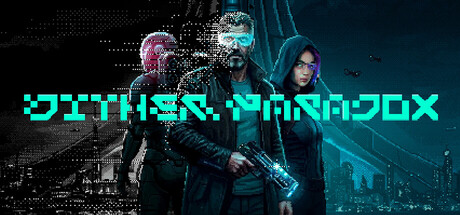
Dither Paradox is created and directed by Michał Kita. The game's final pixel art, animation, and visual design are made by hand, and every artistic and creative decision is made by people.
We use generative AI as a production tool that supports - but does not replace - this work. In the visual layer, AI is sometimes used during the concept and iteration stage - to explore ideas and variations - while the final art assets that ship in the game are made by hand. AI also assists in producing music and voiceover, which are then curated, edited, and approved by the team, as well as some promotional materials.
AI lets us reach a higher level of polish in less time, but authorship, art direction, and final responsibility for everything players see and hear remain with the people who make the game.
Artificial intelligence (AI) was leveraged for key aspects of the game's development, including in-game logic, support systems, and certain artistic assets.
The development of this game made use of AI-generated content. Specifically, some of the in-game images, video sequences and character voice-over were created with the help of generative AI tools. All AI-generated assets were reviewed, curated and edited by the development team before inclusion in the final product
Generative AI tools were used during the creation of certain marketing and promotional materials for the game, including concept artwork, logos, store page assets, and text drafts. All AI-generated content was reviewed, edited, and integrated by the developer before publication.
Generative AI tools (including Tripo3D and Meshy) were used during development to generate base 3D models for characters and environment assets, which were then manually adjusted and refined. AI tools were also used to create ambient background textures for marketing materials and Steam capsule illustrations. No live-generated AI content is used during runtime.
Some content in this game was created with the assistance of generative AI tools during development, including certain visual assets, store artwork, capsule art, and text. All AI-assisted content was reviewed, edited, and integrated by the developer to ensure it fits the game’s design and overall player experience.
Some visual assets used for HackMeNow’s Steam store page, community assets, and marketing materials were created with the assistance of generative AI tools and then reviewed/selected by the developer.
The game itself does not use live generative AI during gameplay. No AI system generates player-facing text, images, audio, code, missions, or other dynamic content while the game is being played.
This game's development used generative AI in three specific areas:
1. Source code: Portions of the source code were authored with assistance from large language model (LLM) coding tools.
2. Localization: In-game text translations for 10 languages (English, Simplified Chinese, Traditional Chinese, Korean, Russian, German, French, Spanish, Brazilian Portuguese, and Italian) were generated
using LLM-based tools from the original Japanese source text.
3. Visual assets (UI graphics and logo): Generative AI was used in some cases to assist with creating certain in-game UI icons and the game logo. These AI-assisted assets are limited to generic UI elements
(icons, indicators) and abstract logo designs, and do not depict real-world characters, brands, or copyrighted materials.
Generative AI was used to create some visual assets for the Steam Store Page (capsule images, promotional materials). All in-game art, gameplay mechanics, code, music, sound effects, and translations were created without generative AI.
This game uses generative AI during gameplay to power hostile in-world security AIs. These systems generate text-based dialogue responses locally on the player’s machine during intrusion sequences. Core progression, mission structure, objectives, and outcomes are authored by the developer; generative AI is used to create reactive in-character dialogue within bounded gameplay contexts.
Some promotional and store assets were created with the assistance of generative AI and then reviewed and edited by the developer before release.
All Store images built with a baseline of Genertive AI and heavly modified before upload
Some Code mainly underlying Features are Made With Generative AI
Some parts of the game content were created with the assistance of artificial intelligence.
AI tools were used during the writing process of certain cases to support idea generation and narrative structuring. All content was reviewed, edited, and finalized by the developer.
Additionally, some visual assets found in the in-game gallery were generated using AI-based tools and curated to match the game's style and atmosphere.
We do NOT use AI-generated art, and we never intentionally include AI assets in our game. We sometimes purchase assets and use stock photos. We do our best to verify them, but nowadays, distinguishing AI from human-made art can be hard.
That said, if there is any specific artwork that you believe looks like AI or raises concerns, we would appreciate it if you could point it out on our Discord server. We will investigate and replace anything that might have slipped through.
AI-generated art is NOT something we want to include in our game.
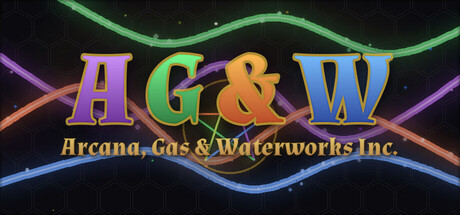
The pipes, ley lines, and gas mains of Arcana, Gas & Waterworks Inc. were designed, debated, and duct-taped together by a single developer. All music was licensed from real indie musicians, who did NOT use generative AI in any way, and who are credited in the game. Generative AI tools helped bring AGW Inc. to life by turning hand-drawn sketches into finished art, scripting sound effects, and contributing early drafts of in-game text. All of this content was rewritten, expanded, or replaced by the developer to fit the game's voice and world. Thanks to the help of these AI tools, I was able to finally answer the burning question, "What if fantasy worlds needed infrastructure?"
AI tools were used to assist in creating selected promotional store assets. These materials were later edited, refined, and finalized by human creators.
In-game videos used for simulating "web cam" or in house cameras are AI generated and than processed by code to get an ASCSII video. Translations of the game into all supported languages were produced with the assistance of large language models
Generative AI has only been used to create placeholder background music tracks, as a type of "elevator music", while I learn more about sound design and music producing. No AI has been used anywhere else, in art or development. Everything else has been done by one individual, and the hope is to have all the AI generated soundtracks replaced before launch. Sorry for any AI hate, and thanks for the understanding.
Generative AI tools were used as part of the creative workflow to help produce certain marketing and promotional assets, such as concept artwork and store page imagery.
The game itself, including all gameplay, mechanics, in-game assets, and narrative content, is developed by a human team.
No generative AI is used to create live or dynamic content within the game.
The promotional assets used in the store for this free game (cover image and the screen animation in the trailer) were created with the help of artificial intelligence.
UmbraNet uses generative artificial intelligence to create some visual content that appears both in-game and on the store page, such as certain images and graphical elements used for atmosphere and presentation.
All AI-generated content is pre-generated and curated by the me (developer) before being included in the game or its marketing materials. No generative AI systems are used during live gameplay, and no player data is collected or processed by AI.
Generative AI is not used for programming, gameplay logic, systems design, or code development. All game mechanics and technical implementation are created manually by the developer.
Generative AI was used to create temporary placeholder visuals during development. All such content is reviewed, edited, and progressively replaced with human-created artwork.
This game makes limited use of generative artificial intelligence during development to assist with placeholder content and non critical descriptive text. All gameplay systems, mechanics, progression, and final in game content are designed, authored, and implemented by the developer. No generative AI is used during live gameplay, and no player data is collected or processed by AI systems.
The in-game music and soundtrack are created using Suno (generative AI). All visual art is produced procedurally through code. Development used an AI coding assistant (Claude), which is a development-efficiency tool; it does not generate any content live at runtime. No generative AI runs during gameplay.
Netshell uses AI to power its characters. The NPCs you meet on the in-game forums and IRC read what is happening in your playthrough and respond in character, so their messages and forum posts are generated rather than pre-scripted, and each player's world unfolds differently.
All of this runs locally and offline: the AI models ship with the game and run on your machine. Netshell never connects to a third-party AI service such as ChatGPT or Claude. You can turn the AI off entirely, in which case the NPCs stop chatting and the game continues with its authored story.
Some Steam store and trailer assets were created with AI assistance and then edited/curated by the development team. During gameplay, Netshell only uses AI to generate in-character NPC text.
This game uses images created with AI generation tools — including NPC photos and portraits, and some store and promotional artwork. All such content has been reviewed by the developer to ensure it contains no illegal or infringing material.
Generative AI was used during the development of this game to assist with:
- Generating static illustrations for in-game achievement icons.
- Generating placeholder sound effects to be swapped before exiting EA
Dither Paradox is created and directed by Michał Kita. The game's final pixel art, animation, and visual design are made by hand, and every artistic and creative decision is made by people.
We use generative AI as a production tool that supports - but does not replace - this work. In the visual layer, AI is sometimes used during the concept and iteration stage - to explore ideas and variations - while the final art assets that ship in the game are made by hand. AI also assists in producing music and voiceover, which are then curated, edited, and approved by the team, as well as some promotional materials.
AI lets us reach a higher level of polish in less time, but authorship, art direction, and final responsibility for everything players see and hear remain with the people who make the game.
Artificial intelligence (AI) was leveraged for key aspects of the game's development, including in-game logic, support systems, and certain artistic assets.
The development of this game made use of AI-generated content. Specifically, some of the in-game images, video sequences and character voice-over were created with the help of generative AI tools. All AI-generated assets were reviewed, curated and edited by the development team before inclusion in the final product
Generative AI tools were used during the creation of certain marketing and promotional materials for the game, including concept artwork, logos, store page assets, and text drafts. All AI-generated content was reviewed, edited, and integrated by the developer before publication.
Generative AI tools (including Tripo3D and Meshy) were used during development to generate base 3D models for characters and environment assets, which were then manually adjusted and refined. AI tools were also used to create ambient background textures for marketing materials and Steam capsule illustrations. No live-generated AI content is used during runtime.
Some content in this game was created with the assistance of generative AI tools during development, including certain visual assets, store artwork, capsule art, and text. All AI-assisted content was reviewed, edited, and integrated by the developer to ensure it fits the game’s design and overall player experience.
Some visual assets used for HackMeNow’s Steam store page, community assets, and marketing materials were created with the assistance of generative AI tools and then reviewed/selected by the developer.
The game itself does not use live generative AI during gameplay. No AI system generates player-facing text, images, audio, code, missions, or other dynamic content while the game is being played.
This game's development used generative AI in three specific areas:
1. Source code: Portions of the source code were authored with assistance from large language model (LLM) coding tools.
2. Localization: In-game text translations for 10 languages (English, Simplified Chinese, Traditional Chinese, Korean, Russian, German, French, Spanish, Brazilian Portuguese, and Italian) were generated
using LLM-based tools from the original Japanese source text.
3. Visual assets (UI graphics and logo): Generative AI was used in some cases to assist with creating certain in-game UI icons and the game logo. These AI-assisted assets are limited to generic UI elements
(icons, indicators) and abstract logo designs, and do not depict real-world characters, brands, or copyrighted materials.
Generative AI was used to create some visual assets for the Steam Store Page (capsule images, promotional materials). All in-game art, gameplay mechanics, code, music, sound effects, and translations were created without generative AI.
This game uses generative AI during gameplay to power hostile in-world security AIs. These systems generate text-based dialogue responses locally on the player’s machine during intrusion sequences. Core progression, mission structure, objectives, and outcomes are authored by the developer; generative AI is used to create reactive in-character dialogue within bounded gameplay contexts.
Some promotional and store assets were created with the assistance of generative AI and then reviewed and edited by the developer before release.
All Store images built with a baseline of Genertive AI and heavly modified before upload
Some Code mainly underlying Features are Made With Generative AI
Some parts of the game content were created with the assistance of artificial intelligence.
AI tools were used during the writing process of certain cases to support idea generation and narrative structuring. All content was reviewed, edited, and finalized by the developer.
Additionally, some visual assets found in the in-game gallery were generated using AI-based tools and curated to match the game's style and atmosphere.
We do NOT use AI-generated art, and we never intentionally include AI assets in our game. We sometimes purchase assets and use stock photos. We do our best to verify them, but nowadays, distinguishing AI from human-made art can be hard.
That said, if there is any specific artwork that you believe looks like AI or raises concerns, we would appreciate it if you could point it out on our Discord server. We will investigate and replace anything that might have slipped through.
AI-generated art is NOT something we want to include in our game.
The pipes, ley lines, and gas mains of Arcana, Gas & Waterworks Inc. were designed, debated, and duct-taped together by a single developer. All music was licensed from real indie musicians, who did NOT use generative AI in any way, and who are credited in the game. Generative AI tools helped bring AGW Inc. to life by turning hand-drawn sketches into finished art, scripting sound effects, and contributing early drafts of in-game text. All of this content was rewritten, expanded, or replaced by the developer to fit the game's voice and world. Thanks to the help of these AI tools, I was able to finally answer the burning question, "What if fantasy worlds needed infrastructure?"
AI tools were used to assist in creating selected promotional store assets. These materials were later edited, refined, and finalized by human creators.
In-game videos used for simulating "web cam" or in house cameras are AI generated and than processed by code to get an ASCSII video. Translations of the game into all supported languages were produced with the assistance of large language models
Generative AI has only been used to create placeholder background music tracks, as a type of "elevator music", while I learn more about sound design and music producing. No AI has been used anywhere else, in art or development. Everything else has been done by one individual, and the hope is to have all the AI generated soundtracks replaced before launch. Sorry for any AI hate, and thanks for the understanding.
Generative AI tools were used as part of the creative workflow to help produce certain marketing and promotional assets, such as concept artwork and store page imagery.
The game itself, including all gameplay, mechanics, in-game assets, and narrative content, is developed by a human team.
No generative AI is used to create live or dynamic content within the game.
The promotional assets used in the store for this free game (cover image and the screen animation in the trailer) were created with the help of artificial intelligence.
UmbraNet uses generative artificial intelligence to create some visual content that appears both in-game and on the store page, such as certain images and graphical elements used for atmosphere and presentation.
All AI-generated content is pre-generated and curated by the me (developer) before being included in the game or its marketing materials. No generative AI systems are used during live gameplay, and no player data is collected or processed by AI.
Generative AI is not used for programming, gameplay logic, systems design, or code development. All game mechanics and technical implementation are created manually by the developer.
Generative AI was used to create temporary placeholder visuals during development. All such content is reviewed, edited, and progressively replaced with human-created artwork.
This game makes limited use of generative artificial intelligence during development to assist with placeholder content and non critical descriptive text. All gameplay systems, mechanics, progression, and final in game content are designed, authored, and implemented by the developer. No generative AI is used during live gameplay, and no player data is collected or processed by AI systems.