








Disclosure
This game uses generative AI to create images and audio as game materials.
- Creator
- 张 潘达
- Reviews
- -
- Added
- Sep 16, 2026
Public Steam disclosure research 25,376 disclosures tracked
Search developers’ Steam disclosures, compare classified AI use across games, and follow recorded changes. This index adds cross-game classifications and statistics to statements published on individual store pages.
Code help, debugging and other development work.
Capsule art, trailers and promotional material.
Pre-made art, audio, writing and other game assets.
Interactive or runtime AI features disclosed by the developer.
Groups reflect automatic analysis of public disclosures; mature records are excluded. These counts do not measure AI use across all of Steam. Missing or unclear statements cannot establish whether a game uses AI.
This game uses generative AI to create images and audio as game materials.
AI-assisted artwork was used for store marketing assets. The shipped game does not generate content during gameplay and does not connect to an AI service at runtime.
AI is not used for any aspect of music creation or sound. And no actual game art was created with AI (Inventory items, decals, portraits, etc. All of that was fully painted by a human.) AI was used for code work and project management. ONLY a small amount of the textures (less than 10) used in the world were created with the help of AI.
Generative AI tools were used during development to create game assets.
Generative AI tools were used during development to create some decorative artwork and surface textures, including botanical table mats and room furnishings. These assets are reviewed and incorporated into the game by the developer. The game does not generate AI content during gameplay or connect to an external AI service.
The application itself does not use generative AI. Maps are produced by a deterministic, rule-based algorithm from signal analysis of the user's own audio file (tempo, beat grid, onsets, song structure); no machine-learning models are involved, and nothing is generated at runtime by AI. Generative AI was used only for marketing: the animated scenes in the store trailer were produced with AI image and video tools from our own storyboard and prompts. Store screenshots are real captures of the application, and the capsule artwork was designed by hand.
Generative AI was used to assist in the creation of some 2D art assets.
Generative AI tools were used to create and edit selected pre-rendered visual assets, animations, and marketing materials. The game does not use live-generated AI content during gameplay.
Does it matter? No, the game is still fun.
Used for Textures.
Slightly Random Dungeons prioritises human generated assets. Player-facing prose is constructed from bespoke human composed words (writer’s block pending). We have engaged a human artist for our bestiary, portraits and scenery art, and use human developed icons and inventory assets, UI elements, music and effects made in house or under licence with a minority of AI generated pieces filling gaps until the alternative arrives. Any AI agent use has been supervised by humans, these agents have not yet unionised.
AI tools were used during development to assist with code, artwork, music, and other production tasks. All creative direction, design decisions, implementation, integration, testing, and final selection of content were handled by the developer.
Some of the game's 2D art — backgrounds, obstacle textures, sticker illustrations and the logo — was created with the help of generative AI tools during development. All of it was reviewed, edited and assembled by the developer. Part of the game's source code was also written with AI assistance. The game itself contains no AI models and generates nothing at runtime: every asset ships as a fixed file.
Some pre-generated visual assets in the game were created or assisted with generative AI tools, including environment artwork, interface illustrations, textures, and source material used for certain 3D assets. All such material was reviewed, edited, integrated, and tested by the developer. The game does not generate AI content during gameplay or connect to external AI services while running.
5 village houses and 1 weapon models are generated by AI as placeholder. We planned to replace all of them gradually.
The game uses generative AI in a limited capacity to create small aesthetic UI elements (such as icons and the mouse cursor), to assist with game translations, and to generate voiceovers for promotional materials, such as the game's trailer and to make minor adjustments. We only consider AI to be a supportive tool. Every detail is meticulously crafted with human intent, as our creative process is still firmly anchored in manual craftsmanship.
Parts of this product were produced with the help of generative AI. The HTML, CSS, JavaScript and shader code of the bundled wallpapers, the store page text and its translations were drafted with AI assistance and reviewed by a person before release. The application itself does not use generative AI at runtime. It generates no content while you use it, and nothing you do in Wallpaper — hardware readings, settings, your own photos and videos — is sent to any AI model or to any server. Everything stays on your PC.
Every voice you hear in Dub Night Live is a real person. Nothing in the game is AI-generated: no AI voices, no AI art, no AI judging (scoring is player votes). The clip editor uses two open-source machine-learning tools that run locally on your PC: one separates a clip's original voices from its music and effects, and one drafts line timings for you to review and fix. They process your own video files, never send anything to an external service, and never create content. During development, AI was used as a coding assistant only.
AI-generated images
AI was used on this game: to assist with the programming, and to produce the translations. If a line reads wrong in your language, report it on the Steam community hub.
AI assistance (a large language model) was used to translate the store page description into English. No in-game assets — 3D models, textures, music, or sound — were created using generative AI.
Game code and ui was assisted with Claude
Generative AI was used only for programming assistance and localization. No generative AI was used for artwork, music, or sound effects.
I used AI for localization and during performance testing for handheld support, coding agents were used to help identify ways to optimize the game
"This game's code, including the level and cosmetics editors, are all AI-generated. The maps and music are not AI-generated. Some cosmetics may be AI-generated, but most are not."
This game uses generative AI tools in a few areas: some 2D art assets (such as the main menu background, title logo, and UI icons), some background music and sound effects, and the drafting and translation of store page text. All AI-generated content was reviewed and edited by the developer to ensure quality and appropriate use.
Some visual assets were created with the help of generative AI tools.
All artwork, sprites, terrain, animations and audio are procedurally generated by our own deterministic tools or licensed/purchased from human-made sources. No generative AI images or audio are used. AI assistance was used for drafting and prototyping, all of which is reviewed and further iterated by a human. No AI models run while the game is played.
The optional cursor-buddy 3D character included in this application was pre-generated with Meshy AI under a paid commercial license. No other shipped content is AI-generated, and this application does not generate AI content during use. Built-in tools such as automatic subtitles run local machine-learning models on this device to process the user's own media only.
Generative AI was used to localize text for the game and the store page and in no other way.
Generative AI was used as part of the development process to assist with the creation of some visual and audio assets. AI-generated outputs are reviewed, selected, edited and integrated by the developer to fit the game's visual and creative direction. Flow Foundry does not use generative AI to create content live during gameplay.
Generative AI tools were used during development to assist with writing portions of the game's code and to generate some of the visual assets used in the game.
CrashFest is a one-person game, built in Unity between coffee and complaints from playtesters. It started as a physics experiment about shoving a low-poly car off a ledge and got out of hand once six controllers were plugged in. I’m a software engineer, not an artist. So a good chunk of CrashFest was made together with Claude AI — art direction, shaders, menus, the visual bits I’d never have drawn on my own — and the soundtrack comes out of Suno. The code, the physics and every questionable design decision are mine.
AI was used only as a tool to speed things up. Voice acting was done by professionals (including me). SFX and most VFX are assets created by artists (some placeholder AI art is included to be replaced in time) and the music tracks were composed by me and rendered with an AI assisted DAW process. All creative ideas, all mods and QoL features of this unique puzzle game were designed and built by a human mind.
During development, generative AI tools were used to assist in creating fixed, pre-generated visual content, including brand illustrations, logo variants, Steam store graphics, UI decorative assets and icons, and seamless PBR material textures. All AI-assisted content was created before release and reviewed by the developer. The game does not generate AI content at runtime, does not accept player prompts for AI generation, and does not send player data to an AI service.
Rally Point's visuals and store art are drawn by code from the game's own geometry. No image, audio, or voice generation model was used. That code was written with AI assistance, as were the non-English translations.
The game's code was written with the help of an AI coding assistant, following the developer's design direction. Because the characters, arenas, materials and user interface are generated procedurally in code rather than authored as art assets, they are a result of that same process. The background music tracks were generated with Suno (commercial licence). Sound effects are licensed from Mixkit and Freesound. Nothing is generated by AI while the game is running.
The game was developed with the help of AI. The background music soundtrack is AI-generated: the pieces were created with a locally run music model, then curated and edited by hand. Puzzles, game design and gameplay are human-made.
Some of the content in Dawnheart Keepers was created with the help of generative AI tools during development. All of it was made before release: the game does not generate anything with AI while you play, and it never connects to an AI service. What that covers: - Illustrated art - menu and story backgrounds, story scenes, the world map, character and tower portraits, and the upgrade-card plates - was made with image-generation models run locally on the developer's own machine, from prompts the developer wrote. - The English and Hebrew voice-over was generated with ElevenLabs from scripts written by the developer. - Sound effects were generated from written prompts, or synthesised procedurally in code. All of it was reviewed, edited, curated and tested by the developer before it shipped, and the same applies to the trailer and store art. The music is not AI-generated. It is written as code and synthesised by the game itself while you play, the way game soundtracks were built before recorded audio.
AI used to generate code, including code to procedurally generate graphics/sound. Artists using Suno marked "(Suno)" after artist name. AI used for localization.
ViewerFrenzy includes pre-generated AI-assisted music and selected visual assets created during development. These assets are reviewed and curated by the development team before inclusion in the game. The game does not use generative AI to create content during gameplay.
Environments and environmental artwork are not created using generative AI. Generative AI is used as part of the early development workflow for prototyping some creature artwork, which is going to be replaced during development.
AI is used to generate a portion of the in-game imagery.
Some pre-rendered 2D art was created with the assistance of generative AI tools: the playable characters' animation frames, world backgrounds and tile art were generated from the developer's original character and world designs, then hand-edited, aligned and baked into final game assets by the developer. A small number of sound effects were also created with AI audio tools and then mixed by hand. The store page capsule images are composed from the same AI-assisted paintings plus hand-set typography. All AI-assisted content is pre-rendered, was reviewed by the developer before shipping, and no content is generated by AI at runtime.
Some of the placeholder unit and terrain sprites that I'm using while the game is in development were generated with the help of AI (with a lot of manual curation and editing... I promise that you will not be confronted by any noticeably ugly slop). Initial sales will contribute toward creating hand-drawn, unique sprites for as many units as possible.
Some audio and translations were made with the assistance of AI.
Some in-game icons were created with the assistance of generative AI during development.
プログラム……AI イラスト……AI ボイス……AI ランダムなパズル生成……AI
Generative AI tools were used to assist with portions of the game’s source code. All AI-assisted code was reviewed, modified, integrated and tested by the developer. The game’s models, artwork and other visual content were created or sourced separately and were not generated by AI. CoasterWorks does not generate AI content during gameplay or connect to external AI services.
We are utilising ElevenLabs’ text-to-speech tool, to generate some voice-over elements within Train Sim World 7. This is utilised in features such as training modules, as well as platform and onboard train announcements. All scripts and content are written by Dovetail Games staff, with ElevenLabs used to generate the audio in these instances.
| Title⇅ | Disclosure | Creator⇅ | Src | Reviews⇅ | Added↓ |
|---|---|---|---|---|---|
 Panda Minesweeper In-game content artaudio | This game uses generative AI to create images and audio as game materials. | 张 潘达 | - | Sep 16, 2026 | |
 Super Brik Brik Store/marketing art | AI-assisted artwork was used for store marketing assets. The shipped game does not generate content during gameplay and does not connect to an AI service at runtime. | Infiland | - | Sep 15, 2026 | |
 SMASH Co. In-game content artcode | AI is not used for any aspect of music creation or sound. And no actual game art was created with AI (Inventory items, decals, portraits, etc. All of that was fully painted by a human.)
AI was used for code work and project management. ONLY a small amount of the textures (less than 10) used in the world were created with the help of AI. | Thicc Voodoo | - | Sep 15, 2026 | |
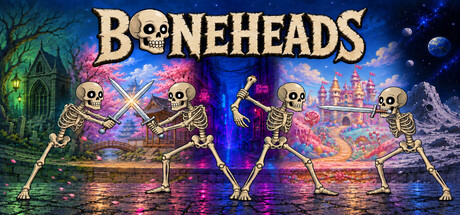 BoneHeads In-game content art | Generative AI tools were used during development to create game assets. | deReaLized | - | Sep 15, 2026 | |
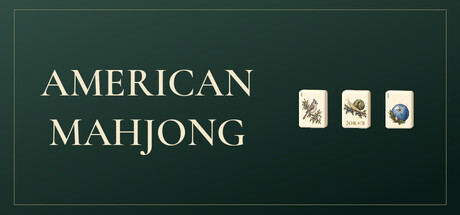 American Mahjong In-game content art | Generative AI tools were used during development to create some decorative artwork and surface textures, including botanical table mats and room furnishings. These assets are reviewed and incorporated into the game by the developer. The game does not generate AI content during gameplay or connect to an external AI service. | Garner Solutions | - | Sep 15, 2026 | |
 SliceForge Store/marketing art | The application itself does not use generative AI. Maps are produced by a deterministic, rule-based algorithm from signal analysis of the user's own audio file (tempo, beat grid, onsets, song structure); no machine-learning models are involved, and nothing is generated at runtime by AI.
Generative AI was used only for marketing: the animated scenes in the store trailer were produced with AI image and video tools from our own storyboard and prompts. Store screenshots are real captures of the application, and the capsule artwork was designed by hand. | NikiBStudio | - | Sep 13, 2026 | |
 The Stars Are Never Still In-game content art | Generative AI was used to assist in the creation of some 2D art assets. | Sojourner. Game | - | Sep 12, 2026 | |
 Sarmatian Heroes In-game content art | Generative AI tools were used to create and edit selected pre-rendered visual assets, animations, and marketing materials. The game does not use live-generated AI content during gameplay. | Kajetan Hrynczuk | - | Sep 12, 2026 | |
 A Journey Rediscovered - Intro Version general | Does it matter? No, the game is still fun. | NotARealGameDev | - | Sep 12, 2026 | |
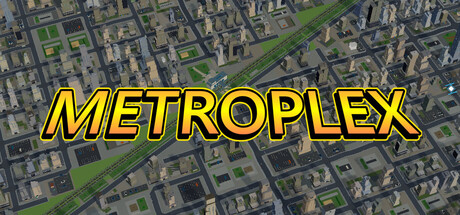 Metroplex In-game content art | Used for Textures. | Infinite Error Industries | - | Sep 12, 2026 | |
 Slightly Random Dungeons In-game content artaudiotext | Slightly Random Dungeons prioritises human generated assets. Player-facing prose is constructed from bespoke human composed words (writer’s block pending).
We have engaged a human artist for our bestiary, portraits and scenery art, and use human developed icons and inventory assets, UI elements, music and effects made in house or under licence with a minority of AI generated pieces filling gaps until the alternative arrives.
Any AI agent use has been supervised by humans, these agents have not yet unionised. | Slightly Random Studios | - | Sep 12, 2026 | |
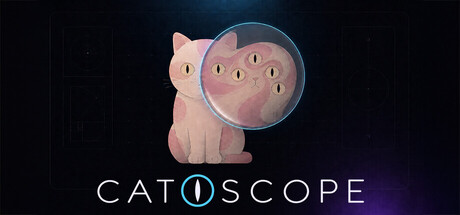 Catoscope In-game content artaudiocode | AI tools were used during development to assist with code, artwork, music, and other production tasks. All creative direction, design decisions, implementation, integration, testing, and final selection of content were handled by the developer. | skeleton picture | - | Sep 10, 2026 | |
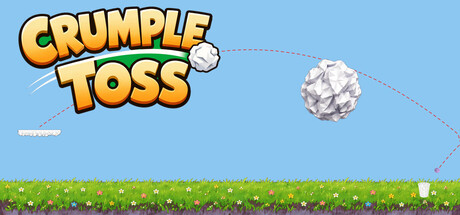 Crumple Toss | Some of the game's 2D art — backgrounds, obstacle textures, sticker
illustrations and the logo — was created with the help of generative AI
tools during development. All of it was reviewed, edited and assembled by
the developer. Part of the game's source code was also written with AI
assistance. The game itself contains no AI models and generates nothing at
runtime: every asset ships as a fixed file. | Petro Game Studio | - | Sep 10, 2026 | |
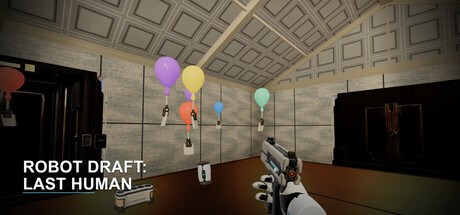 ROBOT DRAFT: LAST HUMAN In-game content art | Some pre-generated visual assets in the game were created or assisted with generative AI tools, including environment artwork, interface illustrations, textures, and source material used for certain 3D assets. All such material was reviewed, edited, integrated, and tested by the developer. The game does not generate AI content during gameplay or connect to external AI services while running. | Zhengkai Zhang | - | Sep 10, 2026 | |
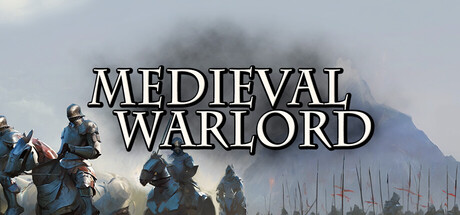 Medieval Warlord In-game content art | 5 village houses and 1 weapon models are generated by AI as placeholder. We planned to replace all of them gradually. | Medieval Warlord Developers | - | Sep 10, 2026 | |
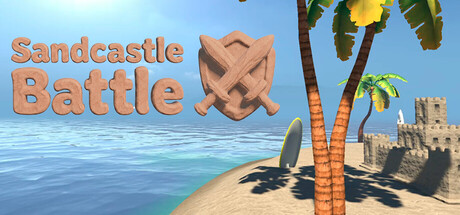 Sandcastle Battle In-game content arttextaudio | The game uses generative AI in a limited capacity to create small aesthetic UI elements (such as icons and the mouse cursor), to assist with game translations, and to generate voiceovers for promotional materials, such as the game's trailer and to make minor adjustments.
We only consider AI to be a supportive tool. Every detail is meticulously crafted with human intent, as our creative process is still firmly anchored in manual craftsmanship. | Eklo Studio | - | Sep 9, 2026 | |
 Wallpaper Store/marketing codetext | Parts of this product were produced with the help of generative AI. The HTML, CSS, JavaScript and shader code of the bundled wallpapers, the store page text and its translations were drafted with AI assistance and reviewed by a person before release.
The application itself does not use generative AI at runtime. It generates no content while you use it, and nothing you do in Wallpaper — hardware readings, settings, your own photos and videos — is sent to any AI model or to any server. Everything stays on your PC. | Simay Yaşın | - | Sep 9, 2026 | |
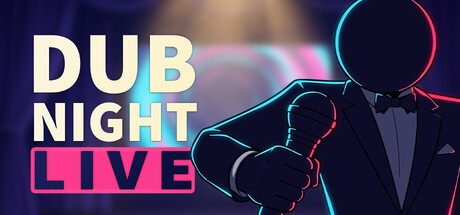 Dub Night Live Dev only code | Every voice you hear in Dub Night Live is a real person. Nothing in the game is AI-generated: no AI voices, no AI art, no AI judging (scoring is player votes).
The clip editor uses two open-source machine-learning tools that run locally on your PC: one separates a clip's original voices from its music and effects, and one drafts line timings for you to review and fix. They process your own video files, never send anything to an external service, and never create content.
During development, AI was used as a coding assistant only. | Dubster Games | - | Sep 7, 2026 | |
 LifeReplay Unclear art | AI-generated images | Dagou Studio | - | Sep 6, 2026 | |
 Ghost in the SQL Data In-game content text | AI was used on this game: to assist with the programming, and to produce the translations. If a line reads wrong in your language, report it on the Steam community hub. | Isaac MENARD | - | Sep 6, 2026 | |
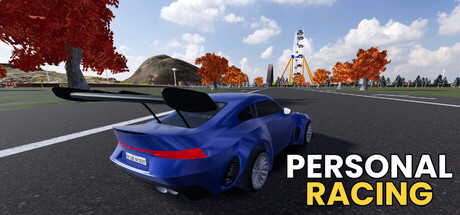 Personal Racing Store/marketing text | AI assistance (a large language model) was used to translate the store page description into English. No in-game assets — 3D models, textures, music, or sound — were created using generative AI. | Dídac | - | Sep 4, 2026 | |
 Drag and Conquer Dev only code | Game code and ui was assisted with Claude | Grawr | - | Sep 4, 2026 | |
 Dice Tiny Town In-game content codetext | Generative AI was used only for programming assistance and localization. No generative AI was used for artwork, music, or sound effects. | Lazini | - | Sep 3, 2026 | |
 Blotch In-game content textcode | I used AI for localization and during performance testing for handheld support, coding agents were used to help identify ways to optimize the game | Nathan Glover | - | Sep 3, 2026 | |
 Fister In-game content codeart | "This game's code, including the level and cosmetics editors, are all AI-generated.
The maps and music are not AI-generated.
Some cosmetics may be AI-generated, but most are not." | Bootloop Studio | - | Sep 2, 2026 | |
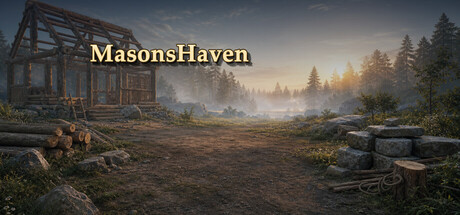 MasonsHaven In-game content artaudiotext | This game uses generative AI tools in a few areas: some 2D art assets (such as the main menu background, title logo, and UI icons), some background music and sound effects, and the drafting and translation of store page text. All AI-generated content was reviewed and edited by the developer to ensure quality and appropriate use. | 해길46 | - | Sep 1, 2026 | |
 Warlord In-game content art | Some visual assets were created with the help of generative AI tools. | Baby War Elephant | - | Sep 1, 2026 | |
 A Million Orcs Dev only artaudio | All artwork, sprites, terrain, animations and audio are procedurally generated by our own deterministic tools or licensed/purchased from human-made sources. No generative AI images or audio are used. AI assistance was used for drafting and prototyping, all of which is reviewed and further iterated by a human. No AI models run while the game is played. | JD Interactive | - | Sep 1, 2026 | |
 Strange Video Editor In-game content art | The optional cursor-buddy 3D character included in this application was pre-generated with Meshy AI under a paid commercial license. No other shipped content is AI-generated, and this application does not generate AI content during use. Built-in tools such as automatic subtitles run local machine-learning models on this device to process the user's own media only. | Blackcanes | - | Sep 1, 2026 | |
 Minesweeper 2007 Store/marketing text | Generative AI was used to localize text for the game and the store page and in no other way. | JK's Gamedev | - | Sep 1, 2026 | |
 Flow Foundry In-game content artaudio | Generative AI was used as part of the development process to assist with the creation of some visual and audio assets. AI-generated outputs are reviewed, selected, edited and integrated by the developer to fit the game's visual and creative direction. Flow Foundry does not use generative AI to create content live during gameplay. | Flowling Studio | - | Aug 31, 2026 | |
 Graveyard Shift In-game content artcode | Generative AI tools were used during development to assist with writing portions of the game's code and to generate some of the visual assets used in the game. | Goat Chef Studios | - | Aug 31, 2026 | |
 CrashFest In-game content artaudiocode | CrashFest is a one-person game, built in Unity between coffee and complaints from playtesters. It started as a physics experiment about shoving a low-poly car off a ledge and got out of hand once six controllers were plugged in.
I’m a software engineer, not an artist. So a good chunk of CrashFest was made together with Claude AI — art direction, shaders, menus, the visual bits I’d never have drawn on my own — and the soundtrack comes out of Suno. The code, the physics and every questionable design decision are mine. | Menno van Hout | - | Aug 31, 2026 | |
 Ballzy: PvP Block Puzzle In-game content audioart | AI was used only as a tool to speed things up.
Voice acting was done by professionals (including me).
SFX and most VFX are assets created by artists (some placeholder AI art is included to be replaced in time) and the music tracks were composed by me and rendered with an AI assisted DAW process.
All creative ideas, all mods and QoL features of this unique puzzle game were designed and built by a human mind. | ONUR COBANOGLU | - | Aug 31, 2026 | |
 Aim Like a Cat In-game content art | During development, generative AI tools were used to assist in creating fixed, pre-generated visual content, including brand illustrations, logo variants, Steam store graphics, UI decorative assets and icons, and seamless PBR material textures. All AI-assisted content was created before release and reviewed by the developer. The game does not generate AI content at runtime, does not accept player prompts for AI generation, and does not send player data to an AI service. | 火火 | - | Aug 31, 2026 | |
 Rally Point In-game content arttext | Rally Point's visuals and store art are drawn by code from the game's own geometry. No image, audio, or voice generation model was used. That code was written with AI assistance, as were the non-English translations. | AnotherBuild | - | Aug 31, 2026 | |
 FSPunch In-game content artaudiocode | The game's code was written with the help of an AI coding assistant, following the developer's design direction. Because the characters, arenas, materials and user interface are generated procedurally in code rather than authored as art assets, they are a result of that same process. The background music tracks were generated with Suno (commercial licence). Sound effects are licensed from Mixkit and Freesound. Nothing is generated by AI while the game is running. | opinionampGames | - | Aug 29, 2026 | |
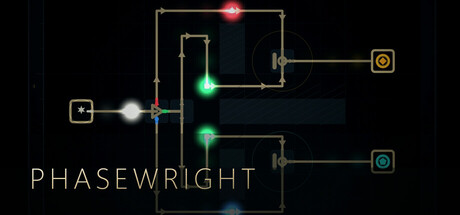 Phasewright In-game content audio | The game was developed with the help of AI. The background music soundtrack is AI-generated: the pieces were created with a locally run music model, then curated and edited by hand. Puzzles, game design and gameplay are human-made. | Lucaren | - | Aug 29, 2026 | |
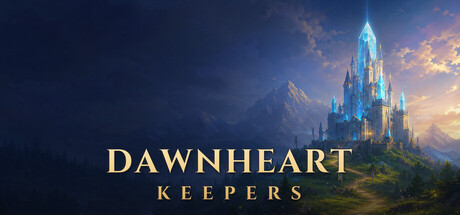 Dawnheart Keepers In-game content artaudiotext | Some of the content in Dawnheart Keepers was created with the help of generative AI tools during development. All of it was made before release: the game does not generate anything with AI while you play, and it never connects to an AI service.
What that covers:
- Illustrated art - menu and story backgrounds, story scenes, the world map, character and tower portraits, and the upgrade-card plates - was made with image-generation models run locally on the developer's own machine, from prompts the developer wrote.
- The English and Hebrew voice-over was generated with ElevenLabs from scripts written by the developer.
- Sound effects were generated from written prompts, or synthesised procedurally in code.
All of it was reviewed, edited, curated and tested by the developer before it shipped, and the same applies to the trailer and store art.
The music is not AI-generated. It is written as code and synthesised by the game itself while you play, the way game soundtracks were built before recorded audio. | ssj2rich | - | Aug 29, 2026 | |
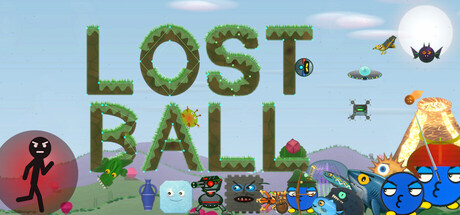 Lost Ball In-game content codeartaudiotext | AI used to generate code, including code to procedurally generate graphics/sound.
Artists using Suno marked "(Suno)" after artist name.
AI used for localization. | Knut Ryager | - | Aug 29, 2026 | |
 ViewerFrenzy In-game content audioart | ViewerFrenzy includes pre-generated AI-assisted music and selected visual assets created during development. These assets are reviewed and curated by the development team before inclusion in the game. The game does not use generative AI to create content during gameplay. | OldManObserver | - | Aug 29, 2026 | |
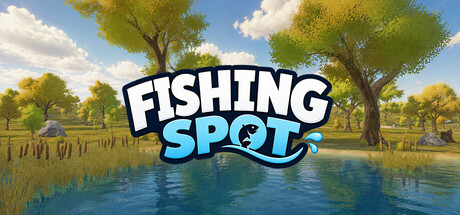 Fishing Spot Dev only art | Environments and environmental artwork are not created using generative AI.
Generative AI is used as part of the early development workflow for prototyping some creature artwork, which is going to be replaced during development. | Float Dev | - | Aug 28, 2026 | |
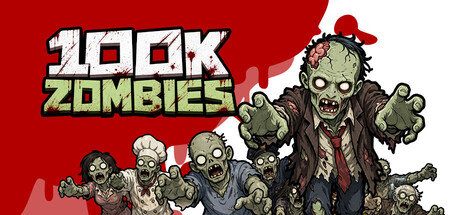 100K ZOMBIES In-game content art | AI is used to generate a portion of the in-game imagery. | 正常游戏 Normal Games | - | Aug 28, 2026 | |
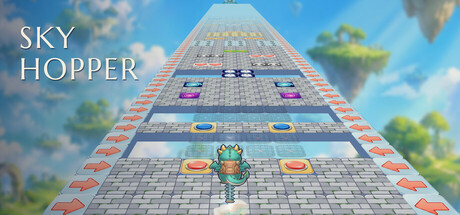 Sky Hopper In-game content artaudio | Some pre-rendered 2D art was created with the assistance of generative AI tools: the playable characters' animation frames, world backgrounds and tile art were generated from the developer's original character and world designs, then hand-edited, aligned and baked into final game assets by the developer. A small number of sound effects were also created with AI audio tools and then mixed by hand. The store page capsule images are composed from the same AI-assisted paintings plus hand-set typography. All AI-assisted content is pre-rendered, was reviewed by the developer before shipping, and no content is generated by AI at runtime. | Evermore Studio Games | - | Aug 28, 2026 | |
 Steel Company In-game content art | Some of the placeholder unit and terrain sprites that I'm using while the game is in development were generated with the help of AI (with a lot of manual curation and editing... I promise that you will not be confronted by any noticeably ugly slop).
Initial sales will contribute toward creating hand-drawn, unique sprites for as many units as possible. | Gyr Software | - | Aug 28, 2026 | |
 Bamboo Beat In-game content audiotext | Some audio and translations were made with the assistance of AI. | Musefarm | - | Aug 28, 2026 | |
 Mapborn In-game content art | Some in-game icons were created with the assistance of generative AI during development. | Yunfc Games | - | Aug 26, 2026 | |
 プリンセス・パズル~禁じられた遊戯~ In-game content artaudiotextcode | プログラム……AI
イラスト……AI
ボイス……AI
ランダムなパズル生成……AI | みらいゲームズ | - | Aug 26, 2026 | |
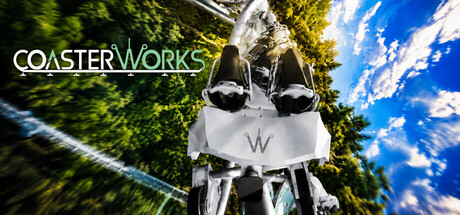 CoasterWorks Dev only code | Generative AI tools were used to assist with portions of the game’s source code. All AI-assisted code was reviewed, modified, integrated and tested by the developer. The game’s models, artwork and other visual content were created or sourced separately and were not generated by AI. CoasterWorks does not generate AI content during gameplay or connect to external AI services. | CoasterWorks | - | Aug 25, 2026 | |
 Train Sim World® 7 In-game content audio | We are utilising ElevenLabs’ text-to-speech tool, to generate some voice-over elements within Train Sim World 7. This is utilised in features such as training modules, as well as platform and onboard train announcements. All scripts and content are written by Dovetail Games staff, with ElevenLabs used to generate the audio in these instances. | Dovetail Games | - | Aug 25, 2026 |


