Public Steam disclosure research25,376 disclosures tracked
Where do games disclose AI use?
Search developers’ Steam disclosures, compare classified AI use across
games, and follow recorded changes.
This index adds cross-game classifications and statistics to
statements published on individual store pages.
Groups reflect automatic analysis of public disclosures; mature records are excluded. These counts do not measure AI use across all of Steam.
Missing or unclear statements cannot establish whether a game uses AI.
Generative AI was used during development to create some promotional artwork, including Steam store capsule images and logo variations. Generative AI is not used during gameplay, and no AI-generated content is created in real time.
Generative AI was used to create the illustrations, as well as a small portion of the character artwork and dialogue. This content was created during development. The game does not generate AI content during gameplay.
Character, monster, and item artwork in this game was pre-generated using AI image generation tools (FLUX.1). No AI-generated content is created live during gameplay, and the game does not connect to any third-party AI service at runtime.
AI is used to assist with the localization and translation of the game's store page and in game text. It is also used to assist with some simple voice interactions, such as goblin growls and battle cries, as well as basic texture adjustments that fit the game's low poly visual style.
Generative AI was used during development to create visual assets, including character illustrations, backgrounds, and UI artwork, as well as portions of the written text. The generated content was edited and adapted to fit the game's setting and presentation.
Our visual style relies on a blend of commissioned artwork, curated assets, and custom designs. We occasionally use AI generation as a tool in our creative process, but never as a final product. Every AI-assisted asset is either fully redrawn or heavily refined by human artists before making its way into the game.
This game contains content created with the assistance of AI tools. AI was used during development to assist with programming, visual assets, and other creative elements. All generated content was reviewed, edited, and integrated by the dev.
The game's art assets (tile, monster and item sprite atlases) were produced during development using OpenAI's image generation service. We then processed the output ourselves into transparent PNGs and assembled them into atlases, which ship as static assets inside the build. The game does not call any AI service at runtime and contains no live-generated content. Every generated image was manually reviewed and corrected before being added to the atlas. Apart from the art, the code, game design, balance and text involve no AI-generated content.
Some of the game's pre-rendered assets were created with generative AI tools during development and then reviewed, edited and integrated by the developer: parts of the pixel art, parts of the sound effects, and the translations from the English original. Nothing is generated while you play: the game uses no AI at runtime and collects no player data for AI training.
AI writing assistants were used to draft and refine in-game text during development; all text has been manually proofread, edited, and verified by the developers.
Generative AI was used during development to help create some visual and audio assets, dialogue, and translations. This content was selected and edited during development and incorporated into the game. No content is generated by AI in real time during gameplay.
This game includes content created with the assistance of generative AI tools. Some character and UI artwork was produced using AI image generation (ChatGPT) and then edited by the developer, and the background music was generated using Suno. All AI-assisted assets were reviewed by the developer to ensure they do not infringe the intellectual property of third parties. No AI is used at runtime—all generation occurred during development (pre-generated).
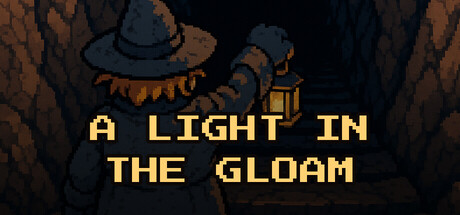
A Light in the Gloam uses pre-generated AI content. Nothing is generated while the game is running, and the game makes no network calls of any kind.
Visual art: all in-game art was generated with OpenAI's image model (gpt-image-1) from prompts written by hand, then processed by our own scripts, which downscale it, quantise it to a fixed palette and trim it before it is placed in the game. This covers 14 character portraits, 43 enemy and boss sprites, 63 item icons, 27 wall, floor and ceiling textures, 10 dungeon props, 21 achievement emblems, and 14 town and title backdrops. The store capsules and the client icons are crops of the title-screen generation rather than new images.
Music and sound: all 14 music tracks were generated with ElevenLabs' music model and all 47 sound effects with ElevenLabs' sound-effects model, both from written prompts and both post-processed by our own scripts for level and length. There is no voice acting and no synthesised speech anywhere in the game.
Writing and translation: the game's text, meaning item and monster descriptions, dialogue, menus and the story, was written with the assistance of a large language model and then edited by hand. The Brazilian Portuguese translation was produced the same way and reviewed against the English.
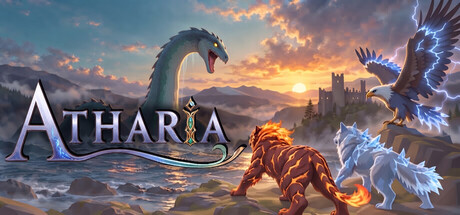
Atharia uses generative AI tools under the developer's constant direction. The combat animations are AI-generated video clips, converted into sprites and integrated into custom-built staging. Background environments and interface elements are also created with AI assistance. Every asset is art-directed, selected and validated by the developer before it enters the game.
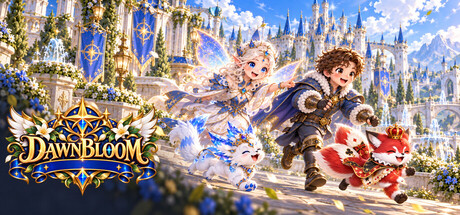
DAWNBLOOM uses generative AI-assisted tools during the development of certain game content. The in-game “Dawnbloom Spirit” feature connects to a generative AI service to provide real-time text responses to players’ game-related questions, including game knowledge, gameplay explanations, and general guidance. This feature generates auxiliary text content only. It does not generate or modify game code, nor does it directly control game rules, character data, or player assets.
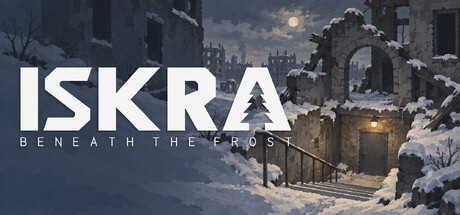
ISKRA currently includes AI-generated artwork prepared during development. We plan to replace this artwork with work created by human artists before leaving Early Access, giving the game the individual artistic identity we envision.
All artwork, animation, writing, character designs and other creative content in this game were made by hand. None of it was created with generative AI.
Generative AI was used only in two parts of development:
Programming assistance: helping to write and debug parts of the game code.
Translation assistance: helping to translate the text for non-Chinese language versions.
The artwork and writing that players see in the game were not generated by AI.
Generative AI was used primarily to assist in the creation of some visual assets and images used in the game, including illustrations, UI artwork, and promotional materials. AI-generated images were manually reviewed, selected, edited, and adjusted by the developer before being integrated into the game.
The game does not use generative AI to create content in real time during gameplay.
The game engine is written with substantial AI assistance.
Some dialogues and quest texts are AI generated, and are successively replaced by human-written dialogue. Every piece of flavor text has a label that states the author (human or ai).
The 3D character models are currently generated with AI, and then transformed through a custom pipeline to work with the text-based graphics and CPU rendering. It is possible to replace them with manually crafted models.
Portraits of characters and creatures are generated using Stable Diffusion. They appear in-game and in store page materials. I plan to replace all generated portraits with hand-drawn art.
Some in-game labels and text descriptions are placeholders generated by an LLM. I am gradually rewriting them by hand.
Time Traveler: Divergence uses locally running generative AI to enable dynamic NPC conversations. AI-generated dialogue is constrained by the game's predefined rules, characters, world knowledge, and simulation state. AI is also used locally to generate voice-over for these dynamic conversations. No external AI service is required during gameplay.
As a solo developer with a big dream and limited resources, I want to be entirely upfront how this game was built. The vast majority of this game is completely human-made: I crafted the pixel characters, animations, code, and story over the past 10 years. I also utilized incredible royalty-free and purchased assets from human creators like gyvr, Eunity, RafaelMatos, penusbmic, Winlu, Geoff Harvey.
The use of generative AI was for touching up and refining the marketing capsule images using Adobe Photoshop tools.
Some of the game's artwork, including characters, monsters, items and backgrounds, was created with the help of generative AI tools and then edited and refined by our team; none of it is used as raw AI output. Parts of the in-game text and translations were also produced with AI assistance. No AI content is generated during gameplay.
Generative AI tools are used during development to create some 3D assets as Place Holders and assist with Art/ music Content. These materials are prepared in advance and incorporated into the game or its store page. The game does not generate content using generative AI during gameplay.
Some character voice recordings are also created using generative AI.
Most of the game's visual art and sound was pre-generated with AI tools and then selected, edited and placed by the developer: the dungeon panoramas, room props, floors, town and building plates, character portraits, walk and combat sprite sheets, monster, boss and villager sprites, item, skill and stack icons, combat and reward effects, and the store page art were generated with the FLUX.1 image model through fal.ai and animated with AutoSprite; the sound effects, ambience beds, voice barks and music were generated with ElevenLabs. Every generated file, the tool that made it and the prompt that asked for it are recorded in the game's files (assets/README.md and assets/PROMPTS.md). All game text, design, rules and code are written by people. Nothing is generated while you play: the game contains no live AI generation and calls no AI service at runtime.
Generative AI was used during development to assist with the creation and refinement of some visual assets, including character artwork, environmental artwork, icons, and promotional imagery. AI-assisted assets were reviewed, edited, and integrated by the developer to maintain a consistent visual style. Generative AI is not used during gameplay and does not generate content in real time.
Pre-generated AI content includes equipment illustrations, skill icons, clothing surface textures, short English character-selection voice lines, and Steam capsule and library artwork. AI tools also assisted with store-page text and translations. The game does not generate AI content or connect to AI services during gameplay.
During development, I used procedural and AI-based tools to assist with content creation. The final game reflects my own creative direction and design choices.
Generative AI was used to create some content, including certain images, music, text and translations, as well as some store and promotional materials. AI-assisted content was created in advance; the game does not generate AI content or connect to external AI services during gameplay.
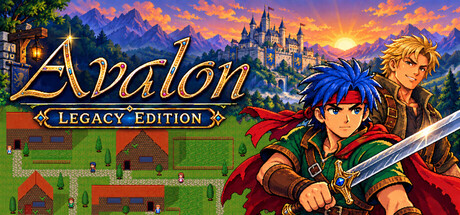
The original 1998 version of Avalon was created entirely by hand, including its graphics, music, story, gameplay, game engine and even its custom music software. Avalon: Legacy Edition retains many of these original assets. Generative AI was used to create or refine much of the updated visual, audio and written content. No content is generated live during gameplay.
Some shipped artwork, visual effects, interface assets, and audio were created or modified with generative AI tools during development. All such content is pre-generated, selected and reviewed by the development team, and included as fixed game assets. The game does not generate AI content while running.
AI tools were used internally to assist with text translation. All final text was reviewed and edited by humans.
No AI-generated assets(art, audio, code) are included.
This game contains content created with the assistance of AI tools. AI was used during development to assist with programming, visual assets, and other creative elements. All generated content was reviewed, edited, and integrated by the dev.
Generative AI was used during development to create some promotional artwork, including Steam store capsule images and logo variations. Generative AI is not used during gameplay, and no AI-generated content is created in real time.
Generative AI was used to create the illustrations, as well as a small portion of the character artwork and dialogue. This content was created during development. The game does not generate AI content during gameplay.
Character, monster, and item artwork in this game was pre-generated using AI image generation tools (FLUX.1). No AI-generated content is created live during gameplay, and the game does not connect to any third-party AI service at runtime.
AI is used to assist with the localization and translation of the game's store page and in game text. It is also used to assist with some simple voice interactions, such as goblin growls and battle cries, as well as basic texture adjustments that fit the game's low poly visual style.
Generative AI was used during development to create visual assets, including character illustrations, backgrounds, and UI artwork, as well as portions of the written text. The generated content was edited and adapted to fit the game's setting and presentation.
Our visual style relies on a blend of commissioned artwork, curated assets, and custom designs. We occasionally use AI generation as a tool in our creative process, but never as a final product. Every AI-assisted asset is either fully redrawn or heavily refined by human artists before making its way into the game.
This game contains content created with the assistance of AI tools. AI was used during development to assist with programming, visual assets, and other creative elements. All generated content was reviewed, edited, and integrated by the dev.
The game's art assets (tile, monster and item sprite atlases) were produced during development using OpenAI's image generation service. We then processed the output ourselves into transparent PNGs and assembled them into atlases, which ship as static assets inside the build. The game does not call any AI service at runtime and contains no live-generated content. Every generated image was manually reviewed and corrected before being added to the atlas. Apart from the art, the code, game design, balance and text involve no AI-generated content.
Some of the game's pre-rendered assets were created with generative AI tools during development and then reviewed, edited and integrated by the developer: parts of the pixel art, parts of the sound effects, and the translations from the English original. Nothing is generated while you play: the game uses no AI at runtime and collects no player data for AI training.
AI writing assistants were used to draft and refine in-game text during development; all text has been manually proofread, edited, and verified by the developers.
Generative AI was used during development to help create some visual and audio assets, dialogue, and translations. This content was selected and edited during development and incorporated into the game. No content is generated by AI in real time during gameplay.
This game includes content created with the assistance of generative AI tools. Some character and UI artwork was produced using AI image generation (ChatGPT) and then edited by the developer, and the background music was generated using Suno. All AI-assisted assets were reviewed by the developer to ensure they do not infringe the intellectual property of third parties. No AI is used at runtime—all generation occurred during development (pre-generated).
A Light in the Gloam uses pre-generated AI content. Nothing is generated while the game is running, and the game makes no network calls of any kind.
Visual art: all in-game art was generated with OpenAI's image model (gpt-image-1) from prompts written by hand, then processed by our own scripts, which downscale it, quantise it to a fixed palette and trim it before it is placed in the game. This covers 14 character portraits, 43 enemy and boss sprites, 63 item icons, 27 wall, floor and ceiling textures, 10 dungeon props, 21 achievement emblems, and 14 town and title backdrops. The store capsules and the client icons are crops of the title-screen generation rather than new images.
Music and sound: all 14 music tracks were generated with ElevenLabs' music model and all 47 sound effects with ElevenLabs' sound-effects model, both from written prompts and both post-processed by our own scripts for level and length. There is no voice acting and no synthesised speech anywhere in the game.
Writing and translation: the game's text, meaning item and monster descriptions, dialogue, menus and the story, was written with the assistance of a large language model and then edited by hand. The Brazilian Portuguese translation was produced the same way and reviewed against the English.
Atharia uses generative AI tools under the developer's constant direction. The combat animations are AI-generated video clips, converted into sprites and integrated into custom-built staging. Background environments and interface elements are also created with AI assistance. Every asset is art-directed, selected and validated by the developer before it enters the game.
DAWNBLOOM uses generative AI-assisted tools during the development of certain game content. The in-game “Dawnbloom Spirit” feature connects to a generative AI service to provide real-time text responses to players’ game-related questions, including game knowledge, gameplay explanations, and general guidance. This feature generates auxiliary text content only. It does not generate or modify game code, nor does it directly control game rules, character data, or player assets.
ISKRA currently includes AI-generated artwork prepared during development. We plan to replace this artwork with work created by human artists before leaving Early Access, giving the game the individual artistic identity we envision.
All artwork, animation, writing, character designs and other creative content in this game were made by hand. None of it was created with generative AI.
Generative AI was used only in two parts of development:
Programming assistance: helping to write and debug parts of the game code.
Translation assistance: helping to translate the text for non-Chinese language versions.
The artwork and writing that players see in the game were not generated by AI.
Generative AI was used primarily to assist in the creation of some visual assets and images used in the game, including illustrations, UI artwork, and promotional materials. AI-generated images were manually reviewed, selected, edited, and adjusted by the developer before being integrated into the game.
The game does not use generative AI to create content in real time during gameplay.
The game engine is written with substantial AI assistance.
Some dialogues and quest texts are AI generated, and are successively replaced by human-written dialogue. Every piece of flavor text has a label that states the author (human or ai).
The 3D character models are currently generated with AI, and then transformed through a custom pipeline to work with the text-based graphics and CPU rendering. It is possible to replace them with manually crafted models.
Portraits of characters and creatures are generated using Stable Diffusion. They appear in-game and in store page materials. I plan to replace all generated portraits with hand-drawn art.
Some in-game labels and text descriptions are placeholders generated by an LLM. I am gradually rewriting them by hand.
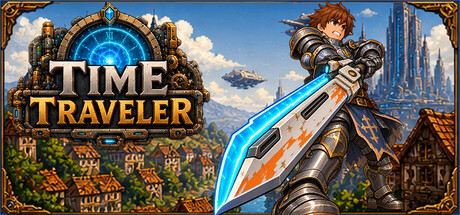
Time Traveler: Divergence uses locally running generative AI to enable dynamic NPC conversations. AI-generated dialogue is constrained by the game's predefined rules, characters, world knowledge, and simulation state. AI is also used locally to generate voice-over for these dynamic conversations. No external AI service is required during gameplay.
As a solo developer with a big dream and limited resources, I want to be entirely upfront how this game was built. The vast majority of this game is completely human-made: I crafted the pixel characters, animations, code, and story over the past 10 years. I also utilized incredible royalty-free and purchased assets from human creators like gyvr, Eunity, RafaelMatos, penusbmic, Winlu, Geoff Harvey.
The use of generative AI was for touching up and refining the marketing capsule images using Adobe Photoshop tools.
Some of the game's artwork, including characters, monsters, items and backgrounds, was created with the help of generative AI tools and then edited and refined by our team; none of it is used as raw AI output. Parts of the in-game text and translations were also produced with AI assistance. No AI content is generated during gameplay.
Generative AI tools are used during development to create some 3D assets as Place Holders and assist with Art/ music Content. These materials are prepared in advance and incorporated into the game or its store page. The game does not generate content using generative AI during gameplay.
Some character voice recordings are also created using generative AI.
Most of the game's visual art and sound was pre-generated with AI tools and then selected, edited and placed by the developer: the dungeon panoramas, room props, floors, town and building plates, character portraits, walk and combat sprite sheets, monster, boss and villager sprites, item, skill and stack icons, combat and reward effects, and the store page art were generated with the FLUX.1 image model through fal.ai and animated with AutoSprite; the sound effects, ambience beds, voice barks and music were generated with ElevenLabs. Every generated file, the tool that made it and the prompt that asked for it are recorded in the game's files (assets/README.md and assets/PROMPTS.md). All game text, design, rules and code are written by people. Nothing is generated while you play: the game contains no live AI generation and calls no AI service at runtime.
Generative AI was used during development to assist with the creation and refinement of some visual assets, including character artwork, environmental artwork, icons, and promotional imagery. AI-assisted assets were reviewed, edited, and integrated by the developer to maintain a consistent visual style. Generative AI is not used during gameplay and does not generate content in real time.
Pre-generated AI content includes equipment illustrations, skill icons, clothing surface textures, short English character-selection voice lines, and Steam capsule and library artwork. AI tools also assisted with store-page text and translations. The game does not generate AI content or connect to AI services during gameplay.
During development, I used procedural and AI-based tools to assist with content creation. The final game reflects my own creative direction and design choices.
Generative AI was used to create some content, including certain images, music, text and translations, as well as some store and promotional materials. AI-assisted content was created in advance; the game does not generate AI content or connect to external AI services during gameplay.
The original 1998 version of Avalon was created entirely by hand, including its graphics, music, story, gameplay, game engine and even its custom music software. Avalon: Legacy Edition retains many of these original assets. Generative AI was used to create or refine much of the updated visual, audio and written content. No content is generated live during gameplay.
Some shipped artwork, visual effects, interface assets, and audio were created or modified with generative AI tools during development. All such content is pre-generated, selected and reviewed by the development team, and included as fixed game assets. The game does not generate AI content while running.
AI tools were used internally to assist with text translation. All final text was reviewed and edited by humans.
No AI-generated assets(art, audio, code) are included.
This game contains content created with the assistance of AI tools. AI was used during development to assist with programming, visual assets, and other creative elements. All generated content was reviewed, edited, and integrated by the dev.