Public Steam disclosure research25,376 disclosures tracked
Where do games disclose AI use?
Search developers’ Steam disclosures, compare classified AI use across
games, and follow recorded changes.
This index adds cross-game classifications and statistics to
statements published on individual store pages.
Groups reflect automatic analysis of public disclosures; mature records are excluded. These counts do not measure AI use across all of Steam.
Missing or unclear statements cannot establish whether a game uses AI.
Character animations are generated with an AI motion model (Kimodo) and then cleaned up and retargeted by our team. Character voice-overs are created with AI text-to-speech and directed and edited by our team. All 3D models, buildings, textures and writing are made by us. No AI content is generated live during gameplay.
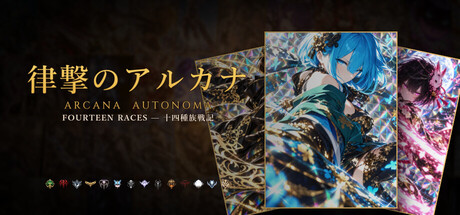
This game was made using generative AI. Generative AI was used for card illustrations, backgrounds, character videos, music, the story and other text, translations, and promotional materials such as the store page and trailer. All of this content was created in advance; no content is generated by AI during gameplay.
The developer uses AI tools to assist in creating 2D graphic assets, specifically the game icon. All assets have been carefully reviewed to ensure they are unique and do not infringe on any copyrighted materials.
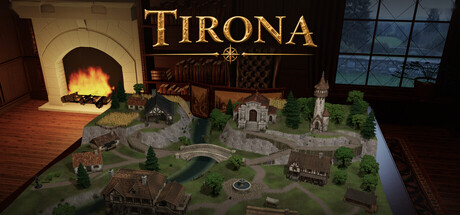
Tirona's development used AI tools for much of its 2D artwork (character portraits, card and scene illustrations, quest illustrations), some 3D models, the music (ElevenLabs) and the character voice performers' reference voices. All of it was selected, edited and placed by the developer, and ships as fixed game content.
While you play, a third-party large language model writes the narration and the dialogue of non-player characters in response to what you type or say. Character voices are synthesised locally on your PC from the generated text. You can optionally generate a portrait for your character from your creation choices.
The AI never decides the rules: dice, hit points, gold, items, experience, spells and quest progress change only through the game's own systems. Romance is opt-in, and anything sexual fades to black.
Generative AI assisted in creating selected illustrations, visual assets, narrative text, and translations during development, including store materials. No content is generated by AI during gameplay.
Generative AI tools were used during development to create some artwork, background music, and monster vocal effects. AI tools also assisted with the writing and translation of store-page text. These materials were prepared in advance. The game does not generate AI content or connect to third-party AI services during gameplay.
Generative AI was used in the creation of images and music in the game. This content was generated and edited during development. No content is generated by AI during gameplay.
Some of the artwork and all original background music in this game were created with the assistance of generative AI. All AI-assisted content was manually reviewed and checked for copyright compliance before release.
The game does not generate any AI content in real time during gameplay, nor does it connect to any external AI services. All consumable content is pre-generated during development and distributed as part of the game.
Generative AI tools were used in the development of some visual assets, primarily to help enhance and upscale textures and create additional variations. All assets were reviewed and integrated by the development team as part of the game's art pipeline.
Generative AI was used during development to assist with pre-rendered character and environment artwork, animations, music and sound effects, and portions of narrative writing and localization. These materials are included as fixed game assets. The game does not generate AI content or connect to external AI services during gameplay.
Generative AI was used to create some artwork and UI assets, summoning animation videos, and background music. Details of the tools used are listed under Settings > Credits in the game.
During gameplay, AI running on your PC uses the true name and essence you enter to generate Textus data, including abilities and moves, as well as artwork.
Generated results may vary. Depending on the outcome of the safety check, a placeholder explaining why the artwork is unavailable may appear instead of the generated image. The Textus's abilities and moves remain usable.
AI-assisted tools were used during development to create and edit visual assets, including characters, equipment, creatures, environments, UI and store illustrations, and to assist with story text and localization. Music and sound effects were made using AI-assisted synthesis code and composition rules. The game uses prepared assets and predefined effects; it does not generate AI content or connect to generative AI services during play.
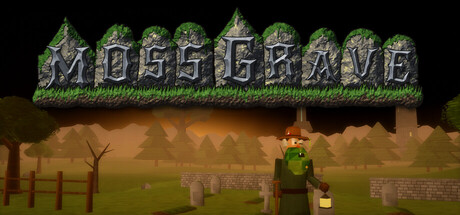
Mossgrave was built with an AI coding assistant, directed and reviewed by the developer. The AI wrote the game's code, including the procedural code that generates the 3D models, textures, pixel-art interface, music and sound effects. It also drafted the in-game text (dialogue, quest and item descriptions) and the text on this store page. Store images are captured from the game itself. No AI image or music generation models were used. The trailer's narration is an AI-generated voice; the game itself has no voice acting, and nothing is generated by AI while you play.
AI tools were used during development to create music, selected sound effects and promotional artwork, and to assist with written content and translations. Content is prepared in advance; no AI content is generated during gameplay.
Some 2D artwork and visual assets were created with the assistance of generative AI tools during development and were reviewed and edited by the developer. The game does not generate AI content during gameplay.
Some store and library artwork, icons, and promotional imagery were created or enhanced with generative AI tools. Gameplay screenshots show actual gameplay. The game does not generate AI content during gameplay or connect to external AI services.
The title logo was generated with an AI image tool and then cropped and resized by the developer.
The store capsule artwork (the key art behind the logo) was generated with an AI image tool from text prompts only, then cropped and resized by the developer.
The in-game text in every language except English and Japanese is machine-translated with an AI language model from the developer's English and Japanese text, and has not yet been reviewed by native speakers.
Some English and Japanese interface text and the English and Japanese store description were drafted with an AI writing assistant and then reviewed and edited by the developer. The store description in the other languages is translated with an AI language model.
The majority of the code and the design was written by AI coding agents (Claude and Codex) under the developer's direction and review.
The in-game characters, items, maps, effects, music, sound effects and fonts are mostly purchased or licensed assets. The exceptions are 8 equipment icons, the slash and healing effects, the spectators in the stands, the crowd cheers and the app icon, which were drawn or synthesized by programs written by AI coding agents (no image or audio generation model was used). The cutting out, combining, recoloring and touching up of the purchased assets, and the shapes and light effects the game draws on screen during matches, are also done by programs written by AI.
Generative AI tools were used during development to assist in creating some artwork, text, and localization used in the game. All AI-assisted content was reviewed, selected, and edited by the developer before being included in the game. No generative AI is used during gameplay.
This game uses generative AI to create pre-generated content that ships with the game: character and monster artwork, backgrounds and other images, the logo, negotiation dialogue text, and level design. The store page text and marketing images are also created with AI assistance. No AI content is generated live while you play.
All coding was done by us. Artwork and SFX/Music was again either done by us or bought from third parties. We don't use AI for any creative element of the game.
To make our game playable for as wide an audience as possible we used AI to generate our translations. If you find it's done a poor job in your language, please let us know on discord!
Pre-generated content: some 3D models (character/boss bodies and props) were generated with AI and then cleaned up, rigged and textured by hand in Blender and Unity; some voice lines and sound effects were generated with AI voice/SFX tools; parts of the trailer footage were AI-assisted; in-game text translations for some languages were produced with AI assistance and reviewed. No content is generated live while the game is running.
Most of the visual assets in this game (character illustrations, background art, UI assets, etc.) were created using AI image generation tools. Game design, programming, scenario writing, and combat balancing were done by the developer.
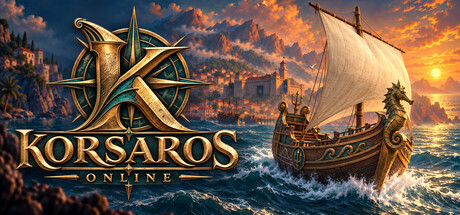
Korsaros Online uses a hybrid creative workflow combining generative AI tools with manual editing and integration for some artwork, 3D models, and music, including Steam marketing assets. These assets are reviewed before inclusion.
Some of the promotional and storefront images were created with AI tools and then refined by hand. All of the in-game assets were designed by a Pixel Art artist.
Generative AI Usage Disclosure
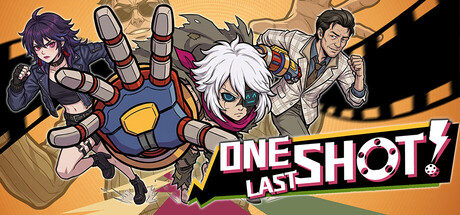
Generative AI tools were used during the development of One Last Shot! to generate or assist with the game’s code, character designs, and visual assets. This includes AI-assisted programming, refactoring, and debugging, as well as AI-generated or AI-assisted character concepts, card artwork, backgrounds, UI elements, and other visual assets.
All AI-generated or AI-assisted content included in the released version was reviewed, edited, integrated, and tested by the development team. The game does not use live generative AI during gameplay, and no text, images, audio, or other content is generated at runtime through an external AI service.
This game contains content created with the assistance of AI tools. AI was used during development to assist with programming, visual assets, and other creative elements. All generated content was reviewed, edited, and integrated by the dev.
Generative AI was used during development to create visual assets, including backgrounds, character and enemy artwork, item icons, and story illustrations. AI was also used to create in-game text and story content, translate in-game text, and draft and translate the Steam store description. The game does not generate AI content or connect to external AI services during gameplay.
Generative AI tools were used during production to create character artwork, portraits, and some of the game's illustrations and visual assets. AI tools also assisted with the story, dialogue, and store-page copy, including its English version. These are pre-generated materials; the game does not use generative AI to create new content during gameplay.
Generative AI is used throughout the development of PenRogue, including code, character artwork, backgrounds, UI assets, music, sound effects, and text. AI-generated content is reviewed, selected, and integrated by the developer.
AI was used as a support tool during development (code assistance and initial image generation). All artwork was individually reworked by hand, and no content is generated live during gameplay.
The store capsule artwork (and the app/shortcut icons cropped from it) was created with AI image generation tools. All in-game content — art, models, audio, writing — was not AI generated.
Generative AI tools were used during the development of this game to help create some store artwork, user interface (UI) concepts, and cover designs. All AI-generated content was reviewed, edited, and finalized by humans. The game does not generate any AI content dynamically or in real time during gameplay.
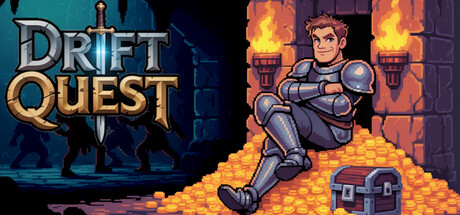
Generative AI was used to create the background artwork in the Steam store and library images, and the Drift Quest logo, which also appears in the game. AI tools were also used during development: AI coding assistants helped write the game's code, the store description was written with AI assistance, and the game and store texts were translated into 29 languages and reviewed with AI. AI also helped write some of the game's English text, such as quest, item and spell names. The in-game interface and icon art comes from licensed asset packs, and the music is licensed from Phat Phrog Studios. No content is generated by AI while you play.
A small language model (Google's Gemma 3 270M) runs entirely on the player's computer, with no network connection. It writes short lines of villager small talk, the ritual oracle's one- or two-sentence hint after a failed ritual, and routine filler records in the in-game archive, and it chooses which of our pre-written dialogue lines fits the moment.
Guardrails: the player never types to the model — there is no text input anywhere in the game. Every prompt is a fixed template we wrote, filled in from game state such as a character's name, the time of day and the current quest. Output is short by construction (hard token caps, and lines over a few words are cut or discarded); lines that read as narration, stage directions or an assistant speaking are rejected; dialogue choices are constrained to our own authored lines. Any failure falls back to written lines. Players can turn the model off in Settings, and the game plays identically on written lines alone.
Character animations are generated with an AI motion model (Kimodo) and then cleaned up and retargeted by our team. Character voice-overs are created with AI text-to-speech and directed and edited by our team. All 3D models, buildings, textures and writing are made by us. No AI content is generated live during gameplay.
This game was made using generative AI. Generative AI was used for card illustrations, backgrounds, character videos, music, the story and other text, translations, and promotional materials such as the store page and trailer. All of this content was created in advance; no content is generated by AI during gameplay.
The developer uses AI tools to assist in creating 2D graphic assets, specifically the game icon. All assets have been carefully reviewed to ensure they are unique and do not infringe on any copyrighted materials.
Tirona's development used AI tools for much of its 2D artwork (character portraits, card and scene illustrations, quest illustrations), some 3D models, the music (ElevenLabs) and the character voice performers' reference voices. All of it was selected, edited and placed by the developer, and ships as fixed game content.
While you play, a third-party large language model writes the narration and the dialogue of non-player characters in response to what you type or say. Character voices are synthesised locally on your PC from the generated text. You can optionally generate a portrait for your character from your creation choices.
The AI never decides the rules: dice, hit points, gold, items, experience, spells and quest progress change only through the game's own systems. Romance is opt-in, and anything sexual fades to black.
Generative AI assisted in creating selected illustrations, visual assets, narrative text, and translations during development, including store materials. No content is generated by AI during gameplay.
Generative AI tools were used during development to create some artwork, background music, and monster vocal effects. AI tools also assisted with the writing and translation of store-page text. These materials were prepared in advance. The game does not generate AI content or connect to third-party AI services during gameplay.
Generative AI was used in the creation of images and music in the game. This content was generated and edited during development. No content is generated by AI during gameplay.
Some of the artwork and all original background music in this game were created with the assistance of generative AI. All AI-assisted content was manually reviewed and checked for copyright compliance before release.
The game does not generate any AI content in real time during gameplay, nor does it connect to any external AI services. All consumable content is pre-generated during development and distributed as part of the game.
Generative AI tools were used in the development of some visual assets, primarily to help enhance and upscale textures and create additional variations. All assets were reviewed and integrated by the development team as part of the game's art pipeline.
Generative AI was used during development to assist with pre-rendered character and environment artwork, animations, music and sound effects, and portions of narrative writing and localization. These materials are included as fixed game assets. The game does not generate AI content or connect to external AI services during gameplay.
Generative AI was used to create some artwork and UI assets, summoning animation videos, and background music. Details of the tools used are listed under Settings > Credits in the game.
During gameplay, AI running on your PC uses the true name and essence you enter to generate Textus data, including abilities and moves, as well as artwork.
Generated results may vary. Depending on the outcome of the safety check, a placeholder explaining why the artwork is unavailable may appear instead of the generated image. The Textus's abilities and moves remain usable.
AI-assisted tools were used during development to create and edit visual assets, including characters, equipment, creatures, environments, UI and store illustrations, and to assist with story text and localization. Music and sound effects were made using AI-assisted synthesis code and composition rules. The game uses prepared assets and predefined effects; it does not generate AI content or connect to generative AI services during play.
Mossgrave was built with an AI coding assistant, directed and reviewed by the developer. The AI wrote the game's code, including the procedural code that generates the 3D models, textures, pixel-art interface, music and sound effects. It also drafted the in-game text (dialogue, quest and item descriptions) and the text on this store page. Store images are captured from the game itself. No AI image or music generation models were used. The trailer's narration is an AI-generated voice; the game itself has no voice acting, and nothing is generated by AI while you play.
AI tools were used during development to create music, selected sound effects and promotional artwork, and to assist with written content and translations. Content is prepared in advance; no AI content is generated during gameplay.
Some 2D artwork and visual assets were created with the assistance of generative AI tools during development and were reviewed and edited by the developer. The game does not generate AI content during gameplay.
Some store and library artwork, icons, and promotional imagery were created or enhanced with generative AI tools. Gameplay screenshots show actual gameplay. The game does not generate AI content during gameplay or connect to external AI services.
The title logo was generated with an AI image tool and then cropped and resized by the developer.
The store capsule artwork (the key art behind the logo) was generated with an AI image tool from text prompts only, then cropped and resized by the developer.
The in-game text in every language except English and Japanese is machine-translated with an AI language model from the developer's English and Japanese text, and has not yet been reviewed by native speakers.
Some English and Japanese interface text and the English and Japanese store description were drafted with an AI writing assistant and then reviewed and edited by the developer. The store description in the other languages is translated with an AI language model.
The majority of the code and the design was written by AI coding agents (Claude and Codex) under the developer's direction and review.
The in-game characters, items, maps, effects, music, sound effects and fonts are mostly purchased or licensed assets. The exceptions are 8 equipment icons, the slash and healing effects, the spectators in the stands, the crowd cheers and the app icon, which were drawn or synthesized by programs written by AI coding agents (no image or audio generation model was used). The cutting out, combining, recoloring and touching up of the purchased assets, and the shapes and light effects the game draws on screen during matches, are also done by programs written by AI.
Generative AI tools were used during development to assist in creating some artwork, text, and localization used in the game. All AI-assisted content was reviewed, selected, and edited by the developer before being included in the game. No generative AI is used during gameplay.
This game uses generative AI to create pre-generated content that ships with the game: character and monster artwork, backgrounds and other images, the logo, negotiation dialogue text, and level design. The store page text and marketing images are also created with AI assistance. No AI content is generated live while you play.
All coding was done by us. Artwork and SFX/Music was again either done by us or bought from third parties. We don't use AI for any creative element of the game.
To make our game playable for as wide an audience as possible we used AI to generate our translations. If you find it's done a poor job in your language, please let us know on discord!
Pre-generated content: some 3D models (character/boss bodies and props) were generated with AI and then cleaned up, rigged and textured by hand in Blender and Unity; some voice lines and sound effects were generated with AI voice/SFX tools; parts of the trailer footage were AI-assisted; in-game text translations for some languages were produced with AI assistance and reviewed. No content is generated live while the game is running.
Most of the visual assets in this game (character illustrations, background art, UI assets, etc.) were created using AI image generation tools. Game design, programming, scenario writing, and combat balancing were done by the developer.
Korsaros Online uses a hybrid creative workflow combining generative AI tools with manual editing and integration for some artwork, 3D models, and music, including Steam marketing assets. These assets are reviewed before inclusion.
Some of the promotional and storefront images were created with AI tools and then refined by hand. All of the in-game assets were designed by a Pixel Art artist.
Generative AI Usage Disclosure
Generative AI tools were used during the development of One Last Shot! to generate or assist with the game’s code, character designs, and visual assets. This includes AI-assisted programming, refactoring, and debugging, as well as AI-generated or AI-assisted character concepts, card artwork, backgrounds, UI elements, and other visual assets.
All AI-generated or AI-assisted content included in the released version was reviewed, edited, integrated, and tested by the development team. The game does not use live generative AI during gameplay, and no text, images, audio, or other content is generated at runtime through an external AI service.
This game contains content created with the assistance of AI tools. AI was used during development to assist with programming, visual assets, and other creative elements. All generated content was reviewed, edited, and integrated by the dev.
Generative AI was used during development to create visual assets, including backgrounds, character and enemy artwork, item icons, and story illustrations. AI was also used to create in-game text and story content, translate in-game text, and draft and translate the Steam store description. The game does not generate AI content or connect to external AI services during gameplay.
Generative AI tools were used during production to create character artwork, portraits, and some of the game's illustrations and visual assets. AI tools also assisted with the story, dialogue, and store-page copy, including its English version. These are pre-generated materials; the game does not use generative AI to create new content during gameplay.
Generative AI is used throughout the development of PenRogue, including code, character artwork, backgrounds, UI assets, music, sound effects, and text. AI-generated content is reviewed, selected, and integrated by the developer.
AI was used as a support tool during development (code assistance and initial image generation). All artwork was individually reworked by hand, and no content is generated live during gameplay.
The store capsule artwork (and the app/shortcut icons cropped from it) was created with AI image generation tools. All in-game content — art, models, audio, writing — was not AI generated.
Generative AI tools were used during the development of this game to help create some store artwork, user interface (UI) concepts, and cover designs. All AI-generated content was reviewed, edited, and finalized by humans. The game does not generate any AI content dynamically or in real time during gameplay.
Generative AI was used to create the background artwork in the Steam store and library images, and the Drift Quest logo, which also appears in the game. AI tools were also used during development: AI coding assistants helped write the game's code, the store description was written with AI assistance, and the game and store texts were translated into 29 languages and reviewed with AI. AI also helped write some of the game's English text, such as quest, item and spell names. The in-game interface and icon art comes from licensed asset packs, and the music is licensed from Phat Phrog Studios. No content is generated by AI while you play.
A small language model (Google's Gemma 3 270M) runs entirely on the player's computer, with no network connection. It writes short lines of villager small talk, the ritual oracle's one- or two-sentence hint after a failed ritual, and routine filler records in the in-game archive, and it chooses which of our pre-written dialogue lines fits the moment.
Guardrails: the player never types to the model — there is no text input anywhere in the game. Every prompt is a fixed template we wrote, filled in from game state such as a character's name, the time of day and the current quest. Output is short by construction (hard token caps, and lines over a few words are cut or discarded); lines that read as narration, stage directions or an assistant speaking are rejected; dialogue choices are constrained to our own authored lines. Any failure falls back to written lines. Players can turn the model off in Settings, and the game plays identically on written lines alone.