Public Steam disclosure research25,376 disclosures tracked
Where do games disclose AI use?
Search developers’ Steam disclosures, compare classified AI use across
games, and follow recorded changes.
This index adds cross-game classifications and statistics to
statements published on individual store pages.
Groups reflect automatic analysis of public disclosures; mature records are excluded. These counts do not measure AI use across all of Steam.
Missing or unclear statements cannot establish whether a game uses AI.
Some of the games text was drafted with the assistance of generative AI and then edited by hand by developers before inclusion.
The game's audio is procedurally synthesized in-engine (algorithmic DSP) and layered with real & recorded audio by the developers. not produced by a generative AI model.
Some of the games 3D model primitive shapes were drafted with the assistance of generative AI, but finalized by hand.
By My Side is developed by a small independent studio, and we use generative AI as part of our content pipeline:
- 3D models — many in-game models (crops, props, buildings, devices and characters) are generated with Meshy AI, then adjusted, scaled and integrated by hand.
- Music & sound — parts of the soundtrack and sound effects are created with AI audio tools and curated by us.
- Localization — translations are drafted with AI assistance and reviewed before release.
All AI-generated content is reviewed, edited and curated by the developer before it ships. No generative AI runs live during gameplay — everything is pre-generated and fixed.
Generative AI was used in the development of Relax Puzzle as an assistive tool to help create some of our art assets and assist with programming logic. The AI served as a supporting utility to enhance our creative workflow and development efficiency. All content generated through these tools was carefully reviewed, refined, and integrated by our team to ensure the quality and consistency of your gaming experience.
Some assets in this work are AI-generated:
Store page: Store promotional images, library promotional images, library homepage image.
Game itself: Some 3D models, background music, sound effects.
Some visual assets and promotional materials for Frozen Christmas Magic: Santa’s Hidden Village were created with the assistance of generative AI tools, then manually directed, selected, edited and integrated by the developer as part of the game’s artistic production pipeline.
No real-time generative AI is used during gameplay.
Generative AI was used during development to assist with some visual concept art, store page images, and marketing assets. All AI-assisted content is manually reviewed, edited, and curated by the developer. The game does not include real-time generative AI content.
Generative AI was used in the creation of promotional store page artwork, achievement icons, and the game icon. No gameplay content, code, or game mechanics were generated using AI. AI is also not used to make decisions, generate real-time content, or display content within the game.
Our Production Partners:
- Engineered by Reupped Technologies LLC
- Original Character Design & Creative Direction by Winter Desktops
- Animation Production by Kiran Graphix & 3D Studio
Winter Panda itself is not AI-generated, AI-powered, or AI-assisted gameplay software. The application functionality, desktop companion systems, and behavioural interactions were manually designed and developed.
Some promotional and Steam store marketing materials, including selected artwork and trailers, were partially created or enhanced using generative AI-assisted creative tools.
Generative artificial intelligence was used during the development of this game to create some of the visual art, as well as some of the music and sound effects. AI-generated assets were reviewed/edited/finalized by a human before release.
AI tools were used in a limited capacity to help speed up parts of the development process, with all content later refined and integrated into the final game.
The in-game graphics and sound are generated by AI and then modified and adjusted by creators before being used.
In World End Dystopia, AI technology is used as a supplementary tool in certain parts of the production process. AI supports tasks such as prototyping, comparison, and organization, while the worldbuilding, narrative, game design, and all final expressions and decisions are created entirely by human hands.
Just as the AI “EDEN” depicted in the game exists to support human choice, AI in the real-world development process is likewise limited to an assistive role—supporting human understanding and judgment rather than replacing creativity or decision-making.
Our game utilizes neural networks for creating visually stunning and immersive environments. AI technology is employed in the production pipeline to assist in rendering backgrounds and character designs, ensuring a unique and high-quality artistic style. While AI aids in the creative process, all generated content is carefully reviewed, refined, and finalized by our team of professional artists to meet the highest standards of originality and quality.
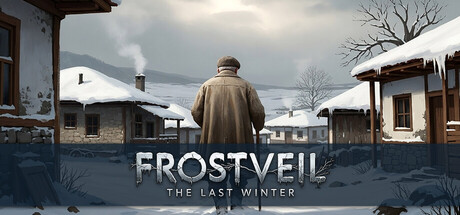
As a two-person independent team with no dedicated art department or budget, we have utilized generative AI to create all visual assets within the game. This includes:
Environment & Backgrounds: All village landscapes, interiors, and atmospheric backdrops depicting 1920s Anatolia.
Character Portraits: All visual representations of the villagers and historical figures.
UI & Icons: The majority of the user interface elements, icons, and parchment-style menus.
Concept Art: All marketing materials and store page assets.
We have carefully curated, edited, and integrated these AI-generated visuals to ensure they align with our specific historical narrative and charcoal-style aesthetic. Our use of this technology was the only way to bring our vision of this National Struggle story to life with the limited resources of a two-man studio.
See the description for an extended discussion about the tools used to produce this game.
AI use in this game includes Claude and Claude Code for assisting with implementing complex systems and bug fixing. The codex's image-examination assets are pre-rendered during development: in-game screenshots are composited via ChatGPT and then some are stylistically processed by a model running locally on my laptop. I experimented a bit with Adobe Podcast to make recordings on my not-very-good mic sound a little better but I wasn't so impressed with the results so I don't think much of this made it in. Most sound effects were found in online libraries but in some cases they were generated using ElevenLabs and other sound generation models when suitable alternatives could not be found. Some 3D models and textures were created using Meshy. Text was checked for spelling and grammar with Grammarly and Claude.
I'm a solo developer making this game entirely on my own with a zero budget. Without AI, I would've gone mad creating such a massive project. It would've taken around 15 years just to reach Early Access.
To be completely transparent: during development, I may use AI tools to assist with content creation, primarily for routine tasks. However, everything is always manually reviewed and refined by me. The workflow is strictly: My work → AI → My work.
There is an optional 100% local and open source AI to create an antagonistic voice taunting the player based on their actions, which can be disabled entirely.
Some store page images were created with the help of AI. Our game artist uses AI tools as part of the design process to speed up and enhance creativity.
OxyRail contains a vast amount of content, with over 516 obtainable items currently available and many more planned for future updates. AI-generated content represents only a very small portion of the game. Due to the large number of items, we use AI-assisted tools in the creation of some item icons, certain background music tracks, and a very small number of visual assets to improve consistency and controllability during content production.
All AI-assisted content is carefully reviewed, adjusted, and further refined by hand to ensure it meets the artistic and design standards of the game.
We will continue to improve the game and gradually replace existing AI-assisted content with manually created assets whenever possible, increasing the proportion of original content over time.
Some voiceovers and select images in this game were created using AI-assisted tools, such as ElevenLabs for voice acting and other image-generation tools during development. All AI-generated content was produced before release and is fully pre-rendered — no generative AI runs in real time during gameplay. All content is fixed in the shipped build and reviewed to comply with copyright and content guidelines.
Our game uses AI primarily to support functions that would traditionally require a larger development team. Due to our limited resources, we integrated AI tools to streamline content generation and support game balancing.
During development, we use AI-assisted tools in a limited and transparent way. These tools may help us with coding support, minor visual stylization, and creating quick promotional or icon-style variations based on assets we made ourselves. In all cases, the final game reflects the work, creative direction, and decisions of our own development team.
Some images like the demon's face, the distortions it places on the world and the ELECTRONICS?!? pamphlet were generated with AI and edited afterwards.
Some of the games text was drafted with the assistance of generative AI and then edited by hand by developers before inclusion.
The game's audio is procedurally synthesized in-engine (algorithmic DSP) and layered with real & recorded audio by the developers. not produced by a generative AI model.
Some of the games 3D model primitive shapes were drafted with the assistance of generative AI, but finalized by hand.
By My Side is developed by a small independent studio, and we use generative AI as part of our content pipeline:
- 3D models — many in-game models (crops, props, buildings, devices and characters) are generated with Meshy AI, then adjusted, scaled and integrated by hand.
- Music & sound — parts of the soundtrack and sound effects are created with AI audio tools and curated by us.
- Localization — translations are drafted with AI assistance and reviewed before release.
All AI-generated content is reviewed, edited and curated by the developer before it ships. No generative AI runs live during gameplay — everything is pre-generated and fixed.
Generative AI was used in the development of Relax Puzzle as an assistive tool to help create some of our art assets and assist with programming logic. The AI served as a supporting utility to enhance our creative workflow and development efficiency. All content generated through these tools was carefully reviewed, refined, and integrated by our team to ensure the quality and consistency of your gaming experience.
Some assets in this work are AI-generated:
Store page: Store promotional images, library promotional images, library homepage image.
Game itself: Some 3D models, background music, sound effects.
Some visual assets and promotional materials for Frozen Christmas Magic: Santa’s Hidden Village were created with the assistance of generative AI tools, then manually directed, selected, edited and integrated by the developer as part of the game’s artistic production pipeline.
No real-time generative AI is used during gameplay.
Generative AI was used during development to assist with some visual concept art, store page images, and marketing assets. All AI-assisted content is manually reviewed, edited, and curated by the developer. The game does not include real-time generative AI content.
Generative AI was used in the creation of promotional store page artwork, achievement icons, and the game icon. No gameplay content, code, or game mechanics were generated using AI. AI is also not used to make decisions, generate real-time content, or display content within the game.
Our Production Partners:
- Engineered by Reupped Technologies LLC
- Original Character Design & Creative Direction by Winter Desktops
- Animation Production by Kiran Graphix & 3D Studio
Winter Panda itself is not AI-generated, AI-powered, or AI-assisted gameplay software. The application functionality, desktop companion systems, and behavioural interactions were manually designed and developed.
Some promotional and Steam store marketing materials, including selected artwork and trailers, were partially created or enhanced using generative AI-assisted creative tools.
Generative artificial intelligence was used during the development of this game to create some of the visual art, as well as some of the music and sound effects. AI-generated assets were reviewed/edited/finalized by a human before release.
AI tools were used in a limited capacity to help speed up parts of the development process, with all content later refined and integrated into the final game.
The in-game graphics and sound are generated by AI and then modified and adjusted by creators before being used.
In World End Dystopia, AI technology is used as a supplementary tool in certain parts of the production process. AI supports tasks such as prototyping, comparison, and organization, while the worldbuilding, narrative, game design, and all final expressions and decisions are created entirely by human hands.
Just as the AI “EDEN” depicted in the game exists to support human choice, AI in the real-world development process is likewise limited to an assistive role—supporting human understanding and judgment rather than replacing creativity or decision-making.
Our game utilizes neural networks for creating visually stunning and immersive environments. AI technology is employed in the production pipeline to assist in rendering backgrounds and character designs, ensuring a unique and high-quality artistic style. While AI aids in the creative process, all generated content is carefully reviewed, refined, and finalized by our team of professional artists to meet the highest standards of originality and quality.
As a two-person independent team with no dedicated art department or budget, we have utilized generative AI to create all visual assets within the game. This includes:
Environment & Backgrounds: All village landscapes, interiors, and atmospheric backdrops depicting 1920s Anatolia.
Character Portraits: All visual representations of the villagers and historical figures.
UI & Icons: The majority of the user interface elements, icons, and parchment-style menus.
Concept Art: All marketing materials and store page assets.
We have carefully curated, edited, and integrated these AI-generated visuals to ensure they align with our specific historical narrative and charcoal-style aesthetic. Our use of this technology was the only way to bring our vision of this National Struggle story to life with the limited resources of a two-man studio.
See the description for an extended discussion about the tools used to produce this game.
AI use in this game includes Claude and Claude Code for assisting with implementing complex systems and bug fixing. The codex's image-examination assets are pre-rendered during development: in-game screenshots are composited via ChatGPT and then some are stylistically processed by a model running locally on my laptop. I experimented a bit with Adobe Podcast to make recordings on my not-very-good mic sound a little better but I wasn't so impressed with the results so I don't think much of this made it in. Most sound effects were found in online libraries but in some cases they were generated using ElevenLabs and other sound generation models when suitable alternatives could not be found. Some 3D models and textures were created using Meshy. Text was checked for spelling and grammar with Grammarly and Claude.
I'm a solo developer making this game entirely on my own with a zero budget. Without AI, I would've gone mad creating such a massive project. It would've taken around 15 years just to reach Early Access.
To be completely transparent: during development, I may use AI tools to assist with content creation, primarily for routine tasks. However, everything is always manually reviewed and refined by me. The workflow is strictly: My work → AI → My work.
There is an optional 100% local and open source AI to create an antagonistic voice taunting the player based on their actions, which can be disabled entirely.
Some store page images were created with the help of AI. Our game artist uses AI tools as part of the design process to speed up and enhance creativity.
OxyRail contains a vast amount of content, with over 516 obtainable items currently available and many more planned for future updates. AI-generated content represents only a very small portion of the game. Due to the large number of items, we use AI-assisted tools in the creation of some item icons, certain background music tracks, and a very small number of visual assets to improve consistency and controllability during content production.
All AI-assisted content is carefully reviewed, adjusted, and further refined by hand to ensure it meets the artistic and design standards of the game.
We will continue to improve the game and gradually replace existing AI-assisted content with manually created assets whenever possible, increasing the proportion of original content over time.
Some voiceovers and select images in this game were created using AI-assisted tools, such as ElevenLabs for voice acting and other image-generation tools during development. All AI-generated content was produced before release and is fully pre-rendered — no generative AI runs in real time during gameplay. All content is fixed in the shipped build and reviewed to comply with copyright and content guidelines.
Our game uses AI primarily to support functions that would traditionally require a larger development team. Due to our limited resources, we integrated AI tools to streamline content generation and support game balancing.
During development, we use AI-assisted tools in a limited and transparent way. These tools may help us with coding support, minor visual stylization, and creating quick promotional or icon-style variations based on assets we made ourselves. In all cases, the final game reflects the work, creative direction, and decisions of our own development team.
Some images like the demon's face, the distortions it places on the world and the ELECTRONICS?!? pamphlet were generated with AI and edited afterwards.