Public Steam disclosure research25,376 disclosures tracked
Where do games disclose AI use?
Search developers’ Steam disclosures, compare classified AI use across
games, and follow recorded changes.
This index adds cross-game classifications and statistics to
statements published on individual store pages.
Groups reflect automatic analysis of public disclosures; mature records are excluded. These counts do not measure AI use across all of Steam.
Missing or unclear statements cannot establish whether a game uses AI.
Gemini was used to create two backgrounds that I later blurred and two non-blurred backgrounds for the game's menus.
I'm a one-person developer. That means I do everything; and some of it I'm just bad at. I use AI as a tool to cover the gaps: the tasks I hate, the stuff I'd waste hours on just to replace later. The tools don't make the art. Every idea and decision, everything that made it into this game came from me.
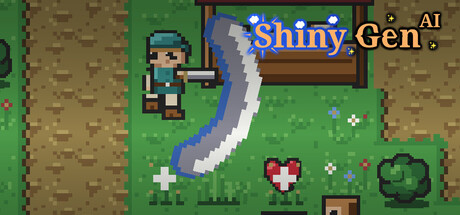
Shiny Gen ships over thirty original games and scenes. Their art, animation frames, music and sound effects were produced with the same AI generation tools the product offers to players, using the third party services listed in our Live-Generated answer. All of it was directed, reviewed and assembled by us before it shipped, and the game code itself is authored and hand edited by our team. No pre generated content in the shipping build is produced from a player's input, and none of it is generated at runtime from our side.
Shiny Gen is a game creation tool, so live generation is the product rather than a feature of it. When a player asks for something, we call third party AI services to generate game code, images, animation frames, music, sound effects and 3D models from the text they type. Generation always happens at the player's explicit request, never in the background, and always requires a free Shiny Gen account and an internet connection.
Every request goes to an established commercial AI provider: Anthropic, OpenAI, Google, OpenRouter, Cloudflare Workers AI, Runware, Retro Diffusion, Replicate and ElevenLabs. Each request is governed by that provider's usage policy and runs under the provider's own built-in safety systems at their default settings. We never disable, weaken or opt out of a provider's safety system anywhere in our product. OpenAI image generation runs under OpenAI's default moderation, and Google image generation carries Google's SynthID provenance watermarking.
Guardrails on our side:
- Our Community Rules, which are binding under our Terms of Service and published on our website, set out what may not be generated or shared. They prohibit, among other things, any sexual content involving a minor and sexual imagery of a real person without their consent, and they treat a prompt asking for prohibited content as a breach whether or not the model produces it.
- Generation requires a signed in Shiny Gen account. There is no anonymous generation, so every request is attributable to an account.
- Generation is rate limited per account and per address, and it is metered against a paid credit balance, so volume abuse is bounded rather than free.
- The prompt and the resulting asset are retained against the account that made them, which is what lets us act on a report.
- Anyone can report content to support@shinygen.ai. A person on our team reviews each report and can remove the content and close the account responsible.
- The in app feed cannot receive player made content. It is served from our own catalogue and is enforced in code: the publish endpoint refuses any caller that is not our own account. Nothing a player generates can appear in another player's feed.
- Multiplayer contains no free text channel of any kind. Communication is a closed set of eight fixed emotes, so there is no user to user text surface to moderate.
- Player made games are never separate programs. They run as interpreted scripts inside our own sandbox, which is an allowlist: it has no filesystem, network, process or operating system access, and no reflection or dynamic dispatch. A generated game cannot execute native code, start a process, reach the network or read the player's files.
We do not permit and do not support the generation of Adult Only sexual content, and we will act on reports received through Steam's in game reporting system and at support@shinygen.ai.
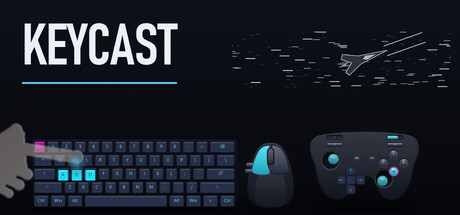
AI tools assisted with writing and translating interface and store text, and with developing code for programmatically rendered visual assets and promotional materials. KEYCAST does not generate AI content or connect to AI services during use.
Generative AI tools were used during development to assist with the creation and iteration of certain visual assets, artwork, and promotional/store materials for Magic Cursor. AI tools were also used as development assistance for portions of the code. All final content was reviewed, selected, edited where necessary, and integrated by the developer. No AI-generated content is created while the application is running.
Lost Gaijin uses generative AI during development and gameplay. Selected pre-generated visual and audio assets used in the game and its Steam materials were created or edited with generative AI tools and reviewed by the developer. During play, text-generating AI responds to player input and game state to create dynamic story content and personalized Japanese-language coaching. Live-generated text is provided through OpenRouter and may vary between playthroughs.
This game began with my idea, brought to life over many weeks using generative AI to create its code, artwork, audio, and promotional materials. These tools made it possible for me to build the game without a programming background.
All AI-generated content was created during development. The game does not generate AI content while you build towards your achievements.
The text on this store page was drafted with the assistance of a generative AI writing tool and reviewed and edited by the developer before publishing.
Generative AI tools assisted with interface translations and the preparation of store descriptions and visual assets. Orymessa does not generate content with AI during use and does not connect to an AI service.
All code and art assets in this game are created with generative‑AI assistance and manually modified. Thanks to AI, I can realize my ideas without programming or art skills.
The app's user-interface text was translated from Japanese into its other supported languages with the help of AI (Claude), as were the translated versions of the store page description. All artwork, including the character illustration, the bundled music, and the original Japanese text were created by people.
Generative AI assisted with selected original visual assets used by Tater Tube Player, including mascot illustrations, fictional demo artwork, Discovery category art, and Tube TV channel logos. These assets were reviewed before inclusion and do not contain third-party movie or television artwork.
During use, the optional Tater Picks feature can generate short recommendation explanations and a synthesized voice briefing based on titles in the user’s own Tater Tube Server library and viewing history. Tater Picks requires the user to configure Tater Link separately, does not accept free-form prompts through the Player, and is hidden when not configured. It does not generate movies, television programs, music, or other playable media.
The application itself does not use generative AI. Maps are produced by a deterministic, rule-based algorithm from signal analysis of the user's own audio file (tempo, beat grid, onsets, song structure); no machine-learning models are involved, and nothing is generated at runtime by AI.
Generative AI was used only for marketing: the animated scenes in the store trailer were produced with AI image and video tools from our own storyboard and prompts. Store screenshots are real captures of the application, and the capsule artwork was designed by hand.
This application does not use AI at runtime. Compatibility verdicts, expected
presets and the performance recommendation come from a deterministic rule set
and the developer's own hardware tier table, with no AI model involved.
AI was used only for pre-made promotional material: the narration of the
optional intro video for the developer's other product (synthetic text-to-speech
with a preset voice) and parts of the store page artwork, which were generated
with an image model and then edited by the developer. All in-app artwork,
including the mascot, is first-party.
RealSub uses AI technology as its core function: it runs speech-recognition and voice-activity-detection models (OpenAI Whisper via faster-whisper, and Silero VAD) locally on the user's own computer to turn audio the user is already playing into live subtitles. If the user enables translation, the recognized subtitle text is sent to the translation service the user selected (Microsoft Translator by default, or an OpenAI-compatible LLM endpoint, DeepL, or a translation server the user runs locally) and the returned translation is displayed. Audio is never uploaded.
The subtitles and translations produced this way are generated at runtime, from the user's own audio, and are shown only to that user on their own screen. RealSub does not generate art, music, voice-over, or narrative content, and it does not share generated text with other users or publish it anywhere.
None of the shipped content assets are generated by AI: interface text, icons, store artwork, screenshots and video are written, laid out or recorded by us. The store capsules are programmatic layouts, and the demo footage is real screen recording of licensed material.
Generative AI was used to assist with localization and some written text, and to create selected artwork for official Steam Workshop content, including the abstract fallback cover in PULSE INDEX. ECHO does not generate content with AI during use or connect to external AI services during use.
AI was used for some code generation and as part of a technique for cleaning-up of 3D scans. 3D scans were created of real lightguns using both a laser based scanner and photogrammetry, and then both models were combined using a frontier AI model for a final clean 3D scan results with higher quality game-ready topography and polycounts.
Generative AI tools were used during development to assist with selected localization text, graphical/promotional assets, and portions of user-facing content. All AI-assisted material was manually reviewed, edited where necessary, and approved by the developer before release. The developer remains responsible for all shipped content and has reviewed the included materials for suitability and rights compliance.
We've leveraged the capabilities of Generative AI technology to create some of the unique themed backgrounds, characters, and content elements featured in our game. This innovative approach allows us to deliver a richer, more immersive experience, filled with visually captivating and creatively inspired designs that enhance every moment of gameplay.
This app includes an optional AI assistant that helps interpret game server console output and error logs. When you send it a log fragment or a question, the text goes to our backend, which forwards it to Anthropic's Claude API and returns a generated explanation with suggested fixes.
The assistant runs only when you invoke it — nothing is sent automatically, and the feature is off by default. Responses are generated by a language model and may be inaccurate, so verify any suggestion before applying it to a live server. No other content in this app is AI-generated.
Generative AI tools were used to assist in creating some promotional artwork for the Steam store and library, and in drafting and translating portions of the store description. All outputs were reviewed and edited by the developer. The application does not generate AI content at runtime.
Parts of this product were produced with the help of generative AI. The HTML, CSS, JavaScript and shader code of the bundled wallpapers, the store page text and its translations were drafted with AI assistance and reviewed by a person before release.
The application itself does not use generative AI at runtime. It generates no content while you use it, and nothing you do in Wallpaper — hardware readings, settings, your own photos and videos — is sent to any AI model or to any server. Everything stays on your PC.
This software incorporates a local AI model, which is used solely to provide an "intelligent semantic search" service. When you enter a text description, the AI analyzes the semantics in real time and searches your local image library to display the most relevant image results. All search results are sourced from your local image library; the AI does not generate or create any new image or video content. Users can choose whether to enable this feature.
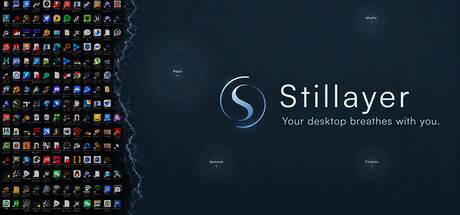
Stillayer uses AI-assisted tools during development for some pre-generated content: the ambient sound bed (the background audio pad) was created with AI audio generation and then hand-edited by the developer; the interface text and store descriptions were written and localized into multiple languages with AI assistance and reviewed by the developer. All visuals — the desktop scenes, light pools and animations — are hand-coded procedural graphics with no AI-generated artwork. Stillayer does not generate any content at runtime, contains no live AI features, and works fully offline.
Some store-page artwork uses pre-generated AI-assisted illustrations. The developer selected, edited, and combined them with authentic CouchDeck interface captures, then reviewed the final materials. CouchDeck does not generate AI content during use.
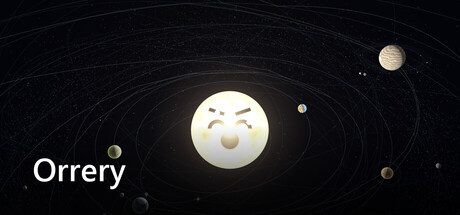
An AI coding assistant was used while developing Orrery to write and review source code, and to draft the text of this store page. No artwork, audio, or in-app content is AI-generated: the planetary surface maps are re-projected NASA and USGS imagery from Solar System Scope, every position is computed from published JPL and Hipparcos data, and the store images are captured from the running program by a script. Nothing is generated by AI while the program runs.
Asiden uses generative AI to create companion conversations, custom personality text and spoken responses during use. When screen awareness is enabled, AI can interpret screen content to inform its responses. Local AI features run on your computer. Optional cloud features send the information needed for the selected feature through Asiden’s managed service to external AI providers. Generated responses may be inaccurate and can include mature language, humour and non-explicit flirtation.
The application icon and the promotional artwork on this store page were created with the assistance of generative AI tools, then selected and reviewed by a human. The application itself does not generate any content during use: it bundles open-source, pre-trained AI models (Qwen3-VL-Embedding-2B and Qwen3-VL-Reranker-2B, Apache-2.0) that run entirely locally and offline on your PC. These models are used solely to analyze your own photos and videos — converting them into numeric feature vectors — to enable private, offline semantic search. No images, text, audio or other content is generated, and no data ever leaves your device.
AI was used on this game: to assist with the programming, and to produce the translations. If a line reads wrong in your language, report it on the Steam community hub.
Dashdoce was created and directed by a single independent developer. AI-assisted tools were used to help implement, debug and test the software and to draft or polish portions of interface text, localization and store copy. All concepts, feature ideas, visual and interaction design decisions, behavior specifications and final approvals were conceived, directed and carefully curated by the developer. AI served as an implementation tool, not as the source of the product's ideas. Dashdoce does not generate content with AI while running.
During the development of the application, artificial intelligence was utilized to generate supporting utility code and translate user interface localization options into different languages.
Epoch Studio is a private writing and worldbuilding studio. When you ask it to, it can generate text suggestions and illustrations to help you develop your own manuscript. All generation runs locally on your own machine using bundled, permissively-licensed AI models — or optional cloud providers you connect with your own API key. Nothing is generated on its own: every suggestion is a deliberate action you take, and you review, edit, and decide what becomes part of your book. Your writing never leaves your device and is never used to train any AI model.
本アプリのソースコードの大部分は、人間の指示とレビューのもとでAIコーディング支援ツール(LLM)を用いて作成されています。ストアページの文章作成にもAI支援を利用しています。 / Most of this application's source code was written using AI coding tools (LLMs) under human direction and review. AI assistance was also used in preparing store page text. ロゴおよびストア用画像の一部は画像生成AIで作成しています。 / Some artwork, including the logo and store images, was created with generative AI.
The optional cursor-buddy 3D character included in this application was pre-generated with Meshy AI under a paid commercial license. No other shipped content is AI-generated, and this application does not generate AI content during use. Built-in tools such as automatic subtitles run local machine-learning models on this device to process the user's own media only.
We use AI tools during development to help write and debug code, and to help produce some art assets. Everything AI-assisted is made during development and reviewed by us before it ships.
We also use third-party assets bought from the Unity Asset Store. These are sold to us as human-made, and we have no reason to doubt that, but we cannot independently verify how each one was produced. Character animation uses Mixamo.
The collectible assets were generated with AI, also Jacky use AI as main brain to speak or interact with you, Jacky voice is a TTS model trained by us, official Jacky skins are NOT AI generated
Rippusion is a music generation tool: every track it produces is created by a generative AI model. The app bundles the Stable Audio 3 Small (Music) model from Stability AI, used under the Stability AI Community License, and runs it entirely on your own device. Generation happens offline on your GPU or CPU - no cloud service is involved, no account is required, and no data is sent anywhere. Music featured in our trailer was generated using Rippusion itself.
MemeWorks contains some pre-generated visual materials created with the assistance of generative AI tools during development. These materials include certain brand elements, sample images, and promotional video assets used for presentation and marketing purposes.
MemeWorks does not use generative AI during runtime, does not generate content for users in real time, and does not connect to any external AI services while the application is being used.
This software does not include any AI features or AI integration services. AI was used to create the promotional posters for the store, as the software interface alone was not suitable for poster design.
All simulation, art, audio and text in Terra Logic are hand-made — the game ships with no AI-generated content and makes no network requests by default. One optional feature can generate text at runtime: the "whisper" narrator, a single one-line ambient caption. By default it composes lines from a built-in, hand-written phrase library. Players who supply their own Anthropic (Claude) API key in a local config file may enable AI-generated phrasing for that one caption line; without a key the AI path is fully inactive. AI output never affects simulation, gameplay, art, audio, or any other text.
This game includes a small amount of generative AI content used only for optional tutorial and demonstration materials. These pre‑generated, G‑rated assets illustrate how the game’s IN‑OUT‑based timing loop works. They do not appear in normal gameplay and do not influence any game systems. All core mechanics, visuals, audio, and interactive content are fully handcrafted and do not use AI generation during play.
Gemini was used to create two backgrounds that I later blurred and two non-blurred backgrounds for the game's menus.
I'm a one-person developer. That means I do everything; and some of it I'm just bad at. I use AI as a tool to cover the gaps: the tasks I hate, the stuff I'd waste hours on just to replace later. The tools don't make the art. Every idea and decision, everything that made it into this game came from me.
Shiny Gen ships over thirty original games and scenes. Their art, animation frames, music and sound effects were produced with the same AI generation tools the product offers to players, using the third party services listed in our Live-Generated answer. All of it was directed, reviewed and assembled by us before it shipped, and the game code itself is authored and hand edited by our team. No pre generated content in the shipping build is produced from a player's input, and none of it is generated at runtime from our side.
Shiny Gen is a game creation tool, so live generation is the product rather than a feature of it. When a player asks for something, we call third party AI services to generate game code, images, animation frames, music, sound effects and 3D models from the text they type. Generation always happens at the player's explicit request, never in the background, and always requires a free Shiny Gen account and an internet connection.
Every request goes to an established commercial AI provider: Anthropic, OpenAI, Google, OpenRouter, Cloudflare Workers AI, Runware, Retro Diffusion, Replicate and ElevenLabs. Each request is governed by that provider's usage policy and runs under the provider's own built-in safety systems at their default settings. We never disable, weaken or opt out of a provider's safety system anywhere in our product. OpenAI image generation runs under OpenAI's default moderation, and Google image generation carries Google's SynthID provenance watermarking.
Guardrails on our side:
- Our Community Rules, which are binding under our Terms of Service and published on our website, set out what may not be generated or shared. They prohibit, among other things, any sexual content involving a minor and sexual imagery of a real person without their consent, and they treat a prompt asking for prohibited content as a breach whether or not the model produces it.
- Generation requires a signed in Shiny Gen account. There is no anonymous generation, so every request is attributable to an account.
- Generation is rate limited per account and per address, and it is metered against a paid credit balance, so volume abuse is bounded rather than free.
- The prompt and the resulting asset are retained against the account that made them, which is what lets us act on a report.
- Anyone can report content to support@shinygen.ai. A person on our team reviews each report and can remove the content and close the account responsible.
- The in app feed cannot receive player made content. It is served from our own catalogue and is enforced in code: the publish endpoint refuses any caller that is not our own account. Nothing a player generates can appear in another player's feed.
- Multiplayer contains no free text channel of any kind. Communication is a closed set of eight fixed emotes, so there is no user to user text surface to moderate.
- Player made games are never separate programs. They run as interpreted scripts inside our own sandbox, which is an allowlist: it has no filesystem, network, process or operating system access, and no reflection or dynamic dispatch. A generated game cannot execute native code, start a process, reach the network or read the player's files.
We do not permit and do not support the generation of Adult Only sexual content, and we will act on reports received through Steam's in game reporting system and at support@shinygen.ai.
AI tools assisted with writing and translating interface and store text, and with developing code for programmatically rendered visual assets and promotional materials. KEYCAST does not generate AI content or connect to AI services during use.
Generative AI tools were used during development to assist with the creation and iteration of certain visual assets, artwork, and promotional/store materials for Magic Cursor. AI tools were also used as development assistance for portions of the code. All final content was reviewed, selected, edited where necessary, and integrated by the developer. No AI-generated content is created while the application is running.
Lost Gaijin uses generative AI during development and gameplay. Selected pre-generated visual and audio assets used in the game and its Steam materials were created or edited with generative AI tools and reviewed by the developer. During play, text-generating AI responds to player input and game state to create dynamic story content and personalized Japanese-language coaching. Live-generated text is provided through OpenRouter and may vary between playthroughs.
This game began with my idea, brought to life over many weeks using generative AI to create its code, artwork, audio, and promotional materials. These tools made it possible for me to build the game without a programming background.
All AI-generated content was created during development. The game does not generate AI content while you build towards your achievements.
The text on this store page was drafted with the assistance of a generative AI writing tool and reviewed and edited by the developer before publishing.
Generative AI tools assisted with interface translations and the preparation of store descriptions and visual assets. Orymessa does not generate content with AI during use and does not connect to an AI service.
All code and art assets in this game are created with generative‑AI assistance and manually modified. Thanks to AI, I can realize my ideas without programming or art skills.
The app's user-interface text was translated from Japanese into its other supported languages with the help of AI (Claude), as were the translated versions of the store page description. All artwork, including the character illustration, the bundled music, and the original Japanese text were created by people.
Generative AI assisted with selected original visual assets used by Tater Tube Player, including mascot illustrations, fictional demo artwork, Discovery category art, and Tube TV channel logos. These assets were reviewed before inclusion and do not contain third-party movie or television artwork.
During use, the optional Tater Picks feature can generate short recommendation explanations and a synthesized voice briefing based on titles in the user’s own Tater Tube Server library and viewing history. Tater Picks requires the user to configure Tater Link separately, does not accept free-form prompts through the Player, and is hidden when not configured. It does not generate movies, television programs, music, or other playable media.
The application itself does not use generative AI. Maps are produced by a deterministic, rule-based algorithm from signal analysis of the user's own audio file (tempo, beat grid, onsets, song structure); no machine-learning models are involved, and nothing is generated at runtime by AI.
Generative AI was used only for marketing: the animated scenes in the store trailer were produced with AI image and video tools from our own storyboard and prompts. Store screenshots are real captures of the application, and the capsule artwork was designed by hand.
This application does not use AI at runtime. Compatibility verdicts, expected
presets and the performance recommendation come from a deterministic rule set
and the developer's own hardware tier table, with no AI model involved.
AI was used only for pre-made promotional material: the narration of the
optional intro video for the developer's other product (synthetic text-to-speech
with a preset voice) and parts of the store page artwork, which were generated
with an image model and then edited by the developer. All in-app artwork,
including the mascot, is first-party.
RealSub uses AI technology as its core function: it runs speech-recognition and voice-activity-detection models (OpenAI Whisper via faster-whisper, and Silero VAD) locally on the user's own computer to turn audio the user is already playing into live subtitles. If the user enables translation, the recognized subtitle text is sent to the translation service the user selected (Microsoft Translator by default, or an OpenAI-compatible LLM endpoint, DeepL, or a translation server the user runs locally) and the returned translation is displayed. Audio is never uploaded.
The subtitles and translations produced this way are generated at runtime, from the user's own audio, and are shown only to that user on their own screen. RealSub does not generate art, music, voice-over, or narrative content, and it does not share generated text with other users or publish it anywhere.
None of the shipped content assets are generated by AI: interface text, icons, store artwork, screenshots and video are written, laid out or recorded by us. The store capsules are programmatic layouts, and the demo footage is real screen recording of licensed material.
Generative AI was used to assist with localization and some written text, and to create selected artwork for official Steam Workshop content, including the abstract fallback cover in PULSE INDEX. ECHO does not generate content with AI during use or connect to external AI services during use.
AI was used for some code generation and as part of a technique for cleaning-up of 3D scans. 3D scans were created of real lightguns using both a laser based scanner and photogrammetry, and then both models were combined using a frontier AI model for a final clean 3D scan results with higher quality game-ready topography and polycounts.
Generative AI tools were used during development to assist with selected localization text, graphical/promotional assets, and portions of user-facing content. All AI-assisted material was manually reviewed, edited where necessary, and approved by the developer before release. The developer remains responsible for all shipped content and has reviewed the included materials for suitability and rights compliance.
We've leveraged the capabilities of Generative AI technology to create some of the unique themed backgrounds, characters, and content elements featured in our game. This innovative approach allows us to deliver a richer, more immersive experience, filled with visually captivating and creatively inspired designs that enhance every moment of gameplay.
This app includes an optional AI assistant that helps interpret game server console output and error logs. When you send it a log fragment or a question, the text goes to our backend, which forwards it to Anthropic's Claude API and returns a generated explanation with suggested fixes.
The assistant runs only when you invoke it — nothing is sent automatically, and the feature is off by default. Responses are generated by a language model and may be inaccurate, so verify any suggestion before applying it to a live server. No other content in this app is AI-generated.
Generative AI tools were used to assist in creating some promotional artwork for the Steam store and library, and in drafting and translating portions of the store description. All outputs were reviewed and edited by the developer. The application does not generate AI content at runtime.
Parts of this product were produced with the help of generative AI. The HTML, CSS, JavaScript and shader code of the bundled wallpapers, the store page text and its translations were drafted with AI assistance and reviewed by a person before release.
The application itself does not use generative AI at runtime. It generates no content while you use it, and nothing you do in Wallpaper — hardware readings, settings, your own photos and videos — is sent to any AI model or to any server. Everything stays on your PC.
This software incorporates a local AI model, which is used solely to provide an "intelligent semantic search" service. When you enter a text description, the AI analyzes the semantics in real time and searches your local image library to display the most relevant image results. All search results are sourced from your local image library; the AI does not generate or create any new image or video content. Users can choose whether to enable this feature.
Stillayer uses AI-assisted tools during development for some pre-generated content: the ambient sound bed (the background audio pad) was created with AI audio generation and then hand-edited by the developer; the interface text and store descriptions were written and localized into multiple languages with AI assistance and reviewed by the developer. All visuals — the desktop scenes, light pools and animations — are hand-coded procedural graphics with no AI-generated artwork. Stillayer does not generate any content at runtime, contains no live AI features, and works fully offline.
Some store-page artwork uses pre-generated AI-assisted illustrations. The developer selected, edited, and combined them with authentic CouchDeck interface captures, then reviewed the final materials. CouchDeck does not generate AI content during use.
An AI coding assistant was used while developing Orrery to write and review source code, and to draft the text of this store page. No artwork, audio, or in-app content is AI-generated: the planetary surface maps are re-projected NASA and USGS imagery from Solar System Scope, every position is computed from published JPL and Hipparcos data, and the store images are captured from the running program by a script. Nothing is generated by AI while the program runs.
Asiden uses generative AI to create companion conversations, custom personality text and spoken responses during use. When screen awareness is enabled, AI can interpret screen content to inform its responses. Local AI features run on your computer. Optional cloud features send the information needed for the selected feature through Asiden’s managed service to external AI providers. Generated responses may be inaccurate and can include mature language, humour and non-explicit flirtation.
The application icon and the promotional artwork on this store page were created with the assistance of generative AI tools, then selected and reviewed by a human. The application itself does not generate any content during use: it bundles open-source, pre-trained AI models (Qwen3-VL-Embedding-2B and Qwen3-VL-Reranker-2B, Apache-2.0) that run entirely locally and offline on your PC. These models are used solely to analyze your own photos and videos — converting them into numeric feature vectors — to enable private, offline semantic search. No images, text, audio or other content is generated, and no data ever leaves your device.
AI was used on this game: to assist with the programming, and to produce the translations. If a line reads wrong in your language, report it on the Steam community hub.
Dashdoce was created and directed by a single independent developer. AI-assisted tools were used to help implement, debug and test the software and to draft or polish portions of interface text, localization and store copy. All concepts, feature ideas, visual and interaction design decisions, behavior specifications and final approvals were conceived, directed and carefully curated by the developer. AI served as an implementation tool, not as the source of the product's ideas. Dashdoce does not generate content with AI while running.
During the development of the application, artificial intelligence was utilized to generate supporting utility code and translate user interface localization options into different languages.
Epoch Studio is a private writing and worldbuilding studio. When you ask it to, it can generate text suggestions and illustrations to help you develop your own manuscript. All generation runs locally on your own machine using bundled, permissively-licensed AI models — or optional cloud providers you connect with your own API key. Nothing is generated on its own: every suggestion is a deliberate action you take, and you review, edit, and decide what becomes part of your book. Your writing never leaves your device and is never used to train any AI model.
本アプリのソースコードの大部分は、人間の指示とレビューのもとでAIコーディング支援ツール(LLM)を用いて作成されています。ストアページの文章作成にもAI支援を利用しています。 / Most of this application's source code was written using AI coding tools (LLMs) under human direction and review. AI assistance was also used in preparing store page text. ロゴおよびストア用画像の一部は画像生成AIで作成しています。 / Some artwork, including the logo and store images, was created with generative AI.
The optional cursor-buddy 3D character included in this application was pre-generated with Meshy AI under a paid commercial license. No other shipped content is AI-generated, and this application does not generate AI content during use. Built-in tools such as automatic subtitles run local machine-learning models on this device to process the user's own media only.
We use AI tools during development to help write and debug code, and to help produce some art assets. Everything AI-assisted is made during development and reviewed by us before it ships.
We also use third-party assets bought from the Unity Asset Store. These are sold to us as human-made, and we have no reason to doubt that, but we cannot independently verify how each one was produced. Character animation uses Mixamo.
The collectible assets were generated with AI, also Jacky use AI as main brain to speak or interact with you, Jacky voice is a TTS model trained by us, official Jacky skins are NOT AI generated
Rippusion is a music generation tool: every track it produces is created by a generative AI model. The app bundles the Stable Audio 3 Small (Music) model from Stability AI, used under the Stability AI Community License, and runs it entirely on your own device. Generation happens offline on your GPU or CPU - no cloud service is involved, no account is required, and no data is sent anywhere. Music featured in our trailer was generated using Rippusion itself.
MemeWorks contains some pre-generated visual materials created with the assistance of generative AI tools during development. These materials include certain brand elements, sample images, and promotional video assets used for presentation and marketing purposes.
MemeWorks does not use generative AI during runtime, does not generate content for users in real time, and does not connect to any external AI services while the application is being used.
This software does not include any AI features or AI integration services. AI was used to create the promotional posters for the store, as the software interface alone was not suitable for poster design.
All simulation, art, audio and text in Terra Logic are hand-made — the game ships with no AI-generated content and makes no network requests by default. One optional feature can generate text at runtime: the "whisper" narrator, a single one-line ambient caption. By default it composes lines from a built-in, hand-written phrase library. Players who supply their own Anthropic (Claude) API key in a local config file may enable AI-generated phrasing for that one caption line; without a key the AI path is fully inactive. AI output never affects simulation, gameplay, art, audio, or any other text.
This game includes a small amount of generative AI content used only for optional tutorial and demonstration materials. These pre‑generated, G‑rated assets illustrate how the game’s IN‑OUT‑based timing loop works. They do not appear in normal gameplay and do not influence any game systems. All core mechanics, visuals, audio, and interactive content are fully handcrafted and do not use AI generation during play.