Public Steam disclosure research25,376 disclosures tracked
Where do games disclose AI use?
Search developers’ Steam disclosures, compare classified AI use across
games, and follow recorded changes.
This index adds cross-game classifications and statistics to
statements published on individual store pages.
Groups reflect automatic analysis of public disclosures; mature records are excluded. These counts do not measure AI use across all of Steam.
Missing or unclear statements cannot establish whether a game uses AI.
Generative AI tools were used during development to assist with pre-generated text, localization, and some promotional/store-page materials. No generative AI is used during gameplay, no content is generated live for users, and CMPNN does not connect to external AI services during gameplay.
The store artwork and some store page text were created with the help of generative AI tools and reviewed and edited by the developer. ShelfSpace itself does not generate any content with AI while it runs.
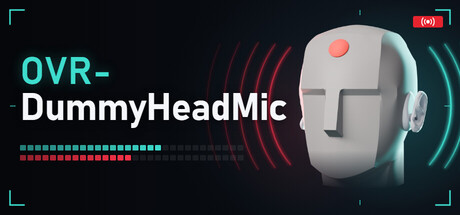
AI assistants were used to help write the application's code. The store images were created with the help of an AI assistant by rendering the actual dummy head 3D model in Blender. The app does not generate any content with AI while it runs.
AI tools assisted the initial translation of P2Peek interface and store text and the early exploration of brand concepts. The chosen brand design was subsequently rebuilt as geometric SVG artwork and outlined lettering, then exported as application icons and store graphics. These assets and translations are prepared in advance. P2Peek does not generate text, images, music or narrative with AI while running, and does not connect to external generative AI services. Optional audio enhancement processes input audio for noise reduction and echo-related enhancement. The Supporter Pack shares this branding and localization.
Some store page artwork, the voices in the trailers and the sample phrases included with the app were created with the help of AI tools.
While you use the app, the text you type is converted into speech by AI speech synthesis: VOICEVOX and Kokoro running on your PC, Windows built-in voices, cloud services you choose to use with your own API key (Google Gemini TTS, ElevenLabs), or speech engines you install and run yourself (VOICEVOX-compatible engines, Irodori-TTS). The app never writes text on its own; it only reads aloud what you type.
Some visual assets and promotional materials for this game were created with the assistance of generative AI and were reviewed, edited, and integrated by the developer. The game does not use live AI generation during gameplay.
During use, the speech recognition and AI features connect to cloud services configured by you (Alibaba Cloud / Tencent Cloud / iFlytek / Volcano Engine speech recognition, or OpenAI-compatible LLM endpoints), and the resulting text is generated in real time by the selected service.
Pre-generated AI content
The application's user-facing text was written with the assistance of a large language model, and translated from English into the other nine supported languages the same way. The store page description was drafted the same way.
The screenshots are unedited captures of the running software.
The in-application audio is synthesised by a DSP script, not by a generative model.
from material the developer produced: frames of video recorded in the headset, and renders of the application's own interface.
Live-generated AI content
None. Next Eye does not run any AI model at runtime, does not send anything to any service, and works entirely offline.
STTS uses AI speech models while you use it. Text you type is turned into speech by text-to-speech models (gTTS, Qwen3-TTS, Supertonic), including voice cloning from a short recording you provide. Speech you hear is transcribed into captions by Whisper. No AI-generated content is pre-rendered or shipped with the app.
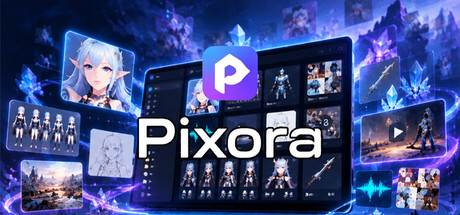
Pixora was developed with AI-assisted tools, which were used to support certain aspects of coding and the creation of promotional materials for the store page. All AI-generated content used in the project is permitted for commercial use under the applicable licenses.
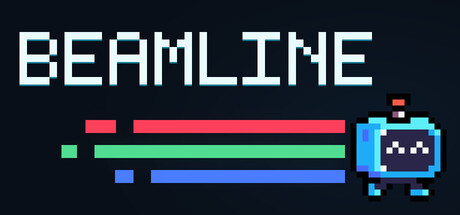
Some Beamline pixel art and localization were created or revised with generative AI assistance. Beamline does not use generative AI at runtime or connect to external AI services.
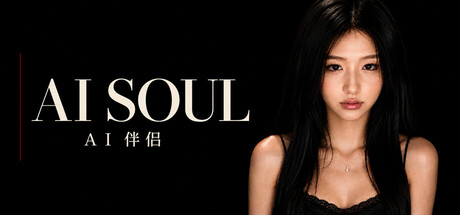
AI SOUL uses generative AI for conversational text, synthesized speech and speech-driven facial animation. Character imagery and store artwork include AI-generated material. Core conversation models run locally. Xiaoya is a synthetic character, not a live human operator. Responses may be inaccurate.
Parts of the game's code and in-game text were written with AI assistance and edited by hand. The store capsule art was generated with AI image tools from the game's own visual style and then edited. No AI-generated image or audio files ship inside the game itself: every graphic is drawn in code while it runs, and all music and sound are synthesised live.
Glyphy's achievement guides are written with AI assistance and checked before release. Each one starts from Steam's own achievement list, so nothing is added or missed. The steps are written from scratch and must pass automated checks for accuracy, clarity and originality. Anything that can't be confirmed is marked "unverified" instead of guessed. The app itself has no AI features, and nothing is generated while you use it.
"Generative AI was used to create the game's cover art and the free scenario assets (such as character images). We plan to replace these art resources as soon as possible."
The character art, idle animations, icons and store images were created with locally run AI image tools, then selected and retouched by hand. Nothing is generated by AI while the game runs.
The app itself is coded with AI tools and harnesses (primarily gpt-codex models and the OpenCode desktop application).
The marketing visuals and trailer were all created with varying other models, the trailer was made with Opus 5.5.
NONE of the wallpapers are AI generated. They are all creative commons images available free to anyone online, I simply took the time to collect and bundle them into the app for local use.
Everything is done under complete human-in-the-loop from start to finish.
Generative AI was used during development to create some store page artwork and in-game icons. All generated content was reviewed before being included in the final product.
The software uses AI images.
When using the software, users need to provide an API key to call third-party AI services.
The AI service costs you use are paid with your own API key.
ROOMKEEP includes pre-generated AI-assisted decorative artwork and AI-assisted interface text, help text, translations and marketing copy, edited and reviewed during development. AI tools were also used to assist software development. ROOMKEEP does not generate AI content while running, does not connect to an AI service, and does not upload game files to an AI service. Reported storage savings come from recorded measurements, not AI-generated estimates or invented results.
Generative AI was used to assist in the creation of some promotional artwork for ENCYCLORA, including selected graphical assets used on the Steam store page. The ENCYCLORA application itself does not use generative AI and does not generate AI content during use.
Generative AI was used to create some of the visual artwork used in the application and on the Steam Store page. AI-assisted tools were also used during development to help generate and refine portions of the application's code. No generative AI is used during runtime, and all AI-assisted content was reviewed and integrated as part of the development process.
As with most VTT systems, users are welcome to import assets made anywhere. Phroller makes it easier than ever. You can just drag the image or model files into the VTT directly from your browser or file system!
I want to encourage supporting real artists where we can though. As such I do my best to collaborate with real creatives on the vast Phroller libraries. Each one of the assets in the library has a field showing the artist behind it. If you like their work, please consider checking them out. Many of them are open for commissions as well! However, I cannot guarantee that assets or part of those assets were created with no AI use at all. A large amount of the assets are made before 2022 though, so we should be safe there.
While I do my best to make Phroller as user friendly as possible, it does still require a ton of instructions and manuals. Frontier models are used to keep some of the text up to date across rapid early access development. Sorry if it sounds robotic!
Soundgun does not use AI while it runs, and it ships no AI-generated sounds. Some of its interface text, translations and store page text were drafted with the help of AI tools and reviewed by the developer.
Generative AI tools were used during the development of Cursor Pilot to assist with programming, troubleshooting, documentation, and the creation or refinement of some visual and written content. All AI-assisted content was reviewed, edited, and integrated by the developer.
ComfyTrans uses an on-device AI language model to translate on-screen text into your language in real time. All AI processing runs locally on your PC — your screen content is not sent to external servers for translation.
Generative AI was used to create the achievement icons. The application itself does not use generative AI: all fractal images and videos are rendered in real time from mathematical Mandelbrot-set calculations and user-selected settings. No AI-generated content is created while using the application.
Generative AI tools were used exclusively to create static, pre-generated illustrative images for the application's Tips section and Steam store/marketing assets. These are the only AI-generated materials included with the product or presented to users. NitroCore Synapse does not generate AI content at runtime and does not connect to external AI services.
Generative AI tools were used during development to assist with parts of concept art, character drafts, draft store assets, localization drafts, and operational copy drafts. All AI-assisted content was manually reviewed, edited, integrated, and approved by the development team before being included in the game or store page.
The game does not use generative AI at runtime to create dialogue, story content, images, audio, or other player-facing content.
AI tools were used during development to help translate the user interface into its 14 languages and to produce the voice-over in the store trailer. All translations and marketing materials were reviewed by the developer. MacroPilot itself does not generate content with AI; users can optionally connect their own third-party AI assistant through the built-in MCP connection.
This utility app uses artificial intelligence models to perform real-time speech-to-text transcription (ASR), live subtitle translation (MT), and local text-to-speech synthesis (TTS) based on the user's voice or PC audio stream.
Generative AI was used only in the preparation of selected promotional images for the game’s Steam page. It assisted with creating and refining background artwork in the game’s visual style. The developer reviewed the results, adapted them to the required dimensions, and added the official SkillHouse logo. The game does not generate any content using AI during gameplay.
Generative AI assisted the creation of pre-made cursor artwork and localized text during development. These assets are included with CURSORLOOM. The application does not generate AI content during use or connect to an external AI service.
KiosuneVN ships no generative AI: nothing it draws, composes or exports comes out of an AI model, it makes no calls to any AI service, and nothing you make is collected or sent anywhere. The developer used an AI assistant (Claude) to help write parts of the application's code and this store page's text; every character, sprite, cue and starter script the tools produce comes from hand-built, deterministic engines.
Some source code used in Game Goose was created with the assistance of generative AI tools during development. All AI-assisted code was reviewed, modified, and tested by the developer. Game Goose itself does not provide generative AI features to users and does not generate AI content at runtime.
A local AI model writes personalized saju (Four Pillars) and compatibility readings from your birth details and selected topics. AI-assisted artwork and localized text are also used in the product and its store materials.
This application's store page artwork (capsule images, banners) and the app icon were created using generative AI image tools, with the developer reviewing and curating the final assets. The application itself does not contain or generate any AI-generated visual content during runtime.
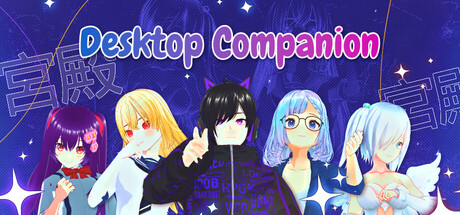
Desktop Companion uses generative AI: your companion's replies are generated live by a large language model that runs entirely on your own PC. The app ships with its own safety-tuned model; nothing is sent to an external AI service. Built-in, application-level safeguards screen generated content to block prohibited output.
Generative AI tools were used during development to assist with pre-generated text, localization, and some promotional/store-page materials. No generative AI is used during gameplay, no content is generated live for users, and CMPNN does not connect to external AI services during gameplay.
The store artwork and some store page text were created with the help of generative AI tools and reviewed and edited by the developer. ShelfSpace itself does not generate any content with AI while it runs.
AI assistants were used to help write the application's code. The store images were created with the help of an AI assistant by rendering the actual dummy head 3D model in Blender. The app does not generate any content with AI while it runs.
AI tools assisted the initial translation of P2Peek interface and store text and the early exploration of brand concepts. The chosen brand design was subsequently rebuilt as geometric SVG artwork and outlined lettering, then exported as application icons and store graphics. These assets and translations are prepared in advance. P2Peek does not generate text, images, music or narrative with AI while running, and does not connect to external generative AI services. Optional audio enhancement processes input audio for noise reduction and echo-related enhancement. The Supporter Pack shares this branding and localization.
Some store page artwork, the voices in the trailers and the sample phrases included with the app were created with the help of AI tools.
While you use the app, the text you type is converted into speech by AI speech synthesis: VOICEVOX and Kokoro running on your PC, Windows built-in voices, cloud services you choose to use with your own API key (Google Gemini TTS, ElevenLabs), or speech engines you install and run yourself (VOICEVOX-compatible engines, Irodori-TTS). The app never writes text on its own; it only reads aloud what you type.
Some visual assets and promotional materials for this game were created with the assistance of generative AI and were reviewed, edited, and integrated by the developer. The game does not use live AI generation during gameplay.
During use, the speech recognition and AI features connect to cloud services configured by you (Alibaba Cloud / Tencent Cloud / iFlytek / Volcano Engine speech recognition, or OpenAI-compatible LLM endpoints), and the resulting text is generated in real time by the selected service.
Pre-generated AI content
The application's user-facing text was written with the assistance of a large language model, and translated from English into the other nine supported languages the same way. The store page description was drafted the same way.
The screenshots are unedited captures of the running software.
The in-application audio is synthesised by a DSP script, not by a generative model.
from material the developer produced: frames of video recorded in the headset, and renders of the application's own interface.
Live-generated AI content
None. Next Eye does not run any AI model at runtime, does not send anything to any service, and works entirely offline.
STTS uses AI speech models while you use it. Text you type is turned into speech by text-to-speech models (gTTS, Qwen3-TTS, Supertonic), including voice cloning from a short recording you provide. Speech you hear is transcribed into captions by Whisper. No AI-generated content is pre-rendered or shipped with the app.
Pixora was developed with AI-assisted tools, which were used to support certain aspects of coding and the creation of promotional materials for the store page. All AI-generated content used in the project is permitted for commercial use under the applicable licenses.
Some Beamline pixel art and localization were created or revised with generative AI assistance. Beamline does not use generative AI at runtime or connect to external AI services.
AI SOUL uses generative AI for conversational text, synthesized speech and speech-driven facial animation. Character imagery and store artwork include AI-generated material. Core conversation models run locally. Xiaoya is a synthetic character, not a live human operator. Responses may be inaccurate.
Parts of the game's code and in-game text were written with AI assistance and edited by hand. The store capsule art was generated with AI image tools from the game's own visual style and then edited. No AI-generated image or audio files ship inside the game itself: every graphic is drawn in code while it runs, and all music and sound are synthesised live.
Glyphy's achievement guides are written with AI assistance and checked before release. Each one starts from Steam's own achievement list, so nothing is added or missed. The steps are written from scratch and must pass automated checks for accuracy, clarity and originality. Anything that can't be confirmed is marked "unverified" instead of guessed. The app itself has no AI features, and nothing is generated while you use it.
"Generative AI was used to create the game's cover art and the free scenario assets (such as character images). We plan to replace these art resources as soon as possible."
The character art, idle animations, icons and store images were created with locally run AI image tools, then selected and retouched by hand. Nothing is generated by AI while the game runs.
The app itself is coded with AI tools and harnesses (primarily gpt-codex models and the OpenCode desktop application).
The marketing visuals and trailer were all created with varying other models, the trailer was made with Opus 5.5.
NONE of the wallpapers are AI generated. They are all creative commons images available free to anyone online, I simply took the time to collect and bundle them into the app for local use.
Everything is done under complete human-in-the-loop from start to finish.
Generative AI was used during development to create some store page artwork and in-game icons. All generated content was reviewed before being included in the final product.
The software uses AI images.
When using the software, users need to provide an API key to call third-party AI services.
The AI service costs you use are paid with your own API key.
ROOMKEEP includes pre-generated AI-assisted decorative artwork and AI-assisted interface text, help text, translations and marketing copy, edited and reviewed during development. AI tools were also used to assist software development. ROOMKEEP does not generate AI content while running, does not connect to an AI service, and does not upload game files to an AI service. Reported storage savings come from recorded measurements, not AI-generated estimates or invented results.
Generative AI was used to assist in the creation of some promotional artwork for ENCYCLORA, including selected graphical assets used on the Steam store page. The ENCYCLORA application itself does not use generative AI and does not generate AI content during use.
Generative AI was used to create some of the visual artwork used in the application and on the Steam Store page. AI-assisted tools were also used during development to help generate and refine portions of the application's code. No generative AI is used during runtime, and all AI-assisted content was reviewed and integrated as part of the development process.
As with most VTT systems, users are welcome to import assets made anywhere. Phroller makes it easier than ever. You can just drag the image or model files into the VTT directly from your browser or file system!
I want to encourage supporting real artists where we can though. As such I do my best to collaborate with real creatives on the vast Phroller libraries. Each one of the assets in the library has a field showing the artist behind it. If you like their work, please consider checking them out. Many of them are open for commissions as well! However, I cannot guarantee that assets or part of those assets were created with no AI use at all. A large amount of the assets are made before 2022 though, so we should be safe there.
While I do my best to make Phroller as user friendly as possible, it does still require a ton of instructions and manuals. Frontier models are used to keep some of the text up to date across rapid early access development. Sorry if it sounds robotic!
Soundgun does not use AI while it runs, and it ships no AI-generated sounds. Some of its interface text, translations and store page text were drafted with the help of AI tools and reviewed by the developer.
Generative AI tools were used during the development of Cursor Pilot to assist with programming, troubleshooting, documentation, and the creation or refinement of some visual and written content. All AI-assisted content was reviewed, edited, and integrated by the developer.
ComfyTrans uses an on-device AI language model to translate on-screen text into your language in real time. All AI processing runs locally on your PC — your screen content is not sent to external servers for translation.
Generative AI was used to create the achievement icons. The application itself does not use generative AI: all fractal images and videos are rendered in real time from mathematical Mandelbrot-set calculations and user-selected settings. No AI-generated content is created while using the application.
Generative AI tools were used exclusively to create static, pre-generated illustrative images for the application's Tips section and Steam store/marketing assets. These are the only AI-generated materials included with the product or presented to users. NitroCore Synapse does not generate AI content at runtime and does not connect to external AI services.
Generative AI tools were used during development to assist with parts of concept art, character drafts, draft store assets, localization drafts, and operational copy drafts. All AI-assisted content was manually reviewed, edited, integrated, and approved by the development team before being included in the game or store page.
The game does not use generative AI at runtime to create dialogue, story content, images, audio, or other player-facing content.
AI tools were used during development to help translate the user interface into its 14 languages and to produce the voice-over in the store trailer. All translations and marketing materials were reviewed by the developer. MacroPilot itself does not generate content with AI; users can optionally connect their own third-party AI assistant through the built-in MCP connection.
This utility app uses artificial intelligence models to perform real-time speech-to-text transcription (ASR), live subtitle translation (MT), and local text-to-speech synthesis (TTS) based on the user's voice or PC audio stream.
Generative AI was used only in the preparation of selected promotional images for the game’s Steam page. It assisted with creating and refining background artwork in the game’s visual style. The developer reviewed the results, adapted them to the required dimensions, and added the official SkillHouse logo. The game does not generate any content using AI during gameplay.
Generative AI assisted the creation of pre-made cursor artwork and localized text during development. These assets are included with CURSORLOOM. The application does not generate AI content during use or connect to an external AI service.
KiosuneVN ships no generative AI: nothing it draws, composes or exports comes out of an AI model, it makes no calls to any AI service, and nothing you make is collected or sent anywhere. The developer used an AI assistant (Claude) to help write parts of the application's code and this store page's text; every character, sprite, cue and starter script the tools produce comes from hand-built, deterministic engines.
Some source code used in Game Goose was created with the assistance of generative AI tools during development. All AI-assisted code was reviewed, modified, and tested by the developer. Game Goose itself does not provide generative AI features to users and does not generate AI content at runtime.
A local AI model writes personalized saju (Four Pillars) and compatibility readings from your birth details and selected topics. AI-assisted artwork and localized text are also used in the product and its store materials.
This application's store page artwork (capsule images, banners) and the app icon were created using generative AI image tools, with the developer reviewing and curating the final assets. The application itself does not contain or generate any AI-generated visual content during runtime.
Desktop Companion uses generative AI: your companion's replies are generated live by a large language model that runs entirely on your own PC. The app ships with its own safety-tuned model; nothing is sent to an external AI service. Built-in, application-level safeguards screen generated content to block prohibited output.