Public Steam disclosure research25,376 disclosures tracked
Where do games disclose AI use?
Search developers’ Steam disclosures, compare classified AI use across
games, and follow recorded changes.
This index adds cross-game classifications and statistics to
statements published on individual store pages.
Groups reflect automatic analysis of public disclosures; mature records are excluded. These counts do not measure AI use across all of Steam.
Missing or unclear statements cannot establish whether a game uses AI.
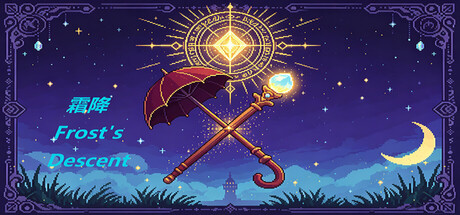
Some 2D artwork used in this game (such as character and environment illustrations) was created or assisted with generative AI tools, then selected and edited by the developer for the final game. Gameplay systems, puzzles, and interactive logic were designed and implemented by the developer. The game does not use generative AI to create content in real time during play.
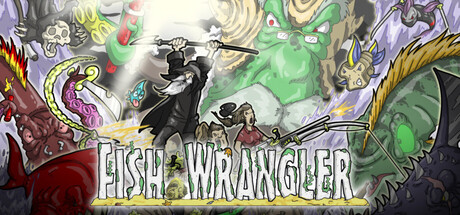
Some in-game artwork, such as fish, poles and quest art, is made with the help of AI image tools, then selected and edited by our team. Some forum replies from in-game characters are AI-assisted and reviewed before they are posted. Nothing is generated live during gameplay.
The soundtrack was produced with generative AI music tools and then edited, cut and mixed by the developer. Part of the game's text and this store page was written with AI assistance and reviewed line by line by the developer. Everything else - code, interface art, achievement icons, the map and every capsule and screenshot - is hand-made. No content is generated by AI while you play.
Some of the images used in the game were created with generative AI tools. However, all questions, answer choices, facts, and other written content were created and edited by humans.
Some of the artwork that ships with Football Ambition 27 was made using
generative AI tools. That covers the club badges and competition logos in
the default database, the menu and screen backgrounds, the stadium and
facility illustrations, and the library of face parts the game builds
portraits from. The national flags are not among them.
Faces are built while you play. Every player, coach and youth prospect gets
a portrait the moment they exist, including people generated seasons into
your save, assembled by the game from that shipped library of parts. It is
ordinary code doing the assembling, not an AI model, and it can only ever
use art that came with the game.
The game does not connect to any AI service. There is an optional feature,
switched off by default, that lets you connect your own AI chat assistant
to the in game database editor, so it can help with jobs like renaming
clubs or building a scenario. It runs only if you turn it on, and it only
reaches your own files on your own computer.
Some pre-generated content — the fictional league, club and player name pools, portions of descriptive and flavour copy, the arena photograph used on the title and store presentation, and parts of the store description — was created with generative-AI assistance during development, then selected, reviewed and edited by the developer. No content is generated at runtime, and no player data is sent to any AI service.
Generative AI tools were used during development to create and assist with pre-generated visual artwork and image assets. No generative AI content is created in real time during gameplay.
ComfyTrans uses an on-device AI language model to translate on-screen text into your language in real time. All AI processing runs locally on your PC — your screen content is not sent to external servers for translation.
Player portraits that will ship with the game will be generated in ComfyUI. Claude Code has been used for debugging, testing, and painful algorithm assistance (scheduling).
This game is a polished and updated version of a limited-time game released in August 2026, and only available for a single month.
The objective for the original was to create a game in as short a time as possible. Development was finished in three weeks, and to achieve this goal, Suno(AI) was used to create some of the sound assets.
If you would prefer not to support this game due to this use of AI, we fully understand. Regardless, thank you for taking the time to consider it!
Pre-generated content only. The game contains no live or runtime AI generation and makes no network connection.
Visual art: the pixel art in this game — sprites, backgrounds, key art, banners and icons — was produced with the assistance of generative AI image tools and then edited, composited, recoloured and assembled by hand for use in the game.
Written content and store text: the encounter text and the store description were written with AI assistance and edited by the developer.
Everything shipped was reviewed by a human before it went in. No content is generated while the game is running.
The character portraits, the menu backdrop and the store art were generated with AI image tools in one fixed illustration style, then chosen and checked by the developer. Nothing is generated while you play.
Some of the game's content was created with the help of generative AI tools (some of the illustrations and the English translation), then reworked, curated and integrated by the developer. The game does not generate any AI content in real time.
Drugrunners uses generative AI tools to help create some in-game visual assets, including icons, item art, and background artwork. This content is generated in advance during development. The game does not use AI to generate content live or in response to player input during gameplay.
Generative AI was used to create background images and character artwork in the game. It was also used as a writing aid for proofreading and editing the narrative. AI-assisted content was reviewed and selected by the developer.
Generative AI tools assisted in producing content for the game and its store materials, including some images, music and character voices. Starlit Hall Studio designs, selects, revises, integrates and reviews the final content. All content is prepared before release; the game does not generate content or connect to generative AI services during play.
Generative AI tools were used during development to create some visual assets, including character skins and store artwork. These assets were reviewed and edited by the developer. The game does not generate AI content during gameplay or connect to a third-party AI service during gameplay.
Generative AI tools helped create character portraits, illustrations, store and marketing artwork, music, sound effects, and player-facing text during development. These are pre-generated assets. No generative AI runs during gameplay, and the game does not connect to external generative AI services.
Generative AI was used to assist in creating some art assets, including backgrounds, prop images, and store promotional images, and in drafting and polishing some written content. The developer selected, edited, and integrated these materials for use in the game and on its store page. The game does not generate AI content during gameplay or connect to external AI services.
This game uses Generative Artificial Intelligence (AI) to create Localization based text and In-game Sound Effects (sfx).
Disclosure is part of Magnus et Epicus LLC commitment on AI free use for all.
Some visual and art assets in the game were created with the assistance of generative AI, combined with live-action materials and human-created artwork and editing.
AI was used to help generate the store page capsule and background artwork. The visuals are procedurally constructed vector graphics built with AI-assisted code, not raster images from an image-generation model. The wordmark and color palette were designed by the developer.
Part of the game's visual content (location backgrounds and some animated CG scenes) was created using generative neural networks based on references and artistic descriptions developed by the author.
Some of this game's assets were created with the assistance of generative AI tools and were then reviewed, edited, and finalized by our development team. This applies to portions of the 2D artwork, such as UI elements, decorative frames, backgrounds, and illustrations, as well as some localized text. All AI-assisted content was pre-generated during development. The live-action video footage features real actors filmed by our production team, and no content is generated by AI during gameplay.
The music in Ammerow: Lands Beyond was created with Claude Compose, a bespoke composition system built for this project. Rather than a generative music model, it works like a tireless studio composer: an AI assistant (Anthropic's Claude) writes and runs code that composes each piece note by note — melody, harmony, counterpoint and orchestration derived from music theory — and performs it through real, licensed virtual instruments in a professional DAW (Ableton Live). It then "listens back" by analysing the rendered audio to refine the balance. No generative audio/music model was used, no AI was trained on other artists' recordings, and no track was produced from a prompt. Every note is placed deliberately, and every piece is directed, reviewed and approved by a human. The result is authored, not generated.
The sound effects are an original, human-directed procedural synthesis library. Claude Code assisted in writing custom Python DSP software and individual cue recipes; every waveform was deterministically rendered from mathematical models and recorded seeds. No recordings, performers, samples, stock audio, sample libraries or generative-audio service were used.
Ammerow is designed primarily as a coloured ASCII game. Selected creature, item and shopkeeper illustrations began as AI-generated source images and are converted through a deterministic ASCII-art pipeline. The optional tile mode is a work-in-progress secondary presentation. Its small atlases were programmatically drawn in a custom SDL application using natural-language Codex direction. No generative-image model, inherited tileset, traced artwork or third-party graphical asset was used.
Some narrative, gameplay data and other player-facing material were also developed with AI assistance under human direction and review.
Some Steam marketing backgrounds were created using OpenAI image-generation tools and then selected, reviewed and combined with deterministic Ammerow branding by the developer.
No AI runs while the game is being played.
The English translation and some store page materials (text and logo artwork) were created with the help of generative AI tools, then reviewed and edited by the developer The original Spanish game text was written by the developer. No AI is used while you play.
1. This game uses AI to interact with the input text commands.
2. Some of the art resources and music assets in the game are generated by AI during the development stage.
The story outline, the characters, and the five branching endings were created by hand. On that basis, the script prose, the 357 background illustrations, the soundtrack and the sound effects were generated with AI and individually reviewed by the developer before inclusion; candidates that did not pass were discarded and are not in the game. The English and Japanese translations were produced with AI and spot-checked by the developer. The store artwork and trailer also use AI-generated images.
No AI runs while you play. All content is fixed at release.
KiosuneVN ships no generative AI: nothing it draws, composes or exports comes out of an AI model, it makes no calls to any AI service, and nothing you make is collected or sent anywhere. The developer used an AI assistant (Claude) to help write parts of the application's code and this store page's text; every character, sprite, cue and starter script the tools produce comes from hand-built, deterministic engines.
Guildmaster Simulator is developed independently, and I use generative AI as one of the tools that helps me bring the game to life. As I am not a professional graphic designer or illustrator, AI-assisted tools have helped me create selected visual assets, character artwork, interface elements and promotional imagery that I can then review, refine and adapt to fit the game’s established style.
Generative AI has also assisted with portions of the game’s written content, including some quest, event and narrative text. All AI-assisted content is reviewed, edited and shaped by me before being included in the game to ensure it fits the world, characters, gameplay systems and overall creative direction of Guildmaster Simulator.
No generative AI is used during gameplay. All AI-assisted content is created during development and is fixed within the shipped game.
This game uses generative AI tools in production, under human direction. Part of the 2D art (characters, backgrounds, icons, interface) and part of the text go through these tools, always from direction, references and rules I define, and always reviewed, corrected and approved piece by piece before entering the game. Other art and text in the game were made by hand. All decisions about story, script, scene design, mechanics and art direction are mine. The game has no voice acting, and no AI-generated voice. Nothing is generated while you play: everything the game shows is a fixed file in the package.
The champion artwork, portraits and various visual assets are generated. The generated visuals are a starting point rather than a settled choice, and if the game's funding allows it I intend to have them redone by an artist.
No content is generated by AI while you play, since the match simulation runs on a hand-written decision engine where each player evaluates their situation against authored rules, rather than on a generative model.
Generative AI was used during development to help create pre-rendered content that ships with the game: in-game text and narrative templates, store page copy, and 2D brand artwork - all reviewed by the developer. The simulation itself (players, teams, seasons, statistics) is produced at runtime by the game's own deterministic statistical engine, not by AI. No AI-generated content is created while you play.
Playtest fighter, promotion, and title imagery created utilizing generative AI. Later builds of the game will replace these assets with artist-created versions.
Generative AI utilizes for troubleshooting when developing.
Some 2D artwork used in this game (such as character and environment illustrations) was created or assisted with generative AI tools, then selected and edited by the developer for the final game. Gameplay systems, puzzles, and interactive logic were designed and implemented by the developer. The game does not use generative AI to create content in real time during play.
Some in-game artwork, such as fish, poles and quest art, is made with the help of AI image tools, then selected and edited by our team. Some forum replies from in-game characters are AI-assisted and reviewed before they are posted. Nothing is generated live during gameplay.
The soundtrack was produced with generative AI music tools and then edited, cut and mixed by the developer. Part of the game's text and this store page was written with AI assistance and reviewed line by line by the developer. Everything else - code, interface art, achievement icons, the map and every capsule and screenshot - is hand-made. No content is generated by AI while you play.
Some of the images used in the game were created with generative AI tools. However, all questions, answer choices, facts, and other written content were created and edited by humans.
Some of the artwork that ships with Football Ambition 27 was made using
generative AI tools. That covers the club badges and competition logos in
the default database, the menu and screen backgrounds, the stadium and
facility illustrations, and the library of face parts the game builds
portraits from. The national flags are not among them.
Faces are built while you play. Every player, coach and youth prospect gets
a portrait the moment they exist, including people generated seasons into
your save, assembled by the game from that shipped library of parts. It is
ordinary code doing the assembling, not an AI model, and it can only ever
use art that came with the game.
The game does not connect to any AI service. There is an optional feature,
switched off by default, that lets you connect your own AI chat assistant
to the in game database editor, so it can help with jobs like renaming
clubs or building a scenario. It runs only if you turn it on, and it only
reaches your own files on your own computer.
Some pre-generated content — the fictional league, club and player name pools, portions of descriptive and flavour copy, the arena photograph used on the title and store presentation, and parts of the store description — was created with generative-AI assistance during development, then selected, reviewed and edited by the developer. No content is generated at runtime, and no player data is sent to any AI service.
Generative AI tools were used during development to create and assist with pre-generated visual artwork and image assets. No generative AI content is created in real time during gameplay.
ComfyTrans uses an on-device AI language model to translate on-screen text into your language in real time. All AI processing runs locally on your PC — your screen content is not sent to external servers for translation.
Player portraits that will ship with the game will be generated in ComfyUI. Claude Code has been used for debugging, testing, and painful algorithm assistance (scheduling).
This game is a polished and updated version of a limited-time game released in August 2026, and only available for a single month.
The objective for the original was to create a game in as short a time as possible. Development was finished in three weeks, and to achieve this goal, Suno(AI) was used to create some of the sound assets.
If you would prefer not to support this game due to this use of AI, we fully understand. Regardless, thank you for taking the time to consider it!
Pre-generated content only. The game contains no live or runtime AI generation and makes no network connection.
Visual art: the pixel art in this game — sprites, backgrounds, key art, banners and icons — was produced with the assistance of generative AI image tools and then edited, composited, recoloured and assembled by hand for use in the game.
Written content and store text: the encounter text and the store description were written with AI assistance and edited by the developer.
Everything shipped was reviewed by a human before it went in. No content is generated while the game is running.
The character portraits, the menu backdrop and the store art were generated with AI image tools in one fixed illustration style, then chosen and checked by the developer. Nothing is generated while you play.
Some of the game's content was created with the help of generative AI tools (some of the illustrations and the English translation), then reworked, curated and integrated by the developer. The game does not generate any AI content in real time.
Drugrunners uses generative AI tools to help create some in-game visual assets, including icons, item art, and background artwork. This content is generated in advance during development. The game does not use AI to generate content live or in response to player input during gameplay.
Generative AI was used to create background images and character artwork in the game. It was also used as a writing aid for proofreading and editing the narrative. AI-assisted content was reviewed and selected by the developer.
Generative AI tools assisted in producing content for the game and its store materials, including some images, music and character voices. Starlit Hall Studio designs, selects, revises, integrates and reviews the final content. All content is prepared before release; the game does not generate content or connect to generative AI services during play.
Generative AI tools were used during development to create some visual assets, including character skins and store artwork. These assets were reviewed and edited by the developer. The game does not generate AI content during gameplay or connect to a third-party AI service during gameplay.
Generative AI tools helped create character portraits, illustrations, store and marketing artwork, music, sound effects, and player-facing text during development. These are pre-generated assets. No generative AI runs during gameplay, and the game does not connect to external generative AI services.
Generative AI was used to assist in creating some art assets, including backgrounds, prop images, and store promotional images, and in drafting and polishing some written content. The developer selected, edited, and integrated these materials for use in the game and on its store page. The game does not generate AI content during gameplay or connect to external AI services.
This game uses Generative Artificial Intelligence (AI) to create Localization based text and In-game Sound Effects (sfx).
Disclosure is part of Magnus et Epicus LLC commitment on AI free use for all.
Some visual and art assets in the game were created with the assistance of generative AI, combined with live-action materials and human-created artwork and editing.
AI was used to help generate the store page capsule and background artwork. The visuals are procedurally constructed vector graphics built with AI-assisted code, not raster images from an image-generation model. The wordmark and color palette were designed by the developer.
Part of the game's visual content (location backgrounds and some animated CG scenes) was created using generative neural networks based on references and artistic descriptions developed by the author.
Some of this game's assets were created with the assistance of generative AI tools and were then reviewed, edited, and finalized by our development team. This applies to portions of the 2D artwork, such as UI elements, decorative frames, backgrounds, and illustrations, as well as some localized text. All AI-assisted content was pre-generated during development. The live-action video footage features real actors filmed by our production team, and no content is generated by AI during gameplay.
The music in Ammerow: Lands Beyond was created with Claude Compose, a bespoke composition system built for this project. Rather than a generative music model, it works like a tireless studio composer: an AI assistant (Anthropic's Claude) writes and runs code that composes each piece note by note — melody, harmony, counterpoint and orchestration derived from music theory — and performs it through real, licensed virtual instruments in a professional DAW (Ableton Live). It then "listens back" by analysing the rendered audio to refine the balance. No generative audio/music model was used, no AI was trained on other artists' recordings, and no track was produced from a prompt. Every note is placed deliberately, and every piece is directed, reviewed and approved by a human. The result is authored, not generated.
The sound effects are an original, human-directed procedural synthesis library. Claude Code assisted in writing custom Python DSP software and individual cue recipes; every waveform was deterministically rendered from mathematical models and recorded seeds. No recordings, performers, samples, stock audio, sample libraries or generative-audio service were used.
Ammerow is designed primarily as a coloured ASCII game. Selected creature, item and shopkeeper illustrations began as AI-generated source images and are converted through a deterministic ASCII-art pipeline. The optional tile mode is a work-in-progress secondary presentation. Its small atlases were programmatically drawn in a custom SDL application using natural-language Codex direction. No generative-image model, inherited tileset, traced artwork or third-party graphical asset was used.
Some narrative, gameplay data and other player-facing material were also developed with AI assistance under human direction and review.
Some Steam marketing backgrounds were created using OpenAI image-generation tools and then selected, reviewed and combined with deterministic Ammerow branding by the developer.
No AI runs while the game is being played.
The English translation and some store page materials (text and logo artwork) were created with the help of generative AI tools, then reviewed and edited by the developer The original Spanish game text was written by the developer. No AI is used while you play.
1. This game uses AI to interact with the input text commands.
2. Some of the art resources and music assets in the game are generated by AI during the development stage.
The story outline, the characters, and the five branching endings were created by hand. On that basis, the script prose, the 357 background illustrations, the soundtrack and the sound effects were generated with AI and individually reviewed by the developer before inclusion; candidates that did not pass were discarded and are not in the game. The English and Japanese translations were produced with AI and spot-checked by the developer. The store artwork and trailer also use AI-generated images.
No AI runs while you play. All content is fixed at release.
KiosuneVN ships no generative AI: nothing it draws, composes or exports comes out of an AI model, it makes no calls to any AI service, and nothing you make is collected or sent anywhere. The developer used an AI assistant (Claude) to help write parts of the application's code and this store page's text; every character, sprite, cue and starter script the tools produce comes from hand-built, deterministic engines.
Guildmaster Simulator is developed independently, and I use generative AI as one of the tools that helps me bring the game to life. As I am not a professional graphic designer or illustrator, AI-assisted tools have helped me create selected visual assets, character artwork, interface elements and promotional imagery that I can then review, refine and adapt to fit the game’s established style.
Generative AI has also assisted with portions of the game’s written content, including some quest, event and narrative text. All AI-assisted content is reviewed, edited and shaped by me before being included in the game to ensure it fits the world, characters, gameplay systems and overall creative direction of Guildmaster Simulator.
No generative AI is used during gameplay. All AI-assisted content is created during development and is fixed within the shipped game.
This game uses generative AI tools in production, under human direction. Part of the 2D art (characters, backgrounds, icons, interface) and part of the text go through these tools, always from direction, references and rules I define, and always reviewed, corrected and approved piece by piece before entering the game. Other art and text in the game were made by hand. All decisions about story, script, scene design, mechanics and art direction are mine. The game has no voice acting, and no AI-generated voice. Nothing is generated while you play: everything the game shows is a fixed file in the package.
The champion artwork, portraits and various visual assets are generated. The generated visuals are a starting point rather than a settled choice, and if the game's funding allows it I intend to have them redone by an artist.
No content is generated by AI while you play, since the match simulation runs on a hand-written decision engine where each player evaluates their situation against authored rules, rather than on a generative model.
Generative AI was used during development to help create pre-rendered content that ships with the game: in-game text and narrative templates, store page copy, and 2D brand artwork - all reviewed by the developer. The simulation itself (players, teams, seasons, statistics) is produced at runtime by the game's own deterministic statistical engine, not by AI. No AI-generated content is created while you play.
Playtest fighter, promotion, and title imagery created utilizing generative AI. Later builds of the game will replace these assets with artist-created versions.
Generative AI utilizes for troubleshooting when developing.