Public Steam disclosure research25,394 disclosures tracked
Where do games disclose AI use?
Search developers’ Steam disclosures, compare classified AI use across
games, and follow recorded changes.
This index adds cross-game classifications and statistics to
statements published on individual store pages.
Groups reflect automatic analysis of public disclosures; mature records are excluded. These counts do not measure AI use across all of Steam.
Missing or unclear statements cannot establish whether a game uses AI.
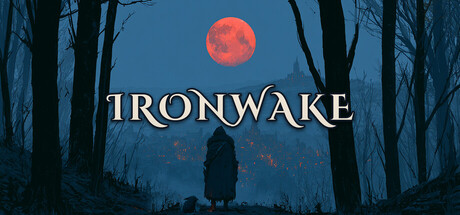
Ironwake contains pre-generated AI content. Some 2D art assets (character sprites, portraits, item illustrations,
backgrounds, and icon sets) were created using AI image-generation tools (PixelLab and MidJourney, plus licensed
third-party icon packs produced with Stable Diffusion). Some sound effects, ambient audio, and music tracks were created
using AI audio-generation tools (ElevenLabs). All AI-generated assets were reviewed, curated, and edited by the
developer. The game does not generate any content with AI at runtime, and no live AI models are accessed by the game.
The core gameplay of this game adopts an independent AI warlord confrontation system. All Three Kingdoms generals and regional lord NPCs make autonomous decisions on their own, and can independently launch alliances, declarations of war, diplomatic negotiations, grain supply trades, secret betrayals and other political strategic behaviors. In-game plot dialogues and interactions among warlords are dynamically generated by AI. A built-in content safety filter is activated throughout the game to prevent the generation of illegal, violent and inappropriate content.
Some visual assets, promotional artwork, and portions of the localization were created or assisted using generative AI during development. All AI-assisted content was reviewed, edited, and integrated by the development team. The game does not generate AI content during gameplay.
During Early Access, generative AI will be used to translate human-written English text for the Steam store page and application into other languages, due to limited resources.
The English localization is not AI generated. No AI-generated artwork or audio is included, and no content is generated by AI at runtime.
Our goal is to replace all AI-generated translations with translations created and reviewed by professional human translators for the full release. This disclosure will remain while any AI-assisted translations are included.
Generative tools were used to create and refine selected 2D illustrations, music, sound effects, localization, and store text. All materials were reviewed and edited by the developer. The game does not generate content using AI or connect to generative AI services during gameplay.
Selected promotional artwork on the Steam store page was created with assistance from generative AI tools. This artwork was manually reviewed and edited by the developer. The application itself does not contain any AI-generated code or visual assets, does not generate AI content during use, and does not connect to external AI services.
Generative AI is used in this game for both asset creation (such as UI elements and character visuals) and as a tool to assist in the development process (such as code organization). Every piece of content generated by AI is carefully reviewed and refined by the development team to ensure it meets our quality standards.
Generative AI tools were used extensively throughout development to create the game's code, dialogue and other written content, sound effects, visual assets, localization, and Steam store and marketing materials. All AI-generated content was reviewed, selected, and integrated by the developer before release. The game does not use generative AI to create new content during gameplay.
Many scene illustrations were generated with AI image tools, then selected, edited, and integrated by hand. Every image in the game was individually reviewed and curated by the developer.
Generative AI was used during development to assist with a small portion of the game's code, improve and translate dialogue, and create or refine a limited number of sprite assets. All AI-assisted content was reviewed, edited, and integrated by the developer. No generative AI is used in real time during gameplay.
The images and illustrations in Old Money (icons, scenes, backgrounds) as well as parts of the store artwork were created with generative AI image tools and were curated and edited by the developer. The program code and parts of the texts were also developed with the assistance of AI tools and were reviewed, tested and are the responsibility of the developer. The game concept, design and balancing come from the developer. No content is generated by AI at runtime, and the game does not send any data to AI services.
Generative AI tools were used during development to assist with the creation of game content. All final content was reviewed and refined by the development team.
AI tools were used during development to assist with writing code, and to produce two categories of content shipped with the game: the original synthwave soundtrack (composed with AI music generation, curated and selected by the developer) and the interface translations for the non-English languages (reviewed by the developer). Some store page text was also drafted with AI assistance. All in-game worlds are generated procedurally by hand-written algorithms — no AI content is generated at runtime.
Some of this game's artwork — including key art, the main-menu background, and store/marketing images — was created with the help of generative AI (Midjourney) and then curated and edited by the developer.
Everything else, including gameplay, code, sound, and the in-game pixel art, is human-made or from licensed asset packs. No AI-generated content is produced live while you play.
Some in-game text translations were produced with AI assistance and reviewed for accuracy.
Some parts of the game were created with the help of generative AI tools. The music was made using Suno, and a few pieces of text were assisted by AI during development. Everything included in the game has been reviewed and approved by me before shipping.
'm a solo developer making this game with a very limited budget. While I was able to hire artists for some of the game's assets, I simply couldn't afford to commission every piece of content needed to complete the project.
Because of that, I used generative AI as a supplementary tool for certain assets and to assist with English translation. Since English isn't my native language, AI also helped me ensure that dialogue, jokes, and other text conveyed the intended meaning naturally.
Whenever possible, I chose to work with human artists, and all AI-generated content was carefully reviewed, edited, and integrated by me. My goal was never to replace artists, but to make it possible to finish the game as an independent developer.
Some of the art assets in this game (such as sprites, icons, and background images) were created with the help of AI generation tools during development. All AI-generated content was reviewed, edited, and curated by the developer to ensure it is appropriate and fits the game. No AI-generated content is created during gameplay.
Some of Flekkia's assets were created with the help of generative AI tools
during development: part of the artwork (backgrounds, screens and event cards)
and the game's music. They were then selected, edited and integrated by hand.
The same assets appear on the store page and in the trailer.
No content is generated by AI while you play. Everything you see and hear is
fixed in the game and identical for every player: Flekkia does not connect to
any AI service and sends none of your data to one.
Since the game is still in active development, generative AI tools were used to create most of the artwork and text included in the game and on the store page. All generated content was carefully reviewed, heavily edited, and integrated by the developers.
This game uses generative AI tools in parts of its development. Some code was written with AI coding assistants, and some marketing and store artwork — including the capsule art and logo — was produced with AI assistance, based on and matched to in-game assets we created ourselves. Some 3D assets were created with AI-assisted tools All screenshots show real gameplay, all AI-assisted output is reviewed by a human before it ships, and no AI-generated content is produced live during play.
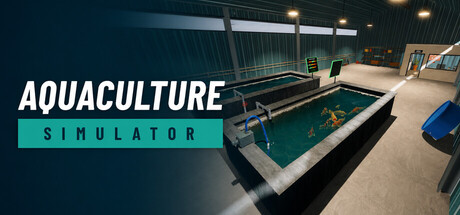
Some of this game's assets were created with generative AI tools and then integrated by hand: the fish models, the facility hall, and the tanks. Some in-game text, the tutorial and the customer emails, was written with the help of an AI language model. All other assets (music, sound, icons, textures, remaining UI) are hand-made or CC0. Every game system, the water simulation, koi grading, economy, customer and calendar logic, is hand-written code. No generative AI runs at runtime; nothing is generated live while you play.
Character portraits and evidence images were created with OpenAI's image generation; some diagrams were authored as SVG with OpenAI Codex. These assets were reviewed before release (originality and likeness pass). Sound effects and the ambient music bed are produced by a deterministic synthesis program (oscillators, filtered noise, and math-based DSP), not by a generative-AI audio model, and from no sampled or library audio; the synthesis script itself was written with AI coding assistance (AI-assisted code, not AI-generated audio). Fonts, engine, and runtime are non-AI third-party components under their own licenses.
Some in-game text, store page copy, and 2D marketing assets were created with the assistance of AI tools. All AI-assisted content was reviewed and curated by the developer. The game does not generate any content using AI during gameplay.
This game is built by a two-member team: a human developer and an AI assistant working under his direction. Large parts of the game code and many pre-rendered assets (enemy creatures, towers, environment props, marketing artwork) were created with the assistance of generative AI — always based on human design decisions, and reviewed, tested and curated by the developer. The game does not generate any content at runtime using AI.
NarrationOS uses generative AI to create its output. It synthesizes speech from your books using an AI voice model (Resemble AI's Chatterbox) and can generate a custom voice from a short recording you supply. A local AI language model assists with text analysis. All generation happens locally on your device. You are responsible for having the rights to any content or voice you use, and voice cloning requires your confirmation of consent.
Some of this game's code was written with the assistance of AI development tools. All art, music, audio, and text that ship in the game are human-created (from licensed asset packs) or procedurally rendered — no AI-generated art, audio, or text is included in the game.
Some game text, procedural artwork, sound effects, and store page copy were created with AI assistance, then reviewed and curated by the developer. Character and enemy sprites are licensed, human-made pixel art. No content is AI-generated during gameplay.
Some in-game radio/music tracks may be created with generative AI tools. These tracks are selected, reviewed and integrated manually by the development team. No live AI generation is used during gameplay.
Visual assets in Blackbriar Crypt were created with generative AI tools (Stable Diffusion via ComfyUI), including in-game 2D art such as item icons, character portraits, enemy sprites, and UI backgrounds, as well as store and library marketing images. Each asset was selected, edited, and approved by the developer before release.
None of the game's artwork, audio, or imagery is AI-generated. Portraits, interface, and all store and marketing art are hand-authored vector and procedural work, and that is a hard rule of the project. We do use AI assistance during development for writing and code, including drafting store text and the scripts that lay out our marketing art, all of it reviewed and edited by hand. No image-generation models are used anywhere, in the game or in its marketing.
Dialogue and narration are generated at runtime by a small language model running entirely on the player's machine. Nothing is sent to any server. The model has no authority over the game: a deterministic simulation decides every outcome, fact, and number, and the model only phrases scenes from state the engine hands it. Its output is structurally constrained and validated against the simulation before it appears, and invalid output is rejected. Prompts and validation keep generated text within the game's fiction and its PG-13 register. Player-typed orders go only to the local model and never leave the machine.
This game's code was written with the assistance of generative AI. No AI-generated artwork or audio is used.
The visuals are hand-coded by the developer and the music is procedurally generated. AI also assisted with some in-game text and its French translation.
The game's fighters are controlled by AI models (LLMs) chosen by the player and reached through their own OpenRouter API key. During a match the model decides the character's actions and writes the short taunts shown on screen (text only). The game does not generate images, audio, music or voices with AI: every character, arena, soundtrack and sound effect is authored in advance and ships with the game. Every AI-generated line goes through an illegal content filter before it is displayed, on the player's computer and again on the server that hosts online matches, and online matches have a report system reviewed by a human team.
Some 2D art assets in this game — such as menu UI textures (buttons and panels) and background images — were created with the help of generative AI image tools during development. All AI-generated assets were reviewed and edited by the developer before being included in the game. No AI-generated content is created live during gameplay.
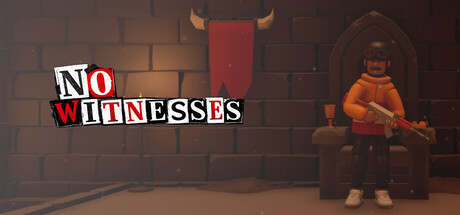
No Witnesses is developed by a two-man team, therefore generative AI has been used to assist in the creation of marketing assets and other player facing interfaces. All generated content is reviewed and perfected by a human before use.No Witnesses utilises third-party assets, of which we cannot attest to the creation of.
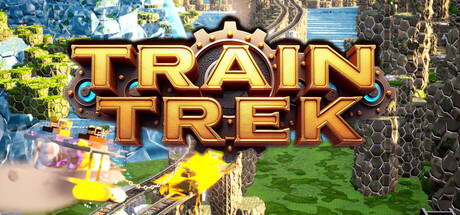
Train Trek uses generative AI in two ways.
During development we used AI tools to help make some assets: the user-interface art (HUD and menu icons, menu artwork, frames, button plates, mouse cursors), the instrumental soundtrack, and some sound effects. All of it was chosen, edited and finished by hand before it shipped. The 3D models are built procedurally by our own scripts, and the design, world generation and balancing are authored by hand. Parts of the source code were written with an AI coding assistant, reviewed and tested by the developer.
While you play, the game speaks using a text-to-speech model that ships inside the game and runs entirely on your own computer. It voices tutorial guidance, hints and menu narration instead of pre-recorded audio. It needs no internet connection, sends nothing anywhere, and never records or listens to you. It only reads lines we wrote and shipped with the game - it does not invent dialogue.
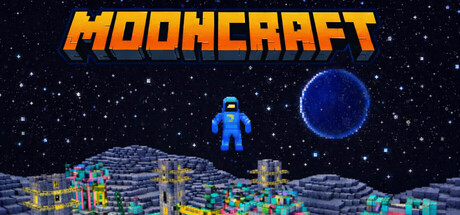
Some of the promotional artwork for MoonCraft was created using generative AI tools.
All in‑game content, gameplay assets, code, and visuals were created manually without AI.
Only the store page art uses AI; the game itself does not include AI‑generated content.
Ironwake contains pre-generated AI content. Some 2D art assets (character sprites, portraits, item illustrations,
backgrounds, and icon sets) were created using AI image-generation tools (PixelLab and MidJourney, plus licensed
third-party icon packs produced with Stable Diffusion). Some sound effects, ambient audio, and music tracks were created
using AI audio-generation tools (ElevenLabs). All AI-generated assets were reviewed, curated, and edited by the
developer. The game does not generate any content with AI at runtime, and no live AI models are accessed by the game.
The core gameplay of this game adopts an independent AI warlord confrontation system. All Three Kingdoms generals and regional lord NPCs make autonomous decisions on their own, and can independently launch alliances, declarations of war, diplomatic negotiations, grain supply trades, secret betrayals and other political strategic behaviors. In-game plot dialogues and interactions among warlords are dynamically generated by AI. A built-in content safety filter is activated throughout the game to prevent the generation of illegal, violent and inappropriate content.
Some visual assets, promotional artwork, and portions of the localization were created or assisted using generative AI during development. All AI-assisted content was reviewed, edited, and integrated by the development team. The game does not generate AI content during gameplay.
During Early Access, generative AI will be used to translate human-written English text for the Steam store page and application into other languages, due to limited resources.
The English localization is not AI generated. No AI-generated artwork or audio is included, and no content is generated by AI at runtime.
Our goal is to replace all AI-generated translations with translations created and reviewed by professional human translators for the full release. This disclosure will remain while any AI-assisted translations are included.
Generative tools were used to create and refine selected 2D illustrations, music, sound effects, localization, and store text. All materials were reviewed and edited by the developer. The game does not generate content using AI or connect to generative AI services during gameplay.
Selected promotional artwork on the Steam store page was created with assistance from generative AI tools. This artwork was manually reviewed and edited by the developer. The application itself does not contain any AI-generated code or visual assets, does not generate AI content during use, and does not connect to external AI services.
Generative AI is used in this game for both asset creation (such as UI elements and character visuals) and as a tool to assist in the development process (such as code organization). Every piece of content generated by AI is carefully reviewed and refined by the development team to ensure it meets our quality standards.
Generative AI tools were used extensively throughout development to create the game's code, dialogue and other written content, sound effects, visual assets, localization, and Steam store and marketing materials. All AI-generated content was reviewed, selected, and integrated by the developer before release. The game does not use generative AI to create new content during gameplay.
Many scene illustrations were generated with AI image tools, then selected, edited, and integrated by hand. Every image in the game was individually reviewed and curated by the developer.
Generative AI was used during development to assist with a small portion of the game's code, improve and translate dialogue, and create or refine a limited number of sprite assets. All AI-assisted content was reviewed, edited, and integrated by the developer. No generative AI is used in real time during gameplay.
The images and illustrations in Old Money (icons, scenes, backgrounds) as well as parts of the store artwork were created with generative AI image tools and were curated and edited by the developer. The program code and parts of the texts were also developed with the assistance of AI tools and were reviewed, tested and are the responsibility of the developer. The game concept, design and balancing come from the developer. No content is generated by AI at runtime, and the game does not send any data to AI services.
Generative AI tools were used during development to assist with the creation of game content. All final content was reviewed and refined by the development team.
AI tools were used during development to assist with writing code, and to produce two categories of content shipped with the game: the original synthwave soundtrack (composed with AI music generation, curated and selected by the developer) and the interface translations for the non-English languages (reviewed by the developer). Some store page text was also drafted with AI assistance. All in-game worlds are generated procedurally by hand-written algorithms — no AI content is generated at runtime.
Some of this game's artwork — including key art, the main-menu background, and store/marketing images — was created with the help of generative AI (Midjourney) and then curated and edited by the developer.
Everything else, including gameplay, code, sound, and the in-game pixel art, is human-made or from licensed asset packs. No AI-generated content is produced live while you play.
Some in-game text translations were produced with AI assistance and reviewed for accuracy.
Some parts of the game were created with the help of generative AI tools. The music was made using Suno, and a few pieces of text were assisted by AI during development. Everything included in the game has been reviewed and approved by me before shipping.
'm a solo developer making this game with a very limited budget. While I was able to hire artists for some of the game's assets, I simply couldn't afford to commission every piece of content needed to complete the project.
Because of that, I used generative AI as a supplementary tool for certain assets and to assist with English translation. Since English isn't my native language, AI also helped me ensure that dialogue, jokes, and other text conveyed the intended meaning naturally.
Whenever possible, I chose to work with human artists, and all AI-generated content was carefully reviewed, edited, and integrated by me. My goal was never to replace artists, but to make it possible to finish the game as an independent developer.
Some of the art assets in this game (such as sprites, icons, and background images) were created with the help of AI generation tools during development. All AI-generated content was reviewed, edited, and curated by the developer to ensure it is appropriate and fits the game. No AI-generated content is created during gameplay.
Some of Flekkia's assets were created with the help of generative AI tools
during development: part of the artwork (backgrounds, screens and event cards)
and the game's music. They were then selected, edited and integrated by hand.
The same assets appear on the store page and in the trailer.
No content is generated by AI while you play. Everything you see and hear is
fixed in the game and identical for every player: Flekkia does not connect to
any AI service and sends none of your data to one.
Since the game is still in active development, generative AI tools were used to create most of the artwork and text included in the game and on the store page. All generated content was carefully reviewed, heavily edited, and integrated by the developers.
This game uses generative AI tools in parts of its development. Some code was written with AI coding assistants, and some marketing and store artwork — including the capsule art and logo — was produced with AI assistance, based on and matched to in-game assets we created ourselves. Some 3D assets were created with AI-assisted tools All screenshots show real gameplay, all AI-assisted output is reviewed by a human before it ships, and no AI-generated content is produced live during play.
Some of this game's assets were created with generative AI tools and then integrated by hand: the fish models, the facility hall, and the tanks. Some in-game text, the tutorial and the customer emails, was written with the help of an AI language model. All other assets (music, sound, icons, textures, remaining UI) are hand-made or CC0. Every game system, the water simulation, koi grading, economy, customer and calendar logic, is hand-written code. No generative AI runs at runtime; nothing is generated live while you play.
Character portraits and evidence images were created with OpenAI's image generation; some diagrams were authored as SVG with OpenAI Codex. These assets were reviewed before release (originality and likeness pass). Sound effects and the ambient music bed are produced by a deterministic synthesis program (oscillators, filtered noise, and math-based DSP), not by a generative-AI audio model, and from no sampled or library audio; the synthesis script itself was written with AI coding assistance (AI-assisted code, not AI-generated audio). Fonts, engine, and runtime are non-AI third-party components under their own licenses.
Some in-game text, store page copy, and 2D marketing assets were created with the assistance of AI tools. All AI-assisted content was reviewed and curated by the developer. The game does not generate any content using AI during gameplay.
This game is built by a two-member team: a human developer and an AI assistant working under his direction. Large parts of the game code and many pre-rendered assets (enemy creatures, towers, environment props, marketing artwork) were created with the assistance of generative AI — always based on human design decisions, and reviewed, tested and curated by the developer. The game does not generate any content at runtime using AI.
NarrationOS uses generative AI to create its output. It synthesizes speech from your books using an AI voice model (Resemble AI's Chatterbox) and can generate a custom voice from a short recording you supply. A local AI language model assists with text analysis. All generation happens locally on your device. You are responsible for having the rights to any content or voice you use, and voice cloning requires your confirmation of consent.
Some of this game's code was written with the assistance of AI development tools. All art, music, audio, and text that ship in the game are human-created (from licensed asset packs) or procedurally rendered — no AI-generated art, audio, or text is included in the game.
Some game text, procedural artwork, sound effects, and store page copy were created with AI assistance, then reviewed and curated by the developer. Character and enemy sprites are licensed, human-made pixel art. No content is AI-generated during gameplay.
Some in-game radio/music tracks may be created with generative AI tools. These tracks are selected, reviewed and integrated manually by the development team. No live AI generation is used during gameplay.
Visual assets in Blackbriar Crypt were created with generative AI tools (Stable Diffusion via ComfyUI), including in-game 2D art such as item icons, character portraits, enemy sprites, and UI backgrounds, as well as store and library marketing images. Each asset was selected, edited, and approved by the developer before release.
None of the game's artwork, audio, or imagery is AI-generated. Portraits, interface, and all store and marketing art are hand-authored vector and procedural work, and that is a hard rule of the project. We do use AI assistance during development for writing and code, including drafting store text and the scripts that lay out our marketing art, all of it reviewed and edited by hand. No image-generation models are used anywhere, in the game or in its marketing.
Dialogue and narration are generated at runtime by a small language model running entirely on the player's machine. Nothing is sent to any server. The model has no authority over the game: a deterministic simulation decides every outcome, fact, and number, and the model only phrases scenes from state the engine hands it. Its output is structurally constrained and validated against the simulation before it appears, and invalid output is rejected. Prompts and validation keep generated text within the game's fiction and its PG-13 register. Player-typed orders go only to the local model and never leave the machine.
This game's code was written with the assistance of generative AI. No AI-generated artwork or audio is used.
The visuals are hand-coded by the developer and the music is procedurally generated. AI also assisted with some in-game text and its French translation.
The game's fighters are controlled by AI models (LLMs) chosen by the player and reached through their own OpenRouter API key. During a match the model decides the character's actions and writes the short taunts shown on screen (text only). The game does not generate images, audio, music or voices with AI: every character, arena, soundtrack and sound effect is authored in advance and ships with the game. Every AI-generated line goes through an illegal content filter before it is displayed, on the player's computer and again on the server that hosts online matches, and online matches have a report system reviewed by a human team.
Some 2D art assets in this game — such as menu UI textures (buttons and panels) and background images — were created with the help of generative AI image tools during development. All AI-generated assets were reviewed and edited by the developer before being included in the game. No AI-generated content is created live during gameplay.
No Witnesses is developed by a two-man team, therefore generative AI has been used to assist in the creation of marketing assets and other player facing interfaces. All generated content is reviewed and perfected by a human before use.No Witnesses utilises third-party assets, of which we cannot attest to the creation of.
Train Trek uses generative AI in two ways.
During development we used AI tools to help make some assets: the user-interface art (HUD and menu icons, menu artwork, frames, button plates, mouse cursors), the instrumental soundtrack, and some sound effects. All of it was chosen, edited and finished by hand before it shipped. The 3D models are built procedurally by our own scripts, and the design, world generation and balancing are authored by hand. Parts of the source code were written with an AI coding assistant, reviewed and tested by the developer.
While you play, the game speaks using a text-to-speech model that ships inside the game and runs entirely on your own computer. It voices tutorial guidance, hints and menu narration instead of pre-recorded audio. It needs no internet connection, sends nothing anywhere, and never records or listens to you. It only reads lines we wrote and shipped with the game - it does not invent dialogue.
Some of the promotional artwork for MoonCraft was created using generative AI tools.
All in‑game content, gameplay assets, code, and visuals were created manually without AI.
Only the store page art uses AI; the game itself does not include AI‑generated content.